
Search results
Search for "visible" in Full Text gives 661 result(s) in Beilstein Journal of Organic Chemistry. Showing first 200.
Perspectives on push–pull chromophores derived from click-type [2 + 2] cycloaddition–retroelectrocyclization reactions of electron-rich alkynes and electron-deficient alkenes
Beilstein J. Org. Chem. 2024, 20, 125–154, doi:10.3762/bjoc.20.13
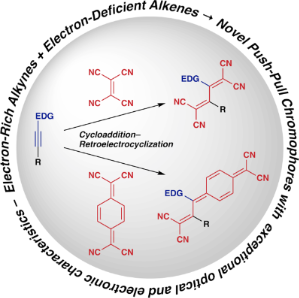
- , the ensuing RE process yields the corresponding TCBD derivatives. The resulting TCBDs and related products exhibit strong light absorption, resulting from the intramolecular charge transfer (ICT) in the visible region; they also exhibit a rich redox chemistry [11]. In the [2 + 2] CA–RE reaction of
- in the visible region were evident in their CD spectra. Using the Arrhenius and Eyring formalisms, the kinetic parameters for the thermal racemization of 57 and 58 were obtained. The activation free enthalpy (ΔG‡) for the racemization of 57 (ΔG‡298 K = 24.8 kcal mol−1) was ≈1.5 kcal mol−1 larger than
- [138]. Compounds 55 and 56 remain devoid of emissive characteristics even when in a solution or a solid state [129]. When compound 50 was characterized using a standard steady-state fluorimeter, no emission signals were observed across the visible and NIR regions extending up to 1,600 nm, both in a


Visible-light-induced radical cascade cyclization: a catalyst-free synthetic approach to trifluoromethylated heterocycles
Beilstein J. Org. Chem. 2024, 20, 118–124, doi:10.3762/bjoc.20.12
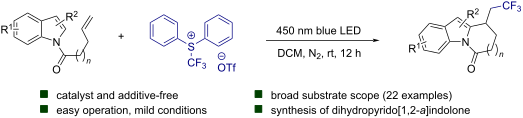
- Chemistry and Chemical Engineering, Henan Normal University, Xinxiang, Henan 453007, China 10.3762/bjoc.20.12 Abstract A visible-light-promoted research protocol for constructing dihydropyrido[1,2-a]indolone skeletons is herein described proceeding through a cascade cyclization mediated by trifluoromethyl
- -reductive quench process (Table 1). The indole substrate 1a was chosen as a model substrate, and the reaction mixture was irradiated under 450 nm visible light for 12 h, resulting in the formation of the desired product 3a, albeit in a relatively low yield (Table 1, entry 1). Control experiments revealed
- 450 nm visible light irradiation is optimal (Table 1, entries 9–12). Furthermore, various types of Umemoto’s reagent were also screened (Table 1, entries 13–15). As Umemoto’s reagent 2b was easier to prepare [29] and the use of 2b did not significantly affect the reaction yield, it was chosen as the




Optimizing reaction conditions for the light-driven hydrogen evolution in a loop photoreactor
Beilstein J. Org. Chem. 2024, 20, 74–91, doi:10.3762/bjoc.20.9
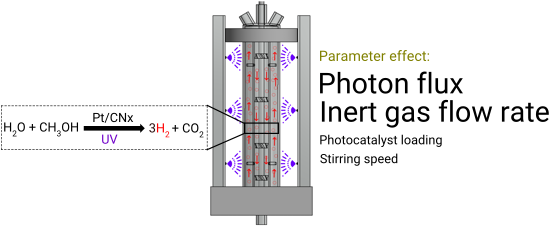
- photon flux density, c0 is the photocatalyst concentration, and kr is the recombination rate. The linear correlation between reaction rate and photon flux visible in Figure 12b indicates that the system is still in regime 1 and the hydrogen generation rate is limited by the available photon flux, even


Multi-redox indenofluorene chromophores incorporating dithiafulvene donor and ene/enediyne acceptor units
Beilstein J. Org. Chem. 2024, 20, 59–73, doi:10.3762/bjoc.20.8
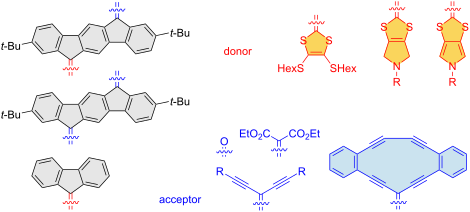
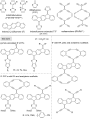
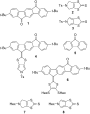
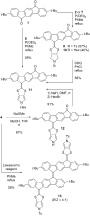
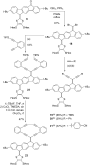
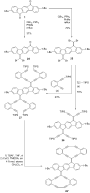
- Hex group in 11) on the nitrogen atom in the pyrrole ring have an effect on the absorption in the visible spectrum of pyrrolo-annelated IF-DTF ketones. Interestingly, the absorption of the dihydropyrrole IF-DTF 9 is redshifted relative to that of the pyrrole IF-DTF 4, while the absorption does not
- was observed for compound 27 was also observed for this compound. The degradation of compound 20 in the presence of light and oxygen is visible as a color change upon leaving a sample of the compound in solution in an open vial, unshielded from light (Figure S2 in Supporting Information File 1). This
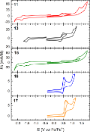
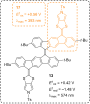
- , incorporating different dithiafulvenes and acetylenic scaffolds, such as acetylenic radiaannulenes. The compounds have strong absorptions in the visible region and undergo reversible (or quasi-reversible) oxidations and reductions. We have also presented two new fluorene-extended dithiafulvenes, which also







Facile access to pyridinium-based bent aromatic amphiphiles: nonionic surface modification of nanocarbons in water
Beilstein J. Org. Chem. 2024, 20, 32–40, doi:10.3762/bjoc.20.5
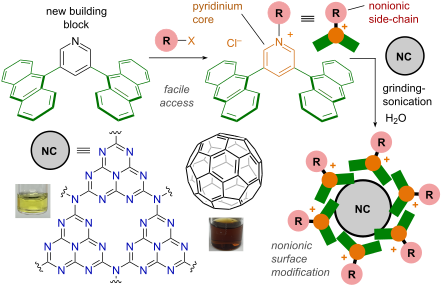
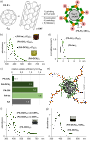
- similar to AA [12][13], indicating self-assembly via the hydrophobic effect and π-stacking interactions (Figure 3a,b). The self-assembly in water was further supported by UV–visible analysis, displaying slight red-shifts of the anthracene absorption bands relative to the spectrum in methanol (Δλmax = +3
- the self-assembly of in average six PA-CH3 amphiphiles into a small aromatic micelle (Figure 3g). In a similar way, the generation of micelles (PA-OCH3)n, (PA-OH)n, and (PA-Im)n was confirmed via NMR, UV–visible, and DLS analyses upon dissolution of the corresponding amphiphiles in water (Figure 3c,d
- H2O (2.7 mL), the suspension was sonicated with a probe sonicator (40 kHz, 150 W, 10 min), centrifuged (16,000g, 10 min), and then filtrated (200 nm pore-size membrane filter) to yield a clear brown solution containing host–guest composite (PA-OCH3)n·(C60)m. The UV–visible analysis clearly showed new




Aldiminium and 1,2,3-triazolium dithiocarboxylate zwitterions derived from cyclic (alkyl)(amino) and mesoionic carbenes
Beilstein J. Org. Chem. 2023, 19, 1947–1956, doi:10.3762/bjoc.19.145
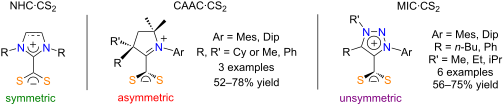
- stretching vibration of the S=C–S− group, another strong absorption was clearly visible in the IR spectra of CAAC·CS2 betaines 4a–c. This second most intense band was observed around 1550 cm−1 (Table 2). It probably originated from the asymmetric stretching of the aldiminium group, in line with similar high


Beyond n-dopants for organic semiconductors: use of bibenzo[d]imidazoles in UV-promoted dehalogenation reactions of organic halides
Beilstein J. Org. Chem. 2023, 19, 1912–1922, doi:10.3762/bjoc.19.142
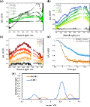
- (Figure 4a) show significant spectral evolution within the first 1 ps following photoexcitation at 350 nm in MeCN. The (negative) bleach feature at 450 nm and photoinduced absorption (PIA) peaking at 775 nm transform into a broad PIA spanning the visible wavelengths with a notable isosbestic point at 600
- -DMBI)2 with a broad PIA spanning the visible wavelengths, which may suggest that the initial evolution observed in the (N-DMBI)2 occurs within our instrument response. In toluene, the signal amplitude at 5 ns for (Cyc-DMBI)2 is significantly smaller than that of the (N-DMBI)2 and 96% of the signal


Aromatic systems with two and three pyridine-2,6-dicarbazolyl-3,5-dicarbonitrile fragments as electron-transporting organic semiconductors exhibiting long-lived emissions
Beilstein J. Org. Chem. 2023, 19, 1867–1880, doi:10.3762/bjoc.19.139
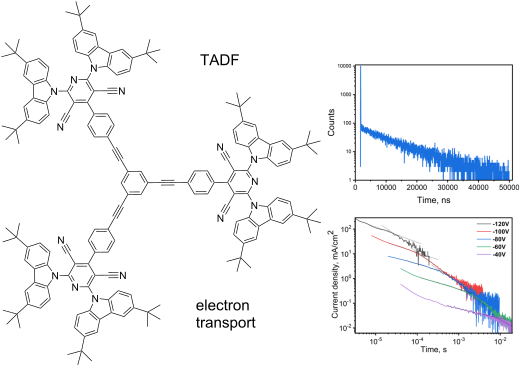
- the solutions of the compounds showed non-structured emission peaks in the visible region, which are attributed to ICT emission. The PL intensities of the solutions of the compounds are enhanced after deoxygenation, which is indicative of TADF. The photoluminescence quantum yields and TADF properties
- 10 000 cd m−2, electroluminescence ranging from blue to yellow, maximum current of 15 cd/A and higher EQE than 7%. Pyridine-3,5-dicarbonitrile-based TADF materials exhibit different visible light emission spectra (Figure 1). Recently, Chen and Lu reported two new orange-red/red TADF emitters composed
- and visible regions. Emission spectra of solutions and films were recorded using an Edinburgh Instruments FLS980 spectrometer, enabling a detailed investigation of the emission behavior of compounds. The choice of toluene, THF, and CHCl3 as solvents in our study was based on their different polarities


Controlling the reactivity of La@C82 by reduction: reaction of the La@C82 anion with alkyl halide with high regioselectivity
Beilstein J. Org. Chem. 2023, 19, 1858–1866, doi:10.3762/bjoc.19.138
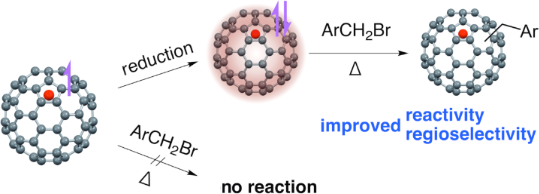
- and visible–near infrared spectroscopy. The reaction of La@C2v-C82 with alkyl halides using the same conditions showed no consumption of La@C2v-C82, indicating that the reactivity of La@C2v-C82 toward alkyl halides was effectively increased by one-electron reduction. Single-crystal X-ray diffraction
- °C for 2 h (Scheme 1). Figure 1 depicts the changes in the visible–near infrared (vis–NIR) absorption spectra during the reaction, showing gradual changes with isosbestic points. Since the electrolyte interferes with the high-performance liquid chromatography (HPLC) separation and anionic species may


Recent advancements in iodide/phosphine-mediated photoredox radical reactions
Beilstein J. Org. Chem. 2023, 19, 1785–1803, doi:10.3762/bjoc.19.131
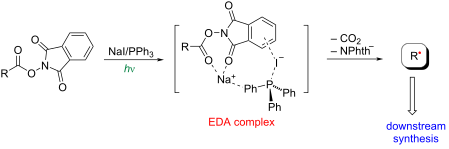
- -anion catalysis under visible light irradiation, as depicted in Scheme 9. Subsequent investigations revealed that redox-active esters 3 and Katritzky salts 15 derived from amino acids could be effectively employed in decarboxylative/deaminative cross-coupling reactions [15]. These reactions enabled the
- -heterocycles. Recently, independent research groups led by Li, Yang, and Patureau separately disclosed a novel approach to 3,3-disubstituted oxindoles 43 through an iodide/phosphine-catalyzed visible-light-mediated decarboxylative radical cascade cyclization of N-arylacrylamides 42 (Scheme 18) [35][36
- hydrogenation or hydrogen transfer [40], electrocatalysis coupled with water oxidation [41], and sustained visible-light-induced photocatalysis [42]. Among the different strategies available, the use of a mild photocatalytic process involving hole-driven hydrogen transfer with hydrogen donors or hole scavengers




Effects of the aldehyde-derived ring substituent on the properties of two new bioinspired trimethoxybenzoylhydrazones: methyl vs nitro groups
Beilstein J. Org. Chem. 2023, 19, 1713–1727, doi:10.3762/bjoc.19.125
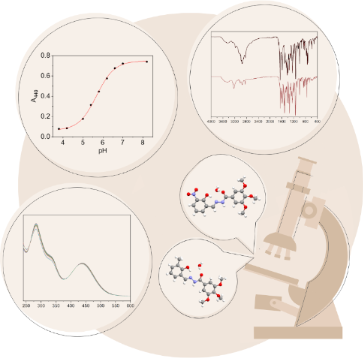
- dichloromethane at 1 mg mL−1 concentration. Molecular absorption spectroscopy Molecular absorption spectra were recorded on Agilent Cary 100 conc UV–visible spectrophotometer between the range of 200 and 800 nm in quartz cuvettes. Stock solutions of the compounds were prepared in spectroscopic grade DMSO at 5





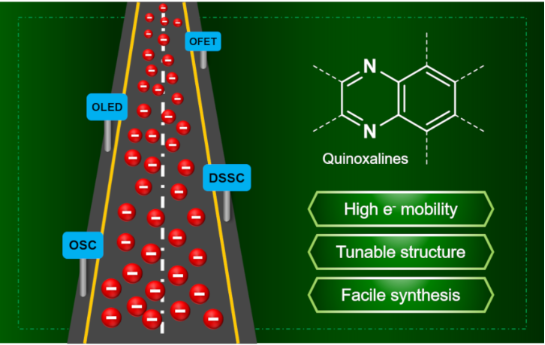
Quinoxaline derivatives as attractive electron-transporting materials
Beilstein J. Org. Chem. 2023, 19, 1694–1712, doi:10.3762/bjoc.19.124
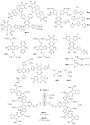
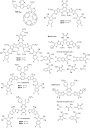
- molecule series, Qx16, featured a 1,4-dihydro-2,3-quinoxalinedione core and different terminal acceptor units. The modified NFAs demonstrated visible and near-infrared absorption as well as good electron mobility, suggesting their potential for experimental exploration in (OCSs) [31]. While FREAs are




A deep-red fluorophore based on naphthothiadiazole as emitter with hybridized local and charge transfer and ambipolar transporting properties for electroluminescent devices
Beilstein J. Org. Chem. 2023, 19, 1664–1676, doi:10.3762/bjoc.19.122
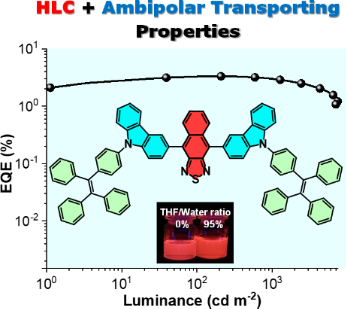
- , particularly when they are applied as emitters in organic light-emitting diodes (OLEDs) [19]. Therefore, with such a constrained number of efficient emitters, the current advance of DR/NIR OLEDs largely trails behind the visible light emission OLEDs [20][21]. So far, remarkable efforts have been made in


Tying a knot between crown ethers and porphyrins
Beilstein J. Org. Chem. 2023, 19, 1630–1650, doi:10.3762/bjoc.19.120
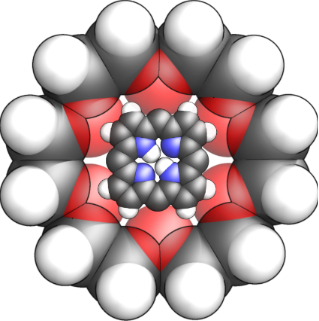
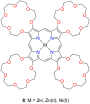
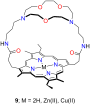
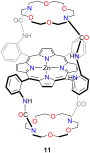
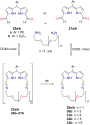
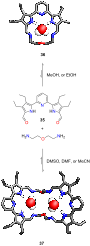
- cation and crown ether pocket, dimerisation of the crown porphyrin molecule would occur. The dimerisation led to interesting changes in the visible, NMR, ESR, and emission spectral features. Further developments by Camilleri, Gunter, Boitrel, and Osuka focused on the exploitation of meso-crowned









A series of perylene diimide cathode interlayer materials for green solvent processing in conventional organic photovoltaics
Beilstein J. Org. Chem. 2023, 19, 1620–1629, doi:10.3762/bjoc.19.119
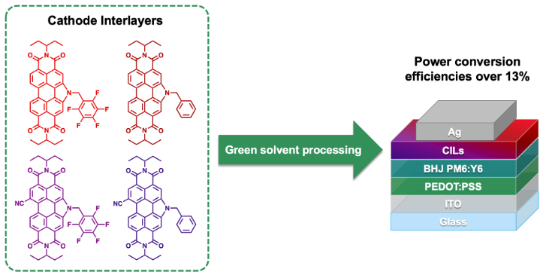
- NMR spectroscopy, mass spectrometry, and elemental analysis. See Supporting Information File 1 for full synthetic and characterization details. Optical properties Using UV–visible spectroscopy, the optical properties for PDIN-FB, PDIN-B, CN-PDIN-FB, and CN-PDIN-FB in both solution and film form were
- group impacts the shape of the UV–visible film spectra, leading to ill-defined 0 → 0, 0 → 1, and 0 → 2 transitions, while those without a nitrile group exhibit well-defined 0 → 0 and 0 → 1 transitions. Complex aggregation of these compounds is evident, and no clear indication of H- or J-aggregation can
- filter. The absorbance of each saturated solution was measured with a UV–visible spectrophotometer to determine the concentration using the Beer–Lambert law and the previously determined molar extinction coefficients. PDIN-FB reached a saturated solution at a concentration at 8.4 mg/mL, PDIN-B a


Visible-light-induced nickel-catalyzed α-hydroxytrifluoroethylation of alkyl carboxylic acids: Access to trifluoromethyl alkyl acyloins
Beilstein J. Org. Chem. 2023, 19, 1372–1378, doi:10.3762/bjoc.19.98
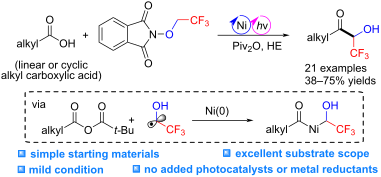
- ., Zibo 256401, China 10.3762/bjoc.19.98 Abstract A visible-light-induced nickel-catalyzed cross coupling of alkyl carboxylic acids with N-trifluoroethoxyphthalimide is described. Under purple light irradiation, an α-hydroxytrifluoroethyl radical generated from a photoactive electron donor–acceptor
- direct conversion of carboxylic acids to ketones is an important chemical transformation [31][32][33][34][35][36][37][38]. However, to the best of our knowledge, this protocol has not been used for the synthesis of fluoroalkylated ketones so far. Very recently, we have developed a visible-light-induced
- might be feasible. Herein, we disclose a visible-light-induced nickel-catalyzed cross-coupling of alkyl carboxylic acids with N-trifluoroethoxyphthalimide to deliver trifluoromethyl aliphatic acyloins under mild conditions (Scheme 1d). Furthermore, this platform bypasses the need for exogenous


Organic thermally activated delayed fluorescence material with strained benzoguanidine donor
Beilstein J. Org. Chem. 2023, 19, 1289–1298, doi:10.3762/bjoc.19.95
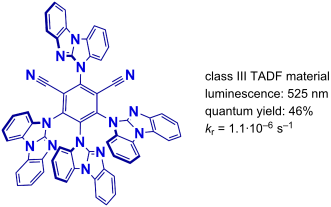
- assigned to singlet locally excited fluorescence (1LE) from the benzoguanidine donor ligand. The second high-energy PL component at 470 nm becomes visible only after a long-time delay (720 ms, see Figure 5 black profile), therefore, we ascribed it to a phosphorescence from a higher lying 3LE state


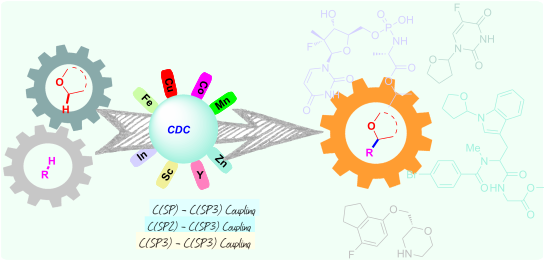
Non-noble metal-catalyzed cross-dehydrogenation coupling (CDC) involving ether α-C(sp3)–H to construct C–C bonds
Beilstein J. Org. Chem. 2023, 19, 1259–1288, doi:10.3762/bjoc.19.94
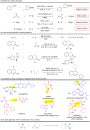
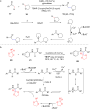
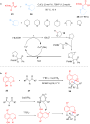
- into a carbon-centered radical B which then combines with 2-methylpyridine to obtain radical intermediate C. Oxidation of intermediate C by radical A then furnishes the product. Photocatalyzed CDC reactions In recent years, visible-light-driven photocatalytic processes have been considered influential
- -dicarbonyl compounds. Rare earth-metal-catalyzed CDC reaction. Visible-light-driven CDC of cycloalkanes with benzazoles. Photoinduced alkylation of quinoline with cyclic ethers. Photocatalyzed CDC reactions between α-C(sp3)–H bonds of ethers and C(sp2)–H bonds of aromatics.





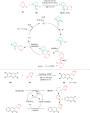

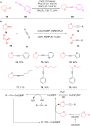


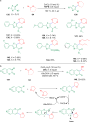


Unravelling a trichloroacetic acid-catalyzed cascade access to benzo[f]chromeno[2,3-h]quinoxalinoporphyrins
Beilstein J. Org. Chem. 2023, 19, 1216–1224, doi:10.3762/bjoc.19.89
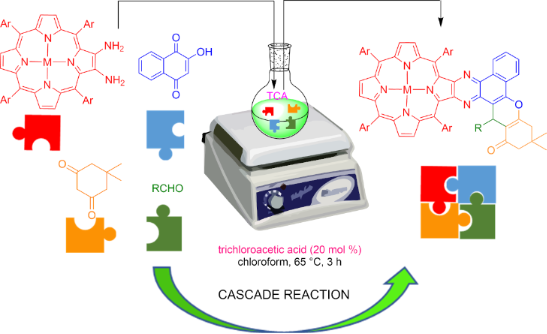
- ) porphyrins were transformed to the corresponding free base and zinc(II) benzo[f]chromeno[2,3-h]quinoxalinoporphyrins under standard demetallation and zinc insertion conditions. The absorption and emission properties of the obtained porphyrins were investigated by using UV–visible and fluorescence
- visible and near IR regions [11][12][13][14]. Similarly, simple quinoxaline-based heterocycles have shown their potential as photosensitizers to induce toxicity in a single cell green algae such as Chlamydomonas reinhardtii [15] and also displayed efficacy against Mycobacterium tuberculosis and other
- Soret bands between 439–442 nm and four Q-bands between 526 and 642 nm (Figure 3). In contrast, UV–visible spectra of zinc(II) benzo[f]chromeno[2,3-h]quinoxalinoporphyrins 14–16 showed broadened Soret bands with slight splitting between 445–450 nm and two Q-bands at ≈566 and 606 nm (Figure 4). All the


Enabling artificial photosynthesis systems with molecular recycling: A review of photo- and electrochemical methods for regenerating organic sacrificial electron donors
Beilstein J. Org. Chem. 2023, 19, 1198–1215, doi:10.3762/bjoc.19.88
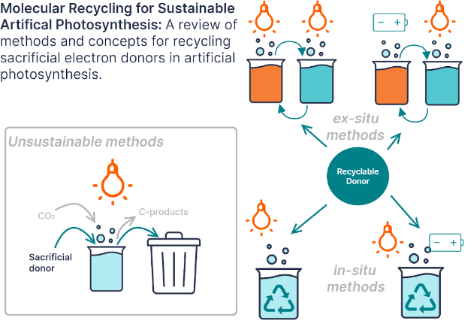
- low absorption in the visible region to prevent side reactions and allow the photosensitizer to absorb as much light as possible. The oxidation potential of the sacrificial electron donor must be less positive than the reduction potential of the excited or oxidized photosensitizer for quenching or
- system using a benzimidazole sacrificial donor. As we have discussed, examples of recycling benzimidazoles already exist which makes them excellent candidates for donor recycling. In contrast to those developed for water splitting, one of the first visible light-driven Z-scheme for carbon dioxide


Selective and scalable oxygenation of heteroatoms using the elements of nature: air, water, and light
Beilstein J. Org. Chem. 2023, 19, 1146–1154, doi:10.3762/bjoc.19.82
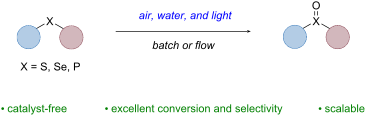
- increase the concentration from 0.06 M to 0.6 M (Table 1, entry 7) maintaining approximately the same reaction time, while further concentration increase resulted in substantially slower kinetics (see Supporting Information File 1, Table S2). When performing the reaction in the dark or under visible light





Photoredox catalysis harvesting multiple photon or electrochemical energies
Beilstein J. Org. Chem. 2023, 19, 1055–1145, doi:10.3762/bjoc.19.81
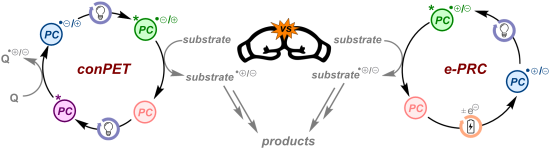
- generation of reactive intermediates for both oxidative and reductive processes via photon activation of a catalyst. Although this represents a significant step towards chemoselective and, more generally, sustainable chemistry, its efficacy is limited by the energy of visible light photons. Nowadays
- conditions are available via PRC (vide infra). However, even if PRC provides elegant methods to circumvent these issues, it comes with its own set of limitations. In particular, the accessible energy for photocatalytically-driven transformations is generally limited by the energy of a single visible light
- remain inert to direct photoredox activation powered by visible light [12]. Irradiation with UV photons that intrinsically possess higher energy, however, is generally unfavorable due to the high expense and thermal footprint of the reactors. Although most organic molecules directly absorb photons in the





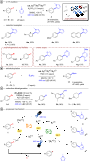


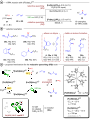
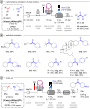
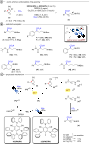



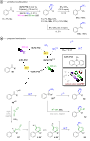
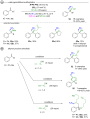
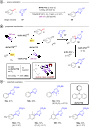


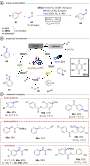













Photoredox catalysis enabling decarboxylative radical cyclization of γ,γ-dimethylallyltryptophan (DMAT) derivatives: formal synthesis of 6,7-secoagroclavine
Beilstein J. Org. Chem. 2023, 19, 918–927, doi:10.3762/bjoc.19.70
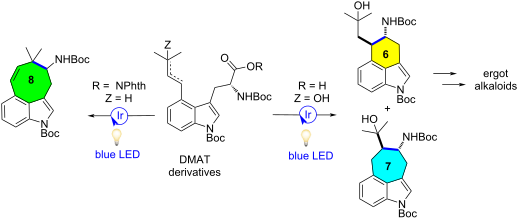
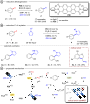
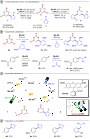
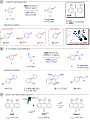
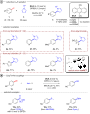
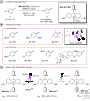
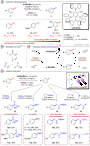
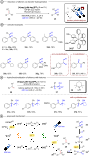
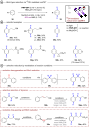
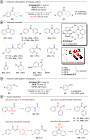
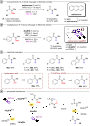
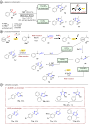
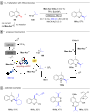
- photocatalyst. Keywords: decarboxylative cyclization; DMAT; ergot alkaloids; photoredox catalysis; radicals; Introduction Visible-light photoredox catalysis is rapidly changing the way organic chemists approach the design and synthesis of molecules by offering new synthetic disconnection opportunities that
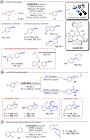
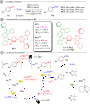
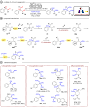
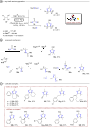
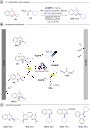
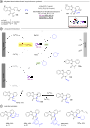
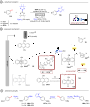
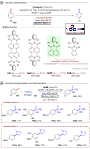
- of all ergot alkaloids, specifically the decarboxylative cyclization of DMAT, is still a puzzle even though a radical mechanism has been proposed (Figure 1a) [72][73]. Results and Discussion Herein, we propose that visible light irradiation of the cationic iridium photocatalyst Ir[dF(CF3)ppy]2(dtbbpy
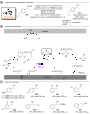
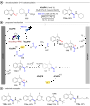
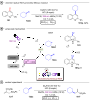
- visible-light irradiation of the photoredox catalyst [Ir(dF(CF3)ppy)2(dtbpy)]PF6 to access the excited state *[Ir(dF(CF3)ppy)2(dtbpy)]PF6, which can trigger SET oxidation of 8. Rapid decarboxylation leads to α-amino radical V (and the reduced photocatalyst), which is intercepted by the pendant double bond


Synthesis of aliphatic nitriles from cyclobutanone oxime mediated by sulfuryl fluoride (SO2F2)
Beilstein J. Org. Chem. 2023, 19, 901–908, doi:10.3762/bjoc.19.68
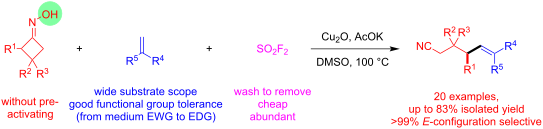
- ], Liu [35], and Yang [36] achieved similar transformations through visible-light photocatalysis. In addition, Guo [37][38] improved the protocol by using low-cost nickel and iron catalysts. However, most of these advancements mainly relied on the excellent redox potential manipulation of cyclic oxime


Light-responsive rotaxane-based materials: inducing motion in the solid state
Beilstein J. Org. Chem. 2023, 19, 873–880, doi:10.3762/bjoc.19.64
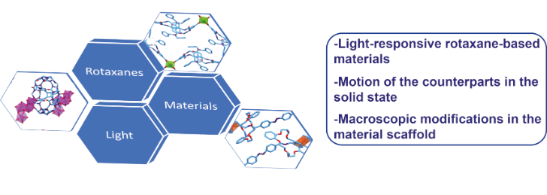
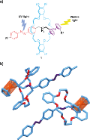
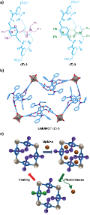
- different flexibility. The crown ether derivative acts as a chassis in order to fix the thread. A ferrocenyl group attached at one of the ends of the linear component serves as a photosensitizer allowing the absorption of visible light. The different substitution induced different types of deformations
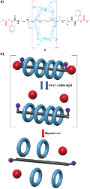
- motifs in rotaxane-based polymers has also provided interesting properties which can be employed in some specific implementations. α-Cyclodextin-based polyrotaxanes 2 having trithiocarbonate stopper groups with an adjacent phenyl group were employed for the construction of visible light-degradable
- supramolecular gels (Figure 2a) [52]. Upon irradiation using a UV-light-emitting diode (LED) and a visible LED as sources, the reversible cleavage of the trithiocarbonate stoppers was accomplished, thus allowing the dethreading [53] of the wheels to take place by the shuttling of the macrocycles along the thread