
Search results
Search for "in situ" in Full Text gives 1178 result(s) in Beilstein Journal of Organic Chemistry. Showing first 200.
Understanding X-ray-induced isomerisation in photoswitchable surfactant assemblies
Beilstein J. Org. Chem. 2024, 20, 2005–2015, doi:10.3762/bjoc.20.176
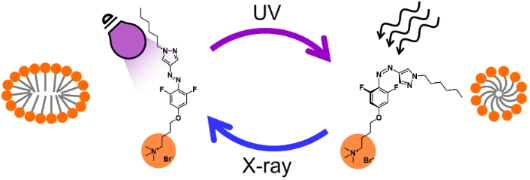
- mechanisms of structural changes using in-situ light irradiation with rapid, time-resolved data collection. However, X-ray irradiation has been shown previously to induce Z-to-E isomerisation of Azo-PS, which can lead to inaccuracies in the measured photostationary state. Here, we investigate the effect of
- light and X-ray irradiation on micelles formed from two different PS, containing either an Azo or AAP photoswitch using SAXS with in-situ light irradiation. The effect of X-ray irradiation on the Z isomer is shown to depend on the photoswitch, solvent, concentration and morphology. We use this to create
- brilliance of synchrotron X-ray sources enables the mechanisms of structural changes in PS to be studied, using in-situ light irradiation with time-resolved data collection. For example, Tribet and co-workers used this approach to explore the kinetics of micellisation and dissolution of cationic Azo-PS, both



Development of a flow photochemical process for a π-Lewis acidic metal-catalyzed cyclization/radical addition sequence: in situ-generated 2-benzopyrylium as photoredox catalyst and reactive intermediate
Beilstein J. Org. Chem. 2024, 20, 1973–1980, doi:10.3762/bjoc.20.173
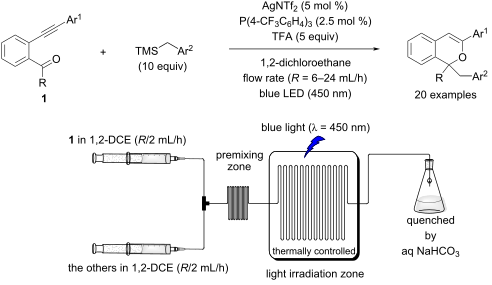
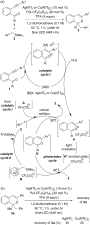
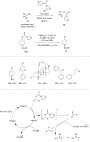
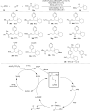
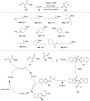
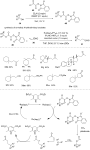
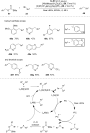
- Abstract A flow photochemical reaction system for a π-Lewis acidic metal-catalyzed cyclization/radical addition sequence was developed, which utilizes in situ-generated 2-benzopyrylium intermediates as the photoredox catalyst and electrophilic substrates. The key 2-benzopyrylium intermediates were
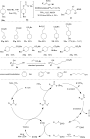
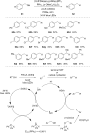
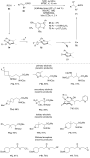
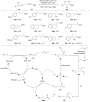
- catalytic cycles). In catalytic cycle I, the key cationic components, 2-benzopyrylium intermediates A, are generated in situ by the activation of the alkyne moiety of ortho-carbonyl alkynylbenzene derivatives 1 in the presence of the π-Lewis acidic metal catalyst [M]X [AgNTf2 or Cu(NTf2)2] and subsequent
- feature of this sequential transformation is that the in situ-generated 2-benzopyrylium intermediates A are used not only as an electrophile but also as a photoredox catalyst. However, as this reaction is carried out under relatively harsh conditions (i.e., light irradiation, use of an excess amount of


Access to 2-oxoazetidine-3-carboxylic acid derivatives via thermal microwave-assisted Wolff rearrangement of 3-diazotetramic acids in the presence of nucleophiles
Beilstein J. Org. Chem. 2024, 20, 1894–1899, doi:10.3762/bjoc.20.164

- -methoxyethylamine. Attempts to obtain directly 2-oxoazetidine carboxylic acid (or its decarboxylation product) or its trifluoroethyl ester by running the synthesis with water or trifluoroethanol were also unsuccessful. Acylation of the π-excessive double bonds of N-alkylindole and dihydropyran by the in situ


The Groebke–Blackburn–Bienaymé reaction in its maturity: innovation and improvements since its 21st birthday (2019–2023)
Beilstein J. Org. Chem. 2024, 20, 1839–1879, doi:10.3762/bjoc.20.162
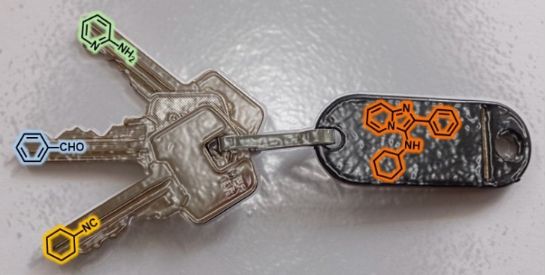
- -free conditions. Although some new metal or Brønsted acid catalysts have been reported in the last few years, the main innovations can be found in the use of organic catalysts, enzymes, and compartmentations. A few reports on the in situ generation of reactants and on the reaction conducted under flow
- metastable imines, could serve as a starting point for the development of other TGS projects involving imine-based multicomponent reactions. 1.4 In situ generation of reactants and use of enabling technologies Despite their high versatility, isocyanides have some drawbacks, such as their repellent smell (but
- only for most of unhindered small ones), their partial instability and their potential toxicity [27], thus in situ generation represents a sustainable alternative for their conventional use and this issue has been recently reviewed by Baht and Heravi [28]. In situ generation of isocyanides has been






Oxidative fluorination with Selectfluor: A convenient procedure for preparing hypervalent iodine(V) fluorides
Beilstein J. Org. Chem. 2024, 20, 1785–1793, doi:10.3762/bjoc.20.157
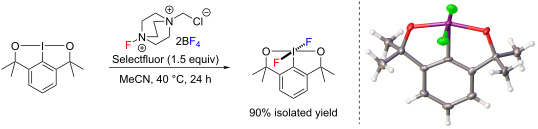
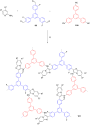
- stability and is highly hygroscopic, it is often prepared in situ and Gilmour [3][4][5][6][7][8] has reported a range of fluorination protocols utilising hypervalent iodine(I/III) catalysis (Scheme 1A). Lennox has also demonstrated that 1 can be generated cleanly by electrochemical oxidation [9][10]. In an


Syntheses and medicinal chemistry of spiro heterocyclic steroids
Beilstein J. Org. Chem. 2024, 20, 1713–1745, doi:10.3762/bjoc.20.152
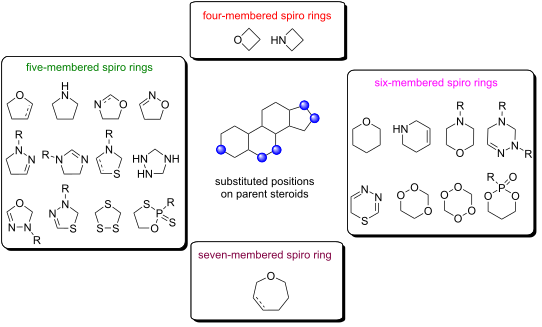
- synthesis of 2H-furan-3-ones from mestranol [23]. Initially, a 1,3-dipolar regioselective cycloaddition occurred between the alkyne group of mestranol and an alkanonitrile oxide generated in situ from the corresponding oxime, yielding isoxazoles 31. Later, a reductive ring cleavage of the isoxazole ring was
- of these compounds via an intramolecular [3 + 2] cycloaddition reaction between (Z)-steroidal arylidene derivatives 42 and azomethine ylides (Scheme 13) [26]. The latter were generated in situ from sarcosine (MeNHCH2CO2H) and a mono- or dicarbonyl compound such as isatin, acenaphthenequinone, and
- et al. reported the synthesis of cycloadducts 47 from reaction of (E)-16-arylidene derivatives 46 and azomethine ylides generated in situ from substituted isatins and sarcosine [27] (Scheme 14). The resulting spiro compounds proved to be potent antiproliferative agents against human cancer cell lines


Chemo-enzymatic total synthesis: current approaches toward the integration of chemical and enzymatic transformations
Beilstein J. Org. Chem. 2024, 20, 1693–1712, doi:10.3762/bjoc.20.151
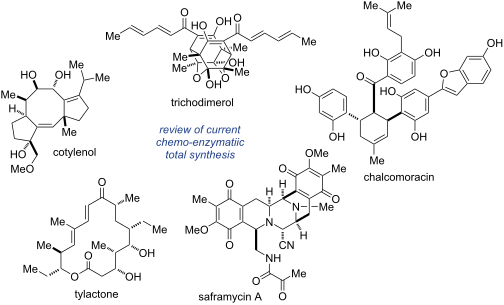
- using an enzyme or at what stage in a synthesis the enzyme is employed: 1) regio- and stereoselective late-stage functionalization of core scaffolds, 2) in situ generation of highly reactive intermediates, and 3) the one-step construction of macrocyclic or fused multicyclic scaffolds via regio- and
- deprotonation to form exomethylene. Subsequent in situ removal of the silyl protecting groups led to the total synthesis of brassicicene K (27). Thus, the biosynthetic proposal featuring the Wagner–Meerwein-type skeletal rearrangement (9→11) through the catalysis of P450 enzyme BscF was successfully emulated by
- brassicicenes 27–29. In situ generation of highly reactive intermediates: trichodimerol and the bisorbicillinoid family The bisorbicillinoid family, isolated from fungi such as Penicillium chrysogenum, has dimeric intricate scaffolds, as exemplified by trichodimerol (2) (Scheme 4) [28][29]. The biosynthetic




Ring opening of photogenerated azetidinols as a strategy for the synthesis of aminodioxolanes
Beilstein J. Org. Chem. 2024, 20, 1671–1676, doi:10.3762/bjoc.20.148
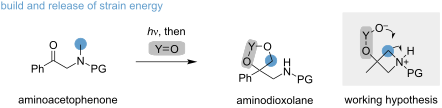
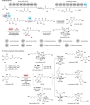
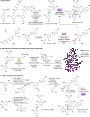
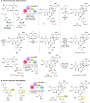
- success. Being conscious about the challenges associated with intermolecular ring openings at four-membered heterocycles, we considered an in situ tethering approach, which has proved an attractive alternative in our recent study on oxetane-ring openings [31]. Therefore, electron-deficient ketone 7 was


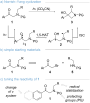

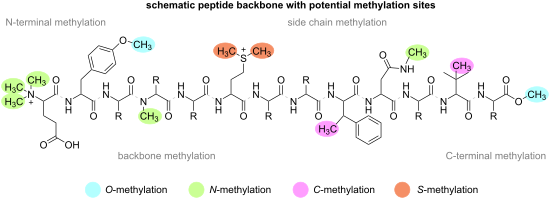
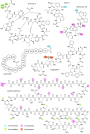
Methyltransferases from RiPP pathways: shaping the landscape of natural product chemistry
Beilstein J. Org. Chem. 2024, 20, 1652–1670, doi:10.3762/bjoc.20.147
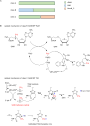
- ) as a co-product, which strongly inhibits various MTs [16][17][18][19]. To overcome these limitations, numerous in situ SAM supply and SAM regeneration systems have been developed [4][20][21][22][23][24][25][26], thereby enabling preparative biocatalytic scale methylation reactions [27]. Such





Polymer degrading marine Microbulbifer bacteria: an un(der)utilized source of chemical and biocatalytic novelty
Beilstein J. Org. Chem. 2024, 20, 1635–1651, doi:10.3762/bjoc.20.146
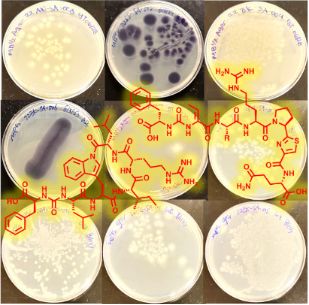
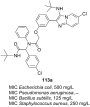
- –12 against Staphlyococcus aureus indicated that 7 and 12 were bacteriostatic, while 9 and 10 were bactericidal. Compound 9 was also active towards another two commensal Gram-positive bacteria Bacillus sp. and Planococcus sp. isolated from the host sponge. Compound 9 can be detected in situ in the
- -biphenyldiol (4-BP, 26, Figure 9). An in situ algal bloom was simulated to test the algicidal activity of compound 26. These experiments demonstrated that even low concentrations of 26 can cause changes in overall phytoplankton community. Mechanistic investigations suggested that compound 26 could disrupt




Divergent role of PIDA and PIFA in the AlX3 (X = Cl, Br) halogenation of 2-naphthol: a mechanistic study
Beilstein J. Org. Chem. 2024, 20, 1580–1589, doi:10.3762/bjoc.20.141
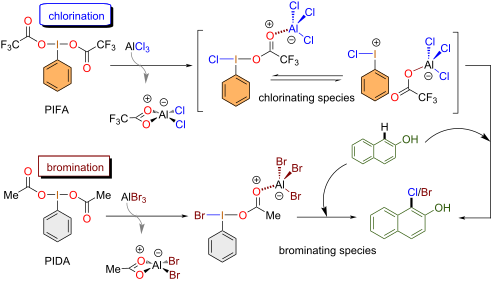
- generated in situ simply by mixing PIFA with a Lewis acid, in this case AlCl3. The importance of this protocol arises from the oxidation of an AlCl3-based chlorine atom, which is an available and cheap reagent. Then it is used as an electrophile source in the chlorination process with an umpolung reactivity


Electrocatalytic hydrogenation of cyanoarenes, nitroarenes, quinolines, and pyridines under mild conditions with a proton-exchange membrane reactor
Beilstein J. Org. Chem. 2024, 20, 1560–1571, doi:10.3762/bjoc.20.139
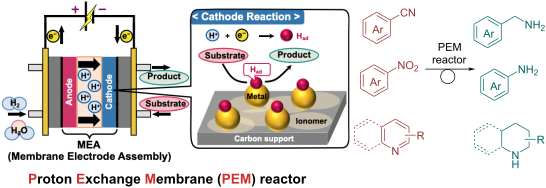
- reduction of A afforded the desired benzylamine (2a). However, nucleophilic attack of 2a on A, followed in situ by reduction, proceeded competitively to form dibenzylamine (3a). We considered that by protonating 2a to form 2a-H+, its nucleophilic nature could be suppressed, thereby inhibiting the formation


Benzylic C(sp3)–H fluorination
Beilstein J. Org. Chem. 2024, 20, 1527–1547, doi:10.3762/bjoc.20.137

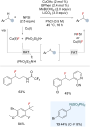
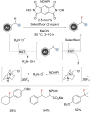
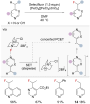
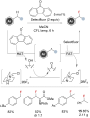
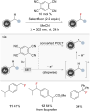
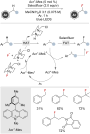
- mechanism. Excess NFSI functioned as both a fluorine source and HAT reagent precursor (Figure 13) [20]. Fluorine abstraction from NFSI by copper(I) generates an N-centred radical that is selective for benzylic C(sp3)–H bonds [52][53], affording the benzylic radical via HAT. Subsequent FAT with the in situ
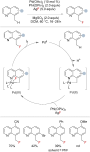
- iodine as a super-stoichiometric oxidant. The catalyst system has precedent for also facilitating oxygenation reactions [82], which was observed as a competing pathway under these conditions. The catalytic cycle proposed by the authors begins at resting state I (Figure 31), which is generated in situ and
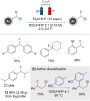
- under these conditions, but required first generating the monobenzyl fluoride in situ from the corresponding benzyl chloride before undergoing the photochemical transformation to give the difluorination product. The authors showed that this HAT-radical-polar crossover approach could be applied to other



















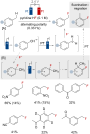

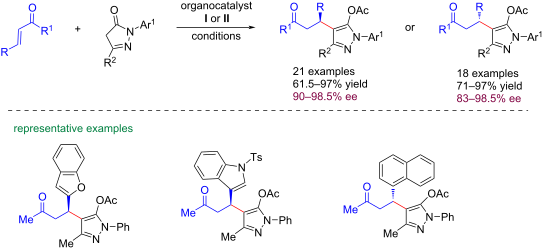
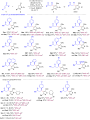
Primary amine-catalyzed enantioselective 1,4-Michael addition reaction of pyrazolin-5-ones to α,β-unsaturated ketones
Beilstein J. Org. Chem. 2024, 20, 1518–1526, doi:10.3762/bjoc.20.136
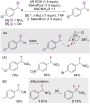
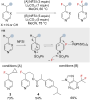
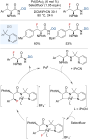
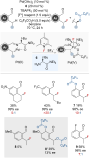
- assembly) activates the pyrazol-5-one 2a through hydrogen bonding and forms the corresponding enol. Simultaneously, the enol form of the pyrazol-5-one attacks the Re-face of the α,β-unsaturated ketone 1b to provide the intermediate 5 (Scheme 5), which after hydrolysis leads to product ent-3ba'. In situ




Tetrabutylammonium iodide-catalyzed oxidative α-azidation of β-ketocarbonyl compounds using sodium azide
Beilstein J. Org. Chem. 2024, 20, 1510–1517, doi:10.3762/bjoc.20.135
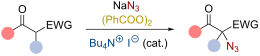
- peroxide catalyzed by tetrabutylammonium iodide (TBAI). By utilizing these readily available bulk chemicals a variety of cyclic β-ketocarbonyl derivatives can be efficiently α-azidated under operationally simple conditions. Control experiments support a mechanistic scenario involving in situ formation of
- catalysis concept for such transformations [32][33][34][35][36]. These oxidative approaches, which usually proceed via the in situ formation of catalytically-competent ammonium hypoiodite species, can normally be carried out under operationally simple conditions, thus allowing for the use of easily
- lead to any noteworthy levels of product formation (Table 2, entries 1–4). In sharp contrast, the use of Bu4NOH + I2, which is known to give Bu4NIO in situ [41][42][43][44], results in the formation of 2a in a yield comparable to the above-described catalytic system. Accordingly, and in strong analogy


Photoswitchable glycoligands targeting Pseudomonas aeruginosa LecA
Beilstein J. Org. Chem. 2024, 20, 1486–1496, doi:10.3762/bjoc.20.132
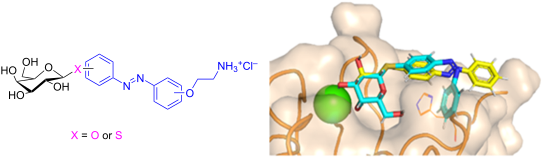
- melting point capillary apparatus. Specific optical rotations were measured in solution using sodium light at 589 nm where no absorption occurred for all compounds. Absorption spectra were recorded on a Cary-5000 spectrophotometer from Agilent Technologies. Photochromic reactions were induced in situ by a


Synthesis of 2-benzyl N-substituted anilines via imine condensation–isoaromatization of (E)-2-arylidene-3-cyclohexenones and primary amines
Beilstein J. Org. Chem. 2024, 20, 1468–1475, doi:10.3762/bjoc.20.130
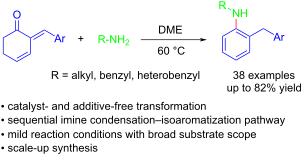
- –dehydrogenative aromatization strategy with amines as nucleophiles [11][12]. For instance, the groups of Deng and Li reported the Pd catalyzed oxidative coupling of 2-cyclohexenones with amines [13]. Later, the same group demonstrated the direct amination of phenols by reductive coupling of in situ generated 2



Synthesis of 4-functionalized pyrazoles via oxidative thio- or selenocyanation mediated by PhICl2 and NH4SCN/KSeCN
Beilstein J. Org. Chem. 2024, 20, 1453–1461, doi:10.3762/bjoc.20.128
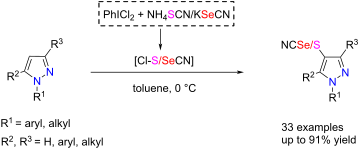
- oxidant. This metal-free approach was postulated to involve the in situ generation of reactive thio/selenocyanogen chloride (Cl–SCN/SeCN) from the reaction of PhICl2 and NH4SCN/KSeCN, followed by an electrophilic thio/selenocyanation of the pyrazole skeleton. Keywords: PhICl2; pyrazoles; selenocyanation


Rapid construction of tricyclic tetrahydrocyclopenta[4,5]pyrrolo[2,3-b]pyridine via isocyanide-based multicomponent reaction
Beilstein J. Org. Chem. 2024, 20, 1436–1443, doi:10.3762/bjoc.20.126
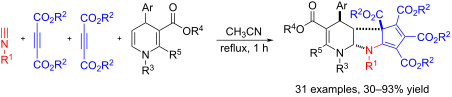
- -3,4b,5,6,7(1H)-pentacarboxylates in high yields and with high diastereoselectivity. The reaction was finished by in situ generation of activated 5-(alkylimino)cyclopenta-1,3-dienes from addition of alkyl isocyanide to two molecules of but-2-ynedioates and sequential formal [3 + 2] cycloaddition
- , Orru reaction and Van Leusen reaction, in which isocyanides were employed as key substrates have become the most powerful tools for rapid construction of various nitrogen-containing organic compounds [7][8][9][10][11][12][13][14]. On the other hand, the reactive Huisgen’ 1,4-dipoles can be in situ
- -deficient alkynes [59][60][61][62][63]. The in situ generated cyclic intermediate C has a resonance hybrid C’. Then, the further nucleophilic addition of the electron-rich enamino unit to 5-(alkylimino)cyclopenta-1,3-diene intermediate C gave intermediate D. At last, the coupling of the iminium cation with


Challenge N- versus O-six-membered annulation: FeCl3-catalyzed synthesis of heterocyclic N,O-aminals
Beilstein J. Org. Chem. 2024, 20, 1412–1420, doi:10.3762/bjoc.20.123
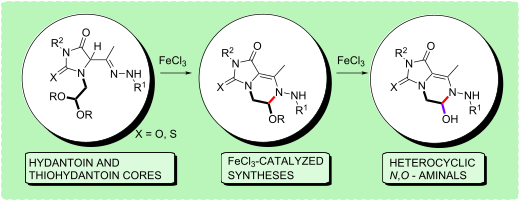
- and very practical synthetic intermediates commonly employed for the in situ generation of highly electrophilic iminium ions [38][39][40][41]. Conclusion In summary, we planned the synthesis of decorated imidazo skeletons accessible through a judicious choice of the starting components of a 3-CR




Synthesis of substituted triazole–pyrazole hybrids using triazenylpyrazole precursors
Beilstein J. Org. Chem. 2024, 20, 1396–1404, doi:10.3762/bjoc.20.121
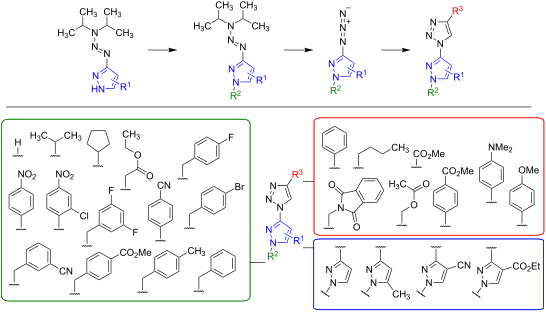
- subsequent CuAAC with the model compound 17e (see Scheme 4). When conducting the two reaction steps back-to-back in a one-pot setup, a decrease in yield from 86% over two steps (96% and 90%) to 59% of impure product was observed. This is presumably caused by incomplete conversion of the in situ-generated




Synthetic applications of the Cannizzaro reaction
Beilstein J. Org. Chem. 2024, 20, 1376–1395, doi:10.3762/bjoc.20.120
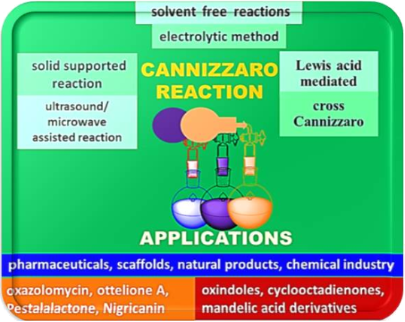
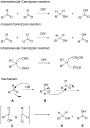
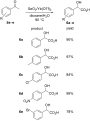
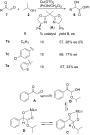
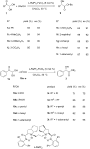
- enantioselectivity of the resultant product (Scheme 1). A one-pot oxidation–Cannizzaro reaction of aryl methyl ketones to mandelic acid derivatives was observed in the presences of ytterbium triflate as the catalyst. The intramolecular reaction sequence employed a SeO2/Yb(OTf)3 combination to affect the in-situ









Generation of alkyl and acyl radicals by visible-light photoredox catalysis: direct activation of C–O bonds in organic transformations
Beilstein J. Org. Chem. 2024, 20, 1348–1375, doi:10.3762/bjoc.20.119
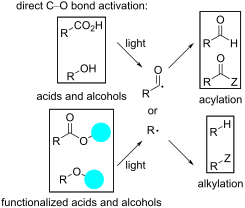
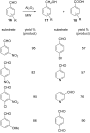
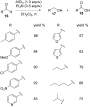
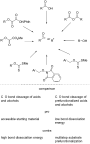
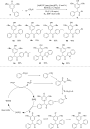
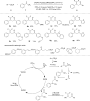
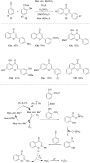
- great importance of these strategies, the direct use of acids or alcohols is more fascinating as this approach circumvents the additional synthesis of special functionalized compounds. The strategy involves in situ activation by appropriate reagent, followed by photochemical C–O bond scission to
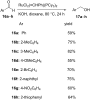
- alcohols. To address the instability of the catecholate products, they were converted in situ to the Bpin esters by introducing pinacol and Et3N into the reaction mixture. In 2021, Wu and co-workers [52] developed a method in which alkyl radicals were generated via photocatalytic deoxygenation of alcohols
- (Scheme 16). This one-pot strategy involved the reaction of xanthates formed in situ with electron-deficient alkenes under visible-light photoredox conditions in the presence of PPh3. This approach did not require multistep synthesis of starting materials. In addition, alcohol groups in polyols could be






Rhodium-catalyzed homo-coupling reaction of aryl Grignard reagents and its application for the synthesis of an integrin inhibitor
Beilstein J. Org. Chem. 2024, 20, 1341–1347, doi:10.3762/bjoc.20.118
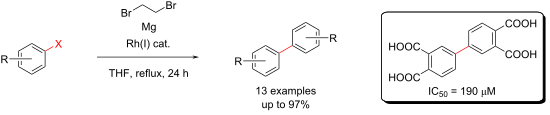
- solvent as the best conditions (Table 2, entry 1). As shown above, the commercially available Grignard reagent 4a gave the corresponding homo-coupled product 3a in a short reaction time at room temperature. Subsequently, for the purpose of expanding the scope of substrates, we examined the in situ
- , since the preparation of Grignard reagents derived from haloarenes with Mg in situ requires heating for a long time, we decided to use heating conditions for the one-pot homo-coupling reaction. Most homo-coupling products were obtained in this reaction, although the product yield decreased when using


Diameter-selective extraction of single-walled carbon nanotubes by interlocking with Cu-tethered square nanobrackets
Beilstein J. Org. Chem. 2024, 20, 1298–1307, doi:10.3762/bjoc.20.113
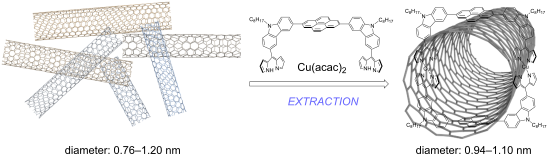
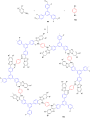
- -TOF mass spectra. Upon extraction of SWNTs with the nanobracket and copper(II), in situ-formed square Cu-nanobrackets are found to interlock SWNTs to disperse them in 2-propanol. The interlocking is confirmed by Raman spectroscopy after thorough washing of the extracted SWNTs. Pristine SWNTs were
- -nanobrackets 1b) tethered by copper(II) dipyrrin linkage was designed, synthesized, and applied to SWNT separation. Cu-nanobrackets 1b were in situ formed by interlocking SWNTs to disperse them in 2-propanol. Raman and absorption spectroscopies reveal the diameter enrichment of several kinds of SWNTs in the