

Search results
Search for "encapsulation" in Full Text gives 130 result(s) in Beilstein Journal of Organic Chemistry.
Size selective recognition of small esters by a negative allosteric hemicarcerand
Beilstein J. Org. Chem. 2010, 6, No. 10, doi:10.3762/bjoc.6.10
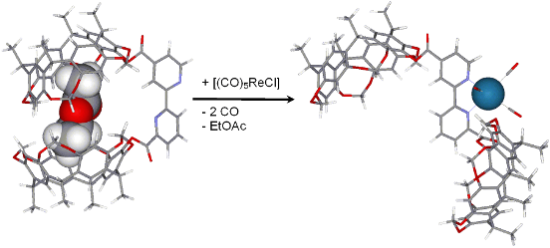
- Molecular mechanics studies (MMFF force field, Spartan 08) indicate that 2 offers only a very small cavity surrounded by rather non-polar acetal and aryl groups for the encapsulation of a small non-polar substrate via dispersive interactions. Unfortunately, 2 is soluble only in rather non-polar solvents
- substrates with the solvent for the encapsulation we chose to do the binding studies in mesitylene-d12 which seemed to be too large to fit into the cavity of 2. We then chose to test its ability to bind to simple esters like ethyl acetate (3), n-propyl propionate (4), n-butyl butyrate (5), isopropyl
- hydrogen atoms of the acetal bridges of the resorcinarenes (4.2–4.8 and 5.3–5.9 ppm) and of the bipyridine (7.5–8.0 ppm), respectively. Note that these hydrogen atoms are all located more or less inside the cavity which clearly indicates encapsulation of the esters rather than a kind of accidental binding


Control of stilbene conformation and fluorescence in self-assembled capsules
Beilstein J. Org. Chem. 2009, 5, No. 79, doi:10.3762/bjoc.5.79
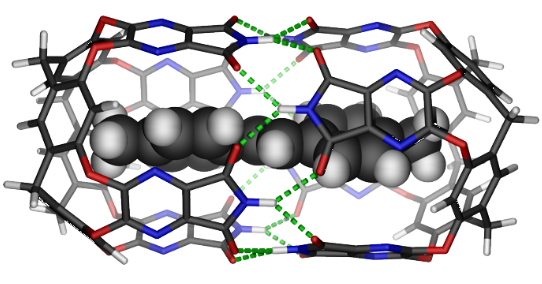
- : molecular twisting; quenching; reversible encapsulation; self-assembly; stilbene fluorescence; Introduction The fluorescence of trans-stilbene has been extensively researched [1], and weak fluorescence occurs in aqueous solutions or typical organic solvents. In a highly structured environment such as an
- host. The homologue, 4-ethyl-4′-methylstilbene (3), is also encapsulated (see Supporting Information File 1 for NMR spectrum), but the slightly longer 4,4′-diethyl derivative 4 simply does not fit. Figure 2 illustrates the effect of encapsulation on 3 (assembly 6). The fluorescence is 96% quenched when


Coaxial electrospinning of liquid crystal-containing poly(vinylpyrrolidone) microfibres
Beilstein J. Org. Chem. 2009, 5, No. 58, doi:10.3762/bjoc.5.58
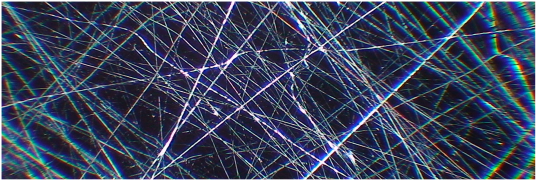
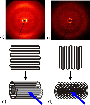
- (vinylpyrrolidone) with the liquid crystal 4-cyano-4′-octylbiphenyl in its smectic phase as core material could be produced. The encapsulation leads to remarkable confinement effects on the liquid crystal, inducing changes in its phase sequence. We conducted a series of experiments to determine the effect of



![[Graphic 1]](/bjoc/content/inline/1860-5397-5-58-i1.png?max-width=637&scale=1.18182) in...
in...





Structural studies on encapsulation of tetrahedral and octahedral anions by a protonated octaaminocryptand cage
Beilstein J. Org. Chem. 2009, 5, No. 41, doi:10.3762/bjoc.5.41
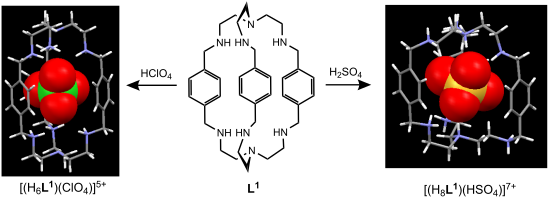
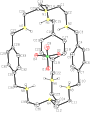
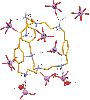
- encapsulation of one perchlorate, hydrogen sulfate and hexafluorosilicate, respectively inside the cage of L1 in their protonated states. Further, detailed structural analysis on complex 1 reveals that the hexaprotonated L1 encapsulates a perchlorate via two N–H···O and five O–H···O hydrogen bonds from
- C–H···F hydrogen bonds with [H8L1]8+. In the cases of complexes 2 and 3, the cryptand L1 in octaprotonated state shows monotopic encapsulation of the guest and the final conformation of these receptors is spherical in nature compared to the elongated shape of hexaprotonated state of L1 in complex 1
- incorporated in a suitable ligand topology make them attractive receptors for anions [1][2][3][4]. Azamacropolycycles L1 and L2 (Figure 1) have shown encapsulation of different anions in their protonated states [9][10][11][12][13][14][15][16][17][18][19][20][21][22]. For example, azamacropolycycle L1 (Figure 1






An exceptional P-H phosphonite: Biphenyl- 2,2'-bisfenchylchlorophosphite and derived ligands (BIFOPs) in enantioselective copper- catalyzed 1,4-additions
Beilstein J. Org. Chem. 2005, 1, No. 6, doi:10.1186/1860-5397-1-6
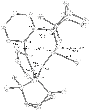
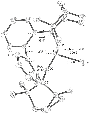
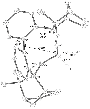
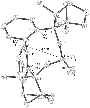
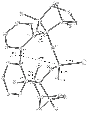
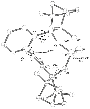
- , exhibit slightly different degrees of pyramidality, as it is measured by angle sums (planarity) from 300° to 309° (Table 2, Scheme 4). The degree of encapsulation of the phosphorus atoms by the fenchane units is measured by the distance (d) of the phosphorus atoms to the center of the biaryl axes (C1-C1
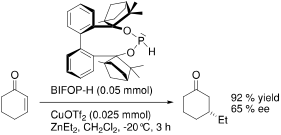
- ', Scheme 4). The tightest encapsulation and fenchane embedding of phosphorus atoms is apparent for the halophosphites BIFOP-Cl (1, 2.471 Å) and BIFOP-Br (2, 2.476 Å, Table 2), explaining their unusual low reactivity (Table 1). Cu-catalyzed, enantioselecitve 1,4-additions of diethylzinc to 2-cyclohexene-1









Other Beilstein-Institut Open Science Activities