
Search results
Search for "emission" in Full Text gives 494 result(s) in Beilstein Journal of Organic Chemistry. Showing first 200.
Tetraphenylethylene-embedded pillar[5]arene-based orthogonal self-assembly for efficient photocatalysis in water
Beilstein J. Org. Chem. 2022, 18, 429–437, doi:10.3762/bjoc.18.45
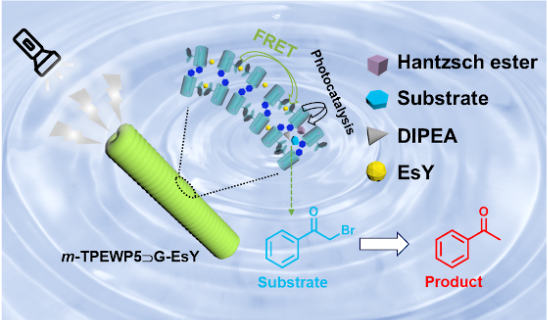
- supramolecular self-assembled nanosystem based on host–guest interactions between water-soluble tetraphenylethylene-embedded pillar[5]arene (m-TPEWP5) and ammonium benzoyl-ʟ-alaninate (G) in an aqueous medium. The obtained assembly of m-TPEWP5 and G showed aggregation-induced emission (AIE) via the blocking of
- photosynthesis and exhibited a high catalytic efficiency for the photocatalytic dehalogenation reaction of various bromoketone derivatives with good yields in short reaction time in water. Keywords: aggregation-induced emission; Förster resonance energy transfer; host–guest interaction; photocatalysis
- overlapping with the donor emission spectrum; ii) the distance between the donor and an acceptor should be within 10 nm; iii) dipoles of the donor and acceptor molecules must be adopted constructively vicinity to each other [9]. These fundamental criteria provide a wonderful approach for the construction of


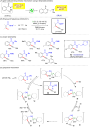
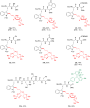
![[Graphic 5]](/bjoc/content/inline/1860-5397-18-45-i7.svg?max-width=637&scale=1.18182) G-EsY self-assembled photocat...
G-EsY self-assembled photocat...
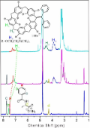


![[Graphic 15]](/bjoc/content/inline/1860-5397-18-45-i17.svg?max-width=637&scale=1.18182) G; (b) m-TPEWP5
G; (b) m-TPEWP5![[Graphic 16]](/bjoc/content/inline/1860-5397-18-45-i18.svg?max-width=637&scale=1.18182) G-EsY. [m-TPEWP5] = 1 × 10⁻⁴ M, [G] = 1 × 10⁻⁴ M, [EsY] = ...
G-EsY. [m-TPEWP5] = 1 × 10⁻⁴ M, [G] = 1 × 10⁻⁴ M, [EsY] = ...

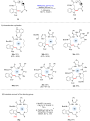
![[Graphic 25]](/bjoc/content/inline/1860-5397-18-45-i27.svg?max-width=637&scale=1.18182) G donor assembly...
G donor assembly...

![[Graphic 43]](/bjoc/content/inline/1860-5397-18-45-i45.svg?max-width=637&scale=1.18182) G-EsY na...
G-EsY na...

![[Graphic 48]](/bjoc/content/inline/1860-5397-18-45-i50.svg?max-width=637&scale=1.18182) G-E...
G-E...
Recent developments and trends in the iron- and cobalt-catalyzed Sonogashira reactions
Beilstein J. Org. Chem. 2022, 18, 262–285, doi:10.3762/bjoc.18.31
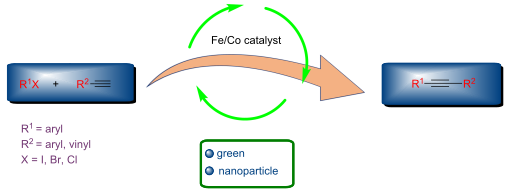
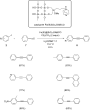
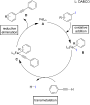
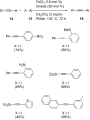
- ) moiety since it can easily undergo aggregation-induced emission enhancement (AIEE). The self-assembly of the HPB derivative resulted in the formation of fluorescent aggregates, which can act as a stabilizer or as a reactor for the development of α-Fe2O3 nanoparticles at room temperature. The catalytic





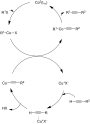


Anomeric 1,2,3-triazole-linked sialic acid derivatives show selective inhibition towards a bacterial neuraminidase over a trypanosome trans-sialidase
Beilstein J. Org. Chem. 2022, 18, 208–216, doi:10.3762/bjoc.18.24
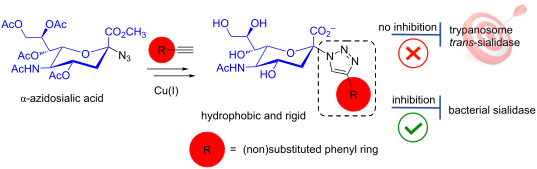
- , followed by addition of 0.5 mM MUNANA (20 μL, 0.1 mM final concentration) and incubated at 37 °C for 15 min. The fluorescent product released (MU) was measured with excitation and emission wavelengths of 360 and 460 nm, respectively. Neuraminidase (10 mU) assay was performed as described above without



Green synthesis of C5–C6-unsubstituted 1,4-DHP scaffolds using an efficient Ni–chitosan nanocatalyst under ultrasonic conditions
Beilstein J. Org. Chem. 2022, 18, 133–142, doi:10.3762/bjoc.18.14
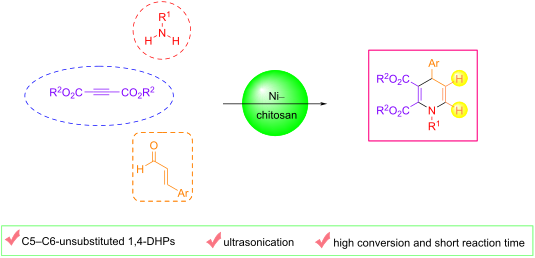
- composition, nitrogen was therefore not marked separately. Rather, the total contribution of carbon and nitrogen was summarized. We performed an inductively coupled plasma–optical emission spectroscopy (ICP–OES) analysis of the catalyst for the determination of the nickel loading. The obtained data is given
- on a Hitachi S-5200 field-emission scanning electron microscope. FTIR data was recorded with a PerkinElmer Spectrum 100 spectrophotometer. ICP–OES data was obtained using a PERKIN ELMER OPTIMA 5300 DV ICP–OES device. Preparation of the Ni–chitosan nanocatalyst NiCl2·6H2O (500 mg) was added slowly




1,2-Naphthoquinone-4-sulfonic acid salts in organic synthesis
Beilstein J. Org. Chem. 2022, 18, 53–69, doi:10.3762/bjoc.18.5
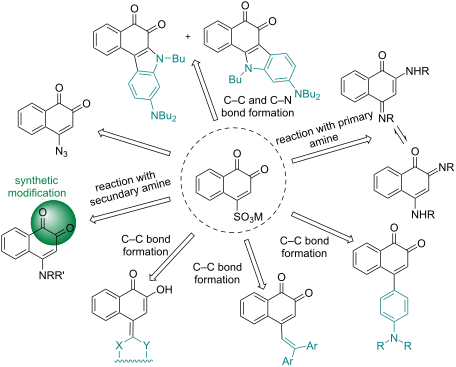
- enhancement behavior with a blueshift in the emission maximum upon enclathration of various types of organic solvents. It is important to note that other authors carried out the reaction of 18 with N,N-diethylaniline without the presence of Ni(II) [104][105]. In the search for fluorophores of heterocyclic


Recent advances and perspectives in ruthenium-catalyzed cyanation reactions
Beilstein J. Org. Chem. 2022, 18, 37–52, doi:10.3762/bjoc.18.4
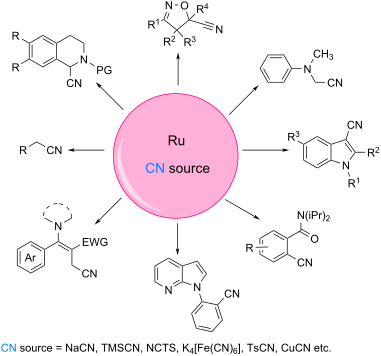
- aromatic amines with electron-donating substituents than electron-withdrawing ones. Under the optimized conditions, tributylamine was found inactive to afford the desired product. Inductively coupled plasma atomic emission spectroscopy (ICP-AES) analysis confirmed the purity of the prepared compounds


Effect of a twin-emitter design strategy on a previously reported thermally activated delayed fluorescence organic light-emitting diode
Beilstein J. Org. Chem. 2021, 17, 2894–2905, doi:10.3762/bjoc.17.197
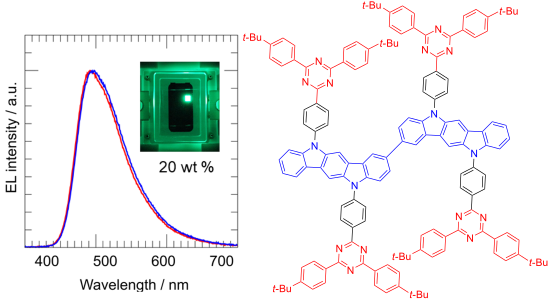
- Technology (KIT), Hermann-von-Helmholtz-Platz 1, D-76344 Eggenstein-Leopoldshafen, Germany 10.3762/bjoc.17.197 Abstract In this work we showcase the emitter DICzTRZ in which we employed a twin-emitter design of our previously reported material, ICzTRZ. This new system presented a red-shifted emission at 488
- 100% IQE is just the first step toward an efficient OLED since the light needs to escape the device. A device is composed of a stack of several layers of organic semiconductor materials, each possessing different refractive indices, sandwiched between two electrodes. Depending on the angle of emission
- coefficients of absorption and high ΦPL [15][16][17][18]. This led to OLEDs employing dual or multi emitter-designed compounds to show much improved EQEmax compared to devices with their single-emitter counterparts (Figure 1), albeit with a red-shifted emission [16][17][18][19]. The advantages of the dual


Synthesis of a novel aminobenzene-containing hemicucurbituril and its fluorescence spectral properties with ions
Beilstein J. Org. Chem. 2021, 17, 2840–2847, doi:10.3762/bjoc.17.195
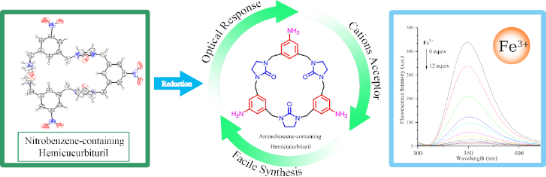
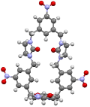
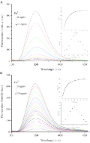
- +, and Mn2+ (nitrate salts were used as cation sources) in DMF resulted in different degrees of quenching of the fluorescence emission of host 4. The results are collected in Figure 3 as the corresponding fluorescence quenching efficiency which was quantified using the equation ΔI = (I0 − I), where I is
- halide ions, especially the heavier iodide ion, to the macrocyclic sensor, slightly enhanced the fluorescence emission in CH2Cl2/CH3OH 4:1 (v/v) at 298 K, instead of quenching the fluorescence as predicted by the classic heavy-atom effect. The corresponding fluorescence enhancement efficiency of selected
- −1. In another perspective, the presence of the coordination of selected anions to the macrocyclic sensor enhanced the fluorescence emission in various degree, extremely contrary to the classic heavy-atom effect caused by a heavy atom. In general, this macrocyclic sensor showed high fluorescence






Photophysical, photostability, and ROS generation properties of new trifluoromethylated quinoline-phenol Schiff bases
Beilstein J. Org. Chem. 2021, 17, 2799–2811, doi:10.3762/bjoc.17.191
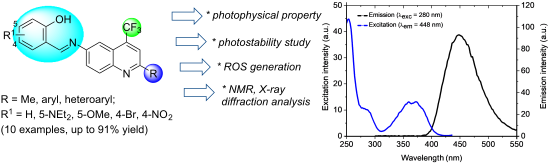
- coefficients of the derivatives studied here. All absorption spectra are listed in Supporting Information File 1 (Figures S2–S7). The steady-state fluorescence emission spectra of the Schiff base compounds from their absorption in the UV–vis region was carried out. Derivatives 3aa–fa and 3bb–be were analyzed
- in CHCl3, DMSO, and MeOH solutions by the emission and excitation spectra and exemplified in the Supporting Information File 1 (Figures S2–S7). For emission measurements, the maximum wavelength with the lowest absorption energy was used for excitation for the fluorescence measurements. The quantum
- fluorescence yields (Φf) were calculated in order to prove the quantum efficiency of these derivatives in terms of fluorescence emission and thus discuss the influence of the different solvents and substituents. Firstly, by comparing the selected solvents, compound 3aa (R = Ph, R1 = H) presented an emission in




Exfoliated black phosphorous-mediated CuAAC chemistry for organic and macromolecular synthesis under white LED and near-IR irradiation
Beilstein J. Org. Chem. 2021, 17, 2477–2487, doi:10.3762/bjoc.17.164
- polymer has similar absorption characteristic to bare anthracene (Figure 4b). The fluorescence spectrum of diluted solution of PCL-Anth in THF excited at λexc = 350 nm showed the characteristic emission bands of the excited (singlet) anthracene at 595, 655, and 725 nm (Figure 4c). These observations
- the NMR tube. The reaction tube was irradiated by using a Philips 150 W PAR38E E27 halogen pressure glass type bulb with strong IR-A (NIR) emission. The light intensity inside the reaction tube was ≈200 mW·cm−2. The light bulb was attached to the top of a photoreactor setup equipped with a large air
- acetylene proton around 4.42 ppm. a) 1H NMR spectrum of chain end modified PCL-Anth; b) UV–vis spectra of (azidomethyl)anthracene (black) and PCL-Anth (red); c) fluorescence emission spectrum of PCL-Anth. a) GPC traces of PS-Az, PCL-Alk and block copolymer (Ps-b-PCL) b) 1H NMR spectrum of the block


Synthesis and investigation on optical and electrochemical properties of 2,4-diaryl-9-chloro-5,6,7,8-tetrahydroacridines
Beilstein J. Org. Chem. 2021, 17, 2450–2461, doi:10.3762/bjoc.17.162
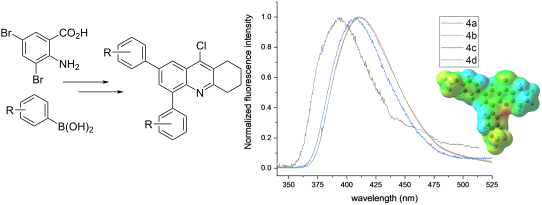
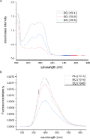
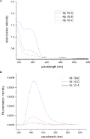
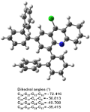
- and their optical and electrochemical properties investigation by the use of UV–vis and emission spectroscopy, CV measurements as well as DFT calculations. Results and Discussion Synthesis. At the beginning of this study, we synthesized 2,4-dibromo-9-chloro-5,6,7,8-tetrahydroacridine (2) by refluxing
- trifluoromethoxy group (OCF3), a longer reaction time of 6 hours was required to obtain the product 4c in decreased yield (57%). Photophysical properties. We studied the steady-state absorption and emission of selected tetrahydroacridines 4a–d to gain insights into their photophysical properties. The UV–vis
- was deduced to be around 3.37 eV. Derivatives 4b and 4d showed similar values of 3.20 eV and 3.18 eV, respectively. In contrast, compound 4c showed a decreased value of 3.09 eV. The emission spectra of tetrahydroacridines 4a–d were measured with an excitation line at 325 nm. They were dominated by






A visible-light-induced, metal-free bis-arylation of 2,5-dichlorobenzoquinone
Beilstein J. Org. Chem. 2021, 17, 2315–2320, doi:10.3762/bjoc.17.149
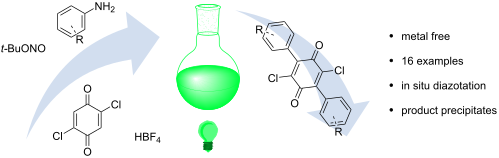
- through oxidative quenching of the excited substrate. While an excited state of 1 could react in a similar fashion, the absorption maximum of 1 is centered around 280 nm, which is outside the emission spectrum of green LEDs. A recent study by Hashmi et al. [44], however, shed a completely different light


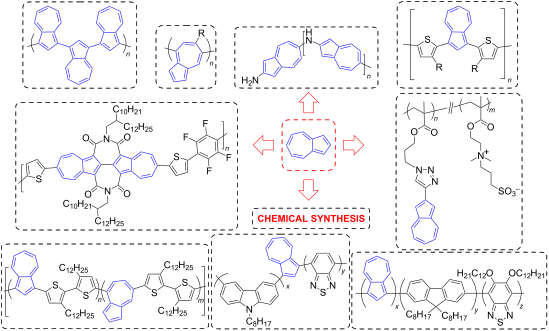
Chemical syntheses and salient features of azulene-containing homo- and copolymers
Beilstein J. Org. Chem. 2021, 17, 2164–2185, doi:10.3762/bjoc.17.139
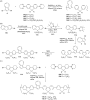
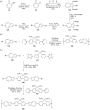
- displayed fluorescence emission at 385 nm in the protonated state. The electrochemical bandgap of these polymers was in the impressive range of 1.57–1.62 eV. In 2014, Hawker, Robb, and co-workers [35] also reported the synthesis of azulene-fluorene copolymers 117–121, containing varying ratios of 1,3-and





Towards new NIR dyes for free radical photopolymerization processes
Beilstein J. Org. Chem. 2021, 17, 2067–2076, doi:10.3762/bjoc.17.133
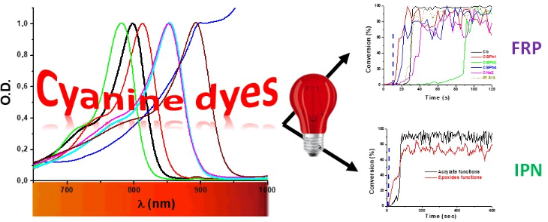
- in Figure 1. They are characterized by a sharp and intense absorption band in the NIR range. Remarkably, absorption of most of the dyes is excellent in the 700–850 nm spectral range, ensuring fairly good overlap with the emission spectrum of the laser diode used in this work (i.e., LD@785 nm




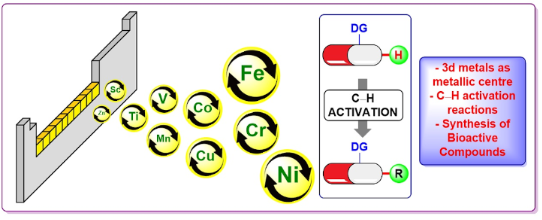
On the application of 3d metals for C–H activation toward bioactive compounds: The key step for the synthesis of silver bullets
Beilstein J. Org. Chem. 2021, 17, 1849–1938, doi:10.3762/bjoc.17.126













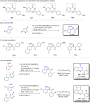

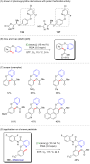
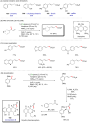


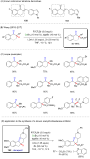





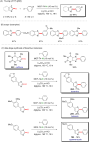
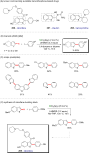
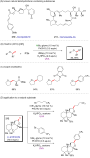
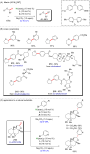


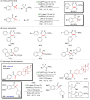





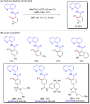
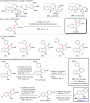
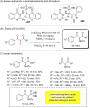
Development of N-F fluorinating agents and their fluorinations: Historical perspective
Beilstein J. Org. Chem. 2021, 17, 1752–1813, doi:10.3762/bjoc.17.123
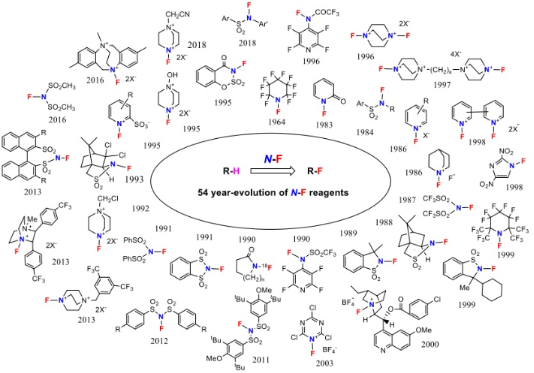
- -fluorolactams 12-1, was synthesized by Sathyamurthy et al. in 1990 [55]. These compounds had already been prepared by Grakauskas and co-worker in 1970 [56], but in low yields and the N-fluorolactams were not recognized as fluorinating agents at that time. For positron emission tomography (PET), Sathyamurthy et










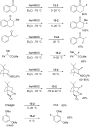

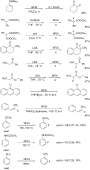


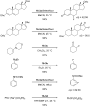


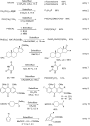


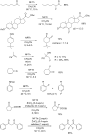


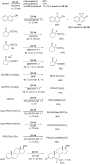

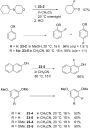


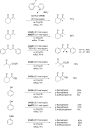
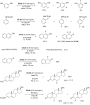








Sustainable manganese catalysis for late-stage C–H functionalization of bioactive structural motifs
Beilstein J. Org. Chem. 2021, 17, 1733–1751, doi:10.3762/bjoc.17.122

- radioisotope for positron emission tomography (PET) in clinical and preclinical research is 18F. Radiopharmaceuticals should be prepared at the late stage of the entire synthetic protocol because of the short half-lives of radioisotopes [26][27][28][29]. In their study, the authors used an aqueous 18F-fluoride









Volatile emission and biosynthesis in endophytic fungi colonizing black poplar leaves
Beilstein J. Org. Chem. 2021, 17, 1698–1711, doi:10.3762/bjoc.17.118
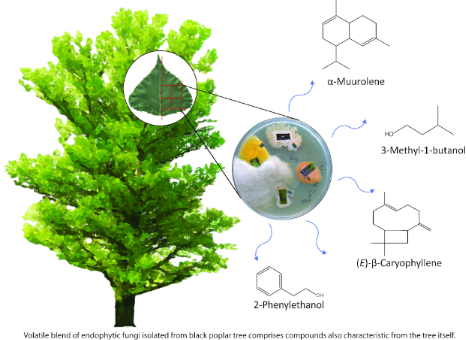
- of the fungus-derived volatiles like 2-phenylethanol, 3-methyl-1-butanol and the sesquiterpene (E)-β-caryophyllene, are known to play a role in direct and indirect plant defense, the emission of volatiles from endophytic microbial species should be considered in future studies investigating tree
- known endophytic volatiles, sesquiterpenes have gained much attention in recent years as they can play an important role in plant–plant, plant–microbe, and microbe–microbe interactions [39][40]. Weikl et al., for instance, analyzed the volatile emission of Alternaria alternata and Fusarium oxysporum in
- their own TPS genes and how these fungal volatiles influence plant–insect interactions. Identification of fungal TPS genes is a useful tool to assess the impact of fungal terpene emission on plant volatile composition and on plant–insect interactions. In this study, we isolated and identified endophytic


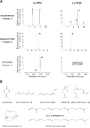

Chemical approaches to discover the full potential of peptide nucleic acids in biomedical applications
Beilstein J. Org. Chem. 2021, 17, 1641–1688, doi:10.3762/bjoc.17.116
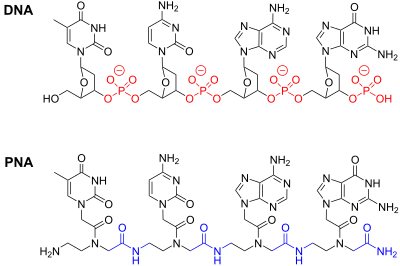
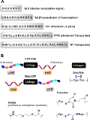
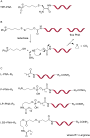
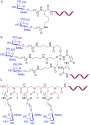
- emission intensity (dependent on the sequence context) upon hybridization with complementary DNA and RNA [145]. Another analogue, 5,6-BenzopC (Figure 10) had high quantum yield and superior base pairing properties, but its fluorescence was completely quenched upon hybridization with DNA and RNA [146





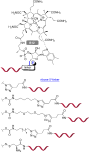


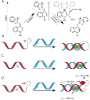


2,4-Bis(arylethynyl)-9-chloro-5,6,7,8-tetrahydroacridines: synthesis and photophysical properties
Beilstein J. Org. Chem. 2021, 17, 1629–1640, doi:10.3762/bjoc.17.115
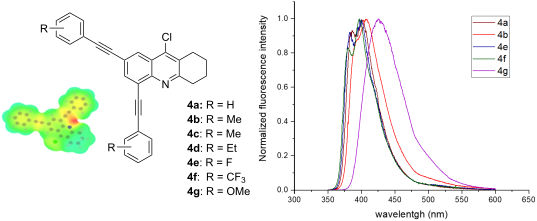
- properties. Herein, starting from readily available anthranilic acid, an efficient synthesis of 2,4-bis(arylethynyl)-9-chloro-5,6,7,8-tetrahydroacridine derivatives was accomplished via a one-pot double Sonogashira cross-coupling method. The UV-visible absorption and emission properties of the synthesized
- blue fluorescence was observed for the prepared tetrahydroacridine derivatives, their photophysical properties were investigated. Absorption and emission spectra were measured at room temperature in diluted dichloromethane solution and are depicted in Figure 2 and Figure 3. All spectroscopic data
- , including the maximum of absorption and emission, fluorescence quantum yield, stokes shift, onset of the absorption wavelengths and optical band gap are summarized in Table 3. Aiming to understand the impact of substituents at arylethynyl groups, spectra of diversely substituted tetrahydroacridines were


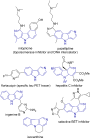
Synthesis of 1-indolyl-3,5,8-substituted γ-carbolines: one-pot solvent-free protocol and biological evaluation
Beilstein J. Org. Chem. 2021, 17, 1453–1463, doi:10.3762/bjoc.17.101
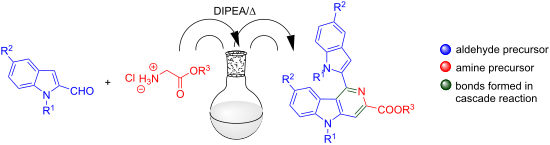
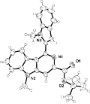
- that the structural core of carbolines had been widely exploited for the development of organic fluorescent entities, and in general, their UV absorbance ranges between 340 to 380 nm. For a deeper insight into the optical properties of the novel substituted γ-carbolines, absorption and emission studies
- absorption maximum (λmax) was observed at 230 nm for 3ac in DMSO (Figure 3, left side). The fluorescence studies carried out for 3ac in four different solvents revealed that the emission maxima shifted bathochromically by almost 40 nm upon changing the solvent polarity, for instance, from non-polar hexane to
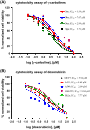
- well followed by incubation for 20 minutes. The absorbance from each well proportional to the live cell was measured using a Synergy H1 multimode plate reader (BioTek Instruments, Inc., Winooski, VT, USA) at an excitation and emission wavelength of 530 nm and 590 nm, respectively. Dose–response curves







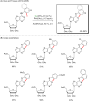
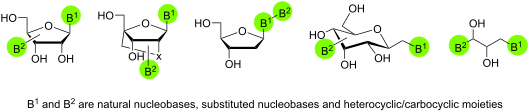
Double-headed nucleosides: Synthesis and applications
Beilstein J. Org. Chem. 2021, 17, 1392–1439, doi:10.3762/bjoc.17.98





Design, synthesis and photophysical properties of novel star-shaped truxene-based heterocycles utilizing ring-closing metathesis, Clauson–Kaas, Van Leusen and Ullmann-type reactions as key tools
Beilstein J. Org. Chem. 2021, 17, 1374–1384, doi:10.3762/bjoc.17.96
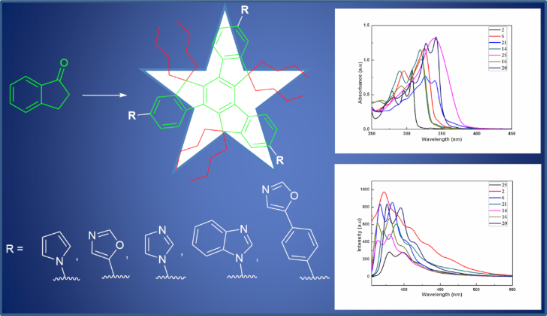
- properties (absorption and emission) for these versatile systems has been revealed. Keywords: Clauson–Kaas reaction; heterocycles; ring-closing metathesis; truxene; Ullmann-type coupling; Van Leusen reaction; Introduction The two-dimensional phenylene-based π-conjugated star-shaped architectures has
- ) furnished the triformyltruxene 24 (Scheme 7). Finally, the crude product 24 was directly treated with TosMIC under Van Leusen oxazole conditions to provide the required product 25 in 23% yield (two steps) as depicted in Scheme 7. Absorption and emission spectra The UV–vis absorption as well as fluorescence
- , compound 25 exhibited only a single broad band at ca. 339.10 nm as can be inspected from Figure 1. To our expectation, as can be seen from an inspection of Figure 1, emission spectra of all the synthesized truxenes lies at longer wavelengths as compared to the absorption spectra for the corresponding


Photoinduced post-modification of graphitic carbon nitride-embedded hydrogels: synthesis of 'hydrophobic hydrogels' and pore substructuring
Beilstein J. Org. Chem. 2021, 17, 1323–1334, doi:10.3762/bjoc.17.92
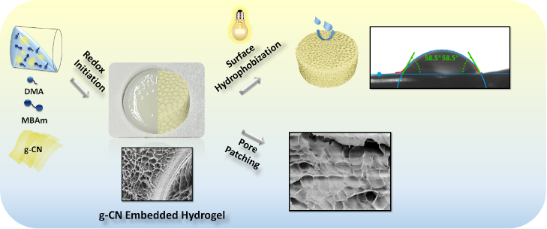
- performed via inductively coupled plasma optical emission spectroscopy (ICP-OES Optima 8000). Scanning electron microscopy (SEM) and EDX elemental mapping were performed using a JSM-7500F (JEOL) microscope equipped with an Oxford Instruments X-Max 80 mm2 detector for the determination of both elemental


A new glance at the chemosphere of macroalgal–bacterial interactions: In situ profiling of metabolites in symbiosis by mass spectrometry
Beilstein J. Org. Chem. 2021, 17, 1313–1322, doi:10.3762/bjoc.17.91
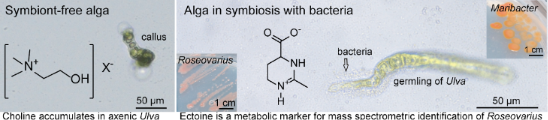
- (1024 × 1024) were acquired using a Zeiss cLSM 880 (Carl Zeiss AG, Oberkochen, Germany) with a Plan-Apochromat 20 × 0.8 and 488 nm Argon-laser excitation (5% transmission). Emission wavelengths for SYBR Gold (490–650 nm) and chlorophyll A (653–735 nm) were separated via the spectral detection unit