
Search results
Search for "cyclic voltammetry" in Full Text gives 210 result(s) in Beilstein Journal of Organic Chemistry. Showing first 200.
Synthesis and properties of fluorescent 4′-azulenyl-functionalized 2,2′:6′,2″-terpyridines
Beilstein J. Org. Chem. 2016, 12, 1812–1825, doi:10.3762/bjoc.12.171
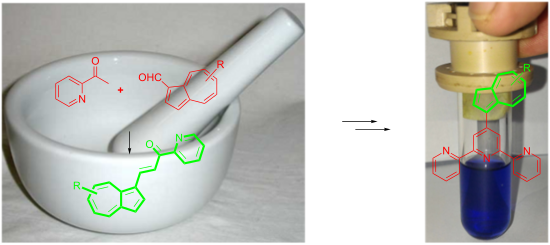
- , azulene→terpy, though different functionals are not consistent in depicting the contributing ratios of these various components of electronic transitions. Electrochemical properties The redox properties of 4a and 4b were investigated using cyclic voltammetry (CV) and differential pulse voltammetry (DPV
- and instruments All reagents for performing the chemical reactions were used as received. CH2Cl2 for fluorescence measurements was purchased from Merck. Dimethylformamide for cyclic voltammetry measurements was purchased from Sigma-Aldrich and kept over molecular sieves. Column chromatography was


Effect of the π-conjugation length on the properties and photovoltaic performance of A–π–D–π–A type oligothiophenes with a 4,8-bis(thienyl)benzo[1,2-b:4,5-b′]dithiophene core
Beilstein J. Org. Chem. 2016, 12, 1788–1797, doi:10.3762/bjoc.12.169
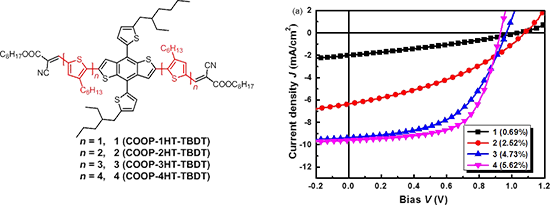
- derivatives reported in the literatures [21][23]. Electrochemical properties Cyclic voltammetry (CV) was applied to investigate the energy levels of 1–4. The cyclic voltammograms of these four compounds are presented in Figure 2 and the electrochemical data are listed in Table 1. As can be seen from Figure 2



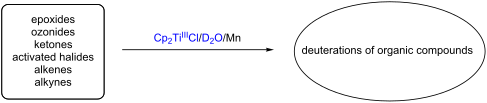
Cp2TiCl/D2O/Mn, a formidable reagent for the deuteration of organic compounds
Beilstein J. Org. Chem. 2016, 12, 1585–1589, doi:10.3762/bjoc.12.154
- cyclic voltammetry, theoretical calculations and electro-paramagnetic resonance techniques studies [28][34]. These results are in agreement with the previously reported results by Wood et al. [35] and Renaud et al. [36] describing the effect of complexation with a Lewis acid on the strength of the O–H


3,6-Carbazole vs 2,7-carbazole: A comparative study of hole-transporting polymeric materials for inorganic–organic hybrid perovskite solar cells
Beilstein J. Org. Chem. 2016, 12, 1401–1409, doi:10.3762/bjoc.12.134
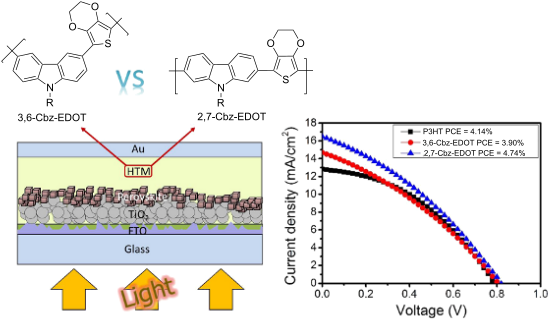
- from the solution to thin film states implied the presence of strong intermolecular interactions between the polymer backbones. Cyclic voltammetry (CV) of the polymer thin films was measured in CH3CN with 0.1 M (n-C4H9)4NPF6 as the supporting electrolyte at 20 °C. Both polymers displayed irreversible
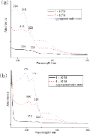
- -View Analyst software was used to model the Nyquist plots obtained from the impedance measurements. (a) Normalized UV–vis absorption of Cbz-EDOT polymers in CH2Cl2 measured at 10−5 M repeat unit−1 and in thin films and (b) cyclic voltammetry of Cbz-EDOT polymer films on glassy carbon electrode


On the mechanism of imine elimination from Fischer tungsten carbene complexes
Beilstein J. Org. Chem. 2016, 12, 1322–1333, doi:10.3762/bjoc.12.125
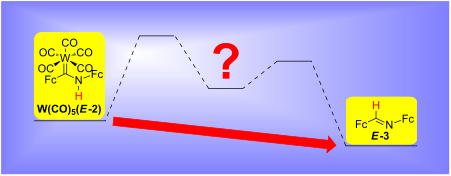
- platinum wire as counter electrode and a 0.01 M Ag/AgNO3 electrode as reference electrode. The measurements were carried out at a scan rate of 100 mV s−1 for cyclic voltammetry experiments and at 50 mV s−1 for square wave voltammetry experiments in 0.1 M [n-Bu4N][B(C6F5)4] as supporting electrolyte in THF




Separation and identification of indene–C70 bisadduct isomers
Beilstein J. Org. Chem. 2016, 12, 903–911, doi:10.3762/bjoc.12.88
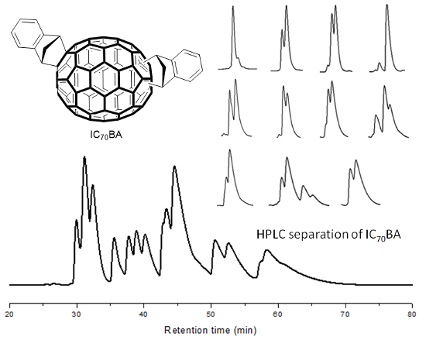
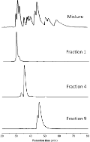
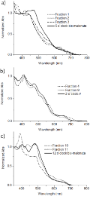
- various fractions of IC70BA is shown in Table 1. In order to analyze the electrochemical properties of the IC70BA fractions, cyclic voltammetry was performed on each fraction. The first reduction potentials of all 11 fractions were found to be in the range of −1.13 to −1.25 eV versus that of ferrocene




Syntheses of dibenzo[d,d']benzo[2,1-b:3,4-b']difuran derivatives and their application to organic field-effect transistors
Beilstein J. Org. Chem. 2016, 12, 805–812, doi:10.3762/bjoc.12.79
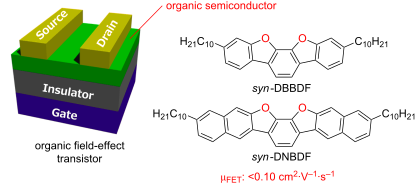
- as dibenzo[d,d']benzo[2,1-b:3,4-b']difuran (syn-DBBDF) and dinaphtho[2,3-d:2',3'-d']benzo[2,1-b:3,4-b']difuran (syn-DNBDF) were synthesized. Their photophysical and electrochemical properties were revealed by UV–vis absorption and photoluminescence spectroscopy and cyclic voltammetry. Organic field




Interactions between 4-thiothymidine and water-soluble cyclodextrins: Evidence for supramolecular structures in aqueous solutions
Beilstein J. Org. Chem. 2016, 12, 549–563, doi:10.3762/bjoc.12.54
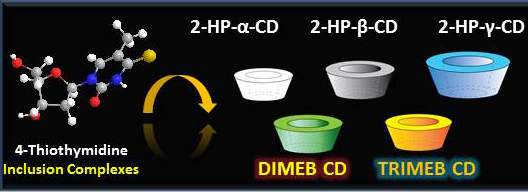
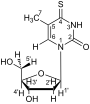
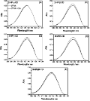
- ) and heptakis-(2,3,6-tri-O-methyl)-β-cyclodextrin (TRIMEB CD) were investigated by different spectroscopic techniques (UV–vis, FTIR–ATR, 1H NMR) and cyclic voltammetry analysis (CV). This work is necessary for a prospective research on the photoreactivity of S4TdR in aqueous environment and in the
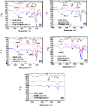
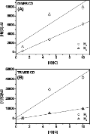
- involved, more details were searched through the use of cyclic voltammetry (CV), FTIR–ATR and 1H NMR analysis. Cyclic voltammetry analysis As described in [33], the clear formation of inclusion complexes between S4TdR and all employed CDs was investigated by means of electrochemical analyses. In fact, if
- the employed CDs interact with S4TdR, different electrochemical properties would be expected, as described in [36]. The obtained results are reported in Figure 3. When a S4TdR solution is measured with cyclic voltammetry a well-defined irreversible cathodic peak, located at −1.39 V, appeared and was



Synthesis and photophysical characteristics of polyfluorene polyrotaxanes
Beilstein J. Org. Chem. 2015, 11, 2677–2688, doi:10.3762/bjoc.11.288
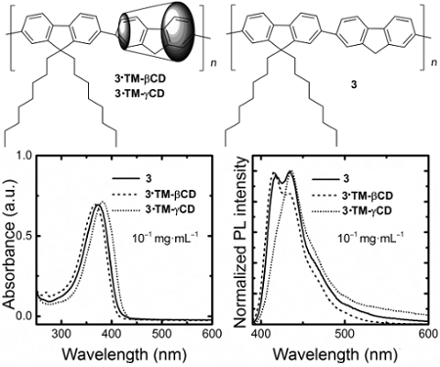
- macromolecular chains and the macrocycles, 3, 3·TM-βCD and 3·TM-γCD were electrochemically investigated by cyclic voltammetry (CV), Figure 4 and the results are summarized in Table 2. The Ep,onset and En,onset values allow the estimation of the ionization potential (IP), electron affinity (EA) and energy band


Rhodium, iridium and nickel complexes with a 1,3,5-triphenylbenzene tris-MIC ligand. Study of the electronic properties and catalytic activities
Beilstein J. Org. Chem. 2015, 11, 2584–2590, doi:10.3762/bjoc.11.278
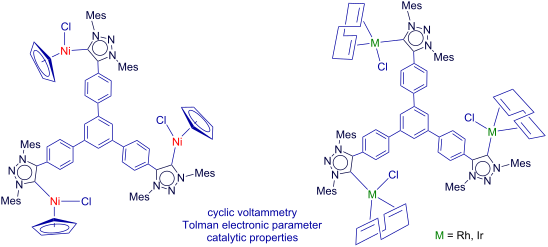
- -NHC ligand. The electronic properties of the tris-MIC ligand were studied by cyclic voltammetry measurements. In all cases, the tris-MIC ligand showed a stronger electron-donating character than the corresponding NHC-based ligands. The catalytic activity of the tri-rhodium complex was tested in the
- B, cyclic voltammetry studies of 2 and 3 (Figure 1) and 4 (Figure 2) were performed. The rhodium complex 2 showed an irreversible wave at E1/2 = 0.56 mV, while the iridium complex 3 displayed a pseudo-reversible wave at a half-wave potential of E1/2 = 0.63 mV. Compared to the cyclic voltammetry data
- both complexes 2 and 3 is consistent with the electronic disconnection of the three metals in both trimetallic complexes. The cyclic voltammetry diagram of the tri-Ni(II) complex 4 is shown in Figure 2, together with the differential pulse voltammetry (DPV) plot. The complex shows a quasi-reversible


Urethane tetrathiafulvalene derivatives: synthesis, self-assembly and electrochemical properties
Beilstein J. Org. Chem. 2015, 11, 2343–2349, doi:10.3762/bjoc.11.255
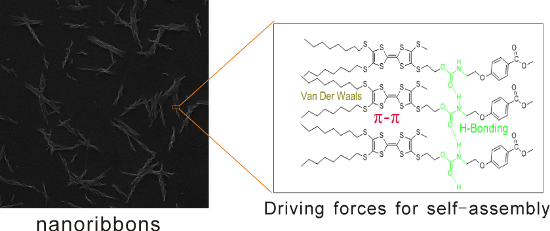
- shown in Figure 4c–e. In contrast to those of T1 and T2, the N–H and C=O stretching bands of the amide groups were not obviously shifted after doping with TCNQ. This indicated that the doping did not change the hydrogen-bonded structures. Cyclic voltammetry (CV) The cyclic voltammetry experiments were
- hydrogen bonds between urethane groups and the π–π stacking interaction from TTF units were regarded as the main driving forces behind the self-assembly process. Cyclic voltammetry showed that the TTF derivatives underwent two reversible oxidation processes. In addition, the doping of nanoribbons by TCNQ






A new approach to ferrocene derived alkenes via copper-catalyzed olefination
Beilstein J. Org. Chem. 2015, 11, 2072–2078, doi:10.3762/bjoc.11.223
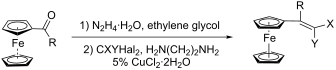
- , with polyhaloalkanes. The procedure is simple, cheap and could be applied for the utilization of environmentally harmful polyhalocarbons. The cyclic voltammetry study of the representative examples of the synthesized ferrocenyl alkenes shows the strong dependence of the cathodic behavior on the amount
- of vinyl groups: while for the monoalkene containing molecules no reduction is seen, the divinyl products are reduced in several steps. Keywords: catalytic olefination; copper catalysis; cyclic voltammetry; ferrocene; Introduction The introduction of complex functional fragments into the specified
- at a double bond. Three representative groups of halovinylferrocenes were studied using cyclic voltammetry (Table 1). The first group was formed from three omega-dichloro derivatives 1, 6, and 10. The second one was made from three omega-dibromo products 2, 7, and 11, and the last group consisted of


Polythiophene and oligothiophene systems modified by TTF electroactive units for organic electronics
Beilstein J. Org. Chem. 2015, 11, 1749–1766, doi:10.3762/bjoc.11.191
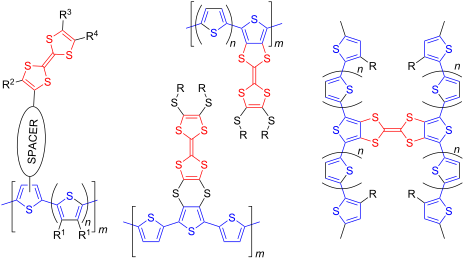
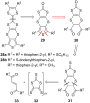
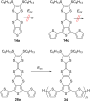
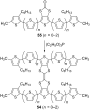
- group, avoiding the effect of steric interactions between pendant TTF units and increasing the conjugation length of the PT backbone (Scheme 2). They successfully electropolymerised TTF-modified thiophene monomer 5a to polymer 6a from a nitrobenzene monomer solution [48]. Cyclic voltammetry of the






Star-shaped tetrathiafulvalene oligomers towards the construction of conducting supramolecular assembly
Beilstein J. Org. Chem. 2015, 11, 1596–1613, doi:10.3762/bjoc.11.175
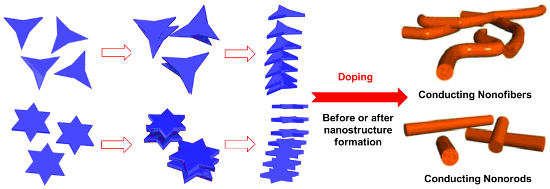
- self-aggregated in chloroform–dioxane to form a gel. TEM images of the xerogel exhibited helical molecular tapes nanometer wide and micrometer long. A cyclic voltammetry (CV) study on 2b showed the redox properties expected for Pc and TTF, and doping of 2b in CH2Cl2 with I2 produced a radical cation
- . The intramolecular through-bond interaction between the two TTF parts linked in a head-to-tail manner is calculated to be weak in the ground state [25]. Thus, the conjugation of the two neutral TTF parts in 16–19 is weak (Figure 6) [59]. In the cyclic voltammetry (CV) measurements, tetraethylthio-bi
- parameters of 23 in various solventsa. Self-aggregation data in toluene-d8.a Redox potentials of 28–34 measured by CVa. Supporting Information Supporting Information File 228: Determination of association constants (K2) of 23 by NMR and cyclic voltammetry analysis of 23. Acknowledgements This work was


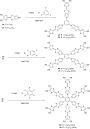


Synthesis of racemic and chiral BEDT-TTF derivatives possessing hydroxy groups and their achiral and chiral charge transfer complexes
Beilstein J. Org. Chem. 2015, 11, 1561–1569, doi:10.3762/bjoc.11.172
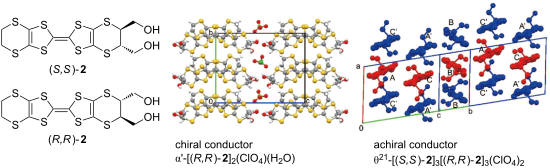
- ,S)-2. The other enantiomer (R,R)-2 was synthesized in the same manner. The cyclic voltammetry measurement on racemic-1 indicated the first and second oxidation potentials (E11/2, E21/2) and their difference ΔE (= E21/2 − E11/2) to be 0.52, 0.83, and 0.31 V by utilizing glassy carbon as working
- ) spectra were measured with a JEOL JNM-AL300 spectrometer with CDCl3 as solvent using Me4Si or residual solvent as an internal standard. Cyclic voltammetry (CV) measurements were performed on an ALS 610DB electrochemical analyzer in benzonitrile containing 0.1 M tetrabutylammonium perchlorate (working


Tetrathiafulvalene-based azine ligands for anion and metal cation coordination
Beilstein J. Org. Chem. 2015, 11, 1379–1391, doi:10.3762/bjoc.11.149
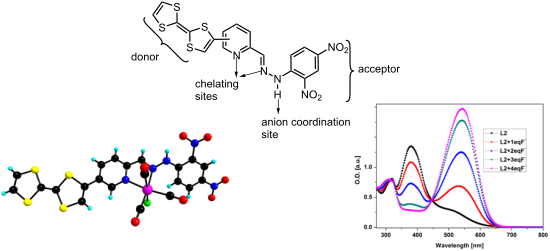
- external ethylenic atom of the TTF moiety which is confirming the good electronic conjugation in this ligand. The same behavior is observed for the TTF pyridine carboxaldehyde precursors 1 and 2 (Figure S3, Supporting Information File 1). Cyclic voltammetry The electrochemical behavior of the electroactive
- precursors 1 and 2 as well as of ligands L1 and L2 was investigated by cyclic voltammetry (Figure 6 and Table 3). The measurements in the case of precursors 1 and 2 show two reversible oxidations at E1ox = +0.26 V, E2ox = +0.75 V and E1ox = +0.32 V, E2ox = +0.77 V vs Ag/Ag+, respectively, that are anodically
- quartz cuvettes using Perkin Elmer spectrophotometer. Mass spectra were collected with Bruker Biflex-III TM. IR spectra were recorded on a Bruker vertex 70. Elemental (C, H and N) analyses were performed on a Thermo-Scientific Flash 2000 Organic Elemental Analyzer. Cyclic voltammetry (CV) experiments


Selected synthetic strategies to cyclophanes
Beilstein J. Org. Chem. 2015, 11, 1274–1331, doi:10.3762/bjoc.11.142
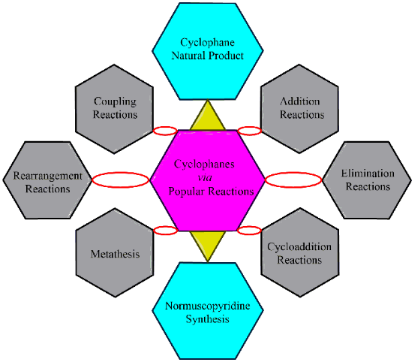
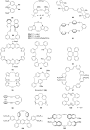
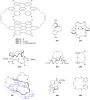
- have reported the synthesis of ethylene-bridged phenothiazinophane 92 using the McMurry coupling reaction. Also cyclic voltammetry experiments indicated the intramolecular electronic communication between the phenothiazinyl subunits. Calixarene-based macrocycles bind with various metal ions. Lee and






Cathodic hydrodimerization of nitroolefins
Beilstein J. Org. Chem. 2015, 11, 1163–1174, doi:10.3762/bjoc.11.131
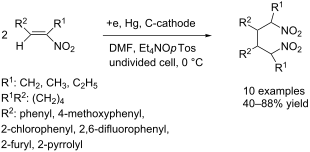
- reduction of 1-nitroalkenes was studied by cyclic voltammetry and controlled potential coulometry. The reduction probably proceeds by initial formation of the radical anion, which subsequently dimerizes [17]. Later conditions were described to achieve selectively either a cathodic ß,ß-coupling (cathodic
- hydrodimerization is performed in a divided electrolysis cell by variation of the electrolyte (Table 1, Scheme 2). The working potential was chosen from cyclic voltammetry and current/voltage curves in the cell used for the preparative conversion. The potential in the controlled potential electrolysis was −0.9 V to
- derived. Cyclic voltammetry The reduction potentials (Ep,c) of the nitroalkenes were determined by cyclic voltammetry. The values, ordered by decreasing potentials, are shown in Scheme 4. The reduction potentials Ep,c are determined by the conformation of the aryl group, the electron density at the double


Thiazole-induced rigidification in substituted dithieno-tetrathiafulvalene: the effect of planarisation on charge transport properties
Beilstein J. Org. Chem. 2015, 11, 1148–1154, doi:10.3762/bjoc.11.129
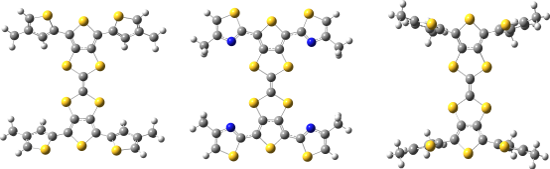
- and electrochemical properties of compounds 1 and 2 have been measured by UV–vis spectroscopy and cyclic voltammetry and the results compared with density functional theory (DFT) calculations to confirm the observed properties. Organic field effect transistor (OFET) devices fabricated from 1 and 2
- charge transfer (CT) from the TTF to the electron-deficient thiazole units, facilitated due to their planarity. The structural properties of each compound will be expanded upon in the theoretical calculations section. Solution-state cyclic voltammetry was employed to determine the highest occupied
- the synthesis of a half-unit and a final triethyl phosphite mediated homo-coupling. The resultant compounds, 1 and 2, were fully characterised and their optical and electrochemical properties elucidated via UV–vis spectroscopy and cyclic voltammetry, and explained in conjunction with DFT level



New tris- and pentakis-fused donors containing extended tetrathiafulvalenes: New positive electrode materials for rechargeable batteries
Beilstein J. Org. Chem. 2015, 11, 1136–1147, doi:10.3762/bjoc.11.128
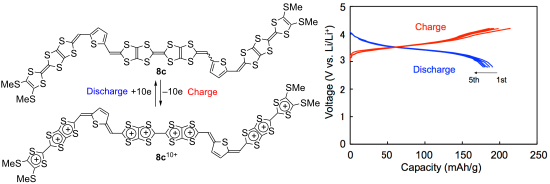
- –680 mAh g−1. The discharge capacities after 40 cycles were 64–86% of the initial discharge capacities. Keywords: cyclic voltammetry; positive electrode materials; rechargeable battery; redox; tetrathiafulvalene; Introduction Tetrathiafulvalene (TTF, 1a) and its analogues have attracted much
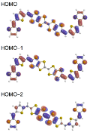
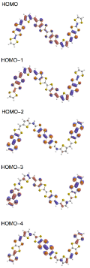
- HOMO–2 of TTPY (−5.439 eV). These results suggest that the electrons at the HOMO–2 of 5a and 6a and HOMO–4 of 8a might be removed more easily than those at the HOMO–2 of TTPY. Electrochemical properties The redox behaviors of 5d, 7d and 9d were investigated by using cyclic voltammetry. Deconvoluted
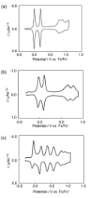
- the full discharge capacity reached in 5 h. Cyclic voltammetry in the solid state was carried out prior to the charge–discharge test so as to determine the turning back voltage (Supporting Information File 1, Figure S4). The electrodes incorporating 5b and 5c exhibited three indistinct oxidation peaks






Regioselective synthesis of chiral dimethyl-bis(ethylenedithio)tetrathiafulvalene sulfones
Beilstein J. Org. Chem. 2015, 11, 1105–1111, doi:10.3762/bjoc.11.124

- conformation. Cyclic voltammetry measurements indicate fully reversible oxidation in radical cation and dication species. Keywords: chirality; crystal structures; molecular materials; sulfones; tetrathiafulvalenes; Introduction Chiral tetrathiafulvalene (TTF) derivatives have been addressed for the first
- generated lose oxygen to afford BEDT-TTF. However, in strike contrast with the behavior of the latter, cyclic voltammetry measurements for (R,R)-1 and (S,S)-1 show reversible two single-electron oxidation processes into radical cation and dication species at ΔE1/2 = +0.67 and 1.00 V vs SCE, respectively
- . Electrochemical studies: Cyclic voltammetry measurements were carried out with a Biologic SP-150 potentiostat in a glove box containing dry, oxygen-free (<1 ppm) argon at 293 K, by using a three-electrode cell equipped with a platinum millielectrode of 0.126 cm2 area, an Ag/Ag+ pseudo-reference electrode and a


Single-molecule conductance of a chemically modified, π-extended tetrathiafulvalene and its charge-transfer complex with F4TCNQ
Beilstein J. Org. Chem. 2015, 11, 1068–1078, doi:10.3762/bjoc.11.120
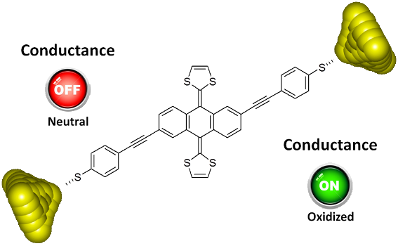
- carbonyl groups appear at 192.4 ppm and the carbons of the alkyne moieties at 88.0 and 90.4 ppm, with the terminal methyl groups at 28.7 ppm. The redox properties of compound 5 (0.2 mM) were determined by cyclic voltammetry at room temperature in THF using TBAPF6 (0.1 M) as a supporting electrolyte under




A hybrid electron donor comprising cyclopentadithiophene and dithiafulvenyl for dye-sensitized solar cells
Beilstein J. Org. Chem. 2015, 11, 1052–1059, doi:10.3762/bjoc.11.118
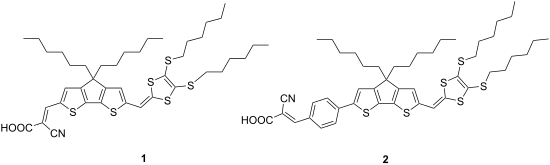
- conduction band and the dye regeneration, the corresponding electrochemical and photophysical properties were investigated. As depicted in Figure 2, cyclic voltammograms of dyes 1 and 2 in CH2Cl2 show two reversible oxidation waves. To gain additional insight into the redox processes, the cyclic voltammetry
- , multiplet. HRMS data were obtained with electrospray ionization (ESI). Cyclic voltammetry was performed in a three-electrode cell equipped with a platinum-disk working electrode, a glassy carbon counter electrode, and Ag/AgCl was used as the reference electrode. The electrochemical experiments were carried


Glycoluril–tetrathiafulvalene molecular clips: on the influence of electronic and spatial properties for binding neutral accepting guests
Beilstein J. Org. Chem. 2015, 11, 1023–1036, doi:10.3762/bjoc.11.115
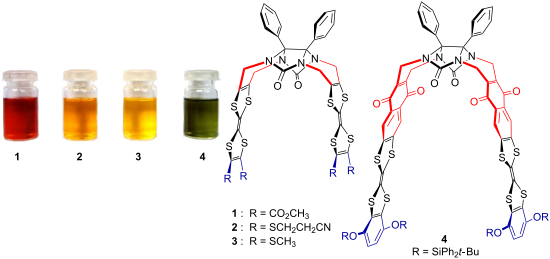
- molecular clips 1–4 were determined using cyclic voltammetry experiments (Table 2). These studies displayed a different electrochemical behavior for clips 1, 2 and 3 in comparison to clip 4. In the latter case, the cyclic voltammogram (CV) showed two oxidation waves at Eapp0ox1 = +0.28 V and Eapp0ox2
- molecular clip using the N-tetraalkylation of glycoluril constitutes a powerful versatile method allowing an easy access to new architectures for which electrochemical properties can be tuned by simple modification of peripheral substituents on the TTF moiety. Cyclic voltammetry and spectroelectrochemical




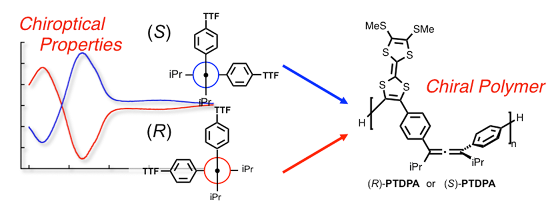
Chiroptical properties of 1,3-diphenylallene-anchored tetrathiafulvalene and its polymer synthesis
Beilstein J. Org. Chem. 2015, 11, 972–979, doi:10.3762/bjoc.11.109
- . cyclic voltammetry (CV) measurements were performed on Hokuto Denko HZ-5000 electrochemical analyzer. GPC analysis for the polymer products was carried out at 40 °C on a Shodex GPC apparatus equipped with two SB-806M HQ GPC columns (Showa Denko K. K.) and a UV detector. DMF was used as the eluent at a
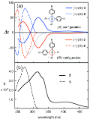
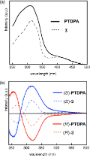
- . Moreover, the ECD intensities of both enantiomers did not change under ambient light, at least over several days. Therefore, 1,3-diphenylallene is a reliable chiral source for a chiral polymer having electron-donating units. The electrochemical properties of 3 and PTDPA were investigated by cyclic
- voltammetry (CV) analyses (Figure 4 and Table 1). In CVs, there are two sets of reversible redox waves in the conventional potential range. Compound 3 exhibits two two-electron transfer waves at E11/2 = −0.01 V and E21/2 = 0.31 V, whereas PTDPA exhibits in a similar manner at E11/2 = 0.03 V and E21/2 = 0.30 V