
Search results
Search for "chemical structures" in Full Text gives 262 result(s) in Beilstein Journal of Organic Chemistry. Showing first 200.
1,2,3-Triazolium macrocycles in supramolecular chemistry
Beilstein J. Org. Chem. 2019, 15, 2142–2155, doi:10.3762/bjoc.15.211
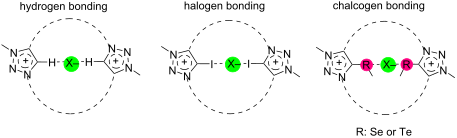
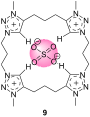
- compound 8. Chemical structures of compound 9. Chemical structures of compound 10, 11 and 12. Chemical structure of compound 13. Chemical structure of compound 15 including the sigma-connected TCNQ dimer. Chemical structure of compound 16 for the kinetic resolution of epoxides. Chemical structure of




Nanopatterns of arylene–alkynylene squares on graphite: self-sorting and intercalation
Beilstein J. Org. Chem. 2019, 15, 1848–1855, doi:10.3762/bjoc.15.180
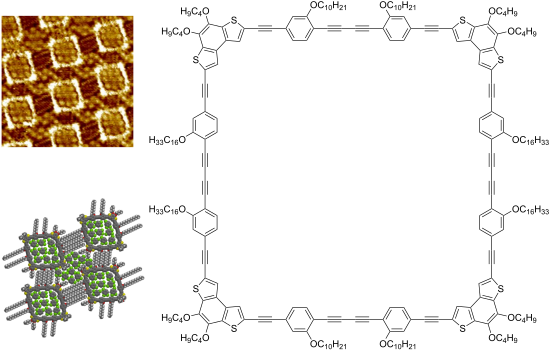
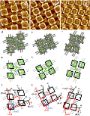
- alkoxy-substituted kekulene and octulene derivatives. Chemical structures of the molecular squares 1a/b, the kekulene derivative 2, and octulene derivative 3 [27]. (a)–(c) Scanning tunneling microscopy images, (d)–(f) supramolecular models, and (g)–(l) schematic models of supramolecular nanopatterns of




Synthesis, photophysical and electrochemical properties of pyridine, pyrazine and triazine-based (D–π–)2A fluorescent dyes
Beilstein J. Org. Chem. 2019, 15, 1712–1721, doi:10.3762/bjoc.15.167
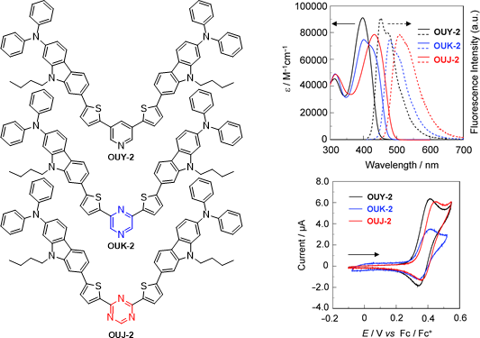
- , 124.50, 124.79, 129.58, 130.62, 133.57, 139.41, 141.56, 142.95, 147.31, 148.55, 153.55, 167.62 ppm (one aromatic carbon signal was not observed due to overlapping resonances); HRMS–ESI (m/z): [M + H] + calcd. for C67H56N7S2, 1022.40331; found, 1022.40344. Chemical structures of the (D–π–)2A fluorescent




Host–guest interactions in nor-seco-cucurbit[10]uril: novel guest-dependent molecular recognition and stereoisomerism
Beilstein J. Org. Chem. 2019, 15, 1705–1711, doi:10.3762/bjoc.15.166
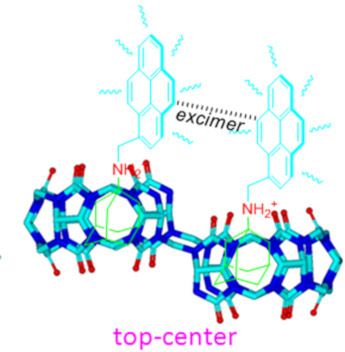
- different concentrations in aqueous solution (pH 2.0) at 298 K. 1H NMR spectra of G2 (1.0 mmol, D2O, pD = 2.0) in the presence of different concentrations of host-1. Chemical structures of host-1, host-2, G1, and G2. Plausible diastereomers showing the fluorescence response of G2 with host-1. Thermodynamic


2,3-Dibutoxynaphthalene-based tetralactam macrocycles for recognizing precious metal chloride complexes
Beilstein J. Org. Chem. 2019, 15, 1460–1467, doi:10.3762/bjoc.15.146
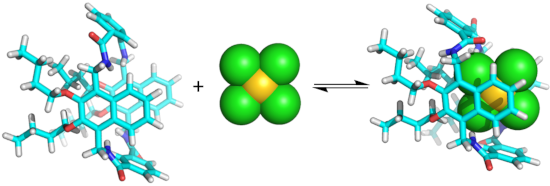
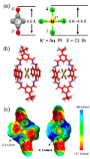
- dichloromethane at room temperature (λex = 310 nm). b) Plot of fluorescence intensity versus TBA[AuCl4] concentration (10−96 µM). (a) Chemical structures of the reported tetralactam macrocycles with aromatic sidewalls; (b) synthetic procedure to 2,3-dibutoxynaphthalene-based tetralactam macrocycles. Numberings on


Complexation of a guanidinium-modified calixarene with diverse dyes and investigation of the corresponding photophysical response
Beilstein J. Org. Chem. 2019, 15, 1394–1406, doi:10.3762/bjoc.15.139
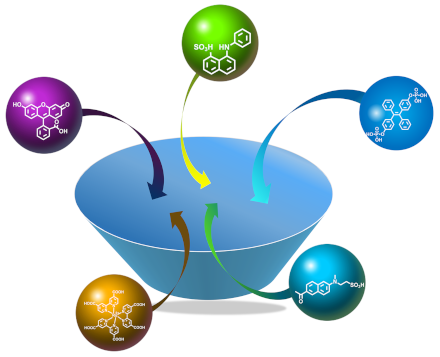
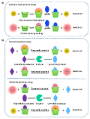
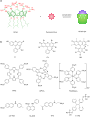
- binds more strongly to the substrate (purple) than to the product (blue). (a) The chemical structure of GC5A and schematic illustration of the binding between the luminescent dye and GC5A. (b) Chemical structures of luminescent dyes employed in this work. Binding constants and binding stoichiometries of



Precious metal-free molecular machines for solar thermal energy storage
Beilstein J. Org. Chem. 2019, 15, 1096–1106, doi:10.3762/bjoc.15.106
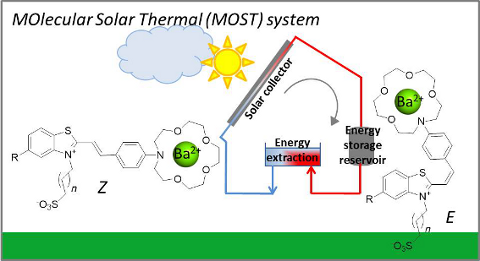
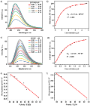
- photoisomerization and a longer life time of the higher energy forms in comparison with the known analogs. The chemical structures of all dyes in the series were characterized by NMR, UV–vis, IR spectroscopy and elemental analysis. The steady-state photophysical properties of the dyes were elucidated. The stability
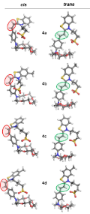
- precipitation from ethanol/ethyl acetate 1:3 was needed to obtain analytically pure target dyes 4a–d. The dyes 4a and 4c were previously described [18][21] and were used as reference compounds. To the best of our knowledge dyes 4b and 4d are new compounds. The chemical structures of all dyes from the series




Molecular recognition using tetralactam macrocycles with parallel aromatic sidewalls
Beilstein J. Org. Chem. 2019, 15, 1086–1095, doi:10.3762/bjoc.15.105
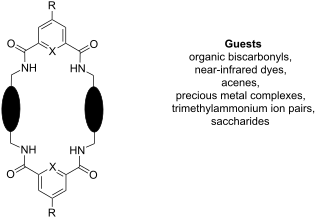
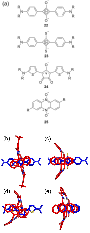
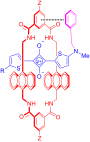
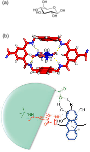
- are omitted for clarity. Selected X-ray structures of [2]rotaxanes with tetralactam A as the surrounding macrocycle reported by groups led by Leigh, Smith, Cooke, and Berná [37][39][50][52][53][54][55][56]. (a) Chemical structures of squaraine, thiosquaraine, croconaine, and acene guests that can bind
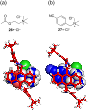
- * level. Reprinted with permission from [24], copyright 2018, American Chemical Society. Chemical structures of a) acetylcholine chloride, 26+·Cl−, (b) trimethyl-p-cyanobenzylammonium chloride, 27+·Cl−, and calculated structures (semiempirical, PM7) of their complexes inside tetralactam B (X = CH, Z = t
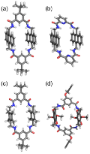
- appended, anionic Z group. Adapted with permission from [71], copyright 2015, John Wiley and Sons. Chemical structures of the tetralactam host macrocycles that are covered by this review. Synthetic yields of [2]rotaxanes with different dumbbell-shaped templates and tetralactam A as the surrounding




Efficient synthesis of pyrazolopyridines containing a chromane backbone through domino reaction
Beilstein J. Org. Chem. 2019, 15, 874–880, doi:10.3762/bjoc.15.85
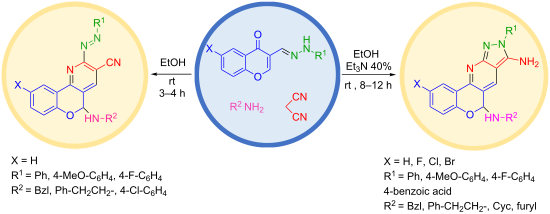
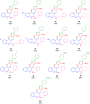
- products 5a–d were not formed. The reaction mechanism is shown in Scheme 2. The chemical structures of the products 5a–d are shown in Figure 4. Usually, to activate the nitrile group for cyclization reaction, the existence of Lewis acid, the addition of organolithium reagents or metal




Azologization of serotonin 5-HT3 receptor antagonists
Beilstein J. Org. Chem. 2019, 15, 780–788, doi:10.3762/bjoc.15.74
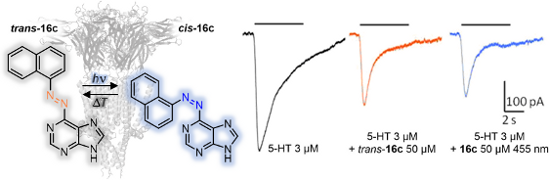
- 1990s, the range of highly selective and potent drugs expanded based on various chemical structures. Nevertheless, on-off-targeting of a pharmacophore’s activity with high spatiotemporal resolution as provided by photopharmacology remains an unsolved challenge bearing additionally the opportunity for
- restoration [53][54][55], the respiratory chain [56] and lipids [57][58]. Owing to the reported serotonin antagonists’ chemical structures, the use of azobenzene as photochromic scaffold in the presented work seemed axiomatic. Therefore, the primary design of our photochromic derivatives is based on the


LCST phase behavior of benzo-21-crown-7 with different alkyl chains
Beilstein J. Org. Chem. 2019, 15, 437–444, doi:10.3762/bjoc.15.38
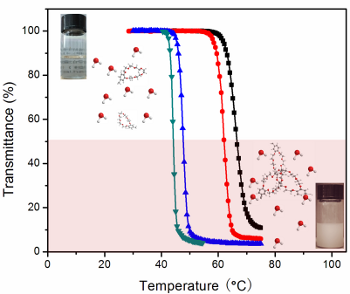
- the hydrophobicity of the crown ethers, but also exert great effect on solubility; c) small modifications in the chemical structures can result in remarkable differences in thermo-responsiveness. The change from carbamate groups to urea groups leads to the quench of thermo-responsiveness of crown
- properties. Both linkers and tails are important for regulating the LCST phenomenon. The presence of hydrophobic tails has a greater influence on the solubility, but the nature of the linkers is more important for the LCST properties. Based on the analyses of the relationship between chemical structures and
- °C; f) 70 °C. Purple dots in spectra indicate the newly emergent peaks upon heating. Chemical structures of 3a–e and 5a–e, and the cartoon representation of LCST behavior. Synthetic routes and yields of 3a–e and 5a–e. Supporting Information Supporting Information File 44: Experimental


Syntheses and chemical properties of β-nicotinamide riboside and its analogues and derivatives
Beilstein J. Org. Chem. 2019, 15, 401–430, doi:10.3762/bjoc.15.36




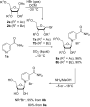


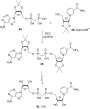


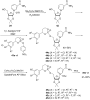


Olefin metathesis in multiblock copolymer synthesis
Beilstein J. Org. Chem. 2019, 15, 218–235, doi:10.3762/bjoc.15.21

- rather clear nowadays that the olefin-metathesis reaction is a versatile tool for the synthesis of multiblock copolymers with diverse chemical structures. Due to the rapid progress in the catalyst design for living polymerization, sequential ROMP has become a well-established method of obtaining


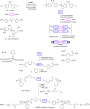




Fabrication of supramolecular cyclodextrin–fullerene nonwovens by electrospinning
Beilstein J. Org. Chem. 2019, 15, 89–95, doi:10.3762/bjoc.15.10
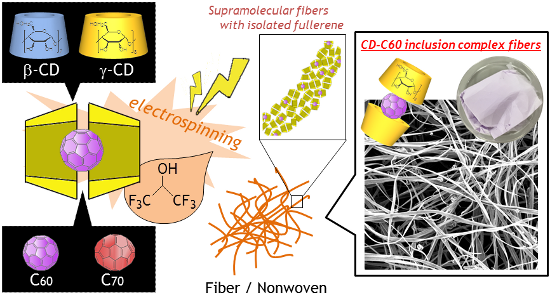
- promising as an approach for fiber functionalization, the scope is limited to cases with 1:1 inclusion complexes and chemically modified CD. Fullerenes have been widely studied in the fields of chemistry and materials science because they have attractive chemical structures and good electron acceptor


Organometallic vs organic photoredox catalysts for photocuring reactions in the visible region
Beilstein J. Org. Chem. 2018, 14, 3025–3046, doi:10.3762/bjoc.14.282
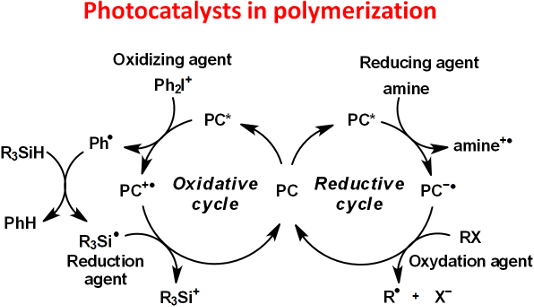
- cycles involved with iodonium salt and (A) (TMS)3SiH, (B) NVK and (C) EDB. Structures of additives involved in the photoredox catalytic cycles. Structures of photoredox metal-based catalysts. Photocatalytical cycle for the Ru complex. Structures of photoredox organocatalysts. Diversity of the chemical
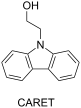
- structures of photoredox organocatalysts. Structures of benchmarked monomers. Structure of the CARET additive. Photoredox catalysis mechanism of a visible light-mediated living radical polymerization. (Abbreviation: PC for photoredox catalyst, [PC]* the photoredox catalyst at its excited state, Pn the



Green synthesis of new chiral 1-(arylamino)imidazo[2,1-a]isoindole-2,5-diones from the corresponding α-amino acid arylhydrazides in aqueous medium
Beilstein J. Org. Chem. 2018, 14, 2923–2930, doi:10.3762/bjoc.14.271
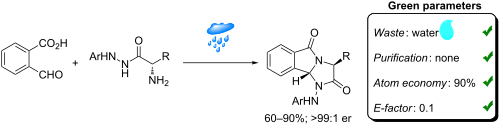
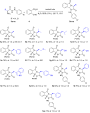
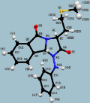
- observed with a total trans-diastereoselectivity controlled by intramolecular hydrogen bonds. Chemical structures of analogues. NOEs correlation showing the stereochemistry of the compound 5a. X-ray crystal structure of 5f shown at the 30% probability level. Strategy for the formation of 1-(arylamino)-1H




Protein–protein interactions in bacteria: a promising and challenging avenue towards the discovery of new antibiotics
Beilstein J. Org. Chem. 2018, 14, 2881–2896, doi:10.3762/bjoc.14.267
- scanning fluorimetry (DSF) assay [80]. Regrettably, no data was presented on the chemical structures of these compounds or the antibacterial activity. Nevertheless, this study reinforces the usefulness of integrating biophysical techniques with HTS approaches in order to detect and investigate SSB protein
- 8) as a template, Rush et al. applied a shape-comparison program (rapid overlay of chemical structures, ROCS). This study led to the identification of three lead-like scaffolds among which compound 38 (Figure 8) was the most active with a Kd of 73.9 μM. In spite of the fact that this molecule was


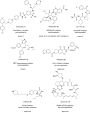
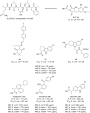


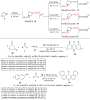
An overview on recent advances in the synthesis of sulfonated organic materials, sulfonated silica materials, and sulfonated carbon materials and their catalytic applications in chemical processes
Beilstein J. Org. Chem. 2018, 14, 2745–2770, doi:10.3762/bjoc.14.253
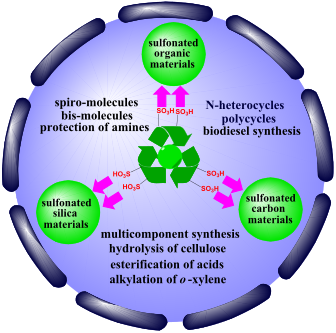
- , CCl3COOH, and CF3COOH) in hexane at 60 °C for 45–60 min was achieved and reported. The chemical structures of new -SO3H functionalized ILs were confirmed by IR, 1H NMR, 13C NMR, and elemental analyses data. The NMR spectra provided evidence for resonating structures of N,N-disulfotetramethylguanidinium




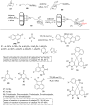


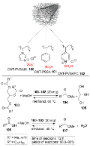

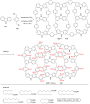


Non-native autoinducer analogs capable of modulating the SdiA quorum sensing receptor in Salmonella enterica serovar Typhimurium
Beilstein J. Org. Chem. 2018, 14, 2651–2664, doi:10.3762/bjoc.14.243
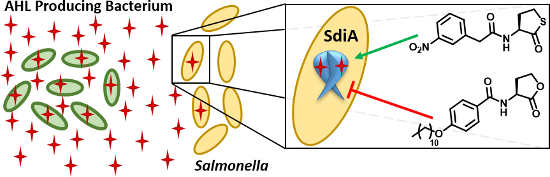
- and antagonism (i.e., no activity) are indicated in grey. All circles are scaled to their proportion of the library. Overlaps largely indicative of overlapping compound sets. Chemical structures of the most potent SdiA agonists. Compound names (except for 11-Az) match those reported in our prior
- publications. HSL = homoserine lactone, Z = O. HCL = homocysteine thiolactone, Z = S. Compound 2 = L-OOHL. Compounds within each cluster (indicated by hashed line box) are listed in order of highest to lowest potency. Chemical structures of the most potent SdiA antagonists. Compound names preceded by letters


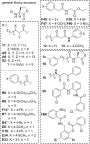

A challenging redox neutral Cp*Co(III)-catalysed alkylation of acetanilides with 3-buten-2-one: synthesis and key insights into the mechanism through DFT calculations
Beilstein J. Org. Chem. 2018, 14, 2366–2374, doi:10.3762/bjoc.14.212
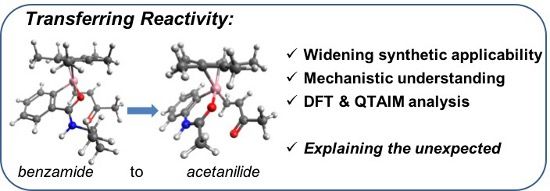
- C–H bonds has been identified as one of the key challenges in modern day chemical research [1][2][3], providing the potential to access complex chemical structures more efficiently. In this context, transition metal catalysis is seen as a potential solution, building on the traditional and well


Synthesis of a water-soluble 2,2′-biphen[4]arene and its efficient complexation and sensitive fluorescence enhancement towards palmatine and berberine
Beilstein J. Org. Chem. 2018, 14, 2236–2241, doi:10.3762/bjoc.14.198
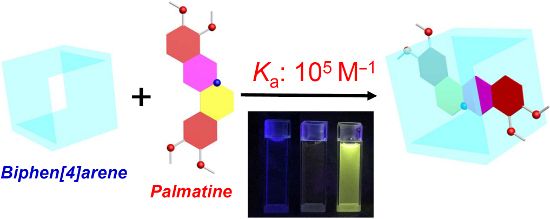
- absence and presence of 2,2’-CBP4 under a UV lamp (365 nm). Left to right: P, P + 2,2’-CBP4, 2,2’-CBP4, B + 2,2’-CBP4 and B. Synthesis of 2,2’-CBP4 and the chemical structures of P and B. Association constants (Ka/M−1) for 1:1 intermolecular complexation of P and B with 2,2’-CBP4 in phosphate buffer


Dynamic light scattering studies of the effects of salts on the diffusivity of cationic and anionic cavitands
Beilstein J. Org. Chem. 2018, 14, 2212–2219, doi:10.3762/bjoc.14.195
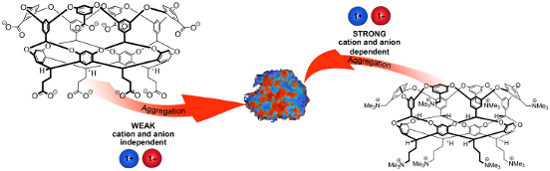
- host solution such that the final CsCl concentration was 100 mM (50 equiv) and dilution of the host was 5% (Supporting Information File 1, Figure S3). Chemical structures of octaacid 1 and positand 2 showing the anionic binding sites of the two hosts (orange and red) and the potential cationic binding


A switchable [2]rotaxane with two active alkenyl groups
Beilstein J. Org. Chem. 2018, 14, 2074–2081, doi:10.3762/bjoc.14.181
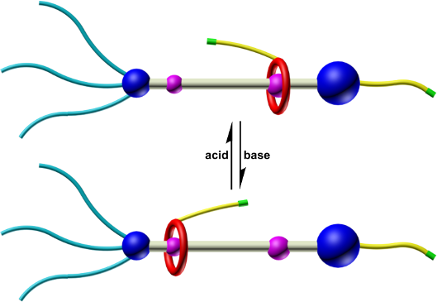
- equiv of DBU to (a). Chemical structures and acid-base stimuli responsiveness of target [2]rotaxane R1 and deprotonated [2]rotaxane R1-1. Syntheses of key intermediates 5, 8 and target [2]rotaxane R1. Supporting Information Supporting Information File 188: 1H, 13C NMR spectra and HRESI mass spectra of


Synthesis and supramolecular self-assembly of glutamic acid-based squaramides
Beilstein J. Org. Chem. 2018, 14, 2065–2073, doi:10.3762/bjoc.14.180
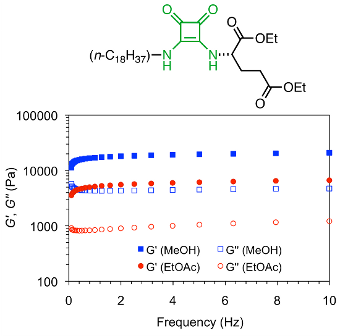
- = 10 kV). Xerogels, prepared by freeze-drying the corresponding gels, were placed on top of a tin plate and shielded with Pt (40 mA, 30–60 s; film thickness = 5–10 nm). Images were obtained by Servicio General de Apoyo a la Investigación-SAI (Universidad de Zaragoza). Chemical structures of isosteric


An amphiphilic pseudo[1]catenane: neutral guest-induced clouding point change
Beilstein J. Org. Chem. 2018, 14, 1937–1943, doi:10.3762/bjoc.14.167
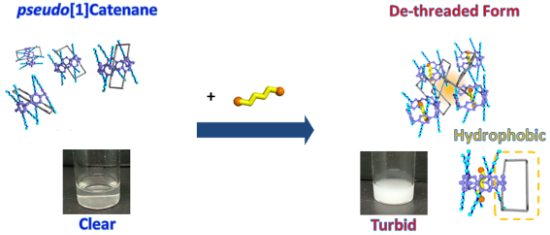
- Information File, Figure S7, orange peak β) of 1,4-dicyanobutane. Chemical structures of (a) tri(ethylene oxide)-substituted pillar[n]arenes (1, n = 5; 2, n = 6), (b) pseudo[1]catenane 3, (c) de-threaded form of 3 by complexation with 1,4-dicyanobutane, and (d) model compound 4. 1H NMR spectra of (a) model