
Search results
Search for "blue" in Full Text gives 1010 result(s) in Beilstein Journal of Organic Chemistry. Showing first 200.
Methyltransferases from RiPP pathways: shaping the landscape of natural product chemistry
Beilstein J. Org. Chem. 2024, 20, 1652–1670, doi:10.3762/bjoc.20.147
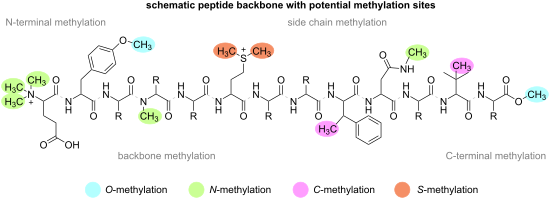
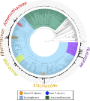
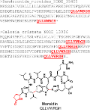
- /aspartimide to isoaspartate. The methyl group is highlighted in blue. The reverse reaction with isoaspartate as substrate of PAMTs is also known. Structural organisation of the OphMA homodimer. A) Schematic representation. The MT domain is coloured in blue; the leader peptide is coloured in yellow, and the





Generation of multimillion chemical space based on the parallel Groebke–Blackburn–Bienaymé reaction
Beilstein J. Org. Chem. 2024, 20, 1604–1613, doi:10.3762/bjoc.20.143

- molecules to be similar. In this way, data visualization becomes possible since similar molecules will likely have close values of t-SNE1 and t-SNE2. As apparent from Figure 7, there is a small overlap between the GBB chemical space (yellow datapoints) with all four databases of comparison (blue data points
- count; F(sp3) – fraction of sp3-hybrid carbon atoms; RotB – rotatable bond count); compounds complying with specific Lipinski/Veber rules (MW ≤ 500, log P ≤ 5, HDon ≤ 5, HAcc ≤ 10, RotB ≤ 10 [38][41]) as well as compounds with F(sp3) > 0.5 are highlighted in blue, the rest of the compounds are shown in


Supramolecular assemblies of amphiphilic donor–acceptor Stenhouse adducts as macroscopic soft scaffolds
Beilstein J. Org. Chem. 2024, 20, 1590–1603, doi:10.3762/bjoc.20.142
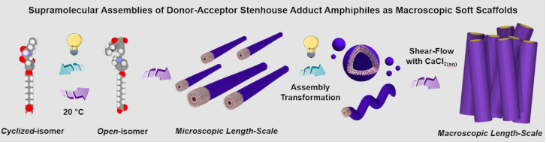
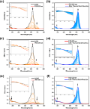
- -DA11 (Figure 1a, black line and Figure 1b blue line) to the cyclized-isomer C-DA11 (Figure 1a, red line). The resulting solution continued to be irradiate with 625 nm red light for 60 s at 20 °C and subsequently stored in the dark at 20 °C for 60 min for the thermal back reaction to occur to test the
- 1d and Figure 1f, blue line), the strong absorption band had recovered and indicated a selective photoisomerization process from the open-isomers O-DA7 and O-DA6 (Figure 1c–f, black and blue lines) to the cyclized-isomers C-DA7 and C-DA6 (Figure 1d and Figure 1f, red line). The results showed
- used for the fabrication of macroscopic soft scaffolds after charge screening with complementary ions. Fabrication and characterization of macroscopic soft scaffolds of DAn in aqueous medium A freshly prepared aqueous solution of DA11 (5.0 wt %, 82 mM) was deep blue and remained stable for months. By




Mining raw plant transcriptomic data for new cyclopeptide alkaloids
Beilstein J. Org. Chem. 2024, 20, 1548–1559, doi:10.3762/bjoc.20.138
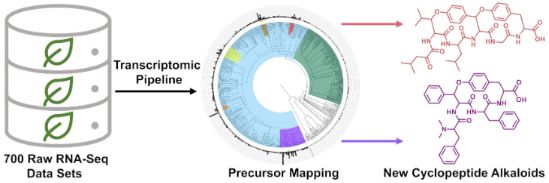
- . The bar graphs show the number of average unique transcripts from each plant species. Producers are indicated with an orange or blue dot. Weblogos generated with aligned recognition and core sequences from the six different families discussed. Up to three unique sequences were taken from each assembly
- , blue arrows – HMBC. Peptide modifications are shown in purple. A) Precursor peptide sequences found in the transcriptome of G. jasminoides containing the cores FFFY, IFLY, and LFLY. A) GJA649 gene cluster from G. jasminoides. Core sequences from the putative precursor peptides map to three predicted





Benzylic C(sp3)–H fluorination
Beilstein J. Org. Chem. 2024, 20, 1527–1547, doi:10.3762/bjoc.20.137

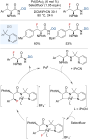
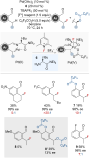
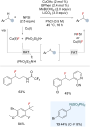
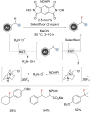
- ]. Photoexcitation of the Ir(III) catalyst I with blue light resulted in the photoexcited Ir(III)* catalyst, which was capable of performing a single-electron reduction on N-acyloxyphthalimide, promoting decarboxylation, releasing CO2, a methyl radical, anionic phthalimide and an Ir(IV) species. The resultant methyl
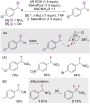
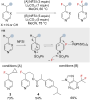
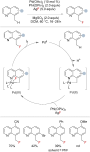
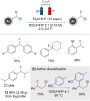
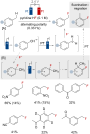
- -catalysed bidentate-directed benzylic C(sp3)–H fluorination. Palladium-catalysed benzylic fluorination using a transient directing group approach. Ratio refers to fluorination (red) vs oxygenation (blue) product. Outline for benzylic C(sp3)–H fluorination via radical intermediates. Iron(II)-catalysed




















Photoswitchable glycoligands targeting Pseudomonas aeruginosa LecA
Beilstein J. Org. Chem. 2024, 20, 1486–1496, doi:10.3762/bjoc.20.132
- decreases concomitantly to the appearance of two new bands at 312 and 438 nm (Figure 2, blue line). Two isosbestic points can also be observed at 310 and 429 nm. The back Z→E photoisomerization can be achieved by illumination at 485 nm (Figure 2, red line). 1H NMR spectroscopy has been used to determine the
- 1). All the photophysical properties of compounds 1–5 are summarized in Table 1 (spectra are shown in Figure S1–S24 in Supporting Information File 1). Concerning the meta-substituted azobenzene 2, a 30 nm blue shift is observed for the π→π* transition (λmax = 321 nm) as well as a lower absorption
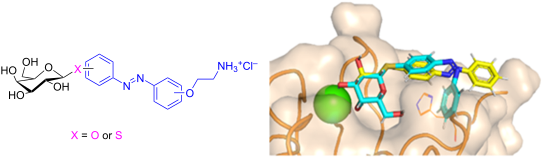
- ) designed general structure of photoswitchable ligands 1–5 targeting LecA. (Left) Absorption spectra and (right) fatigue resistance of 1 under alternated 370/485 nm irradiations in Tris buffer/DMSO 95:5 at rt: E-1 (black line), PSS370 (blue line), PSS485 (red line). Irradiation conditions at 370 nm: 12.8


Bioinformatic prediction of the stereoselectivity of modular polyketide synthase: an update of the sequence motifs in ketoreductase domain
Beilstein J. Org. Chem. 2024, 20, 1476–1485, doi:10.3762/bjoc.20.131
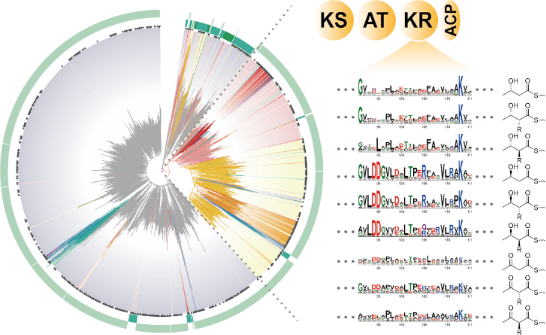
- classification of their products. The key catalytic residues are marked by red stars, and the NADPH-binding residues (partially) are marked by blue triangles. The numbers at the top indicate the fingerprint motifs. Sequence logo comparation of γ- and δ-module KRC based on the classification of their products
- . Top five rows show KRs associated with an inactive DH that produces the hydroxy products. The key catalytic residues are marked by red stars, and the NADPH-binding residues (partially) are marked by blue triangles. The motif numbers at the top are corresponding to the location of fingerprints in


A comparison of structure, bonding and non-covalent interactions of aryl halide and diarylhalonium halogen-bond donors
Beilstein J. Org. Chem. 2024, 20, 1428–1435, doi:10.3762/bjoc.20.125
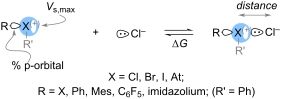
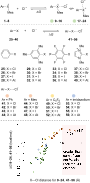
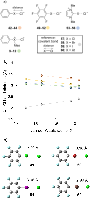
- that we studied here revealed an opposite trend (Scheme 4b, orange, yellow, blue, and green dots). The halogen-bond length decreased with increasing van der Waals radii of X and the trend was more pronounced for monovalent halogen-bond donors. This is exemplified by halogen-bond complexes of the
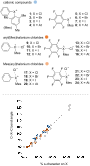
- observed for the cationic imidazolium series of XB donors 53–56 (Scheme 5, blue bars). The neutral monovalent XB donors 26–28 formed halogen-bonding complexes 42–44 with non-covalent interactions in all cases, even those with heavier halogen iodine and astatine (Scheme 5, orange bars). We turned our
- halogen-bond donors are clustered into hypervalent 1–8 (Scheme 6b, green dots), monovalent aryl 26–28 and 30–32 (Scheme 6b, orange dots), perfluorophenyl 33–36 (Scheme 6b, yellow dots), and imidazolium 37–40 (Scheme 6b, blue dots) linear correlations with similar slopes are observed for p-orbital




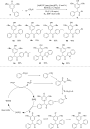
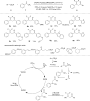
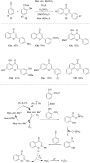
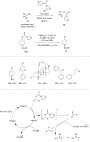
Generation of alkyl and acyl radicals by visible-light photoredox catalysis: direct activation of C–O bonds in organic transformations
Beilstein J. Org. Chem. 2024, 20, 1348–1375, doi:10.3762/bjoc.20.119
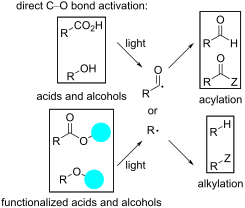
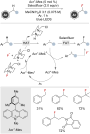
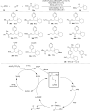
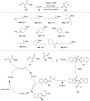
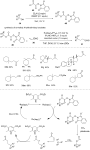
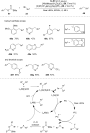
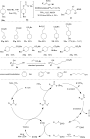
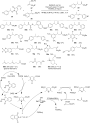
- salicylic acid derivatives and aryl acetylenes. Due to irradiation with blue light, Mes–Acr–Me+ gets excited to Mes–Acr–Me+* and takes up a single electron from Ph2S. The reaction of the diphenyl sulfide radical cation with carboxylate and successive acyloxy C–O bond cleavage forms diphenyl sulfoxide and an
- in DMF solvent and requires ca. 18 h to finish upon irradiation with blue LEDs. The catecholboronic esters produced at first are transesterified into pinacol borane by addition of pinacol and triethylamine. The reaction proved to be useful for a wide variety of substrates, such as borneol, menthol
- -mediated deoxygenative trifluoromethylation technique worked with both benzylic and unactivated thiocarbonates. The proposed mechanism starts with the homolysis of (bpy)Cu(III)(CF3)3 by blue-light irradiation, which produces CF3 radicals and (bpy)Cu(II)(CF3)2. Subsequently, the interaction between the CF3






Transition-metal-catalyst-free electroreductive alkene hydroarylation with aryl halides under visible-light irradiation
Beilstein J. Org. Chem. 2024, 20, 1327–1333, doi:10.3762/bjoc.20.116
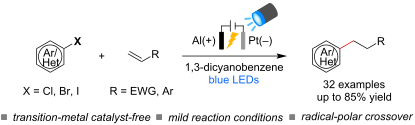
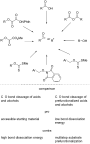
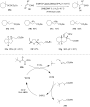
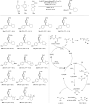
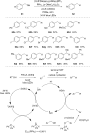
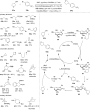
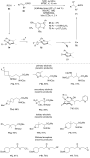
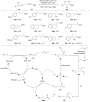
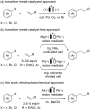
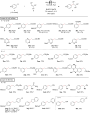
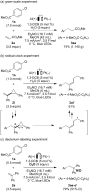
- hydroarylation of alkenes with aryl halides. Substrate scope. Reaction conditions for 1 (X = Cl, Br): 1 (1.0 mmol), 2 (3.5 mmol), 1,3-DCB (5 mol %), H2O (5.0 mmol), Et4NCl (0.1 mmol), MeCN (6 mL), Al(+)-Pt(−), 7.5 mA/cm2, 3.5 F/mol, 0 °C, blue LEDs; reaction conditions for 1 (X = I): 1 (1.0 mmol), 2 (5.0 mmol
- ), 1,3-DCB (50 mol %), H2O (5.0 mmol), Et4NCl (0.1 mmol), MeCN (3 mL), Al(+)-Pt(−), 7.5 mA/cm2, 4.5 F/mol, 0 °C, blue LEDs. a4.5 F/mol. b2 (5 equiv). cMeCN (3 mL). d5 F/mol. 1,3-DCB, 1,3-dicyanobenzene. Gram-scale reaction and control experiments. Plausible mechanism. Evaluation of reaction conditions.a


Computation-guided scaffold exploration of 2E,6E-1,10-trans/cis-eunicellanes
Beilstein J. Org. Chem. 2024, 20, 1320–1326, doi:10.3762/bjoc.20.115

- diterpenoids and their biosyntheses. (A) The 6/10-bicyclic hydrocarbon framework is conserved in eunicellane diterpenoids. Selected natural products consisting of cis- (red) and trans-eunicellane skeletons (blue) are shown. (B) Four types of diterpene synthases are known to form the eunicellane skeleton, each
- of DFT calculations on the atropisomers 10a/10b and the free energy barriers for clockwise (blue) and counter-clockwise (red) rotations. Scaffold exploration of the 2E-trans-eunicellane skeleton. Supporting Information Supporting Information File 90: Experimental methods, NMR and MS spectra, and


Diameter-selective extraction of single-walled carbon nanotubes by interlocking with Cu-tethered square nanobrackets
Beilstein J. Org. Chem. 2024, 20, 1298–1307, doi:10.3762/bjoc.20.113
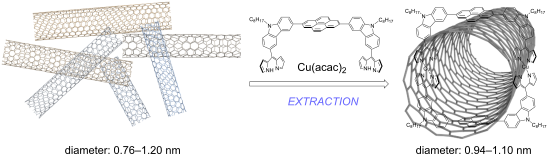
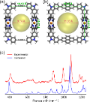
- excitation wavelengths, normalized at 260, 216 and 266 cm−1, respectively, after baseline correction; (b) normalized absorption spectra of HiPco and extracted SWNTs after dispersing with SDBS in D2O after baseline correction; (c) summary of increase (orange) and decrease (blue) in (n,m)-SWNT abundance in the




Synthesis and physical properties of tunable aryl alkyl ionic liquids based on 1-aryl-4,5-dimethylimidazolium cations
Beilstein J. Org. Chem. 2024, 20, 1278–1285, doi:10.3762/bjoc.20.110
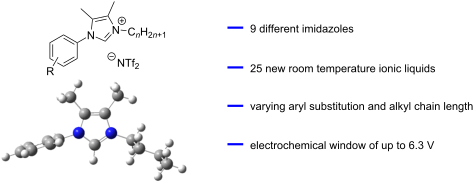
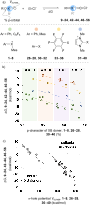
- start at 0 V. Structures of the imidazolium cations obtained by DFT calculations (B3LYP/6-311++G (d,p)). The electrostatic potentials are indicated by color (blue: positive; red: negative). Overview of the synthesis of compounds 1–63. Thermal decomposition point at 5% mass loss in °C for NTf2− TAAILs 37


Synthesis of indano[60]fullerene thioketone and its application in organic solar cells
Beilstein J. Org. Chem. 2024, 20, 1270–1277, doi:10.3762/bjoc.20.109
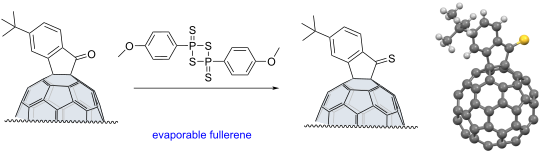
- future. Characterization data. (a) FTIR spectra of t-Bu-FIDO and t-Bu-FIDS. (b) UV–vis spectra of fullerene derivatives normalized at 270 nm. (c) Vacuum TGA curves of t-Bu-FIDO (black), t-Bu-FIDS (red), and C60 (blue). The measurements were conducted under 0.1 Pa. (d) HPLC analyses before deposition of t
- supporting electrolyte at 25 °C with a scan rate of 0.05 V/s, for C60 (blue), t-Bu-FIDO (red), and t-Bu-FIDS (black). Glassy carbon, platinum wire, and Ag/Ag+ electrodes were used as the working, counter, and reference electrodes, respectively. J–V curves of BHJ OPV devices. (a) ITO/ZnO/fullerene:P3HT (1:1


Domino reactions of chromones with activated carbonyl compounds
Beilstein J. Org. Chem. 2024, 20, 1256–1269, doi:10.3762/bjoc.20.108
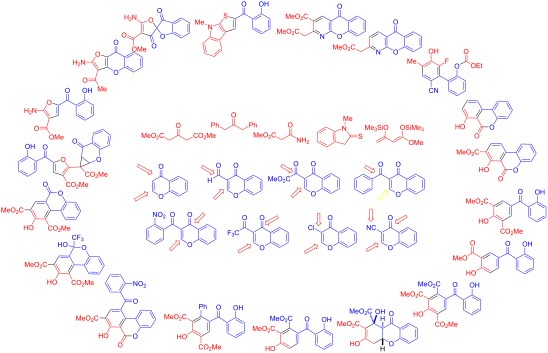
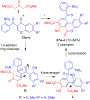
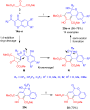
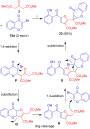
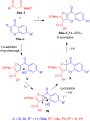
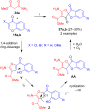
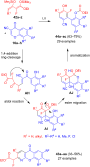
- chromone 9a and for the diene containing a methoxy group (R4 = OMe). The products proved to be interesting, due to their blue fluorescence. 3-Formylchromones Dimethyl acetone-1,3-dicarboxylate The reaction of 3 with 3-formylchromones 10a–d afforded benzophenones 19a–d in moderate to good yields (Scheme 5









Mechanistic investigations of polyaza[7]helicene in photoredox and energy transfer catalysis
Beilstein J. Org. Chem. 2024, 20, 1236–1245, doi:10.3762/bjoc.20.106
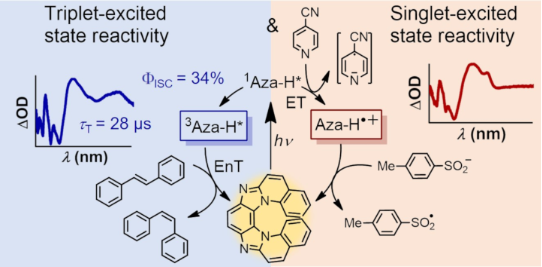
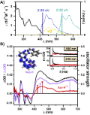
- as the radical cation, Aza-H•+, which is in perfect agreement with our proposed photoinduced electron transfer step, while no triplet-excited Aza-H is observed (Figure 2A, blue spectrum). Since the direct ionization of Aza-H also contributes to this spectrum, we recorded a spectrum of only Aza-H in
- (blue) and phosphorescence (green) spectra measured at 77 K in MeOH/EtOH (4:1). B) Transient absorption spectra of 25 µM (initial ground-state absorbance at the laser wavelength, 0.2) Aza-H in Ar-saturated (black) and air-saturated (red) MeCN/H2O (9:1) recorded after 250 ns and the difference spectrum
- . Mechanistic LFP experiments of 25 µM Aza-H with 4CP in MeCN/H2O (9:1) after 355 nm laser pulses. A) TA spectra recorded after 250 ns of solely Aza-H in air-saturated solution (red), in Ar-saturated solution with 200 mM 4CP (blue) and the difference spectrum of both (green). Inset: Kinetic traces of Aza-H with




Introduction of peripheral nitrogen atoms to cyclo-meta-phenylenes
Beilstein J. Org. Chem. 2024, 20, 1207–1212, doi:10.3762/bjoc.20.103
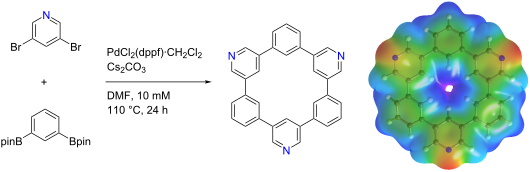
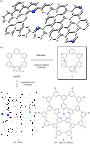
- shown. (b) Packing structures. Chloroform molecules in the crystal of 3b are omitted for clarity. X-ray charge density analyses of 3a and [6]CMP. (a) Deformation map (Fo – Fc) of a pyridine ring in 3a (contour interval: 0.05 e·Å−3, positive: red, negative: blue). (b) Electrostatic potential maps mapped
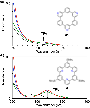
- on the 0.0067 e·Å−3 isosurface for the electron density. Response towards acid treatment with nitrogen-doped CMPs. (a) Absorption spectra of 3a (CHCl3, 2.3 × 10⁻⁶ M) in the absence (black) and presence of trifluoroacetic acid (green: 4.3 × 10⁻² M, blue: 2.1 × 10⁻¹ M, red: 4.2 × 10⁻¹ M). (b
- ) Absorption spectra of 6 (CHCl3, 1.9 × 10⁻⁶ M) in the absence (black) and presence of trifluoroacetic acid (green: 4.3 × 10⁻² M, blue: 2.1 × 10⁻¹ M, red: 4.2 × 10⁻¹ M). Syntheses of 3a and 3b. Supporting Information Supporting Information File 50: Experimental and copies of spectra. Supporting Information



Stability trends in carbocation intermediates stemming from germacrene A and hedycaryol
Beilstein J. Org. Chem. 2024, 20, 1189–1197, doi:10.3762/bjoc.20.101
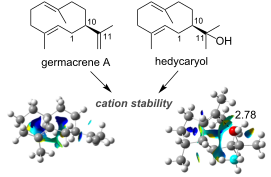
- electron density (ρ) and the reduced-density gradient (RDG, s). The NCIplot provides qualitative information, and it can successfully map real-space regions where non-covalent interactions are prominent. The resulting plots have a color scheme of red–green–blue scale, where red represents attractive
- interactions and blue represents repulsive interactions. Additionally, we carried out natural bonding orbital (NBO) analysis using the NBO 3.1 program [42] as implemented in the Gaussian 16 package. The computations are performed at the same level of theory that we chose initially for optimization (M06-2X/6-31
- , with a larger blue isosurface than A, has greater steric hindrance than A (Figure 3). Although this difference is not directly quantified here, this is likely part of the reason behind the greater stability of A over B. A similar analysis can be performed for C and D (Figure S2 in Supporting


Structure–property relationships in dicyanopyrazinoquinoxalines and their hydrogen-bonding-capable dihydropyrazinoquinoxalinedione derivatives
Beilstein J. Org. Chem. 2024, 20, 1037–1052, doi:10.3762/bjoc.20.92
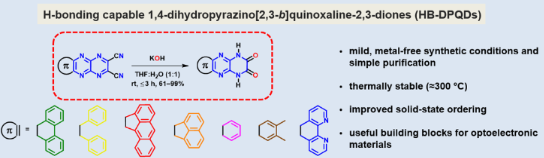
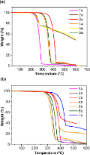
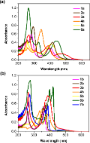
- from 388 to 423 nm, indicative of π–π* transitions. On the contrary, DPQDs exhibited more structured, blue-shifted bands with λmax from 357–400 nm. At the same time, DCPQs exhibit intramolecular charge transfer (ICT) bands at lower energy due to the dicyanopyrazinopyrazine moiety as a strong acceptor
- intermolecular N–H∙∙∙N and C–H∙∙∙O=C distances (d). Unit cell comprised of four molecules of 2b (e). Herringbone packing of 2b showing the distance between adjacent ring centroids (f). Herringbone backing of 2b shown as a spacefilling model (g). Atom color code: blue N, gray C, red O, and white H. Synthesis of




Auxiliary strategy for the general and practical synthesis of diaryliodonium(III) salts with diverse organocarboxylate counterions
Beilstein J. Org. Chem. 2024, 20, 1020–1028, doi:10.3762/bjoc.20.90
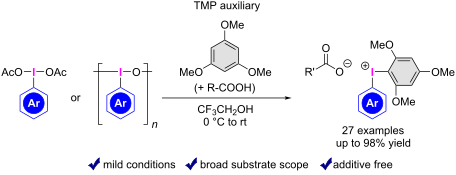
- benzoate in 70% yield (Scheme 6A). Furthermore, iodonium salt 7aj with an umbelliferone-3-carboxylate counterion displayed extremely weak blue fluorescence emission under 365 nm UV light compared to free carboxylic acid 6j. This unique property was utilized for tracing the counterion exchange process of
- the diaryliodonium(III) salt by irradiating with 365 nm UV light. The counterion exchange in umbelliferone carboxylate salt 7aj with trifluoroacetic acid was rapid, and after 30 s, the completion of the reaction was confirmed by the emergence of strong blue fluorescence emission due to the liberation


Spin and charge interactions between nanographene host and ferrocene
Beilstein J. Org. Chem. 2024, 20, 1011–1019, doi:10.3762/bjoc.20.89
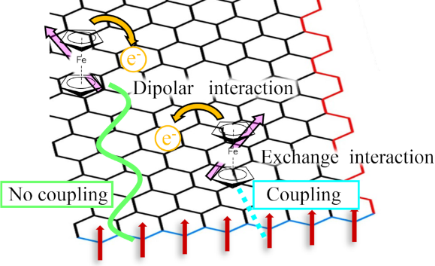
- clarification. XPS spectrum for FeCp2-ACFs-150 in the Fe2p region shown with fitting curves. XPS spectra of (left) FeCp2-ACFs-150 and (right) ACFs in the C1s region with fitting curves. Raman spectra for ACFs and FeCp2-ACFs-150. Each raw data (black) was fitted to the G-band (blue) and D-band (red) components


A Diels–Alder probe for discovery of natural products containing furan moieties
Beilstein J. Org. Chem. 2024, 20, 1001–1010, doi:10.3762/bjoc.20.88
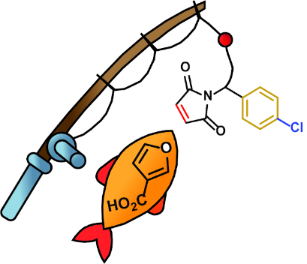
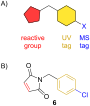
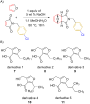
- utilizing the probe in additional strains to probe for novel natural products similar to the MMFs. A) Bioactive natural products containing a furan ring (blue) or 3-furoic acid moiety (red): plakorsin D, wortmannin, tournefolin C, rosefuran, and flufuran and their respective biological activities. B) MMF




Monitoring carbohydrate 3D structure quality with the Privateer database
Beilstein J. Org. Chem. 2024, 20, 931–939, doi:10.3762/bjoc.20.83

- conformational landscape of pyranose sugars. A well-modelled ᴅ-sugar would be expected to be in the lowest-energy conformation and have a theta angle close to 0° and would be indicated by a blue point; deviations from the ideal conformation are highlighted with a red cross. Right: Real space correlation


Synthesis and properties of 6-alkynyl-5-aryluracils
Beilstein J. Org. Chem. 2024, 20, 898–911, doi:10.3762/bjoc.20.80
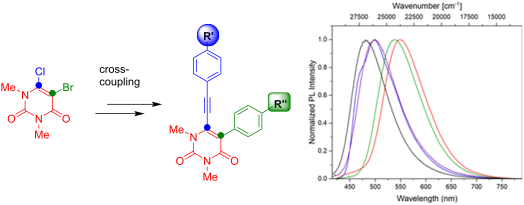
- molecules within and between a layer with two molecules at the top and the bottom of the unit cell. b) Determined from X-ray structural analysis at 123 K. Element color: carbon (grey), hydrogen (white), oxygen (red) and nitrogen (blue). The thermal ellipsoids are drawn at the 50% probability level. UV–vis





Activity assays of NnlA homologs suggest the natural product N-nitroglycine is degraded by diverse bacteria
Beilstein J. Org. Chem. 2024, 20, 830–840, doi:10.3762/bjoc.20.75
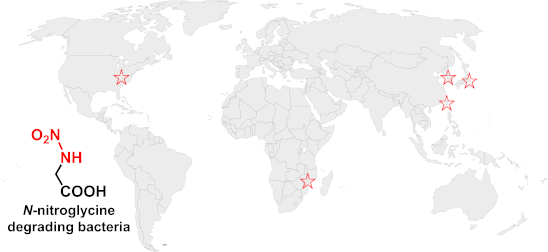
- residues outside of the heme pocket are colored in magenta. Nitrogen, oxygen, and iron atoms are colored blue, red, and orange, respectively. Figure generated using PyMOL. Phylogenetic tree of NnlA homologs with accession numbers. Branch lengths correspond to amino acid substitutions per position. Numbers