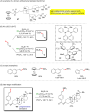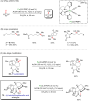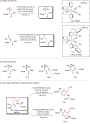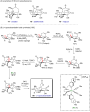

Search for "biologically active" in Full Text gives 561 result(s) in Beilstein Journal of Organic Chemistry. Showing first 200.
Beilstein J. Org. Chem. 2021, 17, 2729–2764, doi:10.3762/bjoc.17.185
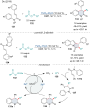
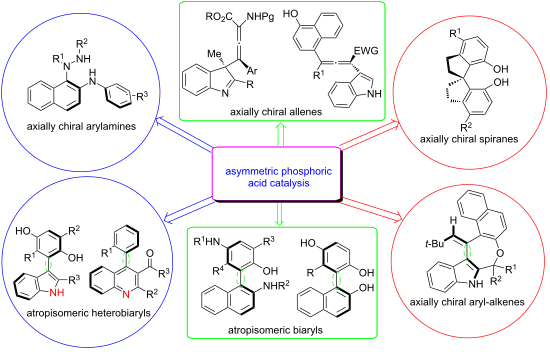
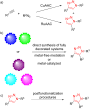
Graphical Abstract
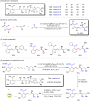
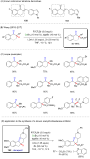
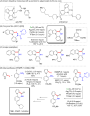
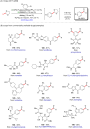
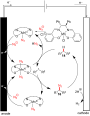
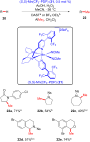
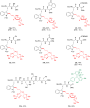
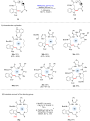
Figure 1: Representative examples of axially chiral biaryls, heterobiaryls, spiranes and allenes as ligands a...
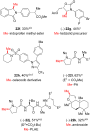
Figure 2: Selected examples of axially chiral drugs and bioactive molecules.
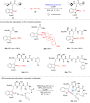
Figure 3: Axially chiral functional materials and supramolecules.
Figure 4: Important chiral phosphoric acid scaffolds used in this review.
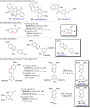
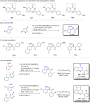
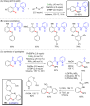
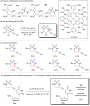
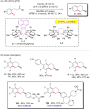
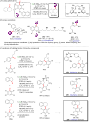
Scheme 1: Atroposelective aryl–aryl-bond formation by employing a facile [3,3]-sigmatropic rearrangement.
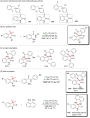
Scheme 2: Atroposelective synthesis of axially chiral biaryl amino alcohols 5.
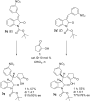
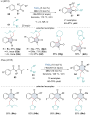
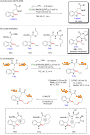
Scheme 3: The enantioselective reaction of quinone and 2-naphthol derivatives.
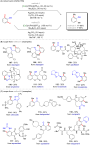
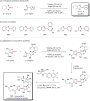
Scheme 4: Enantioselective synthesis of multisubstituted biaryls.
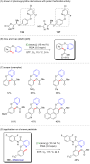
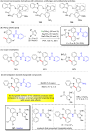
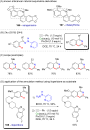
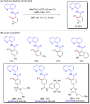
Scheme 5: Enantioselective synthesis of axially chiral quinoline-derived biaryl atropisomers mediated by chir...
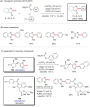
Scheme 6: Pd-Catalyzed atroposelective C–H olefination of biarylamines.
Scheme 7: Palladium-catalyzed directed atroposelective C–H allylation.
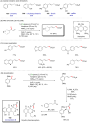
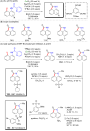
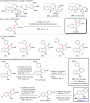
Scheme 8: Enantioselective synthesis of axially chiral (a) aryl indoles and (b) biaryldiols.
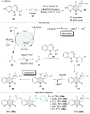
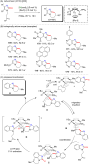
Scheme 9: Asymmetric arylation of indoles enabled by azo groups.
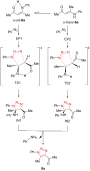
Scheme 10: Proposed mechanism for the asymmetric arylation of indoles.
Scheme 11: Enantioselective synthesis of axially chiral N-arylindoles [38].
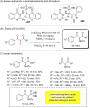
Scheme 12: Enantioselective [3 + 2] formal cycloaddition and central-to-axial chirality conversion.
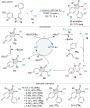
Scheme 13: Organocatalytic atroposelective arene functionalization of nitrosonaphthalene with indoles.
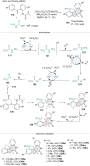
Scheme 14: Proposed reaction mechanism for the atroposelective arene functionalization of nitrosonaphthalenes.
Scheme 15: Asymmetric construction of axially chiral naphthylindoles [65].
Scheme 16: Enantioselective synthesis of axially chiral 3,3’-bisindoles [66].
Scheme 17: Atroposelective synthesis of 3,3’-bisiindoles bearing axial and central chirality.
Scheme 18: Enantioselective synthesis of axially chiral 3,3’-bisindoles bearing single axial chirality.
Scheme 19: Enantioselective reaction of azonaphthalenes with various pyrazolones.
Scheme 20: Enantioselective and atroposelective synthesis of axially chiral N-arylcarbazoles [73].
Scheme 21: Atroposelective cyclodehydration reaction.
Scheme 22: Atroposelective construction of axially chiral N-arylbenzimidazoles [78].
Scheme 23: Proposed reaction mechanism for the atroposelective synthesis of axially chiral N-arylbenzimidazole...
Scheme 24: Atroposelective synthesis of axially chiral arylpyrroles [21].
Scheme 25: Synthesis of axially chiral arylquinazolinones and its reaction pathway [35].
Scheme 26: Synthesis of axially chiral aryquinoline by Friedländer heteroannulation reaction and its proposed...
Scheme 27: Povarov cycloaddition–oxidative chirality conversion process.
Scheme 28: Atroposelective synthesis of oxindole-based axially chiral styrenes via kinetic resolution.
Scheme 29: Synthesis of axially chiral alkene-indole frame works [45].
Scheme 30: Proposed reaction mechanism for axially chiral alkene-indoles.
Scheme 31: Atroposelective C–H aminations of N-aryl-2-naphthylamines with azodicarboxylates.
Scheme 32: Synthesis of brominated atropisomeric N-arylquinoids.
Scheme 33: The enantioselective syntheses of axially chiral SPINOL derivatives.
Scheme 34: γ-Addition reaction of various 2,3-disubstituted indoles to β,γ-alkynyl-α-imino esters.
Scheme 35: Regio- and stereoselective γ-addition reactions of isoxazol-5(4H)-ones to β,γ-alkynyl-α-imino ester...
Scheme 36: Synthesis of chiral tetrasubstituted allenes and naphthopyrans.
Scheme 37: Asymmetric remote 1,8-conjugate additions of thiazolones and azlactones to propargyl alcohols.
Scheme 38: Synthesis of chiral allenes from 1-substituted 2-naphthols [107].
Beilstein J. Org. Chem. 2021, 17, 2611–2620, doi:10.3762/bjoc.17.174
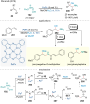
Graphical Abstract
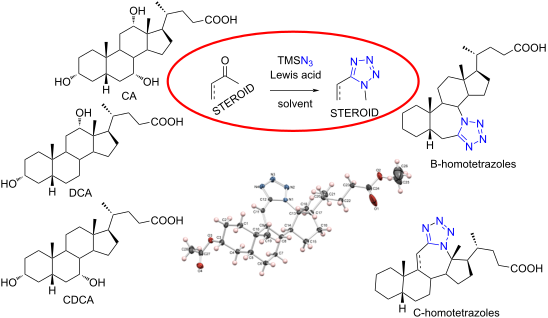
Figure 1: Structures of the steroidal tetrazoles that showed anticancer potential in vitro.
Figure 2: Mechanism of the Schmidt reaction.
Scheme 1: Synthesis of 12-oxo intermediates. Reagents and conditions: a) EtOAc, pTsOH, reflux, 14 h (81%); b)...
Scheme 2: Synthesis of 7-oxo intermediate 11 from chenodeoxycholic acid (9). Reagents and conditions: a) EtOA...
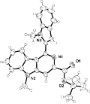
Figure 3: Mercury [51] drawing of the molecular structures of compounds 13 and 14, with labelling of nonhydrogen ...
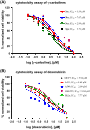
Figure 4: Dose dependence of the cytotoxicity of tested compounds on treated cell lines. All compounds were t...
Beilstein J. Org. Chem. 2021, 17, 2585–2610, doi:10.3762/bjoc.17.173
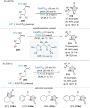
Graphical Abstract
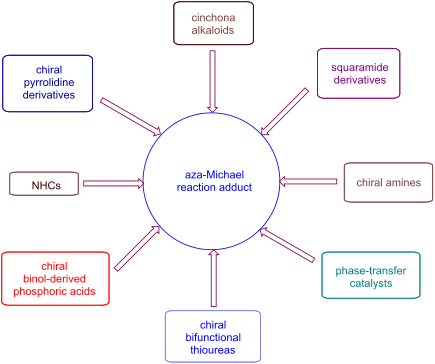
Scheme 1: Asymmetric aza-Michael addition catalyzed by cinchona alkaloid derivatives.
Scheme 2: Intramolecular 6-exo-trig aza-Michael addition reaction.
Scheme 3: Asymmetric aza-Michael/Michael addition cascade reaction of 2-nitrobenzofurans and 2-nitrobenzothio...
Scheme 4: Asymmetric aza-Michael addition of para-dienone imide to benzylamine.
Scheme 5: Asymmetric synthesis of chiral N-functionalized heteroarenes.
Beilstein J. Org. Chem. 2021, 17, 2505–2510, doi:10.3762/bjoc.17.167
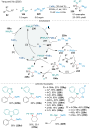
Graphical Abstract
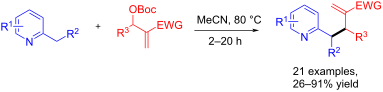
Scheme 1: The benzylic C(sp3)–H allylic alkylation reactions of 2-alkylpyridines.
Scheme 2: Mechanistic hypothesis of the alkylation reaction of 2-alkylpyridines with MBH carbonates.
Scheme 3: Scope of MBH carbonates 2 with 2-picoline 1a. The reactions were performed using 1a (1.0 mmol, 2 eq...
Scheme 4: Scope of 2-alkylpyridine 1 with MBH carbonate 2a. The reactions were performed using 1 (1.0 mmol, 2...
Beilstein J. Org. Chem. 2021, 17, 2399–2416, doi:10.3762/bjoc.17.157
Graphical Abstract
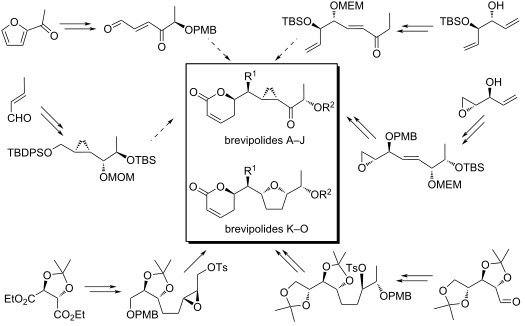
Figure 1: Structures of brevipolides A–O (1 – 15).
Scheme 1: Retrosynthetic analysis of brevipolide H (8) by Kumaraswamy.
Scheme 2: Attempt to synthesize brevipolide H (8) by Kumaraswamy. (R,R)-Noyori cat. = RuCl[N-(tosyl)-1,2-diph...
Scheme 3: Attempt to synthesize brevipolide H (8) by Kumaraswamy (continued).
Scheme 4: Retrosynthetic analysis of brevipolide H (8) by Hou.
Scheme 5: Synthesis ent-brevipolide H (ent-8) by Hou.
Scheme 6: Retrosynthetic analysis of brevipolide H (8) by Mohapatra.
Scheme 7: Attempt to synthesize brevipolide H (8) by Mohapatra.
Scheme 8: Attempt to synthesize brevipolide H (8) by Mohapatra (continued). (+)-(IPC)2-BCl = (+)-B-chloro-dii...
Scheme 9: Retrosynthetic analysis of brevipolide H (8) by Hou.
Scheme 10: Synthesis of brevipolide H (8) by Hou.
Scheme 11: Retrosynthetic analysis of brevipolide M (13) by Sabitha.
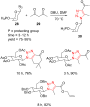
Scheme 12: Synthesis of brevipolide M (13) by Sabitha.
Scheme 13: Retrosynthetic analysis of brevipolides M (13) and N (14) by Sabitha.
Scheme 14: Synthesis of brevipolides M (13) and N (14) by Sabitha.
Beilstein J. Org. Chem. 2021, 17, 2340–2347, doi:10.3762/bjoc.17.152
Graphical Abstract
Figure 1: Biologically active phenanthridines.
Figure 2: Synthetic routes to phenanthridines via iminyl radicals.
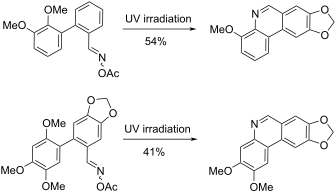
Scheme 1: Previous unexpected synthesis of the phenanthridine framework.
Scheme 2: Synthesis of biaryl benzaldehydes.
Scheme 3: Synthesis of biaryl oximes.
Scheme 4: Synthesis of phenanthridines. Reagents and conditions (i) UV irradiation (450 W medium pressure Hg ...
Figure 3: Two possible mechanistic routes and intermediates in the synthesis of phenanthridines.
Scheme 5: Synthesis of trisphaeridine. Reagents and conditions (i) cat. Pd(PPh3)4, aq Na2CO3, DME, reflux, Ar...
Beilstein J. Org. Chem. 2021, 17, 2203–2208, doi:10.3762/bjoc.17.142
Graphical Abstract
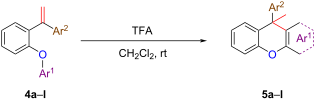
Scheme 1: Synthesis of 4a: (i) phenol, K2CO3, DMF, reflux, 2 h, 91%; (ii) PhMgBr, dry THF, 0 °C, 2 h, 86%; (i...
Figure 1: Scope of substrates for intramolecular FCA by activation of 4a–l and their isolated yields. aCondit...
Scheme 2: Plausible reaction mechanism for the cyclization reaction of alkene 4a.
Beilstein J. Org. Chem. 2021, 17, 2077–2084, doi:10.3762/bjoc.17.134
Graphical Abstract
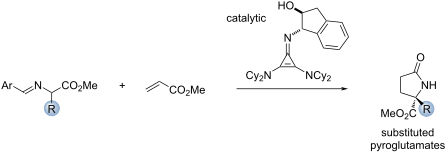
Figure 1: Strategy for the synthesis of glutamate and pyroglutamate derivatives and several natural products ...
Figure 2: Effect of the aryl substituent on reaction efficiency and selectivity.
Figure 3: Proposed transition state model.
Beilstein J. Org. Chem. 2021, 17, 1939–1951, doi:10.3762/bjoc.17.127
Graphical Abstract
Figure 1: Examples of indazole natural products (1 and 2) and synthetic biologically active indazole derivati...
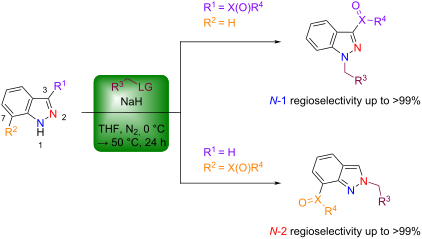
Scheme 1: Synthetic approaches to N-1 substituted indazole derivatives [12-14].
Scheme 2: N-Alkylation of indazole 9 under Mitsunobu conditions shows a strong preference (ratio N-1 (10):N-2...
Figure 2: Observation of a 1H–13C correlation between the C-7a (blue circle) or C-3 (red circle) atom of the ...
Figure 3: C-3 substituted indazole derivatives (12–24) employed to investigate C-3 substituent effects on ind...
Scheme 3: Proposed mechanism for the regioselective N-1 alkylation of indazoles 9, 19, and 21–24 in the prese...
Beilstein J. Org. Chem. 2021, 17, 1849–1938, doi:10.3762/bjoc.17.126
Graphical Abstract
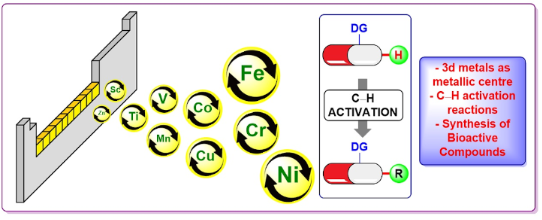
Scheme 1: Schematic overview of transition metals studied in C–H activation processes.
Scheme 2: (A) Known biological activities related to benzimidazole-based compounds; (B and C) an example of a...
Scheme 3: (A) Known biological activities related to quinoline-based compounds; (B and C) an example of a sca...
Scheme 4: (A) Known biological activities related to sulfur-containing compounds; (B and C) an example of a s...
Scheme 5: (A) Known biological activities related to aminoindane derivatives; (B and C) an example of a scand...
Scheme 6: (A) Known biological activities related to norbornane derivatives; (B and C) an example of a scandi...
Scheme 7: (A) Known biological activities related to aniline derivatives; (B and C) an example of a titanium-...
Scheme 8: (A) Known biological activities related to cyclohexylamine derivatives; (B) an example of an intram...
Scheme 9: (A) Known biologically active benzophenone derivatives; (B and C) photocatalytic oxidation of benzy...
Scheme 10: (A) Known bioactive fluorine-containing compounds; (B and C) vanadium-mediated C(sp3)–H fluorinatio...
Scheme 11: (A) Known biologically active Lythraceae alkaloids; (B) synthesis of (±)-decinine (30).
Scheme 12: (A) Synthesis of (R)- and (S)-boehmeriasin (31); (B) synthesis of phenanthroindolizidines by vanadi...
Scheme 13: (A) Known bioactive BINOL derivatives; (B and C) vanadium-mediated oxidative coupling of 2-naphthol...
Scheme 14: (A) Known antiplasmodial imidazopyridazines; (B) practical synthesis of 41.
Scheme 15: (A) Gold-catalyzed drug-release mechanism using 2-alkynylbenzamides; (B and C) chromium-mediated al...
Scheme 16: (A) Examples of anti-inflammatory benzaldehyde derivatives; (B and C) chromium-mediated difunctiona...
Scheme 17: (A and B) Manganese-catalyzed chemoselective intramolecular C(sp3)–H amination; (C) late-stage modi...
Scheme 18: (A and B) Manganese-catalyzed C(sp3)–H amination; (C) late-stage modification of a leelamine deriva...
Scheme 19: (A) Known bioactive compounds containing substituted N-heterocycles; (B and C) manganese-catalyzed ...
Scheme 20: (A) Known indoles that present GPR40 full agonist activity; (B and C) manganese-catalyzed C–H alkyl...
Scheme 21: (A) Examples of known biaryl-containing drugs; (B and C) manganese-catalyzed C–H arylation through ...
Scheme 22: (A) Known zidovudine derivatives with potent anti-HIV properties; (B and C) manganese-catalyzed C–H...
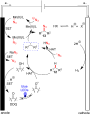
Scheme 23: (A and B) Manganese-catalyzed C–H organic photo-electrosynthesis; (C) late-stage modification.
Scheme 24: (A) Example of a known antibacterial silylated dendrimer; (B and C) manganese-catalyzed C–H silylat...
Scheme 25: (A and B) Fe-based small molecule catalyst applied for selective aliphatic C–H oxidations; (C) late...
Scheme 26: (A) Examples of naturally occurring gracilioethers; (B) the first total synthesis of gracilioether ...
Scheme 27: (A and B) Selective aliphatic C–H oxidation of amino acids; (C) late-stage modification of proline-...
Scheme 28: (A) Examples of Illicium sesquiterpenes; (B) first chemical synthesis of (+)-pseudoanisatin (80) in...
Scheme 29: (A and B) Fe-catalyzed deuteration; (C) late-stage modification of pharmaceuticals.
Scheme 30: (A and B) Biomimetic Fe-catalyzed aerobic oxidation of methylarenes to benzaldehydes (PMHS, polymet...
Scheme 31: (A) Known tetrahydroquinolines with potential biological activities; (B and C) redox-selective Fe c...
Scheme 32: (A) Known drugs containing a benzofuran unit; (B and C) Fe/Cu-catalyzed tandem O-arylation to acces...
Scheme 33: (A) Known azaindolines that act as M4 muscarinic acetylcholine receptor agonists; (B and C) intramo...
Scheme 34: (A) Known indolinones with anticholinesterase activity; (B and C) oxidative C(sp3)–H cross coupling...
Scheme 35: (A and B) Cobalt-catalyzed C–H alkenylation of C-3-peptide-containing indoles; (C) derivatization b...
Scheme 36: (A) Cobalt-Cp*-catalyzed C–H methylation of known drugs; (B and C) scope of the o-methylated deriva...
Scheme 37: (A) Known lasalocid A analogues; (B and C) three-component cobalt-catalyzed C–H bond addition; (D) ...
Scheme 38: (A and B) Cobalt-catalyzed C(sp2)–H amidation of thiostrepton.
Scheme 39: (A) Known 4H-benzo[d][1,3]oxazin-4-one derivatives with hypolipidemic activity; (B and C) cobalt-ca...
Scheme 40: (A and B) Cobalt-catalyzed C–H arylation of pyrrole derivatives; (C) application for the synthesis ...
Scheme 41: (A) Known 2-phenoxypyridine derivatives with potent herbicidal activity; (B and C) cobalt-catalyzed...
Scheme 42: (A) Natural cinnamic acid derivatives; (B and C) cobalt-catalyzed C–H carboxylation of terminal alk...
Scheme 43: (A and B) Cobalt-catalyzed C–H borylation; (C) application to the synthesis of flurbiprofen.
Scheme 44: (A) Benzothiazoles known to present anticonvulsant activities; (B and C) cobalt/ruthenium-catalyzed...
Scheme 45: (A and B) Cobalt-catalyzed oxygenation of methylene groups towards ketone synthesis; (C) synthesis ...
Scheme 46: (A) Known anticancer tetralone derivatives; (B and C) cobalt-catalyzed C–H difluoroalkylation of ar...
Scheme 47: (A and B) Cobalt-catalyzed C–H thiolation; (C) application in the synthesis of quetiapine (153).
Scheme 48: (A) Known benzoxazole derivatives with anticancer, antifungal, and antibacterial activities; (B and...
Scheme 49: (A and B) Cobalt-catalyzed C–H carbonylation of naphthylamides; (C) BET inhibitors 158 and 159 tota...
Scheme 50: (A) Known bioactive pyrrolo[1,2-a]quinoxalin-4(5H)-one derivatives; (B and C) cobalt-catalyzed C–H ...
Scheme 51: (A) Known antibacterial cyclic sulfonamides; (B and C) cobalt-catalyzed C–H amination of propargyli...
Scheme 52: (A and B) Cobalt-catalyzed intramolecular 1,5-C(sp3)–H amination; (C) late-stage functionalization ...
Scheme 53: (A and B) Cobalt-catalyzed C–H/C–H cross-coupling between benzamides and oximes; (C) late-state syn...
Scheme 54: (A) Known anticancer natural isoquinoline derivatives; (B and C) cobalt-catalyzed C(sp2)–H annulati...
Scheme 55: (A) Enantioselective intramolecular nickel-catalyzed C–H activation; (B) bioactive obtained motifs;...
Scheme 56: (A and B) Nickel-catalyzed α-C(sp3)–H arylation of ketones; (C) application of the method using kno...
Scheme 57: (A and B) Nickel-catalyzed C(sp3)–H acylation of pyrrolidine derivatives; (C) exploring the use of ...
Scheme 58: (A) Nickel-catalyzed C(sp3)–H arylation of dioxolane; (B) library of products obtained from biologi...
Scheme 59: (A) Intramolecular enantioselective nickel-catalyzed C–H cycloalkylation; (B) product examples, inc...
Scheme 60: (A and B) Nickel-catalyzed C–H deoxy-arylation of azole derivatives; (C) late-stage functionalizati...
Scheme 61: (A and B) Nickel-catalyzed decarbonylative C–H arylation of azole derivatives; (C) application of t...
Scheme 62: (A and B) Another important example of nickel-catalyzed C–H arylation of azole derivatives; (C) app...
Scheme 63: (A and B) Another notable example of a nickel-catalyzed C–H arylation of azole derivatives; (C) lat...
Scheme 64: (A and B) Nickel-based metalorganic framework (MOF-74-Ni)-catalyzed C–H arylation of azole derivati...
Scheme 65: (A) Known commercially available benzothiophene-based drugs; (B and C) nickel-catalyzed C–H arylati...
Scheme 66: (A) Known natural tetrahydrofuran-containing substances; (B and C) nickel-catalyzed photoredox C(sp3...
Scheme 67: (A and B) Another notable example of a nickel-catalyzed photoredox C(sp3)–H alkylation/arylation; (...
Scheme 68: (A) Electrochemical/nickel-catalyzed C–H alkoxylation; (B) achieved scope, including three using na...
Scheme 69: (A) Enantioselective photoredox/nickel catalyzed C(sp3)–H arylation; (B) achieved scope, including ...
Scheme 70: (A) Known commercially available trifluoromethylated drugs; (B and C) nickel-catalyzed C–H trifluor...
Scheme 71: (A and B) Stereoselective nickel-catalyzed C–H difluoroalkylation; (C) late-stage functionalization...
Scheme 72: (A) Cu-mediated ortho-amination of oxalamides; (B) achieved scope, including derivatives obtained f...
Scheme 73: (A) Electro-oxidative copper-mediated amination of 8-aminoquinoline-derived amides; (B) achieved sc...
Scheme 74: (A and B) Cu(I)-mediated C–H amination with oximes; (C) derivatization using telmisartan (241) as s...
Scheme 75: (A and B) Cu-mediated amination of aryl amides using ammonia; (C) late-stage modification of proben...
Scheme 76: (A and B) Synthesis of purine nucleoside analogues using copper-mediated C(sp2)–H activation.
Scheme 77: (A) Copper-mediated annulation of acrylamide; (B) achieved scope, including the synthesis of the co...
Scheme 78: (A) Known bioactive compounds containing a naphthyl aryl ether motif; (B and C) copper-mediated eth...
Scheme 79: (A and B) Cu-mediated alkylation of N-oxide-heteroarenes; (C) late-stage modification.
Scheme 80: (A) Cu-mediated cross-dehydrogenative coupling of polyfluoroarenes and alkanes; (B) scope from know...
Scheme 81: (A) Known anticancer acrylonitrile compounds; (B and C) Copper-mediated cyanation of unactivated al...
Scheme 82: (A) Cu-mediated radiofluorination of 8-aminoquinoline-derived aryl amides; (B) achieved scope, incl...
Scheme 83: (A) Examples of natural β-carbolines; (B and C) an example of a zinc-catalyzed C–H functionalizatio...
Scheme 84: (A) Examples of anticancer α-aminophosphonic acid derivatives; (B and C) an example of a zinc-catal...
Beilstein J. Org. Chem. 2021, 17, 1733–1751, doi:10.3762/bjoc.17.122
Graphical Abstract
Scheme 1: Mn-catalyzed late-stage fluorination of sclareolide (1) and complex steroid 3.
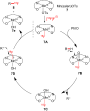
Figure 1: Proposed reaction mechanism of C–H fluorination by a manganese porphyrin catalyst.
Scheme 2: Late-stage radiofluorination of biologically active complex molecules.
Figure 2: Proposed mechanism of C–H radiofluorination.
Scheme 3: Late-stage C–H azidation of bioactive molecules. a1.5 mol % of Mn(TMP)Cl (5) was used. bMethyl acet...
Figure 3: Proposed reaction mechanism of manganese-catalyzed C–H azidation.
Scheme 4: Mn-catalyzed late-stage C–H azidation of bioactive molecules via electrophotocatalysis. a2.5 mol % ...
Figure 4: Proposed reaction mechanism of electrophotocatalytic azidation.
Scheme 5: Manganaelectro-catalyzed late-stage azidation of bioactive molecules.
Figure 5: Proposed reaction pathway of manganaelectro-catalyzed late-stage C–H azidation.
Scheme 6: Mn-catalyzed late-stage amination of bioactive molecules. a3 Å MS were used. Protonation with HBF4⋅...
Figure 6: Proposed mechanism of manganese-catalyzed C–H amination.
Scheme 7: Mn-catalyzed C–H methylation of heterocyclic scaffolds commonly found in small-molecule drugs. aDAS...
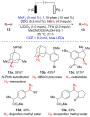
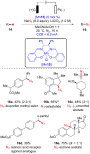
Scheme 8: Examples of late-stage C–H methylation of bioactive molecules. aDAST activation. bFor insoluble sub...
Scheme 9: A) Mn-catalyzed late-stage C–H alkynylation of peptides. B) Intramolecular late-stage alkynylative ...
Figure 7: Proposed reaction mechanism of Mn(I)-catalyzed C–H alkynylation.
Scheme 10: Late-stage Mn-catalyzed C–H allylation of peptides and bioactive motifs.
Scheme 11: Intramolecular C–H allylative cyclic peptide formation.
Scheme 12: Late-stage C–H glycosylation of tryptophan analogues.
Scheme 13: Late-stage C–H glycosylation of tryptophan-containing peptides.
Scheme 14: Late-stage C–H alkenylation of tryptophan-containing peptides.
Scheme 15: A) Late-stage C–H macrocyclization of tryptophan-containing peptides and B) traceless removal of py...
Beilstein J. Org. Chem. 2021, 17, 1600–1628, doi:10.3762/bjoc.17.114
Graphical Abstract
Figure 1: Some significant triazole derivatives [8,23-27].
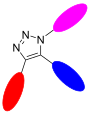
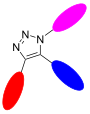
Scheme 1: A general comparison between synthetic routes for disubstituted 1,2,3-triazole derivatives and full...
Scheme 2: Synthesis of formyltriazoles 3 from the treatment of α-bromoacroleins 1 with azides 2.
Scheme 3: A probable mechanism for the synthesis of formyltriazoles 5 from the treatment of α-bromoacroleins 1...
Scheme 4: Synthesis of 1,4,5-trisubstituted 1,2,3-triazoles 8 from the reaction of aryl azides 7 with enamino...
Scheme 5: Proposed mechanism for the synthesis of 1,4,5-trisubstituted 1,2,3-triazoles from the reaction of a...
Scheme 6: Synthesis of 1,4,5-trisubstituted 1,2,3-triazoles 11 from the reaction of primary amines 10 with 1,...
Scheme 7: The proposed mechanism for the synthesis of 1,4,5-trisubstituted 1,2,3-triazoles 11 from the reacti...
Scheme 8: Synthesis of fully decorated 1,2,3-triazoles 19 containing a sulfur-based side chain.
Scheme 9: Mechanism for the formation of fully decorated 1,2,3-triazoles 19 containing a sulfur-based side ch...
Scheme 10: Synthesis of fully decorated 1,2,3-triazole compounds 25 through the regioselective addition and cy...
Scheme 11: A reasonable mechanism for the synthesis of fully decorated 1,2,3-triazole compounds 25 through the...
Scheme 12: Synthesis of 1,4,5-trisubstituted glycosyl-containing 1,2,3-triazole derivatives 30 from the reacti...
Scheme 13: Synthesis of 1,4,5-trisubstituted 1,2,3-triazoles 34 via intramolecular cyclization reaction of ket...
Scheme 14: Synthesis of fully decorated 1,2,3-triazoles 38 from the reaction of aldehydes 35, amines 36, and α...
Scheme 15: A reasonable mechanism for the synthesis of fully decorated 1,2,3-triazoles 38 from the reaction of...
Scheme 16: Synthesis of functionally rich double C- and N-vinylated 1,2,3-triazoles 45 and 47.
Scheme 17: Synthesis of disubstituted 4-chloro-, 4-bromo-, and 4-iodo-1,2,3-triazoles 50.
Scheme 18: a) A general route for SPAAC in polymer chemistry and b) synthesis of a novel pH-sensitive polymeri...
Scheme 19: Synthesis of 5-allenyl-1,2,3-triazoles 60 by the treatment of alkynes 57, azides 58, and propargyli...
Scheme 20: A reasonable mechanism for the synthesis of 5-allenyl-1,2,3-triazoles 60 by the treatment of alkyne...
Scheme 21: Synthesis of 5‐alkynyl-1,2,3-triazoles 69.
Scheme 22: A reasonable mechanism for the synthesis of 5‐alkynyl-1,2,3-triazoles 69.
Scheme 23: Synthesis of sulfur-cycle-fused 1,2,3-triazoles 75 and 77.
Scheme 24: A reasonable mechanism for the synthesis of sulfur-cycle-fused 1,2,3‐triazoles 75 and 77.
Scheme 25: Synthesis of 5-selanyltriazoles 85 from the reaction of ethynylstibanes 82, organic azides 83, and ...
Scheme 26: A mechanism for the synthesis of 5-selanyltriazoles 85 from the reaction of ethynylstibanes 82, org...
Scheme 27: Synthesis of trisubstituted triazoles containing an Sb substituent at position C5 in 93 and 5-unsub...
Scheme 28: Synthesis of asymmetric triazole disulfides 98 from disulfide-containing tert-butyltosyl disulfide 97...
Scheme 29: A mechanism for the synthesis of asymmetric triazole disulfides 98 from disulfide-containing tert-bu...
Scheme 30: Synthesis of triazole-fused sultams 104.
Scheme 31: Synthesis of 1,2,3-triazole-fused tricyclic heterocycles 106.
Scheme 32: A reasonable mechanism for the synthesis of 1,2,3-triazole-fused tricyclic heterocycles 106.
Scheme 33: Synthesis of 5-aryl-substituted 1,2,3-triazole derivatives 112.
Scheme 34: A reasonable mechanism for the synthesis of 5-aryl-substituted 1,2,3-triazole derivatives 112.
Scheme 35: Synthesis of 1,4,5-trisubstituted 1,2,3-triazole-5-carboxamides 119.
Scheme 36: A probable mechanism for the synthesis of 1,4,5-trisubstituted 1,2,3-triazole-5-carboxamides 119.
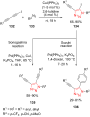
Scheme 37: Synthesis of fully decorated triazoles 125 via the Pd/C-catalyzed arylation of disubstituted triazo...
Scheme 38: Synthesis of triazolo[1,5-a]indolones 131.
Scheme 39: Synthesis of unsymmetrically substituted triazole-fused enediyne systems 135 and 5-aryl-4-ethynyltr...
Scheme 40: Synthesis of Pd/Cu-BNP 139 and application of 139 in the synthesis of polycyclic triazoles 142.
Scheme 41: A probable mechanism for the synthesis of polycyclic triazoles 142.
Scheme 42: Synthesis of highly functionalized 1,2,3-triazole-fused 5-, 6-, and 7-membered rings 152–154.
Scheme 43: A probable mechanism for the synthesis of highly functionalized 1,2,3-triazole-fused 5-, 6-, and 7-...
Scheme 44: Synthesis of fully functionalized 1,2,3-triazolo-fused chromenes 162, 164, and 166 via the intramol...
Scheme 45: Ru-catalyzed synthesis of fully decorated triazoles 172.
Scheme 46: Synthesis of 4-cyano-1,2,3-triazoles 175.
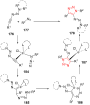
Scheme 47: Synthesis of functionalized triazoles from the reaction of 1-alkyltriazenes 176 and azides 177 and ...
Scheme 48: Mechanism for the synthesis of functionalized triazoles from the reaction of 1-alkyltriazenes 176 a...
Beilstein J. Org. Chem. 2021, 17, 1464–1475, doi:10.3762/bjoc.17.102
Graphical Abstract
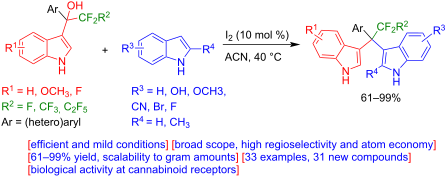
Figure 1: Diindolylmethanes and reported biological activities.
Figure 2: Synthetic strategies toward trifluoromethylated unsymmetrical quaternary DIMs.
Figure 3: Reactions performed to study the scope of the method.
Figure 4: Gram-scale synthesis of unsymmetrical DIMs 3a and 3ad.
Figure 5: Plausible reaction mechanism for the synthesis of fluoromethylated unsymmetrical DIMs, shown for co...
Beilstein J. Org. Chem. 2021, 17, 1453–1463, doi:10.3762/bjoc.17.101
Graphical Abstract
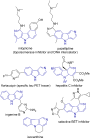
Figure 1: Selected examples of compounds containing the γ-carboline core.
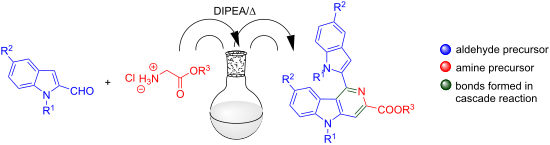
Scheme 1: The synthetic strategy of present work in comparison with previous reports.
Scheme 2: Series of synthesized 1-indolyl-3,5,8-substituted γ-carboline 3aa–ac, 3ba-ea and 1-indolyl-1,2-dihy...
Figure 2: Single-crystal XRD structure of 3ac (CCDC: 1897787).
Scheme 3: Plausible mechanism for the formation of 1,2-dihydro-γ-carboline derivative 3ga and 1-indolyl-3,5,8...
Figure 3: UV–vis absorption (left side) and emission (right side) spectra of 3ac measured in different solven...
Figure 4: Fluorescence decay profile of 3ac in DMSO (left side; λex 360 nm) and 10−5 M solutions of compound ...
Figure 5: Dose–response curves for (A) γ-carbolines 3ac, 3bc, 3ca, 3ga in the breast cancer cell line, MCF7 a...
Figure 6: Dose–response curve of γ-carbolines 3ac, 3bc, 3ca, 3ga in macrophage cell line, RAW264.7.
Figure 7: Laser scanning confocal microscopy studies (λex = 405 nm; collection range = 420–470 nm) for uptake...
Beilstein J. Org. Chem. 2021, 17, 1141–1148, doi:10.3762/bjoc.17.87
Graphical Abstract
Figure 1: Biologically active compounds having thiazolidin-4-one and thiazolo-1,2,4-triazine units.
Scheme 1: Regioselectivity of the cyclization of 3-thioxo-1,2,4-triazin-5-ones 1 with DMAD (A) and general co...
Scheme 2: Synthesis of imidazo[4,5-e]thiazolo[3,2-b]triazine derivatives 4a–n by the reaction of imidazo[4,5-...
Scheme 3: Reaction of imidazo[4,5-e]thiazolo[3,2-b]triazine 4h with aqueous KOH.
Scheme 4: Rearrangement of imidazo[4,5-e]thiazolo[3,2-b]triazines 4a–n into imidazo[4,5-e]thiazolo[2,3-c]tria...
Scheme 5: One-pot synthesis of compounds 5a,b,h,i from imidazo[4,5-e]triazines 3a,b.
Scheme 6: Plausible mechanism of the formation and the rearrangement of compounds 4 into isomers 5.
Figure 2: 1H NMR spectra of compounds 4h and 5h in DMSO-d6 in the region of 3.5–8.8 ppm.
Figure 3: X-ray crystal structure of compound 5i.
Beilstein J. Org. Chem. 2021, 17, 1096–1140, doi:10.3762/bjoc.17.86
Graphical Abstract
Scheme 1: General strategy for the enantioselective synthesis of N-containing heterocycles from N-tert-butane...
Scheme 2: Methodologies for condensation of aldehydes and ketones with tert-butanesulfinamides (1).
Scheme 3: Transition models for cis-aziridines and trans-aziridines.
Scheme 4: Mechanism for the reduction of N-tert-butanesulfinyl imines.
Scheme 5: Transition models for the addition of organomagnesium and organolithium compounds to N-tert-butanes...
Scheme 6: Synthesis of 2,2-dibromoaziridines 15 from aldimines 14 and bromoform, and proposed non-chelation-c...
Scheme 7: Diastereoselective synthesis of aziridines from tert-butanesulfinyl imines.
Scheme 8: Synthesis of vinylaziridines 22 from aldimines 14 and 1,3-dibromopropene 23, and proposed chelation...
Scheme 9: Synthesis of vinylaziridines 27 from aldimines 14 and α-bromoesters 26, and proposed transition sta...
Scheme 10: Synthesis of 2-chloroaziridines 28 from aldimines 14 and dichloromethane, and proposed transition s...
Scheme 11: Synthesis of cis-vinylaziridines 30 and 31 from aldimines 14 and bromomethylbutenolide 29.
Scheme 12: Synthesis of 2-chloro-2-aroylaziridines 36 and 32 from aldimines 14, arylnitriles 34, and silyldich...
Scheme 13: Synthesis of trifluoromethylaziridines 39 and proposed transition state of the aziridination.
Scheme 14: Synthesis of aziridines 42 and proposed state transition.
Scheme 15: Synthesis of 1-substituted 2-azaspiro[3.3]heptanes, 1-phenyl-2-azaspiro[3.4]octane and 1-phenyl-2-a...
Scheme 16: Synthesis of 1-substituted 2,6-diazaspiro[3.3]heptanes 48 from chiral imines 14 and 1-Boc-azetidine...
Scheme 17: Synthesis of β-lactams 52 from chiral imines 14 and dimethyl malonate (49).
Scheme 18: Synthesis of spiro-β-lactam 57 from chiral (RS)-N-tert-butanesulfinyl isatin ketimine 53 and ethyl ...
Scheme 19: Synthesis of β-lactam 60, a precursor of (−)-batzelladine D (61) and (−)-13-epi-batzelladine D (62)...
Scheme 20: Rhodium-catalyzed asymmetric synthesis of 3-substituted pyrrolidines 66 from chiral imine (RS)-63 a...
Scheme 21: Asymmetric synthesis of 1,3-disubstituted isoindolines 69 and 70 from chiral imine 67.
Scheme 22: Asymmetric synthesis of cis-2,5-disubstituted pyrrolidines 73 from chiral imine (RS)-71.
Scheme 23: Asymmetric synthesis of 3-hydroxy-5-substituted pyrrolidin-2-ones 77 from chiral imine (RS)-74.
Scheme 24: Asymmetric synthesis of 4-hydroxy-5-substituted pyrrolidin-2-ones 80 from chiral imines 79.
Scheme 25: Asymmetric synthesis of 3-pyrrolines 82 from chiral imines 14 and ethyl 4-bromocrotonate (81).
Scheme 26: Asymmetric synthesis of γ-amino esters 84, and tetramic acid derivative 86 from chiral imines (RS)-...
Scheme 27: Asymmetric synthesis of α-methylene-γ-butyrolactams 90 from chiral imines (Z,SS)-87 and ethyl 2-bro...
Scheme 28: Asymmetric synthesis of methylenepyrrolidines 92 from chiral imines (RS)-14 and 2-(trimethysilylmet...
Scheme 29: Synthesis of dibenzoazaspirodecanes from cyclic N-tert-butanesulfinyl imines.
Scheme 30: Stereoselective synthesis of cyclopenta[c]proline derivatives 103 from β,γ-unsaturated α-amino acid...
Scheme 31: Stereoselective synthesis of alkaloids (−)-angustureine (107) and (−)-cuspareine (108).
Scheme 32: Stereoselective synthesis of alkaloids (−)-pelletierine (112) and (+)-coniine (117).
Scheme 33: Synthesis of piperidine alkaloids (+)-dihydropinidine (122a), (+)-isosolenopsin (122b) and (+)-isos...
Scheme 34: Stereoselective synthesis of the alkaloids(+)-sedamine (125) from chiral imine (SS)-119.
Scheme 35: Stereoselective synthesis of trans-5-hydroxy-6-substituted-2-piperidinones 127 and 129 from chiral ...
Scheme 36: Stereoselective synthesis of trans-5-hydroxy-6-substituted ethanone-2-piperidinones 132 from chiral...
Scheme 37: Stereoselective synthesis of trans-3-benzyl-5-hydroxy-6-substituted-2-piperidinones 136 from chiral...
Scheme 38: Stereoselective synthesis of trans-5-hydroxy-6-substituted 2-piperidinones 139 from chiral imine 138...
Scheme 39: Stereoselective synthesis of ʟ-hydroxypipecolic acid 145 from chiral imine 144.
Scheme 40: Synthesis of 1-substituted isoquinolones 147, 149 and 151.
Scheme 41: Stereoselective synthesis of 3-substituted dihydrobenzo[de]isoquinolinones 154.
Scheme 42: Enantioselective synthesis of alkaloids (S)-1-benzyl-6,7-dimethoxy-1,2,3,4-tetrahydroisoquinoline (...
Scheme 43: Enantioselective synthesis of alkaloids (−)-cermizine B (171) and (+)-serratezomine E (172) develop...
Scheme 44: Stereoselective synthesis of (+)-isosolepnosin (177) and (+)-solepnosin (178) from homoallylamine d...
Scheme 45: Stereoselective synthesis of tetrahydroquinoline derivatives 184, 185 and 187 from chiral imines (RS...
Scheme 46: Stereoselective synthesis of pyridobenzofuran and pyridoindole derivatives 193 from homopropargylam...
Scheme 47: Stereoselective synthesis of 2-substituted 1,2,5,6-tetrahydropyridines 196 from chiral imines (RS)-...
Scheme 48: Stereoselective synthesis of 2-substituted trans-2,6-disubstituted piperidine 199 from chiral imine...
Scheme 49: Stereoselective synthesis of cis-2,6-disubstituted piperidines 200, and alkaloid (+)-241D, from chi...
Scheme 50: Stereoselective synthesis of 6-substituted piperidines-2,5-diones 206 and 1,7-diazaspiro[4.5]decane...
Scheme 51: Stereoselective synthesis of spirocyclic oxindoles 210 from chiral imines (RS)-53.
Scheme 52: Stereoselective synthesis of azaspiro compound 213 from chiral imine 211.
Scheme 53: Stereoselective synthesis of tetrahydroisoquinoline derivatives from chiral imines (RS)-214.
Scheme 54: Stereoselective synthesis of (−)-crispine A 223 from chiral imine (RS)-214.
Scheme 55: Synthesis of (−)-harmicine (228) using tert-butanesulfinamide through haloamide cyclization.
Scheme 56: Stereoselective synthesis of tetraponerines T1–T8.
Scheme 57: Stereoselective synthesis of phenanthroindolizidines 246a and (−)-tylophorine (246b), and phenanthr...
Scheme 58: Stereoselective synthesis of indoline, tetrahydroquinoline and tetrahydrobenzazepine derivatives 253...
Scheme 59: Stereoselective synthesis of (+)-epohelmin A (258) and (+)-epohelmin B (260) from aldimine (RS)-79.
Scheme 60: Stereoselective synthesis of (−)-epiquinamide (266) from chiral aldimine (SS)-261.
Scheme 61: Synthesis synthesis of (–)-hippodamine (273) and (+)-epi-hippodamine (272) using chiral sulfinyl am...
Scheme 62: Stereoselective synthesis of (+)-grandisine D (279) and (+)-amabiline (283).
Scheme 63: Stereoselective synthesis of (−)-epiquinamide (266) and (+)-swaisonine (291) from aldimine (SS)-126....
Scheme 64: Stereoselective synthesis of (+)-C(9a)-epi-epiquinamide (294).
Scheme 65: Stereoselective synthesis of (+)-lasubine II (298) from chiral aldimine (SS)-109.
Scheme 66: Stereoselective synthesis of (−)-epimyrtine (300a) and (−)-lasubine II (ent-302) from β-amino keton...
Scheme 67: Stereoselective synthesis of (−)-tabersonine (310), (−)-vincadifformine (311), and (−)-aspidospermi...
Scheme 68: Stereoselective synthesis of (+)-epohelmin A (258) and (+)-epohelmin B (260) from aldehyde 313 and ...
Scheme 69: Total synthesis of (+)-lysergic acid (323) from N-tert-butanesulfinamide (RS)-1.
Beilstein J. Org. Chem. 2021, 17, 1048–1085, doi:10.3762/bjoc.17.84
Graphical Abstract
Scheme 1: Synthesis of optically pure 4-phenylchroman-2-one [34].
Scheme 2: Synthesis of (R)-tolterodine [3].
Scheme 3: Catalytic cycle of the Pd(II)-catalysed 1,4-addition of organoboron reagents to enones [3,26,35].
Scheme 4: Enantioselective β-arylation of cyclohexanone [38].
Scheme 5: Application of L2/Pd(OAc)2 in the total synthesis of terpenes [8].
Scheme 6: Plausible catalytic cycle for the addition of phenylboronic acid to 2-cyclohexenone catalysed by L3...
Scheme 7: Microwave-assisted addition of phenylboronic acid to 2-cyclohexenone catalysed by L4/Pd2(dba)3·CHCl3...
Scheme 8: Plausible catalytic cycle of the addition of phenylboronic acid to 2-cyclohexenone catalysed by pal...
Scheme 9: Proposed catalytic cycle for the addition of phenylboronic acids to 2-cyclohexenone catalysed by Pd...
Scheme 10: Usage of addition reactions of boronic acids to various chromones in the syntheses of potentially a...
Scheme 11: Multigram-scale synthesis of ABBV-2222 [6].
Scheme 12: Application of the asymmetric addition of phenylboronic acid to a chromone derivative for the total...
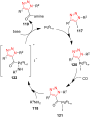
Scheme 13: Plausible catalytic cycle for the addition of phenylboronic acid to 3-methyl-2-cyclohexenone cataly...
Scheme 14: Total syntheses of naturally occurring terpenoids [10,11].
Scheme 15: Use of the L9/Pd(TFA)2 catalytic system for the synthesis of intermediates of biologically active c...
Scheme 16: Usage of a Michael addition catalysed by L9/Pd(TFA)2 in the total synthesis of (–)-ar-tenuifolene [12].
Scheme 17: Synthesis of terpenoids by Michael addition to 3-methyl-2-cyclopentenone [13].
Scheme 18: Rh-catalysed isomerisation of 3-alkyl-3-arylcyclopentanones to 1-tetralones [53].
Scheme 19: Addition reaction of phenylboronic acid to 3-methyl-2-cyclohexenone catalysed by L9/Pd(TFA)2 in wat...
Scheme 20: Micellar nanoreactor PdL10c for the synthesis of flavanones [58].
Scheme 21: Plausible catalytic cycle for the desymmetrisation of polycyclic cyclohexenediones by the addition ...
Scheme 22: Attempt to use the catalytic system L2/Pd(TFA)2 for the addition of phenylboronic acid to 3-methyl-...
Scheme 23: Ring opening of an enantioenriched tetrahydropyran-2-one derivative as alternative strategy to line...
Scheme 24: Synthesis of biologically active compounds from addition products [14-16].
Scheme 25: Chiral 1,10-phenantroline derivative L15 as ligand for the Pd-catalysed addition reactions of pheny...
Scheme 26: The Rh-catalysed addition reaction of phenylboronic acid to a 3-substituted enone [20].
Scheme 27: Underdeveloped methodologies [14,15,65-67].
Scheme 28: Flowchart for the selection of the proper catalytic system.
Beilstein J. Org. Chem. 2021, 17, 1001–1040, doi:10.3762/bjoc.17.82
Graphical Abstract
Figure 1: Tautomeric forms of biguanide.
Figure 2: Illustrations of neutral, monoprotonated, and diprotonated structures biguanide.
Figure 3: The main approaches for the synthesis of biguanides. The core structure is obtained via the additio...
Scheme 1: The three main preparations of biguanides from cyanoguanidine.
Scheme 2: Synthesis of butylbiguanide using CuCl2 [16].
Scheme 3: Synthesis of biguanides by the direct fusion of cyanoguanidine and amine hydrochlorides [17,18].
Scheme 4: Synthesis of ethylbiguanide and phenylbiguanide as reported by Smolka and Friedreich [14].
Scheme 5: Synthesis of arylbiguanides through the reaction of cyanoguanidine with anilines in water [19].
Scheme 6: Synthesis of aryl- and alkylbiguanides by adaptations of Cohn’s procedure [20,21].
Scheme 7: Microwave-assisted synthesis of N1-aryl and -dialkylbiguanides [22,23].
Scheme 8: Synthesis of aryl- and alkylbiguanides by trimethylsilyl activation [24,26].
Scheme 9: Synthesis of phenformin analogs by TMSOTf activation [27].
Scheme 10: Synthesis of N1-(1,2,4-triazolyl)biguanides [28].
Scheme 11: Synthesis of 2-guanidinobenzazoles by addition of ortho-substituted anilines to cyanoguanidine [30,32] and...
Scheme 12: Synthesis of 2,4-diaminoquinazolines by the addition of 2-cyanoaniline to cyanoguanidine and from 3...
Scheme 13: Reactions of anthranilic acid and 2-mercaptobenzoic acid with cyanoguanidine [24,36,37].
Scheme 14: Synthesis of disubstituted biguanides with Cu(II) salts [38].
Scheme 15: Synthesis of an N1,N2,N5-trisubstituted biguanide by fusion of an amine hydrochloride and 2-cyano-1...
Scheme 16: Synthesis of N1,N5-disubstituted biguanides by the addition of anilines to cyanoguanidine derivativ...
Scheme 17: Microwave-assisted additions of piperazine and aniline hydrochloride to substituted cyanoguanidines ...
Scheme 18: Synthesis of N1,N5-alkyl-substituted biguanides by TMSOTf activation [27].
Scheme 19: Additions of oxoamines hydrochlorides to dimethylcyanoguanidine [49].
Scheme 20: Unexpected cyclization of pyridylcyanoguanidines under acidic conditions [50].
Scheme 21: Example of industrial synthesis of chlorhexidine [51].
Scheme 22: Synthesis of symmetrical N1,N5-diarylbiguanides from sodium dicyanamide [52,53].
Scheme 23: Synthesis of symmetrical N1,N5-dialkylbiguanides from sodium dicyanamide [54-56].
Scheme 24: Stepwise synthesis of unsymmetrical N1,N5-trisubstituted biguanides from sodium dicyanamide [57].
Scheme 25: Examples for the synthesis of unsymmetrical biguanides [58].
Scheme 26: Examples for the synthesis of an 1,3-diaminobenzoquinazoline derivative by the SEAr cyclization of ...
Scheme 27: Major isomers formed by the SEAr cyclization of symmetric biguanides derived from 2- and 3-aminophe...
Scheme 28: Lewis acid-catalyzed synthesis of 8H-pyrrolo[3,2-g]quinazoline-2,4-diamine [63].
Scheme 29: Synthesis of [1,2,4]oxadiazoles by the addition of hydroxylamine to dicyanamide [49,64].
Scheme 30: Principle of “bisamidine transfer” and analogy between the reactions with N-amidinopyrazole and N-a...
Scheme 31: Representative syntheses of N-amidino-amidinopyrazole hydrochloride [68,69].
Scheme 32: First examples of biguanide syntheses using N-amidino-amidinopyrazole [66].
Scheme 33: Example of “biguanidylation” of a hydrazide substrate [70].
Scheme 34: Example for the synthesis of biguanides using S-methylguanylisothiouronium iodide as “bisamidine tr...
Scheme 35: Synthesis of N-substituted N1-cyano-S-methylisothiourea precursors.
Scheme 36: Addition routes on N1-cyano-S-methylisothioureas.
Scheme 37: Synthesis of an hydroxybiguanidine from N1-cyano-S-methylisothiourea [77].
Scheme 38: Synthesis of an N1,N2,N3,N4,N5-pentaarylbiguanide from the corresponding triarylguanidine and carbo...
Scheme 39: Reactions of N,N,N’,N’-tetramethylguanidine (TMG) with carbodiimides to synthesize hexasubstituted ...
Scheme 40: Microwave-assisted addition of N,N,N’,N’-tetramethylguanidine to carbodiimides [80].
Scheme 41: Synthesis of N1-aryl heptasubstituted biguanides via a one-pot biguanide formation–copper-catalyzed ...
Scheme 42: Formation of 1,2-dihydro-1,3,5-triazine derivatives by the reaction of guanidine with excess carbod...
Scheme 43: Plausible mechanism for the spontaneous cyclization of triguanides [82].
Scheme 44: a) Formation of mono- and disubstituted (iso)melamine derivatives by the reaction of biguanides and...
Scheme 45: Reactions of 2-aminopyrimidine with carbodiimides to synthesize 2-guanidinopyrimidines as “biguanid...
Scheme 46: Non-catalyzed alternatives for the addition of 2-aminopyrimidine derivatives to carbodiimides. A) h...
Scheme 47: Addition of guanidinomagnesium halides to substituted cyanamides [90].
Scheme 48: Microwave-assisted synthesis of [11C]metformin by the reaction of 11C-labelled dimethylcyanamide an...
Scheme 49: Formation of 4-amino-6-dimethylamino[1,3,5]triazin-2-ol through the reaction of Boc-guanidine and d...
Scheme 50: Formation of 1,3,5-triazine derivatives via the addition of guanidines to substituted cyanamides [92].
Scheme 51: Synthesis of biguanide by the reaction of O-alkylisourea and guanidine [93].
Scheme 52: Aromatic nucleophilic substitution of guanidine on 2-O-ethyl-1,3,5-triazine [95].
Scheme 53: Synthesis of N1,N2-disubstituted biguanides by the reaction of guanidine and thioureas in the prese...
Scheme 54: Cyclization reactions involving condensations of guanidine(-like) structures with thioureas [97,98].
Scheme 55: Condensations of guanidine-like structures with thioureas [99,100].
Scheme 56: Condensations of guanidines with S-methylisothioureas [101,102].
Scheme 57: Addition of 2-amino-1,3-diazaaromatics to S-alkylisothioureas [103,104].
Scheme 58: Addition of guanidines to 2-(methylsulfonyl)pyrimidines [105].
Scheme 59: An example of a cyclodesulfurization reaction to a fused 3,5-diamino-1,2,4-triazole [106].
Scheme 60: Ring-opening reactions of 1,3-diaryl-2,4-bis(arylimino)-1,3-diazetidines [107].
Scheme 61: Formation of 3,5-diamino-1,2,4-triazole derivatives via addition of hydrazines to 1,3-diazetidine-2...
Scheme 62: Formation of a biguanide via the addition of aniline to 1,2,4-thiadiazol-3,5-diamines, ring opening...
Figure 4: Substitution pattern of biguanides accessible by synthetic pathways a–h.
Beilstein J. Org. Chem. 2021, 17, 983–990, doi:10.3762/bjoc.17.80
Graphical Abstract
Figure 1: Biologically active 2-amino-1,3-diols.
Scheme 1: Stereoselective synthesis of the pinane-fused oxazolidin-2-one 9.
Figure 2: NOESY experiments and X-ray structure elucidation of oxazolidin-2-one 9.
Scheme 2: Stereoselective synthesis of the pinane spiro-fused oxazolidin-2-one 12.
Scheme 3: Parallel synthesis of 2-amino-1,3-diols.
Scheme 4: Synthesis of N-benzyl-2-amino-1,3-diol 16.
Scheme 5: Synthesis of 2-amino-1,3-diols.
Figure 3: NOESY experiments and X-ray structure proofment of the structure of oxazolidine 17.
Scheme 6: Synthesis of 2-phenyliminooxazolidines.
Figure 4: Proposed pathway for the ring–ring tautomerism.
Beilstein J. Org. Chem. 2021, 17, 977–982, doi:10.3762/bjoc.17.79
Graphical Abstract
Figure 1: Biologically relevant 2-oxydibenzofuran-containing structures 1–6.
Figure 2: Representative bioactive structures containing benzofuro-fused pyridine analogues 7–9.
Scheme 1: Strategy for metal-free access to benzofuropyridine 13.
Scheme 2: Electrophilic aromatic substitution of 6-hydroxybenzofuro[2,3-b]pyridine (13).
Scheme 3: Synthesis of isomeric oxazole-fused derivatives.
Scheme 4: Fused derivatives from 16.
Beilstein J. Org. Chem. 2021, 17, 819–865, doi:10.3762/bjoc.17.71
Graphical Abstract
Figure 1: Marketed drugs with acridine moiety.
Scheme 1: Synthesis of 4-arylacridinediones.
Scheme 2: Proposed mechanism for acridinedione synthesis.
Scheme 3: Synthesis of tetrahydrodibenzoacridinones.
Scheme 4: Synthesis of naphthoacridines.
Scheme 5: Plausible mechanism for naphthoacridines.
Figure 2: Benzoazepines based potent molecules.
Scheme 6: Synthesis of azepinone.
Scheme 7: Proposed mechanism for azepinone formation.
Scheme 8: Synthesis of benzoazulenen-1-one derivatives.
Scheme 9: Proposed mechanism for benzoazulene-1-one synthesis.
Figure 3: Indole-containing pharmacologically active molecules.
Scheme 10: Synthesis of functionalized indoles.
Scheme 11: Plausible mechanism for the synthesis of functionalized indoles.
Scheme 12: Synthesis of spirooxindoles.
Scheme 13: Synthesis of substituted spirooxindoles.
Scheme 14: Plausible mechanism for the synthesis of substituted spirooxindoles.
Scheme 15: Synthesis of pyrrolidinyl spirooxindoles.
Scheme 16: Proposed mechanism for pyrrolidinyl spirooxindoles.
Figure 4: Pyran-containing biologically active molecules.
Scheme 17: Synthesis of functionalized benzopyrans.
Scheme 18: Plausible mechanism for synthesis of benzopyran.
Scheme 19: Synthesis of indoline-spiro-fused pyran derivatives.
Scheme 20: Proposed mechanism for indoline-spiro-fused pyran.
Scheme 21: Synthesis of substituted naphthopyrans.
Figure 5: Marketed drugs with pyrrole ring.
Scheme 22: Synthesis of tetra-substituted pyrroles.
Scheme 23: Mechanism for silica-supported PPA-SiO2-catalyzed pyrrole synthesis.
Scheme 24: Synthesis of pyrrolo[1,10]-phenanthrolines.
Scheme 25: Proposed mechanism for pyrrolo[1,10]-phenanthrolines.
Figure 6: Marketed drugs and molecules containing pyrimidine and pyrimidinones skeletons.
Scheme 26: MWA-MCR pyrimidinone synthesis.
Scheme 27: Two proposed mechanisms for pyrimidinone synthesis.
Scheme 28: MWA multicomponent synthesis of dihydropyrimidinones.
Scheme 29: Proposed mechanism for dihydropyrimidinones.
Figure 7: Biologically active fused pyrimidines.
Scheme 30: MWA- MCR for the synthesis of pyrrolo[2,3-d]pyrimidines.
Scheme 31: Proposed mechanism for pyrrolo[2,3-d]pyrimidines.
Scheme 32: Synthesis of substituted pyrrolo[2,3-d]pyrimidine-2,4-diones.
Scheme 33: Probable pathway for pyrrolo[2,3-d]pyrimidine-2,4-diones.
Scheme 34: Synthesis of pyridopyrimidines.
Scheme 35: Plausible mechanism for the synthesis of pyridopyrimidines.
Scheme 36: Synthesis of dihydropyridopyrimidine and dihydropyrazolopyridine.
Scheme 37: Proposed mechanism for the formation of dihydropyridopyrimidine.
Scheme 38: Synthesis of thiopyrano[4,3-d]pyrimidines.
Scheme 39: Plausible mechanism for the synthesis of thiopyrano[4,3-d]pyrimidines.
Scheme 40: Synthesis of decorated imidazopyrimidines.
Scheme 41: Proposed mechanism for imidazopyrimidine synthesis.
Figure 8: Pharmacologically active molecules containing purine bases.
Scheme 42: Synthesis of aza-adenines.
Scheme 43: Synthesis of 5-aza-7-deazapurines.
Scheme 44: Proposed mechanism for deazapurines synthesis.
Figure 9: Biologically active molecules containing pyridine moiety.
Scheme 45: Synthesis of steroidal pyridines.
Scheme 46: Proposed mechanism for steroidal pyridine.
Scheme 47: Synthesis of N-alkylated 2-pyridones.
Scheme 48: Two possible mechanisms for pyridone synthesis.
Scheme 49: Synthesis of pyridone derivatives.
Scheme 50: Postulated mechanism for synthesis of pyridone.
Figure 10: Biologically active fused pyridines.
Scheme 51: Benzimidazole-imidazo[1,2-a]pyridines synthesis.
Scheme 52: Mechanism for the synthesis of benzimidazole-imidazo[1,2-a]pyridines.
Scheme 53: Synthesis of pyrazolo[3,4-b]pyridine-5-spirocycloalkanedione derivatives.
Scheme 54: Proposed mechanism for spiro-pyridines.
Scheme 55: Functionalized macrocyclane-fused pyrazolo[3,4-b]pyridine derivatives.
Scheme 56: Mechanism postulated for macrocyclane-fused pyrazolo[3,4-b]pyridine.
Scheme 57: Generation of pyrazolo[3,4-b]pyridines.
Scheme 58: Proposed mechanism for the synthesis of pyrazolo[3,4-b]pyridines.
Scheme 59: Proposed mechanism for the synthesis of azepinoindole.
Figure 11: Pharmaceutically important molecules with quinoline moiety.
Scheme 60: Povarov-mediated quinoline synthesis.
Scheme 61: Proposed mechanism for Povarov reaction.
Scheme 62: Synthesis of pyrazoloquinoline.
Scheme 63: Plausible mechanism for pyrazoloquinoline synthesis.
Figure 12: Quinazolinones as pharmacologically significant scaffolds.
Scheme 64: Four-component reaction for dihydroquinazolinone.
Scheme 65: Proposed mechanism for dihydroquinazolinones.
Scheme 66: Synthesis purine quinazolinone and PI3K-δ inhibitor.
Scheme 67: Synthesis of fused benzothiazolo/benzoimidazoloquinazolinones.
Scheme 68: Proposed mechanism for fused benzothiazolo/benzoimidazoloquinazolinones.
Scheme 69: On-water reaction for synthesis of thiazoloquinazolinone.
Scheme 70: Proposed mechanism for the thiazoloquinazolinone synthesis.
Scheme 71: β-Cyclodextrin-mediated synthesis of indoloquinazolinediones.
Scheme 72: Proposed mechanism for synthesis of indoloquinazolinediones.
Figure 13: Triazoles-containing marketted drugs and pharmacologically active molecules.
Scheme 73: Cu(I) DAPTA-catalyzed 1,2,3-triazole formation.
Scheme 74: Mechanism for Cu(I) DAPTA-catalyzed triazole formation.
Scheme 75: Synthesis of β-hydroxy-1,2,3-triazole.
Scheme 76: Proposed mechanism for synthesis of β-hydroxy-1,2,3-triazoles.
Scheme 77: Synthesis of bis-1,2,4-triazoles.
Scheme 78: Proposed mechanism for bis-1,2,4-triazoles synthesis.
Figure 14: Thiazole containing drugs.
Scheme 79: Synthesis of a substituted thiazole ring.
Scheme 80: Synthesis of pyrazolothiazoles.
Figure 15: Chromene containing drugs.
Scheme 81: Magnetic nanocatalyst-mediated aminochromene synthesis.
Scheme 82: Proposed mechanism for the synthesis of chromenes.
Beilstein J. Org. Chem. 2021, 17, 719–729, doi:10.3762/bjoc.17.61
Graphical Abstract
Figure 1: Structures of dibenzosuberenone 1 and pyridazine and pyrrole derivatives.
Figure 2: Structures of s-tetrazines 2a–l.
Scheme 1: Inverse electron-demand Diels–Alder reactions of dibenzosuberenone (1) with tetrazines 2a–l.
Scheme 2: Inverse electron-demand Diels–Alder reactions between dibenzosuberenone 1 and tetrazines 2ka and 2lb...
Scheme 3: Proposed reaction mechanism for the formation of dibenzosuberenone derivatives 3 and 4.
Scheme 4: Proposed mechanism for the formation of 5l.
Scheme 5: Oxidation of dihydropyridazines 3a–f. All reactions were carried in CH2Cl2 at room temperature (4e:...
Scheme 6: Synthesis of pyrrole 10a. a1.34 mmol 4a, Zinc (for 10aa: 6.68 mmol, for 10ab: 13.36 mmol), 10 mL gl...
Scheme 7: Synthesis of pyrrole 10b. a1.21 mmol 4b, 12.10 mmol Zinc, 118 °C, 2 h. b1.13 mmol 10ba, 1.69 mmol K...
Scheme 8: Synthesis of p-quinone methides 13–16. a1.77 mmol 11, 1.77 mmol 2, 5 mL toluene, 80 °C (13a: overni...
Scheme 9: Proposed mechanism for the formation of 13.
Figure 3: UV–vis spectra of 3c–f and 3k in CH3CN at rt (c = 5 μM).
Figure 4: Fluorescence spectra of 3c–f and 3k in CH3CN at rt (c = 5 μM).
Figure 5: Ambient (top) and fluorescence (bottom, under 365 nm UV light) images of 3c–f and 3k in CH3CN.
Beilstein J. Org. Chem. 2021, 17, 705–710, doi:10.3762/bjoc.17.59
Graphical Abstract
Figure 1: Structures of some important aminocyclitols.
Scheme 1: Synthesis of cyclic sulfate 9.
Scheme 2: Synthesis of aminocyclooctanetriol 12.
Scheme 3: Synthesis of aminocyclooctanetriol 18.
Scheme 4: Synthesis of chlorocyclooctanetriol 20.
Scheme 5: Synthesis of chlorocyclooctanetriols 23 and 24.
Beilstein J. Org. Chem. 2021, 17, 688–704, doi:10.3762/bjoc.17.58
Graphical Abstract
Figure 1: Selected alkaloids containing the pyrrolidone motif.
Scheme 1: A) Classical γ-lactam synthesis by atom transfer radical cyclizations; B) previously developed tand...
Figure 2: X-ray crystal structure of the major (2R,4S)-alkoxyamine hydrochloride derived from 9j. Displacemen...
Scheme 2: Formation of the α-(aminoxy)amides 9o,p.
Figure 3: X-ray crystal structure of the minor cis-diastereomers of the keto lactam 13j (left) and the hydrox...
Scheme 3: Thermal radical cyclization reactions of amides 9l–p bearing cyclic units. Conditions: a) t-BuOH, 1...
Scheme 4: Epimerization of spirolactams 12m,n.
Scheme 5: The Dess–Martin oxidation of lactams 12l–o. Conditions: a) DMP (1.3 equiv), t-BuOH (10 mol %), CH2Cl...
Scheme 6: Selected transformations of the lactams trans-12b and 12o.
Scheme 7: Diastereoselectivity for the formation of α-(aminoxy)amides 9i–k.
Scheme 8: Rationalization of the diastereoselectivity for the formation of the α-(aminoxy)amide 9l.
Scheme 9: Rationalization of the thermal radical cyclization diastereoselectivity of alkoxyamines 9a–k. (S)-C...
Scheme 10: The stereochemical course for the formation of products 12m,n by thermal radical cyclization of alk...
Scheme 11: Formation of bicycles 12o,p.
Beilstein J. Org. Chem. 2021, 17, 678–687, doi:10.3762/bjoc.17.57
Graphical Abstract
Figure 1: Benzodiazepine-based azolo-containing drugs.
Figure 2: Novel potential 1,2,3-triazolobenziadiazepine drugs.
Scheme 1: Examples of synthesis of 1,2,3-triazolobenzodiazepines via tandem approach Ugi reaction/IAAC. Reage...
Scheme 2: Azide precursor synthesis.
Scheme 3: Synthesis of Ugi products 6, their structures and yields.
Figure 3: Code legend for Ugi products 6 and molecular structure (X-ray analysis) of compound 6aaa.
Scheme 4: Cyclization of Ugi-product 6aab with terminal alkyne fragment.
Figure 4: 1H NMR spectra of the reactant and the product of IAAC.
Figure 5: Molecular structure of compound 7aaa (X-ray analysis) and comparison of 1H NMR spectra of compounds ...
Scheme 5: The substrate scope of intermolecular cycloaddition.