

Search results
Search for "aldehydes" in Full Text gives 757 result(s) in Beilstein Journal of Organic Chemistry. Showing first 200.
Synthesis of imidazo[1,2-a]pyridine-containing peptidomimetics by tandem of Groebke–Blackburn–Bienaymé and Ugi reactions
Beilstein J. Org. Chem. 2023, 19, 727–735, doi:10.3762/bjoc.19.53
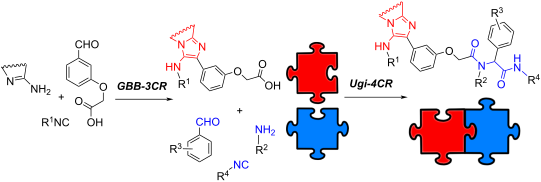
- peptidomimetic chain was already described in 2010 [32]. Thus, the corresponding acid components were synthesized with GBB-3CR and used in Ugi and Paserini reactions with various aldehydes, amines (for Ugi) and isocyanides. Moreover, in 2016 [33], an alternative route to use GBB-3CR products in Ugi reaction as
- carbonyl component was proposed, but these aldehydes did not have the structure of imidazo[1,2-a]pyridine. Interestingly, in 2019 [1], the synthesis of the amine component using GBB-3CR and the modification of the imidazo-pyrimidine scaffold by a peptidomimetic chain was carried out using the Ugi reaction
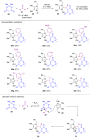
- temperature and the reaction time. After a series of experiments, it was found that stirring the isocyanides 3a–d, heterocyclic acids 4a–c, aldehydes 5a–e, and primary amines 6a–d at 50 °C in methanol for 24–48 hours (depending on the nature of the starting materials) allowed obtaining the Ugi target products


Nucleophile-induced ring contraction in pyrrolo[2,1-c][1,4]benzothiazines: access to pyrrolo[2,1-b][1,3]benzothiazoles
Beilstein J. Org. Chem. 2023, 19, 646–657, doi:10.3762/bjoc.19.46
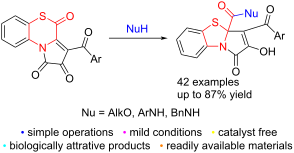
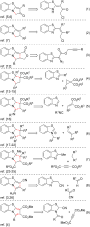
- cycloadditions of N-alkylbenzothiazolium salts (Scheme 1, entry 6) [17][18][19][20][21][22], MCRs of 2-methylbenzothiazole, acetylenedicarboxylates and active methylene compounds (Scheme 1, entry 7) [23][24][25], MCRs of (1,3-benzothiazol-2-yl)acetonitrile, aldehydes and acylcyanides (Scheme 1, enry 8) [3][26




Enolates ambushed – asymmetric tandem conjugate addition and subsequent enolate trapping with conventional and less traditional electrophiles
Beilstein J. Org. Chem. 2023, 19, 593–634, doi:10.3762/bjoc.19.44
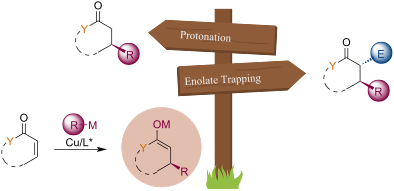
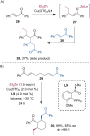
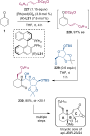
- . presented their work on the asymmetric desymmetrization of cyclopentene-1,3-diones 5 (Scheme 3) [23]. Following the Cu(OTf)2-catalyzed conjugate addition of R2Zn, the enolate 6 was trapped by several aromatic aldehydes 7. These complex chiral cyclopentane derivatives 8 bearing all-carbon quaternary
- enolate intermediate with benzaldehyde (51) and methyl bromoacetate (181) (Scheme 46). At about the same time, Riant and co-workers investigated the chiral auxiliary-assisted Cu-catalyzed tandem silylation/aldol reaction between enoyloxazolidinones and different aromatic aldehydes [89]. In the case of
- derivatization is possible through the oxidation of the silyl motif to alcohol or the dehydration of the aldol adduct. Other tandem conjugate addition/enolate-trapping reactions In 2016, Nishiyama and co-workers have studied a three-component coupling reaction of alkynes, enones, and aldehydes via direct









C3-Alkylation of furfural derivatives by continuous flow homogeneous catalysis
Beilstein J. Org. Chem. 2023, 19, 582–592, doi:10.3762/bjoc.19.43
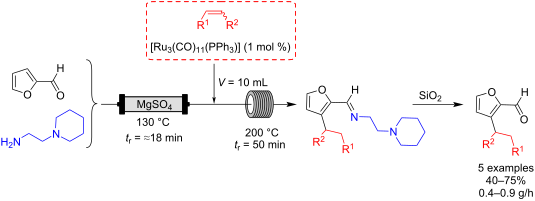
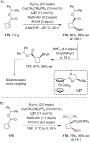
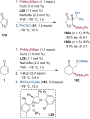
- product was recovered for analysis and purification. The NMR yields were calculated on the alkylated imine before purification (based on a starting concentration of furfural of 0.35 M), and the isolated yields corresponded to the C3-alkylated aldehydes after the hydrolysis step that took place during


Discrimination of β-cyclodextrin/hazelnut (Corylus avellana L.) oil/flavonoid glycoside and flavonolignan ternary complexes by Fourier-transform infrared spectroscopy coupled with principal component analysis
Beilstein J. Org. Chem. 2023, 19, 380–398, doi:10.3762/bjoc.19.30
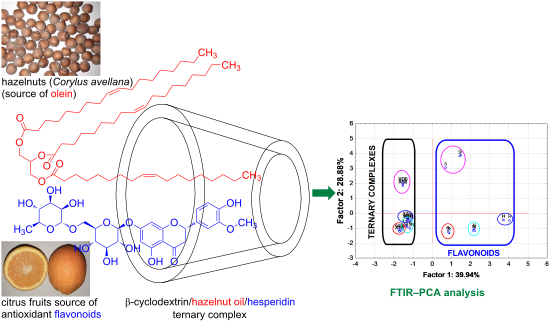
- was demonstrated by both thermal (TG–DTG and DSC) and chromatographic (GC–MS for the degradation compounds, i.e., aldehydes, formylated carboxylic acids, or dicarboxylic acids) methods [16]. Also, vegetable oils containing unsaturated FA moieties were stabilized by CD complexation. Common bean

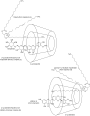


Group 13 exchange and transborylation in catalysis
Beilstein J. Org. Chem. 2023, 19, 325–348, doi:10.3762/bjoc.19.28
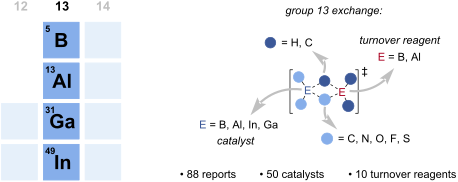
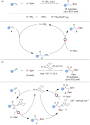
- the aluminium-catalysed reduction of aldehydes and ketones with HBpin, using a NacNac-supported aluminium hydride catalyst (Scheme 23) [104]. Using computational analysis, the reaction was proposed to proceed through reduction of the carbonyl 91 by the aluminium hydride 92, to give an alkoxy aluminium
- /B‒H exchange [114]. Hevia reported a combination of a tris(alkyl)gallium species and bulky N-heterocyclic carbene acted as an FLP for B‒H insertion, and was used subsequently as a catalyst in the hydroboration of ketones, aldehydes, esters, and imines with HBpin [115]. Using an ONO-pincer-supported










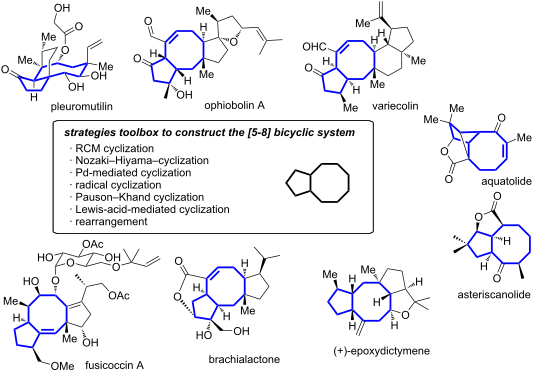
Strategies to access the [5-8] bicyclic core encountered in the sesquiterpene, diterpene and sesterterpene series
Beilstein J. Org. Chem. 2023, 19, 245–281, doi:10.3762/bjoc.19.23
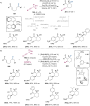
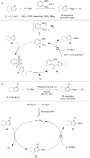
- reported. During this study, they also looked into the asymmetric total synthesis of albolic acid (178) and ceroplastol II (179). Only one paper reported their total synthesis, using a reductive coupling of aldehydes for the synthesis of the eight-membered ring with an excellent yield of 96% [82]. However


Sequential hydrozirconation/Pd-catalyzed cross coupling of acyl chlorides towards conjugated (2E,4E)-dienones
Beilstein J. Org. Chem. 2023, 19, 176–185, doi:10.3762/bjoc.19.17
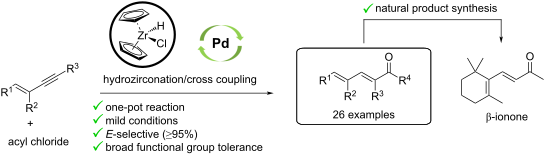
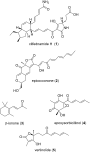
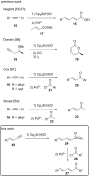
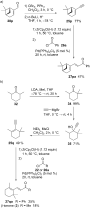
- condensation of enals 6 with aldehydes 7a or ketones 7b [6][7][8][9][10][11], isomerization of alkynones 8 [12][13][14][15], Horner–Wadsworth–Emmons reaction of unsaturated phosphonates 9 and aldehydes 10 [16][17], and dehydrogenation of enones 11 [18]. Further, Claisen rearrangement of vinyl propargylic



Total synthesis of insect sex pheromones: recent improvements based on iron-mediated cross-coupling chemistry
Beilstein J. Org. Chem. 2023, 19, 158–166, doi:10.3762/bjoc.19.15
- derived from aldehydes were used, excellent coupling yields were obtained in THF, with no need of NMP additive (Table 1, entries 1 and 2). However, less reactive α,β-disubstituted enol phosphates required the presence of NMP (Table 1, entry 3) or even N,N′-dimethylpropyleneurea (DMPU) (Table 1, entry 4


1,4-Dithianes: attractive C2-building blocks for the synthesis of complex molecular architectures
Beilstein J. Org. Chem. 2023, 19, 115–132, doi:10.3762/bjoc.19.12
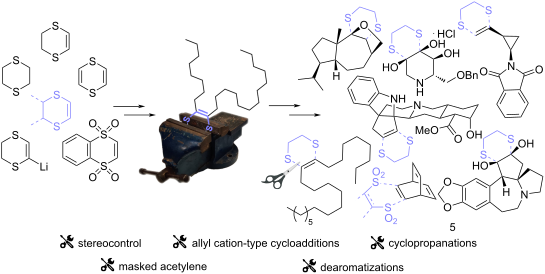
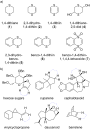
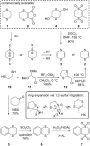
- ) into cis-stilbene (62), via the dihydrodithiin intermediate 61 [58]. The addition of lithiated dihydrodithiins with aldehydes, epoxides or ketones are also all feasible, but sometimes require some more attention (Scheme 11). Palumbo and co-workers have found that substituted dithiins such as 50 can
- ][57]. Stereoselective 5,6-dihydro-1,4-dithiin-based synthesis of cis-olefins [42][58]. Addition to aldehydes and applications in stereoselective synthesis. Direct C–H functionalization methods for 1,4-dithianes [82][83]. Known cycloaddition reactivity modes of allyl cations [84][85][86][87][88][89][90











Redox-active molecules as organocatalysts for selective oxidative transformations – an unperceived organocatalysis field
Beilstein J. Org. Chem. 2022, 18, 1672–1695, doi:10.3762/bjoc.18.179
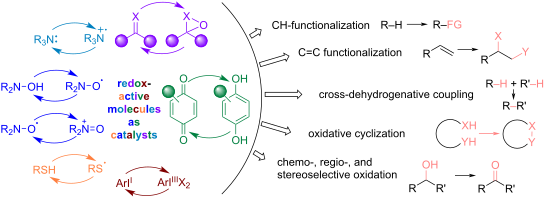
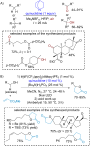
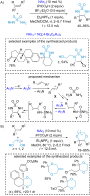
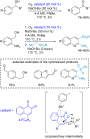
- [62] has found numerous applications in oxidative transformations, especially in the CH-functionalization of aldehydes (Scheme 3). It is believed that NHCs reversibly form enaminols (Breslow intermediates, Scheme 3) from aldehydes [63]. In this transformation an electrophilic aldehyde carbon turns to
- ) or aromatic aldehydes [79] (in 1,1,1,3,3,3-hexafluoropropan-2-ol, HFIP) at room temperature. The selectivity of aldehyde formation without the overoxidation to the carboxylic acid was explained by an inactivation of the aldehyde to further oxidation via the hydrogen bonding between the aldehyde and
- -hydroxybenzimidazole core has several modification sites that allow one to control the properties of the catalyst over a wide range. The authors demonstrated the high efficiency of N-hydroxybenzimidazole catalysts in the benzylic CH-amination with diethyl azodicarboxylate and the CH-fluorination of aldehydes with











Rhodium-catalyzed intramolecular reductive aldol-type cyclization: Application for the synthesis of a chiral necic acid lactone
Beilstein J. Org. Chem. 2022, 18, 1642–1648, doi:10.3762/bjoc.18.176
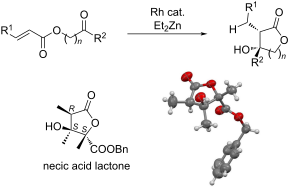
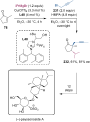
- aldol-type reactions, and reductive Mannich-type reactions using RhCl(PPh3)3 with Et2Zn [41][42][43][44][45][46][47]. The rhodium-catalyzed reductive aldol reaction of α,β-unsaturated esters with aldehydes or ketones gives aldol-type products in good to excellent yields (Scheme 1) [43][44]. In addition


A novel bis-triazole scaffold accessed via two tandem [3 + 2] cycloaddition events including an uncatalyzed, room temperature azide–alkyne click reaction
Beilstein J. Org. Chem. 2022, 18, 1636–1641, doi:10.3762/bjoc.18.175
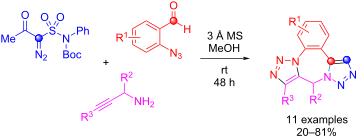
- scaffolds. Recently, we reported a novel, metal-free synthesis of 1,5-disubstituted 1,2,3-triazoles via a three-component reaction of α-acetyl-α-diazomethanesulfonamide (1) with aldehydes and amines [4]. The reaction proceeded, presumably, through the formation of the initial 1,2,3-triazoline adduct 2 [5
- azide-containing aromatic aldehydes 3a–i in the reaction with 1 and propargylamine (Scheme 2). The yields of products 5 were generally fair to good for all the aldehydes tested, even for doubly azide-substituted aldehyde 3c. However, the yield diminished somewhat for chloro-substituted aldehydes 5g–h
- , heterocyclic azido aldehydes 3k,l failed to react with 1 and propargylamine (Figure 3). Having established the scope and limitations of the 9H-benzo[f]bis([1,2,3]triazolo)[1,5-a:1',5'-d][1,4]diazepine (5) synthesis, we proceeded to look at the variations in the alkyne-containing amine component for this


One-pot double annulations to confer diastereoselective spirooxindolepyrrolothiazoles
Beilstein J. Org. Chem. 2022, 18, 1607–1616, doi:10.3762/bjoc.18.171
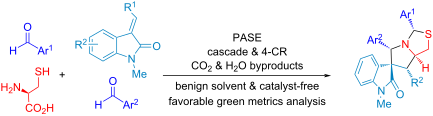
- 10.3762/bjoc.18.171 Abstract A novel four-component reaction in one pot as an atom- and step-economic process was developed to synthesize diastereoselectively spirooxindolepyrrolothiazoles through sequential N,S-acetalation of aldehydes with cysteine and decarboxylative [3 + 2] cycloaddition with olefinic
- diastereoselective spirooxindolepyrrolothiazoles by the formation of two new rings, 5 bonds, and 5 stereocenters without intermediate purification. To explore the reaction scope of 4-CR, different aldehydes 1 (Ar1) were used to react with ʟ-cysteine (2) and olefinic oxindole 4a in the synthesis of substituted
- spirooxindolepyrrolothiazole analogues 5a–d with 49–70% isolated yield (Scheme 3) under the optimized reaction conditions (Table 1, entry 7). Compounds 5b–d with using heteroaromatic aldehydes resulted in lower yield than 5a. In addition, according to the one-pot reaction process (Table 1, entry 5) with two operational steps


Functionalization of imidazole N-oxide: a recent discovery in organic transformations
Beilstein J. Org. Chem. 2022, 18, 1575–1588, doi:10.3762/bjoc.18.168
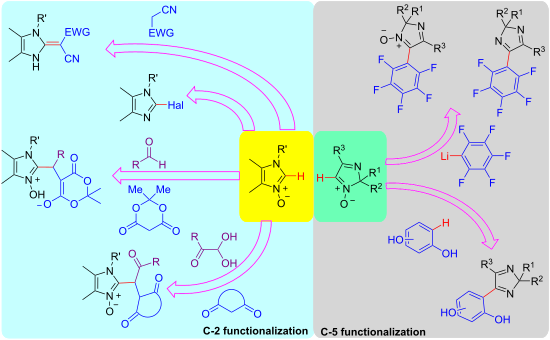
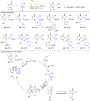
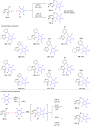
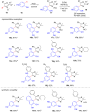
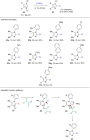
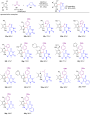
- using aldehydes and Meldrum’s acid under metal-free and mild reaction conditions [20]. The optimization conditions were estimated to be 1.0 mmol of 1-benzyl-4,5-dimethylimidazole N-oxide as substrate, 1.0 mmol of aldehydes and 1.0 mmol of Meldrum’s acid (26) in 6.0 mL of acetonitrile as solvent at
- reflux for 5 h. In this operationally simple procedure, the imidazole N-oxide plays the role of a ‘C’-nucleophile when there is no involvement of acid or base catalyst. 1-Benzyl-4,5-dimethylimidazole N-oxide (28) was chosen as the N-oxide substrate to react with Meldrum’s acid (26) and several aldehydes
- 27. Here, heteroaromatic, aromatic, and aliphatic aldehydes along with formaldehyde were taken into consideration providing the corresponding products in 33–76% yield (Scheme 6). Based on the plausible mechanism proposed by the authors, most likely the reaction began with the nucleophilic addition





One-pot synthesis of 2-arylated and 2-alkylated benzoxazoles and benzimidazoles based on triphenylbismuth dichloride-promoted desulfurization of thioamides
Beilstein J. Org. Chem. 2022, 18, 1479–1487, doi:10.3762/bjoc.18.155

- with various carbonyl compounds, such as carboxylic acid derivatives or aldehydes [6][7][8][9]. These classic reactions require harsh conditions, such as using strong acids or high temperatures. The syntheses of azoles using one-pot reactions are attracting increasing attention as alternatives to


Oxa-Michael-initiated cascade reactions of levoglucosenone
Beilstein J. Org. Chem. 2022, 18, 1457–1462, doi:10.3762/bjoc.18.151
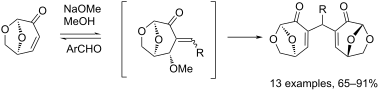
- , United Kingdom 10.3762/bjoc.18.151 Abstract The reactions of aromatic aldehydes and levoglucosenone promoted by methoxide gives bridged α,β-unsaturated ketones, formed by a series of oxa-Michael-initiated cascade reactions in yields of up to 91% (14 examples). A complex series of equilibria operate
- adducts similar to 3 would be possible, and so have investigated the reaction of 1 with aromatic aldehydes in the presence of base in alcohol. It was found that the reaction outcome was dependent on the type of aldehyde used, and the reactions gave unanticipated products. We now disclose a hitherto
- unreported mode of reaction between α,β-unsaturated ketones and aromatic aldehydes promoted by base. Results and Discussion The reactions of 1 with aromatic aldehydes and sodium methoxide in methanol were investigated at ambient and elevated temperatures (Table 1). In the reaction of benzaldehyde and 1 at 60


Synthesis of meso-pyrrole-substituted corroles by condensation of 1,9-diformyldipyrromethanes with pyrrole
Beilstein J. Org. Chem. 2022, 18, 1403–1409, doi:10.3762/bjoc.18.145
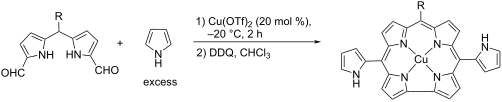
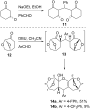
- several methods including; (i) the condensation of pyrrole or dipyrromethanes with aldehydes [14][15][16], (ii) the reaction of 2,2’-bipyrrole with dipyrromethane-1,9-dicarbinols [17][18], (iii) the condensation of bipyrrole-5,5’-dicarbinols with dipyrromethanes [19], (iv) the reaction of dipyrromethane
- -1,9-dicarbinols with pyrrole [20][21], (v) the condensation of dipyrromethane-1-carbinols with dipyrromethanes [22] and (vi) the reaction of tripyrranes with aldehydes [23]. Although many different substituents can be attached to the meso-position of corroles using all these methods, to the best of


Cyclodextrin-based Schiff base pro-fragrances: Synthesis and release studies
Beilstein J. Org. Chem. 2022, 18, 1346–1354, doi:10.3762/bjoc.18.140
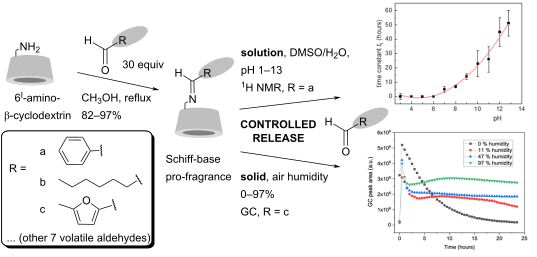
- ), Dunkerque, France 10.3762/bjoc.18.140 Abstract A simple method for the preparation of β-cyclodextrin derivatives containing covalently bonded aldehydes via an imine bond was developed and used to prepare a series of derivatives from 6I-amino-6I-deoxy-β-cyclodextrin and the following volatile aldehydes
- various organic molecules have been described so far. It was proved that the complexation of volatile organic compounds, such as aldehydes, into the CD’s cavity reduces the volatility and increases the solubility and bioavailability of these compounds [5][6][7][8][9][10][11][12][13][14]. The release of
- , we describe the synthesis of ten pro-fragrances – Schiff bases prepared from amino-β-cyclodextrin and common volatile aldehydes. Aldehydes constitute a prominent class of molecules broadly used as food product additives and are also key components of perfumes [24]. They were therefore chosen as an
Synthesis and electrochemical properties of 3,4,5-tris(chlorophenyl)-1,2-diphosphaferrocenes
Beilstein J. Org. Chem. 2022, 18, 1338–1345, doi:10.3762/bjoc.18.139
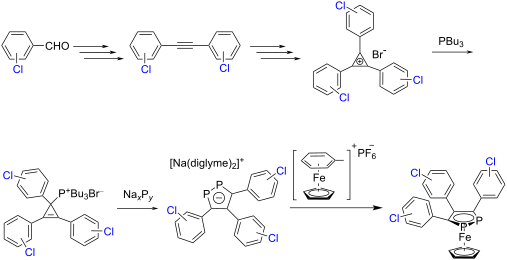
- temperature to afford substituted diarylacetylenes 3. Based on this reaction, the desired compounds 3 were prepared from 2-chloro-, 3-chloro-, and 4-chlorophenyl aldehydes, respectively, in 3 steps in 10–53% yield (10% for 3a, 48% for 3b, 53% for 3c, Scheme 1). This method is an alternative way to different




Cytochrome P450 monooxygenase-mediated tailoring of triterpenoids and steroids in plants
Beilstein J. Org. Chem. 2022, 18, 1289–1310, doi:10.3762/bjoc.18.135
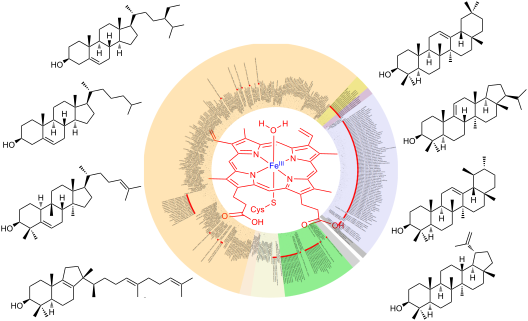
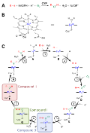
- cycle can also lead to different reaction outcomes, e.g., rearrangements, desaturations or epoxidations. Multiple oxidation rounds, leading to aldehydes/ketones or carboxylic acids, are also commonly observed. Together, this versatile oxidative chemistry makes CYPs key enzymes in specialised metabolism




Lewis acid-catalyzed Pudovik reaction–phospha-Brook rearrangement sequence to access phosphoric esters
Beilstein J. Org. Chem. 2022, 18, 1188–1194, doi:10.3762/bjoc.18.123
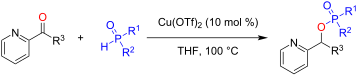
- accomplished the synthesis of phosphoric esters through a 1,8-diazabicyclo[5.4.0]undec-7-ene (DBU)-catalyzed Pudovik reaction–phospha-Brook rearrangement sequence [43]. A decade later, Chakravarty and colleagues reported the efficient synthesis of organic phosphates from ketones and aldehydes using n-BuLi as
- , all of the above transformations were carried out under basic conditions, and thus impose barriers for substrates that bear base-sensitive functional groups. More importantly, heteroatom-containing ketones and aldehydes have been proven to be challenging substrates for all of these existing systems
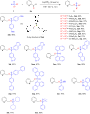
- in moderate to good yield. Delightfully, in addition to aldehydes, a ketone was also applicable under standard conditions, albeit affording the product in a comparably lower yield, probably due to the lower reactivity and steric hindrance of the substrate (see 3bl). Moreover, pyridine bearing two




Experimental and theoretical studies on the synthesis of 1,4,5-trisubstituted pyrrolidine-2,3-diones
Beilstein J. Org. Chem. 2022, 18, 1140–1153, doi:10.3762/bjoc.18.118
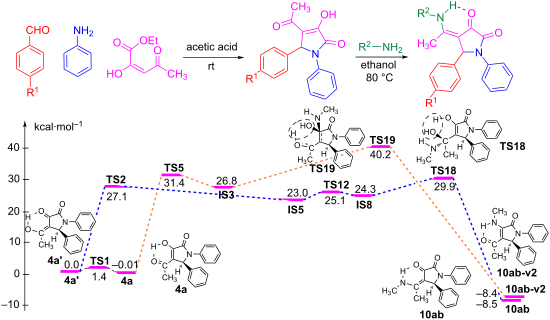
- to obtain structurally complicated and biologically active products containing substantial portions of all starting materials [27]. Recently, polysubstituted 3-hydroxy-1,5-dihydro-2H-pyrrol-2-ones have been synthesized via eco-friendly multicomponent reactions of aromatic aldehydes, amines, and
- ]. Acyl or aroyl groups can be introduced into the 4-position of 3-hydroxy-1,5-dihydro-2H-pyrrol-2-ones via three-component reactions of esters of acylpyruvic acid or of aroylpyruvic acid, respectively, with aromatic aldehydes, and amines. In addition, the resulting 2-pyrrolidinone derivatives also showed
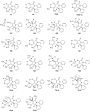
- -acetyl-3-hydroxy-3-pyrroline-2-ones via multicomponent reactions of ethyl 2,4-dioxovalerate with aromatic aldehydes, and aniline in glacial acetic acid. These 2-pyrrolidinone derivatives were then reacted with aliphatic amines in ethanol to obtain a library of 1,4,5-trisubstituted pyrrolidine-2,3-dione


First example of organocatalysis by cathodic N-heterocyclic carbene generation and accumulation using a divided electrochemical flow cell
Beilstein J. Org. Chem. 2022, 18, 979–990, doi:10.3762/bjoc.18.98
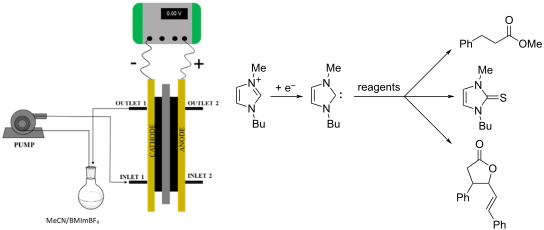
- conversion to the corresponding thione (Scheme 2) [12]. NHCs are used as organocatalysts in many reactions of aldehydes (mainly aromatic) [13][14]. In fact, the reaction of NHCs with aldehydes can lead to the formation of the “Breslow intermediate” [15], in which the reactive character of the carbonyl carbon
- electrochemistry, NHC instability (and anodic electroactivity) prevented its cathodic generation and subsequent use as catalyst or reagent. Instead, the NHC was generated by chemical deprotonation using a strong base (DBU) and then applied in anodic esterification [30][31][32], and amidation of aromatic aldehydes


Morita–Baylis–Hillman reaction of 3-formyl-9H-pyrido[3,4-b]indoles and fluorescence studies of the products
Beilstein J. Org. Chem. 2022, 18, 926–934, doi:10.3762/bjoc.18.92
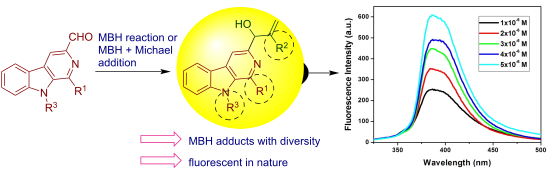
- ) condensation of ʟ-tryptophan (1) with different aldehydes (a–e) in dry DCM at room temperature yielded tetrahydro-β-carboline derivatives 2a–e, which were then oxidized with KMnO4 in anhydrous DMF for 45 minutes to yield β-carboline derivatives 3a–e. It was encouraging to observe that the P-S condensation with
- from the same aldehydes, a noticeable decrease in fluorescence intensity of product 8 (Morita–Baylis–Hilman + Michael adducts 8bA, 8eA and 8eB) was observed than in case of product 7 (Morita–Baylis–Hilman adducts 7bB, 7bC and 7eD) while their λemission was red-shifted in comparison to type 7 compounds