

Search results
Search for "yellow" in Full Text gives 822 result(s) in Beilstein Journal of Organic Chemistry. Showing first 200.
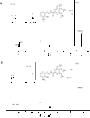
Synthesis of photo- and ionochromic N-acylated 2-(aminomethylene)benzo[b]thiophene-3(2Н)-ones with a terminal phenanthroline group
Beilstein J. Org. Chem. 2024, 20, 552–560, doi:10.3762/bjoc.20.47
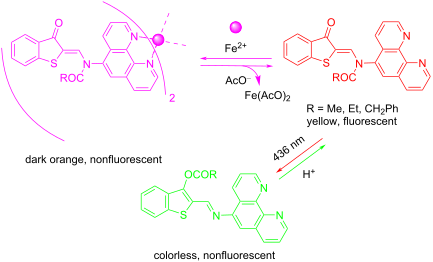
- change of the solutions from yellow to dark orange. Subsequent selective interaction with AcO− led to the restoration of the initial absorption and emission properties. Thus, the obtained compounds represent dual-mode “on–off–on” switches of optical and fluorescent properties under sequential exposure to
- photoproducts 3a–c under the influence of irradiation was developed. We applied a modified procedure using a Sweko IP65 LED emitter that had been previously developed in our studies for similar tasks [30]. For this purpose, a suspension of a yellow solid 2a–c in acetonitrile was boiled for 10–15 s and then
- effect: a visually distinguishable color change of the solutions from yellow to dark orange (Figure 5). Other cations did not demonstrate a measurable effect (Figure 6). Complexes 2a–c with Fe2+ in acetonitrile and DMSO were nonfluorescent. According to spectrophotometric titration data and the isomolar


A new analog of dihydroxybenzoic acid from Saccharopolyspora sp. KR21-0001
Beilstein J. Org. Chem. 2024, 20, 497–503, doi:10.3762/bjoc.20.44
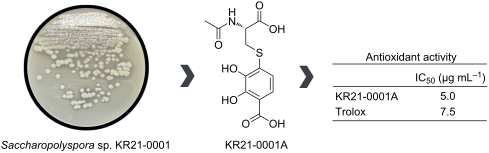
- preparative HPLC of the crude extract, 7.9 mg of 1 was obtained (Scheme 1). Table S1 (Supporting Information File 1) shows the physicochemical properties of 1, which is a yellow oil soluble in MeOH and DMSO. The UV absorption maximum of 1 was at 286 nm (ε = 10238 M−1·cm−1). The molecular formula of 1 was
- . Advanced Marfey’s analysis A volume of 20 µL of 1 M NaHCO3 was added to each 50 µL of the hydrolysate of the de-sulfurized derivative of 1 and 1 mM standard amino acids (ʟ- and ᴅ-alanine). Then, 50 µL of ᴅ-FDLA (10 mg·mL−1 in acetone) was added to the mixtures and mixed well (the color changed from yellow



Pseudallenes A and B, new sulfur-containing ovalicin sesquiterpenoid derivatives with antimicrobial activity from the deep-sea cold seep sediment-derived fungus Pseudallescheria boydii CS-793
Beilstein J. Org. Chem. 2024, 20, 470–478, doi:10.3762/bjoc.20.42
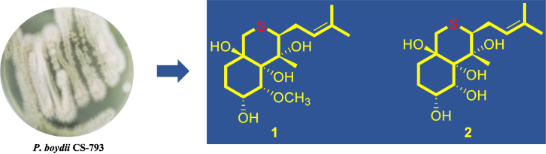
- ), monosodium glutamate (0.1 g/flask), and naturally sourced and filtered seawater (acquired from the Huiquan Gulf of the Yellow Sea near the campus of IOCAS, 100 mL/flask) were autoclaved at 120 °C for 20 min before inoculation. The fresh mycelia of the fungus P. boydii CS-793 were incubated in a shaker on PDB


Mechanisms for radical reactions initiating from N-hydroxyphthalimide esters
Beilstein J. Org. Chem. 2024, 20, 346–378, doi:10.3762/bjoc.20.35
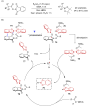
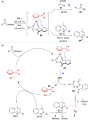
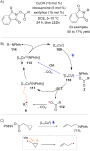
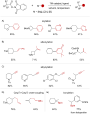
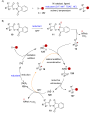
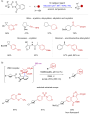
- of N-Boc-proline-derived TCNHPI ester 104 with q-OAc in MeCN resulted in the formation of a yellow solution, which upon blue light irradiation provided the aminodecarboxylation product 105 in 69% yield. It was hypothesized that the reaction involved the formation of EDA complex 106 that led to the








Substitution reactions in the acenaphthene analog of quino[7,8-h]quinoline and an unusual synthesis of the corresponding acenaphthylenes by tele-elimination
Beilstein J. Org. Chem. 2024, 20, 243–253, doi:10.3762/bjoc.20.24
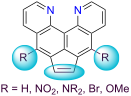
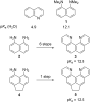
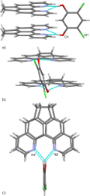
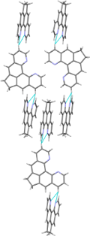
- (Scheme 8). In addition to the spectral data confirming the composition and asymmetric structure of compound 16, a clear sign of the emerging acenaphthylene system is its yellow-orange color, which distinguishes the UV-active (yellow-green luminescence) acenaphthylene 16 from the light-beige UV-inactive





Photochromic derivatives of indigo: historical overview of development, challenges and applications
Beilstein J. Org. Chem. 2024, 20, 228–242, doi:10.3762/bjoc.20.23
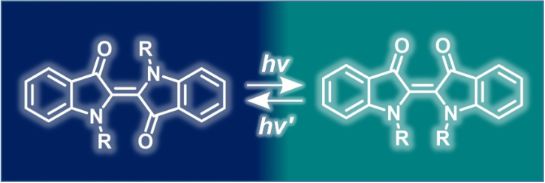
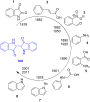
- (9a, Figure 7) was reported by Wyman and co-workers [37]. Interestingly, compound 9a showed pronounced negative photochromism in benzene with the best E–Z conversion upon irradiation with yellow light (λirr > 520 nm), while in chloroform no photochromism was detected. The formation of the Z-isomer of
- underwent E–Z photoisomerization in benzene upon irradiation with yellow light and returned to E-isomer in darkness at room temperature within about 30 seconds [39]. One year later, Pummerer and Marondel attempted to reproduce this experiment and to detect the Z-isomer of N,N'-dimethylindigo 11a upon
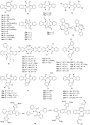
- . Structures of indigo derivatives discussed in this review. Photoswitching of N,N'-diacetylindigo (9a) in CCl4 (c = 17.1 µM; cell length = 5.0 cm) irradiated with blue light (λirr = 350–510 nm): dotted line; irradiated with white light: dashed line; irradiated with yellow light (λirr > 495 nm): solid line





Metal-catalyzed coupling/carbonylative cyclizations for accessing dibenzodiazepinones: an expedient route to clozapine and other drugs
Beilstein J. Org. Chem. 2024, 20, 193–204, doi:10.3762/bjoc.20.19
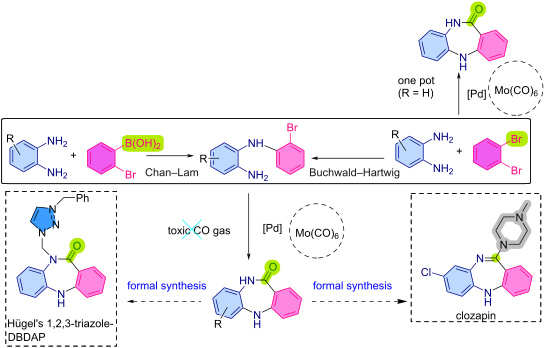
- celite and washed with DCM, then, the solvent was evaporated under reduced pressure to give a crude mixture. Further purification by flash chromatography (hexane/AcOEt 1:1), gave the desired compound 5,10-dihydro-11H-dibenzo[b,e][1,4]diazepin-11-one (4a) as a yellow solid yield (0.032 g, 80%). Mp 249–251


Synthesis of the 3’-O-sulfated TF antigen with a TEG-N3 linker for glycodendrimersomes preparation to study lectin binding
Beilstein J. Org. Chem. 2024, 20, 173–180, doi:10.3762/bjoc.20.17
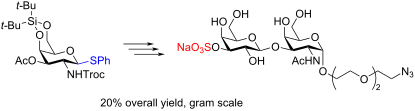
- further 48 hours. The reaction mixture was then concentrated and flash chromatography on silica gel (EtOAc/MeOH, 1:0→0:1) yielded a yellow syrup, which was re-dissolved in H2O (30 mL). Dowex® 50WX4 (Na+ form) resin (1.28 g) was added, and the resulting suspension was stirred at room temperature for 16
- hours. Filtration followed by concentration and lyophilisation of the filtrate yielded 2 as a pale-yellow foam (972 mg, 66%). Rf = 0.3 (EtOAc/MeOH, 3:2); [α]D +76 (c 1.0, H2O); 1H NMR (500 MHz, D2O) δ 4.95 (d, J = 3.8 Hz, 1H, H-1GalNAc), 4.62 (d, J = 7.9 Hz, 1H, H-1Gal), 4.41–4.31 (m, 4H, H-2GalNAc, H


Photoinduced in situ generation of DNA-targeting ligands: DNA-binding and DNA-photodamaging properties of benzo[c]quinolizinium ions
Beilstein J. Org. Chem. 2024, 20, 101–117, doi:10.3762/bjoc.20.11
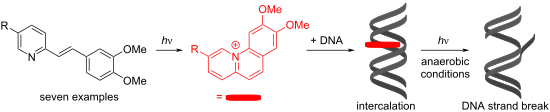
- black precipitate and a saturated aq solution of NaBF4 (7 mL) was added to the solution. The aqueous layer was extracted with MeNO2 (2 × 30 mL) and the combined organic layers were washed with H2O (2 × 30 mL) and dried with Na2SO4. The solvent was evaporated to give a yellow oil. The residue was
- suspended in CHCl3 (1 mL) and the remaining solid was filtered off to give the product as yellow amorphous solid (2.5 mg, 6.9 µmol, <5%); mp 164–166 °C (decomp.); 1H NMR (500 MHz, CD3CN) δ 4.07 (s, 3H, OCH3), 4.20 (s, 1H, OCH3), 7.68 (s, 1H, 7-H), 8.04 (s, 1H, 10-H), 8.10 (d, 3J = 9 Hz, 1H, 5-H), 8.31 (dd
- 45 min and the crude product was washed with n-hexane (3 mL) and recrystallized from MeOH with addition of HClO4 to give a yellow amorphous solid (29 mg, 79 µmol, 21%); mp 215–217 °C (decomp.); 1H NMR (500 MHz, CD3CN) δ 1.42 (t, 3J = 8 Hz, 3H, CH3), 3.08 (q, 3J = 8 Hz, 2H, CH2), 4.05 (s, 3H OCH3




Optimizing reaction conditions for the light-driven hydrogen evolution in a loop photoreactor
Beilstein J. Org. Chem. 2024, 20, 74–91, doi:10.3762/bjoc.20.9
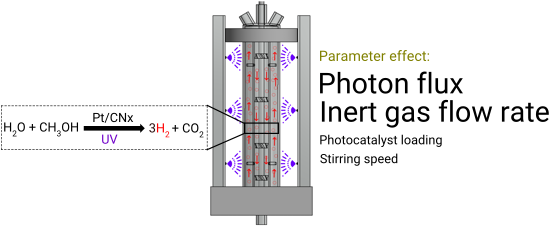
- stirring speed of 560 rpm. The regions of interests (ROIs) shown on frame of 1.2 s are denoted as left side (blue ROI), draft tube (green ROI), and right side (yellow ROI). The color of water changed first in the draft tube and then outside the draft tube until the mixing was complete. Thus, the liquid was
- with a heating rate of 10 °C min−1. The resulting yellow solid was then finely grounded using an agate mortar. For the photochemical deposition of the Pt co-catalyst, 6 g of the produced PCN were first dispersed in 340 mL of water and subjected to sonication for 90 min. Subsequently, a mixture
- Supporting Information File 1, Figure S2b), while maintaining a continuous flow of N2 in the headspace through a septum. The resulting suspension exhibited a yellow/greenish color and was subsequently washed with deionized water 3–5 times, followed by drying at 70 °C overnight and grinding. The synthesized


Multi-redox indenofluorene chromophores incorporating dithiafulvene donor and ene/enediyne acceptor units
Beilstein J. Org. Chem. 2024, 20, 59–73, doi:10.3762/bjoc.20.8
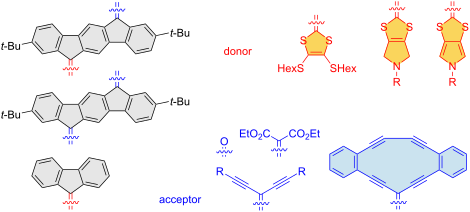
- ) degassed with N2 for 15 min was added, and the solution was heated to 105 °C for 18.5 h. The reaction mixture was then allowed to cool to rt, diluted with toluene (20 mL), and washed with 1 M NaOH (3 × 20 mL), and then with H2O (20 mL). The yellow precipitate in the aqueous phase was isolated by filtration
- and washed with H2O before it was purified by flash column chromatography (SiO2, 50%–100% CH2Cl2/heptane) yielding 16 (18 mg, 39 μmol, 25%) as a yellow solid. Rf = 0.18 (50% CH2Cl2/heptane); mp > 260 °C; 1H NMR (500 MHz, CD2Cl2) δ 7.84 (d, J = 7.5 Hz, 2H), 7.77 (d, J = 8.1 Hz, 2H), 7.75 (d, J = 7.5 Hz
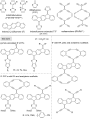
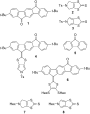
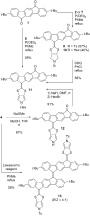
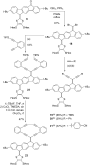
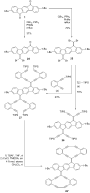
- compound is shown below, in which the hydrogen atoms are omitted for clarity. Atoms are colored grey (carbon), white (hydrogen), brown (bromine), pale-yellow (silicon). Labels of bonds within five-membered ring. Synthesis of IF-DTF ketones 9–12 and dimer 13. Further functionalization of the IF-DTF ketone







Preparing a liquid crystalline dispersion of carbon nanotubes with high aspect ratio
Beilstein J. Org. Chem. 2024, 20, 52–58, doi:10.3762/bjoc.20.7
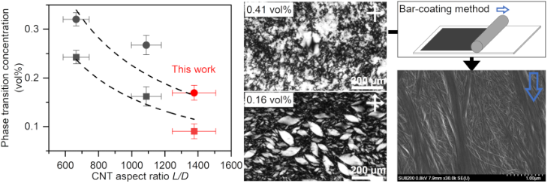
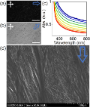
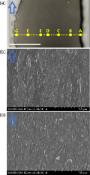
- . (a) Photograph of the DWCNT film. Thicknesses were measured at 7 spots along the yellow dashed line. Scale bar is 1 cm. SEM image at spot (b) A and (c) D. Blue outlined arrows indicate the shear direction of bar-coating. The list of the thickness at each spot in Figure 5a. Supporting Information


Using the phospha-Michael reaction for making phosphonium phenolate zwitterions
Beilstein J. Org. Chem. 2024, 20, 41–51, doi:10.3762/bjoc.20.6
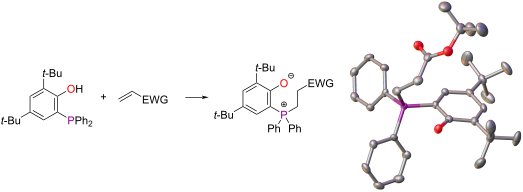
- with allyl alcohol (in both cases using a molar ratio of 1:1.05 and dichloromethane as the solvent). While in the latter case only the starting materials were observed after 24 h at room temperature, the reaction of 1 with acrylonitrile turned yellow during the same time and exclusively yielded the
- between P1 and C15 is slightly longer (1.824(2) Å in 2a; 1.828(3) in 2f) when compared to the P–CH2 distance of a tetra-n-butylphosphonium cation [45]. UV–vis spectroscopy All phosphonium phenolate compounds exhibit a bright yellow color in solution (see inset in Figure 3). Investigating the absorption
- screw-cap vial. The Michael acceptor acrylamide (14.9 mg, 0.21 mmol, 1.05 equiv) was dissolved in 0.5 mL dichloromethane in a separate vial and then added dropwise to the solution of 1. Zwitterion formation was indicated by a color change of the solution to yellow. The reaction mixture was stirred at


Facile access to pyridinium-based bent aromatic amphiphiles: nonionic surface modification of nanocarbons in water
Beilstein J. Org. Chem. 2024, 20, 32–40, doi:10.3762/bjoc.20.5
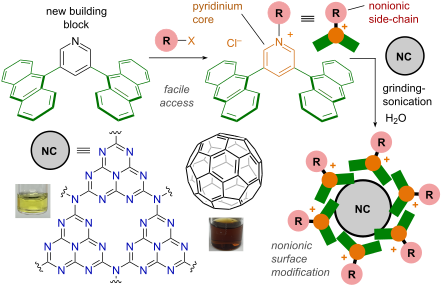
- methyl iodide yielding PA-CH3’, followed by ion exchange using an exchange resin to provide PA-CH3 as a yellow solid (74% yield over 2 steps; Figure 2a). Despite its large aromatic framework with a monocationic core, PA-CH3 was found to be soluble in water up to ≈0.9 mM. Using similar procedures
- -doped nanocarbon g-C3N4 was achieved using aromatic micelle (PA-OCH3)n (Figure 6a). The multiple N-atoms bestow g-C3N4 with unique properties that are responsible for its widespread use in catalysis [28]. Subjecting yellow solid PA-OCH3 (1.2 mg, 1.9 μmol) and pale yellow solid g-C3N4 (1.0 mg) to the
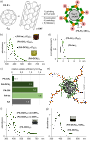
- grinding (3 min) and sonication (30 min) protocol provided a clear yellow aqueous solution of (PA-OCH3)n·(g-C3N4)m. The formation of the host–guest structure was confirmed by UV–visible analysis, which showed a new absorption band around 312 nm (Figure 6b). This result showcased the ability of amphiphile




Cycloaddition reactions of heterocyclic azides with 2-cyanoacetamidines as a new route to C,N-diheteroarylcarbamidines
Beilstein J. Org. Chem. 2024, 20, 17–24, doi:10.3762/bjoc.20.3
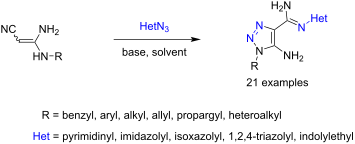
- )-5-Amino-1-benzyl-N'-(thiazol-2-yl)-1H-1,2,3-triazole-4-carboximidamide (3l). Compound 3l was obtained in 88% yield (117 mg) according to the general procedure B (NaOH: 20 mg, 0.5 mmol; amidine 1a: 77 mg, 0.5 mmol; azide 2c: 56 mg, 0.5 mmol; ethanol (2 mL)) as light yellow needles; mp 199–200 °C; 1H



Studying specificity in protein–glycosaminoglycan recognition with umbrella sampling
Beilstein J. Org. Chem. 2023, 19, 1933–1946, doi:10.3762/bjoc.19.144
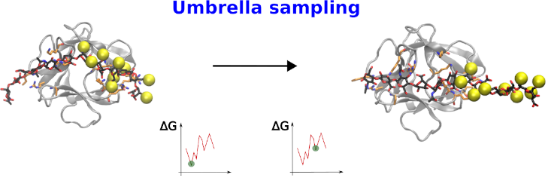
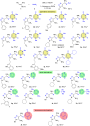
- ). Graphical representation of the ligands’ starting (in red, licorice) and final (in blue, licorice) positions in regard of the binding site of basic fibroblast factor (in yellow, new cartoon). Graphical representation of the ligand’s starting (in red, licorice) and final (in blue, licorice) poses in regard
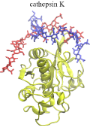
- of the binding site of acidic fibroblast factor (in yellow, new cartoon). Graphical representation of the ligand 4 starting (in red, licorice) and final (in blue, licorice) position in regard of binding site of cathepsin K (in yellow, new cartoon). Comparison of the last frame of the US simulation




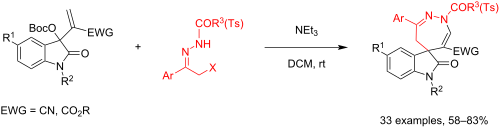
Construction of diazepine-containing spiroindolines via annulation reaction of α-halogenated N-acylhydrazones and isatin-derived MBH carbonates
Beilstein J. Org. Chem. 2023, 19, 1923–1932, doi:10.3762/bjoc.19.143
- ): yellow solid, 0.370 g, 71%; mp 186–187 °C; 1H NMR (400 MHz, CDCl3) δ 8.61 (s, 1H, ArH), 7.75–7.72 (m, 2H, ArH), 7.57–7.53 (m, 1H, ArH), 7.47–7.43 (m, 2H, ArH), 7.35–7.31 (m, 2H, ArH), 7.30–7.27 (m, 5H, ArH), 7.26–7.23 (m, 1H, ArH), 7.22–7.18 (m, 2H, ArH), 7.05–7.02 (m, 1H, ArH), 6.96 (s, 1H, ArH), 6.73
- '-carboxylate (5a): yellow solid, 0.391 g, 68%; mp 189–191 °C; 1H NMR (400 MHz, CDCl3) δ 9.19 (s, 1H, ArH), 7.73–7.71 (m, 2H, ArH), 7.56–7.53 (m, 1H, ArH), 7.48–7.42 (m, 4H, ArH), 7.38–7.35 (m, 2H, ArH), 7.32–7.31 (m, 1H, ArH), 7.29–7.27 (m, 1H, ArH), 7.14 (t, J = 8.0 Hz, 2H, ArH), 7.09–7.05 (m, 3H, ArH), 6.86



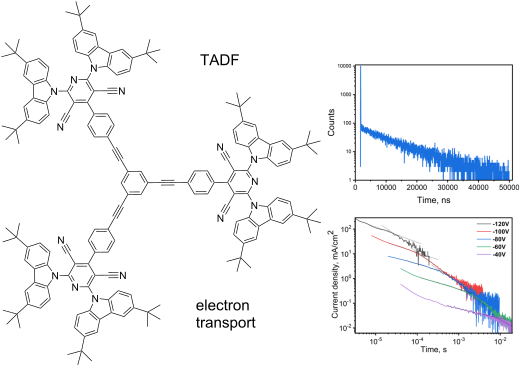
Aromatic systems with two and three pyridine-2,6-dicarbazolyl-3,5-dicarbonitrile fragments as electron-transporting organic semiconductors exhibiting long-lived emissions
Beilstein J. Org. Chem. 2023, 19, 1867–1880, doi:10.3762/bjoc.19.139
- 10 000 cd m−2, electroluminescence ranging from blue to yellow, maximum current of 15 cd/A and higher EQE than 7%. Pyridine-3,5-dicarbonitrile-based TADF materials exhibit different visible light emission spectra (Figure 1). Recently, Chen and Lu reported two new orange-red/red TADF emitters composed
- be soluble in common organic solvents and to exhibit non-structured emission peaks in the green-yellow color region of the spectrum. The PL intensity of the compounds in solution was enhanced after deoxygenation, indicating the presence of triplet harvesting by the mechanism of thermally activated
- dried over Na2SO4. After the solvent was removed, the crude yellow product was carefully washed twice with acetonitrile to remove the starting materials. Further purification was achieved using flash chromatography on silica gel (eluent: dichloromethane/petroleum ether 1:2). Compound 4 (0.86 g, 61%) was


Thienothiophene-based organic light-emitting diode: synthesis, photophysical properties and application
Beilstein J. Org. Chem. 2023, 19, 1849–1857, doi:10.3762/bjoc.19.137
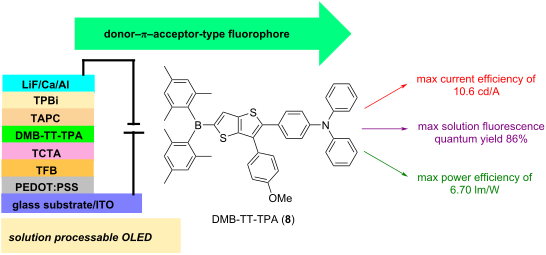
- organic layer was dried over Na2SO4, filtered and the solvent was evaporated under reduced pressure. The crude product was purified by flash column chromatography eluting with a mixture of n-hexane/CH2Cl2 3:1 and then crystallized from ethanol to give the title compound DMB-TT-TPA (8) as a yellow powder


A novel recyclable organocatalyst for the gram-scale enantioselective synthesis of (S)-baclofen
Beilstein J. Org. Chem. 2023, 19, 1811–1824, doi:10.3762/bjoc.19.133
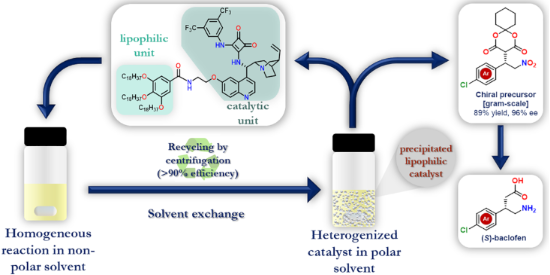
- ) and triethylamine (1.09 mL, 8.26 mmol, 10.2 equiv) were dissolved in dichloromethane (8.8 mL). Then, a solution of 3,4,5-tris(octadecyloxy)benzoyl chloride (11, 729.3 mg, 0.77 mmol) in dichloromethane (22 mL) was added. To the resulting yellow solution further dichloromethane (12.6 mL) was added, and
- product was purified by preparative thin-layer chromatography (SiO2, hexane/ethyl acetate 2:1, Rf 0.36) to obtain the product (S)-14 as pale-yellow crystals. The products had the same spectroscopic data than those of reported (the absolute configuration was determined by the optical rotation of the
- temperature. Then, the solvent was evaporated, and the crude product was purified by preparative thin-layer chromatography (SiO2, hexane/ethyl acetate/AcOH 2:1:0.01, Rf 0.34) to obtain the product as a pale-yellow foam. To the best of our knowledge, the synthesis of (S)-17 has not been reported so far. TLC


Unprecedented synthesis of a 14-membered hexaazamacrocycle
Beilstein J. Org. Chem. 2023, 19, 1728–1740, doi:10.3762/bjoc.19.126
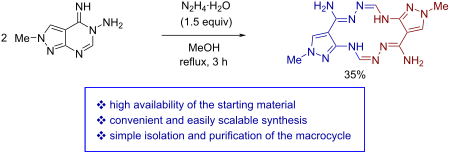
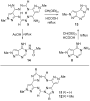
- saturated aqueous NaHCO3 until a suspension formed, and cooled (0 °C). The precipitate was filtered, washed with ice-cold H2O, petroleum ether, and dried to give compound 13 (0.035 g, 61%) as a light yellow solid. An analytically pure sample (a light yellow solid) was obtained after crystallization from
- : Compound 13 (0.034 g, 59%) as a light yellow solid was prepared from macrocycle 5 (0.055 g, 0.17 mmol), СН(ОЕt)3 (4 mL) and НСООН (0.016 mL) (reflux, 8 h) as described in Method A. 5-Acetylamino-4-imino-2-methylpyrazolo[3,4-d]pyrimidine (14): A suspension of macrocycle 5 (0.304 g, 0.93 mmol) in AcOH (15 mL


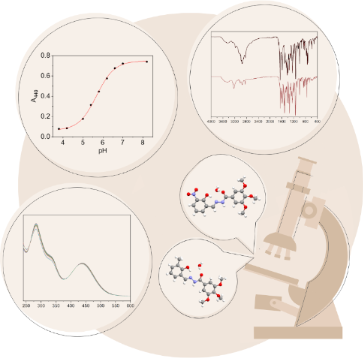
Effects of the aldehyde-derived ring substituent on the properties of two new bioinspired trimethoxybenzoylhydrazones: methyl vs nitro groups
Beilstein J. Org. Chem. 2023, 19, 1713–1727, doi:10.3762/bjoc.19.125
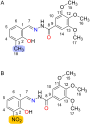
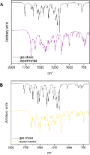
- beige and light-yellow solids with 78% and 44% yield, respectively. Thermal analyses between 25 and 350 °C were performed in order to verify the hydration status of the bulk. Regarding hdz-CH3, a weight loss of 9.78% from around 80 to 190 °C was observed, suggesting the presence of two crystallization
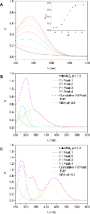
- of the resulting hydrazone: a considerable amount of hdz-NO2 deprotonates immediately upon dilution in the aqueous-rich medium at pH 7.4, affording a deep yellow solution due to phenolate-based absorptions centered at around 440 nm. For this reason, we decided to investigate this deprotonation by
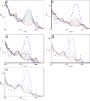
- spectrum of this precursor at pH 3.8 (dotted dark yellow curve). On the other hand, under similar arguments, the constituent at 284 nm is probably related to a TMP-based transition. In contrast, the intense component at 307 nm has no parallel in the spectra of precursors and was consequently attributed to





Quinoxaline derivatives as attractive electron-transporting materials
Beilstein J. Org. Chem. 2023, 19, 1694–1712, doi:10.3762/bjoc.19.124
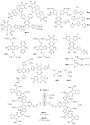
- versatility of quinoxaline derivatives in tailoring the emission properties of TADF materials. The vacuum deposited OLEDs based on Qx63 and Qx64 emitted yellow and red light, achieving EQEs of 17.3% and 15.6%, respectively [63]. You and co-workers reported the strategic design of a series of butterfly-shaped
- indicated efficient charge transfer and exciton formation within the molecule, leading to red emission. The achieved EQE of 7.4% highlighted the potential application of this Qx-based TADF emitter as dopant in red-emitting OLED devices [65]. Huang et al. developed two yellow TADF emitters, Qx67 and Qx68




Secondary metabolites of Diaporthe cameroonensis, isolated from the Cameroonian medicinal plant Trema guineensis
Beilstein J. Org. Chem. 2023, 19, 1555–1561, doi:10.3762/bjoc.19.112
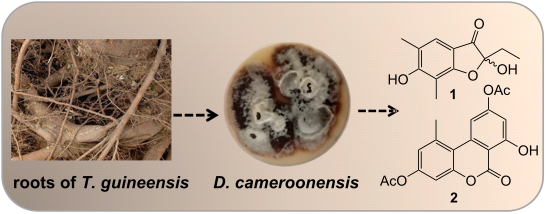
- -diacetylalternariol (2) (Figure 1), together with fifteen known compounds (Figure S1 in Supporting Information File 1). Compound 1 was obtained as a yellow oil. Its molecular formula, C12H14O4 that fits with six double bond equivalents, was established from the positive-ion mode HRESIMS (Figure S2, Supporting
- the stationary phase and the solvent mixture CH2CH2/MeOH 92:8 (v/v) as the mobile phase. The elution was performed for 25 min each with a flow rate of 2 mL/min, an automatic pressure in the range of 1–10 bar and the UV absorptions were set at 210, 254, and 366 nm to yield compounds 15 (3.2 mg, yellow
- oil, tR = 8 min), 9 (1.3 mg, yellow oil, tR = 14 min), 3 (2.76 mg, white neat solid, tR = 16 min), and 1 (0.79 mg, yellow oil, tR = 22 min), respectively. Series E (294 mg) was further purified to yield compounds 5 (0.95 mg, white amorphous powder, tR = 35.20 min), 17 (6.1 mg, white amorphous powder


Synthesis of 5-arylidenerhodanines in L-proline-based deep eutectic solvent
Beilstein J. Org. Chem. 2023, 19, 1537–1544, doi:10.3762/bjoc.19.110

- aldehydes to study the scope of this reaction (Scheme 1). It must be noted that in most of the cases, the reaction mixture changed its appearance from colorless to yellow or orange and that some solid precipitate formed during the reaction. The addition of water at the end of the reaction clearly led to the
- give a purple solution and present a strong absorption maximum at 517 nm. In the presence of an antioxidant compound DPPH is reduced forming DPPH-H and the color of the solution changes to yellow. The overall antioxidant capacity of compounds was measured after 30 minutes of incubation. We used the
- -Hydroxymethylfurfurylidene)-2-thioxothiazolidin-4-one (3j). ochre yellow solid obtained after 1 h at 60 °C in 36% yield (two-step yield). Mp 149 °C; 1H NMR (400 MHz, DMSO-d6) δ (ppm) 4.49 (s, 2H), 5.52 (br s, 1H, OH), 6.58 (d, J = 3.6 Hz, 1H), 7.11 (d, J = 3.6 Hz, 1H), 7.44 (s, 1H, =CH), 13.62 (br s, 1H, NH); 13C NMR (100