
Search results
Search for "sulfone" in Full Text gives 133 result(s) in Beilstein Journal of Organic Chemistry.
Regioselective synthesis of chiral dimethyl-bis(ethylenedithio)tetrathiafulvalene sulfones
Beilstein J. Org. Chem. 2015, 11, 1105–1111, doi:10.3762/bjoc.11.124

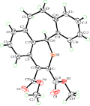
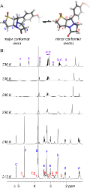
- aerial oxidation of the chiral dithiolates generated from the propionitrile-protected precursors. Both enantiomers crystallize in the orthorhombic chiral space group P212121. They show a boat-type conformation of the TTF moiety, a rather rigid dithiin sulfone ring and the methyl groups in a bisequatorial
- that the oxidation of the outer sulfur atoms into sulfoxide or sulfone should only moderately influence the oxidation potential and thus provide more stable radical cation species. In order to access chiral precursors with controlled stereochemistry we decided to investigate the sulfoxidation of the DM
- elemental analysis, which are all concordant, the definite proof for the sulfone structure of 1 has been provided by single crystal X-ray diffraction analysis. Single crystals of the two enantiomers (S,S)-1 and (R,R)-1 were obtained by slow evaporation from dichloromethane/pentane or dichloromethane


Hetero-Diels–Alder reactions of hetaryl and aryl thioketones with acetylenic dienophiles
Beilstein J. Org. Chem. 2015, 11, 576–582, doi:10.3762/bjoc.11.63

- ESI mass spectra as well as the elemental analysis confirmed the molecular formula C19H16SO6, which corresponds with the structure of the sulfone 6a obtained in 90% yield (Scheme 4). Based on this result, the intermediate product observed in the mixture after 3 h can be proposed as the corresponding




Synthesis of nanodiamond derivatives carrying amino functions and quantification by a modified Kaiser test
Beilstein J. Org. Chem. 2014, 10, 2729–2737, doi:10.3762/bjoc.10.288
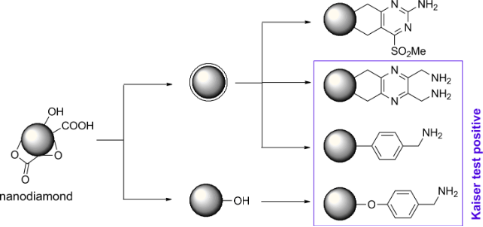
- nitrogen and sulfur content. All analytical methods yield comparable results around 0.2 mmol g−1. The further reaction depicted in Scheme 1 enables the formation of an aromatic amine at the 2-position of the ring by the oxidation of the thioethers and subsequent substitution of the sulfone by an amino
- carried out using gaseous ammonia and hence the isolation and purification of the reaction product 11 is very simple. As expected the intensity of the sulfone related IR bands decreases upon amination (but does not vanish as only the SO2Me group in 2-position is exchanged) and new signals corresponding to
- amino functions (1590 and ~3450 cm−1) appear in the spectrum. Furthermore, the sulfur content of the material is reduced to one half of the original value. This shows that the reaction occurs with high efficiency as the remaining sulfur stems from the conserved sulfone group. From these results it is


Application of cyclic phosphonamide reagents in the total synthesis of natural products and biologically active molecules
Beilstein J. Org. Chem. 2014, 10, 1848–1877, doi:10.3762/bjoc.10.195
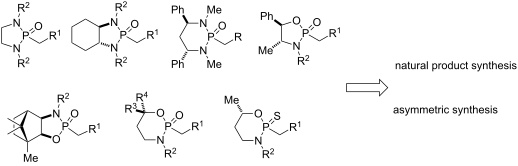
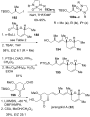
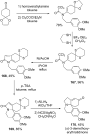
- accomplished through a one-pot Swern oxidation/Wittig olefination protocol followed by hydrogenation to give ketone 127. For further extension of the carbon chain and installation of the trisubstituted double bond, a modified Julia olefination with imidazole sulfone 128 was employed [100][101][102]. Thus
- , reaction of ketone 127 with the lithium anion of sulfone 128 and treatment of the obtained β-hydroxysulfone with SmI2 led to olefin 129 as a 2:1 mixture of E/Z-isomers. After reduction of the tert-butyl ester to the primary alcohol, the E/Z-isomers could be separated chromatographically. Cleavage of the
- accessed from (S)-glycidol. The assembly of the two cyclic building blocks and the Roche ester derived middle fragment under formation of the trans-double bonds would utilize phosphonamide and sulfone anion coupling strategy, respectively. A similar strategy was employed for the assembly of ambruticin S












Olefin cross metathesis based de novo synthesis of a partially protected L-amicetose and a fully protected L-cinerulose derivative
Beilstein J. Org. Chem. 2014, 10, 1023–1031, doi:10.3762/bjoc.10.102
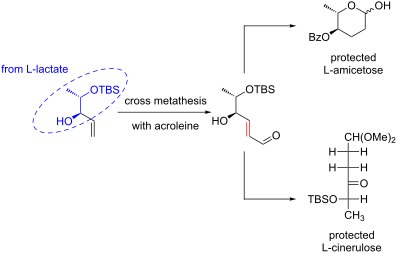
- -benzyloxyhex-5-enal [30], oxidative degradation of aromatics and subsequent lactonization [31], and a two-carbon homologation of an enantiopure C4-building block with a metallated sulfone [32]. A combinatorial biosynthetic approach to D- and L-amicetose has also recently been established by combining different


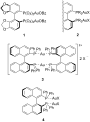
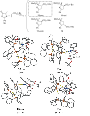
Synthetic scope and DFT analysis of the chiral binap–gold(I) complex-catalyzed 1,3-dipolar cycloaddition of azlactones with alkenes
Beilstein J. Org. Chem. 2013, 9, 2422–2433, doi:10.3762/bjoc.9.280
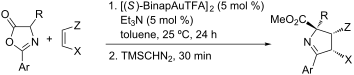
- sulfone, trans-1,2-bis(phenylsulfonyl)ethylene, chalcone, crotonaldehyde and cinnamaldehyde at the same reaction conditions [36]. Another drawback was the poor reactivity observed when α-substituted azlactones were used as starting material in the named reaction with NPM. However, the alanine-derived 4





Sequential Diels–Alder/[3,3]-sigmatropic rearrangement reactions of β-nitrostyrene with 3-methyl-1,3-pentadiene
Beilstein J. Org. Chem. 2013, 9, 2137–2146, doi:10.3762/bjoc.9.251

- . Nitronic ester 26c with a sulfone group (Hammett σp 0.68) [20] at the C(I) position rearranges at 80 °C to 28b whereas analogous nitronic ester 26d with phenacyl group, a less powerful W-group (Hammett σp 0.43) [20], requires 120 °C for rearrangement to 28c [2]. The [3,3]-sigmatropic rearrangement of 26a
- similar bicyclic transition state must be involved [2]. The high reactivity of nitronic ester 30 is presumably due to the combined presence of a C(I) sulfone group and a C(IV) methyl group. In particular, the presence of an electron-attracting substituent at C(I) appears to have a greater accelerative


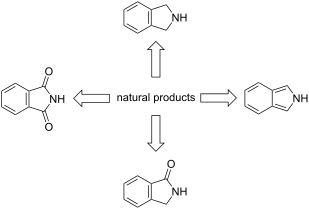
The chemistry of isoindole natural products
Beilstein J. Org. Chem. 2013, 9, 2048–2078, doi:10.3762/bjoc.9.243
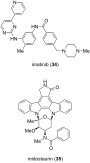
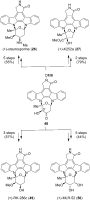
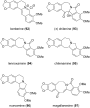
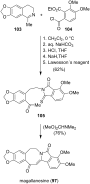
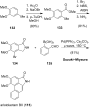
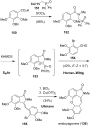
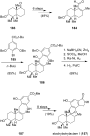
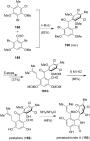
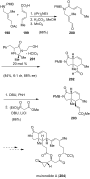
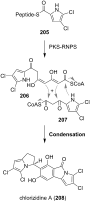
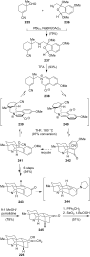
- (52) and cytochalasin L-696,474 (78) diverged. For 78, another five steps were necessary to form the isoindolinone 74. After oxidation of the primary alcohol with Dess–Martin periodinane, the obtained aldehyde was coupled with the readily available N-phenyltetrazole sulfone 75 via a Julia–Kocienski
















Stereoselective synthesis of the C79–C97 fragment of symbiodinolide
Beilstein J. Org. Chem. 2013, 9, 1931–1935, doi:10.3762/bjoc.9.228
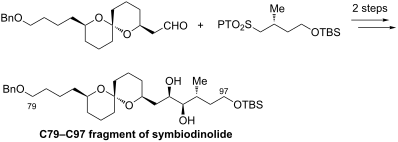
- Julia–Kocienski olefination as the coupling reaction. The new retrosynthetic analysis of the C79–C97 fragment 8 is described in Scheme 2. We envisaged that the diol 8 could be synthesized by the Julia–Kocienski olefination [12][13][14] between aldehyde 9 and 1-phenyl-1H-tetrazol-5-yl (PT)-sulfone 10 and
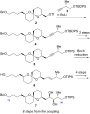
- /Mo(VI) [23] to yield PT-sulfone 23. The TBDPS protecting group of 23 was transformed to the TBS group in two steps to provide PT-sulfone 24. With the coupling precursors aldehyde 20 and PT-sulfones 23 and 24 in hand, we next examined the Julia–Kocienski olefination [12][13][14] of these compounds
- (Table 1). Deprotonation of the PT-sulfone 23 with KHMDS, followed by addition of the aldehyde 20, gave rise to the desired coupling product (E)-25 along with (Z)-25 in 27% combined yield at a 3.5:1 diastereomeric ratio (Table 1, entry 1). When NaHMDS was used as the base, the chemical yield was improved




Ethyl diazoacetate synthesis in flow
Beilstein J. Org. Chem. 2013, 9, 1813–1818, doi:10.3762/bjoc.9.211

- elimination of the sulfone substituent. Additionally, Ley et al. [19] recently prepared a range of α-hydroxy acids in flow starting from the corresponding amino acids, involving diazotization of the amine to the diazonium salt in a biphasic system. Inspired by Ley’s approach, which is significantly more atom


Dipolar addition to cyclic vinyl sulfones leading to dual conformation tricycles
Beilstein J. Org. Chem. 2013, 9, 1419–1425, doi:10.3762/bjoc.9.159
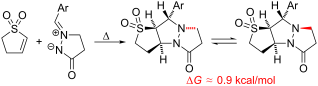
- coupling partners for these cycloadditions, and in many cases the reaction rate can be enhanced through the addition of a Lewis acid that can coordinate to the carbonyl function, thereby lowering the energy of the olefin LUMO. By contrast, vinyl sulfones (with the exception of simple aryl vinyl sulfone
- species [13][14][15][16][17][18][19][20][21]) have been less-frequently employed as acceptors in 1,3-dipolar cycloadditions [22][23][24][25]. Indeed, we are only aware of a single prior example of a cyclic alkyl vinyl sulfone participating in a dipolar addition with an azomethine ylide [26]. In part, this
- lack of reactivity is due to a poor orbital overlap between the sulfone and olefin functions [27][28][29]; while vinyl sulfones are electrophilic (due to the inductive effects of the sulfone group), their LUMO cannot be as easily perturbed by the addition of a Lewis acid. We previously described the


Homolytic substitution at phosphorus for C–P bond formation in organic synthesis
Beilstein J. Org. Chem. 2013, 9, 1269–1277, doi:10.3762/bjoc.9.143

- the regioselectivity, these addition reactions naturally involve C–P bond formation by homolytic substitution at phosphorus (Scheme 5). Studer recently reported similar silylphosphination of phenyl vinyl sulfone with Me3Si–PPh2 [26]. Tzschach reported that tetraorganodiphosphines R2P–PR2 add to
- Me3M–PPh2 (M = Sn, Si) and V-40 (Table 9) [26]. Secondary and tertiary alkyl iodides participate in the addition reaction while primary alkyl iodide results in direct phosphination prior to the expected addition. Not only acrylate ester but also acrylamide, vinyl sulfone, and acrylonitrile are good


Appel-reagent-mediated transformation of glycosyl hemiacetal derivatives into thioglycosides and glycosyl thiols
Beilstein J. Org. Chem. 2013, 9, 974–982, doi:10.3762/bjoc.9.112
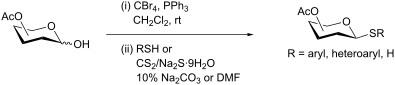
- ][2][3][4][5]. Due to their thermal and chemical stability, they have been used as stable intermediates for functional-group transformations as well as stereoselective glycosylations. Thioglycosides can be transformed into various other glycosyl donors [6][7][8][9][10] (e.g., sulfoxide, sulfone


Some aspects of radical chemistry in the assembly of complex molecular architectures
Beilstein J. Org. Chem. 2013, 9, 557–576, doi:10.3762/bjoc.9.61

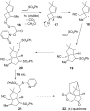
- addition to phenyl vinyl sulfone and closure to form the cyclopentane ring in 19, and then by a second intermolecular addition to phenyl vinyl sulfone to furnish radical 20, which finally evolves into the observed product 21 by transfer of the pyridylthiyl group from the starting Barton ester 16. Even
- carboxylic acid derivative 23 [18]. As in the previous sequence, radical 24, generated following the second addition to the vinyl sulfone, is electrophilic in character and does not add further; it simply propagates the chain by reacting with the starting thiohydroxamate 23. The complex bicyclic structure 25
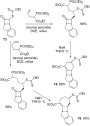
- , exposure of bis-sulfone 25 to trimethylaluminium causes the regioselective replacement of the terminal sulfone with a methyl group to give compound 26 in good yield. The Barton decarboxylation reaction is an exceptionally powerful method that deserves without doubt a much greater attention from synthetic













Recent advances in transition-metal-catalyzed intermolecular carbomagnesiation and carbozincation
Beilstein J. Org. Chem. 2013, 9, 278–302, doi:10.3762/bjoc.9.34
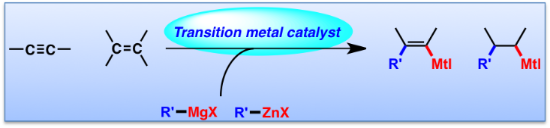
- -substituted alkynes, such as alkynyl sulfones, sulfoxides, or sulfoximines as electron-deficient alkynes. Xie reported a copper-catalyzed carbomagnesiation of alkynyl sulfone to give the corresponding alkenylmagnesium intermediates (Scheme 2) [39][40]. Interestingly, the stereochemistry of the products was
- allylmagnesiation of alkynyl sulfone. Copper-catalyzed four-component reaction of alkynyl sulfoxide with alkylzinc reagent, diiodomethane, and benzaldehyde. Rhodium-catalyzed reaction of aryl alkynyl ketones with arylzinc reagents. Allylmagnesiation of propargyl alcohol, which provides the anti-addition product


















Organocatalytic cascade aza-Michael/hemiacetal reaction between disubstituted hydrazines and α,β-unsaturated aldehydes: Highly diastereo- and enantioselective synthesis of pyrazolidine derivatives
Beilstein J. Org. Chem. 2012, 8, 1710–1720, doi:10.3762/bjoc.8.195
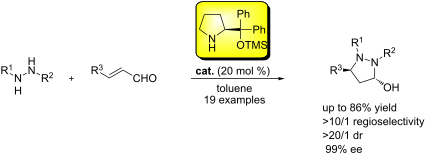
- screening results are summarized in Table 3. (S)-Proline derivatives 1g–h, 1k, 1l were found to be ineffective for the reaction, because they afford only trace products after one day (Table 3, entries 1, 2, 5 and 6). Although a moderate yield was obtained with organocatalyst 1i bearing a sulfone functional


Synthesis of compounds related to the anti-migraine drug eletriptan hydrobromide
Beilstein J. Org. Chem. 2012, 8, 1400–1405, doi:10.3762/bjoc.8.162
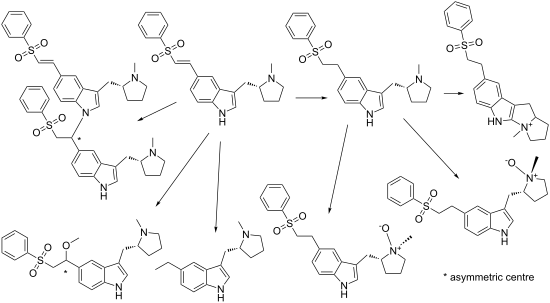
- -3-(N-methylpyrrolidin-2-ylmethyl)-1H-indole (9) by using acetic anhydride and triethylamine in N,N-dimethylformamide affords (R)-1-acetyl-5-bromo-3-(N-methylpyrrolidin-2-ylmethyl)-1H-indole (10). When coupled in situ with phenyl vinyl sulfone (11) in the presence of a catalytic amount of palladium


Parallel and four-step synthesis of natural-product-inspired scaffolds through modular assembly and divergent cyclization
Beilstein J. Org. Chem. 2012, 8, 930–940, doi:10.3762/bjoc.8.105
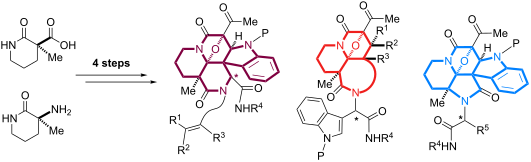
- cytotoxic activities. Incorporation of dimethyl substituents on the scaffold resulted in diminished activity (41b: IC50 = 5.89 μg/mL) (Table 1, entry 3). Removal of the nosyl group (39b→39c) also caused substantial loss of the activities, suggesting the critical role of the aromatic sulfone amide moiety


Synthesis and characterization of a novel carboxyl group containing (co)polyimide with sulfur in the polymer backbone
Beilstein J. Org. Chem. 2012, 8, 776–786, doi:10.3762/bjoc.8.88
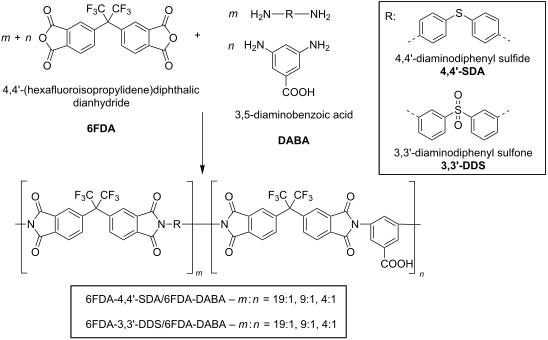
- previous work of our group showed that the imidization degree of chemically converted PAAs is superior to thermally imidized PAAs [24]. Aromatic diamines as shown in Scheme 1, carrying either sulfone (3,3′-diaminodiphenyl sulfone, 3,3′-DDS), or (as partly described in a previous work from our group
- ). Similar results were found for the sulfone-containing 6FDA-3,3′-DDS/6FDA-DABA 4:1, which is shown in Figure 4. All synthesized (co)polyimides showed the expected vibrational bands. GPC measurements Gel permeation chromatography (GPC) measurements of the synthesized (co)polyimides were performed in order
- -mentioned behavior. Apparently, the sulfide-containing (co)polyimides exhibit higher Tg values than the sulfone-containing (co)polyimides. This is due to the differently substituted aromatic diamines. The para-substituted 4,4′-SDA induces a higher stiffness compared to the meta-substituted 3,3′-DDS, which



Derivatives of phenyl tribromomethyl sulfone as novel compounds with potential pesticidal activity
Beilstein J. Org. Chem. 2012, 8, 259–265, doi:10.3762/bjoc.8.27
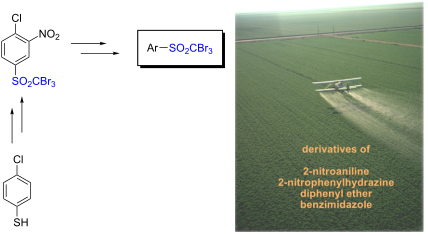
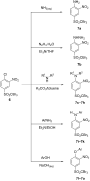
- tribromomethyl phenyl sulfone derivatives as novel potential pesticides is reported. The title sulfone was obtained by following three different synthetic routes, starting from 4-chlorothiophenol or 4-halogenphenyl methyl sulfone. Products of its subsequent nitration were subjected to the SNAr reactions with
- . Keywords: 2-nitroaniline derivatives; phenylhydrazones; pesticides; SNAr reaction; tribromomethyl sulfone derivatives; Introduction The rapid growth of the world population results in a continous increase in the demand for food. At the same time, about 35% of the global crops around the world are being
- containing a tribromomethylsulfonyl group, including derivatives of nitroaniline, nitrophenylhydrazine, diphenyl ether and benzimidazole (Scheme 1). All the target molecules are derived from a common precursor, namely 4-halogenphenyl tribromomethyl sulfone, efficiently synthesized from inexpensive 4




Improved syntheses of high hole mobility phthalocyanines: A case of steric assistance in the cyclo-oligomerisation of phthalonitriles
Beilstein J. Org. Chem. 2012, 8, 120–128, doi:10.3762/bjoc.8.14
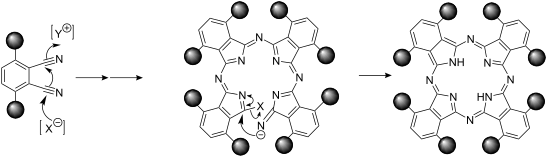
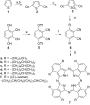
- bis-alkylation of thiophene (1), oxidation to the corresponding sulfone 3, and treatment with fumaronitrile (Scheme 1, top line). However, for most of the phthalonitriles we have made, we have found that a much better route is the nickel-catalysed reaction of an alkylzinc iodide with the bistriflate



Synthesis and oxidation of some azole-containing thioethers
Beilstein J. Org. Chem. 2011, 7, 1526–1532, doi:10.3762/bjoc.7.179
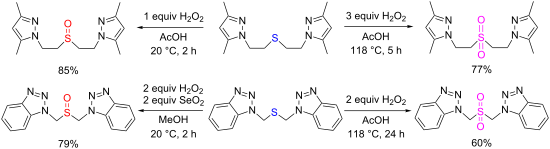
- characterized. Oxidation of the pyrazole-containing thioether by hydrogen peroxide proceeds selectively to provide a sulfoxide or sulfone, depending on the amount of oxidant used. Oxidation of the benzotriazole derivative by hydrogen peroxide is not selective, and sulfoxide and sulfone form concurrently
- . Selenium dioxide-catalyzed oxidation of benzotriazole thioether by H2O2, however, proceeds selectively and yields sulfoxide only. Keywords: azole; oxidation; sulfone; sulfoxide; thioether; Introduction Compounds comprising two pyrazole moieties linked by an aliphatic spacer act as bidentate chelating
- through its conversion to sulfoxide or sulfone derivatives. In this report we present the synthesis of pyrazole and benzotriazole thioether ligands and their oxidation to the corresponding sulfoxides and sulfones. Results and Discussion 1-(2-Hydroxyethyl)-3,5-dimethylpyrazole (1), the starting compound


Rh(I)-catalyzed intramolecular [2 + 2 + 1] cycloaddition of allenenes: Construction of bicyclo[4.3.0]nonenones with an angular methyl group and tricyclo[6.4.0.01,5]dodecenone
Beilstein J. Org. Chem. 2011, 7, 404–409, doi:10.3762/bjoc.7.52
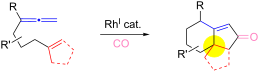
- proximal double bond of the allene might be mandatory. Removal of the allylic sulfone group in 2a was achieved by tributyltin hydride in the presence of AIBN to give 9g in 91% yield [35][36][37][38][39][40][41]. Thus, the phenylsulfonyl group of 2a can be regarded as a hydrogen surrogate and this procedure


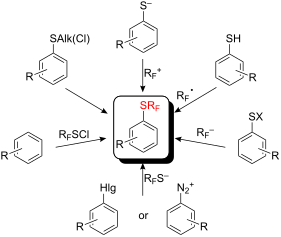
Aromatic and heterocyclic perfluoroalkyl sulfides. Methods of preparation
Beilstein J. Org. Chem. 2010, 6, 880–921, doi:10.3762/bjoc.6.88