

Search results
Search for "pyrazole" in Full Text gives 143 result(s) in Beilstein Journal of Organic Chemistry.
Catalytic Chan–Lam coupling using a ‘tube-in-tube’ reactor to deliver molecular oxygen as an oxidant
- Carl J. Mallia,
- Paul M. Burton,
- Alexander M. R. Smith,
- Gary C. Walter and
- Ian R. Baxendale
Beilstein J. Org. Chem. 2016, 12, 1598–1607, doi:10.3762/bjoc.12.156
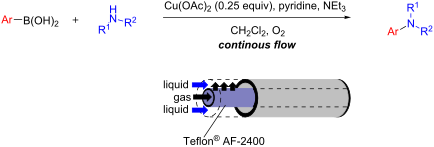
- -phenyl-1H-pyrazole (18) as the nucleophile with a number of different phenylboronic acids gave moderate to good yields (38–82% yields). In general electron-rich phenylboronic acids (19, 29–32, Scheme 2) gave better yields than electron poor ones (33–35, Scheme 2). This is probably due to the more
- -rich (65% yield) and electron-poor (38% yield) 2-substituted phenylboronic acids, most likely due to steric factors (31 and 35, Scheme 2). It is noteworthy that for all of the 3-phenyl-1H-pyrazole couplings, only the 1,3-disubsituted pyrazole products were obtained with no 1,5-disubsituted isomers

Graphical Abstract

Scheme 1: Comparison of early C–N and C–O coupling reactions.

Figure 1: General flow scheme for catalytic Chan–Lam reaction.

Figure 2: Observed trend for the effect of changing oxygen pressure on the NMR yield of 19.

Figure 3: Comparison of 1H NMR spectra of non-purified (top) and QP-DMA purified (bottom) continuous flow syn...

Scheme 2: Scope of the catalytic Chan–Lam reaction in continuous flow.

Scheme 3: Syntheses of substrate 39.

Figure 4: NOESY NMR spectrum for 30 with the characteristic NOESY signal encircled.

Figure 5: NOESY NMR spectrum for 33 with the characteristic NOESY signal encircled.

Figure 6: NOESY NMR spectrum for 35 with the characteristic NOESY signal encircled.

Figure 7: Substrates that gave no products in flow.

Scheme 4: Scale-up procedure for 19.
Conjugate addition–enantioselective protonation reactions
- James P. Phelan and
- Jonathan A. Ellman
Beilstein J. Org. Chem. 2016, 12, 1203–1228, doi:10.3762/bjoc.12.116
- amides into ligand 113 was crucial for achieving high enantioselectivity. A wide variety of α-aryl vinyl ketones 112 were effective substrates, and only when R1 was methyl did the enantioselectivity drop below 92:8 er to 80:20 er (Scheme 26a). The authors also investigated a number of pyrazole

Graphical Abstract

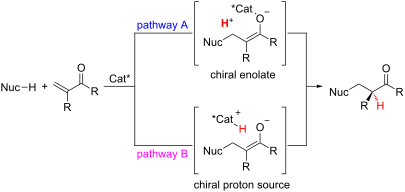
Figure 1: Two general pathways for conjugate addition followed by enantioselective protonation.

Scheme 1: Tomioka’s enantioselective addition of arylthiols to α-substituted acrylates.

Scheme 2: Sibi’s enantioselective hydrogen atom transfer reactions.

Scheme 3: Mikami’s addition of perfluorobutyl radical to α-aminoacrylate 11.

Scheme 4: Reisman’s Friedel–Crafts conjugate addition–enantioselective protonation approach toward tryptophan...

Scheme 5: Pracejus’s enantioselective addition of benzylmercaptan to α-aminoacrylate 20.

Scheme 6: Kumar and Dike’s enantioselective addition of thiophenol to α-arylacrylates.

Scheme 7: Tan’s enantioselective addition of aromatic thiols to 2-phthalimidoacrylates.

Scheme 8: Glorius’ enantioselective Stetter reactions with α-substituted acrylates.

Scheme 9: Dixon’s enantioselective addition of thiols to α-substituted acrylates.

Figure 2: Chiral phosphorous ligands.

Scheme 10: Enantioselective addition of arylboronic acids to methyl α-acetamidoacrylate.

Scheme 11: Frost’s enantioselective additions to dimethyl itaconate.

Scheme 12: Darses and Genet’s addition of potassium organotrifluoroborates to α-aminoacrylates.

Scheme 13: Proposed mechanism for enantioselective additions to α-aminoacrylates.

Scheme 14: Sibi’s addition of arylboronic acids to α-methylaminoacrylates.

Scheme 15: Frost’s enantioselective synthesis of α,α-dibenzylacetates 64.

Scheme 16: Rovis’s hydroheteroarylation of α-substituted acrylates with benzoxazoles.

Scheme 17: Proposed mechanism for the hydroheteroarylation of α-substituted acrylates with benzoxazoles.
Scheme 18: Sodeoka’s enantioselective addition of amines to N-benzyloxycarbonyl acrylamides 75 and 77.

Scheme 19: Proposed catalytic cycle for Sodeoka’s enantioselective addition of amines.

Scheme 20: Sibi’s enantioselective Friedel–Crafts addition of pyrroles to imides 84.

Scheme 21: Kobayashi’s enantioselective addition of malonates to α-substituted N-acryloyloxazolidinones.

Scheme 22: Chen and Wu’s enantioselective addition of thiophenol to N-methacryloyl benzamide.

Scheme 23: Tan’s enantioselective addition of secondary phosphine oxides and thiols to N-arylitaconimides.

Scheme 24: Enantioselective addition of thiols to α-substituted N-acryloylamides.

Scheme 25: Kobayashi’s enantioselective addition of thiols to α,β-unsaturated ketones.

Scheme 26: Feng’s enantioselective addition of pyrazoles to α-substituted vinyl ketones.

Scheme 27: Luo and Cheng’s addition of indoles to vinyl ketones by enamine catalysis.

Scheme 28: Curtin–Hammett controlled enantioselective addition of indole.

Scheme 29: Luo and Cheng’s enantioselective additions to α-branched vinyl ketones.

Scheme 30: Lou’s reduction–conjugate addition–enantioselective protonation.

Scheme 31: Luo and Cheng’s primary amine-catalyzed addition of indoles to α-substituted acroleins.

Scheme 32: Luo and Cheng’s proposed mechanism and transition state.

Figure 3: Shibasaki’s chiral lanthanum and samarium tris(BINOL) catalysts.

Scheme 33: Shibasaki’s enantioselective addition of 4-tert-butyl(thiophenol) to α,β-unsaturated thioesters.

Scheme 34: Shibasaki’s application of chiral (S)-SmNa3tris(binaphthoxide) catalyst 144 to the total synthesis ...

Scheme 35: Shibasaki’s cyanation–enantioselective protonation of N-acylpyrroles.

Scheme 36: Tanaka’s hydroacylation of acrylamides with aliphatic aldehydes.

Scheme 37: Ellman’s enantioselective addition of α-substituted Meldrum’s acids to terminally unsubstituted nit...

Scheme 38: Ellman’s enantioselective addition of thioacids to α,β,β-trisubstituted nitroalkenes.

Scheme 39: Hayashi’s enantioselective hydroarylation of diphenylphosphinylallenes.

Scheme 40: Hayashi’s enantioselective hydroarylation of diphenylphosphinylallenes.

Figure 4: Togni’s chiral ferrocenyl tridentate nickel(II) and palladium(II) complexes.

Scheme 41: Togni’s enantioselective hydrophosphination of methacrylonitrile.

Scheme 42: Togni’s enantioselective hydroamination of methacrylonitrile.
Bi- and trinuclear copper(I) complexes of 1,2,3-triazole-tethered NHC ligands: synthesis, structure, and catalytic properties
- Shaojin Gu,
- Jiehao Du,
- Jingjing Huang,
- Huan Xia,
- Ling Yang,
- Weilin Xu and
- Chunxin Lu
Beilstein J. Org. Chem. 2016, 12, 863–873, doi:10.3762/bjoc.12.85
- [1][2][3][4][5][6][7][8][9][10][11][12]. A number of transition metal complexes of NHCs containing pyridine [13], pyrimidine [14], pyrazole [15][16], naphthyridine [17], pyridazine [18], and phenanthroline [19][20] donating groups have been studied in metal-catalyzed organic transformations. Recently

Graphical Abstract

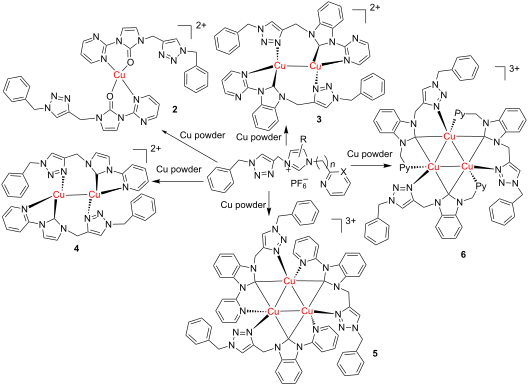
Scheme 1: Synthesis of copper complexes 2–6.

Figure 1: X-ray diffraction structure of copper(II) complex 2 with thermal ellipsoids drawn at 30% probabilit...

Figure 2: ORTEP the cationic section of [Cu2(L2)2](PF6)2 (3). Thermal ellipsoids are drawn at the 30% probabi...

Figure 3: ORTEP drawing of [Cu2(L3)2](PF6)2 (4). Thermal ellipsoids are drawn at the 30% probability level. H...

Figure 4: ORTEP drawing of [Cu3(L4)3](PF6)3 (5). Thermal ellipsoids are drawn at the 30% probability level. H...
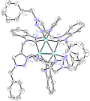
Figure 5: ORTEP drawing of [Cu3(L5)3](PF6)3 (6). Thermal ellipsoids are drawn at the 30% probability level. H...

Figure 6: Yield vs reaction time of different copper complex. The reaction was carried out in acetonitrile-d3...
The aminoindanol core as a key scaffold in bifunctional organocatalysts
- Isaac G. Sonsona,
- Eugenia Marqués-López and
- Raquel P. Herrera
Beilstein J. Org. Chem. 2016, 12, 505–523, doi:10.3762/bjoc.12.50
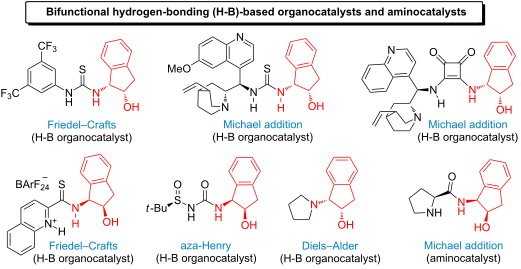
- framework. In this case, a pyrazole moiety presents additional H-bond acceptor sites. These could play an important role in fixing the substrate to the catalyst and favoring a more rigid transition state (TS11) and thus leading to better selectivity (Scheme 12). The absolute configuration is only given for

Graphical Abstract

Figure 1: Different configurations of 1,2-aminoindanol 1a–d.

Scheme 1: Asymmetric F–C alkylation catalyzed by thiourea 4.

Figure 2: Results for the F–C reaction carried out with catalyst 4 and the structurally modified analogues, 4'...

Figure 3: (a) Transition state TS1 originally proposed for the F–C reaction catalyzed by thiourea 4 [18]. (b) Tra...

Scheme 2: Asymmetric F–C alkylation catalyzed by thiourea ent-4 in the presence of D-mandelic acid as a Brøns...

Figure 4: Transition state TS2 proposed for the activation of the thiourea-based catalyst ent-4 by an externa...

Scheme 3: Friedel–Crafts alkylation of indoles catalyzed by the chiral thioamide 6.

Scheme 4: Scalable tandem C2/C3-annulation of indoles, catalyzed by the thioamide ent-6.

Scheme 5: Plausible tandem process mechanism for the sequential, double Friedel–Crafts alkylation, which invo...

Scheme 6: One-pot multisequence process that allows the synthesis of interesting compounds 14. The pharmacolo...

Scheme 7: Reaction pathway proposed for the preparation of the compounds 14.

Scheme 8: The enantioselective synthesis of cis-vicinal-substituted indane scaffolds 21, catalyzed by ent-6.

Scheme 9: Asymmetric domino procedure (Michael addition/Henry cyclization), catalyzed by the thioamide ent-6 ...

Scheme 10: The enantioselective addition of indoles 2 to α,β-unsaturated acyl phosphonates 24, a) screening of...

Figure 5: Proposed transition state TS7 for the Friedel–Crafts reaction of indole and α,β-unsaturated acyl ph...

Scheme 11: Study of aliphatic β,γ-unsaturated α-ketoesters 26 as substrates in the F–C alkylation of indoles c...

Figure 6: Possible transition states TS8 and TS9 in the asymmetric addition of indoles 2 to the β,γ-unsaturat...

Figure 7: Transition state TS10 proposed for the asymmetric addition of dialkylhydrazone 28 to the β,γ-unsatu...

Scheme 12: Different β-hydroxylamino-based catalysts tested in a Michael addition, and the transition state TS...

Scheme 13: Enantioselective addition of acetylacetone (36a) to nitroalkenes 3, catalyzed by 37 and the propose...

Scheme 14: Addition of 3-oxindoles 39 to 2-amino-1-nitroethenes 40, catalyzed by 41.

Scheme 15: Michael addition of 1,3-dicarbonyl compounds 36 to the nitroalkenes 3 catalyzed by the squaramide 43...

Scheme 16: Asymmetric aza-Henry reaction catalyzed by the aminoindanol-derived sulfinyl urea 50.

Figure 8: Results for the aza-Henry reaction carried out with the structurally modified catalysts 50–50''.

Scheme 17: Diels–Alder reaction catalyzed by the aminoindanol derivative ent-41.

Scheme 18: Asymmetric Michael addition of 3-pentanone (55a) to the nitroalkenes 3 through aminocatalysis.

Scheme 19: Substrate scope extension for the asymmetric Michael addition between the ketones 55 and the nitroa...

Scheme 20: A possible reaction pathway in the presence of the catalyst 56 and the plausible transition state T...
A convenient four-component one-pot strategy toward the synthesis of pyrazolo[3,4-d]pyrimidines
- Mingxing Liu,
- Jiarong Li,
- Hongxin Chai,
- Kai Zhang,
- Deli Yang,
- Qi Zhang and
- Daxin Shi
Beilstein J. Org. Chem. 2015, 11, 2125–2131, doi:10.3762/bjoc.11.229
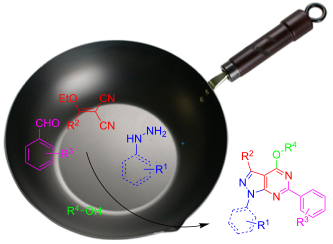
- -phenyl-1H-pyrazole-4-carbonitrile (6a) with benzaldehyde and ethanol, the cyclization of (E)-5-(benzylideneamino)-1-phenyl-1H-pyrazole-4-carbonitrile (7a) with ethanol or the reaction of 1,6-diphenyl-1,5-dihydro-4H-pyrazolo[3,4-d]pyrimidin-4-one (5aa) with ethanol, respectively (Scheme 2). With those

Graphical Abstract

Scheme 1: The synthesis of pyrazolo[3,4-d]pyrimidines.

Figure 1: Four-component one-pot synthesis of 5. Reactions conditions: 1 (1.2 mmol), 2 (1.0 mmol), 3 (1.2 mmo...

Scheme 2: Synthesis of 5a from different intermediates.

Scheme 3: Possible reaction mechanisms for the formation of pyrazolo[3,4-d]pyrimidiine.

Figure 2: Molecular structure (from X-ray diffraction data) of 5g.
Deproto-metallation of N-arylated pyrroles and indoles using a mixed lithium–zinc base and regioselectivity-computed CH acidity relationship
- Mohamed Yacine Ameur Messaoud,
- Ghenia Bentabed-Ababsa,
- Madani Hedidi,
- Aïcha Derdour,
- Floris Chevallier,
- Yury S. Halauko,
- Oleg A. Ivashkevich,
- Vadim E. Matulis,
- Laurent Picot,
- Valérie Thiéry,
- Thierry Roisnel,
- Vincent Dorcet and
- Florence Mongin
Beilstein J. Org. Chem. 2015, 11, 1475–1485, doi:10.3762/bjoc.11.160
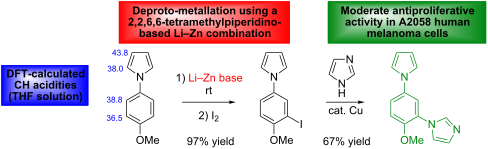
- antiproliferative activity, with no significant difference between the pyrrole and indole derivatives. Conclusion Unlike other azoles such as pyrazole and triazoles [37][38][40], pyrrole and indole do not possess any atom capable of coordinating metals. As a consequence, the corresponding CH acidities in THF

Graphical Abstract

Figure 1: Substrates involved in deproto-metallation reaction.
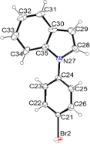
Figure 2: ORTEP diagram (30% probability) of 2e.

Scheme 1: Synthesis of the azole substrates 1f and 2f.

Scheme 2: Deproto-metallation of 1c followed by iodolysis [33].

Scheme 3: Deproto-metallation of 1a and 2a followed by iodolysis.

Scheme 4: Deproto-metallation of 1b and 2b followed by iodolysis.

Scheme 5: Deproto-metallation of 1c and 2c followed by iodolysis.

Figure 3: ORTEP diagrams (30% probability) of 4c, 3d and 3e.

Scheme 6: Deproto-metallation of 1d and 2d followed by iodolysis.

Scheme 7: Deproto-metallation of 1e and 2e followed by iodolysis.

Scheme 8: N-arylation of the iodides 3b, 3d and 4d.
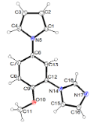
Figure 4: ORTEP diagram (30% probability) of 5d.
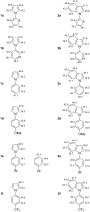
Figure 5: Calculated values of pKa(THF) of the compounds 1 and 2, and bromobenzene.

Figure 6: Antiproliferative activity (growth inhibition) of the tested compounds 1a,b,e,f, 2a,b and 5d at con...

Figure 7: Iodides previously formed as major products from the corresponding N-(4-methoxyphenyl)azoles using ...
The synthesis of active pharmaceutical ingredients (APIs) using continuous flow chemistry
- Marcus Baumann and
- Ian R. Baxendale
Beilstein J. Org. Chem. 2015, 11, 1194–1219, doi:10.3762/bjoc.11.134
- precipitation and clogging problems, thus a pressure chamber was developed [94] that would act as a pressure regulator allowing this step to be scaled up in flow in order to provide 114 on multigram scale (134 g/h). A Knorr pyrazole formation between 114 and commercially available hydrazine 115 had previously

Graphical Abstract

Figure 1: Pharmaceutical structures targeted in early flow syntheses.

Scheme 1: Flow synthesis of 6-hydroxybuspirone (9). Inserted photograph reprinted with permission from [45]. Copy...

Figure 2: Configuration of a baffled reactor tube (left) and its schematic working principle (right).

Scheme 2: McQuade’s flow synthesis of ibuprofen (16).

Scheme 3: Jamison’s flow synthesis of ibuprofen sodium salt (17).

Scheme 4: Flow synthesis of imatinib (23).

Scheme 5: Flow synthesis of the potent 5HT1B antagonist 28.

Scheme 6: Flow synthesis of a selective δ-opioid receptor agonist 33.

Scheme 7: Flow synthesis of a casein kinase I inhibitor library (38).

Scheme 8: Flow synthesis of fluoxetine (46).

Scheme 9: Flow synthesis of artemisinin (55).

Scheme 10: Telescoped flow synthesis of artemisinin (55) and derivatives (62–64).

Scheme 11: Flow approach towards AZD6906 (65).

Scheme 12: Pilot scale flow synthesis of key intermediate 73.

Scheme 13: Semi-flow synthesis of vildagliptine (77).

Scheme 14: Pilot scale asymmetric flow hydrogenation towards 83. Inserted photograph reprinted with permission...

Figure 3: Schematic representation of the ‘tube-in-tube’ reactor.

Scheme 15: Flow synthesis of fanetizole (87) via tube-in-tube system.

Scheme 16: Flow synthesis of diphenhydramine.HCl (92).

Scheme 17: Flow synthesis of rufinamide (95).

Scheme 18: Large scale flow synthesis of rufinamide precursor 102.

Scheme 19: First stage in the flow synthesis of meclinertant (103).

Scheme 20: Completion of the flow synthesis of meclinertant (103).

Scheme 21: Flow synthesis of olanzapine (121) utilising inductive heating techniques.

Scheme 22: Flow synthesis of amitriptyline·HCl (127).

Scheme 23: Flow synthesis of E/Z-tamoxifen (132) using peristaltic pumping modules.

Figure 4: Container sized portable mini factory (photograph credit: INVITE GmbH, Leverkusen Germany).

Scheme 24: Flow synthesis of imidazo[1,2-a]pyridines 136 linked to frontal affinity chromatography (FAC).

Figure 5: Structures of zolpidem (142) and alpidem (143).

Scheme 25: Synthesis and screening loops in the discovery of new Abl kinase inhibitors.

Figure 6: Schotten–Baumann approach towards LY573636.Na (147).

Scheme 26: Pilot scale flow synthesis of LY2886721 (146).

Scheme 27: Continuous flow manufacture of alikiren hemifumarate 152.
Diastereoselective and enantioselective conjugate addition reactions utilizing α,β-unsaturated amides and lactams
- Katherine M. Byrd
Beilstein J. Org. Chem. 2015, 11, 530–562, doi:10.3762/bjoc.11.60
- amides was reported by Sibi and co-workers [233]. In this work, they performed the 1,4-addition of O-benzylhydroxylamine to pyrazole-derived α,β-unsaturated amides using a chiral Lewis acid derived from bisoxazoline 116 (Scheme 29). The authors obtained the 1,4-addition products in optimal yields and

Graphical Abstract

Scheme 1: Generic mechanism for the conjugate addition reaction.

Figure 1: Methods to activate unsaturated amide/lactam systems.

Scheme 2: DCA of Grignard reagents to an L-ephedrine derived chiral α,β–unsaturated amide.

Figure 2: Chiral auxiliaries used in DCA reactions.

Scheme 3: Comparison between auxiliary 5 and the Oppolzer auxiliary in a DCA reaction.

Scheme 4: Use of Evans auxiliary in a DCA reaction.
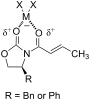
Figure 3: Lewis acid complex of the Evans auxiliary [43].

Scheme 5: DCA reactions of α,β-unsaturated amides utilizing (S,S)-(+)-pseudoephedrine and the OTBS-derivative...

Figure 4: Proposed model accounting for the diastereoselectivity observed in the 1,4-addition of Bn2NLi to α,...

Scheme 6: An example of a tandem conjugate addition–α-alkylation reaction of an α,β-unsaturated amide utilizi...

Scheme 7: Conjugate addition to an α,β-unsaturated bicyclic lactam leading to (+)-paroxetine and (+)-femoxeti...

Scheme 8: Intramolecular conjugate addition reaction to α,β-unsaturated amide.

Scheme 9: Conjugate addition to an α,β-unsaturated pyroglutamate derivative.

Scheme 10: Cu(I)–NHC-catalyzed asymmetric silylation of α,β-unsaturated lactams and amides.

Scheme 11: Asymmetric copper-catalyzed 1,4-borylation of an α,β-unsaturated amide.

Scheme 12: Asymmetric cross-coupling 49 to phenyl chloride.

Scheme 13: Rhodium-catalyzed asymmetric 1,4-arylation of an α,β-unsaturated lactam.

Scheme 14: Rhodium-catalyzed asymmetric 1,4-arylation of an α,β-unsaturated amide.

Scheme 15: Rhodium-catalyzed asymmetric 1,4-arylation of an α,β-unsaturated amide using a chiral bicyclic dien...

Scheme 16: Synthesis of (R)-(−)-baclofen through a rhodium-catalyzed asymmetric 1,4-arylation of lactam 58.

Scheme 17: Rhodium-catalyzed asymmetric 1,4-arylation of an α,β-unsaturated amide and lactam employing organo[...

Scheme 18: Rhodium-catalyzed asymmetric 1,4-arylation of an α,β-unsaturated lactam employing benzofuran-2-ylzi...

Figure 5: Further chiral ligands that have been used in rhodium-catalyzed 1,4-additions of α,β-unsaturated am...

Scheme 19: Palladium-catalyzed asymmetric 1,4-arylation of arylsiloxanes to a α,β-unsaturated lactam.

Scheme 20: SmI2-mediated cyclization of α,β-unsaturated Weinreb amides.

Figure 6: Chiral Lewis acid complexes used in the Mukaiyama–Michael addition of α,β-unsaturated amides.

Scheme 21: Mukaiyama–Michael addition of thioester silylketene acetal to α,β-unsaturated N-alkenoyloxazolidino...

Scheme 22: Asymmetric 1,4-addition of aryl acetylides to α,β-unsaturated thioamides.

Scheme 23: Asymmetric 1,4-addition of alkyl acetylides to α,β-unsaturated thioamides.

Scheme 24: Asymmetric vinylogous conjugate additions of unsaturated butyrolactones to α,β-unsaturated thioamid...

Scheme 25: Gd-catalyzed asymmetric 1,4-cyanation of α,β-unsaturated N-acylpyrroles [205].

Scheme 26: Lewis acid-catalyzed asymmetric 1,4-cyanation of α,β-unsaturated N-acylpyrazole 107.

Scheme 27: Lewis acid mediated 1,4-addition of dibenzyl malonate to α,β-unsaturated N-acylpyrroles.

Scheme 28: Chiral Lewis acid mediated 1,4-radical addition to α,β-unsaturated N-acyloxazolidinone [224].

Scheme 29: Aza-Michael addition of O-benzylhydroxylamine to an α,β-unsaturated N-acylpyrazole.

Scheme 30: An example of the aza-Michael addition of secondary aryl amines to an α,β-unsaturated N-acyloxazoli...

Scheme 31: Aza-Michael additions of anilines to a α,β-unsaturated N-alkenoyloxazolidinone catalyzed by palladi...

Scheme 32: Aza-Michael additions of aniline to an α,β-unsaturated N-alkenoylbenzamide and N-alkenoylcarbamate ...

Scheme 33: Difference between aza-Michael addition ran using the standard protocol versus the slow addition pr...

Scheme 34: Aza-Michael additions of aryl amines salts to an α,β-unsaturated N-alkenoyloxazolidinone catalyzed ...

Scheme 35: Aza-Michael addition of N-alkenoyloxazolidiniones catalyzed by samarium diiodide [244].

Scheme 36: Asymmetric aza-Michael addition of p-anisidine to α,β-unsaturated N-alkenoyloxazolidinones catalyze...

Scheme 37: Asymmetric aza-Michael addition of O-benzylhydroxylamine to N-alkenoyloxazolidinones catalyzed by i...

Scheme 38: Asymmetric 1,4-addition of purine to an α,β-unsaturated N-alkenoylbenzamide catalyzed by (S,S)-(sal...

Scheme 39: Asymmetric 1,4-addition of phosphites to α,β-unsaturated N-acylpyrroles.

Scheme 40: Asymmetric 1,4-addition of phosphine oxides to α,β-unsaturated N-acylpyrroles.

Scheme 41: Tandem Michael-aldol reaction catalyzed by a hydrogen-bonding organocatalyst.

Scheme 42: Examples of the sulfa-Michael–aldol reaction employing α,β-unsaturated N-acylpyrazoles.

Scheme 43: Example of the sulfa-Michael addition of α,β-unsaturated N-alkenoyloxazolidinones.

Figure 7: Structure of cinchona alkaloid-based squaramide catalyst.

Scheme 44: Asymmetric intramolecular oxa-Michael addition of an α,β-unsaturated amide.

Scheme 45: Formal synthesis atorvastatin.
Cross-dehydrogenative coupling for the intermolecular C–O bond formation
- Igor B. Krylov,
- Vera A. Vil’ and
- Alexander O. Terent’ev
Beilstein J. Org. Chem. 2015, 11, 92–146, doi:10.3762/bjoc.11.13
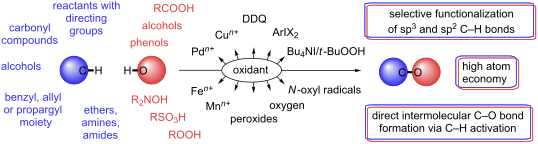
- arenes (Scheme 4). The pyridine, pyrimidine, or pyrazole moiety serves as the directing group in the oxidative ortho-alkoxylation of arenes 16 with the Cu(OAc)2/AgOTf/O2 system giving coupling products 17 (Scheme 5) [47]. It is supposed that copper is inserted into the C–H bond of arene, the resulting Cu

Graphical Abstract

Scheme 1: Cross-dehydrogenative coupling.

Scheme 2: Cross-dehydrogenative C–O coupling.

Scheme 3: Regioselective ortho-acetoxylation of meta-substituted arylpyridines and N-arylamides.
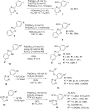
Scheme 4: ortho-Acyloxylation and alkoxylation of arenes directed by pyrimidine, benzoxazole, benzimidazole a...

Scheme 5: Cu(OAc)2/AgOTf/O2 oxidative system in the ortho-alkoxylation of arenes.
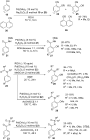
Scheme 6: Pd(OAc)2/persulfate oxidative system in the ortho-alkoxylation and acetoxylation of arenes with nit...
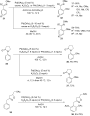
Scheme 7: ortho-Acetoxylation and methoxylation of O-methyl aryl oximes, N-phenylpyrrolidin-2-one, and (3-ben...

Scheme 8: Ruthenium-catalyzed ortho-acyloxylation of acetanilides.

Scheme 9: Acetoxylation and alkoxylation of arenes with amide directing group using Pd(OAc)2/PhI(OAc)2 oxidat...

Scheme 10: Alkoxylation of azoarenes, 2-aryloxypyridines, picolinamides, and N-(1-methyl-1-(pyridin-2-yl)ethyl...

Scheme 11: Acetoxylation of compounds containing picolinamide and quinoline-8-amine moieties using the Pd(OAc)2...

Scheme 12: (CuOH)2CO3 catalyzed oxidative ortho-etherification using air as oxidant.

Scheme 13: Copper-catalyzed aerobic alkoxylation and aryloxylation of arenes containing pyridine-N-oxide moiet...

Scheme 14: Cobalt-catalyzed aerobic alkoxylation of arenes and alkenes containing pyridine N-oxide moiety.

Scheme 15: Non-symmetric double-fold C–H ortho-acyloxylation.

Scheme 16: N-nitroso directed ortho-alkoxylation of arenes.

Scheme 17: Selective alkoxylation and acetoxylation of alkyl groups.

Scheme 18: Acetoxylation of 2-alkylpyridines and related compounds.
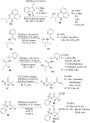
Scheme 19: Acyloxylation and alkoxylation of alkyl fragments of substrates containing amide or sulfoximine dir...

Scheme 20: Palladium-catalyzed double sp3 C–H alkoxylation of N-(quinolin-8-yl)amides for the synthesis of sym...

Scheme 21: Copper-catalyzed acyloxylation of methyl groups of N-(quinolin-8-yl)amides.

Scheme 22: One-pot acylation and sp3 C–H acetoxylation of oximes.

Scheme 23: Possible mechanism of oxidative esterification catalyzed by N-heterocyclic nucleophilic carbene.

Scheme 24: Oxidative esterification employing stoichiometric amounts of aldehydes and alcohols.

Scheme 25: Selective oxidative coupling of aldehydes with alcohols in the presence of amines.

Scheme 26: Iodine mediated oxidative esterification.

Scheme 27: Oxidative C–O coupling of benzyl alcohols with methylarenes under the action of Bu4NI/t-BuOOH syste...

Scheme 28: Oxidative coupling of methyl- and ethylarenes with aromatic aldehydes under the action of Bu4NI/t-B...

Scheme 29: Cross-dehydrogenative C–O coupling of aldehydes with t-BuOOH in the presence of Bu4NI.

Scheme 30: Bu4NI-catalyzed α-acyloxylation reaction of ethers and ketones with aldehydes and t-BuOOH.

Scheme 31: Oxidative coupling of aldehydes with N-hydroxyimides and hexafluoroisopropanol.

Scheme 32: Oxidative coupling of alcohols with N-hydroxyimides.

Scheme 33: Oxidative coupling of aldehydes and primary alcohols with N-hydroxyimides using (diacetoxyiodo)benz...

Scheme 34: Proposed mechanism of the oxidative coupling of aldehydes and N-hydroxysuccinimide under action of ...

Scheme 35: Oxidative coupling of aldehydes with pivalic acid (172).

Scheme 36: Oxidative C–O coupling of aldehydes with alkylarenes using the Cu(OAc)2/t-BuOOH system.

Scheme 37: Copper-catalyzed acyloxylation of C(sp3)-H bond adjacent to oxygen in ethers using benzyl alcohols.

Scheme 38: Oxidative C–O coupling of aromatic aldehydes with cycloalkanes.

Scheme 39: Ruthenium catalyzed cross-dehydrogenative coupling of primary and secondary alcohols.

Scheme 40: Cross-dehydrogenative C–O coupling reactions of β-dicarbonyl compounds with sulfonic acids, acetic ...

Scheme 41: Acyloxylation of ketones, aldehydes and β-dicarbonyl compounds using carboxylic acids and Bu4NI/t-B...

Scheme 42: Acyloxylation of ketones using Bu4NI/t-BuOOH system.

Scheme 43: Cross-dehydrogenative C–O coupling of β-dicarbonyl compounds and their heteroanalogues with N-hydro...

Scheme 44: Cross-dehydrogenative C–O coupling of β-dicarbonyl compounds and their heteroanalogues with t-BuOOH....

Scheme 45: Oxidative C–O coupling of 2,6-dialkylphenyl-β-keto esters and thioesters with tert-butyl hydroxycar...

Scheme 46: α’-Acyloxylation of α,β-unsaturated ketones using KMnO4.

Scheme 47: Possible mechanisms of the acetoxylation at the allylic position of alkenes by Pd(OAc)2.

Scheme 48: Products of the oxidation of terminal alkenes by Pd(II)/AcOH/oxidant system.

Scheme 49: Acyloxylation of terminal alkenes with carboxylic acids.

Scheme 50: Synthesis of linear E-allyl esters by cross-dehydrogenative coupling of terminal alkenes wih carbox...

Scheme 51: Pd(OAc)2-catalyzed acetoxylation of Z-vinyl(triethylsilanes).

Scheme 52: α’-Acetoxylation of α-acetoxyalkenes with copper(II) chloride in acetic acid.

Scheme 53: Oxidative acyloxylation at the allylic position of alkenes and at the benzylic position of alkylare...

Scheme 54: Copper-catalyzed alkoxylation of methylheterocyclic compounds using di-tert-butylperoxide as oxidan...

Scheme 55: Oxidative C–O coupling of methylarenes with β-dicarbonyl compounds or phenols.

Scheme 56: Copper-catalyzed esterification of methylbenzenes with cyclic ethers and cycloalkanes.

Scheme 57: Oxidative C–O coupling of carboxylic acids with toluene catalyzed by Pd(OAc)2.

Scheme 58: Oxidative acyloxylation at the allylic position of alkenes with carboxylic acids using the Bu4NI/t-...

Scheme 59: Cross-dehydrogenative C–O coupling of carboxylic acids with alkylarenes using the Bu4NI/t-BuOOH sys...

Scheme 60: Oxidative C–O cross-coupling of methylarenes with ethyl or isopropylarenes.

Scheme 61: Phosphorylation of benzyl C–H bonds using the Bu4NI/t-BuOOH oxidative system.

Scheme 62: Selective C–H acetoxylation of 2,3-disubstituted indoles.

Scheme 63: Acetoxylation of benzylic position of alkylarenes using DDQ as oxidant.

Scheme 64: C–H acyloxylation of diarylmethanes, 3-phenyl-2-propen-1-yl acetate and dimethoxyarene using DDQ.

Scheme 65: Cross-dehydrogenative C–O coupling of 1,3-diarylpropylenes and 1,3-diarylpropynes with alcohols.

Scheme 66: One-pot azidation and C–H acyloxylation of 3-chloro-1-arylpropynes.

Scheme 67: Cross-dehydrogenative C–O coupling of 1,3-diarylpropylenes, (E)-1-phenyl-2-isopropylethylene and is...

Scheme 68: Cross-dehydrogenative C–O coupling of alkylarenes and related compounds with N-hydroxyphthalimide.

Scheme 69: Acetoxylation at the benzylic position of alkylarenes mediated by N-hydroxyphthalimide.

Scheme 70: C–O coupling of methylarenes with aromatic carboxylic acids employing the NaBrO3/NaHSO3 system.

Scheme 71: tert-Butyl peroxidation of allyl, propargyl and benzyl ethers catalyzed by Fe(acac)3.

Scheme 72: Cross-dehydrogenative C–O coupling of ethers with carboxylic acids mediated by Bu4NI/t-BuOOH system....

Scheme 73: Oxidative acyloxylation of dimethylamides and dioxane with 2-aryl-2-oxoacetic acids accompanied by ...

Scheme 74: tert-Butyl peroxidation of N-benzylamides and N-allylbenzamide using the Bu4NI/t-BuOOH system.

Scheme 75: Cross-dehydrogenative C–O coupling of aromatic carboxylic acids with ethers using Fe(acac)3 as cata...

Scheme 76: Cross-dehydrogenative C–O coupling of cyclic ethers with 2-hydroxybenzaldehydes using iron carbonyl...
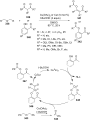
Scheme 77: Cross-dehydrogenative C–O coupling of ethers with β-dicarbonyl compounds and phenols using copper c...

Scheme 78: Cross-dehydrogenative C–O coupling of 2-hydroxybenzaldehyde with dioxane catalyzed by Cu2(BPDC)2(BP...

Scheme 79: Ruthenium chloride-catalyzed acyloxylation of β-lactams.

Scheme 80: Ruthenium-catalyzed tert-butyl peroxydation amides and acetoxylation of β-lactams.

Scheme 81: PhI(OAc)2-mediated α,β-diacetoxylation of tertiary amines.

Scheme 82: Electrochemical oxidative methoxylation of tertiary amines.

Scheme 83: Cross-dehydrogenative C–O coupling of ketene dithioacetals with carboxylic acids in the presence of...

Scheme 84: Cross-dehydrogenative C–O coupling of enamides with carboxylic acids using iodosobenzene as oxidant....

Scheme 85: Oxidative alkoxylation, acetoxylation, and tosyloxylation of acylanilides using PhI(O(O)CCF3)2 in t...

Scheme 86: Proposed mechanism of the oxidative C–O coupling of actetanilide with O-nucleophiles in the presenc...

Scheme 87: Three-component coupling of aldehydes, anilines and alcohols involving oxidative intermolecular C–O...

Scheme 88: Oxidative coupling of phenols with alcohols.

Scheme 89: 2-Acyloxylation of quinoline N-oxides with arylaldehydes in the presence of the CuOTf/t-BuOOH syste...

Scheme 90: Cross-dehydrogenative C–O coupling of azoles with primary alcohols.

Scheme 91: Oxidation of dipyrroles to dipyrrins and subsequent oxidative alkoxylation in the presence of Na3Co...

Scheme 92: Oxidative dehydrogenative carboxylation of alkanes and cycloalkanes to allylic esters.

Scheme 93: Pd-catalyzed acetoxylation of benzene.
Three-component synthesis of C2F5-substituted pyrazoles from C2F5CH2NH2·HCl, NaNO2 and electron-deficient alkynes
- Pavel K. Mykhailiuk
Beilstein J. Org. Chem. 2015, 11, 16–24, doi:10.3762/bjoc.11.3

- C2F5CHN2, that participates in a [3 + 2] cycloaddition with electron-deficient alkynes in dichloromethane. Keywords: cycloaddition; fluorine; pentafluoroethyl group; pentafluoroethyldiazomethane; pyrazole; Introduction Incorporation of fluorinated fragments into organic compounds might affect their
- reaction conversion (Table 1, entry 6). The standard work-up afforded pyrazole 1a as a white crystalline solid in 99% yield without any purification (neither recrystallization, nor column chromatography). The reaction required no inert gas atmosphere, and was performed in air. Reaction scope Having these
- encouraging results on pyrazole 1a at hand, the reaction scope was studied. First, various mono-substituted alkynes 2–14 were tested under the already optimized reaction conditions (Table 2). Substrates 2, 3, 6–9 with strong EWGs smoothly reacted with C2F5CHN2 at room temperature to afford products 2a, 3a, 6a

Graphical Abstract

Figure 1: Bioactive compounds and agrochemicals with fluorinated pyrazoles.

Figure 2: Bioactive compounds with C2F5 group [34-36].

Figure 3: X-ray crystal structure of pyrazoles 10a, 19b and 20b [50].

Figure 4: Structure of the expected product 19a, and the observed isomeric one – 19b.

Scheme 1: Comparison of CF3CHN2 vs C2F5CHN2 in the reaction with alkyne 19.

Scheme 2: Synthesis of 3,4-disubstituted pyrazole 24.

Scheme 3: Synthesis of C2F5-substituted acids 25 and 27. In brackets are the known bioactive compounds DP-23, ...
A novel 4-aminoantipyrine-Pd(II) complex catalyzes Suzuki–Miyaura cross-coupling reactions of aryl halides
- Claudia A. Contreras-Celedón,
- Darío Mendoza-Rayo,
- José A. Rincón-Medina and
- Luis Chacón-García
Beilstein J. Org. Chem. 2014, 10, 2821–2826, doi:10.3762/bjoc.10.299
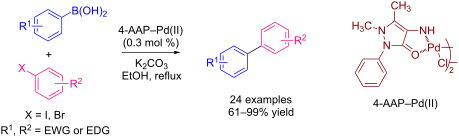
- ppm, with its integration indicating one proton. This result suggests to us that the palladium interacts with the carbonyl and amine groups of the pyrazole ring of 4-AAP. The synthesized 4-AAP–Pd(II) complex was used to carry out all palladium-catalyzed Suzuki–Miyaura cross-coupling reactions

Graphical Abstract

Scheme 1: Synthesis of 4-aminoantipyrine-Pd(II) complex.

Scheme 2: Reaction of different aryl halides with substituted arylboronic acids. Reaction conditions: phenylb...
Facile synthesis of 1H-imidazo[1,2-b]pyrazoles via a sequential one-pot synthetic approach
- András Demjén,
- Márió Gyuris,
- János Wölfling,
- László G. Puskás and
- Iván Kanizsai
Beilstein J. Org. Chem. 2014, 10, 2338–2344, doi:10.3762/bjoc.10.243
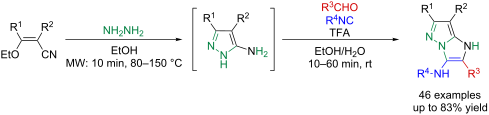
- synthetic elaboration of a green-compatible isocyanide-based access in three-component mode, we describe an operationally simple, one-pot two-step GBB protocol for the rapid construction of a 46 membered imidazo[1,2-b]pyrazole library with yields up to 83%. Keywords: Groebke–Blackburn–Bienaymé reaction; 1H
- -imidazo[1,2-b]pyrazole; isocyanide; multicomponent reaction; N-heterocycles; Introduction For the relatively rapid design and construction of a diverse, large pharmacophore library, the basic concepts of diversity-oriented synthesis and isocyanide-based multicomponent reactions, such as the Ugi four
- (5H- or 1H-imidazo[1,2-b]pyrazole with an endo- or exocyclic double bond) of each regioisomer. As presented [7][28][29][30][31][32][33][34][35][36], the “endo” 1H- and 5H-imidazo[1,2-b]pyrazoles were synthesized by the treatment of the corresponding amino substituted pyrazoles with aldehydes and

Graphical Abstract

Scheme 1: The conventional GBB-3CR.

Scheme 2: Plausible products 6A–H.

Scheme 3: Synthesis of 6 via the sequential one-pot method.
Chiral phosphines in nucleophilic organocatalysis
- Yumei Xiao,
- Zhanhu Sun,
- Hongchao Guo and
- Ohyun Kwon
Beilstein J. Org. Chem. 2014, 10, 2089–2121, doi:10.3762/bjoc.10.218
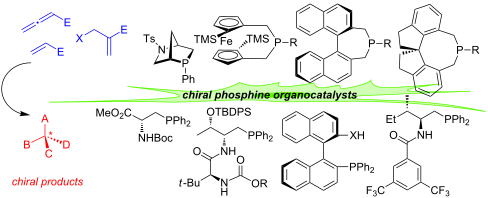
- 23). Shortly after, the Lu group further expanded the substrate scope of asymmetric [3 + 2] annulations with allenoates to a series of 3,5-dimethyl-1H-pyrazole-derived acrylamides (Scheme 24) [55]. The dipeptide-based phosphine H10 effectively promoted the reaction in good to excellent yields, albeit

Graphical Abstract

Figure 1: Cyclic chiral phosphines based on bridged-ring skeletons.

Figure 2: Cyclic chiral phosphines based on binaphthyl skeletons.

Figure 3: Cyclic chiral phosphines based on ferrocene skeletons.

Figure 4: Cyclic chiral phosphines based on spirocyclic skeletons.

Figure 5: Cyclic chiral phosphines based on phospholane ring skeletons.

Figure 6: Acyclic chiral phosphines.

Figure 7: Multifunctional chiral phosphines based on binaphthyl skeletons.

Figure 8: Multifunctional chiral phosphines based on amino acid skeletons.

Scheme 1: Asymmetric [3 + 2] annulations of allenoates with electron-deficient olefins, catalyzed by the chir...

Scheme 2: Asymmetric [3 + 2] annulations of allenoate and enones, catalyzed by the chiral binaphthyl-based ph...

Scheme 3: Asymmetric [3 + 2] annulations of N-substituted olefins and allenoates, catalyzed by the chiral bin...

Scheme 4: Asymmetric [3 + 2] annulations of 2-aryl-1,1-dicyanoethylenes with ethyl allenoate, catalyzed by th...

Scheme 5: Asymmetric [3 + 2] annulations of 3-alkylideneindolin-2-ones with ethyl allenoate, catalyzed by the...

Scheme 6: Asymmetric [3 + 2] annulations of 2,6-diarylidenecyclohexanones with allenoates, catalyzed by the c...

Scheme 7: Asymmetric [3 + 2] annulations of allenoate with alkylidene azlactones, catalyzed by the chiral bin...

Scheme 8: Asymmetric [3 + 2] annulations of C60 with allenoates, catalyzed by the chiral phosphine B6.

Scheme 9: Asymmetric [3 + 2] annulations of α,β-unsaturated esters and ketones with an allenoate, catalyzed b...

Scheme 10: Asymmetric [3 + 2] annulations of exocyclic enones with allenoates, catalyzed by the ferrocene-modi...

Scheme 11: Asymmetric [3 + 2] annulations of enones with an allenylphosphonate, catalyzed by the ferrocene-mod...

Scheme 12: Asymmetric [3 + 2] annulations of 3-alkylidene-oxindoles with ethyl allenoate, catalyzed by the fer...

Scheme 13: Asymmetric [3 + 2] annulations of dibenzylideneacetones with ethyl allenoate, catalyzed by the ferr...

Scheme 14: Asymmetric [3 + 2] annulations of trisubstituted alkenes with ethyl allenoate, catalyzed by the fer...

Scheme 15: Asymmetric [3 + 2] annulations of 2,6-diarylidenecyclohexanones with allenoates, catalyzed by the f...

Scheme 16: Asymmetric [3 + 2] annulations of α,β-unsaturated ketones with ethyl allenoates, catalyzed by the f...

Scheme 17: Asymmetric [3 + 2] annulations of α,β-unsaturated esters with allenoates, catalyzed by the ferrocen...

Scheme 18: Asymmetric [3 + 2] annulations of alkylidene azlactones with allenoates, catalyzed by the chiral sp...

Scheme 19: Asymmetric [3 + 2] annulations of α-trimethylsilyl allenones and electron-deficient olefins, cataly...

Scheme 20: Asymmetric [3 + 2] annulations of α,β-unsaturated ketones with an allenone, catalyzed by the chiral...

Scheme 21: Asymmetric [3 + 2] annulations of cyclic enones with allenoates, catalyzed by the chiral α-amino ac...

Scheme 22: Asymmetric [3 + 2] annulations of arylidenemalononitriles and analogues with an allenoate, catalyze...

Scheme 23: Asymmetric [3 + 2] annulations of α,β-unsaturated esters with an allenoate, catalyzed by the chiral...

Scheme 24: Asymmetric [3 + 2] annulations of 3,5-dimethyl-1H-pyrazole-derived acrylamides with an allenoate, c...

Scheme 25: Asymmetric [3 + 2] annulations of maleimides with allenoates, catalyzed by the chiral phosphine H10....

Scheme 26: Asymmetric [3 + 2] annulations of α-substituted acrylates with allenoate, catalyzed by the chiral p...

Scheme 27: Asymmetric [3 + 2] annulation of an N-tosylimine with an allenoate, catalyzed by the chiral phosphi...

Scheme 28: Asymmetric [3 + 2] annulations of N-tosylimines with an allenoate, catalyzed by the chiral phosphin...

Scheme 29: Asymmetric [3 + 2] annulations of N-tosylimines with an allenoate, catalyzed by the chiral phosphin...

Scheme 30: Asymmetric [3 + 2] annulations of N-diphenylphosphinoyl aromatic imines with butynoates, catalyzed ...

Scheme 31: Asymmetric [3 + 2] annulations of N-tosylimines with allenylphosphonates, catalyzed by the chiral p...

Scheme 32: Asymmetric [3 + 2] annulation of an N-tosylimine with an allenoate, catalyzed by the chiral phosphi...

Scheme 33: Asymmetric [3 + 2] annulations of N-diphenylphosphinoyl aromatic imines with allenoates (top), cata...

Scheme 34: Asymmetric [3 + 2] annulation of N-diphenylphosphinoylimines with allenoates, catalyzed by the chir...

Scheme 35: Asymmetric [3 + 2] annulation of an azomethine imine with an allenoate, catalyzed by the chiral pho...

Scheme 36: Asymmetric [3 + 2] annulations between α,β-unsaturated esters/ketones and 3-butynoates, catalyzed b...

Scheme 37: Asymmetric intramolecular [3 + 2] annulations of electron-deficient alkenes and MBH carbonates, cat...

Scheme 38: Asymmetric [3 + 2] annulations of methyleneindolinone and methylenebenzofuranone derivatives with M...

Scheme 39: Asymmetric [3 + 2] annulations of activated isatin-based alkenes with MBH carbonates, catalyzed by ...

Scheme 40: Asymmetric [3 + 2] annulations of maleimides with MBH carbonates, catalyzed by the chiral phosphine ...

Scheme 41: A series of [3 + 2] annulations of various activated alkenes with MBH carbonates, catalyzed by the ...

Scheme 42: Asymmetric [3 + 2] annulations of an alkyne with isatins, catalyzed by the chiral phosphine F1.

Scheme 43: Asymmetric [4 + 2] annulations catalyzed by the chiral phosphine B1.

Scheme 44: Asymmetric [4 + 2] annulations catalyzed by the chiral phosphine H5.

Scheme 45: Asymmetric [4 + 2] annulations catalyzed by the chiral phosphines H13 and H12.

Scheme 46: Asymmetric [4 + 2] annulations catalyzed by the chiral phosphine H6.

Scheme 47: Kerrigan’s [2 + 2] annulations of ketenes with imines, catalyzed by the chiral phosphine B7.

Scheme 48: Asymmetric [4 + 1] annulations, catalyzed by the chiral phosphine G6.

Scheme 49: Asymmetric homodimerization of ketenes, catalyzed by the chiral phosphine F5 and F6.

Scheme 50: Aza-MBH/Michael reactions, catalyzed by the chiral phosphine G1.

Scheme 51: Tandem RC/Michael additions, catalyzed by the chiral phosphine H14.

Scheme 52: Intramolecular tandem RC/Michael addition, catalyzed by the chiral phosphine H15.

Scheme 53: Double-Michael addition, catalyzed by the chiral aminophosphine G9.

Scheme 54: Tandem Michael addition/Wittig olefinations, mediated by the chiral phosphine BIPHEP.

Scheme 55: Asymmetric Michael additions, catalyzed by the chiral phosphines H7, H8, and H9.

Scheme 56: Asymmetric γ-umpolung additions, catalyzed by the chiral phosphine A1.

Scheme 57: Asymmetric γ-umpolung additions, catalyzed by the chiral phosphines E2 and E3.

Scheme 58: Intramolecular γ-additions of hydroxy-2-alkynoates, catalyzed by the chiral phosphine D2.

Scheme 59: Intra-/intermolecular γ-additions, catalyzed by the chiral phosphine D2.

Scheme 60: Intermolecular γ-additions, catalyzed by the chiral phosphines B5 and B3.

Scheme 61: Intermolecular γ-additions, catalyzed by the chiral phosphines E6 and B4.

Scheme 62: Asymmetric allylic substitution of MBH acetates, catalyzed by the chiral phosphine G2.

Scheme 63: Allylic substitutions between MBH acetates or carbonates and an array of nucleophiles, catalyzed by...

Scheme 64: Asymmetric acylation of diols, catalyzed by the chiral phosphines E4 and E5.

Scheme 65: Kinetic resolution of secondary alcohols, catalyzed by the chiral phosphine E8 and E9.
Synthesis of trifluoromethyl-substituted pyrazolo[4,3-c]pyridines – sequential versus multicomponent reaction approach
- Barbara Palka,
- Angela Di Capua,
- Maurizio Anzini,
- Gyté Vilkauskaité,
- Algirdas Šačkus and
- Wolfgang Holzer
Beilstein J. Org. Chem. 2014, 10, 1759–1764, doi:10.3762/bjoc.10.183

- . Oximes derived from (intermediate) 5-alkynyl-1-phenyl-3-trifluoromethyl-1H-pyrazole-4-carbaldehydes were transformed into the corresponding 1H-pyrazolo[4,3-c]pyridine 5-oxides by silver triflate-catalyzed cyclization. Detailed NMR spectroscopic investigations (1H, 13C, 15N and 19F) were undertaken with
- pyrazole-derived compounds the COX-2 inhibitor Celecoxib (Celebrex®) is an important representative (Figure 1) [7]. In continuation of our program regarding the synthesis of fluoro- and trifluoromethyl-substituted pyrazoles and annulated pyrazoles [8][9] we here present the synthesis of trifluoromethyl
- the pyrazolo[4,3-c]pyridine system can be mainly achieved through two different approaches. One strategy involves the annelation of a pyrazole ring onto an existing, suitable pyridine derivative [16]. Alternatively, the bicyclic system can be accessed by pyridine-ring formation with an accordant

Graphical Abstract

Figure 1: Important drug molecules containing a trifluoromethylpyridine, respectively a trifluoromethylpyrazo...

Scheme 1: Synthesis of the title compounds.

Figure 2: 1H (in italics, red), 13C (black), 15N (in blue) and 19F NMR (green) chemical shifts of compounds 4c...
Chemistry of polyhalogenated nitrobutadienes, 14: Efficient synthesis of functionalized (Z)-2-allylidenethiazolidin-4-ones
- Viktor A. Zapol’skii,
- Jan C. Namyslo,
- Mimoza Gjikaj and
- Dieter E. Kaufmann
Beilstein J. Org. Chem. 2014, 10, 1638–1644, doi:10.3762/bjoc.10.170
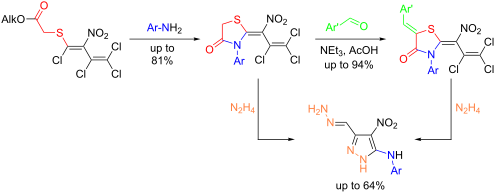
- -inhibiting and antialgal properties [49], show anticancer activity [50][51], and are inhibitors of bacterial enzyme synthetase MurD with E. coli [52]. Additional treatment of thiazolidin-4-one 8 with a fivefold excess of hydrazine hydrate resulted in the formation of a 1H-pyrazole: A total of two hydrazine
- molecules were incorporated into the final product, whereas two additional equivalents were consumed capturing hydrochloric acid. In this way, the 1H-pyrazole 27 with an exceptional substitution pattern was obtained in 64% yield. The same reaction was applied to 5-arylmethylidene-thiazolidin-4-one 25 which
- furnished the corresponding 1H-pyrazole 28 in 52% yield (Scheme 5). A plausible multistep mechanism of this conversion is shown in Scheme 6: Initially, a first molecule of the strong nucleophile hydrazine is assumed to substitute the single C–Cl group within the trichlorovinyl subunit of 8 to give the

Graphical Abstract

Scheme 1: SNVin reactions of pentachloro-2-nitro-1,3-butadiene (1).

Scheme 2: Formation of thiazolidin-4-ones 7–19.

Figure 1: Hindered rotation in the case of ortho- or meta-substituted aniline precursors.

Figure 2: X-ray analysis of thiazolidin-4-one 11.

Scheme 3: Assumed mechanism for the formation of thiazolidin-4-ones 7–18.

Scheme 4: Substitution reactions of the precursors 3 and 5 with additional amines.

Scheme 5: Synthesis of 5-arylmethylidenethiazolidin-4-ones 22–26 and 1H-pyrazoles 27, 28.

Scheme 6: Assumed mechanism for the formation of 1H-pyrazole 27.

Scheme 7: Formation of ethyl propanoate 29 and subsequent reactions.
An experimental and theoretical NMR study of NH-benzimidazoles in solution and in the solid state: proton transfer and tautomerism
- Carla I. Nieto,
- Pilar Cabildo,
- M. Ángeles García,
- Rosa M. Claramunt,
- Ibon Alkorta and
- José Elguero
Beilstein J. Org. Chem. 2014, 10, 1620–1629, doi:10.3762/bjoc.10.168
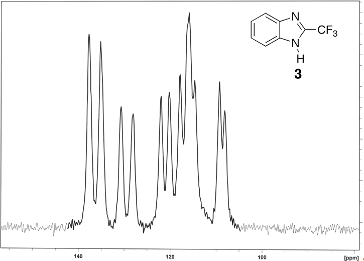
- are: TC = 277.5 K and Δν = 0.12 ppm = 48 Hz; from them and using the Eyring equation [ΔG‡TC = 19.12 × TC × (10.32 + log TC/kC)] [32], we obtained: kC = 67.88 s−1 and ΔG‡277.5 = 58.0 kJ·mol−1. This barrier is similar to that of pyrazole in the same solvent (58.6 kJ·mol−1 at 289 K) [33]. The effect of

Graphical Abstract

Figure 1: The five studied compounds.

Figure 2: Trimers A (left) and B (right) of 1.

Figure 3: The tautomerism of 1H-benzimidazole.

Figure 4: The 13C CPMAS NMR spectrum of 3.

Figure 5: The two independent molecules of 3 drawn with the Mercury program [26].

Figure 6: The evolution of the spectrum of 1 with temperature in HMPA-d18.
Regioselective SN2' Mitsunobu reaction of Morita–Baylis–Hillman alcohols: A facile and stereoselective synthesis of α-alkylidene-β-hydrazino acid derivatives
- Silong Xu,
- Jian Shang,
- Junjie Zhang and
- Yuhai Tang
Beilstein J. Org. Chem. 2014, 10, 990–995, doi:10.3762/bjoc.10.98
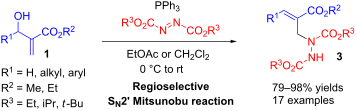
- nitrogen-containing heterocyclic compounds, especially pyrazole derivatives [2][3][4][5][6][7]. Although various methods detailing the synthesis of hydrazines have been established [8], the development of an efficient synthesis of hydrazines with highly structural diversity from simple starting materials
- ). To further investigate the scope, a single case using allenic MBH alcohol 6 as the substrate was studied (Scheme 3). However, under similar conditions, the reaction between alcohol 6, tert-butyl azodicarboxylate (2c), and PPh3 afforded an interesting 1H-pyrazole compound 7 in 58% yield. A possible
- silica gel (gradient eluant: petroleum ether/ethyl acetate 9:1–3:1) to afford the hydrazines 3. Synthesis of 1H-pyrazole 7 Under N2 atmosphere and at room temperature, PPh3 (157 mg, 0.6 mmol) was slowly added to a stirred solution of allenic MBH alcohol 6 (61 mg, 0.3 mmol) and di-tert-butyl

Graphical Abstract

Scheme 1: Synthesis of α-alkylidene-β-hydrazino acid derivatives from MBH adducts.

Scheme 2: Initial investigation.

Scheme 3: Synthesis of 1H-pyrazole 7.

Scheme 4: A plausible mechanism for the formations of 3.
Dimerisation, rhodium complex formation and rearrangements of N-heterocyclic carbenes of indazoles
- Zong Guan,
- Jan C. Namyslo,
- Martin H. H. Drafz,
- Martin Nieger and
- Andreas Schmidt
Beilstein J. Org. Chem. 2014, 10, 832–840, doi:10.3762/bjoc.10.79
- . Keywords: E/Z isomerism; indazol-3-ylidene; mesomeric betaine; pyrazole; quinazoline; Rh complex; Introduction As a result of their biochemical and pharmacological significance, there has been a considerably growing interest in indazoles in recent years, which is reflected in several book chapters and
- organocatalysts [15][16]. The N-heterocyclic carbenes of indazole (and pyrazole [17][18]), however, have a chemistry of their own which set them apart from the NHCs of the aforementioned ring systems. Portions of that field have been covered in recent review articles [18][19]. The N-heterocyclic carbene of
- observable in NMR spectra at standard temperature conditions. The spiro compound 14c crystallized from a saturated solution in n-hexane so that we were able to perform a single crystal X-ray analysis. The compound crystallized monoclinic. As expected, neither the pyrrole ring nor the pyrazole ring is planar

Graphical Abstract

Scheme 1: Generation of indazol-3-ylidenes.
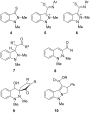
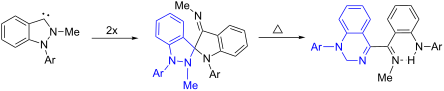
Scheme 2: Reaction products of indazol-3-ylidenes in heterocycle synthesis.

Scheme 3: Syntheses of acridines from indazol-3-ylidenes.

Scheme 4: Dimerisation of indazol-3-ylidenes to spiro compounds.

Figure 1: Diagnostic 1H and 13C NMR chemical shifts of the Z and E configuration isomer in CDCl3.

Figure 2: Molecular structure of 14c, displacement parameters are drawn at 50% probability level.

Scheme 5: Rhodium complex formation.
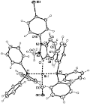
Figure 3: Structure of the cation of 15e, displacement parameters are drawn at 50% probability level.

Scheme 6: Rearrangement of the spiro compounds on heating.

Figure 4: Molecular structure of 16b, displacement parameters are drawn at 50% probability level.
Use of activated enol ethers in the synthesis of pyrazoles: reactions with hydrazine and a study of pyrazole tautomerism
- Denisa Tarabová,
- Stanislava Šoralová,
- Martin Breza,
- Marek Fronc,
- Wolfgang Holzer and
- Viktor Milata
Beilstein J. Org. Chem. 2014, 10, 752–760, doi:10.3762/bjoc.10.70

- tautomerism and supramolecular structure. A reverse addition of the reagents led to the isolation of two novel products, namely bis-enehydrazines 6 with an unsymmetrical arrangement of the formally equivalent subunits. Keywords: bis-enehydrazines; enol ethers; NMR; pyrazole; tautomerism; Introduction Enol
- are shown in Scheme 3. It is well known that the reaction of hydrazine hydrate with alkoxymethylidenemalononitrile affords 3-amino-1H-pyrazole-4-carbonitrile (5a) [8][9][10][11][12][13]. Eight tautomeric forms of 5a could theoretically be expected (Figure 1). Five of these tauromeric forms carry an
- numbering and the fourth and fifth numbers giving the positions of two hydrogens. When dimethyl methoxymethylidenemalonate (3b) is used, methyl 3-hydroxy-1H-pyrazole-4-carboxylate (5b) is formed. Analogously, reaction of diethyl ethoxymethylenemalonate (3c) gives the corresponding ethyl 3-hydroxy-1H

Graphical Abstract

Scheme 1: Preparation of enol ethers.

Scheme 2: Reaction of enol ethers with hydrazine hydrate.

Scheme 3: Pyrazoles 5.

Figure 1: Tautomers of 5a.

Figure 2: Tautomers of 5b (R = Me), 5c (R = Et).

Figure 3: Tautomers of 5b (R = Me), 5c (R = Et).

Figure 4: Tautomers of 5d.

Scheme 4: Reactions of hydrazine hydrate with dialkyl alkoxymethylidenemalonates.
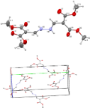
Figure 5: Crystal structure and crystal packing of compound 6a.

Figure 6: Key 1H (red), 13C (black) and 15N (blue) NMR chemical shifts (δ, ppm) in isomers A and B of compoun...
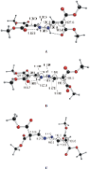
Figure 7: DFT optimized isomers of compound 6a. (Distances are in Å, angles are in degrees.)
Isocyanide-based multicomponent reactions towards cyclic constrained peptidomimetics
- Gijs Koopmanschap,
- Eelco Ruijter and
- Romano V.A. Orru
Beilstein J. Org. Chem. 2014, 10, 544–598, doi:10.3762/bjoc.10.50

- pyrazolones The group of Krasavin prepared both pyrazole- as well as pyrazolone-containing peptidomimetics via a sequential hydrazino-Ugi/Paal–Knorr condensation [94]. In their first approach, pyrazoles were obtained in good yields, however, with a limited scope of the condensation substrates (Scheme 32

Graphical Abstract

Scheme 1: The proposed mechanism of the Passerini reaction.

Scheme 2: The PADAM-strategy to α-hydroxy-β-amino amide derivatives 7. An additional oxidation provides α-ket...

Scheme 3: The general accepted Ugi-mechanism.

Scheme 4: Three commonly applied Ugi/cyclization approaches. a) UDC-process, b) UAC-sequence, c) UDAC-combina...

Scheme 5: Ugi reaction that involves the condensation of Armstrong’s convertible isocyanide.

Scheme 6: Mechanism of the U-4C-3CR towards bicyclic β-lactams.

Scheme 7: The Ugi 4C-3CR towards oxabicyclo β-lactams.

Scheme 8: Ugi MCR between an enantiopure monoterpene based β-amino acid, aldehyde and isocyanide resulting in...

Scheme 9: General MCR for β-lactams in water.

Scheme 10: a) Ugi reaction for β-lactam-linked peptidomimetics. b) Varying the β-amino acid resulted in β-lact...

Scheme 11: Ugi-4CR followed by a Pd-catalyzed Sn2 cyclization.

Scheme 12: Ugi-3CR of dipeptide mimics from 2-substituted pyrrolines.

Scheme 13: Joullié–Ugi reaction towards 2,5-disubstituted pyrrolidines.

Scheme 14: Further elaboration of the Ugi-scaffold towards bicyclic systems.

Scheme 15: Dihydroxyproline derivatives from an Ugi reaction.

Scheme 16: Diastereoselective Ugi reaction described by Banfi and co-workers.

Scheme 17: Similar Ugi reaction as in Scheme 16 but with different acids and two chiral isocyanides.

Scheme 18: Highly diastereoselective synthesis of pyrrolidine-dipeptoids via a MAO-N/MCR-procedure.

Scheme 19: MAO-N/MCR-approach towards the hepatitis C drug telaprevir.

Scheme 20: Enantioselective MAO-U-3CR procedure starting from chiral pyrroline 64.

Scheme 21: Synthesis of γ-lactams via an UDC-sequence.

Scheme 22: Utilizing bifunctional groups to provide bicyclic γ-lactam-ketopiperazines.

Scheme 23: The Ugi reaction provided both γ- as δ-lactams depending on which inputs were used.

Scheme 24: The sequential Ugi/RCM with olefinic substrates provided bicyclic lactams.

Scheme 25: a) The structural and dipole similarities of the triazole unit with the amide bond. b) The copper-c...

Scheme 26: The Ugi/Click sequence provided triazole based peptidomimetics.

Scheme 27: The Ugi/Click reaction as described by Nanajdenko.

Scheme 28: The Ugi/Click-approach by Pramitha and Bahulayan.

Scheme 29: The Ugi/Click-combination by Niu et al.

Scheme 30: Triazole linked peptidomimetics obtained from two separate MCRs and a sequential Click reaction.

Scheme 31: Copper-free synthesis of triazoles via two MCRs in one-pot.

Scheme 32: The sequential Ugi/Paal–Knorr reaction to afford pyrazoles.

Scheme 33: An intramolecular Paal–Knorr condensation provided under basic conditions pyrazolones.

Scheme 34: Similar cyclization performed under acidic conditions provided pyrazolones without the trifluoroace...

Scheme 35: The Ugi-4CR towards 2,4-disubstituted thiazoles.

Scheme 36: Solid phase approach towards thiazoles.

Scheme 37: Reaction mechanism of formation of thiazole peptidomimetics containing an additional β-lactam moiet...

Scheme 38: The synthesis of the trisubstituted thiazoles could be either performed via an Ugi reaction with pr...

Scheme 39: Performing the Ugi reaction with DMB-protected isocyanide gave access to either oxazoles or thiazol...

Scheme 40: Ugi/cyclization-approach towards 2,5-disubstituted thiazoles. The Ugi reaction was performed with d...

Scheme 41: Further derivatization of the thiazole scaffold.

Scheme 42: Three-step procedure towards the natural product bacillamide C.

Scheme 43: Ugi-4CR to oxazoles reported by Zhu and co-workers.

Scheme 44: Ugi-based synthesis of oxazole-containing peptidomimetics.

Scheme 45: TMNS3 based Ugi reaction for peptidomimics containing a tetrazole.

Scheme 46: Catalytic cycle of the enantioselective Passerini reaction towards tetrazole-based peptidomimetics.

Scheme 47: Tetrazole-based peptidomimetics via an Ugi reaction and a subsequent sigmatropic rearrangement.

Scheme 48: Resin-bound Ugi-approach towards tetrazole-based peptidomimetics.

Scheme 49: Ugi/cyclization approach towards γ/δ/ε-lactam tetrazoles.

Scheme 50: Ugi-3CR to pipecolic acid-based peptidomimetics.

Scheme 51: Staudinger–Aza-Wittig/Ugi-approach towards pipecolic acid peptidomimetics.

Figure 1: The three structural isomers of diketopiperazines. The 2,5-DKP isomer is most common.

Scheme 52: UDC-approach to obtain 2,5-DKPs, either using Armstrong’s isocyanide or via ethylglyoxalate.

Scheme 53: a) Ugi reaction in water gave either 2,5-DKP structures or spiro compounds. b) The Ugi reaction in ...

Scheme 54: Solid-phase approach towards diketopiperazines.

Scheme 55: UDAC-approach towards DKPs.

Scheme 56: The intermediate amide is activated as leaving group by acid and microwave assisted organic synthes...

Scheme 57: UDC-procedure towards active oxytocin inhibitors.

Scheme 58: An improved stereoselective MCR-approach towards the oxytocin inhibitor.

Scheme 59: The less common Ugi reaction towards DKPs, involving a Sn2-substitution.

Figure 2: Spatial similarities between a natural β-turn conformation and a DKP based β-turn mimetic [158].

Scheme 60: Ugi-based syntheses of bicyclic DKPs. The amine component is derived from a coupling between (R)-N-...

Scheme 61: Ugi-based synthesis of β-turn and γ-turn mimetics.

Figure 3: Isocyanide substituted 3,4-dihydropyridin-2-ones, dihydropyridines and the Freidinger lactams. Bio-...

Scheme 62: The mechanism of the 4-CR towards 3,4-dihydropyridine-2-ones 212.

Scheme 63: a) Multiple MCR-approach to provide DHP-peptidomimetic in two-steps. b) A one-pot 6-CR providing th...

Scheme 64: The MCR–alkylation–MCR procedure to obtain either tetrapeptoids or depsipeptides.

Scheme 65: U-3CR/cyclization employing semicarbazone as imine component gave triazine based peptidomimetics.

Scheme 66: 4CR towards triazinane-diones.

Scheme 67: The MCR–alkylation–IMCR-sequence described by our group towards triazinane dione-based peptidomimet...

Scheme 68: Ugi-4CR approaches followed by a cyclization to thiomorpholin-ones (a) and pyrrolidines (b).

Scheme 69: UDC-approach for benzodiazepinones.

Scheme 70: Ugi/Mitsunobu sequence to BDPs.

Scheme 71: A UDAC-approach to BDPs with convertible isocyanides. The corresponding amide is cleaved by microwa...

Scheme 72: microwave assisted post condensation Ugi reaction.

Scheme 73: Benzodiazepinones synthesized via the post-condensation Ugi/ Staudinger–Aza-Wittig cyclization.

Scheme 74: Two Ugi/cyclization approaches utilizing chiral carboxylic acids. Reaction (a) provided the product...

Scheme 75: The mechanism of the Gewald-3CR includes three base-catalysed steps involving first a Knoevnagel–Co...

Scheme 76: Two structural 1,4-thienodiazepine-2,5-dione isomers by U-4CR/cyclization.

Scheme 77: Tetrazole-based diazepinones by UDC-procedure.

Scheme 78: Tetrazole-based BDPs via a sequential Ugi/hydrolysis/coupling.

Scheme 79: MCR synthesis of three different tricyclic BPDs.

Scheme 80: Two similar approaches both involving an Ugi reaction and a Mitsunobu cyclization.

Scheme 81: Mitsunobu–Ugi-approach towards dihydro-1,4-benzoxazepines.

Scheme 82: Ugi reaction towards hetero-aryl fused 5-oxo-1,4-oxazepines.

Scheme 83: a) Ugi/RCM-approach towards nine-membered peptidomimetics b) Sequential peptide-coupling, deprotect...

Scheme 84: Ugi-based synthesis towards cyclic RGD-pentapeptides.

Scheme 85: Ugi/MCR-approach towards 12–15 membered macrocycles.

Scheme 86: Stereoselective Ugi/RCM approach towards 16-membered macrocycles.

Scheme 87: Passerini/RCM-sequence to 22-membered macrocycles.

Scheme 88: UDAC-approach towards 12–18-membered depsipeptides.

Figure 4: Enopeptin A with its more active derivative ADEP-4.

Scheme 89: a) The Joullié–Ugi-approach towards ADEP-4 derivatives b) Ugi-approach for the α,α-dimethylated der...

Scheme 90: Ugi–Click-strategy for 15-membered macrocyclic glyco-peptidomimetics.

Scheme 91: Ugi/Click combinations provided macrocycles containing both a triazole and an oxazole moiety.

Scheme 92: a) A solution-phase procedure towards macrocycles. b) Alternative solid-phase synthesis as was repo...

Scheme 93: Ugi/cyclization towards cyclophane based macrocycles.

Scheme 94: PADAM-strategy towards eurystatin A.

Scheme 95: PADAM-approach for cyclotheanamide.

Scheme 96: A triple MCR-approach affording RGD-pentapeptoids.

Scheme 97: Ugi-MiBs-approach towards peptoid macrocycles.

Scheme 98: Passerini-based MiB approaches towards macrocycles 345 and 346.

Scheme 99: Macrocyclic peptide formation by the use of amphoteric aziridine-based aldehydes.
Aminofluorination of 2-alkynylanilines: a Au-catalyzed entry to fluorinated indoles
- Antonio Arcadi,
- Emanuela Pietropaolo,
- Antonello Alvino and
- Véronique Michelet
Beilstein J. Org. Chem. 2014, 10, 449–458, doi:10.3762/bjoc.10.42
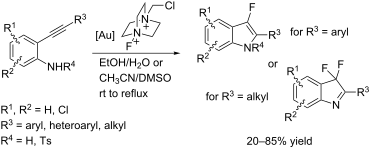
- in 75% yield (Table 1, entry 9). The addition of NaHCO3 [20][33] as a base to the reaction mixture failed to give 2a, whereas it was successful for the preparation of fluorinated pyrazole, via the gold(I)-catalyzed tandem aminofluorination of 1-phenyl-2-(4-phenylbut-3-yn-2-ylidene)hydrazine. Other
- 1/2 and comparison of 5 vs 6). The reaction conditions were compatible with a halogen substituent such as in 2e (Table 2, entries 7 and 8), which was obtained in up to 67% yield. Gratifyingly the presence of 4-substituted 1H-pyrazole allowed the clean formation of the corresponding difluoroadduct 2f

Graphical Abstract

Scheme 1: Cycloisomerization/fluorination of functionalized indoles.

Scheme 2: Synthesis of hemiaminal derivatives.

Scheme 3: Reaction on n-hexyl-substituted derivative 1i.

Scheme 4: Mechanism rationale for the formation of 7.
Continuous flow nitration in miniaturized devices
- Amol A. Kulkarni
Beilstein J. Org. Chem. 2014, 10, 405–424, doi:10.3762/bjoc.10.38
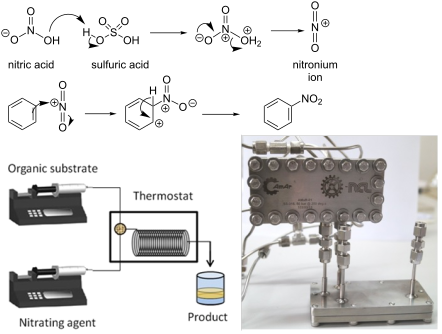
- by Panke et al. [27]. The nitration product of 1-methyl-3-propyl-1H-pyrazole-5-carboxylic acid is an intermediate for the “life-style drug” Sildenafil® (Scheme 1). Similarly, nitration of 2-methylindole, pyridine N-oxide and toluene (also with an acetyl nitrate Ac2O/HNO3 mixture) were conducted. The
- critical situation. It is important to note that the pyrazole was nitrated after dissolving it in the sulfuric acid. For a reactor of 10 mL volume, the temperature was maintained at 65 °C, and the hydrolysis was carried out by dropping the reaction mixture into a cold aqueous solution saturated with

Graphical Abstract

Figure 1: Analysis of the literature on aromatic nitration over the last 50 years. Numbers next to each nitra...

Figure 2: Schematic of a typical experimental setup for aromatic nitration. The circular segment shown inside...

Scheme 1: Nitration of substituted pyrazole-5-carboxylic acid 1. T = 90 °C, residence time = 35 min, yield: 7...

Scheme 2: Nitration of 2-methylindole (4). T = 3 °C, residence time = 48 s, yield: 70%. [27].

Scheme 3: Nitration of pyridine-N-oxide (6), T = 120 °C, residence time = 80 min, yield: 78% (72% in the flas...

Scheme 4: Nitration of toluene (8). Method 1: H2SO4/HNO3, T = 65 °C, residence time = 15 min. Method 2: Ac2O/H...

Figure 3: Graphical presentation of a microreactor used for double nitration and the schematic of the experim...

Scheme 5: Nitration of 2-amino-6-chloro-4-pyrimidinol (14) [25].

Scheme 6: Nitration of benzaldehyde (16) [35].

Scheme 7: Nitration of salicylic acid (19) [30].

Scheme 8: Nitration of phenol (22) yielding mono-nitro isomers 23 and 24 as main products, hydroquinone (25),...

Scheme 9: Synthesis of 3-methyl-4-nitropyrazole (29) and 3,5-dimethyl-4-nitropyrazole (31) [31].

Figure 4: Photograph of the experimental setup for the synthesis of alkyl-nitropyrazoles. IMM’s SIMM-V2 micro...

Scheme 10: Nitration of chlorobenzene (33) [23].

Figure 5: Continuous flow nitration of chlorobenzene (33) with nitric acid in a sequence of continuously stir...

Scheme 11: Nitration of 2-isopropoxybenzaldehyde (36) by using red fuming nitric acid [37].

Figure 6: Silicon-glass microreactor by Knapkiewicz et al. [37]. (A) Layout of the microreactor with a built-in m...

Scheme 12: Synthesis of nitropyridine (40) [39].

Figure 7: Schematic of the experimental setup involving a pressure based charging system [39]. Reproduced with pe...

Scheme 13: Nitration of p-difluorobenzene (42) [40].

Figure 8: Schematic of the flow reactor arrangement. Reproduced with permission from [40]. Copyright 2013 The Ame...

Scheme 14: Nitration of naphthalene (47) [34].

Figure 9: Structure of the microreactor. (A) Top view (1, 2 – inlets, 3 – mixing points, 4 – outlet). (B) Lat...

Scheme 15: Nitration of 2-nitropropane (52) [38].

Figure 10: Schematic of the continuous nitration system reported in CN103044261A [56].
An overview of the synthetic routes to the best selling drugs containing 6-membered heterocycles
- Marcus Baumann and
- Ian R. Baxendale
Beilstein J. Org. Chem. 2013, 9, 2265–2319, doi:10.3762/bjoc.9.265

Graphical Abstract

Scheme 1: Scaled industrial processes for the synthesis of simple pyridines.

Scheme 2: Synthesis of nicotinic acid from 2-methyl-5-ethylpyridine (1.11).

Scheme 3: Synthesis of 3-picoline and nicotinic acid.

Scheme 4: Synthesis of 3-picoline from 2-methylglutarodinitrile 1.19.

Scheme 5: Picoline-based synthesis of clarinex (no yields reported).

Scheme 6: Mode of action of proton-pump inhibitors and structures of the API’s.

Scheme 7: Hantzsch-like route towards the pyridine rings in common proton pump inhibitors.

Figure 1: Structures of rosiglitazone (1.40) and pioglitazone (1.41).

Scheme 8: Synthesis of rosiglitazone.

Scheme 9: Syntheses of 2-pyridones.

Scheme 10: Synthesis and mechanism of 2-pyrone from malic acid.

Scheme 11: Polymer-assisted synthesis of rosiglitazone.

Scheme 12: Synthesis of pioglitazone.

Scheme 13: Meerwein arylation reaction towards pioglitazone.

Scheme 14: Route towards pioglitazone utilising tyrosine.

Scheme 15: Route towards pioglitazone via Darzens ester formation.

Scheme 16: Syntheses of the thiazolidinedione moiety.

Scheme 17: Synthesis of etoricoxib utilising Negishi and Stille cross-coupling reactions.

Scheme 18: Synthesis of etoricoxib via vinamidinium condensation.

Figure 2: Structures of nalidixic acid, levofloxacin and moxifloxacin.

Scheme 19: Synthesis of moxifloxacin.

Scheme 20: Synthesis of (S,S)-2,8-diazabicyclo[4.3.0]nonane 1.105.

Scheme 21: Synthesis of levofloxacin.

Scheme 22: Alternative approach to the levofloxacin core 1.125.

Figure 3: Structures of nifedipine, amlodipine and clevidipine.

Scheme 23: Mg3N2-mediated synthesis of nifedipine.

Scheme 24: Synthesis of rac-amlodipine as besylate salt.

Scheme 25: Aza Diels–Alder approach towards amlodipine.

Scheme 26: Routes towards clevidipine.

Figure 4: Examples of piperidine containing drugs.

Figure 5: Discovery of tiagabine based on early leads.

Scheme 27: Synthetic sequences to tiagabine.

Figure 6: Structures of solifenacin (2.57) and muscarine (2.58).

Scheme 28: Enantioselective synthesis of solifenacin.

Figure 7: Structures of DPP-4 inhibitors of the gliptin-type.

Scheme 29: Formation of inactive diketopiperazines from cis-rotameric precursors.

Figure 8: Co-crystal structure of carmegliptin bound in the human DPP-4 active site (PDB 3kwf).

Scheme 30: Improved route to carmegliptin.

Figure 9: Structures of lamivudine and zidovudine.

Scheme 31: Typical routes accessing uracil, thymine and cytosine.

Scheme 32: Coupling between pyrimidones and riboses via the Vorbrüggen nucleosidation.

Scheme 33: Synthesis of lamivudine.

Scheme 34: Synthesis of raltegravir.

Scheme 35: Mechanistic studies on the formation of 3.22.

Figure 10: Structures of selected pyrimidine containing drugs.

Scheme 36: General preparation of pyrimidines and dihydropyrimidones.

Scheme 37: Synthesis of imatinib.

Scheme 38: Flow synthesis of imatinib.

Scheme 39: Syntheses of erlotinib.

Scheme 40: Synthesis of erlotinib proceeding via Dimroth rearrangement.

Scheme 41: Synthesis of lapatinib.

Scheme 42: Synthesis of rosuvastatin.

Scheme 43: Alternative preparation of the key aldehyde towards rosuvastatin.

Figure 11: Structure comparison between nicotinic acetylcholine receptor agonists.

Scheme 44: Syntheses of varenicline and its key building block 4.5.

Scheme 45: Synthetic access to eszopiclone and brimonidine via quinoxaline intermediates.

Figure 12: Bortezomib bound in an active site of the yeast 20S proteasome ([114], pdb 2F16).

Scheme 46: Asymmetric synthesis of bortezomib.

Figure 13: Structures of some prominent piperazine containing drugs.

Figure 14: Structural comparison between the core of aplaviroc (4.35) and a type-1 β-turn (4.36).

Scheme 47: Examplary synthesis of an aplaviroc analogue via the Ugi-MCR.

Scheme 48: Syntheses of azelastine (5.1).

Figure 15: Structures of captopril, enalapril and cilazapril.

Scheme 49: Synthesis of cilazapril.

Figure 16: Structures of lamotrigine, ceftriaxone and azapropazone.

Scheme 50: Synthesis of lamotrigine.

Scheme 51: Alternative synthesis of lamotrigine (no yields reported).

Figure 17: Structural comparison between imiquimod and the related adenosine nucleoside.

Scheme 52: Conventional synthesis of imiquimod (no yields reported).

Scheme 53: Synthesis of imiquimod.

Scheme 54: Synthesis of imiquimod via tetrazole formation (not all yields reported).

Figure 18: Structures of various anti HIV-medications.

Scheme 55: Synthesis of abacavir.

Figure 19: Structures of diazepam compared to modern replacements.

Scheme 56: Synthesis of ocinaplon.

Scheme 57: Access to zaleplon and indiplon.

Scheme 58: Different routes towards the required N-methylpyrazole 6.65 of sildenafil.

Scheme 59: Polymer-supported reagents in the synthesis of key aminopyrazole 6.72.

Scheme 60: Early synthetic route to sildenafil.

Scheme 61: Convergent preparations of sildenafil.

Figure 20: Comparison of the structures of sildenafil, tadalafil and vardenafil.

Scheme 62: Short route to imidazotriazinones.

Scheme 63: Alternative route towards vardenafils core imidazotriazinone (6.95).

Scheme 64: Bayer’s approach to the vardenafil core.

Scheme 65: Large scale synthesis of vardenafil.

Scheme 66: Mode of action of temozolomide (6.105) as methylating agent.

Scheme 67: Different routes to temozolomide.

Scheme 68: Safer route towards temozolomide.

Figure 21: Some unreported heterocyclic scaffolds in top market drugs.
Coupling of C-nitro-NH-azoles with arylboronic acids. A route to N-aryl-C-nitroazoles
- Marta K. Kurpet,
- Aleksandra Dąbrowska,
- Małgorzata M. Jarosz,
- Katarzyna Kajewska-Kania,
- Nikodem Kuźnik and
- Jerzy W. Suwiński
Beilstein J. Org. Chem. 2013, 9, 1517–1525, doi:10.3762/bjoc.9.173
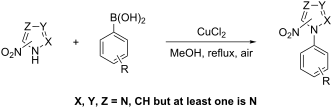
- Materials, Polish Academy of Sciences, M. Curie-Skłodowskiej 34, Zabrze 41-819, Poland 10.3762/bjoc.9.173 Abstract A method for the synthesis of N-aryl-C-nitroazoles is presented. A coupling reaction between variously substituted arylboronic acids and 3(5)-nitro-1H-pyrazole catalyzed by copper salt has
- conditions on the yield of the product has been presented. Results and Discussion The group of products that we mainly describe is the 1-aryl derivatives of 3(5)-nitro-1H-pyrazole (1a). This is still a barely investigated group of compounds that can have attractive properties. Some recent reports describe
- ], and are described as being useful for the treatment of cognitive-deficit-associated psychiatric, neurodegenerative and neurological disorders [33]. Only four papers describe the synthesis of 3-nitro-1-phenyl-1H-pyrazole. It may be a product of oxidation of 3-amino-1-phenyl-1H-pyrazole [18], a product

Graphical Abstract

Scheme 1: Methods of synthesis of 3-nitro-1-phenyl-1H-pyrazole (3a) described in the literature.

Figure 1: X-ray structure of 3-nitro-1-[4-(trifluoromethoxy)phenyl]-3-nitro-1H-pyrazole (3k) with 60% probabi...

Scheme 2: Cross coupling of 3-nitro-1H-pyrazole (1a) with phenylboronic acid (2a).

Scheme 3: Cross coupling of 1a with arylboronic acids 2a–n.

Scheme 4: Cross coupling of C-nitro-NH-azoles 1a–d with phenylboronic acid (2a).
Substituent effect on the energy barrier for σ-bond formation from π-single-bonded species, singlet 2,2-dialkoxycyclopentane-1,3-diyls
- Jianhuai Ye,
- Yoshihisa Fujiwara and
- Manabu Abe
Beilstein J. Org. Chem. 2013, 9, 925–933, doi:10.3762/bjoc.9.106
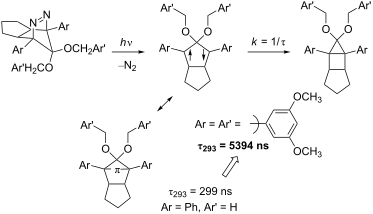
- method of Tiecco [32]. Pyrazole 3g was then synthesized by the reaction with hydrazine hydrate. AZg was obtained by the Diels–Alder [4 + 2]-cycloaddition with cyclopentadiene and hydrogenation using PtO2 as a catalyst. The endo-configured structure of azoalkanes AZc–g was determined by X-ray
- /z): [M + Na]+ calcd for C33H32O6N2Na, 575.21526; found, 575.21387; Rf = 0.27 (EtOAc/hexane = 30/70). 4,4-Dibenzyloxy-3,5-bis(3,5-dimethoxyphenyl)pyrazole (3e). Yellow powder (from MeOH), mp: 183–184 °C; IR (neat, cm−1): 3025, 2952, 2847, 1605, 1551, 1456, 1426, 1371, 1160, 1117, 849, 670; 1H NMR
- , phenyl), 130.47 (s, C, aryl), 136.24 (s, C, phenyl), 161.81 (s, COCH3), 167.53 (s, C); ESIMS (m/z): [M + H]+ calcd for C33H33N6O2, 553.23331; found, 553.23267; Rf = 0.13 (EtOAc/hexane = 20/80). 4,4-Bis(3,5-dimethoxybenzyloxy)-3,5-bis(3,5-dimethoxyphenyl)pyrazole (3f). IR (neat, cm−1): 3010, 2942, 1605

Graphical Abstract

Figure 1: Localized singlet diradicals.

Scheme 1: Alkoxy group effect on the lifetime of π-single-bonded species DR.

Scheme 2: Generation of singlet diradicals DRc–g and their reactivity in the photochemical denitrogenation of ...

Scheme 3: Synthesis of azoalkanes AZc–f and AZg.

Figure 2: (a) Absorption spectrum of the singlet diradical DRe in a MTHF matrix at 80 K; (b) transient absorp...