

Search results
Search for "photophysical" in Full Text gives 270 result(s) in Beilstein Journal of Organic Chemistry. Showing first 200.
Photoinduced post-modification of graphitic carbon nitride-embedded hydrogels: synthesis of 'hydrophobic hydrogels' and pore substructuring
Beilstein J. Org. Chem. 2021, 17, 1323–1334, doi:10.3762/bjoc.17.92
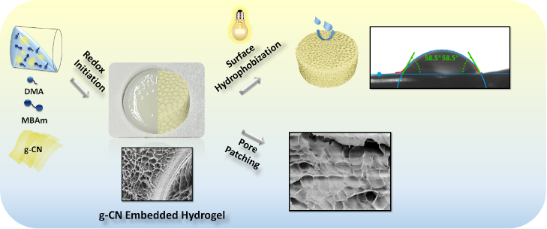
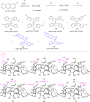
- , and at last the intensified peak at 1419 cm−1 indicates a C–N stretching of the thiazole ring. Proceeding the examination by UV–vis spectroscopy, overlaid absorption spectra of the samples revealed the photophysical differences as expected, since HG does not consist of photoactive g-CN particles in


Synthesis of dibenzosuberenone-based novel polycyclic π-conjugated dihydropyridazines, pyridazines and pyrroles
Beilstein J. Org. Chem. 2021, 17, 719–729, doi:10.3762/bjoc.17.61
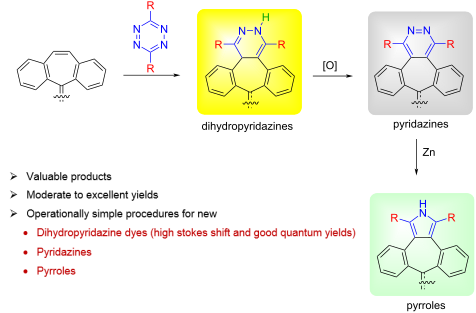
- exhibit photophysical properties such as photosensitization [13], fluorescence, and aggregation-induced emission (AIE) [14][15][16]. π-Conjugated polycyclic hydrocarbons (CPHs) containing polycyclic heteroaromatic molecules (PHAs) and aza-polycyclic aromatic hydrocarbons (aza-PAHs) have been attracting
- , synthesis, and structural and photophysical characterization of a new series of 3,7-substituted dihydropyridazine dibenzosuberenone units with electron-withdrawing and electron-donating functional groups [56]. Herein, we report the examined impact of various electron-withdrawing and electron-donating
- functional groups at the 3- and 6-positions of s-tetrazine on inverse electron-demand Diels–Alder cycloaddition reactions with a dibenzosuberenone (1) and the photophysical properties of dihydropyridazines. The corresponding pyridazines and pyrroles were obtained from dihydropyridazines. Finally, we




Synthesis, structural characterization, and optical properties of benzo[f]naphtho[2,3-b]phosphoindoles
Beilstein J. Org. Chem. 2021, 17, 671–677, doi:10.3762/bjoc.17.56
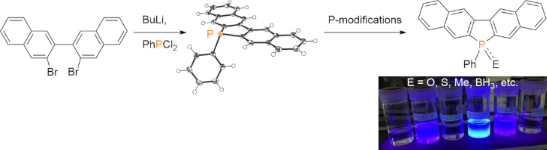
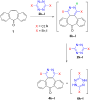
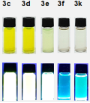
- benzonaphthophosphoindole planes (Figure 2b). The photophysical properties of the synthesized phospholes were evaluated. The corresponding data are shown in Figure 3 and Table 2. Parent compound 2 shows the absorption maximum (λmax) at 362 nm, which is longer than that of 2,2′-binaphthyl (λmax = 300 nm) [24]. The
- ]. Unfortunately, the electrochemistry of some compounds could not be determined under the conditions available to us. Therefore, computational investigations are particularly useful for understanding the trends of the electrochemical and photophysical properties of molecular materials. Density functional theory


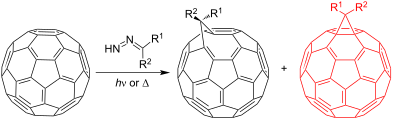
[2 + 1] Cycloaddition reactions of fullerene C60 based on diazo compounds
Beilstein J. Org. Chem. 2021, 17, 630–670, doi:10.3762/bjoc.17.55
- (Scheme 33). Сoordination of these compounds with ruthenium(II) leads to a donor–bridge–acceptor assembly of complexes with various lengths, 187–189. It is believed [153] that the photophysical and electrochemical properties of the complexes presented are promising for the formation of charge-separated
Exploring the possibility of using fluorine-involved non-conjugated electron-withdrawing groups for thermally activated delayed fluorescence emitters by TD-DFT calculation
Beilstein J. Org. Chem. 2021, 17, 210–223, doi:10.3762/bjoc.17.21
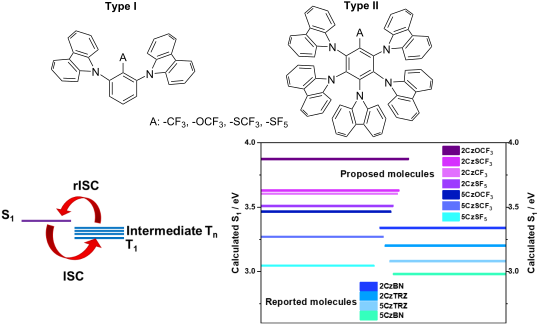
- [28][29]. Results and Discussion We employed density functional theory (DFT) and TD-DFT calculations to predict the photophysical properties of these emitters in order to assess their potential as TADF emitters for OLEDs. All ground-state calculations were performed using PBE0/6-31G(d,p) in the gas


Insight into functionalized-macrocycles-guided supramolecular photocatalysis
Beilstein J. Org. Chem. 2021, 17, 139–155, doi:10.3762/bjoc.17.15
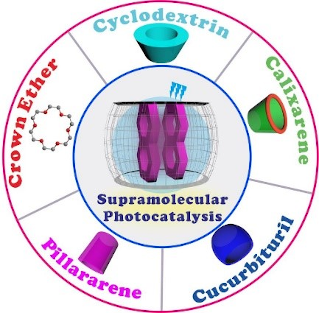
- materials that have been exploited for photocatalytic applications, including photocatalytic dye degradations and hydrogen evolution. To successfully perform supramolecular photocatalytic reactions, various photophysical and photochemical properties of the host–guest system need to be considered [4]: i) the
- via photophysical analyses is relatively important. Hence, this review aims to summarize the photochemical transformation and catalytic reactivity of different guests within the various macrocyclic hosts of various sizes and shapes based on molecular recognition as well as the role of macrocyclic-host
- various photocatalytic reactions, there are still several issues to be addressed: 1) To develop supramolecular photocatalytic systems, it is critical to have a thorough understanding of the photochemical and photophysical aspects of the reactions, such as the kinetic equilibrium constants, the reaction






Tuning the solid-state emission of liquid crystalline nitro-cyanostilbene by halogen bonding
Beilstein J. Org. Chem. 2021, 17, 124–131, doi:10.3762/bjoc.17.13
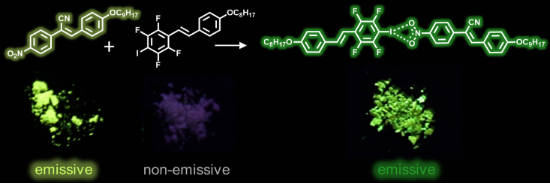
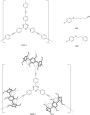
- fluoroiodoazobenzenes with varying fluorination degree at the iodobenzene moiety was used to investigate the impact of halogen bonding on the properties of the assemblies. Since cyanostilbene molecules are known to show aggregation-induced emission (AIE) behaviour the photophysical properties of the resulting
- supramolecular entities in the solid state. This effect was also confirmed by the fluorescence behaviour (see paragraph on photophysical properties) and affects mainly the transition from the nematic to crystalline phase. In addition, it was observed that only assemblies with an odd number of carbon atoms in the
- interactions and packing in the solid state and adds to the shift of the crystallisation temperature. Photophysical studies Recently, our group has shown that self-assembly provides an efficient way to tune fluorescence behaviour of liquid crystalline materials [21]. Phenolic thioethers showing aggregation



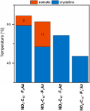

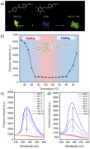


Control over size, shape, and photonics of self-assembled organic nanocrystals
Beilstein J. Org. Chem. 2021, 17, 42–51, doi:10.3762/bjoc.17.5
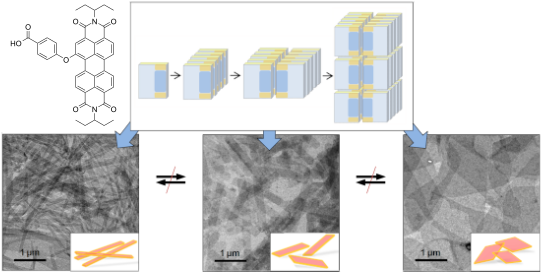
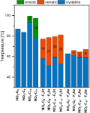
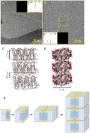
- upon drying, as was evidenced by TEM and atom force microscopy. Photophysical studies, including femtosecond transient absorption spectroscopy, revealed a distinct influence of the ONC morphology on their photonic properties (excitation energy transfer was observed only in the high-aspect ONCs




Synthesis, crystal structures and properties of carbazole-based [6]helicenes fused with an azine ring
Beilstein J. Org. Chem. 2021, 17, 11–21, doi:10.3762/bjoc.17.2
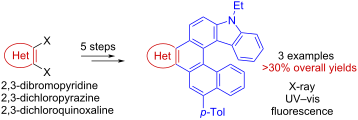
- distortion angle of 50.5° is the smallest in the series. The photophysical properties of the synthesized [6]helicenes were compared to the parent carbazole-based [6]helicene. A spectrophotometric analysis of the quinoxaline-fused helicene displayed a moderate absorption red-shift (19 nm) and reduced optical
- . Sonogashira coupling of compounds 7 with p-tolylacetylene. Acid-induced isomerization of compounds 9 into carbazole-based [6]helicenes 10. Comparison of X-ray data of the carbazole-based [6]helicenes (atomic numbering does not correspond to IUPAC nomenclature). Photophysical properties of carbazole-based [6



Metal-free synthesis of biarenes via photoextrusion in di(tri)aryl phosphates
Beilstein J. Org. Chem. 2020, 16, 3008–3014, doi:10.3762/bjoc.16.250
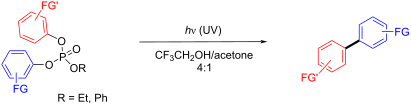
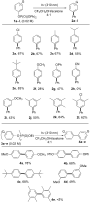
- strong electron-donating substituents, especially when present in the para-position (see the case of 4a–c). Unfortunately, the unsymmetric biaryl 4e was detected in a very poor amount. To investigate the reaction mechanism, some photophysical parameters of compounds 1 and 3 were determined. All the



Naphthalonitriles featuring efficient emission in solution and in the solid state
Beilstein J. Org. Chem. 2020, 16, 2960–2970, doi:10.3762/bjoc.16.246
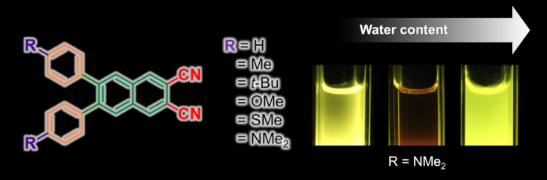
- , the π-donor nature of the substituents on the phenyl ring constitutes the main parameter that influences the photophysical properties, such as excited state lifetimes and photoluminescence quantum yields. Hence, a series of highly luminescent materials from deep blue to red emission depending on
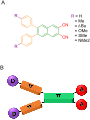
- reports on the DSE behavior of 6,7-disubstituted naphthalene-2,3-dicarbonitrile derivatives so far. Herein we have designed and synthesized donor–acceptor (D–A) naphthalonitriles (NCNs) symmetrically γ-disubstituted with two p-functionalized phenyl moieties and investigated their photophysical properties
- from pure organic solvents to water, in which aggregates are formed. Thus, the photophysical properties of all compounds were investigated in THF and in different ratios of THF/water to study aggregate dispersions at room temperature, and the aggregates were further analyzed by DLS. The results showed



Styryl-based new organic chromophores bearing free amino and azomethine groups: synthesis, photophysical, NLO, and thermal properties
Beilstein J. Org. Chem. 2020, 16, 2282–2296, doi:10.3762/bjoc.16.189
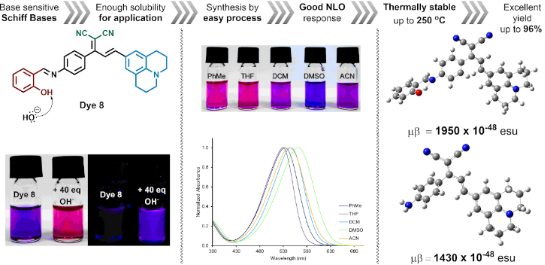
- dicyanomethylene group as an acceptor and different para-substituted alkylamines as donors. Morever as a proton-sensitive group a pyridin-2-yl substituent was attached to the para-position of the phenyl moiety in both series of compounds. The photophysical properties of the dyes were examined in various solvents
- azomethine group are one of the most widely used organic dyes because of their easy and cheap synthetic accessibility through various methodologies and suitable photophysical properties. In addition, they exhibit a broad range of biological activities such as antimicrobial, antifungal, antiviral, and
- anticancer activity, to name a few. Moreover, Schiff bases bearing a salicylidene moiety are also used as chemosensors for sensing of specific ions. In addition, some derivatives also show NLO activity [25][34][35][36][37]. Herein, we report on the synthesis and full photophysical characterization of a


Photosensitized direct C–H fluorination and trifluoromethylation in organic synthesis
Beilstein J. Org. Chem. 2020, 16, 2151–2192, doi:10.3762/bjoc.16.183
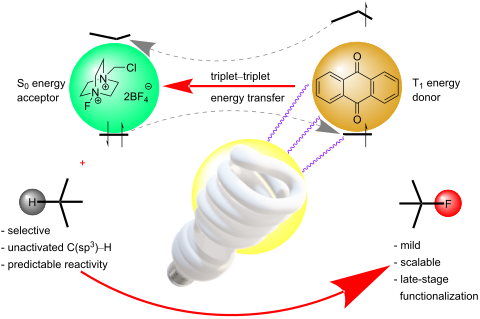
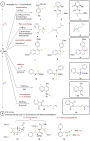
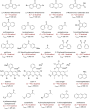
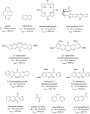
- cleavage reactions [80] and 1,5-HAT [81] and iii) the excited state of the simple organic molecule target can possess an ultrashort lifetime [82] that precludes photochemistry in favor of photophysical or nonradiative deactivation, e.g., fluorescence or internal conversion (IC). Instead of direct UV
- photosensitized energy transfer: Photocatalysis, photochemical sensitization and photosensitization are very similar terms. The IUPAC gold book defines photosensitization as follows: “The process by which a photochemical or photophysical alteration occurs in one molecular entity as a result of the initial
- . It is not our purpose to provide a detailed review on photosensitized energy transfer in organic synthesis, including a detailed account of the photophysical phenomena [105][116] nor is it our purpose to review C–H fluorinations accomplished by nonphotochemical methods or by photochemical methods






Azo-dimethylaminopyridine-functionalized Ni(II)-porphyrin as a photoswitchable nucleophilic catalyst
Beilstein J. Org. Chem. 2020, 16, 2119–2126, doi:10.3762/bjoc.16.179
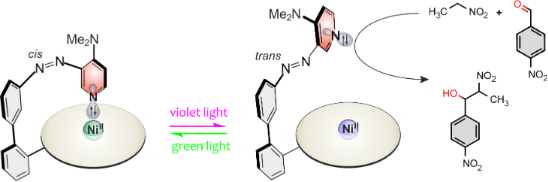
- (6) concentration. Supporting Information Supporting Information File 460: General information, synthetic and photophysical procedures, and copies of NMR spectra. Acknowledgements We thank Dr. Florian Gutzeit for providing the substance for reference measurements (maximum shift of a fivefold


Et3N/DMSO-supported one-pot synthesis of highly fluorescent β-carboline-linked benzothiophenones via sulfur insertion and estimation of the photophysical properties
Beilstein J. Org. Chem. 2020, 16, 1740–1753, doi:10.3762/bjoc.16.146
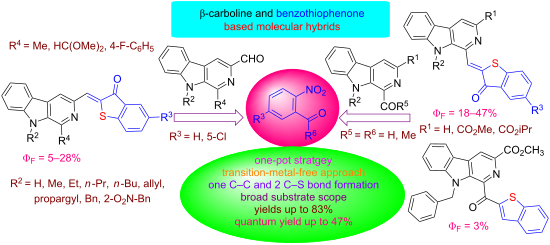
- excellent light-emitting properties with quantum yields (ΦF) up to 47%. Keywords: benzothiophene; β-carboline; metal-free; photophysical properties; sulfur insertion; Introduction The pyrido[3,4-b]indole moiety, commonly referred as β-carboline, is the core unit of about one quarter of all natural
- accelerate the transformation. Photophysical studies Fluorescence, offering a nondestructive exceptional technique to monitor a system of interest at the molecular level [70][71][72], has found wide-ranging applications in several research areas such as medicine, pharmaceutics, biology, environment, and food
- of concentrations, a 4 µM concentration in CHCl3 was found to be optimal for the photophysical studies of the synthesized derivatives. The fluorescence quantum efficiency (ΦF) was measured relative to quinine sulfate (ΦR = 0.546 in 0.1 M H2SO4 under 350 nm excitation) as a reference compound. For the


Clickable azide-functionalized bromoarylaldehydes – synthesis and photophysical characterization
Beilstein J. Org. Chem. 2020, 16, 1683–1692, doi:10.3762/bjoc.16.139
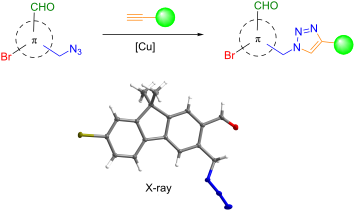
- alkynes, exhibiting different degrees of steric demand, was performed in high efficiency. Finally, we investigated the photophysical properties of the azide-functionalized arenes and their covalently linked triazole derivatives to gain deeper insight towards the effect of these covalent linkers on the
- *) character of the T2 state. Although phosphorescent organic compounds are well investigated with respect to their photophysical properties in the crystalline state, in solution or physically embedded in polymer matrices, there is a significant lack of possibilities [61] for their targeted covalent attachment
- triazole 45 in 83% yield. Photophysical properties Finally, we examined the photophysical properties of both the azides and the triazoles. UV–vis absorption measurements of para-bromobenzaldehyde 3 and ortho-bromobenzaldehyde 4 as well as the corresponding triazoles 33–40 were conducted in chloroform



Heterogeneous photocatalysis in flow chemical reactors
Beilstein J. Org. Chem. 2020, 16, 1495–1549, doi:10.3762/bjoc.16.125
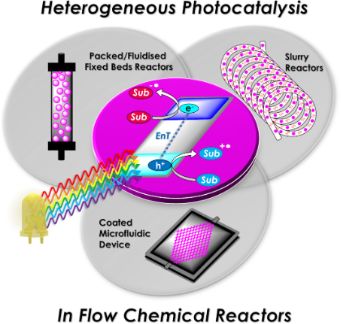
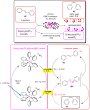
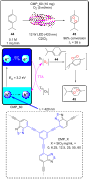
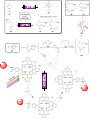
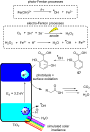
- has shifted the paradigms of photochemistry, opening new avenues of research with safer and scalable processes that can be readily implemented in academia and industry. Current state-of-the-art photocatalysts are homogeneous transition metal complexes that have favourable photophysical properties
- , materials science, and physics, in addition to chemistry (Figure 1B). This reflects the multiplex nature of photocatalysis as it requires an advanced chemical and photophysical theory to rationalise its complex mechanisms, as well as skilled engineering and reactor design to overcome the limitations of
- photophysical properties and surface structure of HPCats are more challenging to characterise and requires specialised techniques that are not readily available and often require multidisciplinary collaborations [44]. Additionally, the penetration of light through the bulk of the HPCat is difficult and can















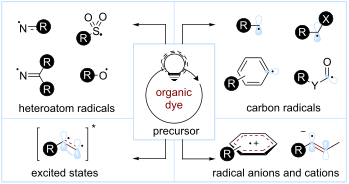
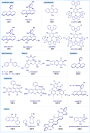
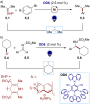
Photocatalysis with organic dyes: facile access to reactive intermediates for synthesis
Beilstein J. Org. Chem. 2020, 16, 1163–1187, doi:10.3762/bjoc.16.103





Development of fluorinated benzils and bisbenzils as room-temperature phosphorescent molecules
Beilstein J. Org. Chem. 2020, 16, 1154–1162, doi:10.3762/bjoc.16.102
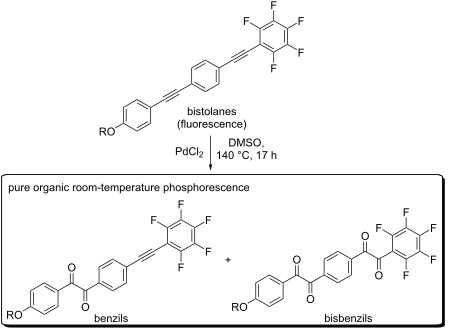
- transition-metal-complex-based phosphores for biomedical and technological applications owing to their abundance and nontoxicity. This article discloses the design, synthesis, and photophysical properties of fluorinated benzil and bisbenzil derivatives as potential pure organic room-temperature
- photophysical properties of the benzil and bisbenzil derivatives in toluene at 25 °C showed both fluorescence with a photoluminescence (PL) band at a maximum wavelength (λPL) of around 400 nm and phosphorescence with a PL band at a λPL of around 560 nm. Interestingly, intersystem crossing effectively caused
- examined the synthesis of novel benzil- and bisbenzil-type molecules via oxidation of fluorinated and nonfluorinated bistolane derivatives and evaluated their photophysical properties in detail. Results and Discussion Synthesis This study was initiated with the synthesis of fluorinated bisbenzil



Synthesis and properties of quinazoline-based versatile exciplex-forming compounds
Beilstein J. Org. Chem. 2020, 16, 1142–1153, doi:10.3762/bjoc.16.101
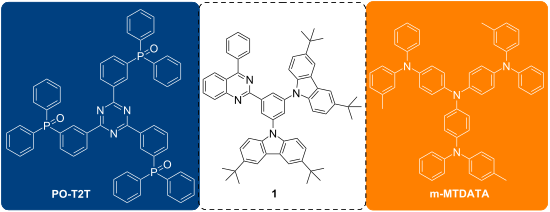
- , bearing a quinazoline unit as the acceptor core and carbazole, dimethyldihydroacridine, or phenothiazine donor moieties, were designed and synthesized in two steps including a facile copper-catalyzed cyclization and a nucleophilic aromatic substitution reaction. The photophysical properties of the
- results of theoretical calculations which revealed that the HOMO and LUMO orbitals of the carbazole-substituted quinazoline compound 1 overlap. Photophysical and electronic properties Figure 4 shows the theoretical UV spectra and experimental absorption spectra of dilute THF solutions of compounds 1–3
- the derivatives 1–3 correlated with electrochemically estimated ones and with the ionization potential values discussed above. The photophysical characteristics determined from the UV–vis absorption and photoluminescence spectra are collected in Table 2. The emission spectra of diluted toluene


Synthesis of esters of diaminotruxillic bis-amino acids by Pd-mediated photocycloaddition of analogs of the Kaede protein chromophore
Beilstein J. Org. Chem. 2020, 16, 1111–1123, doi:10.3762/bjoc.16.98
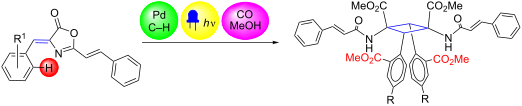
- precursors of the photoconvertible chromophore of the Kaede protein, an imidazolone with outstanding photophysical properties [31][32][33][34][35][36][37][38]. It is clear from Figure 2b that the molecular skeleton contains different reactive functional groups, which offer a variety of structural


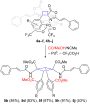
Synthesis of novel multifunctional carbazole-based molecules and their thermal, electrochemical and optical properties
Beilstein J. Org. Chem. 2020, 16, 1066–1074, doi:10.3762/bjoc.16.93
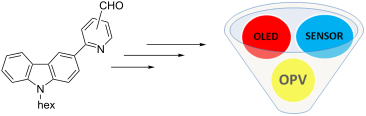
- component), whereas the link by conjugation between the same functionalities in 7a is missing. The resulting stronger ICT component in 7b explains the big difference in photophysical properties. Experimental All reagents were standard reagent grade and purchased from Sigma-Aldrich, Merck and Alfa Aesar


Aryl-substituted acridanes as hosts for TADF-based OLEDs
Beilstein J. Org. Chem. 2020, 16, 989–1000, doi:10.3762/bjoc.16.88
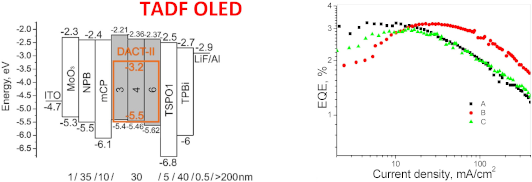
- molecular weights resulting in a stronger intermolecular interaction and by larger volumes restricting molecular motion. These observations confirm that compounds 3–5 can be used for the preparation of thin amorphous layers on substrates. Photophysical properties The absorption and photoluminescence (PL
- appropriate for an application as hole-transporting materials in organic optoelectronic devices. Conclusion Four new aryl-substituted derivatives of acridan were designed and synthesized as electroactive materials for organic light emitting diodes. The thermal, photophysical, and electrochemical properties of



Recent applications of porphyrins as photocatalysts in organic synthesis: batch and continuous flow approaches
Beilstein J. Org. Chem. 2020, 16, 917–955, doi:10.3762/bjoc.16.83
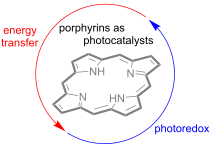
- electron and energy transfer. Chemical structures of the porphyrinoids and their absorption spectra: in bold are highlighted the 18 π aromatic system. Adapted from [7]. Photophysical and photochemical processes (Por = porphyrin). Adapted from [12][18]. Main dual photocatalysts and their oxidative/reductive


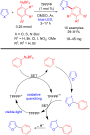


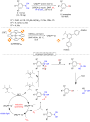


Cation-induced ring-opening and oxidation reaction of photoreluctant spirooxazine–quinolizinium conjugates
Beilstein J. Org. Chem. 2020, 16, 904–916, doi:10.3762/bjoc.16.82
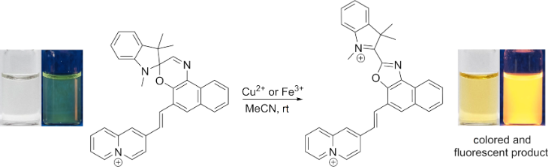
- examples reported for arylvinyl-substituted spirooxazine derivatives, although they possess some interesting photophysical and photochromic properties [16][48][49][50]. Specifically, the introduction of an arylvinyl [50] or a cyanovinyl substituent [16] causes a red shift of the absorption due to an
- been shown that derivatives thereof have a great potential to serve as functional units in DNA-binding ligands [54], fluorescent dyes and chemosensors [55][56][57][58][59]. Furthermore, we have already demonstrated that styryl-substituted quinolizinium derivatives exhibit ideal photophysical and DNA
- -binding properties to be used as DNA-sensitive fluorescent probes in cell imaging [60][61][62] or as photoswitchable DNA ligands [63]. Therefore, we were interested in a combination of the photochromic properties of the spirooxazine moiety with the advantageous photophysical and biological properties of