
Search results
Search for "metals" in Full Text gives 492 result(s) in Beilstein Journal of Organic Chemistry. Showing first 200.
Two-step continuous-flow synthesis of 6-membered cyclic iodonium salts via anodic oxidation
Beilstein J. Org. Chem. 2023, 19, 27–32, doi:10.3762/bjoc.19.2
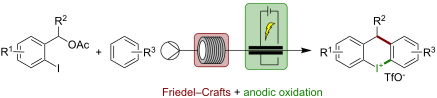
- -established reagents for synthetic chemists. They are portrayed as an alternative to otherwise hazardous transition metals. This is due to their great reactivity in electrophilic group transfers [1][2][3][4], photo- or organocatalysis [5][6][7][8][9][10][11][12][13][14][15], and their utility as building


Inline purification in continuous flow synthesis – opportunities and challenges
Beilstein J. Org. Chem. 2022, 18, 1720–1740, doi:10.3762/bjoc.18.182
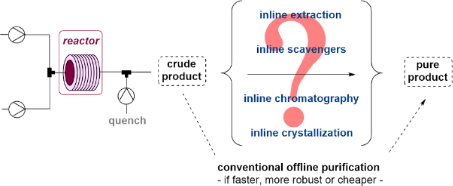
- /catalyst/byproduct to telescope several reactions before performing the final purification step offline (Scheme 8) [80][81][82][83]. Notable applications of metal scavengers such as QuadraPure® resins involve the removal of leached metals as well as catalytic amounts of homogeneous metal catalysts as
- reported by Pitts and collaborators. This study achieves full removal of metal species after common homogenous catalytic reactions such as a Suzuki–Miyaura reaction, Sonogashira reaction or hydrogenation mediated by Wilkinson’s catalyst [84]. Other interesting examples to remove transition metals in
- choice of suitable options. It is, however, anticipated that with the advent of more sophisticated and robust automation tools the field of flow chemistry will continue to embrace inline purification as a valuable approach to remove incompatible species for subsequent steps or scavenge precious metals or




Redox-active molecules as organocatalysts for selective oxidative transformations – an unperceived organocatalysis field
Beilstein J. Org. Chem. 2022, 18, 1672–1695, doi:10.3762/bjoc.18.179
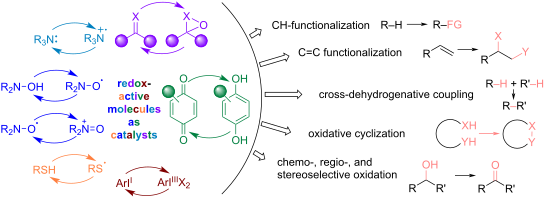
- organic chemistry. It allows chemists to avoid the use of precious and (or) toxic metals by taking advantage of the catalytic activity of small and synthetically available molecules. Today, the term organocatalysis is mainly associated with redox-neutral asymmetric catalysis of C–C bond-forming processes
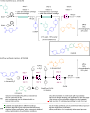
- fundamentally different mechanisms have been proposed for the oxidation of alcohols [96] (Scheme 12). When using transition metals such as Cu(I) as co-catalyst, both aminoxyl radicals and metal ions serve as one-electron oxidants in a joint two-electron oxidation. In this system, primary aliphatic alcohols can







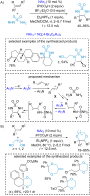


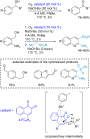


Mechanochemical synthesis of unsymmetrical salens for the preparation of Co–salen complexes and their evaluation as catalysts for the synthesis of α-aryloxy alcohols via asymmetric phenolic kinetic resolution of terminal epoxides
Beilstein J. Org. Chem. 2022, 18, 1416–1423, doi:10.3762/bjoc.18.147
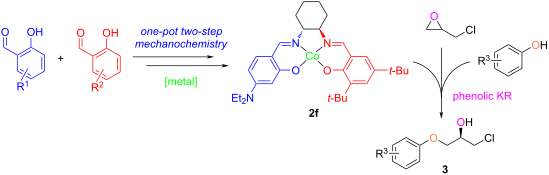
- metals have been explored to optimize the catalytic properties of chiral metal–salens, such as Cr [7], Co [8], Fe [9], Ti [10], Al [11], Y [12], and Mn [13] and investigated with numerous nucleophiles to afford chiral molecules. In addition to the variation of metals, salen ligands have also been studied
- addition, a Lewis basic NEt2 (‒N(CH2CH3)2) group was introduced to the salen scaffold to facilitate purification, enhance catalytic efficiency, and improve the thermal stability, as was shown in the synthesis of fluorescent probes [41][42]. The chelating effect of salen compounds 1 with different metals
- in both techniques and probably pressure-induced activation and shearing deformation of reactant particles are more efficient using the grinding. We next examined the chelating effect of the above salens 1 with different transition metals. A library of metal–salen complexes was synthesized as


Ferrocenoyl-adenines: substituent effects on regioselective acylation
Beilstein J. Org. Chem. 2022, 18, 1270–1277, doi:10.3762/bjoc.18.133
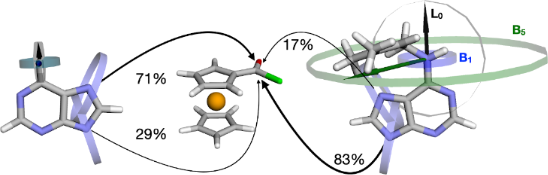
- applied to quantify the fraction of the defined sphere around a reaction center [46]. It was introduced for ligands on metals [47], but may be adapted to estimate the steric hindrance of substituents in different chemical environments (see Supporting Information File 1 for more details). As expected



Heterogeneous metallaphotoredox catalysis in a continuous-flow packed-bed reactor
Beilstein J. Org. Chem. 2022, 18, 1123–1130, doi:10.3762/bjoc.18.115
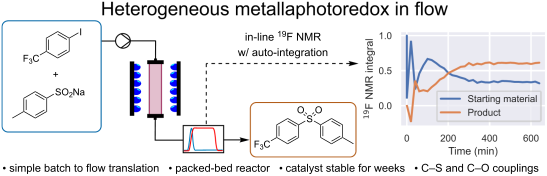
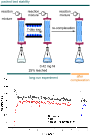
- Berlin, Germany 10.3762/bjoc.18.115 Abstract Metallaphotoredox catalysis is a powerful and versatile synthetic platform that enables cross-couplings under mild conditions without the need for noble metals. Its growing adoption in drug discovery has translated into an increased interest in sustainable

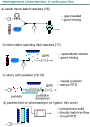


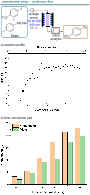


Electrogenerated base-promoted cyclopropanation using alkyl 2-chloroacetates
Beilstein J. Org. Chem. 2022, 18, 1116–1122, doi:10.3762/bjoc.18.114
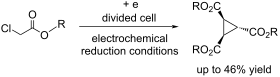
- derivatives could be formed in moderate yields through the electrochemical reduction [13][14][15][16][17][18][19][20][21] of alkyl 2-chloroacetates in a divided cell (Scheme 1, reaction 4). The in Abushanab’s study utilized metal lithium is one of the rarest and most expensive metals. In addition, the


Scope of tetrazolo[1,5-a]quinoxalines in CuAAC reactions for the synthesis of triazoloquinoxalines, imidazoloquinoxalines, and rhenium complexes thereof
Beilstein J. Org. Chem. 2022, 18, 1088–1099, doi:10.3762/bjoc.18.111
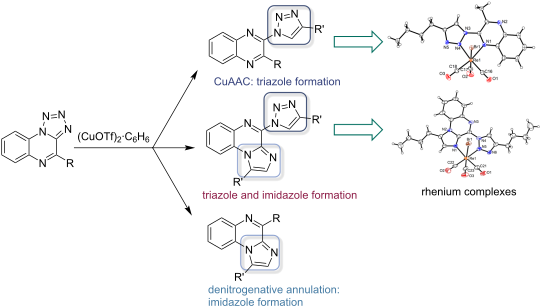
- confirmed via single crystal X-ray crystallography. Several other byproducts, such as the bistriazolo product were isolated (see Supporting Information File 1). The obtained triazoloquinoxaline and TIQ products are promising ligands for complexation with different metals. The formation of organometallic


Electrochemical Friedel–Crafts-type amidomethylation of arenes by a novel electrochemical oxidation system using a quasi-divided cell and trialkylammonium tetrafluoroborate
Beilstein J. Org. Chem. 2022, 18, 1040–1046, doi:10.3762/bjoc.18.105
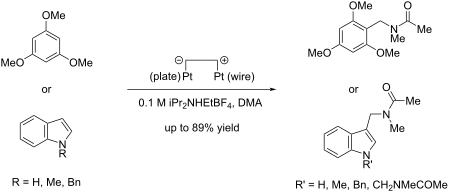
- -acyliminium ions in chemical methods has been generally accomplished by the reaction of amides with chemical oxidants, such as peroxides and persulfates at high temperature (path a in Scheme 1) [10][11][12][13]. A metal catalyst or a photocatalyst consisting of metals, such as ruthenium or iridium, is also


Automated grindstone chemistry: a simple and facile way for PEG-assisted stoichiometry-controlled halogenation of phenols and anilines using N-halosuccinimides
Beilstein J. Org. Chem. 2022, 18, 999–1008, doi:10.3762/bjoc.18.100
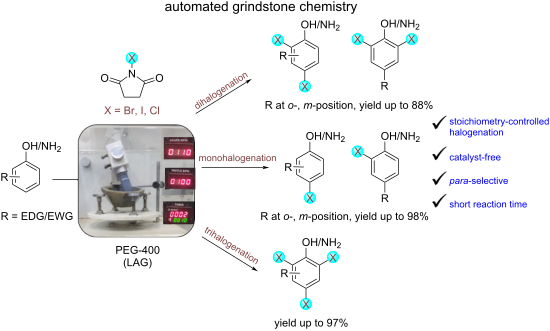
- catalysts (Pd, Rh, Fe, etc.) were employed to boost the reactivity of NXS (Scheme 1b) [32][33][34][35][36][37][38][39][40][41][42][43]. However, the use of toxic and expensive metals, high catalyst loading, and heating conditions are some sheer hurdles to achieving sustainability. Among notable other




Synthesis of novel alkynyl imidazopyridinyl selenides: copper-catalyzed tandem selenation of selenium with 2-arylimidazo[1,2-a]pyridines and terminal alkynes
Beilstein J. Org. Chem. 2022, 18, 863–871, doi:10.3762/bjoc.18.87
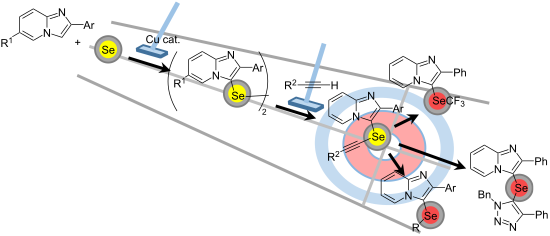
- ]. However, there is no reported example of the synthesis of alkynyl imidazopyridinyl selenides. The Se–C bond-formation reaction using transition metals such as Pd, Ru, Ni, Fe, and Cu as catalysts is one of the most powerful synthetic tools for preparing organoselenium compounds [16][17][18]. Diselenides



Complementarity of solution and solid state mechanochemical reaction conditions demonstrated by 1,2-debromination of tricyclic imides
Beilstein J. Org. Chem. 2022, 18, 746–753, doi:10.3762/bjoc.18.75

- dust. This combination of metals worked well, and the best conditions were obtained with the addition of a small amount of THF (liquid assisted grinding, LAG) [22], η = 0.5 μL·mg−1 (Table 1, entry 19). In contrast, the solution reaction catalyzed by Zn/Cu dust was totally ineffective (Table 1, entry 21




Inductive heating and flow chemistry – a perfect synergy of emerging enabling technologies
Beilstein J. Org. Chem. 2022, 18, 688–706, doi:10.3762/bjoc.18.70
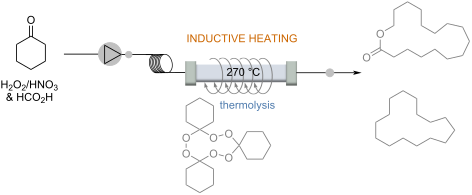
- application for heating large metallic objects and workpieces. It is used for bending tubes, bonding, welding, sintering, and annealing of metals and alloys [11]. In addition to steel and alloys, glass or silicon are also heated or melted under inductive heating conditions [12]. In the last decade, inductive
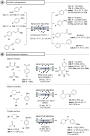
- , e.g., from the metals magnesium or zinc, (thermal) activation is required. This was demonstrated for the Reformatzky reaction (Scheme 11, case B) [53][74], in which zinc powder was mixed with MagSilicaTM and positioned inside the flow reactor. For example, 2-bromopropanoic acid ethyl ester (52) and


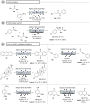
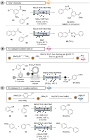


Heteroleptic metallosupramolecular aggregates/complexation for supramolecular catalysis
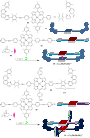
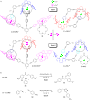
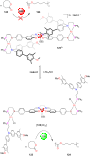
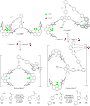
Beilstein J. Org. Chem. 2022, 18, 597–630, doi:10.3762/bjoc.18.62
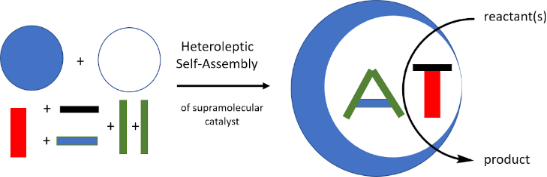
- the electrostatic interaction of crown ethers and alkali metals [4]. While, in the beginning, crown ethers were an excellent choice for metal ion complexation, they later received ample recognition as supramolecular catalysts [49]. The majority of host capsules, however, has been constructed using


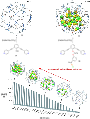









Substituent effect on TADF properties of 2-modified 4,6-bis(3,6-di-tert-butyl-9-carbazolyl)-5-methylpyrimidines
Beilstein J. Org. Chem. 2022, 18, 497–507, doi:10.3762/bjoc.18.52
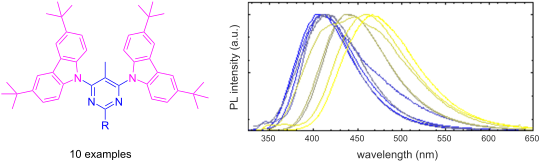
- compounds. Efficient triplet harvesting in TADF compounds leads to internal quantum efficiencies up to 100% and electroluminescence yields exceeding 20% [3][4]. TADF OLEDs usually contain pure organic molecules, which avoid expensive noble metals and allow broad possibilities of molecular design. One of the


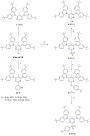

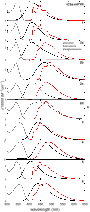

Comparative study of thermally activated delayed fluorescent properties of donor–acceptor and donor–acceptor–donor architectures based on phenoxazine and dibenzo[a,j]phenazine
Beilstein J. Org. Chem. 2022, 18, 459–468, doi:10.3762/bjoc.18.48
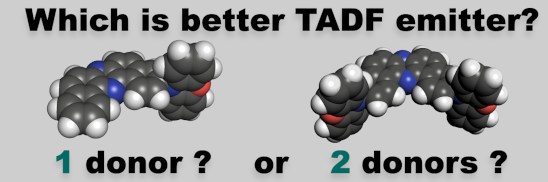
- allow for achieving a very high external quantum efficiency (EQE) of OLEDs without using precious metals such as Ir and Pt in the emitter. Thus, the development of TADF-active organic compounds, the establishment of materials design through systematic structure–property relationship (SPR), and the


Menadione: a platform and a target to valuable compounds synthesis
Beilstein J. Org. Chem. 2022, 18, 381–419, doi:10.3762/bjoc.18.43
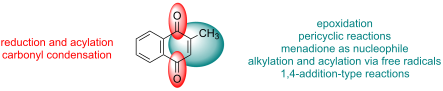
- (Scheme 24). Tang and co-workers described the synthesis of thiosemicarbazone 80 from menadione (10) through a condensation reaction with thiosemicarbazide (79), which was used as a ligand in the synthesis of metal complexes using different transition metals, in refluxing ethanol (Scheme 25) [125


A resorcin[4]arene hexameric capsule as a supramolecular catalyst in elimination and isomerization reactions
Beilstein J. Org. Chem. 2022, 18, 337–349, doi:10.3762/bjoc.18.38
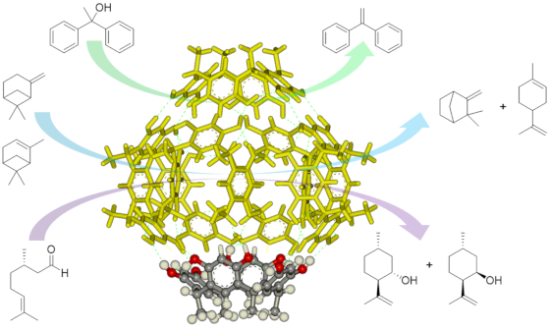
- the cyclization of citronellal have been developed mostly based on transition metals, both as heterogeneous and homogeneous catalysts frequently under much harsher experimental conditions [48][49][50]. The same cyclization of citronellal was reported also by Raymond and collaborators in water using a


Recent developments and trends in the iron- and cobalt-catalyzed Sonogashira reactions
Beilstein J. Org. Chem. 2022, 18, 262–285, doi:10.3762/bjoc.18.31
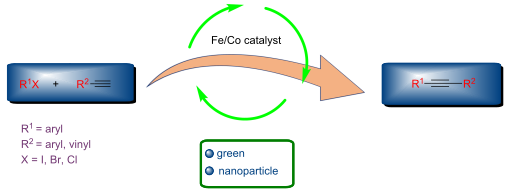
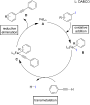
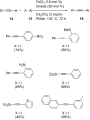
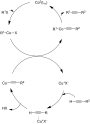
- importance of this coupling reaction [7]. Later, Sonogashira-type reactions requiring only copper as catalyst alone [8] and with other transition metals [9][10][11][12] have been reported. Especially iron has attracted a great deal of attention owing to its low price, easy availability, abundant nature, and
- exceptional versatility [13][14][15]. Therefore, the low cost first series transition metals such as iron and cobalt show higher significance than other transition metals. Naturally, Sonogashira cross-coupling reactions using cobalt or iron catalysts were reported as more cost-effective alternatives to the
- organic transformations [16]. The development of improved procedures in which less expensive and more suitable catalysts are used has remained an elusive goal. In this respect, iron catalysts stand out as valuable alternatives to those transition metals used in Sonogashira coupling reactions [17]. With







Iridium-catalyzed hydroacylation reactions of C1-substituted oxabenzonorbornadienes with salicylaldehyde: an experimental and computational study
Beilstein J. Org. Chem. 2022, 18, 251–261, doi:10.3762/bjoc.18.30
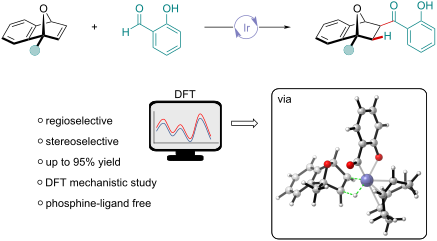
- mechanism. Although an in-depth investigation into the mechanism of iridium-catalyzed hydroacylation reactions has never been carried out, the mechanistic pathways should parallel those of other analogously reactive d7 metals. On the basis of pioneering mechanistic investigations into rhodium-catalyzed


Diametric calix[6]arene-based phosphine gold(I) cavitands
Beilstein J. Org. Chem. 2022, 18, 190–196, doi:10.3762/bjoc.18.21
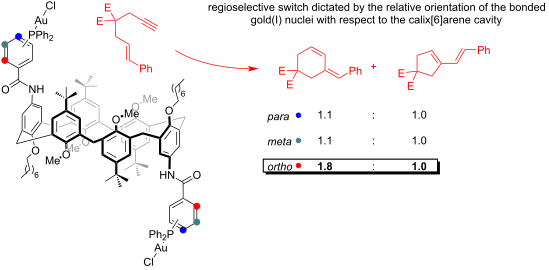
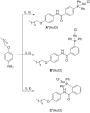
- , calix[4]- [9][10][11][12][13] and resorcin[4]arene [14][15][16][17] are the most exploited cavitands due to their inherent limited flexibility and already proved their ability to control the catalytic activity of late-transition metals and particularly gold(I) catalysts [18][19][20][21][22][23][24][25


Green synthesis of C5–C6-unsubstituted 1,4-DHP scaffolds using an efficient Ni–chitosan nanocatalyst under ultrasonic conditions
Beilstein J. Org. Chem. 2022, 18, 133–142, doi:10.3762/bjoc.18.14
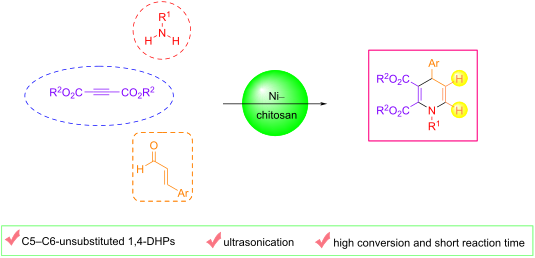
- delivery [11], biomedical uses [12], removal of toxic metals from wastewater [13], in manufacturing processes [14], in the food industry [15], in agriculture [16], and as catalyst in transesterification reactions [17]. Chitosan is regarded as one of the most effective bio-based polymers to chelate




Earth-abundant 3d transition metals on the rise in catalysis
Beilstein J. Org. Chem. 2022, 18, 86–88, doi:10.3762/bjoc.18.8

- , Germany 10.3762/bjoc.18.8 Keywords: C–H activation; 3d transition metals; green chemistry; late-stage functionalization; sustainability; Transition metal catalysis has emerged as a transformative platform for the assembly of increasingly complex compounds, with enabling applications to natural product
- these indisputable advances, this approach has, thus far, predominantly relied on precious, often toxic, 4d and 5d transition metals, most prominently palladium, rhodium and iridium. In sharp contrast, the use of less expensive and less toxic Earth-abundant 3d transition metals continues to be
- underdeveloped. This lack of viable catalysis strategies involving 3d transition metals is largely due to a limited knowledge on the working mode of these metal catalysts, which often involve single-electron-transfer-based redox events. As a consequence, there is a strong demand for efficient and reliable
Recent advances and perspectives in ruthenium-catalyzed cyanation reactions
Beilstein J. Org. Chem. 2022, 18, 37–52, doi:10.3762/bjoc.18.4
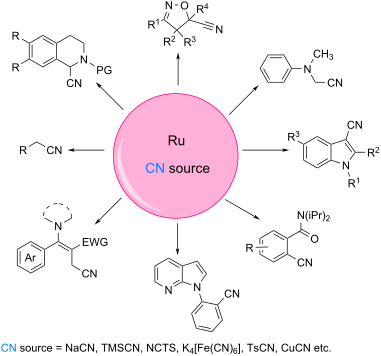
- demanded the need of an alternative method for the synthesis of nitriles. Nowadays transition-metal-catalyzed reactions have received tremendous interest. Various transition metals such as Fe [15], Co [16], Ni [17], Pd [18], Cu [19], Rh [20] etc. were well explored in cyanation owing to its cost-effective
- of other metals such as Au, Pt, Pd, Rh, Ag, and Fe and found that they were less efficient compared to Ru. The benzylic alcohols showed higher reactivity than aliphatic alcohols towards this methodology. Moreover, this protocol worked well for differently substituted heterocyclic alcohols and


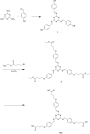
Study on the interactions between melamine-cored Schiff bases with cucurbit[n]urils of different sizes and its application in detecting silver ions
Beilstein J. Org. Chem. 2021, 17, 2950–2958, doi:10.3762/bjoc.17.204
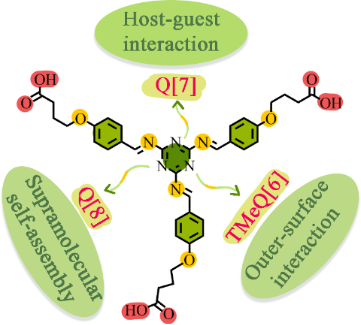
- supermolecule polymer with TBT due to its larger cavity. Since Q[7] and TBT form a host–guest complex, the carboxyl group at the end of TBT and the carbonyl group of the Q[7] still have a strong ability to coordinate with metals. Therefore, Q[7]-TBT is selected for the detection of silver ions (Ag+) [32][33
- coordination ability to metals. In this study, Q[7]-TBT was selected as a UV detector to detect common metals. As shown in Figure 5, the additional Ag+ increases the absorbance of the Q[7]-TBT complex from 0.441 to 0.555 at λmax = 258 nm, while other metal ions do not increase or decrease the absorbance
- significantly at this wavelength, so Q[7]-TBT has a higher selectivity to Ag+ among metals. In addition, in the anti-interference experiment, Q[7]-TBT also has a good performance in the detection of silver ions in the presence of other common metals. To further explore the detection limit (DL) and detection