
Search results
Search for "isolation" in Full Text gives 1001 result(s) in Beilstein Journal of Organic Chemistry. Showing first 200.
Base-promoted cascade recyclization of allomaltol derivatives containing an amide fragment into substituted 3-(1-hydroxyethylidene)tetronic acids
Beilstein J. Org. Chem. 2024, 20, 2585–2591, doi:10.3762/bjoc.20.217
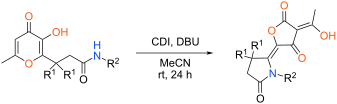
- method for the synthesis of a wide range of (3E,5E)-3-(1-hydroxyethylidene)-5-(5-oxopyrrolidin-2-ylidene)furan-2,4(3H,5H)-diones was elaborated. The advantages of the presented protocol are easily available starting compounds and simple isolation of the target products without chromatographic


Transition-metal-free synthesis of arylboronates via thermal generation of aryl radicals from triarylbismuthines in air
Beilstein J. Org. Chem. 2024, 20, 2577–2584, doi:10.3762/bjoc.20.216
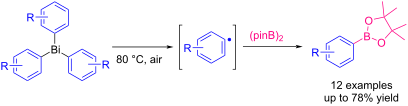
- also tolerable, and the corresponding products 3i and 3j were selectively obtained in moderate yields. Notably, the bulky 2,4,6-trimethylphenyl group of bisumuthine 1l did not inhibit the transformation, and the boronate 3l was obtained in 78% yield. The isolation of arylboronates 3c, 3i, and 3j was
- somewhat difficult due to strong adsorption or decomposition on silica gel. Since some arylboronates are somewhat unstable, it is desirable to synthesize such compounds and then use them in a one-pot manner for the following reactions without isolation. To gain insight into the reaction pathways, several



HFIP as a versatile solvent in resorcin[n]arene synthesis
Beilstein J. Org. Chem. 2024, 20, 2469–2475, doi:10.3762/bjoc.20.211
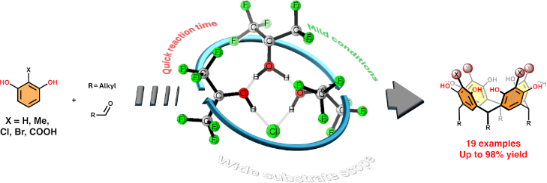
- ) use of 2-substituted electron-poor resorcinols with aldehydes larger than acetaldehyde produce intractable mixtures leading to no product isolation [9], in turn access to halogenated or deactivated electron-poor resorcin[n]arenes typically require an extra step as shown in Scheme 1b [8][56][57][58][59


Photoredox-catalyzed intramolecular nucleophilic amidation of alkenes with β-lactams
Beilstein J. Org. Chem. 2024, 20, 2461–2468, doi:10.3762/bjoc.20.210
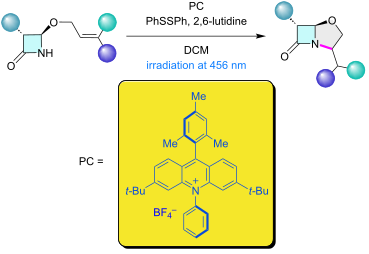
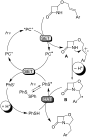
- well known as a potent β-lactamase inhibitor [33][34]. It is produced by the filamentous bacterium Streptomyces clavuligerus, but in low yield. Various clavams 2–5 have been identified (Figure 2B), either through isolation as natural metabolites or obtained by synthetic methods [35][36][37][38][39][40
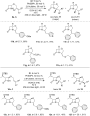
- 8d exhibited an enhancement in reaction diastereoselectivity, resulting in the isolation of product 11d with a dr of 6.7:1 in favor of the trans-diastereoisomer. Remarkably, the formation of a fully substituted quaternary center was possible, as observed for the product 11g, where the trans
- starting from succinimide (Scheme 3). Through a simple reaction in toluene at 80 °C in the presence of Zn(OAc)2, the hemiaminal derivative 13 underwent substitution with cinnamyl alcohol, resulting in the isolation of 14 with a satisfactory yield. Under optimized reaction conditions, the photocatalytic




Improved deconvolution of natural products’ protein targets using diagnostic ions from chemical proteomics linkers
Beilstein J. Org. Chem. 2024, 20, 2323–2341, doi:10.3762/bjoc.20.199
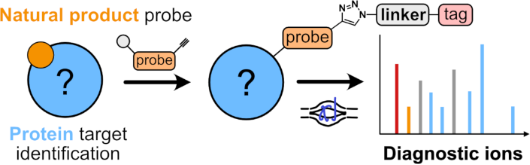
- . Acquisition techniques benefit from possible multistage ion separation and isolation, and diverse fragmentation techniques. All of that is nowadays combined in one instrument to provide greater flexibility of the spectra acquisition setup [7][8][9][10][11][12][13][14][15][16]. Given the sheer amount of data


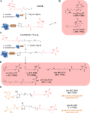


gem-Difluorination of carbon–carbon triple bonds using Brønsted acid/Bu4NBF4 or electrogenerated acid
Beilstein J. Org. Chem. 2024, 20, 2261–2269, doi:10.3762/bjoc.20.194
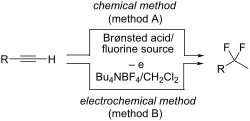
- the case of an aliphatic terminal alkyne, such as dec-1-yne (1d), the 19F NMR study indicated 46% yield with method A (Table 2, entry 5), but it was difficult to purify and isolate product 2d because of the low molecular weight. Scale up conditions of method A, for the purpose of the isolation, led to
- the formation of the corresponding product 2d in 40% yield as the 19F NMR analysis (Table 2, entry 6), but the isolation of 2d was difficult [54]. Method B gave 2d in 35% yield, as shown by the 19F NMR analysis (Table 2, entry 7). Another alkyne, namely, octadec-1-yne (1e), was found to be a nice



Heterocycle-guided synthesis of m-hetarylanilines via three-component benzannulation
Beilstein J. Org. Chem. 2024, 20, 2208–2216, doi:10.3762/bjoc.20.188
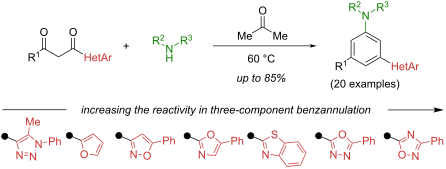
- reaction in the presence of molecular sieves and 1.5-fold excess of aniline (conditions B) dramatically reduced the reaction time to 1 d, allowing isolation of diarylamine 3ac in 75% yield (Scheme 2). Next, we started to screen various heterocyclic 1,3-diketones with the model amine series. The reaction of


Natural resorcylic lactones derived from alternariol
Beilstein J. Org. Chem. 2024, 20, 2171–2207, doi:10.3762/bjoc.20.187
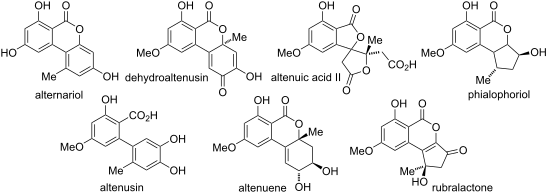
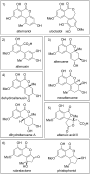
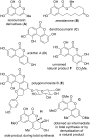
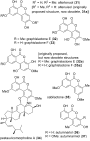
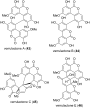
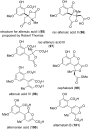
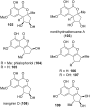
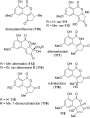
- fungi, are discussed with view on their isolation, structure, biological activities, biosynthesis, and total syntheses. This class of compounds consists until now of 127 naturally occurring compounds, with very divers structural motifs. Although only a handful of these toxins (i.e., alternariol and its
- members), and cyclopenta-fused derivatives (26 members). These compounds will be strictly organized due to their structures and not due a possible concurrent isolation or even to common names (e.g., graphislactones A, C, E, and G will be treated in different sub-chapters, although graphislactones A and C
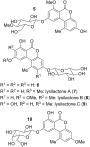
- [131][132][133], it is quite likely that alternariol and its derivatives are partly present in the organisms as O-glucosides, acetates, or sulfates [134][135], where these substituents are most generally cleaved during the isolation and work-up processes. These derivatives (glucosides and sulfates) are










Multicomponent syntheses of pyrazoles via (3 + 2)-cyclocondensation and (3 + 2)-cycloaddition key steps
Beilstein J. Org. Chem. 2024, 20, 2024–2077, doi:10.3762/bjoc.20.178
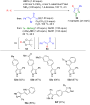
- chlorides furnishes alkynones 104 under mild reaction conditions [124][125]. Without isolation alkynones 104, hydrazines react directly by Michael addition–cyclocondensation, affording 1,3,5-trisubstituted pyrazoles 102 and 103 with remarkable regioselectivity (Scheme 37) [126][127]. The nucleophilicity of
- -component reaction, with a concluding cyclocondensation employing Boc hydrazine, 1,5-diacyl-5-hydroxypyrazoline 127 is formed, as later confirmed by isolation [149]. Upon alkaline workup, this gives 3-acylpyrazole 128 in good yield (Scheme 45) [147]. Ynediones are also accessible from α-ketocarboxylic acids




Allostreptopyrroles A–E, β-alkylpyrrole derivatives from an actinomycete Allostreptomyces sp. RD068384
Beilstein J. Org. Chem. 2024, 20, 1981–1987, doi:10.3762/bjoc.20.174
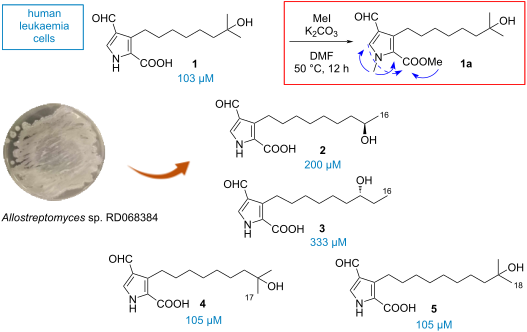
- Allostreptomyces sp. RD068384, including a new congener, allostreptamide [24]. Further investigation of this strain led to the isolation of five new β-alkylpyrroles, designated allostreptopyrroles A–E (1–5) (Figure 1). Results and Discussion The fermentation extract of strain RD068384, cultured in A-3M medium, was
- , and isolation Details on the supplier of Allostreptomyces sp. RD068384, fermentation, extraction, and fractionation are described in Supporting Information File 1. While a CHCl3/MeOH 2:1-eluting fraction by silica gel open column chromatography eventually yielded allostreptamide [24], a less polar
- min), 2 (0.9 mg, tR 12.1 min), 3 (0.8 mg, tR 13.7 min), and 4 (2.3 mg, tR 17.3 min). At time 22 min, the MeCN concentration was raised to 35%, which eluted 5 (1.7 mg) at tR 28.9 min. To obtain higher amounts of compounds, fermentation with 4 L culture and isolation were repeated twice to afford in


A facile three-component route to powerful 5-aryldeazaalloxazine photocatalysts
Beilstein J. Org. Chem. 2024, 20, 1831–1838, doi:10.3762/bjoc.20.161
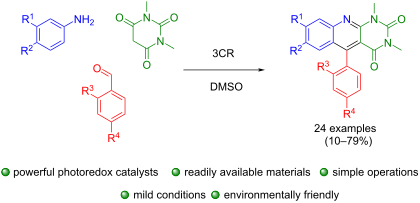
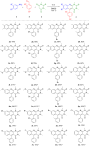
- reactivity, thus giving higher yields than those bearing electron-withdrawing groups. The best reactivity was observed for 3,4-dimethylaniline (3a) and 3,4-dimethoxyaniline (3b) with the isolation of 5-aryldeazaalloxazines 2a–h, with yields of 43–79%. Additionally, 5-aryldeazaalloxazines bearing methoxy
- derivatives, 2i–l and 2m–p, respectively, was accompanied by several complications, and the isolation of the products required precipitation with 2-propanol in several cases. The heating time was prolonged to two days for 8-methoxy derivatives 2m–p, nevertheless giving moderate yields. For 7-methoxy




Discovery of antimicrobial peptides clostrisin and cellulosin from Clostridium: insights into their structures, co-localized biosynthetic gene clusters, and antibiotic activity
Beilstein J. Org. Chem. 2024, 20, 1800–1816, doi:10.3762/bjoc.20.159
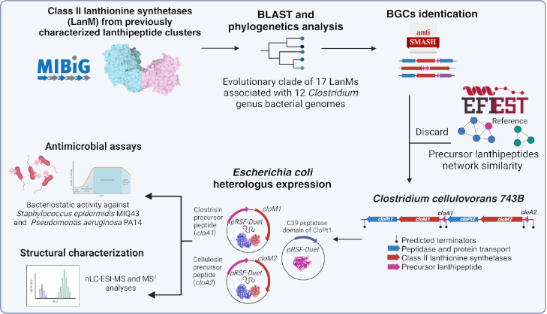
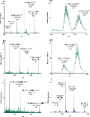
- microbiota members. The habitat of C. cellulovurans, the strain of origin of the lanthipeptide clusters, appears to be plant-associated due to its metabolism and isolation environment (wood). Our results raise numerous questions regarding the ecological functions of the lantibiotics we discovered. Our




Oxidative fluorination with Selectfluor: A convenient procedure for preparing hypervalent iodine(V) fluorides
Beilstein J. Org. Chem. 2024, 20, 1785–1793, doi:10.3762/bjoc.20.157
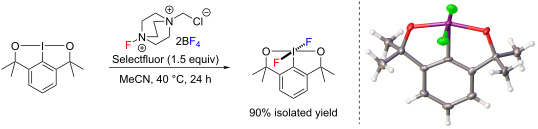
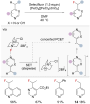
- protocol using TCCA (4 equivalents) and KF (6 equivalents) was then applied to both bicyclic iodine(III) amides 11a and 11b, but these reactions also failed to form either difluoroiodane 7a or 7b. Following the successful preparation and isolation of difluoroiodane 6, we investigated its ability to
- increased by the stepwise incorporation of the trifluoromethyl groups into the sidearm, but trifluoroiodane 22 was less stable than bicyclic difluoro(aryl)-λ5-iodane 6. Conclusion In summary, we have developed a new strategy using Selectfluor for the convenient preparation and isolation of hypervalent


Ugi bisamides based on pyrrolyl-β-chlorovinylaldehyde and their unusual transformations
Beilstein J. Org. Chem. 2024, 20, 1773–1784, doi:10.3762/bjoc.20.156
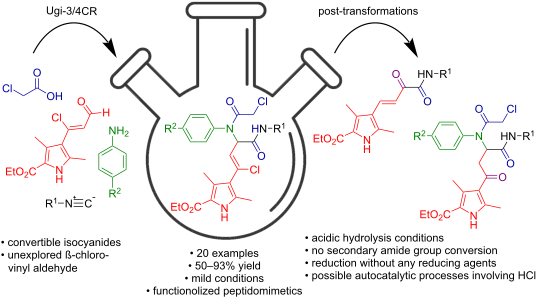
- for two days and then heating the reaction mixture in a closed vessel at 80 °C for 3 hours (Scheme 5). This procedure led to the formation and isolation of the products 10d and 12e with yields which are similar to the tandem reaction. Using the example of bisamide 8c, it was found that changing the




Synthesis of polycyclic aromatic quinones by continuous flow electrochemical oxidation: anodic methoxylation of polycyclic aromatic phenols (PAPs)
Beilstein J. Org. Chem. 2024, 20, 1746–1757, doi:10.3762/bjoc.20.153
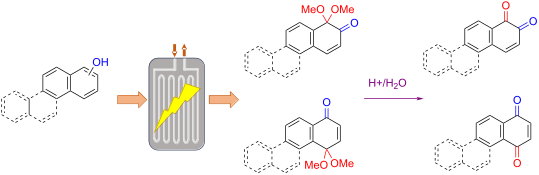
- multiple products were formed. The lability of the acetals prompted us to submit the crude intermediate directly to hydrolysis without prior isolation (Table 4). As mentioned above, having an aqueous reaction mixture in the electrochemical oxidation will give reduced yields. The overall yield of 9b from 6b
- of 1-chrysenol (3b) at different electron equivalents.a Anodic methoxylation of PAPs followed by hydrolysis in two separate steps.a Synthesis of o- and p-quinones without isolation of the acetal intermediate.a Electrochemical properties of PAPs. Supporting Information Supporting Information File 6




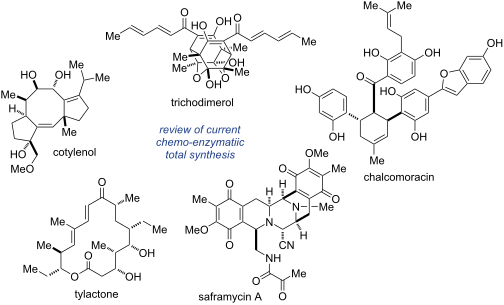
Chemo-enzymatic total synthesis: current approaches toward the integration of chemical and enzymatic transformations
Beilstein J. Org. Chem. 2024, 20, 1693–1712, doi:10.3762/bjoc.20.151
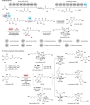
- reaction with biotin azide, which led to selective pull-down with streptavidin agarose and isolation of the probe–protein covalent complex. Proteomic analysis of the isolated proteins narrowed down the MaMO and MaDA candidates, including several berberine bridge enzyme (BBE)-like enzymes. This FAD-linked
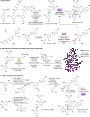
- enzyme SfmCy2, lead to saframycin S (95) [100][101]. To convert the labile hemiaminal moiety at C21 to a more stable aminonitrile, the extracts of the microorganism containing 95 were treated with KCN, allowing the isolation as saframycin A (5) [89]. A notable feature of this biosynthetic machinery is
- 98 [104]. Without isolation of any intermediate from the simple synthetic substrates 88 and 96, rapid access to 98 was achieved in 13% yield over two pots based on peptidyl aldehyde 96. From chemo-enzymatically constructed scaffold 98, chemical manipulations of functional groups were investigated to




Polymer degrading marine Microbulbifer bacteria: an un(der)utilized source of chemical and biocatalytic novelty
Beilstein J. Org. Chem. 2024, 20, 1635–1651, doi:10.3762/bjoc.20.146
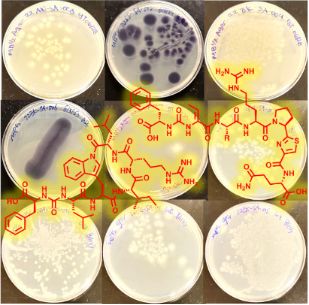
- not only a wide variety of polysaccharides including cellulose, agar, chitin, alginate, and xylan [8][9][10][11], but also plastics [4][12]. Progressing from their isolation and cultivation, natural product discovery from Microbulbifer bacteria is starting to gather steam [6][13][14]. The major
- -695 showed antimicrobial activity against E. coli [14]. Bioassay-guided fractionation led to the isolation of two new acetamidobenzoate esters: bulbiferate A (13) and bulbiferate B (14, Figure 6). Their structures were established on the basis of comprehensive spectroscopic and spectrometric data
- algae [17]. Further investigation indicated that the bioactive substance was mainly located in the cell-free supernatant of Microbulbifer sp. RZ01. Fractionation and spectroscopic characterization led to the isolation and identification of the extracellularly secreted molecule, 3,3´,5,5´-tetrabromo-2,2


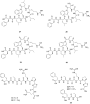


Mining raw plant transcriptomic data for new cyclopeptide alkaloids
Beilstein J. Org. Chem. 2024, 20, 1548–1559, doi:10.3762/bjoc.20.138
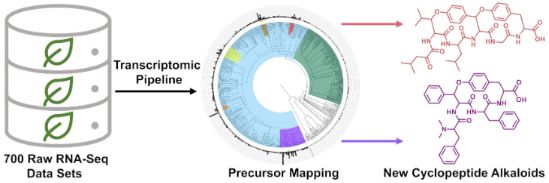
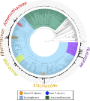
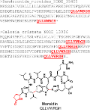
- transcripts [37][38]. For our analysis, the previously distinct Chenopodioideae family was viewed as members of the Amaranthaceae family based on the most up to date Angiosperm Phylogeny Group classification (APG IV) [23]. Isolation of burpitides from C. americanus Three separate extractions were performed





Benzylic C(sp3)–H fluorination
Beilstein J. Org. Chem. 2024, 20, 1527–1547, doi:10.3762/bjoc.20.137

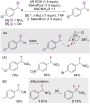
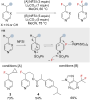
- predominately considered to be stable to isolation conditions, secondary and tertiary suffer from the elimination of HF, especially in the presence of silica gel or glass vessels. Therefore, benzyl fluorides have been derivatised, for example in C–O, C–N and C–C bond-forming reactions [18][19][20], thereby also
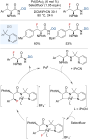
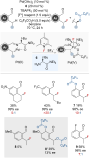
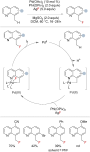
- several secondary and tertiary benzyl fluorides were unstable to silica during isolation or storage in glass vessels, and therefore, demonstrated several downstream diversifications of the benzyl fluorides. Sevov, Zhang and co-workers reported in 2023 a stable copper(III) fluoride complex that was capable




















Synthesis of substituted triazole–pyrazole hybrids using triazenylpyrazole precursors
Beilstein J. Org. Chem. 2024, 20, 1396–1404, doi:10.3762/bjoc.20.121
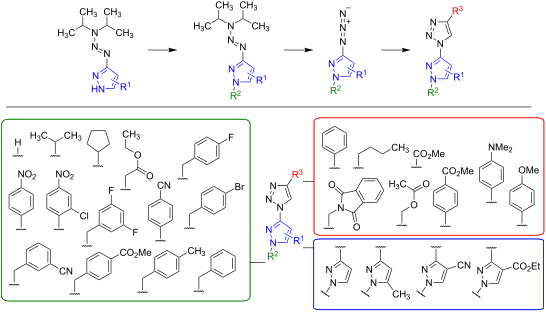
- the triazole unit via a copper-catalyzed azide–alkyne cycloaddition. The developed methodology was used to synthesize a library of over fifty new multi-substituted pyrazole–triazole hybrids. We also demonstrate a one-pot strategy that renders the isolation of potentially hazardous azides obsolete. In
- 50 °C. This optimization allowed for the isolation of the corresponding azides 19a–v in yields of 51% to quantitative (Scheme 2), usually with durations of 3–16 h. Longer reaction times were necessary for some CN-substituted triazene derivatives (19o, 19q, 19s, 19v), especially in combination with


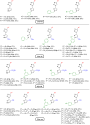


Synthetic applications of the Cannizzaro reaction
Beilstein J. Org. Chem. 2024, 20, 1376–1395, doi:10.3762/bjoc.20.120
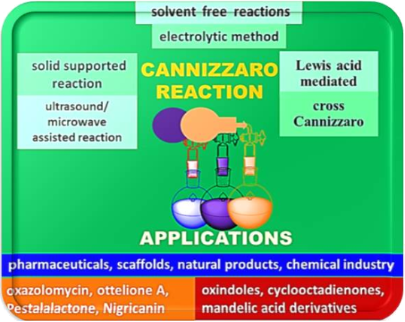
- also simplifies product isolation and purification and improves the overall sustainability of the process [23][24]. However; specific reaction requirements ensure efficient and selective utilization of solvents. Marvi and Talakoubi carried out the Cannizzaro reaction [25] using montmorillonite K-10 and

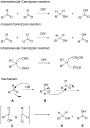


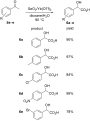






Computation-guided scaffold exploration of 2E,6E-1,10-trans/cis-eunicellanes
Beilstein J. Org. Chem. 2024, 20, 1320–1326, doi:10.3762/bjoc.20.115

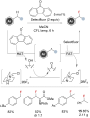
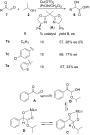
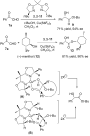
- epoxide 9, but the similar reaction with 2 yields gersemienol 8. Isolation yields are provided. (B and C) Results of DFT calculations on the protonation-induced cyclizations of 1 and 2. The energies of the cationic intermediates (italicized values) are not on the same energy scale as for the substrates
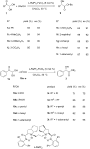
- be 3.5 kcal mol−1 higher in energy than the one shown, an energy difference that is larger than expected based on experiment. Cope rearrangement in trans-eunicellanes. (A) The 2E-trans-eunicellane undergoes thermal Cope rearrangement, yielding atropisomers 10a/10b; an isolation yield of 96% was


Sustainable tandem acylation/Diels–Alder reaction toward versatile tricyclic epoxyisoindole-7-carboxylic acids in renewable green solvents
Beilstein J. Org. Chem. 2024, 20, 1308–1319, doi:10.3762/bjoc.20.114
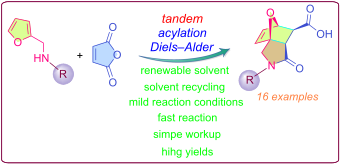
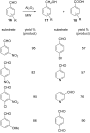
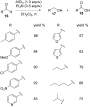
- bisepoxyisoindole-7-carboxylic acids were obtained in good yields after a practical isolation procedure. The results obtained in this study demonstrate the potential of vegetable oils and their renewable materials to provide a reaction medium that is more sustainable than conventional organic solvents in cascade
- as the reaction medium seven times under optimum conditions and the results for the cycloadduct 2k are shown in Figure 1. As shown in the figure, there is no significant decrease in product yield. The reaction conditions and isolation method used in the literature procedures for the previous
- transformations is the purification of the synthesized product, since these oils are non-volatile and non-polar. However, in this study, the choice of these materials as green solvents allows convenient isolation of the cycloadducts by precipitation followed by filtration with hexane or diethyl ether. Thus, IMDAF


Light on the sustainable preparation of aryl-cored dibromides
Beilstein J. Org. Chem. 2024, 20, 1076–1087, doi:10.3762/bjoc.20.95
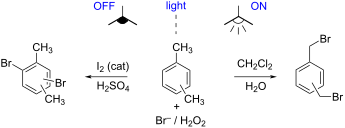
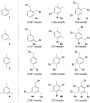
- undetectable 1H NMR impurities. The application of the same protocol on o-xylene (1, Figure 3) cleanly gave dibromide 1a in almost quantitative yield. Some issues emerged during the isolation step, because of the high lacrimatory activity of 1a [53][54], while 3a lacks the same effect. Higher nucleophilic



A Diels–Alder probe for discovery of natural products containing furan moieties
Beilstein J. Org. Chem. 2024, 20, 1001–1010, doi:10.3762/bjoc.20.88
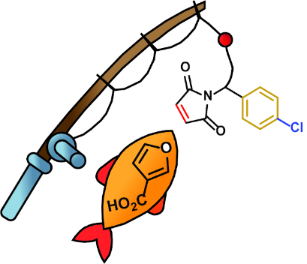
- agar plates (1 mg/L titer or 5 µM). However, this initial isolation was enabled by heterologous expression of their biosynthetic genes from Streptomyces coelicolor to produce higher titers of the MMF molecules compared to the native producer [7]. Given the challenges of isolating furans generally and