

Search results
Search for "heteroarenes" in Full Text gives 109 result(s) in Beilstein Journal of Organic Chemistry.
Palladium-catalyzed substitution of (coumarinyl)methyl acetates with C-, N-, and S-nucleophiles
Beilstein J. Org. Chem. 2012, 8, 1200–1207, doi:10.3762/bjoc.8.133
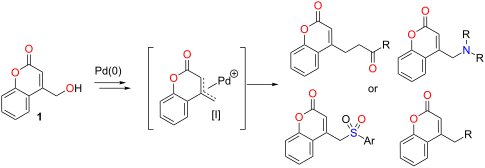
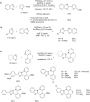
- halomethylcoumarin and highly stabilized nucleophiles or amines [6][7][8][9][10][11][12][13][14][15]. Due to the sensitivity and toxicity of related benzyl halides, there has been interest in catalytically activating hydroxymethylarene and heteroarenes (e.g., benzyl alcohol derivatives) toward reactions with


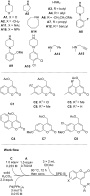

Parallel solid-phase synthesis of diaryltriazoles
Beilstein J. Org. Chem. 2012, 8, 1027–1036, doi:10.3762/bjoc.8.115
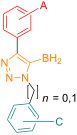
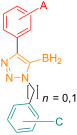
- phenyl ring of the benzoic acid as constant structural elements and the third ring consisting either of substituted benzenes, heteroarenes or a polycyclic aromatic compound. Lower product yields were obtained in this series of compounds, ranging from 21 to 63%. The lower reactivity of the aromatic azide


Recent advances in direct C–H arylation: Methodology, selectivity and mechanism in oxazole series
Beilstein J. Org. Chem. 2011, 7, 1584–1601, doi:10.3762/bjoc.7.187
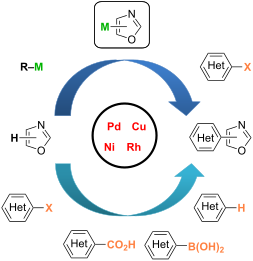
- ) catalysis with arylbromides (Scheme 30) [80][81]. Transition metal-catalyzed dehydrogenative cross-coupling Last year, Hu and You reported the first extended study of Pd(II)- and Cu(II)- catalyzed oxidative C–H/C–H cross-coupling of electron-rich heteroarenes, including benzoxazole coupled with 2






Meta-metallation of N,N-dimethylaniline: Contrasting direct sodium-mediated zincation with indirect sodiation-dialkylzinc co-complexation
Beilstein J. Org. Chem. 2011, 7, 1234–1248, doi:10.3762/bjoc.7.144

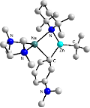
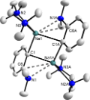
- direct zincation of functionalised arenes and heteroarenes [9][10]. However, common limitations have been noted for the use of this reagent with some electron poor and heterocyclic compounds which suffer from the drawback of limited regioselectivity, whilst several activated aromatic compounds bearing





A review of new developments in the Friedel–Crafts alkylation – From green chemistry to asymmetric catalysis
Beilstein J. Org. Chem. 2010, 6, No. 6, doi:10.3762/bjoc.6.6
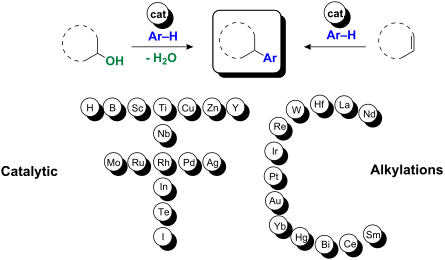
- efficient Friedel–Crafts alkylations of arenes and heteroarenes using only catalytic amounts of a Lewis acid has gained much attention over the last decade. The new catalytic approaches described in this review are favoured over classical Friedel–Crafts conditions as benzyl-, propargyl- and allyl alcohols
- descriptions of a Lewis acid used in organic synthesis but also the first example of what was later to be called Friedel–Crafts alkylation (FC alkylation) after its inventors. Today Friedel–Crafts alkylations remain the method of choice for the alkylation of arenes and heteroarenes. Over the intervening years
- bearing methyl, methoxy or hydroxy functionalities as well as heteroarenes, including thiophenes or 3-methylindole with a good para/ortho/meta regioselectivity (Scheme 10). In addition, they successfully used benzyl acetates, 1-phenylethanol and β-hydroxy-substituted benzyl alcohols as alkylating reagents


The efficient synthesis of dibenzo[d,d′]benzo[1,2-b:4,3-b′]dithiophene and cyclopenta[1,2-b:4,3-b′]bis(benzo[d]thiophen)-6-one
Beilstein J. Org. Chem. 2009, 5, No. 55, doi:10.3762/bjoc.5.55

- [1,2-b:4,3-b′]dithiophene; McMurry reaction; preparation; Introduction With considerable environmental stability and flexibility in synthesis, π-extended heteroarenes containing thiophene rings within an polyaromatic ring system are currently of great interest because they can potentially be used to
- fabricate organic field-effect transistors (OFETs) [1][2][3][4][5][6][7], light emitting diodes (LEDs) [8][9], and photovoltaic cells [10]. Various novel π-extended heteroarenes, e.g. dibenzo[d,d′]thieno[3,2-b:4,5-b′]dithiophene [11], pentathienoacene [12], and benzo[1,2-b:4,5-b′]bis[b]benzothiophene [13


Synthesis of rigidified flavin–guanidinium ion conjugates and investigation of their photocatalytic properties
Beilstein J. Org. Chem. 2009, 5, No. 26, doi:10.3762/bjoc.5.26
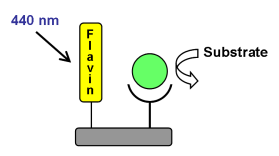
- flavin heteroarenes are observed. The structure of compound 1 in the solid state (Figure 2) shows an almost identical orientation of the flavin group to that of the acid 6. The acyl guanidinium ion group is almost planar and in a parallel orientation relative to the Kemp’s acid imide group. 2-D NMR




Transition- metal/Lewis acid free synthesis of acyl benzothiophenes via C-C bond forming reaction
Beilstein J. Org. Chem. 2007, 3, No. 35, doi:10.1186/1860-5397-3-35
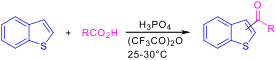
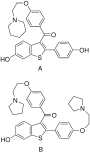
- Lewis acid/transition metal free synthesis of acyl benzothiophenes could provide an easy access to a library of benzothiophene based analogues of potential biological interest. Notably, while the use of various arenes/heteroarenes has been explored in the previous study, [25][26][27][28][29][30] the use



m-Iodosylbenzoic acid – a convenient recyclable reagent for highly efficient aromatic iodinations
Beilstein J. Org. Chem. 2007, 3, No. 19, doi:10.1186/1860-5397-3-19
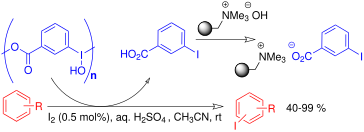
- Table 2). Addition of aqueous H2SO4 accelerated the iodination of benzenes. For heteroarenes 7j and 7o this additive was not required and if an additional alcohol group was present (see 7n), addition of aqueous H2SO4 resulted in its oxidation. Compared to diacetoxyiodobenzene (DIB) 1a and its polymeric


Other Beilstein-Institut Open Science Activities