
Search results
Search for "carboxylic acid" in Full Text gives 627 result(s) in Beilstein Journal of Organic Chemistry. Showing first 200.
(E,Z)-1,1,1,4,4,4-Hexafluorobut-2-enes: hydrofluoroolefins halogenation/dehydrohalogenation cascade to reach new fluorinated allene
Beilstein J. Org. Chem. 2024, 20, 452–459, doi:10.3762/bjoc.20.40
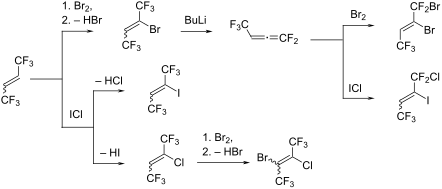
- demonstrated that 1,1,1,4,4,4-hexafluorobut-2-ene reacts with dithietane, sulfur and KF with the formation of the corresponding 1,3-dithiole [16]. Also, a recent patent presents a method for the preparation of 5,6-bis(trifluoromethyl)-1,2,4-triazine-3-carboxylic acid ethyl ester starting from 1,1,1,4,4,4


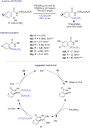
A novel recyclable organocatalyst for the gram-scale enantioselective synthesis of (S)-baclofen
Beilstein J. Org. Chem. 2023, 19, 1811–1824, doi:10.3762/bjoc.19.133
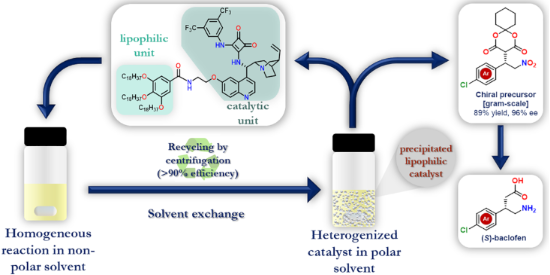
- acid ester 9 was hydrolyzed under basic conditions in an ethanol/water mixture. After the reaction, the pH of the mixture was adjusted to 4 with hydrochloric acid, which resulted in the precipitation of the product 10 in excellent yield (95%). Next, carboxylic acid 10 was converted into the


α-(Aminomethyl)acrylates as acceptors in radical–polar crossover 1,4-additions of dialkylzincs: insights into enolate formation and trapping
Beilstein J. Org. Chem. 2023, 19, 1443–1451, doi:10.3762/bjoc.19.103
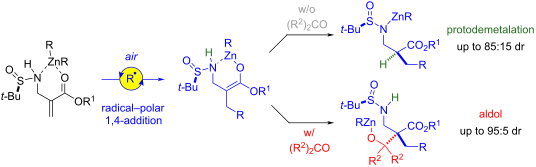
- . Trialkylboranes can react in a similar way with enones [3] whereas, distinctively, suitable acceptors for the reaction with dialkylzinc reagents also include α,β-unsaturated carboxylic acid derivatives such as α,β-unsaturated (di)esters [4][5], N-enoyloxazolidinones [6][7], N-enoyloxazolidines [8], or




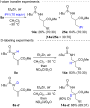


Visible-light-induced nickel-catalyzed α-hydroxytrifluoroethylation of alkyl carboxylic acids: Access to trifluoromethyl alkyl acyloins
Beilstein J. Org. Chem. 2023, 19, 1372–1378, doi:10.3762/bjoc.19.98
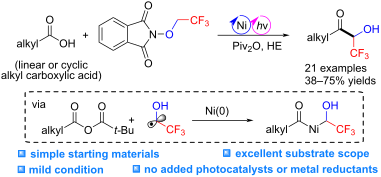
- carboxylic acid and pivalic anhydride than aryl bromide. The halides provided versatile synthetic handles for further transformations. Substrates bearing thiophene (3k) furan (3j) and other heterocycle (3l,m) moieties were also applicable to this reaction. This protocol allowed for the coupling of not only
- light-induced charge transfer event to give trifluoroethoxyl radical B, followed by a 1,2-hydrogen atom transfer (HAT), producing the stable radical C. For the nickel cycle, it is initiated by oxidative addition of Ni(0) catalyst E to acyl electrophile D formed in situ from carboxylic acid 1 with
- -trifluoroethoxyphthalimide: In the glove box with nitrogen atmosphere, to an 8 mL vial equipped with a magnetic stir bar, NiBr2(dtbbpy) (19.6 mg, 0.04 mmol, 10 mol %), alkyl carboxylic acid 1 (0.4 mmol, 1.0 equiv), N-trifluoroethoxyphthalimide (2, 147.1 mg, 0.6 mmol, 1.5 equiv), Hantzsch ester (152.0 mg, 0.6 mmol, 1.5 equiv


Synthesis of ether lipids: natural compounds and analogues
Beilstein J. Org. Chem. 2023, 19, 1299–1369, doi:10.3762/bjoc.19.96
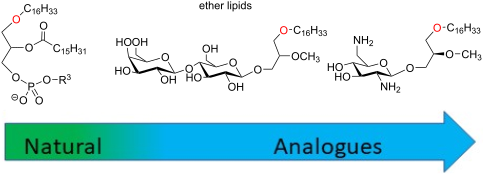
- acylation of lyso-PAF with a series of functionalized carboxylic acid was reported in a series of articles from the group of Salomon [98][99]. This group aimed to identify natural compounds that could be formed by the oxidation of ether lipids featuring a polyunsaturated acyl chain in sn-2 position. This
- work includes, in addition to the oxidation of such type of polyunsaturated EL incorporated in liposomes [99], the formal synthesis of some oxidized derivatives. As an illustration, lyso-PAF 15.1 (extracted from egg albumin) was acylated using Steglich conditions with ω-unsaturated carboxylic acid to
- produce 15.2a [99] (Figure 15A and B) or with functionalized furane to produce 15.2b. The acylation was also achieved by reaction with cyclic acid anhydride to place in ω-position a carboxylic acid function as exemplified with 15.3a [98]. The acetyl group present in the structure of PAF in position sn-2






Metal catalyst-free N-allylation/alkylation of imidazole and benzimidazole with Morita–Baylis–Hillman (MBH) alcohols and acetates
Beilstein J. Org. Chem. 2023, 19, 1251–1258, doi:10.3762/bjoc.19.93
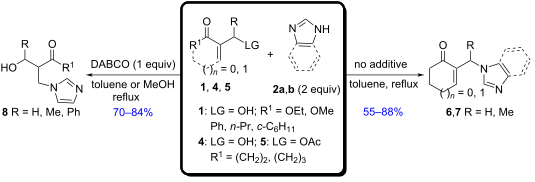
- , Yang et al. [18][19] have developed a catalytic system involving Pd/Ti(OiPr)4 or Pd/carboxylic acid for the direct allylation of anilines with alcohols. The synthesis of N-allylimidazole derivatives 3 has been previously carried out using acyclic MBH adducts bearing good leaving groups, such as bromide


Radical ligand transfer: a general strategy for radical functionalization
Beilstein J. Org. Chem. 2023, 19, 1225–1233, doi:10.3762/bjoc.19.90
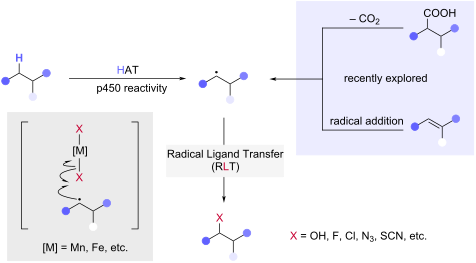
- the mechanism. In 2015, the Groves group reported their manganese porphin-based catalyst V and related species being capable of participating in decarboxylation reactions (Scheme 4) [42]. The activated Mn(V) species is proposed to perform HAT carboxylic acid O–H bond, directly forming a carboxyl
- beautiful decarboxylative azidation examples, combining iron-mediated photodecarboxylation via LMCT and azide RLT (Scheme 5) [11]. Irradiating a substoichiometric amount of iron(III) nitrate hydrate III in the presence of carboxylic acid, TMS azide, and sodium carbonate allows for direct synthesis of alkyl


Exploring the role of halogen bonding in iodonium ylides: insights into unexpected reactivity and reaction control
Beilstein J. Org. Chem. 2023, 19, 1171–1190, doi:10.3762/bjoc.19.86
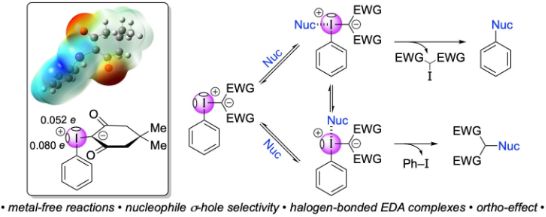
- ≈ 8; 50e, 64–74% yield) were suitable, they were unreactive in the presence of a carboxylic acid (50c). If these insertions proceed via initial protonation of the iodonium ylide to produce 51 (Figure 11), its high acidity (pKa ≈ 0) [131][132] would suggest that only strong acids should undergo this








Two new lanostanoid glycosides isolated from a Kenyan polypore Fomitopsis carnea
Beilstein J. Org. Chem. 2023, 19, 1161–1169, doi:10.3762/bjoc.19.84
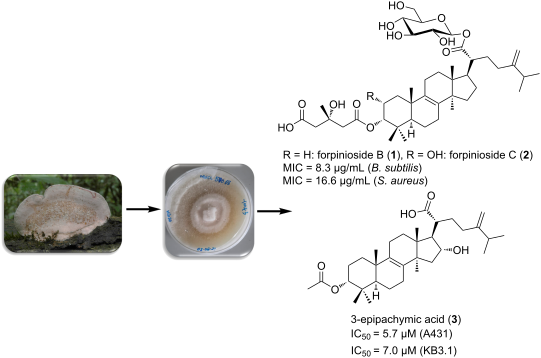
- inducing cytotoxicity. In addition, another study demonstrated that a lanostanoid glycoside derivative with a glucosyl ester at the C-21 carboxylic acid group was active in a cytotoxic activity assay, whereas the galactosyl ester counterpart was inactive [36]. Similarly, the carboxylic acid group at C-21
- was shown to be a key player in lanostane triterpenoid cytotoxicity; increased activity was demonstrated either by its esterification with glucose or by its reduction into a hydroxymethylene group unlike its presence as a free carboxylic acid moiety [23]. Thus, our findings provide further insights


Photoredox catalysis harvesting multiple photon or electrochemical energies
Beilstein J. Org. Chem. 2023, 19, 1055–1145, doi:10.3762/bjoc.19.81
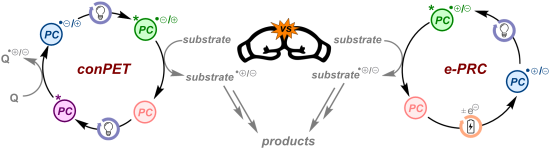
- products, demonstrating a clear preference for addition to alkenes even in the presence of alkyne functionalities. Due to basic conditions of the reductive quenching (RQ) route, the formation of lactone side product 30h could be observed with a carboxylic acid functionality. In the absence of Et3N, the

























Five new sesquiterpenoids from agarwood of Aquilaria sinensis
Beilstein J. Org. Chem. 2023, 19, 998–1007, doi:10.3762/bjoc.19.75
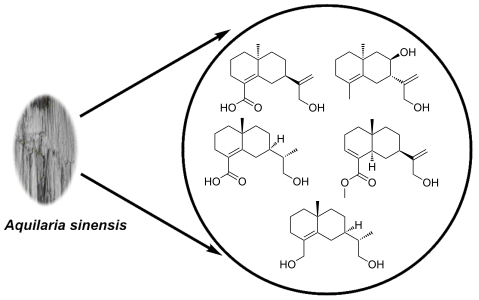
- powder, possesses a molecular formula of C16H24O3 (5 degrees of unsaturation) derived from its HRESIMS (m/z 287.1614, calcd 287.1618 [M + Na]+). Comparing the NMR data of 1 with those of 4 indicates that the Δ4,5 double bond migrates to Δ3,4 and the carboxylic acid group becomes a methyl ester derivative
- (Table 3). The difference is that the carboxylic acid at C-4 in 3 undergoes reduction to form a hydroxymethyl group at C-4 in 5. This alteration is supported by the analysis of the HMBC correlations (Figure 2) of H-3/C-4 (δC 128.6), C-14 (δC 63.5) and H-14/C-4, C-5 (δC 141.9). Thus, the planar structure


Photoredox catalysis enabling decarboxylative radical cyclization of γ,γ-dimethylallyltryptophan (DMAT) derivatives: formal synthesis of 6,7-secoagroclavine
Beilstein J. Org. Chem. 2023, 19, 918–927, doi:10.3762/bjoc.19.70
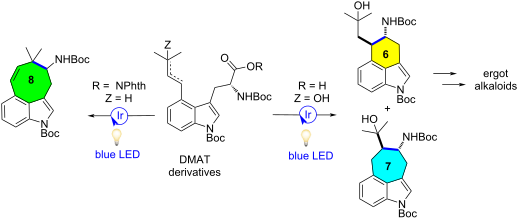
- photoredox cycle (Figure 1b). Alternatively, we envisioned a more established approach expecting the direct oxidative photoredox decarboxylation of the carboxylic acid/carboxylate (by SET from the activated photocatalyst) of DMAT to generate the α-aminoalkyl radical that might readily be captured/trapped


Intermediates and shunt products of massiliachelin biosynthesis in Massilia sp. NR 4-1
Beilstein J. Org. Chem. 2023, 19, 909–917, doi:10.3762/bjoc.19.69
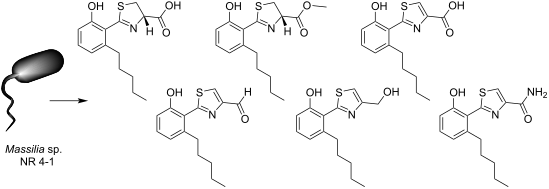
- substituent at C-2 of the phenol moiety. The final carbon atom at 171.9 ppm (C-15) could be attributed to a carboxylic acid function with HMBC correlations from H-13 and H-14, thereby completing the determination of the planar structure of 1. To determine the configuration of 1, we measured its optical
- ) and a proton resonance at δH 3.73 ppm (H-16). Both H-16 and H-14 show HMBC correlations to the carbonyl C-15. It can therefore be concluded that a methyl ester function replaced the carboxylic acid function of compound 1. Measurements of the optical rotation of 2 were not possible due to the low
- 16 Da compared to compound 3, confirming that it is the reduced form of the carboxylic acid. Compound 5 (0.6 mg) was obtained as a brown oil. It possesses a molecular ion at m/z 278.1231 [M + H]+, which suggests a molecular formula of C15H19NO2S (calcd. for C15H20NO3S, 278.1220) and corresponds to


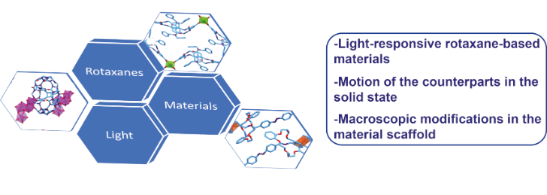
Light-responsive rotaxane-based materials: inducing motion in the solid state
Beilstein J. Org. Chem. 2023, 19, 873–880, doi:10.3762/bjoc.19.64
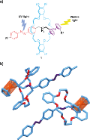
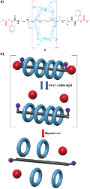
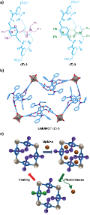
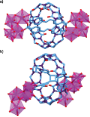
- the interlocked arrangement. As an illustrative example, cucurbit[8]uril-based pseudorotaxanes having a pair of styrylpyridinium threads bearing carboxylic acid groups were employed in the preparation of the uranium-organic framework U-CB[8]-MPyVB (Figure 4a) [63]. The solid structure of the MOFs
- shows the styrene-based derivatives coordinated in an antiparallel manner through the carboxylic acid group placed at the end of each thread, thus avoiding the dethreading process. Two identical intertwined scaffolds were formed differing in the photoactivities due to different conformations. In the

Non-peptide compounds from Kronopolites svenhedini (Verhoeff) and their antitumor and iNOS inhibitory activities
Beilstein J. Org. Chem. 2023, 19, 789–799, doi:10.3762/bjoc.19.59
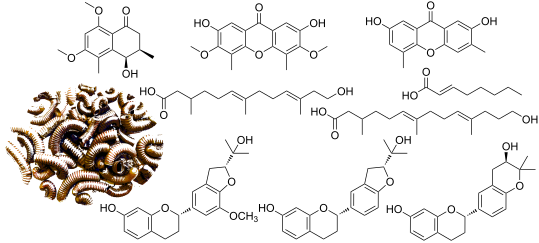
- (δC 43.8), and H-12/C-10, C-11. The presence of a conjugated carboxylic acid was verified by the HMBC correlation of H2-2 to C-1 (δC 177.1). Concerning the geometry of 7, the ROESY correlation (Figure 2 and Figure S32 in Supporting Information File 1) of H-10/H2-12 disclosed that the ∆10,11


Honeycomb reactor: a promising device for streamlining aerobic oxidation under continuous-flow conditions
Beilstein J. Org. Chem. 2023, 19, 752–763, doi:10.3762/bjoc.19.55
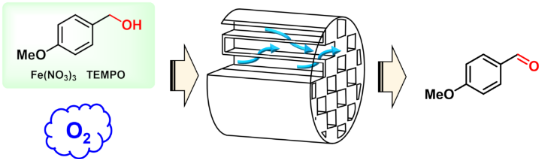
- temperature derived from the heat of reaction accelerated the reaction. The quantitative yield by HPLC was 98.3% and the byproduct carboxylic acid 3a was 1.3%. 3a was easily purged by extraction with a weak base such as NaHCO3. From the above discussion, the throughput was improved to 1.4 kg/day (= 57 g/h


Palladium-catalyzed enantioselective three-component synthesis of α-arylglycine derivatives from glyoxylic acid, sulfonamides and aryltrifluoroborates
Beilstein J. Org. Chem. 2023, 19, 719–726, doi:10.3762/bjoc.19.52
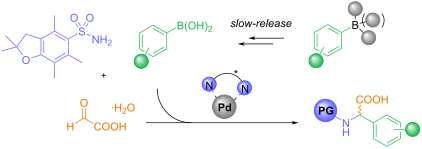
- these transformations to a palladium-catalyzed enantioselective synthesis of α-arylglycine bearing a free carboxylic acid functionality directly from the parent glyoxylic acids (Scheme 1c) [22]. We could show that the desired arylglycine can be synthesized in good to excellent enantioselectivities


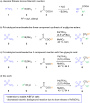
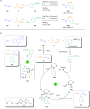


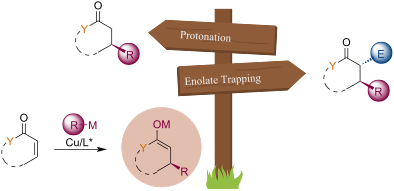
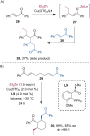
Enolates ambushed – asymmetric tandem conjugate addition and subsequent enolate trapping with conventional and less traditional electrophiles
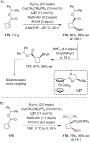
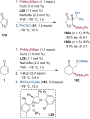
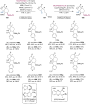
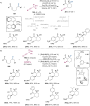
Beilstein J. Org. Chem. 2023, 19, 593–634, doi:10.3762/bjoc.19.44









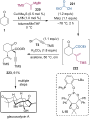
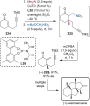
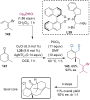
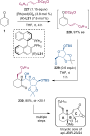
Phenanthridine–pyrene conjugates as fluorescent probes for DNA/RNA and an inactive mutant of dipeptidyl peptidase enzyme
Beilstein J. Org. Chem. 2023, 19, 550–565, doi:10.3762/bjoc.19.40
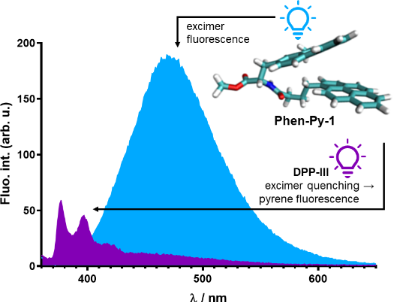
- phenanthridinylalanine with the corresponding pyrene-containing carboxylic acid and were linked together by an amide bond. Conjugate Phen-Py-1 possessed a trimethylene chain linker that allowed pronounced flexibility for the positioning of aromatic units. Although more rigid, Phen-Py-2 also enabled intramolecular




Transition-metal-catalyzed C–H bond activation as a sustainable strategy for the synthesis of fluorinated molecules: an overview
Beilstein J. Org. Chem. 2023, 19, 448–473, doi:10.3762/bjoc.19.35
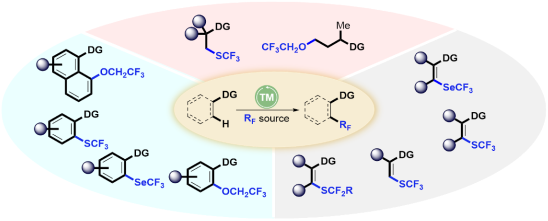
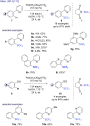
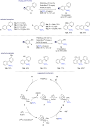
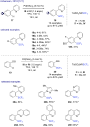
- approach. Of high interest, the modularity of the SCF2CO2Et was highlighted by its conversion into various other fluorinated residues (amide, carboxylic acid) and its selective oxidation into the corresponding sulfoxide and sulfone. I.5) Trifluoromethylselenolation of aromatic and vinylic C(sp2)–H bonds by











Combretastatins D series and analogues: from isolation, synthetic challenges and biological activities
Beilstein J. Org. Chem. 2023, 19, 399–427, doi:10.3762/bjoc.19.31
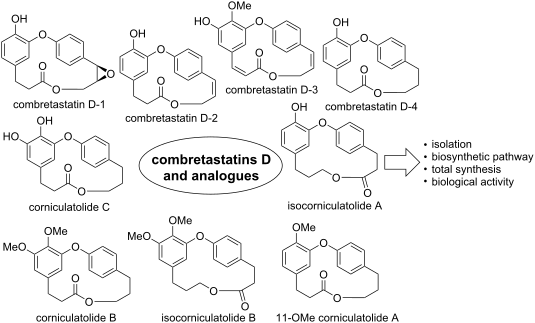
- carboxylic acid 20, which underwent protection with Troc-Cl and selective reduction in the presence of sodium borohydride to form the alcohol 21. After ester hydrolysis the desired seco-acid 22 was obtained in 82% yield. However, several attempts to achieve the macrolactonization of 22 using PPh3 and DEAD
- coupling reaction. Thus, the olefination reaction of aldehyde 15 with phosphonate 23, followed by the reduction of the obtained ester 24 using DIBAL led to the alcohol 25. The latter was submitted to the reaction with carboxylic acid 26 under Mitsunobu conditions [30], giving the corresponding ester 27 in
- protection with BnBr and oxidation led to the carboxylic acid 107. Esterification of the carboxylic acid followed by the cleavage of the silyl ether using TBAF and hydrolysis led to the seco-acid 108. Macrolactonization using the Mitsunobu conditions gave combretastatin D-4 (4) after cleavage of the benzyl




CuAAC-inspired synthesis of 1,2,3-triazole-bridged porphyrin conjugates: an overview
Beilstein J. Org. Chem. 2023, 19, 349–379, doi:10.3762/bjoc.19.29
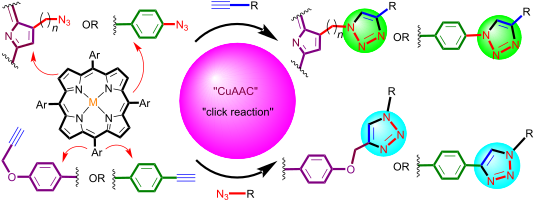
- recombination dynamics is primarily related to the electronic properties of the conjugates, such as electron affinity, orbital energies, and excited state energies. In another report, Nikolaou et al. [51] described the synthesis of two novel porphyrin dyads 107b and 108b containing terminal carboxylic acid




Continuous flow synthesis of 6-monoamino-6-monodeoxy-β-cyclodextrin
Beilstein J. Org. Chem. 2023, 19, 294–302, doi:10.3762/bjoc.19.25
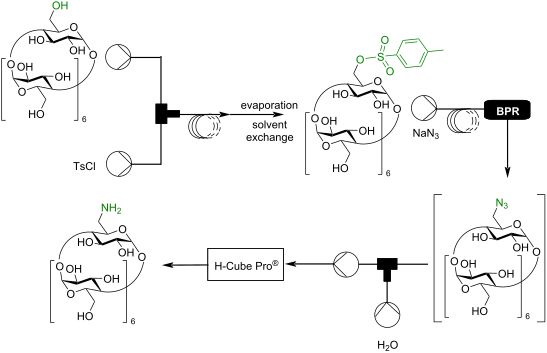
- corresponding carboxylic acid derivatives [20]. An alternative strategy to overcome the difficulties associated with the preparation of mono-6-O-tosyl-CD intermediates is the direct preparation of 6-monoaldehyde-CD with Dess–Martin periodinane in a fairly good yield of 85%, which can be considered the most


Catalytic aza-Nazarov cyclization reactions to access α-methylene-γ-lactam heterocycles
Beilstein J. Org. Chem. 2023, 19, 66–77, doi:10.3762/bjoc.19.6

- formation of ester 16 in 90% yield (4.8 g, dr (diastereomeric ratio) = 2.6:1). Hydrolysis of the α,β-unsaturated ester 16 under basic conditions followed by acidification gave carboxylic acid 17 in 60% yield. Finally, the α,β-unsaturated acyl chloride 6b was obtained via the treatment of acid 17 with oxalyl
- . Oxidation of 26 with Jones reagent afforded the carboxylic acid 27 (84% over two steps) and its subsequent treatment with oxalyl chloride gave the desired β-TMS-substituted acyl chloride 23 in 91% yield. Based on our previous observations, the reaction of imine 5a with acyl chloride 23 was expected to give



Combining the best of both worlds: radical-based divergent total synthesis
Beilstein J. Org. Chem. 2023, 19, 1–26, doi:10.3762/bjoc.19.1
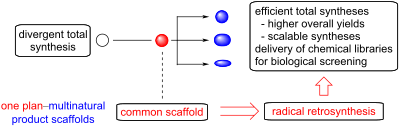
- their synthesis (Scheme 2). The synthetic variant of 3 was designed as the common scaffold 16, bearing the appropriate substitution for sequential revelation of carboxylic acid moieties. The highly congested decalin core of common scaffold 16 was obtained by a modified electrochemical polycyclization of
- A (52) as the radical cross-coupling employing redox-active esters of carboxylic acid 46 proved unsuccessful. The coupling was followed by an acid-catalyzed cyclization to yield the pyrone core of the natural products. The divergent plan described provided various meroterpenoids in 7–12 steps
- substitution for the minimization of 1,3-allylic strain to enable Suzuki coupling for biaryl formation as a single atropisomer. The optimized conditions for this transformation utilize Buchwald’s catalyst (SPhos and Pd-based G2 precatalyst) in conjunction with K3PO4. With DBCOD bearing carboxylic acid handles