
Search results
Search for "blue" in Full Text gives 1010 result(s) in Beilstein Journal of Organic Chemistry. Showing first 200.
Interaction of a pyrene derivative with cationic [60]fullerene in phospholipid membranes and its effects on photodynamic actions
Beilstein J. Org. Chem. 2024, 20, 2732–2738, doi:10.3762/bjoc.20.231
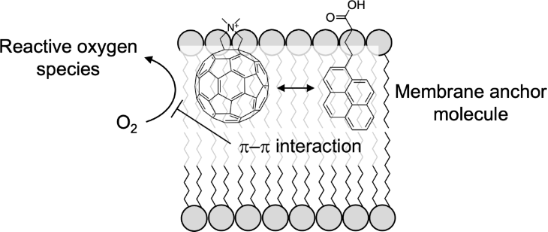
- -methyl-1-pyrrolidone-N-oxide (DEPMPO) were respectively used (schemes in Figure 5). Our previous study demonstrated that both 1O2 and O2•– were generated under irradiation of triad molecules in DMSO/H2O [8]. Under irradiation by a blue LED (464–477 nm, 23 lm·W–1), significant ESR signals corresponding to
- Sciences AG (Farmingdale, NY, USA). FeSO4, DETAPAC and NADH was bought from Sigma-Aldrich (St. Louis, Missouri, USA). DMPO was bought from TCI (Tokyo Chemical Industry Co. Ltd., Tokyo, Japan). Irradiation was performed by blue LED light (464–477 nm, 23 lm·W–1) from Lumiflex300 Pro RGB LED Stripes
- solution (335 µM) was added instead of 10 µM of PBS(–). The solution was subjected to O2 bubbling for 30 seconds and then taken into 50 µL capillary and sealed. The solution was then irradiated with blue LED light for 30 minutes. The capillary was taken into the ESR tube for measurement at room temperature


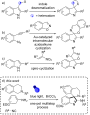
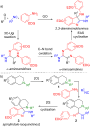
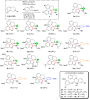
Synthesis of spiroindolenines through a one-pot multistep process mediated by visible light
Beilstein J. Org. Chem. 2024, 20, 2722–2731, doi:10.3762/bjoc.20.230
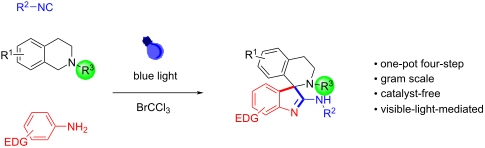
- materials (Scheme 1d). The synthetic procedure is achieved using blue light irradiation and bromotrichloromethane (BrCCl3), as a one-pot procedure, minimizing chemical wastes, avoiding purification of intermediates, and simplifying practical aspects. Results and Discussion We have recently published the one
- synthetic process in a one-pot manner, adding all the components from the very beginning. So, the blue-light-promoted reaction between N-Ph-THIQ, 3-methoxyaniline and tert-butyl isocyanide in the presence of BrCCl3 was extensively optimized by varying several parameters, such as solvent, relative quantity
- of components and temperature (Table 2). We firstly irradiated with blue LEDs (451 nm) the mixture of the three components in the presence of 1.5 equiv of BrCCl3 for 18 h at room temperature under argon atmosphere (Table 2, entry 1). To our surprise, the reaction provided only traces of the expected




Photoluminescence color-tuning with polymer-dispersed fluorescent films containing two fluorinated diphenylacetylene-type fluorophores
Beilstein J. Org. Chem. 2024, 20, 2682–2690, doi:10.3762/bjoc.20.225
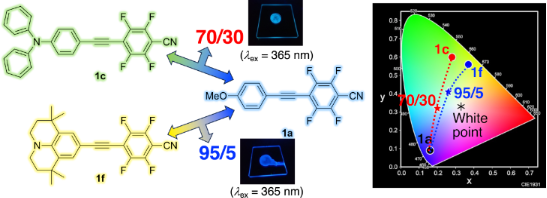
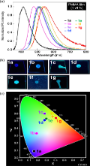
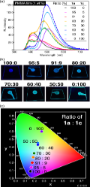
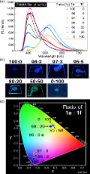
- and effective luminescence color-tuning method is proposed to investigate the photoluminescence behavior of two-component polymer dispersion films blended with two types of fluorinated diphenylacetylenes, namely blue- and yellow- or red-fluorescent fluorinated diphenylacetylenes. It is confirmed that
- if blue and green–yellow or yellow fluorophores are blended in appropriate ratios, a binary blend with color coordinates (0.20, 0.32) can be achieved, which approaches the white point of pure white emission. These findings contribute to the development of effective lighting and display devices as new
- has been severely delayed [4][5][6]. However, since Tang et al. first reported the aggregation-induced emission phenomenon in 2001 [7], the development of solid-state light-emitting materials has accelerated significantly [8][9][10]. Many photoluminescent materials that emit blue, green, and yellow


Computational design for enantioselective CO2 capture: asymmetric frustrated Lewis pairs in epoxide transformations
Beilstein J. Org. Chem. 2024, 20, 2668–2681, doi:10.3762/bjoc.20.224
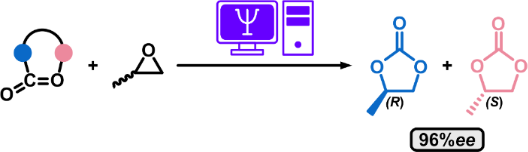
- (PO) and CO2 and the five catalyst scaffolds under study. The position of the LB along with an appropriate number of substituents is indicated by blue dots and that of the LA by pink dots. Capture reactions of CO2 or an epoxide by FLP. Asymmetric catalysis studied. On the left, the catalyst proposed


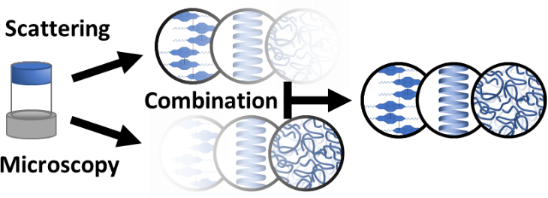
Applications of microscopy and small angle scattering techniques for the characterisation of supramolecular gels
Beilstein J. Org. Chem. 2024, 20, 2608–2634, doi:10.3762/bjoc.20.220


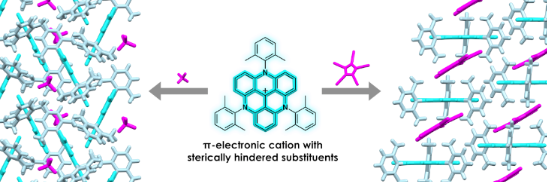
Anion-dependent ion-pairing assemblies of triazatriangulenium cation that interferes with stacking structures
Beilstein J. Org. Chem. 2024, 20, 2567–2576, doi:10.3762/bjoc.20.215
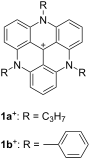
- (Figures S22–25 in Supporting Information File 1) [31]. The absorption band at 524 nm was blue-shifted by 4 nm compared to that of N-phenyl-substituted 1b+-BF4− [15]. This can be ascribed to the lesser conjugation of the core TATA+ unit with the introduced 2,6-dimethylphenyl moieties owing to the more
- ) packing structures and (ii) enlarged views for the columnar structures. In (i), cation and anion are represented in cyan and magenta colors, respectively. In (ii), brown, pink, yellow, blue, yellow green, orange, and green (spherical) refer to carbon, hydrogen, boron, nitrogen, fluorine, phosphorus, and
- chlorine, respectively. Hirshfeld surface analysis mapped with dnorm of closely contacted two 2+ in (a) 2+-BF4− and (b) 2+-PF6−. Atom color code: brown, pink, and blue refer to carbon, hydrogen, and nitrogen, respectively. Hirshfeld surface analysis mapped with dnorm of closely contacted ion pairs: (a) 2



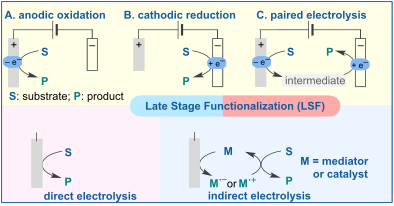
A review of recent advances in electrochemical and photoelectrochemical late-stage functionalization classified by anodic oxidation, cathodic reduction, and paired electrolysis
Beilstein J. Org. Chem. 2024, 20, 2500–2566, doi:10.3762/bjoc.20.214
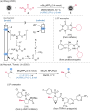
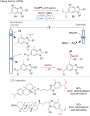
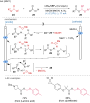
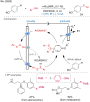
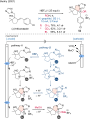
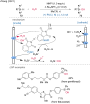
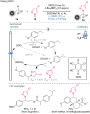
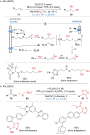
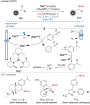
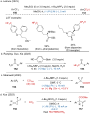
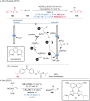
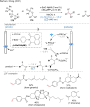
- in the late functionalization of complex drug molecules. Due to the versatility of the azide group, the direct C(sp3)–H azidation is an extremely valuable transformation. Lei and coworkers achieved this transformation using electrochemistry upon irradiation with blue LEDs [69]. Under photoelectric










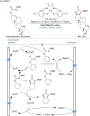


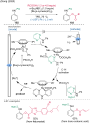
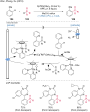


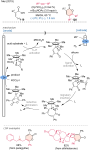














Photoredox-catalyzed intramolecular nucleophilic amidation of alkenes with β-lactams
Beilstein J. Org. Chem. 2024, 20, 2461–2468, doi:10.3762/bjoc.20.210
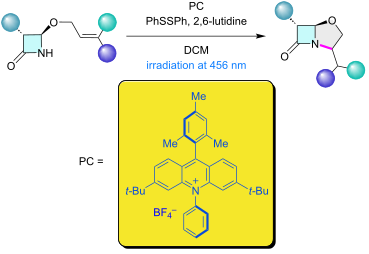
- reaction was carried out in DCM with acridinium PC IV (5 mol %), 50 mol % of PhSSPh as HAT catalyst, and lutidine (50 mol %) as the base. Upon 72 hours of irradiation with a blue light at 456 nm, the product 11c was obtained in a satisfactory yield as a mixture of diastereoisomers in a 1.4:1 ratio (Table 1




Evaluating the halogen bonding strength of a iodoloisoxazolium(III) salt
Beilstein J. Org. Chem. 2024, 20, 2401–2407, doi:10.3762/bjoc.20.204
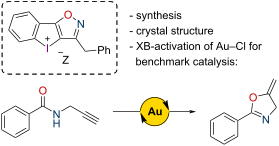
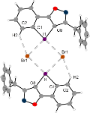
- ). Halogen bonding dimer found in the crystal structure of 7Br. Ellipsoids are shown at 50% probability (carbon: grey, nitrogen: blue, oxygen: red, bromine: orange, iodine: purple) and hydrogen atoms are shown in standard ball-and-stick model (white). Halogen and hydrogen bonding is indicated dashed. 1H NMR




Improved deconvolution of natural products’ protein targets using diagnostic ions from chemical proteomics linkers
Beilstein J. Org. Chem. 2024, 20, 2323–2341, doi:10.3762/bjoc.20.199
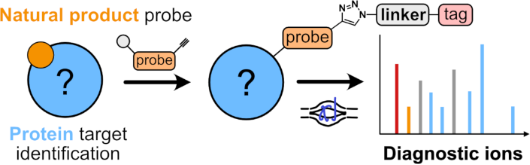
- field have the potential to facilitate this advancement. Overall chemical proteomics strategy to identify protein targets of natural products (NPs) and similar active small compounds. The example protein (blue) is an AlphaFold v2.0-generated prediction of bovine serum albumin (BSA) [23][24]. A) Design




Hydrogen-bond activation enables aziridination of unactivated olefins with simple iminoiodinanes
Beilstein J. Org. Chem. 2024, 20, 2305–2312, doi:10.3762/bjoc.20.197
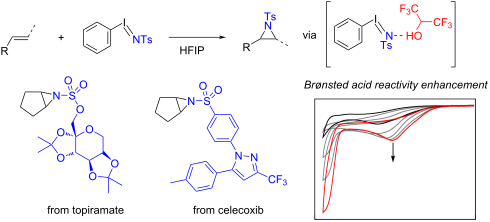
- (denoted by asterisk *) of HFIP in the presence of iminoiodinane 2c suggesting hydrogen bonding observed in 1H NMR spectra (CD3CN) of: 8.0 mM 2c with no HFIP (blue line), 8.0 mM 2c with 32 mM HFIP (green line), 4.0 mM of 4-(trifluoromethyl)benzenesulfonamide with 32 mM HFIP (purple line), only 32 mM HFIP
- (red line). b) Cyclic voltammogram of iminoiodinane 2c (8.0 mM) with varying amounts of HFIP in 5.0 mL solution of MeCN (0.10 M TBABF4) under N2 atmosphere: 2c with no HFIP (black line); 2c with 5, 10, 15 µL HFIP (grey line); 2c with 25 µL HFIP (red line); only 25 µL (blue line). c) Diastereomeric


Metal-free double azide addition to strained alkynes of an octadehydrodibenzo[12]annulene derivative with electron-withdrawing substituents
Beilstein J. Org. Chem. 2024, 20, 2234–2241, doi:10.3762/bjoc.20.191
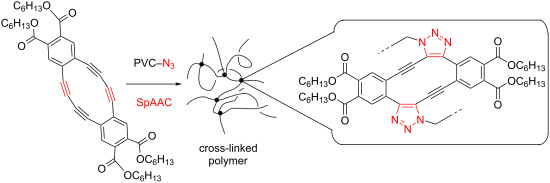
- profiles (ΔG298 in kJ mol−1) calculated at the ωB97X-D/6-31G(d,p)/PCM (in CH2Cl2). Absorption (blue) and fluorescence (red) spectra of 6a (2 × 10⁻⁵ M) in CH2Cl2. (a) Crosslinking reaction of PVC-N3 (x = 0.11) with compound 5. (b,c) Strain-stress curves of PVC-N3 before (blue) and after (red) crosslinking




Finding the most potent compounds using active learning on molecular pairs
Beilstein J. Org. Chem. 2024, 20, 2152–2162, doi:10.3762/bjoc.20.185
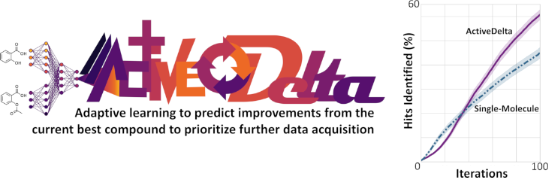
- shown in the inlet with a green bar while the times it ‘stays’ in the same cluster is shown with a light blue bar. Arrow gradient towards darker grey indicates increasing iteration number. Tree-based model navigation of chemical space. T-SNE of a representative dataset (CHEMBL232-1, Alpha-1b adrenergic
- another is shown in the inlet with a green bar while the times it ‘stays’ in the same cluster is shown with a light blue bar. Arrow gradient towards darker grey indicates increasing iteration number. Supporting Information Supporting Information File 54: Supplementary figures and tables


Efficacy of radical reactions of isocyanides with heteroatom radicals in organic synthesis
Beilstein J. Org. Chem. 2024, 20, 2114–2128, doi:10.3762/bjoc.20.182
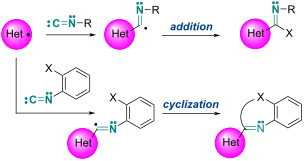
- quinoxaline synthesis was reported to proceed by irradiation with visible light in the presence of dibenzylamine ((PhCH2)2NH, MeCN, rt, blue LED) [64]. This reaction involves a visible-light-induced single electron transfer (SET) process. An efficient radical cascade cyclization has also been reported, in


Multicomponent syntheses of pyrazoles via (3 + 2)-cyclocondensation and (3 + 2)-cycloaddition key steps
Beilstein J. Org. Chem. 2024, 20, 2024–2077, doi:10.3762/bjoc.20.178
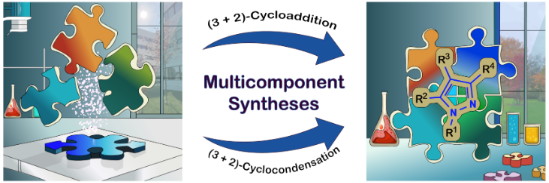
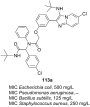
- synthesized 4 halopyrazoles 111 and their Suzuki products 110 fluoresce blue in solution and have quantum yields of 29–72 % (Scheme 40) [137]. The Suzuki coupling can also be used for the functionalization of pyrazoles. For this purpose, p-bromo-substituted terminal alkynes 112, acyl chlorides 114, and
- pathway enables the synthesis of 3,5-bis(biphenyl)-1-methyl pyrazole. To stabilize the catalyst, additional triphenylphosphane is added as a ligand during the Suzuki coupling. The resulting products fluoresce blue, with the five biaryl-substituted derivatives 113 showing the highest quantum yields of up




Understanding X-ray-induced isomerisation in photoswitchable surfactant assemblies
Beilstein J. Org. Chem. 2024, 20, 2005–2015, doi:10.3762/bjoc.20.176
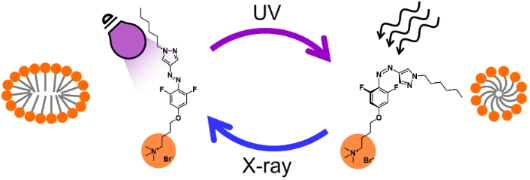
- ) that contains mostly Z isomers. This can be reversed using blue light or heat in a process that is stable over many cycles [7]. Isomerisation of azobenzene leads to a change in its conformation and polarity which, when combined into a surfactant molecule, modifies the resulting molecular geometry and
- on their own and in mixed micelles with lipids, on irradiation with either UV or blue light [21][22]. In addition, Ober et al. showed that in-situ UV irradiation stimulates a steady decrease in bilayer thickness for vesicles formed using Azo-modified phosphatidylcholine lipids, due to the shorter
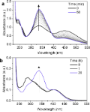
- pattern to that of the native, E isomer (Figure 2). Changes occur immediately, after 1 s of X-ray exposure, and saturate after ca. 5 s. The changes are comparable to those observed on Z–E isomerisation induced using blue (460 nm) light or heating to 55 °C but occur at a much faster rate (Figure S2



Development of a flow photochemical process for a π-Lewis acidic metal-catalyzed cyclization/radical addition sequence: in situ-generated 2-benzopyrylium as photoredox catalyst and reactive intermediate
Beilstein J. Org. Chem. 2024, 20, 1973–1980, doi:10.3762/bjoc.20.173
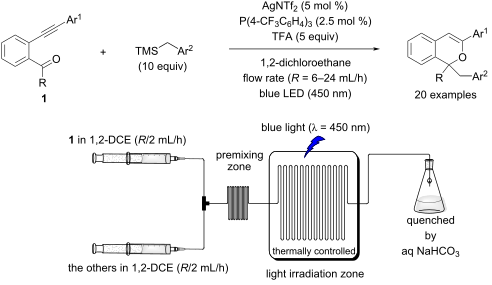
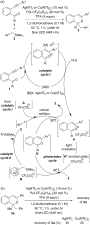
- 2a, and 0.5 mmol (5 equiv) of TFA under light irradiation (blue LED: λmax = 448 nm) at 50 °C for 1 h in 1 mL (total volume) of 1,2-DCE] [55] with a flow rate of 3 mL/h (light irradiation time: 20 min in the flow reaction, 1 h in the batch reaction). As shown in Table 1, product 3a was obtained in


Negishi-coupling-enabled synthesis of α-heteroaryl-α-amino acid building blocks for DNA-encoded chemical library applications
Beilstein J. Org. Chem. 2024, 20, 1922–1932, doi:10.3762/bjoc.20.168
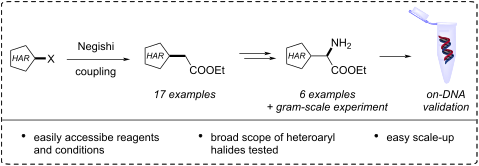
- Negishi reaction (Supporting Information File 1). Preliminary experiments were carried out with and without blue light irradiation in the PhotoCubeTM photoreactor [45]. These experiments revealed that while the conversion of imidazoles and pyrazoles benefits from irradiation, thiazoles seem to be largely
- within 4 h in the dark, irradiation with blue light halves the reaction time for many compounds. Overall, these observations are in line with those of Alcazar et al. [43]. In their work, the authors demonstrated the formation of a complex between palladium and the organozinc reagent which is absorbing in
- the blue region. This complex then accelerates the oxidative addition of the aryl halide to the metal, which is usually the rate-limiting step for palladium-catalyzed cross-couplings. Based on these results we decided to perform all Negishi reactions under blue light irradiation. With the optimized




The Groebke–Blackburn–Bienaymé reaction in its maturity: innovation and improvements since its 21st birthday (2019–2023)
Beilstein J. Org. Chem. 2024, 20, 1839–1879, doi:10.3762/bjoc.20.162






Hetero-polycyclic aromatic systems: A data-driven investigation of structure–property relationships
Beilstein J. Org. Chem. 2024, 20, 1817–1830, doi:10.3762/bjoc.20.160
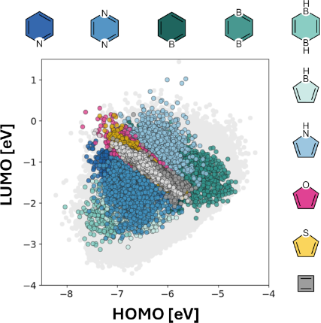
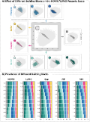
- distribution of the COMPAS-1 molecules (light blue) is contained within the distribution of the COMPAS-2 molecules (purple). In other words, the expansion of the building block library widens the property distributions towards both higher and lower energies, providing access to functional molecules with
- molecular properties. Comparison between COMPAS-1 (blue) and COMPAS-2 (purple). A) Principal Moments of Inertia shape distribution, all molecules sorted according to their normalized principal moments of inertia (In, n = 1–3), with I1 < I2 < I3. B) Molecular properties (all reported in eV): HOMO, LUMO, AIP



Discovery of antimicrobial peptides clostrisin and cellulosin from Clostridium: insights into their structures, co-localized biosynthetic gene clusters, and antibiotic activity
Beilstein J. Org. Chem. 2024, 20, 1800–1816, doi:10.3762/bjoc.20.159
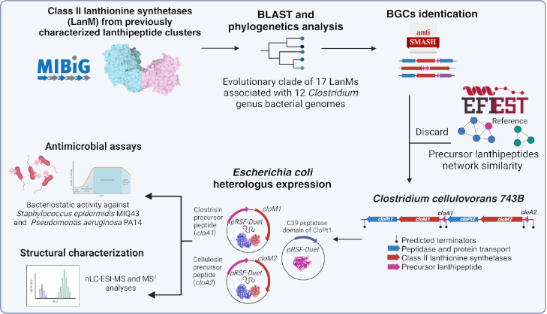
- presented (right). The highlighted cluster was chosen for heterologous expression. A. Similarity network created with the ESI web tool with the precursor peptide amino acid sequences. In the similarity network of precursor peptides, each blue node represents a characterized lanthipeptide, and each pink node




Oxidative fluorination with Selectfluor: A convenient procedure for preparing hypervalent iodine(V) fluorides
Beilstein J. Org. Chem. 2024, 20, 1785–1793, doi:10.3762/bjoc.20.157
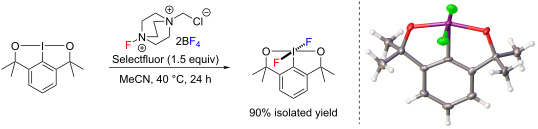
- (blue line), dry CDCl3 with 2.4 equivalents of dry pyridine (green line), and dry CDCl3 (red line). Order of hydrolytic stability for the four hypervalent iodine(V) fluorides. Examples of fluorination using hypervalent iodine(III) reagents 1 and 2. Preparations and reactions of hypervalent iodine(V


Synthesis and characterization of 1,2,3,4-naphthalene and anthracene diimides
Beilstein J. Org. Chem. 2024, 20, 1767–1772, doi:10.3762/bjoc.20.155
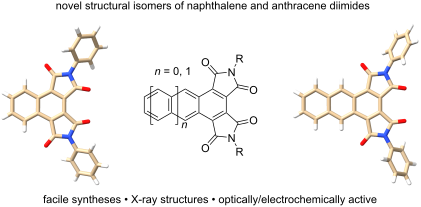
- = green, N = blue, and O = red. a) Absorption and b) emission spectra of the compounds dissolved in CH2Cl2. Cyclic voltammograms of the compounds collected on ca. 1 mM solutions of the analyte in CH2Cl2 with 0.1 M Bu4NPF6 as electrolyte. The major y-axis tick mark spacing corresponds to 5 μA. Structural


Syntheses and medicinal chemistry of spiro heterocyclic steroids
Beilstein J. Org. Chem. 2024, 20, 1713–1745, doi:10.3762/bjoc.20.152
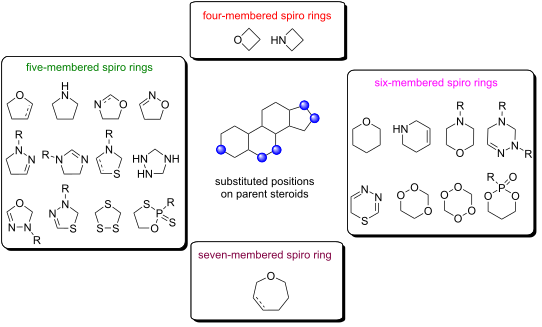
- C–H insertion to produce the spiro-β-lactone was accomplished by simply exposing the diazo derivative to 440 nm blue LEDs (Kessil lamp) at 50 °C, that favored the formation of a singlet carbene that reacted selectively by insertion into the C(3)–H bond. Spiro-lactones 14 were obtained in 80% yield


Oxidation of benzylic alcohols to carbonyls using N-heterocyclic stabilized λ3-iodanes
Beilstein J. Org. Chem. 2024, 20, 1677–1683, doi:10.3762/bjoc.20.149
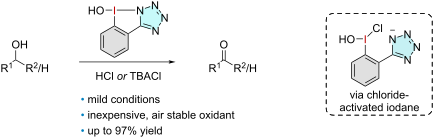
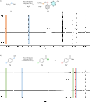
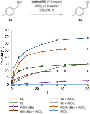
- formation of a) an alkoxy-NHI which is causing a significant downfield shift of the protons in alpha-position (orange) compared to the free alcohol 2 (blue) and b) oxidation of p-tolylmethanol (3a, blue) to the aldehyde 4a (green) and carboxylic acid 4a’ (red). Reaction conditions: An equimolar mixture of