
Search results
Search for "assembly" in Full Text gives 647 result(s) in Beilstein Journal of Organic Chemistry. Showing first 200.
Tying a knot between crown ethers and porphyrins
Beilstein J. Org. Chem. 2023, 19, 1630–1650, doi:10.3762/bjoc.19.120
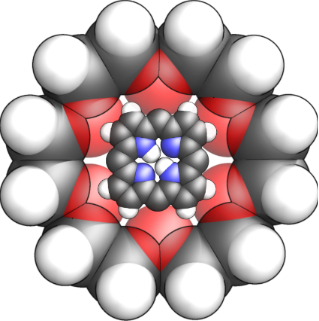
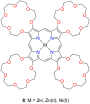
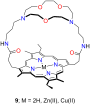
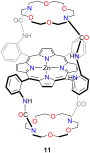
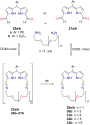
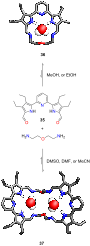
- synthesising these systems, including cyclisation reactions, self-assembly, and their remarkable reactivity. The potential applications of porphyrin-crown ether hybrids are also highlighted. Moreover, the discussion identifies the challenges associated with synthesising and characterising hybrids, outlining
- the possible future directions. Keywords: crown ethers; porphyrinoids; self-assembly; sensors; supramolecular chemistry; Introduction Many areas of modern supramolecular chemistry, organic, inorganic, materials and coordination chemistry, are based upon macrocyclic compounds of specifically-designed
- ]. The CsF binding led to a supramolecular self-assembly process, inducing a sandwich host–guest complex formation in the solid state (Scheme 2). It was established that fluoride is preferred over any other halide anions. The binding of the ion pairs was observed in highly polar solvent media, but in the









Complexes of resorcin[4]arene with secondary amines: synthesis, solvent influence on “in-out” structure, and theoretical calculations of non-covalent interactions
Beilstein J. Org. Chem. 2023, 19, 1525–1536, doi:10.3762/bjoc.19.109
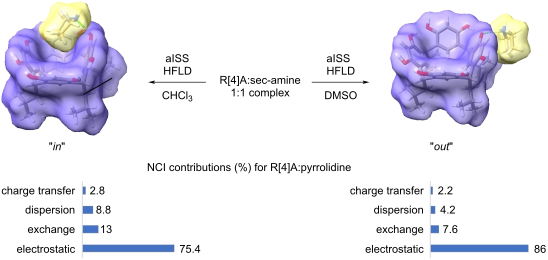
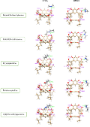
- procedure: Optimization of the R[4]A and sec-amine geometries was performed with the GFN2-xTB method using the ALPB solvent model with the “veryTight” accuracy using the xTB software package [29]. Complex assembly search (aISS) was performed using the “dock” function with “tight” optimization of the




N-Sulfenylsuccinimide/phthalimide: an alternative sulfenylating reagent in organic transformations
Beilstein J. Org. Chem. 2023, 19, 1471–1502, doi:10.3762/bjoc.19.106
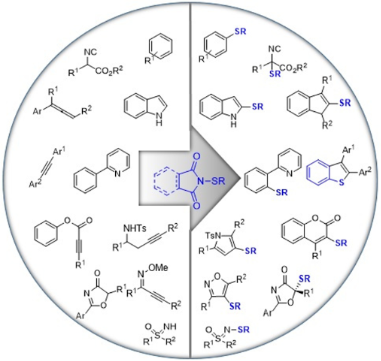
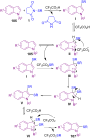
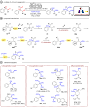
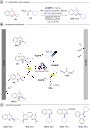
- ]. Combination of CSA/TBAC formed an efficient activator system for this sulfenylation/intramolecular cyclization. In the same year, Zhao and co-workers reported the thiocarbocyclization of allenes 136 with N-(organothio)succinimides 1 as electrophilic aryl/alkylthio reagents for the assembly of indene-based




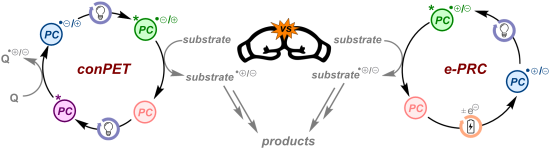
Photoredox catalysis harvesting multiple photon or electrochemical energies
Beilstein J. Org. Chem. 2023, 19, 1055–1145, doi:10.3762/bjoc.19.81
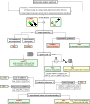
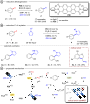
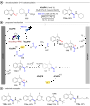
- could act as an electron shuttle (potentially via a π-stacking assembly). The synthetic scope was extended to C(sp2)–P bond formations by trapping with phosphines or phosphites (Figure 12B), and in all these cases DIPEA was used as the electron donor (0.5–5 equiv). Arylphosphonium chlorides 20 that are


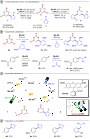


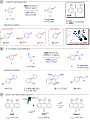
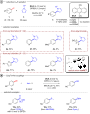
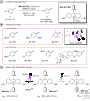
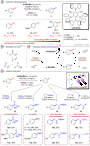
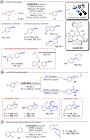

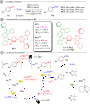
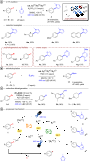




















Linker, loading, and reaction scale influence automated glycan assembly
Beilstein J. Org. Chem. 2023, 19, 1015–1020, doi:10.3762/bjoc.19.77
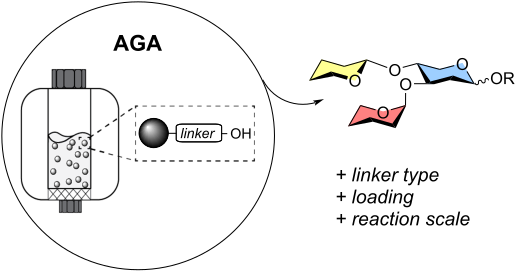
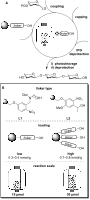
- Universität Berlin, Arnimallee 22, 14195 Berlin, Germany 10.3762/bjoc.19.77 Abstract Automated glycan assembly (AGA) affords collections of well-defined glycans in a short amount of time. We systematically analyzed how parameters connected to the solid support affect the AGA outcome for three different
- purification steps. Keywords: automated glycan assembly; photocleavable linker; polysaccharides; solid-phase synthesis; Introduction Automated glycan assembly (AGA) is a solid-phase method that enables the rapid synthesis of complex oligo- and polysaccharides from protected monosaccharide building blocks
- mostly performed on cross-linked polystyrene resins equipped with photocleavable linkers [3], offering orthogonality to all the synthetic steps of the assembly, while selectively releasing the glycan at the end of the synthesis. In recent years, the implementation of new synthetic strategies [4][5][6][7

The unique reactivity of 5,6-unsubstituted 1,4-dihydropyridine in the Huisgen 1,4-diploar cycloaddition and formal [2 + 2] cycloaddition
Beilstein J. Org. Chem. 2023, 19, 982–990, doi:10.3762/bjoc.19.73
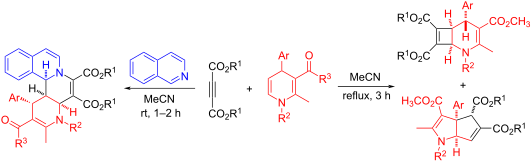
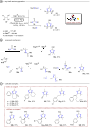
- reactions [16][17][18][19][20][21][22][23][24][25]. Recently, much attention has been devoted to the development of new domino reactions containing reactive Huisgen 1,4-dipoles as key components for the assembly of many biologically important nitrogen-containing six-membered heterocyclic compounds [26][27


Intermediates and shunt products of massiliachelin biosynthesis in Massilia sp. NR 4-1
Beilstein J. Org. Chem. 2023, 19, 909–917, doi:10.3762/bjoc.19.69
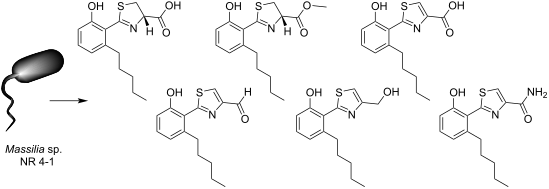
- ] and the photoxenobactins [32]. A unifying theme in the biosynthesis of these natural products is the use of a thiotemplate-based assembly strategy [33]. The molecular building blocks that are needed for the biosynthesis are covalently bound via thioester bonds to multi-domain enzymes. The domains
- intermediate (1’). In massiliachelin biosynthesis this intermediate is further processed and elongated with another cysteine-derived thiazoline, which is eventually reduced [18]. A premature hydrolytic release of 1’ from the assembly line would give 1, which could be further modified to 2–5. Some corresponding


A fluorescent probe for detection of Hg2+ ions constructed by tetramethyl cucurbit[6]uril and 1,2-bis(4-pyridyl)ethene
Beilstein J. Org. Chem. 2023, 19, 864–872, doi:10.3762/bjoc.19.63
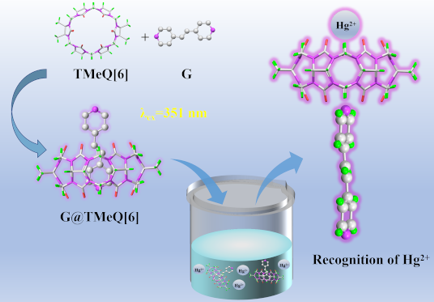
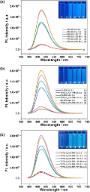
- supplementary crystallographic data for this paper. These data can be obtained free of charge from The Cambridge Crystallographic Data Centre via https://www.ccdc.cam.ac.uk/data_request/cif. Supramolecular assembly of TMeQ[6] and 1,2-bis(4-pyridyl)ethene (G). (a) UV–vis titration of G (3.0 × 10⁻⁵ mol·L−1, pH


Facile access to 3-sulfonylquinolines via Knoevenagel condensation/aza-Wittig reaction cascade involving ortho-azidobenzaldehydes and β-ketosulfonamides and sulfones
Beilstein J. Org. Chem. 2023, 19, 800–807, doi:10.3762/bjoc.19.60
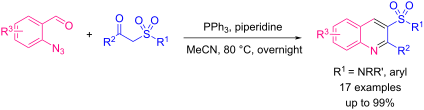
- conditions reported previously, we began our investigation using o-azidobenzaldehyde (1a), 2-oxopropanesulfonamide 2a, triphenylphosphine, and diethylamine as reagents for the quinoline-3-sulfonamide assembly (Table 1). The reaction mixture was stirred in MeCN at 95 °C for 6 h which led to a mediocre yield
- synthesis of 3-sulfonyl-substituted quinolines (sulfonamides and sulfones). The approach is based on a Knoevenagel condensation/aza-Wittig reaction cascade for the quinoline core assembly. Hence, o-azidobenzaldehyde, ketosulfonamide or ketosulfone were utilized as key building blocks. The method devised


pH-Responsive fluorescent supramolecular nanoparticles based on tetraphenylethylene-labelled chitosan and a six-fold carboxylated tribenzotriquinacene
Beilstein J. Org. Chem. 2023, 19, 635–645, doi:10.3762/bjoc.19.45
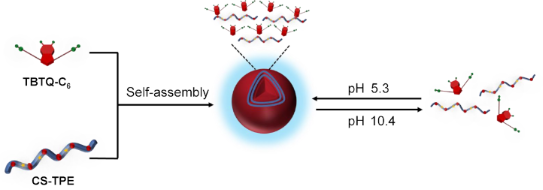
- exposure to alkaline environmental stimuli at pH 10.4, and the assembly and disassembly processes were reversible (Scheme 1). The introduction of the TBTQ-C6 host significantly improved the dispersion of the aggregates formed after the collapse of the spherical nanoparticles under alkaline conditions. In
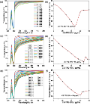
- TPE labelling degree. Self-assembly behavior of CS-TPE in water. To investigate the self-assembly behavior of CS-TPE in water, the critical aggregation concentrations (CACs) of CS-TPE were determined by measuring their optical transmittance at different concentrations (Figure S2, Supporting
- to observe the morphology of CS-TPE aggregates. At pH 5.3, CS-TPE with Rf = 2, 10 and 20 mol % assembled into homogeneous spherical nanoparticles with average diameters of 131 nm, 166 nm and 236 nm, respectively (Figure 3a–c). This assembly behavior is supposed to be caused by the amphiphilic nature



Enolates ambushed – asymmetric tandem conjugate addition and subsequent enolate trapping with conventional and less traditional electrophiles
Beilstein J. Org. Chem. 2023, 19, 593–634, doi:10.3762/bjoc.19.44




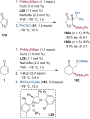

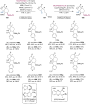


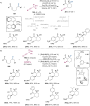


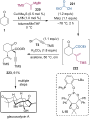
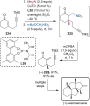
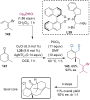
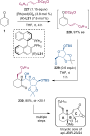
A new oxidatively stable ligand for the chiral functionalization of amino acids in Ni(II)–Schiff base complexes
Beilstein J. Org. Chem. 2023, 19, 566–574, doi:10.3762/bjoc.19.41
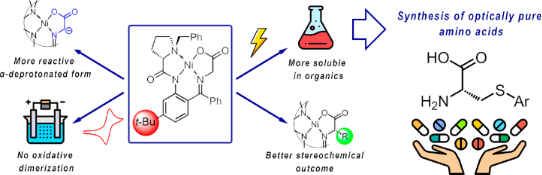
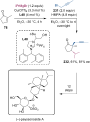
- derived from glycine Schiff bases containing a source of chirality is the most convenient and widely used template for modification of the glycine fragment under mild conditions. The template can be easily obtained via self-assembly of the starting components in the presence of metal ions (commonly Ni(II
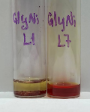
- )-benzylproline lead to (S)-N-(2-benzoyl-5-tert-butylphenyl)-1-benzylpyrrolidine-2-carboxamide (L7) in 73% yield with 96% ee (see Supporting Information File 1). The self-assembly of the three components L7, Ni(NO3)2, and glycine gave the corresponding (GlyNi)L7 complex which was isolated in 66% yield and fully



Asymmetric synthesis of a stereopentade fragment toward latrunculins
Beilstein J. Org. Chem. 2023, 19, 428–433, doi:10.3762/bjoc.19.32
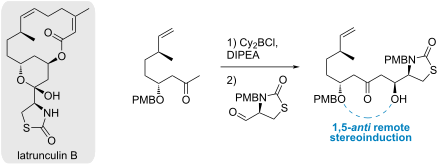
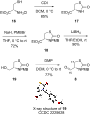
- oxidation in presence of DMP. The assembly of aldehyde 8 and methyl ketone 15 was envisaged through a stereoselective aldol reaction. After unsuccessful attempts of Mukaiyama aldol reactions with silyl enol ethers [28], we found that dicyclohexylboron enolate 20, made in situ from ketone 15 and Cy2BCl in




Combretastatins D series and analogues: from isolation, synthetic challenges and biological activities
Beilstein J. Org. Chem. 2023, 19, 399–427, doi:10.3762/bjoc.19.31
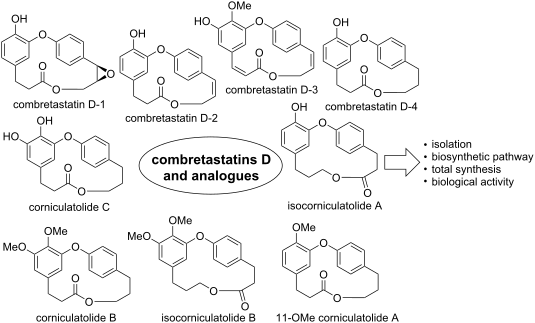
- formation of microtubules, which are important structures in the constitution of eukaryotic cells [74]. All tested compounds interfered with the polymerization of tubulin, and when compared to colchicine, classified as a destabilizing agent which prevents the microtubule assembly [55], the tested
- derivatives of compound 2 favor to various degrees the formation of microtubules, suggesting that the mechanism of this class of compound interacts with tubulin in a way to allow the microtubule assembly. The authors also observed that the introduction of higher polarity groups at the position of the double




CuAAC-inspired synthesis of 1,2,3-triazole-bridged porphyrin conjugates: an overview
Beilstein J. Org. Chem. 2023, 19, 349–379, doi:10.3762/bjoc.19.29
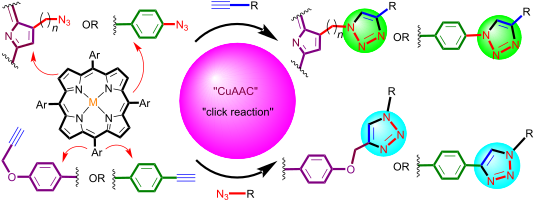
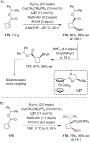
- cyclodextrin assembly. Recently, Nasri and co-workers [68] constructed the triazole-bridged meso-arylporphyrins 171a–c and 172a–c by using the CuAAC reaction in good yields (Scheme 37). Initially, the triazolo-linked compounds 170a–c were prepared by reacting 3-methoxy-4-(prop-2-ynlyloxy)benzaldehyde (168
- porphyrin 174 and stirred at room temperature for 24 h, solubilization occurred, resulting in a homogeneous solution. This is due to the formation of a supramolecular assembly in which the hydrophobic adamantane arms of 176b are sequestered by the β-CD arms of porphyrin 174, resulting in water solubility




Investigation of cationic ring-opening polymerization of 2-oxazolines in the “green” solvent dihydrolevoglucosenone
Beilstein J. Org. Chem. 2023, 19, 217–230, doi:10.3762/bjoc.19.21
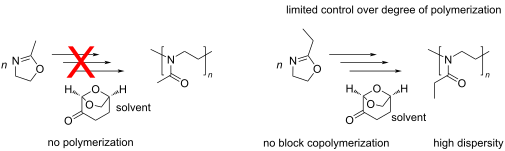
- of view [28]. Accordingly, Hoogenboom et al. investigated the CROP of 2-alkyl-2-oxazoline in sulfolane and investigated its effect on monomer distribution and self-assembly of the performed copolymer [30][31][32]. However, the degradability of sulfolane into acidic components, its relatively high


1,4-Dithianes: attractive C2-building blocks for the synthesis of complex molecular architectures
Beilstein J. Org. Chem. 2023, 19, 115–132, doi:10.3762/bjoc.19.12
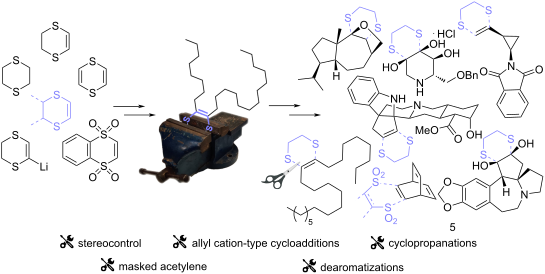
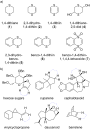
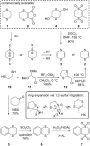
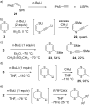
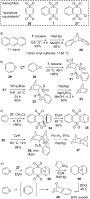
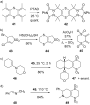
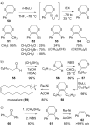
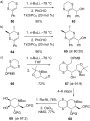
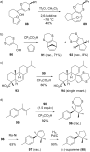
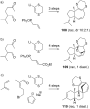
- (hetero)aromatic building blocks. 1,4-Dithianes have as yet not been investigated to the same extent as their well-known 1,3-dithiane counterparts, but they do offer attractive transformations that can find good use in the assembly of a wide array of complex molecular architectures, ranging from lipids
- , and several excellent reviews have highlighted their synthetic versatility and utility in the assembly of complex target molecules [4][5][6]. Some recent examples of 1,3-dithiane-mediated short and efficient total syntheses of complex target products are shown in Scheme 1b [7], wherein the original
- products related to different competing reaction pathways. However, when suitable cation-stabilizing substituents are present, especially on the central carbon atom, very useful transformations can result for the rapid assembly of cycloheptanoid scaffolds [91]. Oxyallyl cations (when Z is an oxygen-based











Practical synthesis of isocoumarins via Rh(III)-catalyzed C–H activation/annulation cascade
Beilstein J. Org. Chem. 2023, 19, 100–106, doi:10.3762/bjoc.19.10
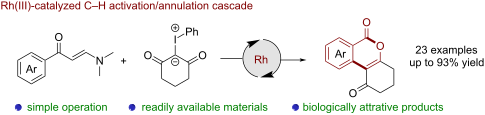
- of 1,2-difunctionalized arenes with alkynes or carbon monoxide (Scheme 1b, III) [13][14][15][16], have been widely applied for the assembly of isocoumarins over the past decades. Recently, the transition-metal-catalyzed ortho C–H activation/annulation of benzoic acids has emerged as an attractive


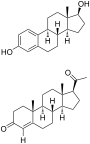
Inclusion complexes of the steroid hormones 17β-estradiol and progesterone with β- and γ-cyclodextrin hosts: syntheses, X-ray structures, thermal analyses and API solubility enhancements
Beilstein J. Org. Chem. 2022, 18, 1749–1762, doi:10.3762/bjoc.18.184
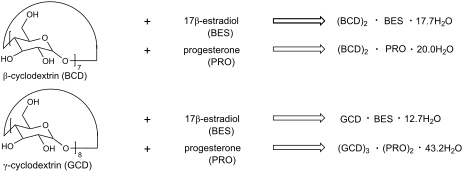
- , it is evident that the water molecules which occupy the interstitial spaces between the columns reinforce this assembly of complex units via multiple O–H···O hydrogen bonds. These depictions also indicate that there are four β-CD molecules in the unit cell, corresponding to two dimeric complex units
- spaces between the columns (Figure 12, viewed down the c-axis) and are thus also responsible for reinforcing the assembly of γ-CD complex columnar units via water–water and water–host hydrogen bonds. It should be noted that, since PXRD analyses indicated that the γ-CD·PRO and γ-CD·BES crystal structures



Navigating and expanding the roadmap of natural product genome mining tools
Beilstein J. Org. Chem. 2022, 18, 1656–1671, doi:10.3762/bjoc.18.178
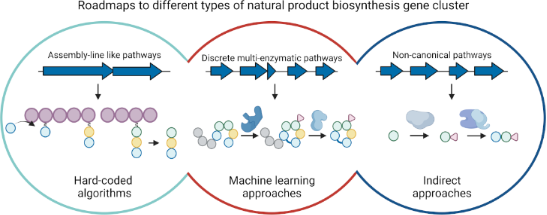
- biosynthetic concepts. NP biosynthesis follows two fundamentally different principles: NPs can either be produced in an assembly line-like fashion (Figure 2A) or by discrete, multi-enzymatic assemblies (Figure 2B). Discrete, multi-enzymatic assemblies utilize monofunctional enzymes for the consecutive build-up
- and decoration of a NP scaffold. In comparison to biosynthetic assembly lines, intermediates are not permanently covalently bound to carrier proteins in discrete, multi-enzymatic assemblies. In both biosynthetic principles, the NP backbone is first assembled by core enzymes and then further modified
- by tailoring enzymes that decorate the NP scaffold. Assembly line-like pathways are characterized by mega enzymes, which can be subdivided into modules. Each module is responsible for the incorporation (and/or processing) of one building block into the nascent product. A “textbook” extension module




Solid-phase total synthesis and structural confirmation of antimicrobial longicatenamide A
Beilstein J. Org. Chem. 2022, 18, 1560–1566, doi:10.3762/bjoc.18.166
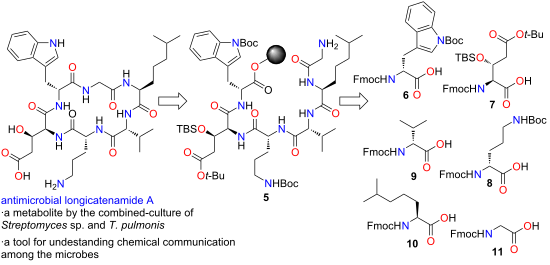
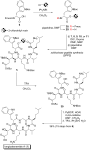
- synthesized the necessary building blocks, we turned our attention to construct resin-bound peptide 5 (Scheme 4). The assembly of this hexapeptide started with the loading of Fmoc-ᴅ-Trp(Boc)-OH (6) onto 2-chlorotrityl resin with iPr2NEt, which was followed by piperidine treatment to liberate resin-bound amine



Comparison of crystal structure and DFT calculations of triferrocenyl trithiophosphite’s conformance
Beilstein J. Org. Chem. 2022, 18, 1499–1504, doi:10.3762/bjoc.18.157
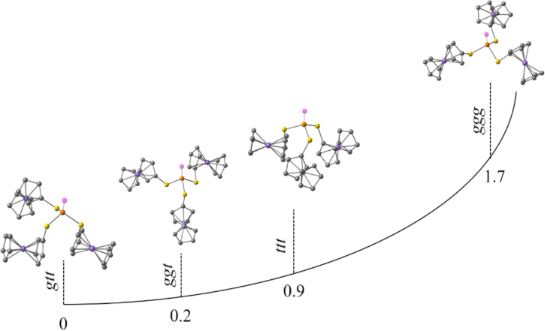
- properties. Such switchable systems with conjugated organic fragments containing an FeII/FeIII system were used in organic electronics as molecular switches, optoelectronic materials and in biochemistry as photonic or redox devices [6]. A promising approach is the coordination self-assembly of multiferrocene


Design, synthesis, and evaluation of chiral thiophosphorus acids as organocatalysts
Beilstein J. Org. Chem. 2022, 18, 1471–1478, doi:10.3762/bjoc.18.154
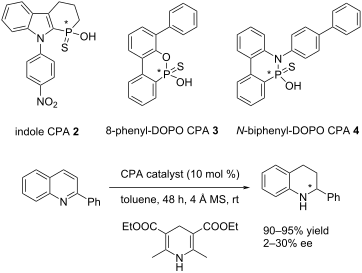
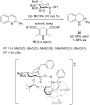
- still be important in the assembly of a ternary complex and the enantioselectivity of the reaction. The evaluation of the catalysts is shown in Table 1. CPA 4 was completely ineffective at inducing chirality (Table 1, entry 1) and catalyst 2 was not much better (entry 2). Catalyst 3 on the other hand


Supramolecular approaches to mediate chemical reactivity
Beilstein J. Org. Chem. 2022, 18, 1463–1465, doi:10.3762/bjoc.18.152
- supramolecular nanostructures, displayed aggregation-induced emission (AIE) due to the restricted phenyl-ring rotation of m-TPEWP5 component. Inspired by natural photosynthesis and following an energy transfer process, the supramolecular nanorod assembly was employed as a nanoreactor for a photocatalytic
1,4,6,10-Tetraazaadamantanes (TAADs) with N-amino groups: synthesis and formation of boron chelates and host–guest complexes
Beilstein J. Org. Chem. 2022, 18, 1424–1434, doi:10.3762/bjoc.18.148
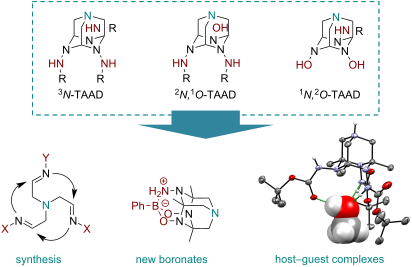
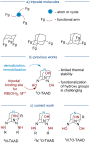
- self-assembly reactions from simple precursors and easily functionalized through addition reactions at heteroatoms [15][16][17][18][19][20]. Some time ago, our group introduced 1,4,6,10-tetraazaadamantane (TAAD) as a promising molecular platform for the design of functional tripodal molecules (Figure
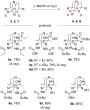
- cyclization of the corresponding tris-hydrazones, as well as the assembly of unsymmetrically substituted TAADs having both amino(amido) and hydroxy groups at bridge nitrogen atoms (2N,1O-TAADs and 1N,2O-TAADs) via a hitherto unknown co-trimerization of oxime and hydrazone units [35]. Also, structural studies
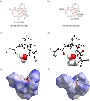
- , 21, and 21·HCl as well as the previously described 3O-TAADs 2 do not form such host–guest complexes, although water and methanol molecules are present in their crystal lattices. Thus, the presence of amide/carbamate groups is essential for the assembly of these supramolecular structures. The