

Search results
Search for "amphiphilic" in Full Text gives 143 result(s) in Beilstein Journal of Organic Chemistry.
A green approach to the synthesis of novel phytosphingolipidyl β-cyclodextrin designed to interact with membranes
Beilstein J. Org. Chem. 2014, 10, 2654–2657, doi:10.3762/bjoc.10.278
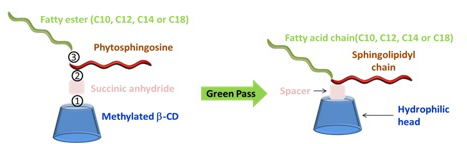
- Yong Miao Florence Djedaini-Pilard Veronique Bonnet LG2A FRE-CNRS 3517 Institut de Chimie de Picardie FR CNRS 3085, SFR Condorcet, UPJV, 33 rue St Leu, 80039 Amiens, France 10.3762/bjoc.10.278 Abstract This work reports the synthesis of a new family of mono-substituted amphiphilic cyclodextrins
- with a promising yield. Keywords: fatty ester; green chemistry; lipase; mono-substituted amphiphilic cyclodextrins; peptide Coupling; solvent-free medium; transesterification; Introduction Cyclodextrins (CDs) are sustainable compounds which are particularly interesting in the frame of pharmaceutical
- and cosmetic applications and food industry thanks to their ability to encapsulate the hydrophobic molecules by forming inclusion complexes [1]. Moreover, the modified amphiphilic CDs are able to form nanoparticles without cosolvent or surfactant which could be ideal for drug delivery systems [2]. In


Cyclodextrin-grafted polymers functionalized with phosphanes: a new tool for aqueous organometallic catalysis
Beilstein J. Org. Chem. 2014, 10, 2642–2648, doi:10.3762/bjoc.10.276
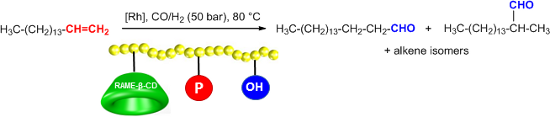
- supercritical CO2, ionic liquids or fluorous phases have been used to immobilize the organometallic catalyst [3][4][5]. Co-solvents, surfactants, amphiphilic phosphanes, molecular receptors, polymers or dispersed particles have also been investigated to favour contacts between the aqueous and the organic


Encapsulation of biocides by cyclodextrins: toward synergistic effects against pathogens
Beilstein J. Org. Chem. 2014, 10, 2603–2622, doi:10.3762/bjoc.10.273
- . Moreover, the concentration used has also a considerable influence on the mechanism. As examples at relatively low concentrations, the amphiphilic agents (surfactants) are membrane permeabilisers whereas at high concentrations, the penetration of these compounds in the cytoplasmic leads to protein
- environment [23]. The toxicity of some biocides has been particularly well described. As examples glutaraldehyde and amphiphilic ammonium have been associated with dermatitis [24][25]. Toxicity, hypersensitivity and irritation have also been reported with other biocides such as formaldehyde [26
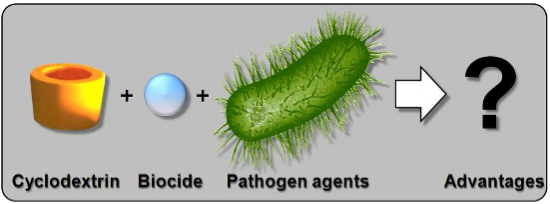
- CDs. In this review, the advantages of using CDs in the presence of biocides will be discussed and illustrated throughout several examples from the literature. It is noteworthy that the review is divided in three parts devoted to three biocide families: organic, amphiphilic and heavy-metal biocides


Towards the sequence-specific multivalent molecular recognition of cyclodextrin oligomers
Beilstein J. Org. Chem. 2014, 10, 2428–2440, doi:10.3762/bjoc.10.253
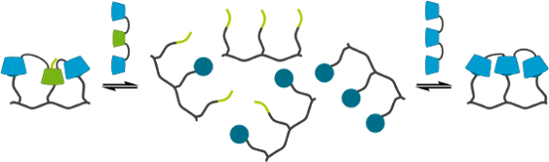
- toxins or viruses and for imaging and targeted drug delivery [3]. Hydrogels which are built up by multivalent host–guest interactions and vesicles of amphiphilic host molecules have been intensively studied for their ability to function as drug delivery systems as well [4][5][6][7][8][9]. Additionally


Supercritical carbon dioxide: a solvent like no other
Beilstein J. Org. Chem. 2014, 10, 1878–1895, doi:10.3762/bjoc.10.196
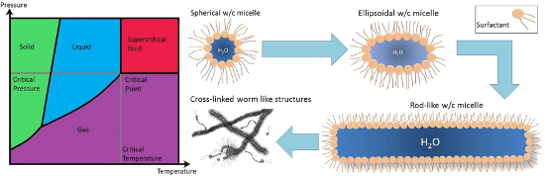
- through the addition of amphiphilic molecules, such as surfactants or polymers. The domains created are on the nanometer scale leading to the dispersions being transparent or translucent in appearance. The microemulsion appearance does not alter over time. Following this discovery, a vast array of
- another with twin vinyl acetate oligomeric chains (AO-Vac, Table 1, compound 15). Polymers: Amphiphilic block-copolymers are classic examples of molecules which have an inherent ability to adsorb at interfaces and generate aggregation structures. Polymeric micelles may be generated in water and have been
- that have been previously reported due to the amphiphilic nature of their cores; ensuring that both non-polar and polar components could be dissolved in the micellar interiors. Conclusions – factors impacting solubility in CO2 Significant effort has gone into further understanding the origins and


Synthesis of rigid p-terphenyl-linked carbohydrate mimetics
Beilstein J. Org. Chem. 2014, 10, 1749–1758, doi:10.3762/bjoc.10.182
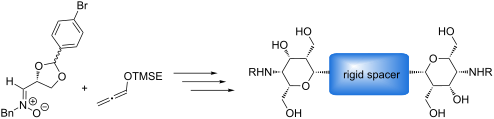
- soluble polyhydroxylated compound 26 (Scheme 11). Due to the amphiphilic character this compound was only soluble in pyridine that makes purification and subsequent reactions fairly difficult. The conversion of the deprotection step was high but the yield after purification was only 30%. The reduction


Influence of perylenediimide–pyrene supramolecular interactions on the stability of DNA-based hybrids: Importance of electrostatic complementarity
Beilstein J. Org. Chem. 2014, 10, 1589–1595, doi:10.3762/bjoc.10.164
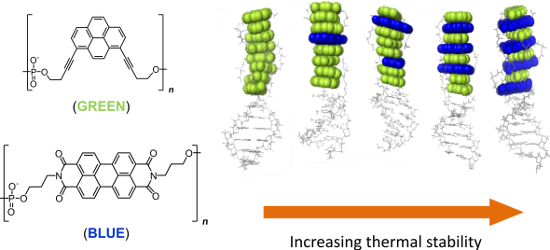
- interaction of the two complementary strands is governed mainly by aromatic π–π stacking interactions, hydrogen bonds, and electrostatic repulsion from the negatively-charged sugar phosphate backbone [10][23][24][25][26][27][28]. DNA can be regarded as an amphiphilic polymer in which aromatic residues are



The search for new amphiphiles: synthesis of a modular, high-throughput library
Beilstein J. Org. Chem. 2014, 10, 1578–1588, doi:10.3762/bjoc.10.163
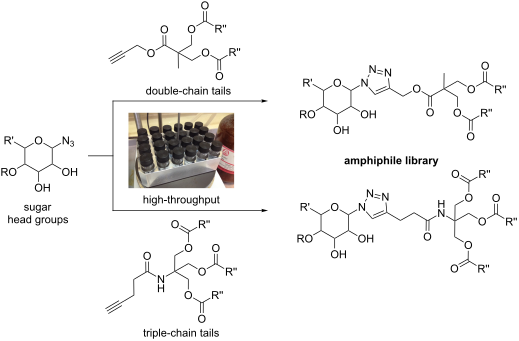
- 2476, Melbourne, VIC 3001, Australia 10.3762/bjoc.10.163 Abstract Amphiphilic compounds are used in a variety of applications due to their lyotropic liquid-crystalline phase formation, however only a limited number of compounds, in a potentially limitless field, are currently in use. A library of
- organic amphiphilic compounds was synthesised consisting of glucose, galactose, lactose, xylose and mannose head groups and double and triple-chain hydrophobic tails. A modular, high-throughput approach was developed, whereby head and tail components were conjugated using the copper-catalysed azide–alkyne
- throughput; library synthesis; Introduction Amphiphilic compounds contain a hydrophilic polar head group and a hydrophobic non-polar side chain. Upon addition of water, these amphiphiles may self-assemble into lyotropic phases that have a variety of uses, from simple household detergents and cleaning


Synthesis and solvodynamic diameter measurements of closely related mannodendrimers for the study of multivalent carbohydrate–protein interactions
Beilstein J. Org. Chem. 2014, 10, 1524–1535, doi:10.3762/bjoc.10.157
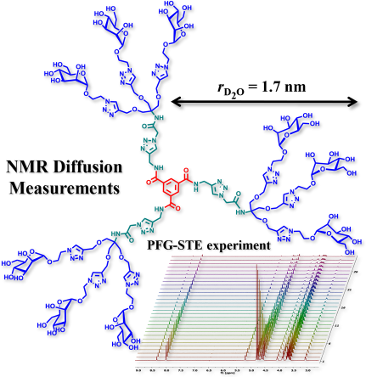
- , compared to the one generated in BTAs-centered structures 12 and 21, could explain this observation. Also, these discrepancies might result from the general amphiphilic behavior of this kind of macromolecules [39]. In fact, these glycoclusters shared common structural factors with hydrophilic peripheral


Postsynthetic functionalization of glycodendrons at the focal point
Beilstein J. Org. Chem. 2014, 10, 1482–1487, doi:10.3762/bjoc.10.152
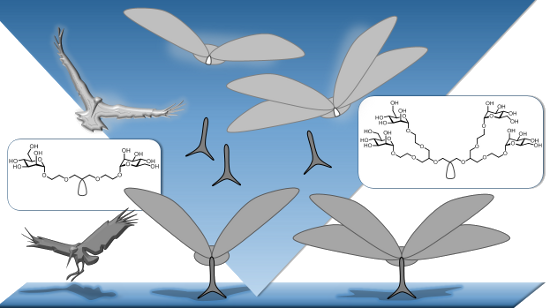
- molecule. This allows for their postsynthetic elaboration to achieve amphiphilic glycolipid mimetics, for example, which eventually can be applied in biology, biophysics, or material science. Here, postsynthetic modification of di- and tetravalent polyether glycodendrons has been explored using
- etherification, thiol-ene reaction and in particular olefin cross metathesis. Keywords: amphiphilic glycomimetics; cross metathesis; glycodendrons; multivalent glycoconjugates; multivalent glycosystems; Introduction In addition to nucleic acids and proteins, molecular life is based on a third important class
- expected in case of the glycodendrons 3–9. However, the so-called “thiol-ene” reaction [10] gave reliable results with both bivalent and tetravalent glycodendrons. The radical addition of mercaptododecane to either 3 or 7, employing AIBN as radical starter, led to the amphiphilic thioethers 12 and 13


Carbohydrate PEGylation, an approach to improve pharmacological potency
Beilstein J. Org. Chem. 2014, 10, 1433–1444, doi:10.3762/bjoc.10.147
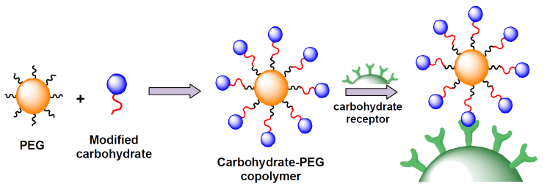
- multiarm PEGs, with the aim to increase the loading of the active sugar. Multivalent glycomolecules have proven to mediate or inhibit a variety of biological or pathological processes [17][23]. Review Polyethylene glycol (PEG) derivatives Polyethyleneglycol is an amphiphilic polymer consisting of repeating






An economical and safe procedure to synthesize 2-hydroxy-4-pentynoic acid: A precursor towards ‘clickable’ biodegradable polylactide
Beilstein J. Org. Chem. 2014, 10, 1365–1371, doi:10.3762/bjoc.10.139
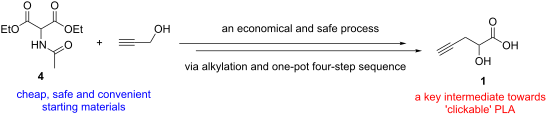
- clinical application. More recently, Coumes and coworkers have prepared acetylene functionalized PLAs from precursor 1 and ‘click’ modification of the resulting PLAs with PEG azides provided amphiphilic graft copolymers which form nanorod aggregates in water [19]. The results discussed above indicate the


Glycosystems in nanotechnology: Gold glyconanoparticles as carrier for anti-HIV prodrugs
Beilstein J. Org. Chem. 2014, 10, 1339–1346, doi:10.3762/bjoc.10.136
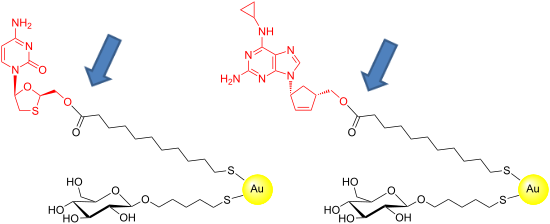
- corresponding ABC-GNPs showed similar IC50 values of 5 μM and 8 μM, respectively (Figure 3 left and Table 1). Surprisingly, the abacavir derivative seems to induce viral replication. With the presented data we are not able to explain this result, but it may be due to the amphiphilic properties of the drug


Automated solid-phase peptide synthesis to obtain therapeutic peptides
Beilstein J. Org. Chem. 2014, 10, 1197–1212, doi:10.3762/bjoc.10.118
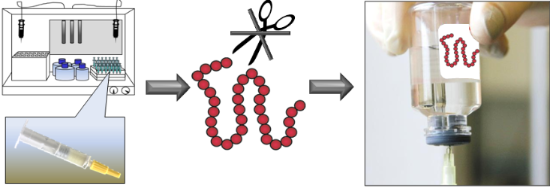
- known to be amphiphilic, non-toxic, little immunogenic, non-antigenic and highly soluble [108]. These beneficial attributes are conveyed to the peptide by covalent attachment leading to an increased size, which lowers renal ultrafiltration [109]. Moreover, the PEGylated peptide is surrounded by a large




Atherton–Todd reaction: mechanism, scope and applications
Beilstein J. Org. Chem. 2014, 10, 1166–1196, doi:10.3762/bjoc.10.117

- design of phosphorus-based amphiphilic compounds. 2. Mechanism of the Atherton–Todd reaction In their initial publication, Atherton and Todd have suggested two possible mechanisms to explain the formation of phosphoramidate [1]. The first one (Scheme 2-i) was based on a two-step sequence with the


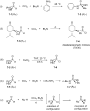


The influence of intraannular templates on the liquid crystallinity of shape-persistent macrocycles
Beilstein J. Org. Chem. 2014, 10, 910–920, doi:10.3762/bjoc.10.89
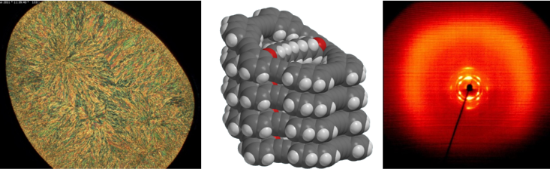
- ]. Amphiphilic macrocycles in aqueous solution have been shown to be able to form vesicles [24][25]. In the bulk state, most of the macrocycles crystallize and some could be explored by single-crystal X-ray analysis [26][27][28]. Heating crystalline macrocycles above the melting point does not always lead


End-group-functionalized poly(N,N-diethylacrylamide) via free-radical chain transfer polymerization: Influence of sulfur oxidation and cyclodextrin on self-organization and cloud points in water
Beilstein J. Org. Chem. 2014, 10, 680–691, doi:10.3762/bjoc.10.61
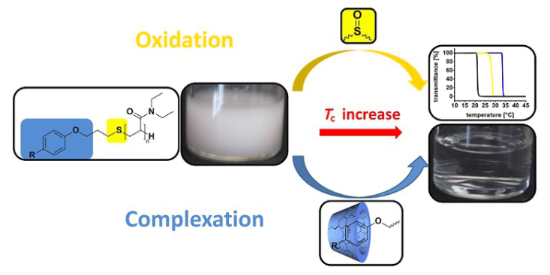
- regarding the cloud point depression of thermoresponsive polymers containing hydrophobic end-groups with decreasing molecular weight [20][24][30][44] or the effect of an increasing hydrophobic environment in amphiphilic conetworks [45] are in accordance with previous studies. Theoretically a stronger


Self-assembly of 2,3-dihydroxycholestane steroids into supramolecular organogels as a soft template for the in-situ generation of silicate nanomaterials
Beilstein J. Org. Chem. 2013, 9, 1826–1836, doi:10.3762/bjoc.9.213
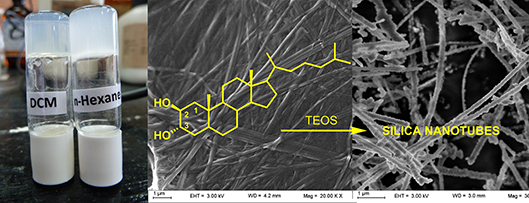
- side chains. Taking this into account the specific molecular packing of gels of 1 may be understood from its molecular structure itself. Steroid 1 is a typical amphiphilic compound in which the dihydroxy moiety defines a hydrophilic head while the rest of the skeleton (tail) is hydrophobic. The
- amphiphilic property causes molecules to aggregate into structures that avoid the unfavorable head-to-tail contact, and so, head-to-head and tail-to-tail contacts are directing the self-assembly. In more polar solvents such as DCM, the side chain of the steroid is not fully elongated to avoid the interaction
- zone, but a qualitative analysis showed that predictions are still possible for this complex system. The FTIR, XRPD, and semiempirical molecular modeling studies allowed us to propose a packing mode in which the amphiphilic steroid self-assembles in a head-to-head mode through two hydrogen bonds


Thermotropic and lyotropic behaviour of new liquid-crystalline materials with different hydrophilic groups: synthesis and mesomorphic properties
Beilstein J. Org. Chem. 2013, 9, 425–436, doi:10.3762/bjoc.9.45
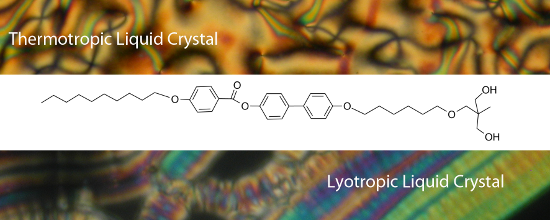
- materials showing liquid-crystalline (LC) behaviour belong to two general classes: lyotropic materials, in which fluid anisotropy results from interactions between anisotropic aggregates of amphiphilic molecules; and thermotropic materials, in which the orientational order arises from interactions among
- partially rigid anisotropic molecules. Amphiphilic compounds can form a variety of thermotropic liquid-crystalline phases as a function of temperature by themselves, and lyotropic liquid-crystalline phases upon addition of some solvent, such as water or diethylene glycol [1]. Thermotropic liquid-crystalline
- systems composed of amphiphilic molecules can exhibit smectic phases with layered structure [2] or nematic (eventually cholesteric) phases. Lyotropic systems usually form a lamellar liquid-crystalline mesophase, i.e., a lyotropic analogue of the thermotropic orthogonal smectic A (SmA) phase [3], and more






Spin state switching in iron coordination compounds
Beilstein J. Org. Chem. 2013, 9, 342–391, doi:10.3762/bjoc.9.39


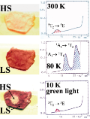
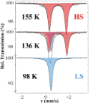


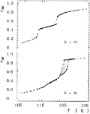

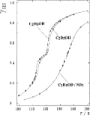


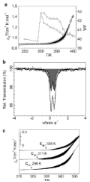
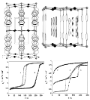
![[Graphic 1]](/bjoc/content/inline/1860-5397-9-39-i3.png?max-width=637&scale=1.18182) ) modes versus the anion volu...
) modes versus the anion volu...






Influence of cyclodextrin on the solubility and the polymerization of (meth)acrylated Triton® X-100
Beilstein J. Org. Chem. 2012, 8, 2176–2183, doi:10.3762/bjoc.8.245
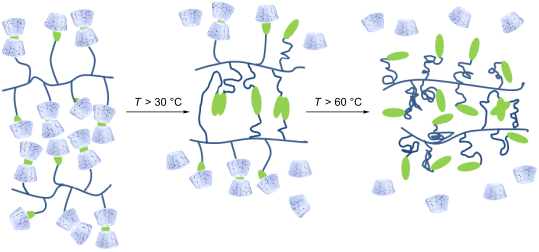
- the poly(ethylene glycol) substituent is hydrophilic. Because of this amphiphilic character, Triton® X-100 can be described as a short AB block co-oligomer [1]. Long amphiphiles are relatively flexible and provide a lower critical micelle concentration (CMC) [2]. The CMC of Triton® X-100 is 0.22 mM [3


Chemical modification allows phallotoxins and amatoxins to be used as tools in cell biology
Beilstein J. Org. Chem. 2012, 8, 2072–2084, doi:10.3762/bjoc.8.233
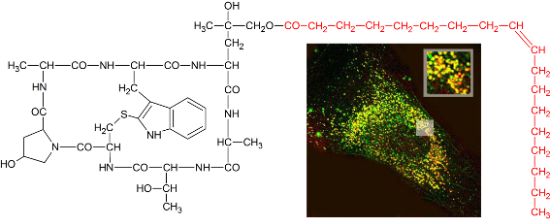
- represent a lipophilic phase in an aqueous medium, and amphiphilic compounds brought into this system will distribute between the two phases according to their nature. This process is similar to the distribution the substance will take between n-octanol and water, an idea that has been suggested by Palm et




Total synthesis and biological evaluation of fluorinated cryptophycins
Beilstein J. Org. Chem. 2012, 8, 2060–2066, doi:10.3762/bjoc.8.231
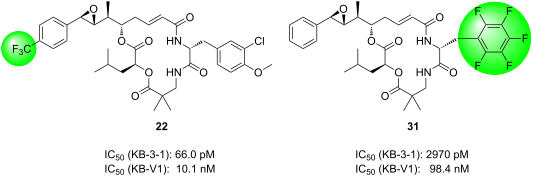
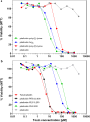
- -1 and its MDR subclone KB-V1. This fact was quite surprising because the fluorinated cryptophycins were expected to display higher lipophilicity compared to the parent compound cryptophycin-52 and, therefore, exhibit equal or even higher activities. In contrast, more amphiphilic or polar compounds


Influence of intramolecular hydrogen bonds on the binding potential of methylated β-cyclodextrin derivatives
Beilstein J. Org. Chem. 2012, 8, 1890–1895, doi:10.3762/bjoc.8.218
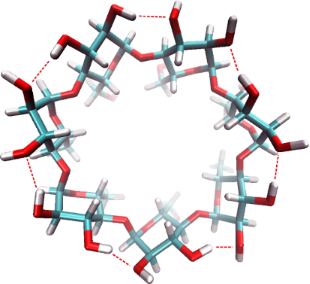
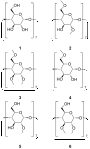
- pattern of methylation on the complexation of amphiphilic guests, we synthesized well-defined model compounds 2–6 (Figure 1) of methylated β-CD, using regioselective procedures already published [30]. 4-tert-Butylbenzoate and adamantane-1-carboxylate were chosen as representative guests. Complexation of


Self-assembled organic–inorganic magnetic hybrid adsorbent ferrite based on cyclodextrin nanoparticles
Beilstein J. Org. Chem. 2012, 8, 1867–1876, doi:10.3762/bjoc.8.215
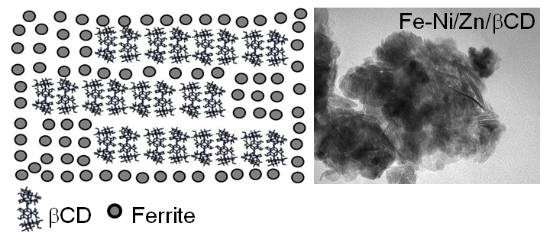
- complexes [14][15][16][17]. Beyond these characteristics, it has been reported in the literature that CDs self-assemble into large aggregates [18][19][20], suggesting their uses as size-modulator molecules [21], similar to other amphiphilic molecules [22][23][24][25]. Based on these interesting properties