

Search results
Search for "aldehydes" in Full Text gives 757 result(s) in Beilstein Journal of Organic Chemistry. Showing first 200.
Green and sustainable approaches for the Friedel–Crafts reaction between aldehydes and indoles
Beilstein J. Org. Chem. 2024, 20, 379–426, doi:10.3762/bjoc.20.36
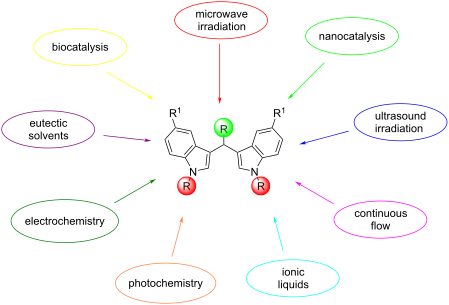
- reaction between aldehydes with indoles, while focusing on the more environmentally friendly methods developed over the years. Keywords: aldehyde; BIMs; Friedel–Crafts reaction; green chemistry; indole; Review Medicinal properties In recent years, diindolylmethane (DIM, 1) and its derivatives known as
- pharmaceutical and biological activities. Among indole derivatives, bis(indolyl)methanes (BIMs) are profoundly interesting, due to their wide range of pharmaceutical properties. The most common approach involves the electrophilic substitution of various aldehydes and ketones by indoles, utilizing either protic
- :0.05, under solvent-free conditions at 50 °C for 50 min, the product was obtained in 90% yield. To emphasize the role of DBDMH, when the reaction was performed without DBDMH, no product was observed. The generality of this protocol was also tested by employing various aromatic aldehydes, which formed


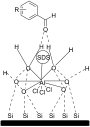


Mechanisms for radical reactions initiating from N-hydroxyphthalimide esters
Beilstein J. Org. Chem. 2024, 20, 346–378, doi:10.3762/bjoc.20.35
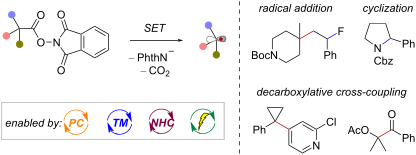
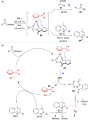
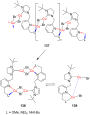
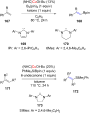
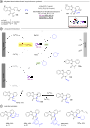
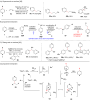
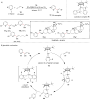
- coupling of NHPI esters with aldehydes enabled by NHC catalysis [106]. The reaction proceeds with the catalyst NHC-1 at 60 °C and gives rise to ketones (Scheme 30A). The proposed mechanism begins with the reaction of benzaldehyde (143) and the NHC-catalyst 144 to form the neutral Breslow intermediate 145
- mechanism discussed in Scheme 7B. Lastly, radical–radical coupling between 64 and 147, accompanied by elimination of the NHC catalyst, yields ketone product 149. In subsequent studies, this NHC-catalyzed radical relay activation mode has been extended to the alkylation of aliphatic aldehydes [107] and to


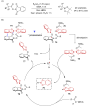






Tandem Hock and Friedel–Crafts reactions allowing an expedient synthesis of a cyclolignan-type scaffold
Beilstein J. Org. Chem. 2024, 20, 162–169, doi:10.3762/bjoc.20.15
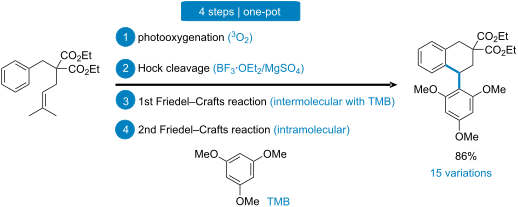
- mention that allylic hydroperoxides are conveniently produced by the photooxygenation of alkene substrates [14][15][16]. Taking all these informations together, since alkenes can be easier intermediates than aldehydes to handle, we envisaged to use a prenyl (= 3-methyl-2-buten-1-yl) group as an aldehyde





Using the phospha-Michael reaction for making phosphonium phenolate zwitterions
Beilstein J. Org. Chem. 2024, 20, 41–51, doi:10.3762/bjoc.20.6
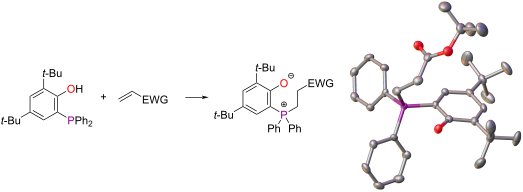
- alkylphosphine, an aldehyde and an alkyne [32]. Another example resulting from phosphine addition to α,β-unsaturated aldehydes was published shortly afterwards [33]. Phosphonium carboxylate zwitterions have been obtained by the reaction of phosphines with acrylic acid [8] and ortho-carboxylated arylphosphines


Substituent-controlled construction of A4B2-hexaphyrins and A3B-porphyrins: a mechanistic evaluation
Beilstein J. Org. Chem. 2023, 19, 1832–1840, doi:10.3762/bjoc.19.135
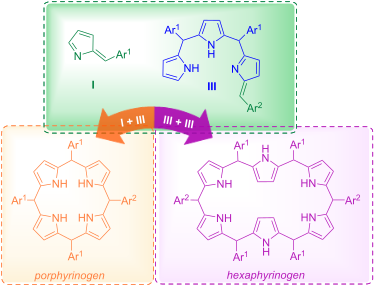
- selective synthesis of expanded porphyrins and their chemistry with regard to their aromaticity and coordination properties. They used meso-aryl-substituted dipyrromethanes and aldehydes in the synthesis of A3B3-type hexaphyrins [13] and 5,10-diaryl-substituted tripyrranes in A4B2-hexaphyrin synthesis [6
- ][17][18][19][20]. Similarly, the syntheses of AmBn-type hexaphyrins, octaphyrins, or higher expanded porphyrins were handled by improved methods in recent years with the use of tripyrranes or bilanes and aldehydes [7][14][21][22][23][24][25]. In our previous studies, we used N-tosylimines throughout
- the syntheses of several porphyrinic compounds which emphasized the usability of N-tosylimines with dipyrromethanes, tripyrranes, or bilanes instead of aldehydes in the synthesis of porphyrins and contracted/expanded porphyrins [26][27][28]. It was shown that the reaction of meso-pentafluorophenyl



Recent advancements in iodide/phosphine-mediated photoredox radical reactions
Beilstein J. Org. Chem. 2023, 19, 1785–1803, doi:10.3762/bjoc.19.131
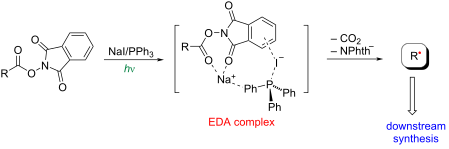
- nitroarenes 48 (Scheme 22). The protocol demonstrated excellent tolerance towards a wide range of reducible functional groups, including halogens (such as chlorine, bromine, and even iodine), aldehydes, ketones, carboxyl groups, and cyano groups. Iodination Alkyl iodide is considered to be the most reactive


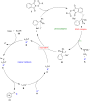


Trifluoromethylated hydrazones and acylhydrazones as potent nitrogen-containing fluorinated building blocks
Beilstein J. Org. Chem. 2023, 19, 1741–1754, doi:10.3762/bjoc.19.127
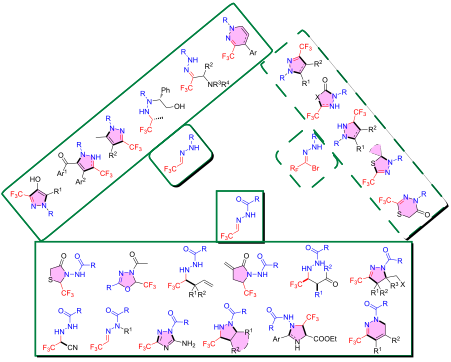
- [44] (Scheme 6). El Kaim and Jia reported a Mannich-type reaction of trifluoroacetaldehyde hydrazones with formaldehyde and aromatic aldehydes to obtain valuable starting materials for the generation of other trifluoromethyl-substituted heterocycles. The study demonstrated that the electron


Decarboxylative 1,3-dipolar cycloaddition of amino acids for the synthesis of heterocyclic compounds
Beilstein J. Org. Chem. 2023, 19, 1677–1693, doi:10.3762/bjoc.19.123
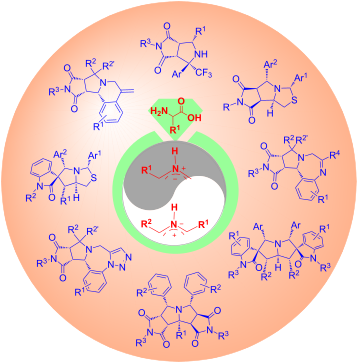
- aldehydes and α-amino esters (via dehydration) or α-amino acids (via decarboxylation) could be classified based on the substitution groups on the N atom to: 1) N-substituted (N–R type), 2) hydrogen containing (N–H type), and 3) metal complexes (N–M type) (Figure 1) [16][17]. These AMYs could also be
- : A1-type AMYs can be generated from the condensation of aldehydes with α- and N-dialkylglycine esters, A2-type AMYs are derived from α-alkylglycine esters, A3-type AMYs are derived from N-alkylglycine esters, and A4-type AMYs are derived from glycine esters. Stabilized zwitterions A1–A4 have the
- group on the α-carbon atom are semi-stabilized (Scheme 1) [16]. The B1-type AMYs can be generated from the decarboxylative condensation of aldehydes with α- and N-dialkylglycines or from cyclic amino acids (such as proline) [31][32][33], while AMYs of type B2 are accessible through the decarboxylative


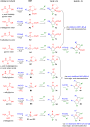


Benzoimidazolium-derived dimeric and hydride n-dopants for organic electron-transport materials: impact of substitution on structures, electrochemistry, and reactivity
Beilstein J. Org. Chem. 2023, 19, 1651–1663, doi:10.3762/bjoc.19.121
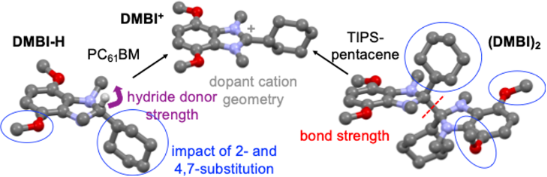
- [12][13][16][19][26]. 1H derivatives can be obtained in a number of ways, including direct condensation of N,N'-dimethylphenylene-1,2-diamine derivatives with the appropriate aldehydes, YCHO [24][27], or borohydride reduction of 1+ salts [24]. The cations conversely can be obtained from 1H derivatives


Synthesis of 5-arylidenerhodanines in L-proline-based deep eutectic solvent
Beilstein J. Org. Chem. 2023, 19, 1537–1544, doi:10.3762/bjoc.19.110

- Knoevenagel condensation of rhodanine with different aldehydes [3]. The reactions were performed in ChCl/urea (1:2) at 90 °C, without needing a catalyst and the products were obtained in low to good yields (10–78%). On another hand, ʟ-proline is well known as an organocatalyst and its use in aldol and
- reaction of benzofuranone and aldehydes in good to excellent yields in a few minutes under ultrasound irradiation. Results and Discussion As a part of our ongoing research in DES chemistry, we were mainly interested in the conditions reported by Detsi [20], and attempted to apply them for rhodanine
- aldehydes to study the scope of this reaction (Scheme 1). It must be noted that in most of the cases, the reaction mixture changed its appearance from colorless to yellow or orange and that some solid precipitate formed during the reaction. The addition of water at the end of the reaction clearly led to the


Complexes of resorcin[4]arene with secondary amines: synthesis, solvent influence on “in-out” structure, and theoretical calculations of non-covalent interactions
Beilstein J. Org. Chem. 2023, 19, 1525–1536, doi:10.3762/bjoc.19.109
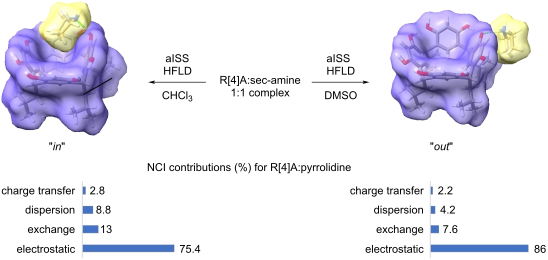
- ; Introduction Resorcin[4]arenes are macrocyclic compounds with a cavity structure formed from resorcinol and aldehydes [1]. Of particular significance is their crown conformation, which stems from the presence of 8 hydroxy groups on the upper rim and a hydrophobic cavity [2]. This property plays an important




N-Sulfenylsuccinimide/phthalimide: an alternative sulfenylating reagent in organic transformations
Beilstein J. Org. Chem. 2023, 19, 1471–1502, doi:10.3762/bjoc.19.106
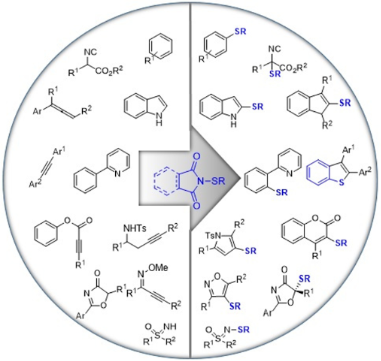
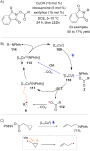
- pyrroles 83 contained higher HOMO orbital energies, and lower band gaps compared to the unsubstituted parent 2,5-diphenylpyrrole. Organocatalyzed sulfenylation by N-(sulfenyl)succinimides/phthalimides In 2004, direct sulfenylation of a series of aldehydes and ketones 84 with N-(phenylthio)phthalimide (14
- acylation and acylthiolation. AlCl3-catalyzed synthesis of 3,4-bisthiolated pyrroles. α-Sulfenylation of aldehydes and ketones. Acid-catalyzed sulfetherification of unsaturated alcohols. Enantioselective sulfenylation of β-keto phosphonates. Organocatalyzed sulfenylation of 3‑substituted oxindoles


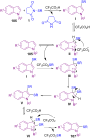


α-(Aminomethyl)acrylates as acceptors in radical–polar crossover 1,4-additions of dialkylzincs: insights into enolate formation and trapping
Beilstein J. Org. Chem. 2023, 19, 1443–1451, doi:10.3762/bjoc.19.103
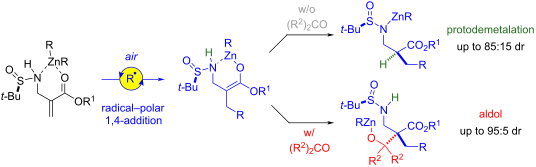
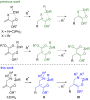
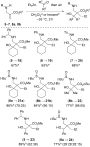
- interesting to note that the levels of induction for the 1,4-addition–aldol condensations are somewhat higher than those obtained for the 1,4-additions. Aldehydes also proved competent terminal electrophiles for the tandem sequence. Illustratively, adducts 23 and 24 were obtained from α-(aminomethyl)acrylates






Application of N-heterocyclic carbene–Cu(I) complexes as catalysts in organic synthesis: a review
Beilstein J. Org. Chem. 2023, 19, 1408–1442, doi:10.3762/bjoc.19.102
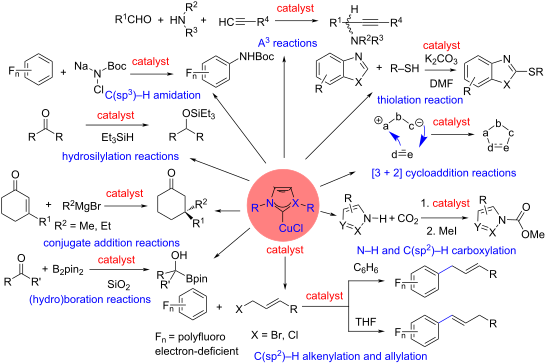
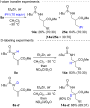
- less-encumbered NHC–CuSiMe2Ph complexes for the silylation of aldehydes and unsaturated ketones with silylboranes were investigated in a case study. The complexes (It-Bu)CuOt-Bu (105b) and (Me2IMe)CuOt-Bu (105c) were found to be effective (pre)catalysts for the 1,2-silylation of tolualdehyde and the
- (Scheme 55). A wide range of combinations of aldehydes, alkynes, and secondary amines including aromatic as well as aliphatic substrates were used and the products were obtained in up to 95% yield. The effects of solvents and temperature were also investigated. Polar solvents such as acetone or










Visible-light-induced nickel-catalyzed α-hydroxytrifluoroethylation of alkyl carboxylic acids: Access to trifluoromethyl alkyl acyloins
Beilstein J. Org. Chem. 2023, 19, 1372–1378, doi:10.3762/bjoc.19.98
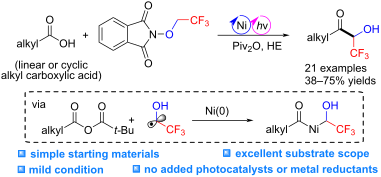
- acyloins (Scheme 1a). Anand’s group [25] demonstrated that a NHC-catalyzed selective acyloin condensation between aromatic aldehydes and trifluoroacetaldehyde ethyl hemiacetal afforded the analogous products (Scheme 1b). In comparison, the synthesis of trifluoromethyl aliphatic acyloins is still


Non-noble metal-catalyzed cross-dehydrogenation coupling (CDC) involving ether α-C(sp3)–H to construct C–C bonds
Beilstein J. Org. Chem. 2023, 19, 1259–1288, doi:10.3762/bjoc.19.94
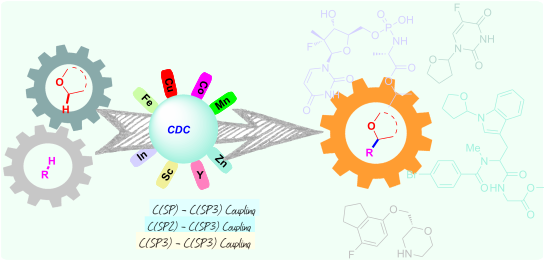
- triggers the whole coupling reaction. The potential application of NHIP as a catalyst for oxidative coupling reactions with oxygen as a terminal oxidant was explored. In 2011, Garcia-Mancheño et al. developed a Cu-catalyzed CDC of cyclic benzyl ethers 10 with aliphatic or α,β-unsaturated aldehydes 13 or 14
- terminal alkynyl aldehydes with ethers in the presence of CuCl2 and TBHP (Scheme 15b) [68]. The reaction is compatible with various functional groups including cyclic ethers and open chain ethers. Studies on the reaction mechanism showed that the reaction is a catalytic cycle involving a radical process
- dihydropyrans (DHPs) and aldehydes in the presence of Zn(II) (Scheme 37) [102]. The method has good enantioselectivity and functional group tolerance and provides a practical and economical route towards a series of enantiopure α-substituted DHPs through CDC, through an in situ NaBH4 reduction two-step sequence










Acetaldehyde in the Enders triple cascade reaction via acetaldehyde dimethyl acetal
Beilstein J. Org. Chem. 2023, 19, 1243–1250, doi:10.3762/bjoc.19.92
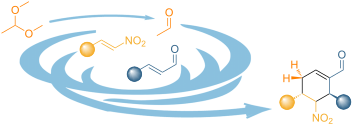
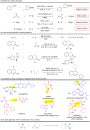
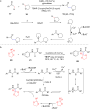
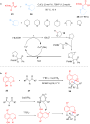
- increasing structural and stereochemical complexity starting from readily available substrates. The scope of the process was shown to be successful with aliphatic aldehydes 2, aromatic nitroalkenes 3, and both aromatic and aliphatic unsaturated aldehydes 4. Given our recent interest in the use of a surrogate
- aldehydes other than acetaldehyde generates higher control [11]. It was previously shown that the first stereogenic center formed in the presented cascade process is formed with high control [17]. Therefore, the second carbon–carbon bond forming step, i.e., the organocatalyzed Michael addition of the


Unravelling a trichloroacetic acid-catalyzed cascade access to benzo[f]chromeno[2,3-h]quinoxalinoporphyrins
Beilstein J. Org. Chem. 2023, 19, 1216–1224, doi:10.3762/bjoc.19.89
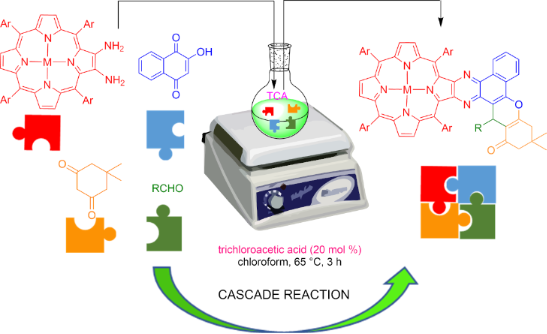
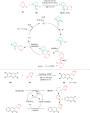
- ]quinoxalinoporphyrins in good yields via a sequential reaction of copper(II) 2,3-diamino-5,10,15,20-tetraarylporphyrins, 2-hydroxynaphthalene-1,4-dione, aromatic aldehydes, and dimedone in the presence of a catalytic amount of trichloroacetic acid in chloroform at 65 °C. Further, the newly prepared copper(II
- aldehydes and dimedone in chloroform at 65 °C. The optical properties of the newly prepared porphyrins have been investigated by using UV–vis and emission spectroscopy and the results are presented in this paper. Results and Discussion Synthesis The required precursors, copper(II) 2,3-diamino-5,10,15,20
- condensation of intermediate 17 with 2-arylidene-5,5-dimethylcyclohexane-1,3-dione 18 (formed in situ through an Aldol condensation of aldehydes with dimedone), to generate copper(II) benzo[f]chromeno[2,3-h]dihydroquinoxalinoporphyrins which on dehydration produce the desired copper(II) benzo[f]chromeno[2,3-h


New one-pot synthesis of 4-arylpyrazolo[3,4-b]pyridin-6-ones based on 5-aminopyrazoles and azlactones
Beilstein J. Org. Chem. 2023, 19, 1155–1160, doi:10.3762/bjoc.19.83
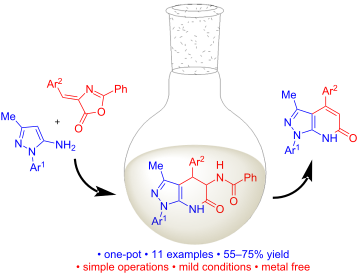
- are also low in two-stage synthesis methods. The first of them is based on the three-component condensation of aminopyrazoles, Meldrum's acid, and aromatic aldehydes, followed by the oxidation of the intermediate with DDQ [13][16][19] (method B). The second one includes the reaction of an aromatic


Photoredox catalysis harvesting multiple photon or electrochemical energies
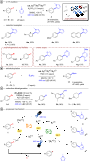
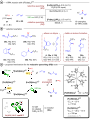
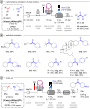
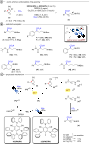
Beilstein J. Org. Chem. 2023, 19, 1055–1145, doi:10.3762/bjoc.19.81







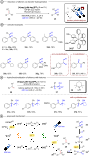
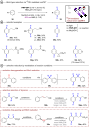


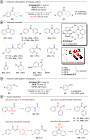

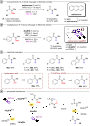















Synthesis of tetrahydrofuro[3,2-c]pyridines via Pictet–Spengler reaction
Beilstein J. Org. Chem. 2023, 19, 991–997, doi:10.3762/bjoc.19.74
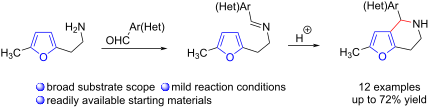
- the condensation of easily accessibly 2-(5-methylfuran-2-yl)ethanamine with commercially available aromatic aldehydes followed by acid-catalyzed Pictet–Spengler cyclization. Using this approach, we synthesized a range of 4-substituted tetrahydrofuro[3,2-c]pyridines in reasonable yields. The reactivity
- -c]pyridines. From the analysis of the literature data [2][40][41][42][43], we suggested that the interaction of furanic amines with various aldehydes in an acidic media should be accompanied by the formation of the corresponding imine, the generation of the iminium cation, and subsequent Pictet
- processes and tarring of the reaction mixture should be minimized; 4) the possibility for the synthesis of a wide range of desired products should be realized. We have found that all requirements are met for the reaction of 2-(5-methylfuran-2-yl)ethanamine with a set of aromatic aldehydes. Herein, we report


The unique reactivity of 5,6-unsubstituted 1,4-dihydropyridine in the Huisgen 1,4-diploar cycloaddition and formal [2 + 2] cycloaddition
Beilstein J. Org. Chem. 2023, 19, 982–990, doi:10.3762/bjoc.19.73
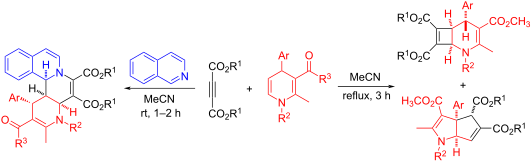
- Povarov reaction of 3-aminocoumarins, aldehydes, and 5,6-unsubstituted 1,4-dihydropyridine derivatives for the construction of exo-hexahydrochromeno[3,4-h][1,6]naphthyridine-3-carboxylate derivatives (reaction 3 in Scheme 1) [44]. In these reactions, the 5,6-unsubstituted 1,4-dihydropyridines usually


Asymmetric tandem conjugate addition and reaction with carbocations on acylimidazole Michael acceptors
Beilstein J. Org. Chem. 2023, 19, 881–888, doi:10.3762/bjoc.19.65

- organoboron reagents were realized [12]. Also, in terms of suitable Michael acceptors as substrates, unsaturated ketones, aldehydes, esters, thioesters, amides, alkenyl heterocycles and enoyl heterocycles became viable for conjugate additions. The maturity and robustness of this methodology is documented by




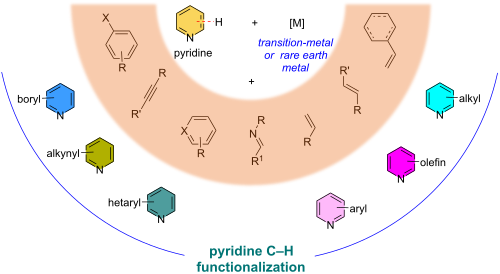
Pyridine C(sp2)–H bond functionalization under transition-metal and rare earth metal catalysis
Beilstein J. Org. Chem. 2023, 19, 820–863, doi:10.3762/bjoc.19.62
- significantly affect the C–H alkylation reaction and the reaction also proceeded well with hydrazones 13 obtained from aliphatic aldehydes or ketones. Based on mechanistic experiments and DFT calculations, the reaction presumably proceeds via a Cu–carbene migratory insertion (Scheme 4b). In the presence of CuI
- iridium catalysis was achieved by Shi [61] in 2010 through an unusual meta-selectivity for the first time (Scheme 11a). To achieve meta-selectivity, the group has screened various transition metals and revealed that a silyl-iridium complex promoted the addition of meta-pyridyl C–H bonds to aldehydes 50












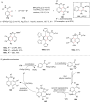
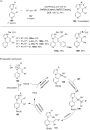


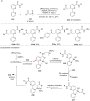


Sulfate radical anion-induced benzylic oxidation of N-(arylsulfonyl)benzylamines to N-arylsulfonylimines
Beilstein J. Org. Chem. 2023, 19, 771–777, doi:10.3762/bjoc.19.57
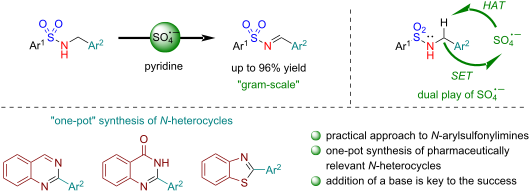
- condensation of aromatic aldehydes and sulfonamides (Scheme 1a) [3][5][6][7][8]. Because of the poor nucleophilicity of sulfonamides, the condensation reactions generally require harsh reaction conditions involving the use of strong acids, elevated temperature, and metal catalysts. Other methods include a non
- -dehydrative reaction of aldehydes with isocyanate analogs ([3] and references therein) (Scheme 1b) and an oxidative reaction of primary benzylic alcohols with sulfonamides or chloramine-T ([3] and references therein), and although they are elegant, they use substrates that are not readily accessible or toxic