
Search results
Search for "TEMPO" in Full Text gives 184 result(s) in Beilstein Journal of Organic Chemistry.
α-Photooxygenation of chiral aldehydes with singlet oxygen
Beilstein J. Org. Chem. 2019, 15, 2076–2084, doi:10.3762/bjoc.15.205
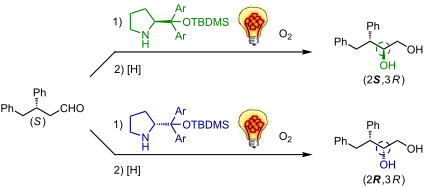
- ], TEMPO [4], or benzoyl peroxide [5][6][7][8]. Therefore, the use of environmentally friendly reagents instead is highly desirable. Along this line, singlet oxygen by being easily photochemically generated from triplet oxygen in the presence of organic dyes seems promising. Despite its high reactivity and



Metal-free mechanochemical oxidations in Ertalyte® jars
Beilstein J. Org. Chem. 2019, 15, 1786–1794, doi:10.3762/bjoc.15.172
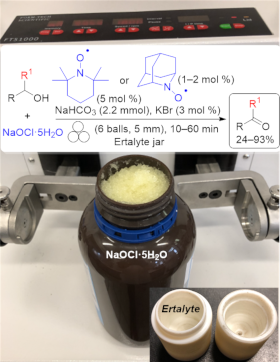
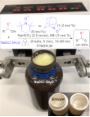
- l’Ecole Normale, 34296 Montpellier, Cedex 5, France 10.3762/bjoc.15.172 Abstract Aimed at eliminating or at least significantly reducing the use of solvents, sodium hypochlorite pentahydrate crystals (NaOCl·5H2O) in the presence of a catalytic amount of a nitrosyl radical (TEMPO or AZADO) have been
- a mechanochemical process. Keywords: AZADO; Ertalyte®; green chemistry; mechanochemistry; NaOCl·5H2O; selective oxidation; TEMPO; Introduction The conversion of primary and secondary alcohols to the corresponding carbonyl compounds (aldehydes and ketones, respectively) is of such importance in
- the atom efficiency [4][5]. The discovery of (2,2,6,6-tetramethylpiperidin-1-yl)oxyl, commonly known as TEMPO by Lebedev and Kazarnowskii in 1960 has been hailed as a significant breakthrough in the field of redox reactions, allowing the fast and selective oxidation of alcohols to the related carbonyl


Recent advances on the transition-metal-catalyzed synthesis of imidazopyridines: an updated coverage
Beilstein J. Org. Chem. 2019, 15, 1612–1704, doi:10.3762/bjoc.15.165
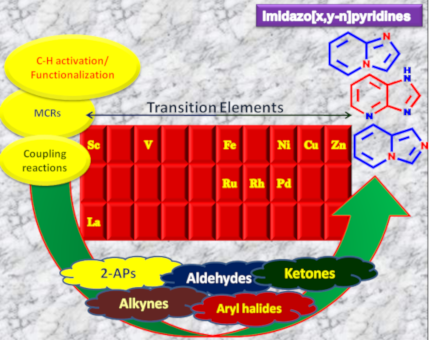
- aliphatic alkynes gave an optimal yield of the final product in the range of 50–78%. Successful formation of the product on application of 2,2,6,6-tetramethylpiperidine-1-oxyl (TEMPO: a radical scavenger) has nullified the probability of radical pathway. It was thought to be initiated by the coordination of
- the formation of radical intermediates, as use of TEMPO inhibited intramolecular C(sp3)–H amination of imine species. Aerial oxidation of the Cu(I) species bonded to the N-atom of pyridine and imine 39 resulted in Cu(II) superoxo radical intermediate 40. This was followed by intramolecular hydrogen
- the desired product. The reaction with secondary amines 35a also resulted in a trace of the final product (Scheme 38). The use of TEMPO (a radical scavenger) has shown that the reaction might proceed through a radical pathway as depicted in Scheme 39. In the presence of TEMPO the desired product was


Photochemical generation of the 2,2,6,6-tetramethylpiperidine-1-oxyl (TEMPO) radical from caged nitroxides by near-infrared two-photon irradiation and its cytocidal effect on lung cancer cells
Beilstein J. Org. Chem. 2019, 15, 863–873, doi:10.3762/bjoc.15.84
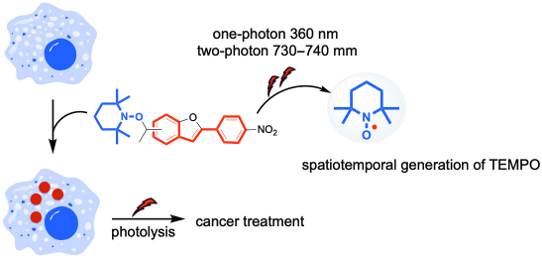
- character, 2,2,6,6-tetramethyl-1-(1-(2-(4-nitrophenyl)benzofuran-6-yl)ethoxy)piperidine (2a) and its regioisomer 2b, were designed and synthesized. The one-photon (OP) (365 ± 10 nm) and TP (710–760 nm) triggered release (i.e., uncaging) of the 2,2,6,6-tetramethylpiperidine-1-oxyl (TEMPO) radical under air
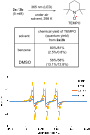
- atmosphere were discovered. The quantum yields for the release of the TEMPO radical were 2.5% (2a) and 0.8% (2b) in benzene at ≈1% conversion of 2, and 13.1% (2a) and 12.8% (2b) in DMSO at ≈1% conversion of 2. The TP uncaging efficiencies were determined to be 1.1 GM at 740 nm for 2a and 0.22 GM at 730 nm
- approach for investigating the role of redox-active nitroxides in mediating oxidative stress in organisms [27][28][29][30][31][32]. In 1997, Scaiano and co-workers reported the triplet-xanthone sensitized generation of the 2,2,6,6-tetramethylpiperidine-1-oxyl (TEMPO) radical from alkoxyamine 1 under






Synthesis and biological investigation of (+)-3-hydroxymethylartemisinin
Beilstein J. Org. Chem. 2019, 15, 567–570, doi:10.3762/bjoc.15.51
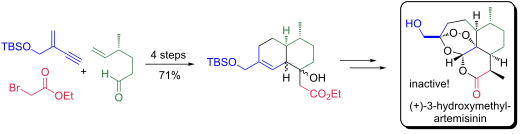
- the propargylic moiety with Red-Al. BAIB/TEMPO oxidation of this alcohol gave ketone 7. By a Reformatsky reaction of 7 using Zn/ethyl bromoacetate derivative 8 was obtained, which was subjected to a thermal (190 °C, toluene) intramolecular Diels–Alder reaction resulting in the formation of the β
- % yield, starting from aldehyde 3 and alkyne 4. Reaction conditions: a) alkyne 4, n-BuLi, THF, −78 °C to rt, 16 h, 86%; b) Red-Al, THF, 0 °C, 10 min, 96%; c) BAIB, TEMPO, DCM, rt, 16 h, 92%; d) BrCH2CO2Et, Zn, toluene, reflux, 30 min, 93%. Red-Al = sodium bis(2-methoxyethoxy)aluminum dihydride, BAIB
- = (diacetoxyiodo)benzene, TEMPO = (2,2,6,6-tetramethylpiperidin-1-yl)oxyl. Synthesis of (+)-3-hydroxymethyl-9-desmethylartemisinin (16), starting from Diels–Alder derivatives 9 and 10. Reaction conditions: a) toluene, 190 °C, 24 h, 84% (dr 9:10:11 = 1.74:0.38:0.24); b) Martin sulfurane, DCM, 0 °C, 10 min, 97% [(E


Convergent synthesis of the pentasaccharide repeating unit of the biofilms produced by Klebsiella pneumoniae
Beilstein J. Org. Chem. 2019, 15, 431–436, doi:10.3762/bjoc.15.37
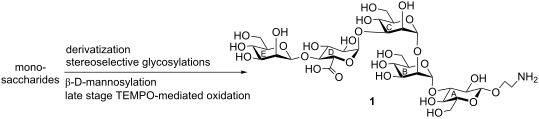
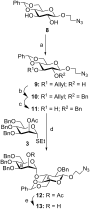
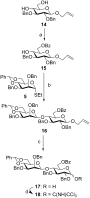
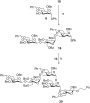
- unit of biofilms produced by Klebsiella pneumoniae, has been synthesized using a stereoselective [2 + 3] convergent glycosylation strategy. The β-D-mannosidic moiety has been synthesized using a D-mannose-derived thioglycoside by a two-step activation process. Late stage TEMPO-mediated oxidation of the
- yield with excellent stereoselectivity. The noteworthy features of the synthetic strategy are (a) incorporation of a β-D-mannosidic linkage and (b) late stage TEMPO-mediated oxidation of the primary hydroxy group into a carboxylic group after completion of glycosylations. The starting compound 2
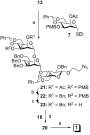
- the presence of TMSOTf [35] furnished target pentasaccharide derivative 20 in 70% yield (Scheme 4). Removal of the benzoyl group from compound 20 using sodium methoxide [24] followed by TEMPO-mediated oxidation [39] of the hydroxy group to a carboxylic group using sodium hypochlorite under biphasic


Oxidative radical ring-opening/cyclization of cyclopropane derivatives
Beilstein J. Org. Chem. 2019, 15, 256–278, doi:10.3762/bjoc.15.23
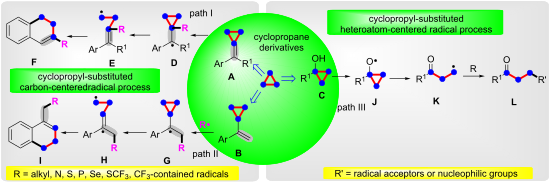
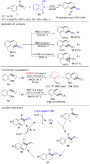
- naphthaldehyde 33 was obtained in 61% yield (Scheme 9, reaction b). Furthermore, the product 31a could also be transformed to the CF3-substituted epoxide 34 in the presence of 2 equiv m-CPBA (m-chloroperbenzoic acid) (Scheme 9, reaction c). A radical-trapping experiment was conducted with the addition of TEMPO
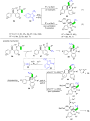
- cyclization under transition-metal free conditions. With the addition of a radical scavenger such as TEMPO or BHT, the reaction was suppressed remarkably. In the same year, Dai’s group also reported the ring-opening-initiated tandem cyclization of cyclopropanols 91 with acrylamides 122 or 2-isocyanobiphenyls








Synthesis of nonracemic hydroxyglutamic acids
Beilstein J. Org. Chem. 2019, 15, 236–255, doi:10.3762/bjoc.15.22
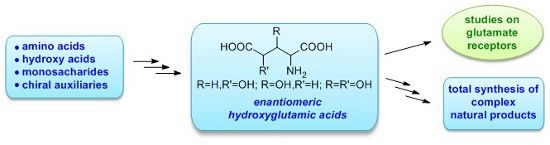
- sequence. Reagents and conditions: a) (CF3CH2O)2P(O)CH2COOMe, KHMDS, 18-crown-6, THF; b) PTSA, MeOH; c) NaOCl, TEMPO, KBr, NaHCO3, water/acetone; d) 3 M HCl, 80 °C. Synthesis of the orthogonally protected (2S,3R)-2 from a chiral aziridine. Reagents and conditions: a) LiHMDS, AcOt-Bu, THF; b) NaBH4, iPrOH


Copper(I)-catalyzed tandem reaction: synthesis of 1,4-disubstituted 1,2,3-triazoles from alkyl diacyl peroxides, azidotrimethylsilane, and alkynes
Beilstein J. Org. Chem. 2018, 14, 2916–2922, doi:10.3762/bjoc.14.270
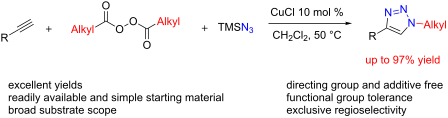
- trapping reagent (tetramethylpiperdinyloxy, TEMPO) [38][39] to the standard reaction system, no product 3a was obtained; only the radical trapped product 4 was detected by GC–MS (Scheme 4a). To further investigate this phenomenon, we synthesized a substrate bearing a cyclopropylmethyl moiety, diacyl




Synthesis of aryl sulfides via radical–radical cross coupling of electron-rich arenes using visible light photoredox catalysis
Beilstein J. Org. Chem. 2018, 14, 2520–2528, doi:10.3762/bjoc.14.228
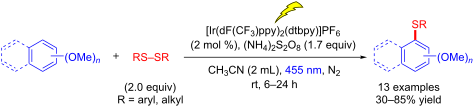
- in Scheme 4. Two equivalents of 2,2,6,6-tetramethylpiperidyl-1-oxyl (TEMPO), a radical scavenger were added to 1,2,4-trimethoxybenzene (Scheme 4a), in the presence of [Ir(dF(CF3)ppy)2(dtbpy)]PF6, ammonium thiosulfate and 455 nm LED irradiation. The reaction mixture was analyzed by mass spectrometry
- , which showed the molecular ion indicating the formation of the proposed TEMPO adduct with the arene radical intermediate. Also, when diphenyl disulfide was irradiated with TEMPO in the presence and absence of the photocatalyst, (Scheme 4b and Scheme 4c) the adduct 2,2,6,6-tetramethyl-1-((phenylthio)oxy
- )piperidine was obtained in both cases. See Supporting Information File 1 for the HRMS analysis of the TEMPO adduct. These radical trapping experiments show that initially a radical cation of the arene is formed by the excited photocatalyst, which then is trapped by the radical scavenger TEMPO. S–S bond


A general and atom-efficient continuous-flow approach to prepare amines, amides and imines via reactive N-chloramines
Beilstein J. Org. Chem. 2018, 14, 2220–2228, doi:10.3762/bjoc.14.196
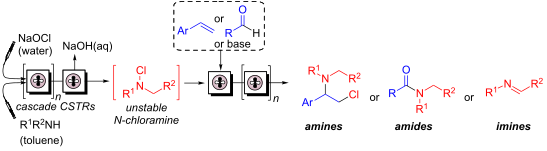
- under an atmosphere of air or in the presence of TEMPO, suppressed all product formation (Table 2, entry 5). Due to the safety concerns of scaling-up such a batch reaction, a heated single-stage CSTR was evaluated to immediately quench the N-chloramine. Flowing an aqueous solution of in situ generated


Cobalt-catalyzed peri-selective alkoxylation of 1-naphthylamine derivatives
Beilstein J. Org. Chem. 2018, 14, 2090–2097, doi:10.3762/bjoc.14.183
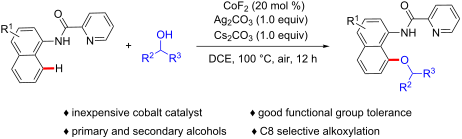
- , benzoquinone (BQ), suppressed the formation of product 3aa. When 2,2,6,6-tetramethyl-1-piperidinyloxyl (TEMPO) or 2,6-di-tert-butyl-4-methylphenol (BHT) was added under the standard reaction conditions, a significantly reduced yield (39% or 23%) was obtained (Scheme 3, reaction 2). These facts suggest that a




Phosphoramidite building blocks with protected nitroxides for the synthesis of spin-labeled DNA and RNA
Beilstein J. Org. Chem. 2018, 14, 1563–1569, doi:10.3762/bjoc.14.133
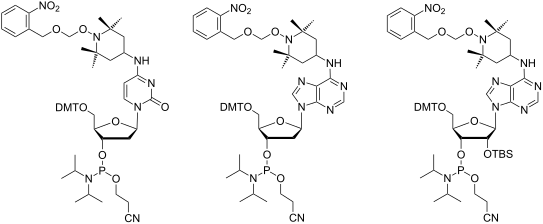
- , Max-von-Laue-Str. 7, D-60438 Frankfurt am Main, Germany 10.3762/bjoc.14.133 Abstract TEMPO spin labels protected with 2-nitrobenzyloxymethyl groups were attached to the amino residues of three different nucleosides: deoxycytidine, deoxyadenosine, and adenosine. The corresponding phosphoramidites
- resulting spin-labeled palindromic duplexes could be directly investigated by PELDOR spectroscopy without further purification steps. Spin–spin distances measured by PELDOR correspond well to the values obtained from molecular models. Keywords: EPR; oligonucleotide; PELDOR; photolabile protection; TEMPO
- , for example, nucleophilic displacement by 4-amino-TEMPO has been used to prepare RNA strands containing the cytidine derivative 1 and its adenosine analog 3 [8][25][26] (Figure 1). Alternatively, by adapting the standard synthetic procedures, nitroxides can be directly incorporated into



Hypervalent organoiodine compounds: from reagents to valuable building blocks in synthesis
Beilstein J. Org. Chem. 2018, 14, 1508–1528, doi:10.3762/bjoc.14.128
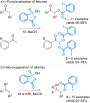
- than its O-tautomer 88, the rearrangement step seems to be much faster. The use of the radical scavenger TEMPO had no effect on the reaction outcome suggesting that the initial hypothesis is correct. By screening additives, it was shown that the hypervalent iodine could be quickly generated in situ by






Synthesis of trifluoromethylated 2H-azirines through Togni reagent-mediated trifluoromethylation followed by PhIO-mediated azirination
Beilstein J. Org. Chem. 2018, 14, 1452–1458, doi:10.3762/bjoc.14.123

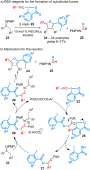
- mechanism, 2,2,6,6-tetramethyl-1-piperidinyloxy (TEMPO), a well-known radical scavenger, was introduced to the model reaction (Scheme 4) following the method previously reported in the literature [63]. It was found that the trifluoromethylation was hampered and the TEMPO-CF3 adduct 8 was formed as a major
- stated. PhIO was added to the reaction mixture after the substrate 5 was completely consumed (TLC analysis). Yields refer to isolated yields. Control study with TEMPO. Proposed mechanism for the Togni reagent-mediated trifluoromethylation of enamines. Optimization of reaction conditions.a Supporting




Cobalt–metalloid alloys for electrochemical oxidation of 5-hydroxymethylfurfural as an alternative anode reaction in lieu of oxygen evolution during water splitting
Beilstein J. Org. Chem. 2018, 14, 1436–1445, doi:10.3762/bjoc.14.121
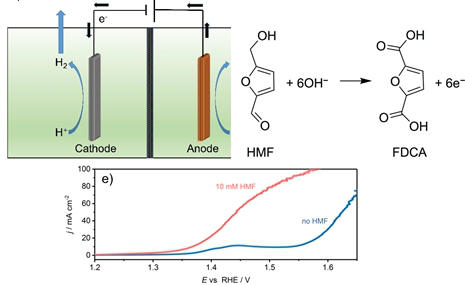
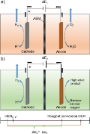
- HMF oxidation was considerably decreased by introducing 2,2,6,6-tetramethylpiperidine-1-oxyl (TEMPO) as an electron mediator to the electrolyte [4]. Despite promising results in synthesizing FDCA, this method suffers from the high cost of TEMPO, which had to be added in 1.5 equivalents relative to HMF
- [4]. The elaborate separation of TEMPO from FDCA appeared to be an additional disadvantage [24]. Recently, Sun and co-workers reported the electrochemical oxidation of HMF using various non-precious cobalt and nickel based bifunctional HER/OER water splitting electrocatalysts, namely CoP on copper



Chlorination of phenylallene derivatives with 1-chloro-1,2-benziodoxol-3-one: synthesis of vicinal-dichlorides and chlorodienes
Beilstein J. Org. Chem. 2018, 14, 796–802, doi:10.3762/bjoc.14.67
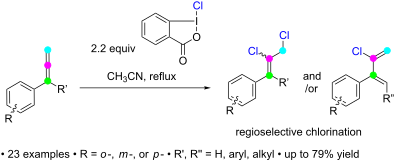
- scrambling observable by 1H or 2H NMR of the product mixture, it appeared that 1,2-phenyl shifts or other rearrangement processes were not involved in the reaction. A further reaction was carried out in the presence of the radical scavenger TEMPO (1.5 equiv), from which only a trace of 3b was recovered
- over 1 h to a solution of 1b (0.44 mmol, 2.2 equiv) in 0.1 M CH3CN under reflux conditions, and the reaction stirred overnight; isolated yields. Control reactions: (a) chlorination of deuterated biphenylallene [D2]-2b; (b) reaction with TEMPO. Optimization of the reaction conditions.a Supporting


Latest development in the synthesis of ursodeoxycholic acid (UDCA): a critical review
Beilstein J. Org. Chem. 2018, 14, 470–483, doi:10.3762/bjoc.14.33
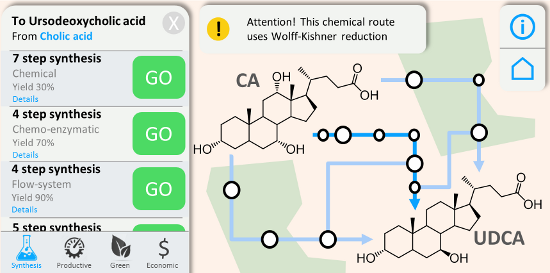
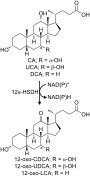
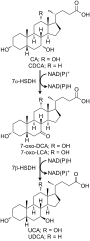
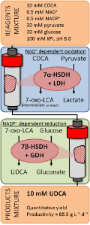
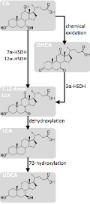
- synthesis of UDCA. For example the 3α-HSDHs [51][99] catalyze the oxidoreduction of the 3α-OH groups to the corresponding ketones and the well-known laccase-TEMPO system [100] can be used for the unselective oxidation of CA to dehydrocholic acid (DHCA). Solvent and substrate loading considerations in



One-pot preparation of 4-aryl-3-bromocoumarins from 4-aryl-2-propynoic acids with diaryliodonium salts, TBAB, and Na2S2O8
Beilstein J. Org. Chem. 2018, 14, 345–353, doi:10.3762/bjoc.14.22
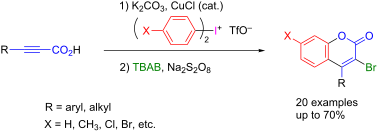
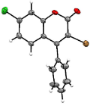
- the presence of 2,2,6,6-tetramethylpiperidine 1-oxyl radical (TEMPO, 2.0 equiv) or 2,6-di(tert-butyl-p-cresol (BHT, 3.0 equiv) at the second step under the same procedure and conditions, but 3-bromo-4-phenylcoumarin (3Aa) was not obtained at all in both reactions. Thus, the present bromocyclization of




CF3SO2X (X = Na, Cl) as reagents for trifluoromethylation, trifluoromethylsulfenyl-, -sulfinyl- and -sulfonylation. Part 1: Use of CF3SO2Na
Beilstein J. Org. Chem. 2017, 13, 2764–2799, doi:10.3762/bjoc.13.272
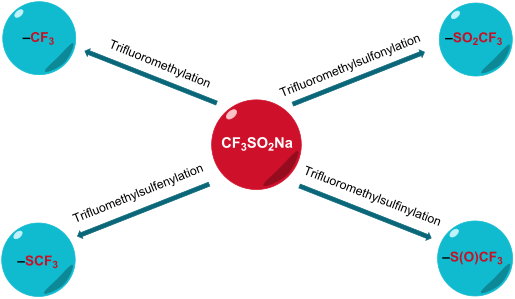
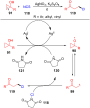
- CF3SO2Na by means of an oxidative system comprising catalytic amounts of silver(I) nitrate and potassium persulfate K2S2O8. Both atmospheric oxygen and K2S2O8 can be the source of the oxygen atom of the ketone moiety. A series of experiments that include the formation of TEMPO–CF3 (TEMPO: 2,2,6,6
- ) addition of TEMPO suppressed the reaction; (ii) an induction period was observed followed by acceleration with consumption of styrene; (iii) vinyl triflone was detected indicating the formation of CF3SO2•; (iv) formation of CF3SO3– via oxidation of CF3SO2• (Scheme 16). A metal-free approach with in situ
- -unsaturated ketones 58 (Scheme 31b). Benzophenone (BP) or anthracene-9,10-dione (AQ) were used as sensitizers under irradiation using a UV lamp at 280 nm. A radical pathway that involves CF3• was established after a negative reaction in the presence of TEMPO (TEMPO–CF3 was detected by GC–MS). An example of






















Reagent-controlled regiodivergent intermolecular cyclization of 2-aminobenzothiazoles with β-ketoesters and β-ketoamides
Beilstein J. Org. Chem. 2017, 13, 2739–2750, doi:10.3762/bjoc.13.270
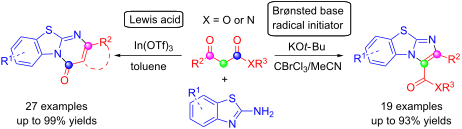
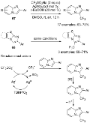
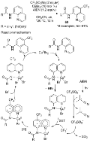
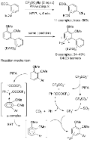
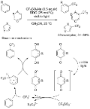
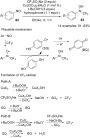
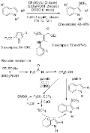
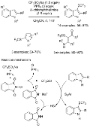
- pathway, 2,2,6,6-tetramethylpiperidin-1-yl oxyl (TEMPO, 2.0 equiv) was added to the reaction mixture as a radical scavenger (Scheme 4c). After 24 h, none of the desired product 3a had formed, indicating that the reaction pathway was a radical one in nature. Homolytic cleavage of the C–Br bond in CBrCl3
- conditions (Scheme 4e). No desired product 5a was formed, implying the need for In(OTf)3 as catalyst in the reaction. A radical trapping experiment with 2 equivalents of TEMPO was also conducted using the optimized conditions (Scheme 4f). 89% of 5a was formed, implying that the reaction does not proceed via


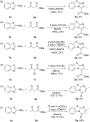


Mechanically induced oxidation of alcohols to aldehydes and ketones in ambient air: Revisiting TEMPO-assisted oxidations
Beilstein J. Org. Chem. 2017, 13, 2049–2055, doi:10.3762/bjoc.13.202
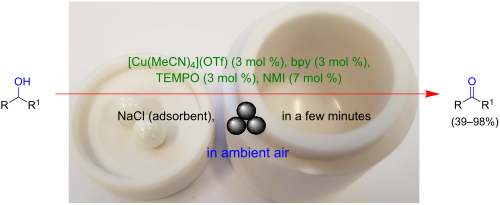
- reaction exhibited higher yields and rates than the classical, homogeneous, TEMPO-based oxidation. Keywords: aldehydes; ball milling; ketones; mechanochemistry; oxidation reactions; TEMPO; Introduction Aldehydes and ketones constitute some of the most powerful and versatile building blocks that are
- to the respective carboxylic acid [11][12]. In addition, the appeal of this reaction is reduced by the need to use stoichiometric amounts of strong oxidising agents that are extremely toxic, hazardous, and expensive [13][14][15][16][17]. The use of the stable tetraalkylnitroxyl radical TEMPO (2,2,6,6
- -phase system buffered at pH 8.5–9.5 [20]. Over the years, bleach has been replaced with an impressively long list of other co-oxidants [21], which are sometimes very expensive, and exhibit a wide spectrum of effectiveness (Scheme 1) [22][23]. Recently, Stahl [24] developed a practical CuI/TEMPO-based


Difunctionalization of alkenes with iodine and tert-butyl hydroperoxide (TBHP) at room temperature for the synthesis of 1-(tert-butylperoxy)-2-iodoethanes
Beilstein J. Org. Chem. 2017, 13, 2023–2027, doi:10.3762/bjoc.13.200
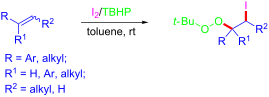
- product formation efficiency. We investigated the addition of the radical inhibitor TEMPO (2,2,6,6-tetramethylpiperididine-N-oxyl) to gain an insight into the mechanism of this reaction. The reaction was completely inhibited in the presence of TEMPO, suggesting that a radical pathway may be operating in


Transition-metal-free synthesis of 3-sulfenylated chromones via KIO3-catalyzed radical C(sp2)–H sulfenylation
Beilstein J. Org. Chem. 2017, 13, 2017–2022, doi:10.3762/bjoc.13.199
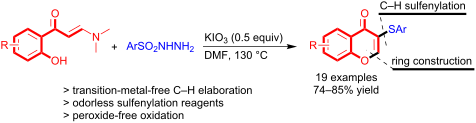
- (reaction 1, Scheme 3). In addition, sulfonyl hydrazine 2b gave disulfide 6 under the same conditions (reaction 2, Scheme 3), suggesting that chromone 5 and disulfide 6 might be key intermediates in the domino reactions. Moreover, the same reaction in the presence of TEMPO gave no formation of 6, indicating
- presence of TEMPO, however, provides only with trace amounts of 3i, supporting that products 3 are yielded via a free radical route (reaction 6, Scheme 3). In addition, the control reaction of 1b and 2b afforded also only trace amounts of product 3i in the presence of 1 equiv TEMPO (reaction 7, Scheme 3


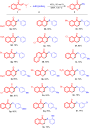
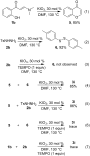

Mechanochemical synthesis of small organic molecules
Beilstein J. Org. Chem. 2017, 13, 1907–1931, doi:10.3762/bjoc.13.186
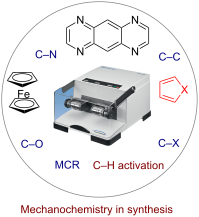
- ][133] in which the component aldehyde and catalytic amount of acid were generated in situ for the final step of dihydropyrimidinone synthesis. Benzyl alcohols were oxidized by a reagent combination of oxone (0.6 equiv), KBr (10 mol %) and 2,2,6,6-tetramethylpiperidin-1-yloxy radical (TEMPO, 1 mol %) to