
Search results
Search for "CO" in Full Text gives 1891 result(s) in Beilstein Journal of Organic Chemistry. Showing first 200.
Formal synthesis of a selective estrogen receptor modulator with tetrahydrofluorenone structure using [3 + 2 + 1] cycloaddition of yne-vinylcyclopropanes and CO
Beilstein J. Org. Chem. 2025, 21, 1639–1644, doi:10.3762/bjoc.21.127
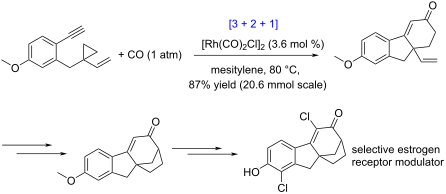
- University, Beijing, 100871, China 10.3762/bjoc.21.127 Abstract A formal synthesis of product VI with tetrahydroflurenone structure as selective estrogen receptor modulator has been realized. The Rh-catalyzed [3 + 2 + 1] reaction of yne-vinylcyclopropanes and CO (20 mmol scale, in 87% yield) for building
- annulation to construct the C ring (cyclohexenone ring), and an intramolecular SN2 reaction to build the D ring (five-membered ring) [15][16][17][18]. In 2013, Wallace and co-workers disclosed the second route for this molecule (Scheme 2B) [19], in which the five-membered ring B was formed by utilizing
- group in compound 10. Compound 10 can be realized by introducing an ester group in 9, which is the [3 + 2 + 1] cycloadduct from 8 and CO using a Rh catalyst. The [3 + 2 + 1] substrate of yne-vinylcyclopropane (yne-VCP) 8 can be synthesized by Wittig reaction from cyclopropyl aldehyde 7, in which the


Transition-state aromaticity and its relationship with reactivity in pericyclic reactions
Beilstein J. Org. Chem. 2025, 21, 1613–1626, doi:10.3762/bjoc.21.125
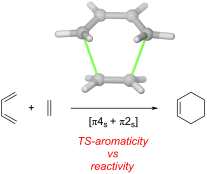
- Cope rearrangements [20]. More recently, Alabugin and co-workers reported that the gold(I)-catalyzed propargyl rearrangement depicted in Scheme 1b also follows a concerted oxonia Claisen pathway (via an aromatic TS) rather than through a higher barrier 6-endo-dig cyclization [21], which provides


Chemical synthesis of glycan motifs from the antitumor agent PI-88 through an orthogonal one-pot glycosylation strategy
Beilstein J. Org. Chem. 2025, 21, 1587–1594, doi:10.3762/bjoc.21.122
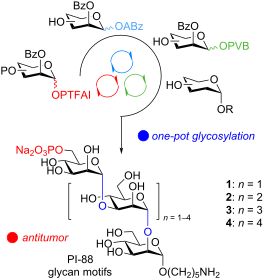
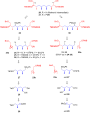
- trials for post-resection hepatocellular carcinoma [26]. Interestingly, Ferro and co-workers revised the structure of PI-88 to I and II in 2017 via successful separation of oligosaccharide phosphate fractions by preparative ion-exchange chromatography (Scheme 1A) [27]. Besides the major components α(1→3



Thermodynamic equilibrium between locally excited and charge transfer states in perylene–phenothiazine dyads
Beilstein J. Org. Chem. 2025, 21, 1577–1586, doi:10.3762/bjoc.21.121
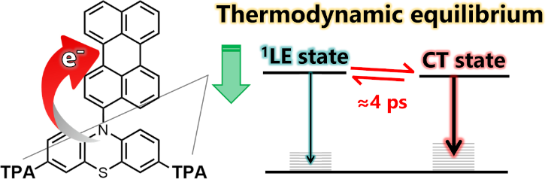
- : Experimental and computational details, synthesis and characterization of compounds, additional spectroscopic results, and theoretical calculations. Acknowledgements The authors acknowledge Dr. Tatsuo Nakagawa, UNISOKU Co., Ltd., for nanosecond transient absorption measurements Funding This work was supported


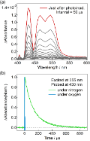

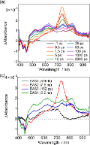

Azide–alkyne cycloaddition (click) reaction in biomass-derived solvent CyreneTM under one-pot conditions
Beilstein J. Org. Chem. 2025, 21, 1544–1551, doi:10.3762/bjoc.21.117
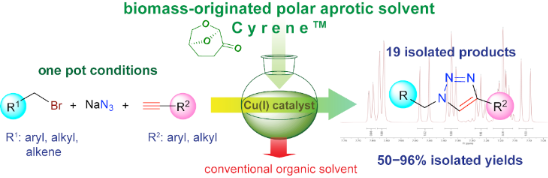
- = 6.3 Hz, 1H, CH), 2.73–2.02 (m, 4H, CH2); 13C NMR (75 MHz, CDCl3, TMS) δ 200.3 (CO), 101.5 (CH), 73.1 (CH), 67.6 (CH2), 31.1 (CH2), 29.9 (CH2). The NMR data correspond to the published results. Methyl 4-methoxyvalerate and ethyl 4-ethoxyvalerate were prepared using the published method [47]. The


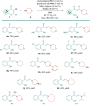
General method for the synthesis of enaminones via photocatalysis
Beilstein J. Org. Chem. 2025, 21, 1535–1543, doi:10.3762/bjoc.21.116
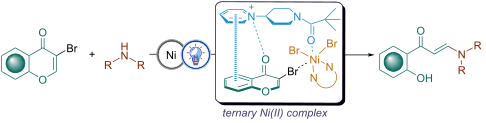
- presence of amines and CuI as catalyst, as reported by Zhang and co-workers (Scheme 1B) [32]. On the other hand, Li et al. disclosed a silver-catalyzed amination of propargyl alcohols to afford enaminones (Scheme 1C) [33]. Although these new methods provide a wide variety of enaminones, there are




Ambident reactivity of enolizable 5-mercapto-1H-tetrazoles in trapping reactions with in situ-generated thiocarbonyl S-methanides derived from sterically crowded cycloaliphatic thioketones
Beilstein J. Org. Chem. 2025, 21, 1508–1519, doi:10.3762/bjoc.21.113
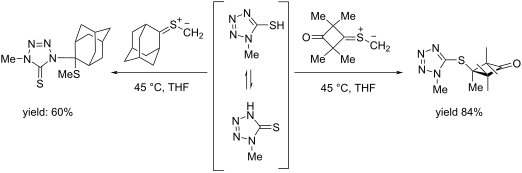
- ]. Thiocarbonyl S-methanides (thiocarbonyl ylides) 1, which were first reported in the 1980s by R. Huisgen and co-workers contributed to a substantial extension of mechanistic interpretations of cycloaddition reactions and to rapid development of methods applied not only for the synthesis of sulfur heterocycles


Heterologous biosynthesis of cotylenol and concise synthesis of fusicoccane diterpenoids
Beilstein J. Org. Chem. 2025, 21, 1489–1495, doi:10.3762/bjoc.21.111
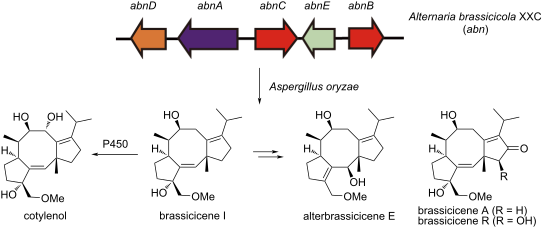
- biosynthetic pathway for brassicicenes, which share the same carbon skeleton and similar oxidation and unsaturation states as cotylenol and cotylenin A [36]. In a previous study, Oikawa and co-workers reported the identification of brassicicene BGC in Pseudocercospora fijiensis [37]. By heterologous expression
- the homologous gene abnABCDE. As expected, compound 5 was produced at a titer of 8 mg/L (Figure 2c). By co-fermenting with Amberlite XAD-16, an enhanced yield of 30 mg/L was achieved, thus allowing further transformation into other natural products. We next carried out the formal synthesis of
- cotylenin A by Nakada and co-workers [21]. However, installing the C9 hydroxy group requires the use of stoichiometric MoOPH [39], which raises toxicity and safety issues. Therefore, we sought an enzymatic method to selectively oxidize 5 at the C9 position. Dairi and co-workers reported that Orf7 oxidizes


Copper catalysis: a constantly evolving field
Beilstein J. Org. Chem. 2025, 21, 1477–1479, doi:10.3762/bjoc.21.109

- substitution pattern on the regioselectivity and stereoselectivity of the reactions. A Review article by Papis and co-workers discusses various copper(II) triflate-catalyzed multicomponent reaction types [2]. Therein, the synthesis of cyclic and acyclic compounds, as well as three-component and four-component
- by Son and co-workers illustrates recent advancements in the use of dioxazolones in synthetic transformations with copper salts [4]. The authors remark that these catalytic systems, which employ dioxazolones as electrophilic amide sources, were applied for the preparation of diverse amidated products
- . In their contribution, Son et al. focus on transformations via the formation of copper nitrenoids, particularly amidations via oxidative insertion to N–O bonds and reductive elimination, and a small number of other reactions. The final Review by Cho, Lee, and co-workers is useful for the scientific
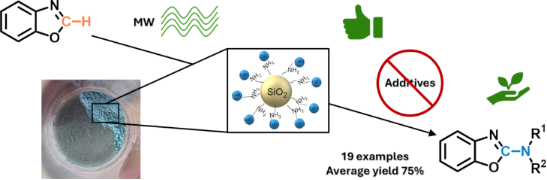
Microwave-enhanced additive-free C–H amination of benzoxazoles catalysed by supported copper
Beilstein J. Org. Chem. 2025, 21, 1462–1476, doi:10.3762/bjoc.21.108
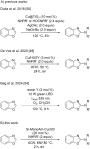
- devoted to benzoxazoles. When applied to benzoxazole, the reaction is catalysed by transition metals such as Ag(I) [20], Mn(II) [21], Fe(III) [22][23], Co [24], Ni(II) [25] and Fe(III) [26]. However, the use of Cu(II) has increased thanks to its high tolerance towards several functional groups, high
- being applied when reacting amides to achieve their decarbonylation. In 2014, Cao et al. [47] reported the amination of benzoxazole with a secondary amine either in air or an O2 atmosphere, lowering the catalyst amount and the reaction temperature. In 2020, a study by De Vos and co-workers [48] focused
- to identify mild conditions for the Cu-catalysed aerobic C–H amination in absence of acid, base or co-catalyst additives. As described in Table 1, we explored the effects of different solvents and copper species, and preliminary reactions were conducted with Cu(II) salts, with reference to reaction



Advances in nitrogen-containing helicenes: synthesis, chiroptical properties, and optoelectronic applications
Beilstein J. Org. Chem. 2025, 21, 1422–1453, doi:10.3762/bjoc.21.106
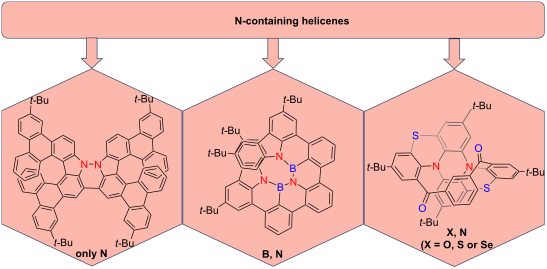
- helical architectures, have attracted considerable attention due to their intrinsic chirality and tunable optoelectronic properties. Among them, nitrogen-doped helicenes (azahelicenes) and their heteroatom-co-doped counterparts – such as B/N-, O/N-, S/N-, and Se/N-doped helicenes – have emerged as highly
- emitters. Boron–nitrogen co-doping strategies, in particular, have facilitated the development of materials with ultra-narrowband emissions, near-unity photoluminescence quantum yields, and electroluminescence dissymmetry factors (|gEL|) exceeding 10−3. Likewise, heteroatom co-doping with oxygen, sulfur
- applications in chiral optoelectronics. Several comprehensive reviews have examined specific classes of these molecules. Crassous and co-workers provided a detailed overview of heterohelicenes up to 2019, focusing on their structural diversity and functional applications [11]. Nowak-Król and colleagues

Tautomerism and switching in 7-hydroxy-8-(azophenyl)quinoline and similar compounds
Beilstein J. Org. Chem. 2025, 21, 1404–1421, doi:10.3762/bjoc.21.105
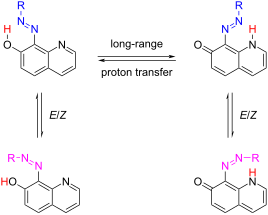
- tautomer, which means that the switching would not be clean. According to relative energies and relative Gibb’s free energies, collected in Table 1, compound 1 should co-exist as a three component (E, KE and KK) tautomeric mixture in both toluene and acetonitrile. If the relative energies are taken into




Oxetanes: formation, reactivity and total syntheses of natural products
Beilstein J. Org. Chem. 2025, 21, 1324–1373, doi:10.3762/bjoc.21.101
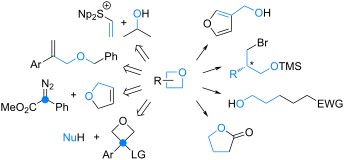
- loadings were necessary for ortho-substituted phenyls. Control experiments and DFT calculations revealed that the oxetane ring is formed before the tetrahydrofuran in the domino process. In 2023, Shigehisa and co-workers published a new cycloisomerisation strategy for the construction of oxetane rings from
- oxidation of the metal centre turns the cobalt into an excellent leaving group, allowing for an intramolecular displacement reaction that affords the oxetane ring and regenerates the Co(II) catalyst. In 2023, Silvi et al. described a versatile and practical methodology that couples Williamson etherification
- vinylsulphonium triflates 28 which combine the features of a radical acceptor (in a Giese-type addition) and a leaving group. The use of ketyl radicals for oxetane synthesis was also investigated by Schindler and co-workers and a year later the group published a methodology that utilises a similar Giese addition










Recent advances and future challenges in the bottom-up synthesis of azulene-embedded nanographenes
Beilstein J. Org. Chem. 2025, 21, 1272–1305, doi:10.3762/bjoc.21.99
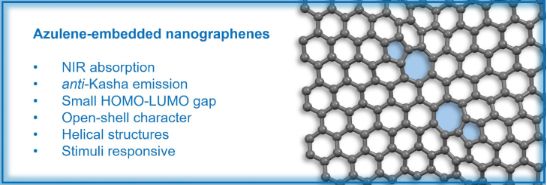
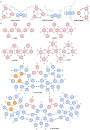
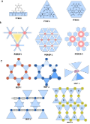
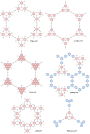
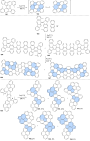
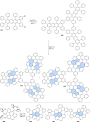
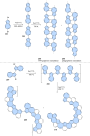
- ], TPH-graphene (Figure 2b) [23], PHH-graphene [24] and ψ-graphene [25]. Notably, fragments phagraphene and TPH-graphene have already been synthesized via on-surface chemistry and characterized using low-temperature scanning probe microscopy with CO-functionalized tips [23]. These non-alternant carbon
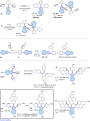
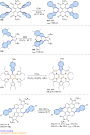
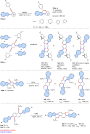
- synthesis of π-extended azulene was the non-benzenoid isomer of pyrene published by Ward and co-workers (Scheme 1) [31]. Cyclohept[bc]acenaphthylene (2) was obtained from a partially saturated precursor 1 via dehydrogenation using palladium on carbon. However, the reaction carried out at 300 °C gave 2 as a
- . Dehydrogenation played a pivotal role as a key step also in the synthesis of larger π-scaffolds. For example, Murata and co-workers reported the synthesis of an azulene containing isomer of benzo[a]pyrene 9 (Scheme 2) [33]. Reduction of ketone 7 using LiAlH4 resulted in alcohol 8 which was subsequently






Recent advances in oxidative radical difunctionalization of N-arylacrylamides enabled by carbon radical reagents
Beilstein J. Org. Chem. 2025, 21, 1207–1271, doi:10.3762/bjoc.21.98
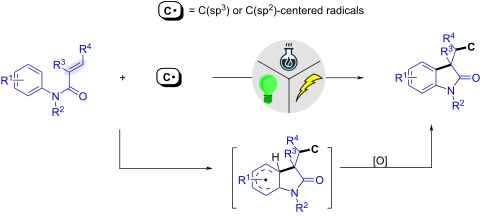
- , People’s Republic of China Zhejiang Lvgu Biopharmaceutical Co., Ltd., No.16 Bailian Road, Nanmingshan Street, Lishui City 323000, Zhejiang Province, China 10.3762/bjoc.21.98 Abstract The field of radical-mediated functionalization of N-arylacrylamides has experienced considerable advancements in recent
- methoxy (-OMe) and halogens (-F, -Cl, -Br), as well as electron-withdrawing functionalities like trifluoromethyl (-CF₃) and ester groups (-CO₂Me). However, highly electron-deficient substrates, such as those bearing cyano (-CN) or nitro (-NO₂) groups, did not react. Additionally, the study explored
- employed as a redox catalyst, Na2CO3 as a base, and n-Bu4NBF4 as the electrolyte, all participating in an undivided electrolytic cell with a reticulated vitreous carbon (RVC) anode and a platinum (Pt) cathode at a constant current of 10 mA, in a co-solvent mixture of MeOH/THF 2:1 for 3 hours to deliver the














Enhancing chemical synthesis planning: automated quantum mechanics-based regioselectivity prediction for C–H activation with directing groups
Beilstein J. Org. Chem. 2025, 21, 1171–1182, doi:10.3762/bjoc.21.94
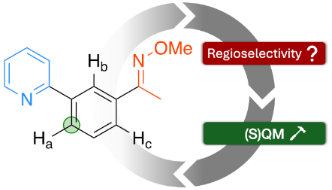
- molecules that increase the directing strength of a directing group towards a specific site. While this paper was in review, Oshiya and co-workers published an ML model that classifies reactants as having ortho-, meta-, para- or non-directing functionalities for Pd-catalysed directing group-assisted C–H


Correction: Diastereoselective synthesis of highly substituted cyclohexanones and tetrahydrochromene-4-ones via conjugate addition of curcumins to arylidenemalonates
Beilstein J. Org. Chem. 2025, 21, 1170–1170, doi:10.3762/bjoc.21.93
- reaction; tetrahydrochromenones; Lakshminarayana Satham is acknowledged as additional co-author of our original publication. It was subsequently determined that Lakshminarayana Satham made significant contributions to the published research. The Funding section is updated as follows: DN thanks UGC India
Synthetic approach to borrelidin fragments: focus on key intermediates
Beilstein J. Org. Chem. 2025, 21, 1135–1160, doi:10.3762/bjoc.21.91
- a marine or hypersaline environment natural products library to identify potent drugs, a putatively novel metabolite co-produced with borrelidin was discovered, expanding the potential for new borrelidin derivatives. This led to the formation of the so-called “borrelidin family” (Table 1), with
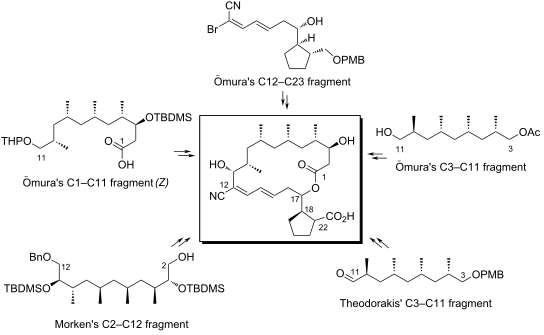
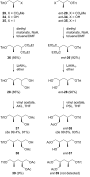
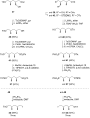
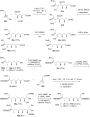
- approach for constructing Morken’s C2–C12 fragment In 2019, Uguen and co-workers introduced a strategy to assemble Morken’s C2–C12 intermediate 20 [41]. Their approach utilized iterative base-catalyzed condensation of sulfone compounds with epoxides. As illustrated in Scheme 1, the monoalcohol 20 was
- alternative route was also proposed for synthesizing 21 from compound 30, which was derived from ent-29. Notably, epoxides 23a and 23b were obtained via Sharpless epoxidation of (E)-2-butenol. Uguen and co-workers began their synthesis by reducing Roche esters 29 and ent-29 to their respective primary








Gold extraction at the molecular level using α- and β-cyclodextrins
Beilstein J. Org. Chem. 2025, 21, 1116–1125, doi:10.3762/bjoc.21.89
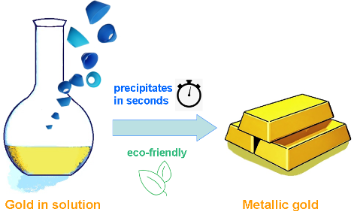
- the inclusion of complex aurate ions such as tetrabromoaurate, dicyanoaurate and a few other tetrahaloaurates. The review describes the properties of self-assembly of cyclodextrins with these ions, with highlight to α-CD and, more recently, β-CD, requiring the use of a co-former/precipitating agent
- trace amounts (<3%). Investigations on the role of both the halogen in KAuX4 (X = Br, Cl) [37], as well as of different alkali cations (Na, K, Rb, Cs) [40] upon the ability to form a co-precipitate in the presence of α-CD were undertaken. The possibility of using different cyclodextrins (α-CD, β-CD or γ
- the importance of a host–guest tight fit to obtain a precipitate with KAuBr4, which occurs only with α-CD. Lastly, tests with alternative alkali metals showed that two of the salts were able to afford co-precipitates with α-CD, as shown in Figure 2. In the adducts with the large-diameter alkali metal


A versatile route towards 6-arylpipecolic acids
Beilstein J. Org. Chem. 2025, 21, 1104–1115, doi:10.3762/bjoc.21.88
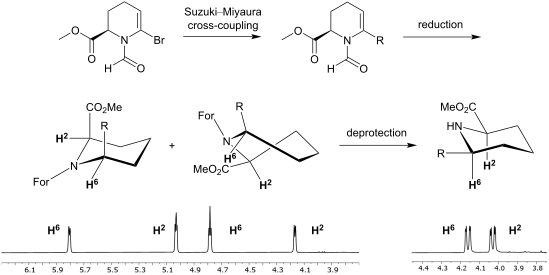
- . The co-existence of cis-/trans-isomers around the N-formyl bond instead of the proposed conformational isomers would not change the coupling pattern and can, therefore, be ruled out. A complete flip of the conformation is not likely due to the partial double bond between the formyl group and nitrogen
- reduction product 13 of a Sonogashira–Hagihara cross-coupling reaction. This was synthesised under similar conditions as the Suzuki–Miyaura counterpart 3 utilising the same Pd catalyst, base and solvent. In addition, 10 mol % CuI as a co-catalyst and 2.0 equiv phenylacetylene (12) were used, resulting in





Supramolecular assembly of hypervalent iodine macrocycles and alkali metals
Beilstein J. Org. Chem. 2025, 21, 1095–1103, doi:10.3762/bjoc.21.87
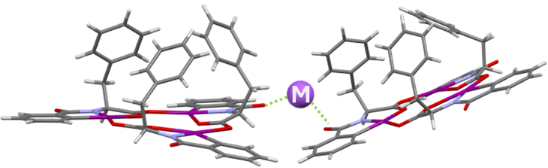
- lithium tetrakis(pentafluorophenyl)borate ethyl etherate LiBArF20 and sodium tetrakis[3,5-bis(trifluoromethyl)phenyl]borate NaBArF24. The electron-rich, outwardly projected carbonyl oxygens of the HIM co-crystalize with the cations into bent supramolecular architectures. Both crystal structures show a
- systems, these macrocycles display dynamic behavior even in the absence of extra anions, with monomers swapping between macrocycles to participate in dynamic covalent chemistry. As a demonstration of even higher supramolecular assemblies, we also showed π-extended HIMs enable the co-assembly of
- hypothesis diverged and considered alternative binding sights including the exterior of the HIMs. Recently, Huber and co-workers [21] showed hypervalent iodine(III) compounds were not impacted by non-coordinating BArF cations. Upon this inspiration, we employed LiBArF20 and NaBArF24 as salt sources to



Salen–scandium(III) complex-catalyzed asymmetric (3 + 2) annulation of aziridines and aldehydes
Beilstein J. Org. Chem. 2025, 21, 1087–1094, doi:10.3762/bjoc.21.86
- was refluxed over sodium with benzophenone as an indicator and freshly distilled prior to use. Column chromatography was performed on silica gel (normal phase, 200–300 mesh) from Anhui Liangchen Silicon Material Co., Ltd. or basic aluminum oxide (pH 9–10) from Shanghai Titan Technology Co., Ltd
- . Petroleum ether (PE, 60–90 °C fraction) and ethyl acetate (EA) were used as eluent. Reactions were monitored by thin-layer chromatography (TLC) on GF254 silica gel plates (0.2 mm) from Anhui Liangchen Silicon Material Co., Ltd. The plates were visualized by UV light. 1H NMR (400 MHz) and 13C NMR (101 MHz


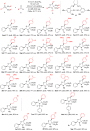
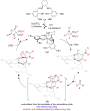

Recent advances in synthetic approaches for bioactive cinnamic acid derivatives
Beilstein J. Org. Chem. 2025, 21, 1031–1086, doi:10.3762/bjoc.21.85
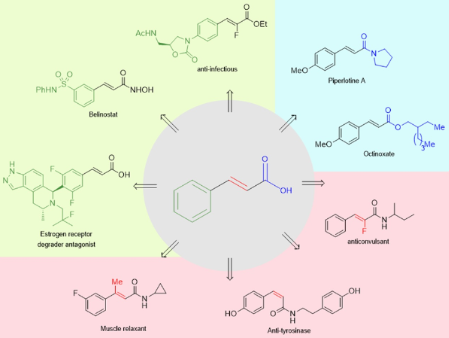
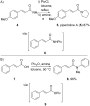
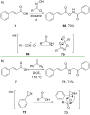
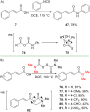
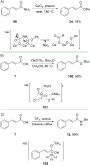
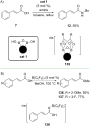
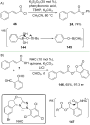
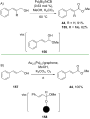
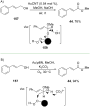
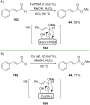
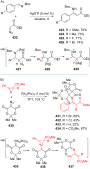
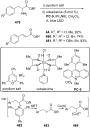
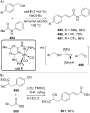
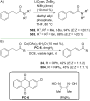
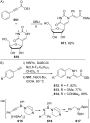
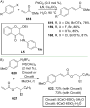
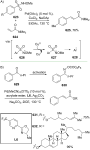
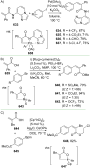
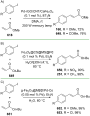
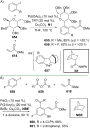
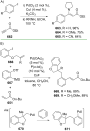
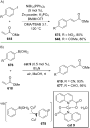
- 4 by utilizing pivaloyl chloride via the N-pivaloyl-activated amide 6 to give piperlotine A (5), the secondary metabolite of black pepper (Piper nigrum) reported to show antibacterial and bioinsecticidal activities, in good yield (Scheme 3A) [33][34]. In the akin process, Xu and co-workers (2023
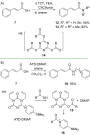
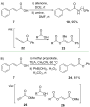
- ) reported a carboxyl group activation of cinnamic acid (7) by applying pivalic anhydride in a single step to afford the corresponding amide 8 in excellent yield (Scheme 3B) [35]. Moreover, pivalic anhydride is easier to handle than its chloride counterpart. Wang and co-workers (2022) utilized 5-nitro-4,6
- applications in organic reactions. Similarly, Kunishima and co-workers (2021) utilized (N,N’-dialkyl)triazinedione-4-(dimethylamino)pyridine (ATD-DMAP) for the amidation of cinnamic acid (7) to generate the corresponding amide 10 in excellent yield (Scheme 5B) [37]. Mechanistically, the carboxyl group attacks


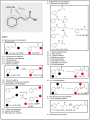



































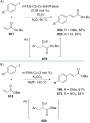

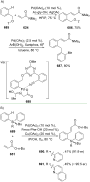
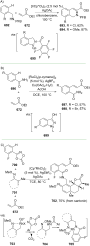
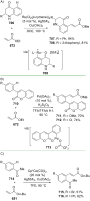




Recent total synthesis of natural products leveraging a strategy of enamide cyclization
Beilstein J. Org. Chem. 2025, 21, 999–1009, doi:10.3762/bjoc.21.81
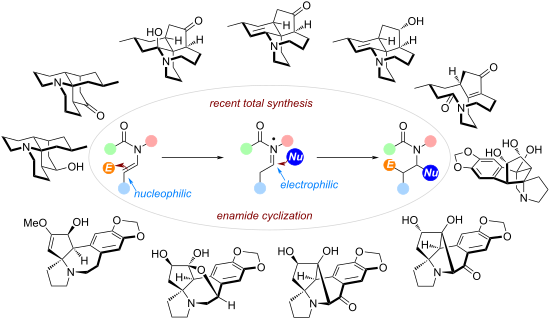
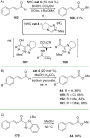
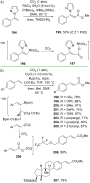
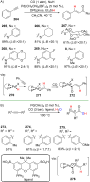
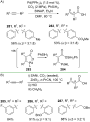
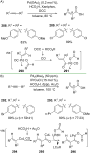
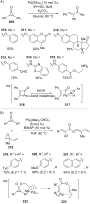
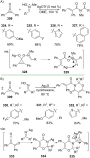
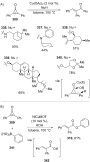
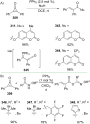
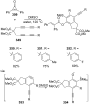
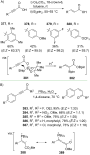
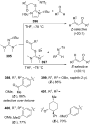
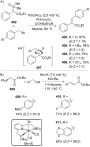
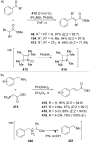
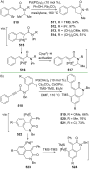
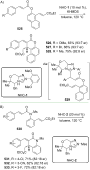
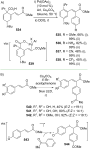
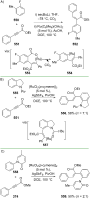
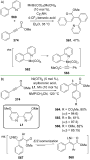
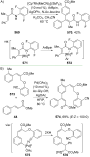
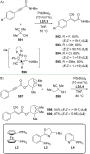
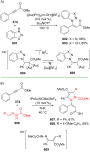
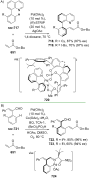
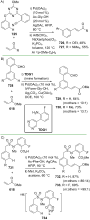
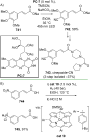
- , lycopodine features a characteristic tetracyclic structure with a bridged cyclohexanone. To address the challenges associated with constructing the complex ring systems of this structure, She and co-workers devised an intramolecular aza-Prins cyclization strategy to form both the bridge ring and the N-hetero
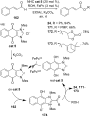
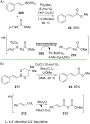
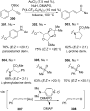
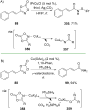
- the reduction of amide-generated ketone 12 after a subsequent Dess–Martin oxidation. Upon treatment of 12 with Co(acac)2 and PhSiH3 in iPrOH at 80 °C, the Mukaiyama hydration of enamide delivered hemiaminal 13. Despite the incorrect configuration of the newly formed hydroxy group, it is considered
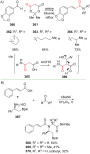
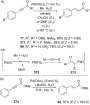
- column chromatography was required during this process, the synthetic route is highly practical. The enantioselective annulation of tertiary enamide 28 with enoldiazoacetate 29 was then explored under the catalysis of a chiral dirhodium catalyst. While Doyle and co-workers had previously reported an





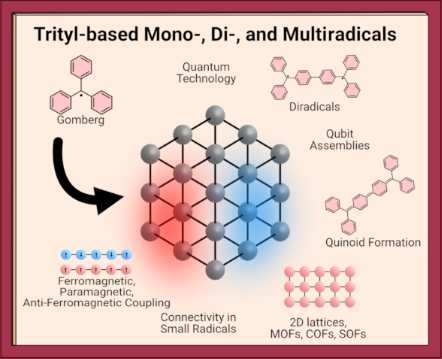
On the photoluminescence in triarylmethyl-centered mono-, di-, and multiradicals
Beilstein J. Org. Chem. 2025, 21, 964–998, doi:10.3762/bjoc.21.80