
Search results
Search for "C–H" in Full Text gives 776 result(s) in Beilstein Journal of Organic Chemistry. Showing first 200.
pKalculator: A pKa predictor for C–H bonds
Beilstein J. Org. Chem. 2024, 20, 1614–1622, doi:10.3762/bjoc.20.144
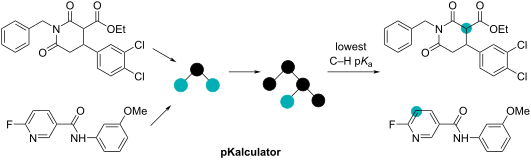
- Rasmus M. Borup Nicolai Ree Jan H. Jensen Department of Chemistry, University of Copenhagen, Copenhagen, DK-2100, Denmark 10.3762/bjoc.20.144 Abstract Determining the pKa values of various C–H sites in organic molecules offers valuable insights for synthetic chemists in predicting reaction sites
- . As molecular complexity increases, this task becomes more challenging. This paper introduces pKalculator, a quantum chemistry (QM)-based workflow for automatic computations of C–H pKa values, which is used to generate a training dataset for a machine learning (ML) model. The QM workflow is
- benchmarked against 695 experimentally determined C–H pKa values in DMSO. The ML model is trained on a diverse dataset of 775 molecules with 3910 C–H sites. Our ML model predicts C–H pKa values with a mean absolute error (MAE) and a root mean squared error (RMSE) of 1.24 and 2.15 pKa units, respectively


![[Graphic 9]](/bjoc/content/inline/1860-5397-20-144-i12.svg?max-width=637&scale=1.3000021)


Regio- and stereochemical stability induced by anomeric and gauche effects in difluorinated pyrrolidines
Beilstein J. Org. Chem. 2024, 20, 1572–1579, doi:10.3762/bjoc.20.140
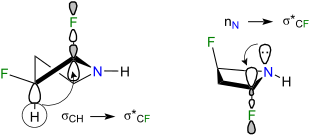
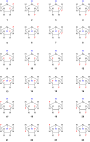
- , less stabilizing σCC→σ*CF interactions were anticipated. Moreover, besides the anomeric interaction, the pseudoaxially oriented C–F bonds in 17 and 19 facilitated efficient electron donation from vicinal antiperiplanar C–H bonds through σCH→σ*CF interactions (Figure 6). The methylene group separating
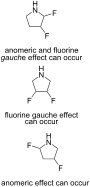
- -fluoropyrrolidinium cation and 3-fluoropyrrolidine. The conformational space of 2,3-, 2,4-, and 3,4-difluoropyrrolidines is notably dictated, both in the gas phase and implicit polar solution, by the N to C–F bond anomeric effect. Additionally, albeit less significant, electron delocalization from the C–H bonding





Benzylic C(sp3)–H fluorination
Beilstein J. Org. Chem. 2024, 20, 1527–1547, doi:10.3762/bjoc.20.137

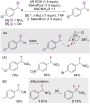
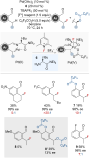
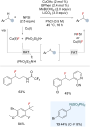
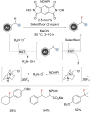
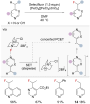
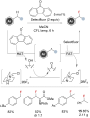
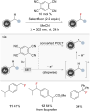
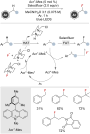
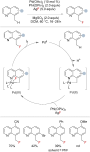
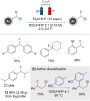
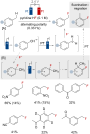
- , over recent years much attention has been focused on C(sp3)–H fluorination, and several methods that are selective for benzylic C–H bonds have been reported. These protocols operate via several distinct mechanistic pathways and involve a variety of fluorine sources with distinct reactivity profiles
- . This review aims to give context to these transformations and strategies, highlighting the different tactics to achieve fluorination of benzylic C–H bonds. Keywords: benzylic; C–H functionalization; fluorination; photoredox catalysis; Introduction The development of new fluorination methodologies is
- compound, carry that functional group through synthesis and also protect any potentially labile group that would otherwise displace during the installation of the fluorine atom [6][7][8]. Therefore, methodologies for the selective C–H fluorination represent a valuable class of reactions [1][9][10], for




















Synthesis of 4-functionalized pyrazoles via oxidative thio- or selenocyanation mediated by PhICl2 and NH4SCN/KSeCN
Beilstein J. Org. Chem. 2024, 20, 1453–1461, doi:10.3762/bjoc.20.128
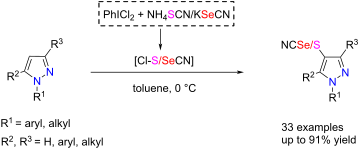
- , Yotphan and colleagues realized a direct thiocyanation of N-substituted pyrazolones under metal-free conditions [49]. Besides, Choudhury and co-workers developed an additive and metal-free methodology for the C–H thiocyanation of aminopyrazoles, using H2O2 as a benign oxidizing agent (Scheme 1b) [41]. Pan
- presented a method for the C–H thiocyanation of pyrazoles by using a sustainable catalyst of graphite-phase carbon nitride (g-C3N4) under visible light irradiation (Scheme 1c) [2]. Furthermore, Yao harnessed an electrochemical approach to form the electrophilic SCN+ intermediate, which reacted with


Predicting bond dissociation energies of cyclic hypervalent halogen reagents using DFT calculations and graph attention network model
Beilstein J. Org. Chem. 2024, 20, 1444–1452, doi:10.3762/bjoc.20.127
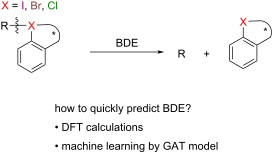
- hypervalent iodine(III) reagents has been developed [12][13][14][15][16][17] (Figure 1), including the well-known Zhdankin reagents [13] and Togni reagents [14]. These reagents are popularly used as electrophilic group transfer reagents [18][19] in a variety of reactions, such as C–H functionalization [20][21
- applications [27][28][29][30]. For example, hypervalent bromine(III) reagents enable C–H amination and alkene aziridination reactions without the need for additional Lewis acid activation [31][32][33]. However, challenges in the synthesis and stabilization of cyclic hypervalent bromine and chlorine reagents


Generation of alkyl and acyl radicals by visible-light photoredox catalysis: direct activation of C–O bonds in organic transformations
Beilstein J. Org. Chem. 2024, 20, 1348–1375, doi:10.3762/bjoc.20.119
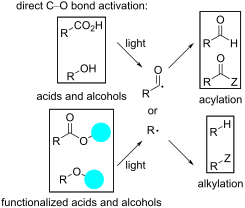
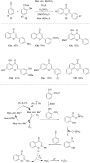
- –halogen bond formation, as well as C–H functionalization [27]. Some notable examples include C–H arylation, various cross-coupling reactions, oxidative coupling, and photocatalytic radical reactions. The advantages of visible-light-induced photoredox catalysis are due to the ability to utilize visible
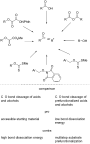
- acyl radical. This acyl radical eventually leads to the formation of expected product. Reactions involving alkyl radical obtained via C–O bond cleavage C–O bond activation of prefunctionalized alcohols Alkyl radicals play a crucial role as intermediates in various chemical transformations involving C–H
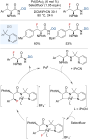
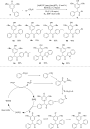
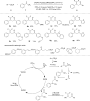
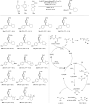
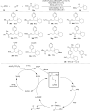
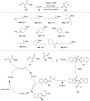
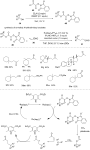
- -state *[Ir(III)] complex can effectively oxidize the nitrogen atom of activated NHC–alcohol adduct 66 via SET. The resulting nitrogen radical cation intermediate 67 weakens the adjacent C–H bond, making it more acidic and susceptible to deprotonation by a suitable base, ultimately yielding an α-amino






Transition-metal-catalyst-free electroreductive alkene hydroarylation with aryl halides under visible-light irradiation
Beilstein J. Org. Chem. 2024, 20, 1327–1333, doi:10.3762/bjoc.20.116
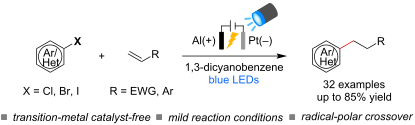
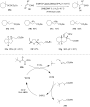
- versatile building blocks in organic syntheses. To achieve this transformation with high efficiency and predictable regioselectivity, numerous efforts have been made to develop transition-metal-catalyzed reactions based on a C–H activation strategy [1][2][3][4] or the reductive coupling of aryl halides with

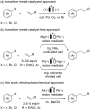
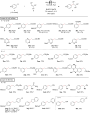
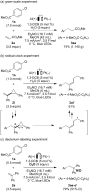

Competing electrophilic substitution and oxidative polymerization of arylamines with selenium dioxide
Beilstein J. Org. Chem. 2024, 20, 1221–1235, doi:10.3762/bjoc.20.105
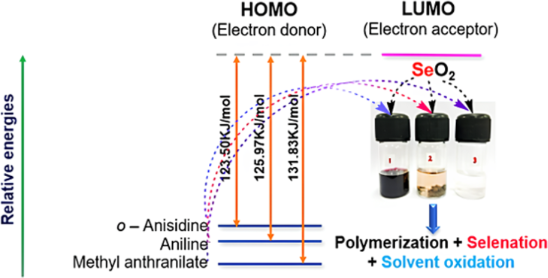
- due to N–H stretching of the polymer [43][44]. The peak appearing at around 3000 cm−1 corresponded to the aryl C–H stretching. The peaks observed at 1593 and 1479 cm−1 were associated with C=C and C=N stretching, respectively. The obtained result was further supported by solid-state synthesis of


Light on the sustainable preparation of aryl-cored dibromides
Beilstein J. Org. Chem. 2024, 20, 1076–1087, doi:10.3762/bjoc.20.95
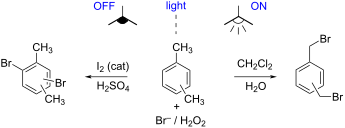
- context of covalent organic frameworks (COFs) and metal-organic frameworks (MOFs), frequently assembled through imine linkages. While C–H activation through halogens presents clear technical advantages, it also brings forth concerns about the toxicity of halo compounds to both human health and the



Structure–property relationships in dicyanopyrazinoquinoxalines and their hydrogen-bonding-capable dihydropyrazinoquinoxalinedione derivatives
Beilstein J. Org. Chem. 2024, 20, 1037–1052, doi:10.3762/bjoc.20.92
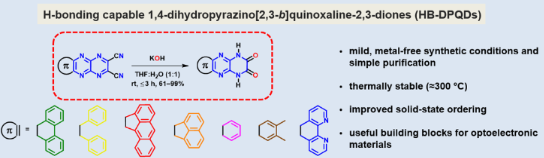
- respect to the carbonyl groups (Figure 6b) and 5.25° concerning peripheral rings 1 and 3 (Figure 6c). The unit cell is composed of a dimer of 2b held together by intermolecular N–H∙∙∙N and C–H∙∙∙O=C H-bonds with average distances of 2.30 Å and 2.28 Å, respectively (Figure 6d and 6e). The herringbone
- intermolecular N–H∙∙∙N and C–H∙∙∙O=C distances (d). Unit cell comprised of four molecules of 2b (e). Herringbone packing of 2b showing the distance between adjacent ring centroids (f). Herringbone backing of 2b shown as a spacefilling model (g). Atom color code: blue N, gray C, red O, and white H. Synthesis of




Novel analogues of a nonnucleoside SARS-CoV-2 RdRp inhibitor as potential antivirotics
Beilstein J. Org. Chem. 2024, 20, 1029–1036, doi:10.3762/bjoc.20.91
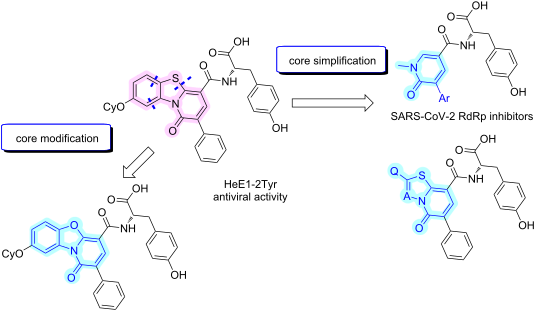
- -2Tyr (1). Reagents and conditions: a) MeI, K2CO3, DMF, rt, 2.5 h, b) LiOH⋅H2O, H2O, 1,4-dioxane, rt, 15 min, c) H–ʟ-Tyr–OMe, HOBt, EDCI, TEA, DCM, DMF, rt, 12 h, d) ArB(OH)2, Pd(dppf)Cl2⋅CH2Cl2, Cs2CO3, DMF, H2O, 80 °C, overnight. Synthetic pathway to thiazolopyridone derivatives 4a,b of HeE1-2Tyr (1


Spin and charge interactions between nanographene host and ferrocene
Beilstein J. Org. Chem. 2024, 20, 1011–1019, doi:10.3762/bjoc.20.89
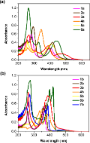
- spectra for FeCp2, and the infrared spectra differences from that of ACFs for FeCp2-ACFs-150 (Δ([FeCp2-ACFs-150]-ACFs) and FeCp2-ACFs-55 (Δ([FeCp2-ACFs-55]-ACFs). The difference spectra exhibit peaks for vibration modes of Cp–Fe (ν), C–C (ν), C–H (γ), C–H (δ), Cp-breathing (ν) typical for FeCp2 molecular


Carbonylative synthesis and functionalization of indoles
Beilstein J. Org. Chem. 2024, 20, 973–1000, doi:10.3762/bjoc.20.87
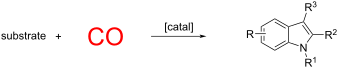
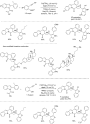
- derivatives were isolated with good yields (Scheme 1). Instead, in the Senadi et al. approach, 1-(3-amino)-1H-indol-2-yl)-1-ketones were obtained through a Pd(0)-catalyzed cascade process consisting of isonitrile insertion as carbon monoxide surrogate and a C–H cross-coupling [13]. The reaction took place in
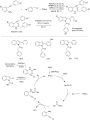
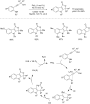
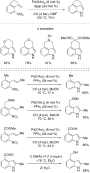
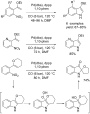
- isolated product was an indol-3-one derivative (Scheme 14). Another example for the synthesis of 3-substituted indoles was described by Hsieh and Dong [35]. They synthesized 3-arylindoles by palladium-catalyzed C–H bond amination via reduction of nitroalkenes using carbon monoxide as reducing agent. The
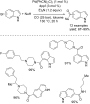
- ] as catalyst to achieve an NH-indole–C–H carbonylation [57]. A base was added to improve the efficiency of the process and an oxidant to restore the catalytic active species. The reaction was carried out under a low pressure of CO (1 bar) at 110 °C in xylene for 24 hours (Scheme 26). In 2018, the Zhou












(Bio)isosteres of ortho- and meta-substituted benzenes
Beilstein J. Org. Chem. 2024, 20, 859–890, doi:10.3762/bjoc.20.78
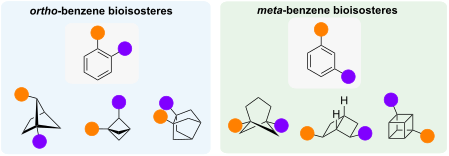
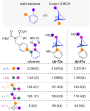
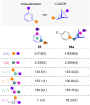
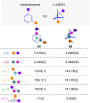
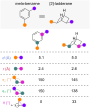
- 105. Prior to Rigotti and Bach, a select few 1,4-BCHs had been synthesised by Qin and co-workers [41] and Blanchard [56]. Alternatively, Hartwig and co-workers developed a C–H borylation reaction to access bridgehead-borylated 1,4-BCHs from monosubstituted BCHs [57]. The synthesis of polysubstituted
- could also be oxidised to acid 112, from which redox active ester 118 could be accessed. An alternative approach to 2-oxa-1,4-BCHs involves the C–H-borylation of monosubstituted 2-oxa-BCHs developed by Hartwig and co-workers (Scheme 12C) [57]. Functional groups including halides (in 120b), alcohols (in
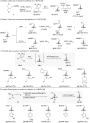
- shown by Molander and co-workers [77]. The synthesis of bridge heteroaryl 1,2,3-BCPs by a decarboxylative Minisci reaction was reported by Poole and co-workers [68]. The previously discussed C–H activation reported by MacMillan and co-workers (Scheme 2) was used to access a wide number of 1,2,3-BCPs [33

















Ortho-ester-substituted diaryliodonium salts enabled regioselective arylocyclization of naphthols toward 3,4-benzocoumarins
Beilstein J. Org. Chem. 2024, 20, 841–851, doi:10.3762/bjoc.20.76
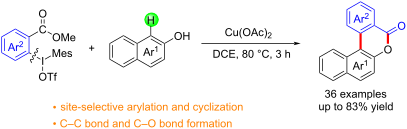
- have been employed in benzocyclization and arylocyclization reactions, enabling intramolecular cyclization by forming aromatic or heterocyclic rings as a part of cyclic structures [8]. In these reactions, the dual activation of a C–I bond and vicinal C–H bonds/functional groups features a distinct
- advantage, facilitating the formation of two or more chemical bonds in a step-economic manner [9][10][11][12][13]. In a prior study, we reported a palladium-catalyzed efficient activation of both C–I bond and the adjacent C–H bond of diaryliodonium salts in the formation of 4,5-benzocoumarin derivatives


Advancements in hydrochlorination of alkenes
Beilstein J. Org. Chem. 2024, 20, 787–814, doi:10.3762/bjoc.20.72
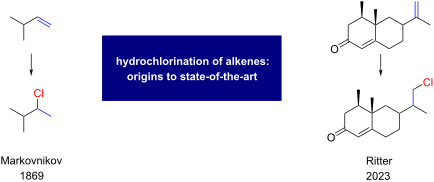
- C–H bonds into the alkene π-bond [30]. Before reviewing polar hydrochlorination reactions in detail, it is worth mentioning several statements which were made in the Sergeev review [12]: a) The activation energy for an anti-Markovnikov addition is at least by 30 kJ mol−1 higher than for normal
- potential safety hazards, especially in large-scale reactions [53]. Instead of acetyl chlorides, various other reagents, including pivaloyl chloride, oxalyl chloride, SOCl2, and TMSCl, can be employed to generate HCl. Numerous proton donors, such as water, alcohol, phenol, or acidic C–H groups, have been
- ) [78]. Another advantage of the MH HAT process is that the α-C–H bond in the corresponding radical is comparatively stable, whereas a carbocation has superacidic α-C–H bonds with a pKa of ≈ −17 [79]. Therefore, polar hydrochlorination reactions are in competition with elimination reactions which is not












Chemoenzymatic synthesis of macrocyclic peptides and polyketides via thioesterase-catalyzed macrocyclization
Beilstein J. Org. Chem. 2024, 20, 721–733, doi:10.3762/bjoc.20.66
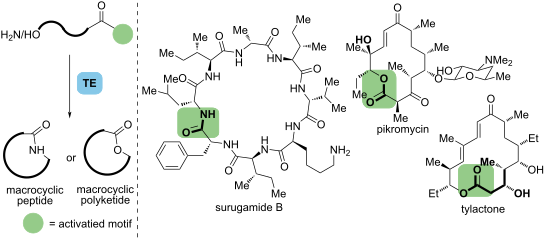
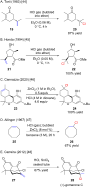
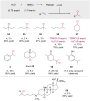
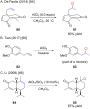
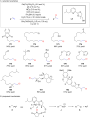
- macrolactones. Using engineered variants of S. venezuelae ATCC 15439 designated strains DHS200141 [71] and YJ11242 [72], 24 and 25 were transformed to the corresponding macrolides through whole cell biotransformation to append ᴅ-desosamine and perform C–H oxidation(s) by the PikC monooxygenase (Scheme 6b). In
- macrolactonization, leading to the formation of tylactone (39) in 69% yield. Furthermore, the Streptomyces strain S. venezuelae DHS316 [76] performed an in vivo glycosylation resulting in M-4365 G1 (50) in 15 linear steps and 4.6% overall yield from commercial resources. With regio- and stereoselective C–H


Regioselective quinazoline C2 modifications through the azide–tetrazole tautomeric equilibrium
Beilstein J. Org. Chem. 2024, 20, 675–683, doi:10.3762/bjoc.20.61
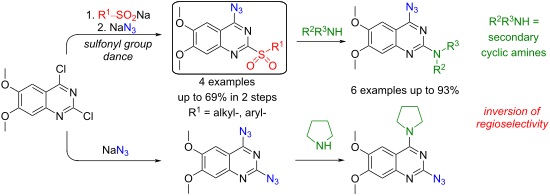
- position of quinazolines requires longer time, higher temperatures, and sometimes the use of expensive transition-metal catalysts [12]. A selective C2 modification can be achieved by using 2-chloroquinazolines IV, where the C4 position is blocked by an unreactive C–C or C–H bond (Scheme 1). Cyclization
- reactions of substituted anilines VI, VII or N-arylamidines VIII are frequently employed for synthesizing C2-substituted quinazolines (Scheme 1), thereby influencing the spatial arrangement of the desired substituents [13][14]. Moreover, there have been recent advancements in efficient C–H activation


A laterally-fused N-heterocyclic carbene framework from polysubstituted aminoimidazo[5,1-b]oxazol-6-ium salts
Beilstein J. Org. Chem. 2024, 20, 621–627, doi:10.3762/bjoc.20.54
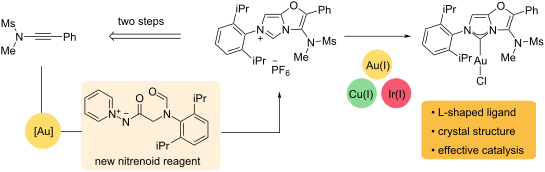
- which could not be fully purified or characterised but has a characteristic AQ quartet of two protons replacing the singlet for the N-methyl group in the 1H NMR spectra consistent with a cyclometallated complex from C–H insertion [31][32]. Three distinct sets of N-methyl and N-methylsulfonyl signals


Possible bi-stable structures of pyrenebutanoic acid-linked protein molecules adsorbed on graphene: theoretical study
Beilstein J. Org. Chem. 2024, 20, 570–577, doi:10.3762/bjoc.20.49
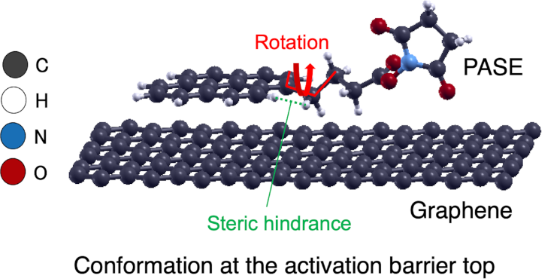
- conformation 1, 2, and the conformation at the saddle point, we measured the dihedral angles and the distance between two hydrogen atoms using Xcrysden [10]. (a) Molecular structure of 1-pyrenebutanoic acid succinimidyl ester (PASE). The black, white, red, and blue balls represent C, H, O, and N atoms


Mono or double Pd-catalyzed C–H bond functionalization for the annulative π-extension of 1,8-dibromonaphthalene: a one pot access to fluoranthene derivatives
Beilstein J. Org. Chem. 2024, 20, 427–435, doi:10.3762/bjoc.20.37
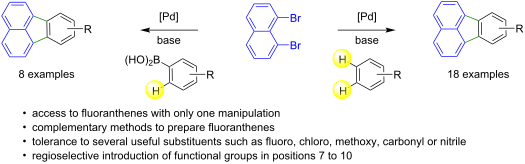
- -catalyzed annulative π-extension of 1,8-dibromonaphthalene for the preparation of fluoranthenes in a single operation has been investigated. With specific arenes such as fluorobenzenes, the Pd-catalyzed double functionalization of C–H bonds yields the desired fluoranthenes. The reaction proceeds via a
- palladium-catalyzed direct intermolecular arylation, followed by a direct intramolecular arylation step. As the C–H bond activation of several benzene derivatives remains very challenging, the preparation of fluoranthenes from 1,8-dibromonaphthalene via Suzuki coupling followed by intramolecular C–H
- activation has also been investigated to provide a complementary method. Using the most appropriate synthetic route and substrates, it is possible to introduce the desired functional groups at positions 7–10 on fluoranthenes. Keywords: catalysis; C–H bond functionalization; direct arylation; fluoranthenes


Additive-controlled chemoselective inter-/intramolecular hydroamination via electrochemical PCET process
Beilstein J. Org. Chem. 2024, 20, 264–271, doi:10.3762/bjoc.20.27
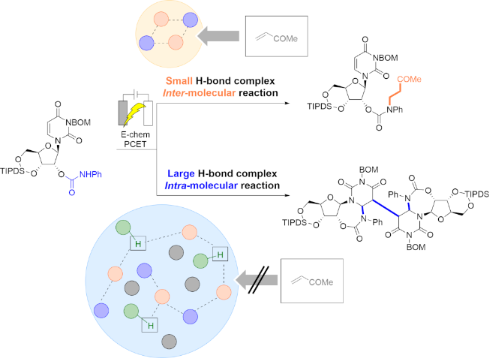
- electron-transfer to give the corresponding radical species through oxidative X–H bond cleavage. One such species is the amidyl radical, which is broadly synthetically useful as a nitrogen source in hydroamination reactions and as a hydrogen atom transfer (HAT) reagent for remote C–H activation [2][3][4][5


Nucleophilic functionalization of thianthrenium salts under basic conditions
Beilstein J. Org. Chem. 2024, 20, 257–263, doi:10.3762/bjoc.20.26
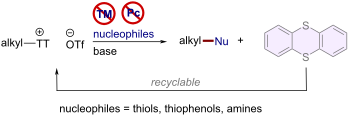
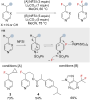
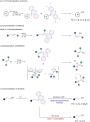
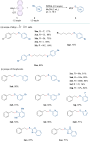
- regioselectivity. Significant advancements in the synthesis of arylthianthrenium salts have prompted a growing interest in their utilization as versatile precursors for the conversion of C–H bonds in arenes into C–C/X bonds through transition-metal-catalyzed cross-coupling processes [12][13][14][15][16][17][18][19
- -stage C–H functionalization of arenes, Wickens’s group has introduced an oxidative alkene aziridination strategy that relies on thianthrenation of an alkene under electrochemical conditions [27]. Subsequently, cyclopropanation, [28] aziridination, [29] allylic C–H functionalization, [30][31] transition



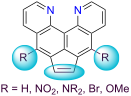
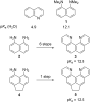
Substitution reactions in the acenaphthene analog of quino[7,8-h]quinoline and an unusual synthesis of the corresponding acenaphthylenes by tele-elimination
Beilstein J. Org. Chem. 2024, 20, 243–253, doi:10.3762/bjoc.20.24
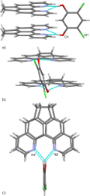
- of quinoquinolines, their planar structure, and very easy coordination to acidic and electrophilic sites (including water [15][22] or the C–H bond of chloroform [11]) almost always lead to co-crystallization. For example, there is no such crystallographic information for quinoquinoline 3 itself. In
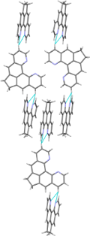
- the present work, we succeeded in filling this gap by growing crystals of base 5 from pure acetonitrile. It turned out that molecule 5 is capable of self-association through multiple C–H…N–H-bond-like contacts involving pyridyl C(3)H and C(4)H protons (Figure 5). These intermolecular contacts, whose
- overlap (с). Again, π-stacking and H-bonding (blue dotted lines) strongly dominate in this structure. Fragment of the crystal packing of neutral dipyridoacenaphthene 5 showing self-association via multiple C–H…N contacts (blue dotted lines) between three independent molecules. Structure of





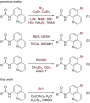
Copper-promoted C5-selective bromination of 8-aminoquinoline amides with alkyl bromides
Beilstein J. Org. Chem. 2024, 20, 155–161, doi:10.3762/bjoc.20.14
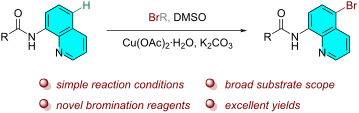
- , employing activated and unactivated alkyl bromides as the halogenation reagents without additional external oxidants. This method features outstanding site selectivity, broad substrate scope, and excellent yields. Keywords: aminoquinolines; C–H bromination; copper catalysis; regioselectivity; Introduction
- important auxiliary group for the proximal C–H activation with the efforts of Daugulis [5] and others [6]. Results from medical research indicated that the introduction of halogen atoms into quinoline motifs has positive effects on their bioactivities, such as antimalarial, antitumor, and so on [7
- quinoline ring of 1a in this reaction. Other competitive site-selective C–H bromination products and multiple brominated products were not observed. Subsequently, the bromination reaction was examined with various catalysts such as CoCl2·6H2O, Ni(OAc)2·4H2O, MnSO4·H2O, CuCl, CuBr, CuCl2, CuBr2, and Cu(OAc)2