
Search results
Search for "visible" in Full Text gives 661 result(s) in Beilstein Journal of Organic Chemistry. Showing first 200.
Photoluminescence color-tuning with polymer-dispersed fluorescent films containing two fluorinated diphenylacetylene-type fluorophores
Beilstein J. Org. Chem. 2024, 20, 2682–2690, doi:10.3762/bjoc.20.225
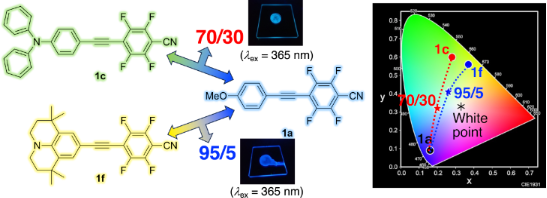
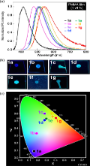
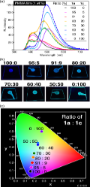
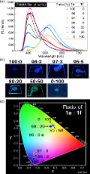
- especially indispensable for our affluent life, is more difficult than the development of the blue-, yellow-, and red-light-emitting molecules mentioned above [24][25][26]. Therefore, to achieve white luminescence covering the entire spectral range of the visible light region, two or more colors of
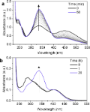
- fluorophore 1c. The absorption wavelengths and spectral shapes in the ultraviolet (UV)–visible absorption spectra of the PMMA films containing 1 wt % of 1a and 1c or 1f as representative examples (Figure S2 in Supporting Information File 1) were similar to those in the corresponding excitation spectra, which


The scent gland composition of the Mangshan pit viper, Protobothrops mangshanensis
Beilstein J. Org. Chem. 2024, 20, 2644–2654, doi:10.3762/bjoc.20.222
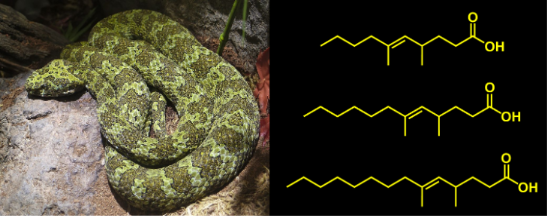
- the first methyl group was at C-4, due to a missing peak at m/z 178 in the corresponding ion series (Supporting Information File 1, Figure S6). The next visible ion in this series, m/z 232 results from cleavage adjacent to the double bond, and the ion m/z 246 results from allylic cleavage. The 40 Da


Deciphering the mechanism of γ-cyclodextrin’s hydrophobic cavity hydration: an integrated experimental and theoretical study
Beilstein J. Org. Chem. 2024, 20, 2635–2643, doi:10.3762/bjoc.20.221
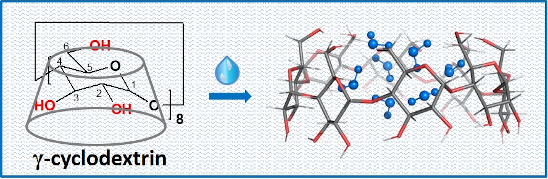
- cyclodextrin cavity and in the intermolecular space. Several overlapped steps are visible on the TG curve, which is associated with the release of water molecules in several stages, with the steepest lightening of the sample at 350–370 K. Consistent with this is the DSC endothermic peak, which is asymmetric


Anion-dependent ion-pairing assemblies of triazatriangulenium cation that interferes with stacking structures
Beilstein J. Org. Chem. 2024, 20, 2567–2576, doi:10.3762/bjoc.20.215
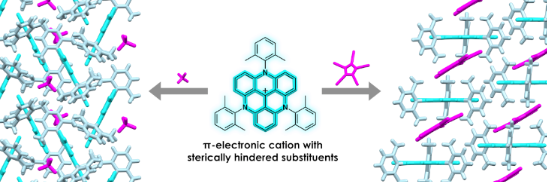
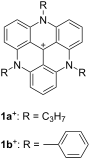
- +) cations, used as visible light fluorescent dyes, have been synthesized via a nucleophilic aromatic substitution (SNAr) reaction with primary alkylamines (e.g., 1a+; Figure 1) [15][16]. The highly planar geometry of the TATA+ core unit induces π–π stacking structures in single-crystal and film states, as
- spectra were referenced to residual solvent. UV–visible absorption spectra were recorded on a Hitachi U-4500 spectrometer. Fluorescence spectra were recorded on a Hitachi F-4500 fluorescence spectrometer. MALDI–TOF MS was recorded on a Shimadzu Axima-CFRplus. TLC analyses were carried out on aluminum



Visible-light-mediated flow protocol for Achmatowicz rearrangement
Beilstein J. Org. Chem. 2024, 20, 2493–2499, doi:10.3762/bjoc.20.213
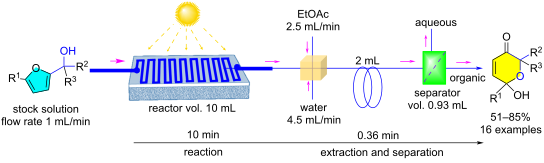
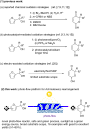
- and development of a visible light-assisted modular photo-flow reactor with a seamlessly integrated post-synthetic work-up procedure enabling the efficient synthesis of dihydropyranones from furfuryl alcohols. The reaction uses sun light as green energy source, and the novel photo-flow reactor
- a result, developing an alternative strategy would be an attractive solution to address the limitations described above. Flow chemistry was chosen as the most attractive alternative for the photo-induced (visible light) Achmatowicz rearrangement to convert furfuryl alcohol scaffolds into
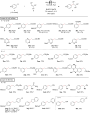
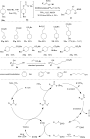
- product synthesis. Scope of the integrated continuous photo-flow (visible light)-induced Achmatowicz rearrangement reaction. Reaction conditions: Stock solution (A) comprise of 2/K2S2O8/Ru(bpy)3Cl·6H2O/ACN/DMSO/H2O in a molar ratio of 1:1:0.005:70:54:408; yields are based on isolated yields. Proposed


Synthesis, electrochemical properties, and antioxidant activity of sterically hindered catechols with 1,3,4-oxadiazole, 1,2,4-triazole, thiazole or pyridine fragments
Beilstein J. Org. Chem. 2024, 20, 2378–2391, doi:10.3762/bjoc.20.202
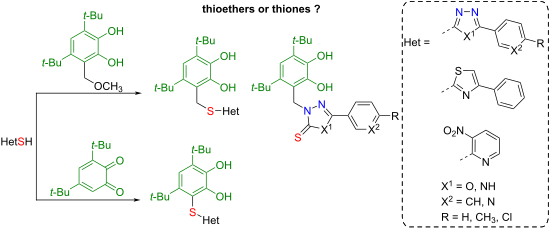
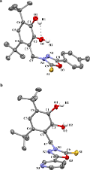
- changes. This is confirmed by the appearance of an absorption maximum in the UV–visible spectrum at λ = 490 nm, which is characteristic of thiolated o-benzoquinones. This absorption band corresponds to intramolecular charge transfer between the thioether group and the o-benzoquinone fragment [36][62][63




Cell-free protein synthesis with technical additives – expanding the parameter space of in vitro gene expression
Beilstein J. Org. Chem. 2024, 20, 2242–2253, doi:10.3762/bjoc.20.192
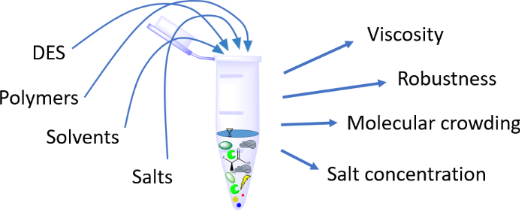
- avoid evaporation of the solvent in the headspace of the reaction vessel due to the high vapor pressures. In contrast to the standard volumetric ratio of 20 µL in a 1.5 mL microreaction tube, a visible gradient in the concentration of sfGFP occurred under these conditions. Therefore, shaking at 700 rpm



Metal-free double azide addition to strained alkynes of an octadehydrodibenzo[12]annulene derivative with electron-withdrawing substituents
Beilstein J. Org. Chem. 2024, 20, 2234–2241, doi:10.3762/bjoc.20.191
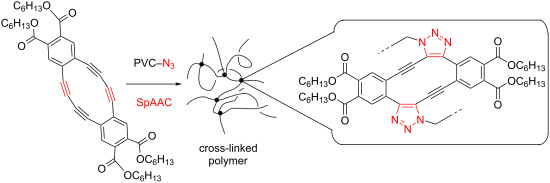
- addition. Thus, compound 6a shows an ultraviolet absorption peak at 249 nm (λmax) and no absorption in the visible region was observed. When excited at 249 nm, an emission band at 513 nm (λem) appeared in the spectrum with a fluorescence quantum yield (Φ) of 7.0%. The absorption and fluorescence spectra
- previously reported electron-donating hexyloxy substituents. The addition pattern was experimentally investigated by 2D NMR, which was also supported by DFT calculations. The bistriazole product displayed fluorescence in the visible range with a fluorescence quantum yield of 7.0%. Finally, the developed




O,S,Se-containing Biginelli products based on cyclic β-ketosulfone and their postfunctionalization
Beilstein J. Org. Chem. 2024, 20, 2143–2151, doi:10.3762/bjoc.20.184
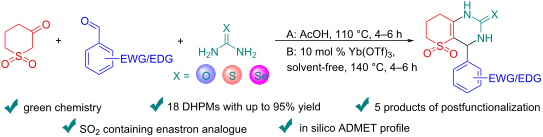
- ][4][9] or even visible light-driven methods [25][26][27][28]. We started our study from the optimization of the reaction conditions using β-ketosulfone 1, benzaldehyde and thiourea as model reaction. According to the literature, the reaction has been shown to work best and most efficiently under

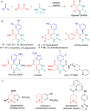


Efficacy of radical reactions of isocyanides with heteroatom radicals in organic synthesis
Beilstein J. Org. Chem. 2024, 20, 2114–2128, doi:10.3762/bjoc.20.182
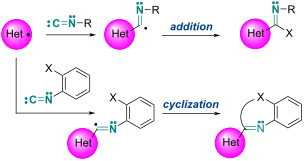
- , when using sunlight, which is an inexhaustible natural energy, it is expected to be the most environmentally friendly method. The homolysis of E–E upon visible light irradiation is induced by exciting one electron of the isolated electron pair on E to the anti-bonding orbital of the E–E-bond (σ
- * orbital). Such an n–σ* transition usually indicates the maximum absorption in the near-UV region, and the absorption cutoff reaches the visible region, especially in the case of highly periodic E–E. Therefore, interelement compounds E–E with groups 15–17 heteroatoms have isolated electron pairs, and E
- %). Since it is known that the carbon radical capturing ability of (PhTe)2 is even four times higher than that of (PhSe)2 [31], we investigated the radical addition to isocyanides using a disulfide–ditelluride binary system under photoirradiation. The visible-light-irradiated thiotelluration reaction did


Cage-like microstructures via sequential Ugi reactions in aqueous emulsions
Beilstein J. Org. Chem. 2024, 20, 2078–2083, doi:10.3762/bjoc.20.179
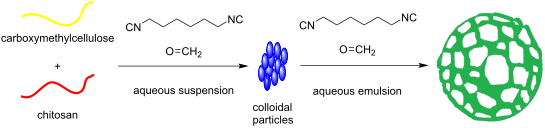
- ) [17]. As before, depending on the CMC concentration, we obtained submicron particles with an average diameter from 200–600 nm, which were visible under an optical microscope in the form of luminous points. Next, Pickering emulsions were obtained by emulsifying toluene in an aqueous suspension of


Understanding X-ray-induced isomerisation in photoswitchable surfactant assemblies
Beilstein J. Org. Chem. 2024, 20, 2005–2015, doi:10.3762/bjoc.20.176
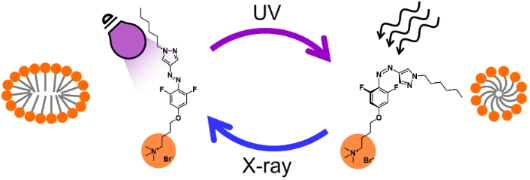
- ]. In addition to this, AAPTAB has a high thermal half-life at room temperature (5.7 years [19]), meaning there is no significant contribution from thermal Z–E isomerisation over the course of these experiments. Using in-situ UV- and visible-light irradiation with SAXS, here we measure the intermediate
- change in the SAXS profile from the AzoTAB (Figure 1c), resulting in a steady decrease in the scattering intensity and a shift in the Guinier plateau to higher Q values. These changes are visible within 10 minutes of UV irradiation and stabilise with no further structural changes after around 20 minutes
- that Z–E isomerisation cannot be easily induced using gentle heating or visible light, as shown by the stability of the UV–vis absorbance spectra and SAXS patterns under these conditions (Figures S1 and S3, Supporting Information File 1). In contrast, irradiation with X-rays leads to significant



A new platform for the synthesis of diketopyrrolopyrrole derivatives via nucleophilic aromatic substitution reactions
Beilstein J. Org. Chem. 2024, 20, 1933–1939, doi:10.3762/bjoc.20.169
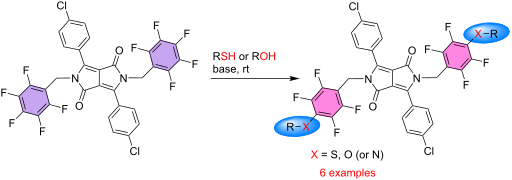
- aromatic substitution; phenol; thiol; Introduction Diketopyrrolopyrroles (DPPs) are a class of organic pigments discovered by serendipity in the 1970s [1][2]. Generally, N-unsubstituted DPP derivatives exhibit high melting points, low solubility in most solvents, and strong absorption in the visible


A facile three-component route to powerful 5-aryldeazaalloxazine photocatalysts
Beilstein J. Org. Chem. 2024, 20, 1831–1838, doi:10.3762/bjoc.20.161
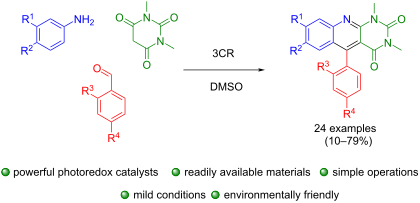
- /alloxazine photoredox catalysis [9][14][15][16][17][18][19], 7-methoxyderivatives should also be considered due to their absorption closer to the visible light region. This allows longer wavelength LEDs with lower energy photons to be applied, potentially contributing to avoiding undesired reactions [14][15
- potent, biologically active compounds. Interestingly, the introduction of a strong methoxy group at position 7 of the 5-aryldeazaalloxazine core led to a bathochromic shift in the absorption spectra of the synthesised molecules, making them more suitable for visible light photocatalysis. Experimental




Discovery of antimicrobial peptides clostrisin and cellulosin from Clostridium: insights into their structures, co-localized biosynthetic gene clusters, and antibiotic activity
Beilstein J. Org. Chem. 2024, 20, 1800–1816, doi:10.3762/bjoc.20.159

- , G, and H). The treatment with the mature peptides led to numerous blebs visible after 1 hour. Interestingly, no cocci structures were detected after 5 hours of treatment (see Figure 6). The precursor peptides, especially cellulosin, appear to elicit some effects on the membrane of S. epidermidis




Synthesis and characterization of 1,2,3,4-naphthalene and anthracene diimides
Beilstein J. Org. Chem. 2024, 20, 1767–1772, doi:10.3762/bjoc.20.155
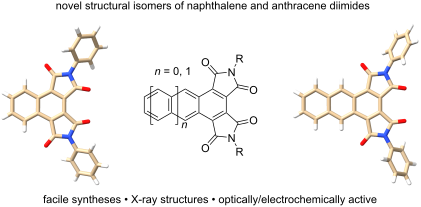
- title compounds indicates that they are optically and electronically similar to previously reported naphthalene and anthracene diimides, absorbing/emitting light in the visible region and readily undergoing one-electron-reduction processes. As such, this work opens the possibility of incorporating the


New triazinephosphonate dopants for Nafion proton exchange membranes (PEM)
Beilstein J. Org. Chem. 2024, 20, 1623–1634, doi:10.3762/bjoc.20.145
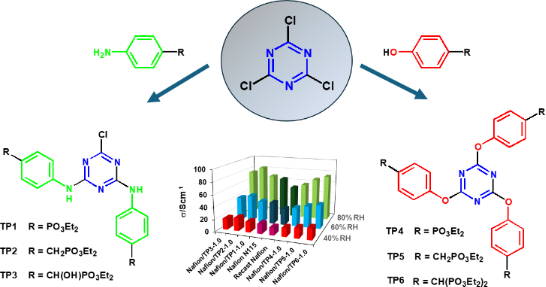
- phosphonate compounds also present their strongest bands in this region, but they are overlapped by the more intense Nafion bonds due to the small wt % loading of the dopants. As a result, despite the visible slight dark-brown color, observed by a visual inspection of the membranes, only discrete changes are




Supramolecular assemblies of amphiphilic donor–acceptor Stenhouse adducts as macroscopic soft scaffolds
Beilstein J. Org. Chem. 2024, 20, 1590–1603, doi:10.3762/bjoc.20.142
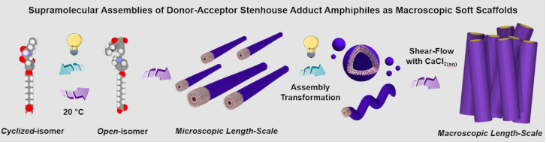
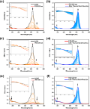
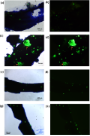
- moiety. The excellent photoswitchability in organic medium and the photoresponsiveness in aqueous medium, driven by visible light, were investigated by UV–vis absorption spectroscopy. The assembled supramolecular nanostructures were confirmed by electron microscopy, while the supramolecular packing was
- revealed by X-ray diffraction analysis. Upon visible-light irradiation, significant transformations of the DA geometry enabled transformations of the supramolecular assemblies on a microscopic scale, subsequently disassembling macroscopic soft scaffolds of DAs. The current work shows promising use for the
- fabrication of visible-light-controlled macroscopic scaffolds, offering the next generation of biomedical materials with visible-light-controlled microenvironments and future soft-robotic systems. Keywords: donor–acceptor Stenhouse adduct; photoresponsive molecular amphiphile; supramolecular transformation




Benzylic C(sp3)–H fluorination
Beilstein J. Org. Chem. 2024, 20, 1527–1547, doi:10.3762/bjoc.20.137

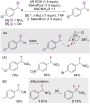
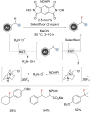
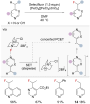
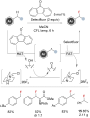
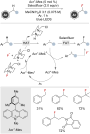
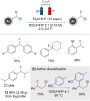
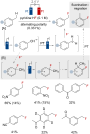
- pioneering report in 2013 that used photocatalyst 9-fluorenone under visible-light irradiation to generate a photoexcited aryl ketone, capable of HAT to promote benzylic fluorination with Selectfluor (Figure 23) [69]. The reaction tolerated an exceptional range of functional groups and enabled the
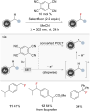
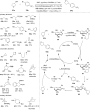
- disclosed the use of catalytic amounts of the organic dye Acr+-Mes under visible-light irradiation in combination with stoichiometric amounts of Selectfluor to achieve benzylic fluorination (Figure 29) [74]. It was proposed that a SET between Selectfluor and the photoexcited catalyst liberated fluoride and




















Electrophotochemical metal-catalyzed synthesis of alkylnitriles from simple aliphatic carboxylic acids
Beilstein J. Org. Chem. 2024, 20, 1497–1503, doi:10.3762/bjoc.20.133
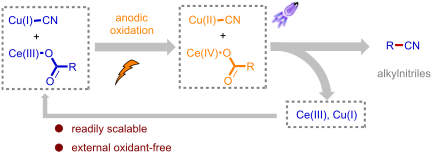
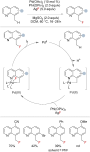
- esters, the so called "Barton esters", for decarboxylative cyanation of aliphatic acids with tosyl cyanide as the nitrile source under visible light irradiation at room temperature [21][22]. Although two synthetic steps are required, this is the first practical decarboxylative cyanation protocol because
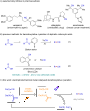
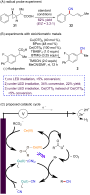
- by anodic oxidation and visible light irradiation of the Ce species in a sequential fashion [38][39][40][41][42][43][44][45]. Therefore, the anodic electrode potential for this process could be substantially reduced. In doing so, a low working potential at the anode offers the opportunity for


Photoswitchable glycoligands targeting Pseudomonas aeruginosa LecA
Beilstein J. Org. Chem. 2024, 20, 1486–1496, doi:10.3762/bjoc.20.132
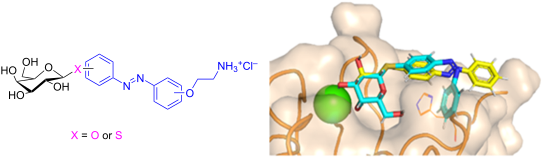
- undergo reversible photoisomerization under UV–vis irradiation in aqueous solution. The O-galactosyl azobenzene 1 shows reversible photoisomerization under UV (370 nm) and visible (485 nm) irradiations in water, with a high fatigue resistance as no degradation has been observed after more than 10 UV–vis


Synthesis of 4-functionalized pyrazoles via oxidative thio- or selenocyanation mediated by PhICl2 and NH4SCN/KSeCN
Beilstein J. Org. Chem. 2024, 20, 1453–1461, doi:10.3762/bjoc.20.128
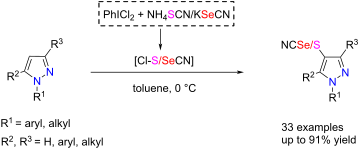
- presented a method for the C–H thiocyanation of pyrazoles by using a sustainable catalyst of graphite-phase carbon nitride (g-C3N4) under visible light irradiation (Scheme 1c) [2]. Furthermore, Yao harnessed an electrochemical approach to form the electrophilic SCN+ intermediate, which reacted with


Synthesis of substituted triazole–pyrazole hybrids using triazenylpyrazole precursors
Beilstein J. Org. Chem. 2024, 20, 1396–1404, doi:10.3762/bjoc.20.121
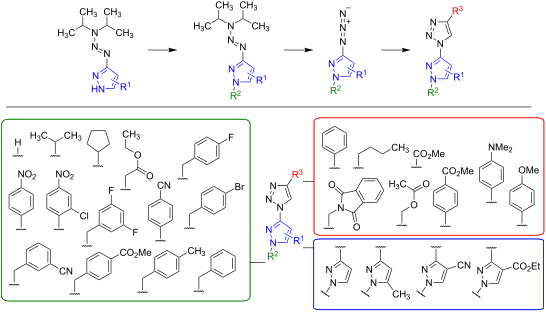
- the alkyne depends on the substitutions on the pyrazole, and no general trend is visible – reactions with electron-poor, electron-rich as well as sterically demanding alkynes give high product yields, depending on the respective pyrazole. The functionalization of the NH-unsubstituted derivative 21jd




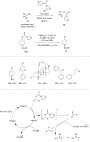
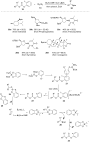
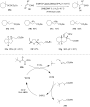
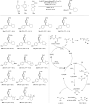
Generation of alkyl and acyl radicals by visible-light photoredox catalysis: direct activation of C–O bonds in organic transformations
Beilstein J. Org. Chem. 2024, 20, 1348–1375, doi:10.3762/bjoc.20.119
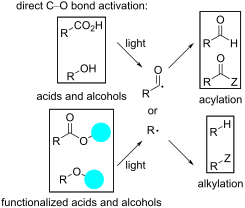
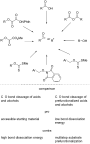
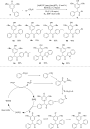
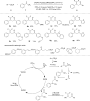
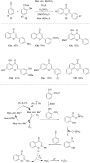
- radicals by activation of C–O bonds using visible-light photoredox catalysis offers a mild and environmentally benign approach to useful chemical transformations. Alcohols, carboxylic acids, anhydrides, xanthates, oxalates, N-phthalimides, and thiocarbonates are some examples of alkyl and acyl precursors
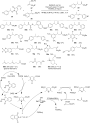
- photocatalysts, transition-metal photoredox catalysts, and metallaphotocatalysts to produce acyl and alkyl radicals driven by visible light. Keywords: acyl radical; alkyl radical; sustainable catalysis; visible light; Introduction The growing awareness of the necessity for sustainable developments has been
- synthesis [4][5][6][7][8][9]. In the context of sustainable catalysis, visible-light-mediated chemistry is becoming a prominent viable option for radical transformations in the synthesis of biologically useful compounds due to the energy efficiency and environmental friendliness [10][11]. Recently, the






Transition-metal-catalyst-free electroreductive alkene hydroarylation with aryl halides under visible-light irradiation
Beilstein J. Org. Chem. 2024, 20, 1327–1333, doi:10.3762/bjoc.20.116
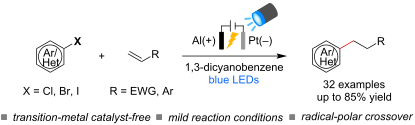
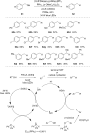
- conditions. The key to success is the use of 1,3-dicyanobenzene as a redox mediator and visible-light irradiation, which effectively suppresses the formation of simple reduction, i.e., hydrodehalogenation, products to afford the desired products in good to high yields. Mechanistic investigations proposed
- that a reductive radical-polar crossover pathway is likely to be involved in this transformation. Keywords: aryl halides; C–C bond formation; electroreduction; radicals; visible light; Introduction Alkene hydroarylation is an attractive method for the construction of alkylarenes, which serve as
- chemical reagents; however, these methods have some drawbacks, such as reagent toxicity/stability and limited substrate scope [12][13][14]. While recent advances in photochemistry have remarkably expanded the synthetic utility of (hetero)aryl radicals in organic synthesis [15][16][17][18][19][20], visible