

Search results
Search for "nucleophiles" in Full Text gives 608 result(s) in Beilstein Journal of Organic Chemistry. Showing first 200.
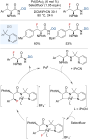
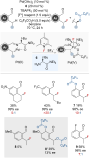
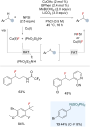
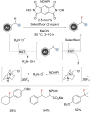
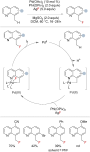
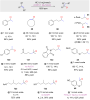
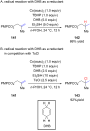
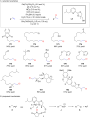
Electrochemical radical cation aza-Wacker cyclizations
Beilstein J. Org. Chem. 2024, 20, 1900–1905, doi:10.3762/bjoc.20.165
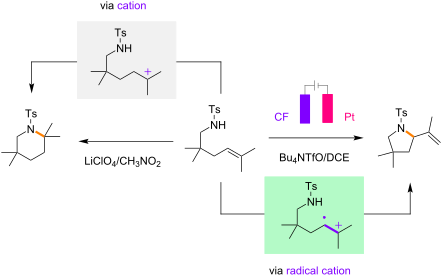
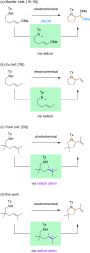
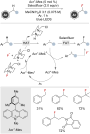
- representative radical cation precursors that are widely used to realize the formation of unique bonds. The respective radical cations are trapped by various nucleophiles under radical and/or ion control, where kinetic and/or thermodynamic effects are expected to be dominant. Typical examples that clearly show




Ring opening of photogenerated azetidinols as a strategy for the synthesis of aminodioxolanes
Beilstein J. Org. Chem. 2024, 20, 1671–1676, doi:10.3762/bjoc.20.148
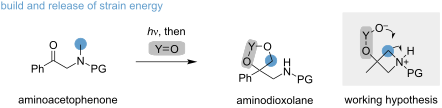
- by Norrish–Yang cyclization, which employs easily accessible α-aminoacetophenones as starting materials [11][12][13][14][15]. Furthermore, ring-opening reactions of azetidines have been recently achieved using sulfur and oxygen nucleophiles [16][17][18][19][20][21][22][23][24][25]. However, methods



New triazinephosphonate dopants for Nafion proton exchange membranes (PEM)
Beilstein J. Org. Chem. 2024, 20, 1623–1634, doi:10.3762/bjoc.20.145
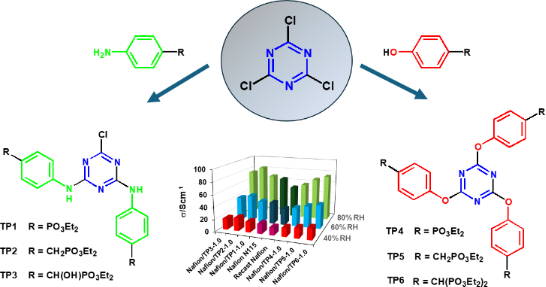
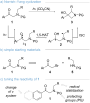
- chlorine atoms by different nucleophiles. The devised strategy involved the attack of the O or N atoms of the arylphosphonate nucleophile at the position of the chlorine atom of triazine, at its 2, 4 and 6 carbon positions (Figure 1). Most of these nucleophiles bearing a phosphonate group were not
- chlorine atoms of 2,4,6-trichloro-1,3,5-triazine (cyanuric chloride, 1) by the previously synthesized nucleophiles. The general scheme to obtain the desired triazinephosphonates (TPs) from the synthesized amino nucleophiles are represented in Scheme 5. Initially, the 4-aminophenyl derivatives were




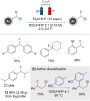
Benzylic C(sp3)–H fluorination
Beilstein J. Org. Chem. 2024, 20, 1527–1547, doi:10.3762/bjoc.20.137

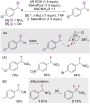
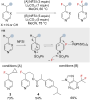
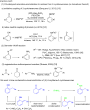
- nucleophiles, including water to give benzylic alcohols, or methanol to give methoxy products. Musacchio and co-workers reported a similar approach for benzylic fluorination (Figure 33) [84], which followed a similar mechanistic blueprint to that reported by the Doyle group. Using tert-butoxide radicals
- HAT reagent. Difluorination could be achieved using excess fluoride and HAT reagent. Other nucleophiles were amenable to the reaction conditions, allowing various benzylic functionalisation reactions, including acetoxylation and chlorination. In 2023, Hamashima and co-workers disclosed an analogous




















Synthesis of 2-benzyl N-substituted anilines via imine condensation–isoaromatization of (E)-2-arylidene-3-cyclohexenones and primary amines
Beilstein J. Org. Chem. 2024, 20, 1468–1475, doi:10.3762/bjoc.20.130
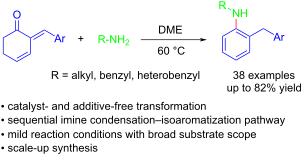
- are not always readily accessible. Typically, the preparation methods involve SNAr reactions with N-centered nucleophiles [5], nitroarene reduction [6] and transition metal (e.g., Pd, Cu)-catalyzed C–N cross coupling of aryl halides, aryl sulfonates or arylboronic acid reagents with ammonia or NH
- –dehydrogenative aromatization strategy with amines as nucleophiles [11][12]. For instance, the groups of Deng and Li reported the Pd catalyzed oxidative coupling of 2-cyclohexenones with amines [13]. Later, the same group demonstrated the direct amination of phenols by reductive coupling of in situ generated 2



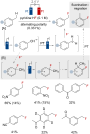
Selectfluor and alcohol-mediated synthesis of bicyclic oxyfluorination compounds by Wagner–Meerwein rearrangement
Beilstein J. Org. Chem. 2024, 20, 1462–1467, doi:10.3762/bjoc.20.129
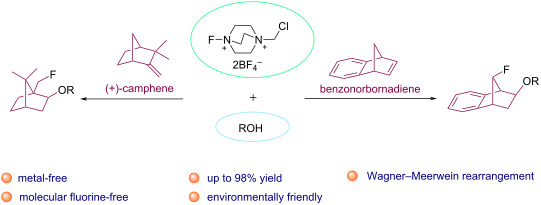
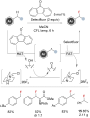
- used as nucleophiles. First, optimization experiments were carried out for fluoroalkoxy reactions with benzonorbornadiene (1a, Table 1). As a result of experiments conducted in six different solvents at room temperature with 1.0 equivalent of selectflor and 1.0 equivalent of methanol, it was observed


Rapid construction of tricyclic tetrahydrocyclopenta[4,5]pyrrolo[2,3-b]pyridine via isocyanide-based multicomponent reaction
Beilstein J. Org. Chem. 2024, 20, 1436–1443, doi:10.3762/bjoc.20.126
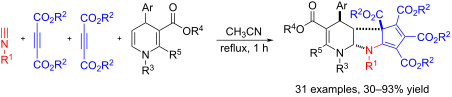
- generated by addition reaction of isocyanides to electron-deficient alkynes, which were sequentially trapped by various electrophiles and nucleophiles to give versatile acyclic and heterocyclic compounds [15][16][17][18][19][20][21][22][23][24][25][26]. In recent years, many multicomponent reactions based


Hypervalent iodine-catalyzed amide and alkene coupling enabled by lithium salt activation
Beilstein J. Org. Chem. 2024, 20, 1405–1411, doi:10.3762/bjoc.20.122

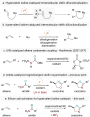
- .20.122 Abstract Hypervalent iodine catalysis has been widely utilized in olefin functionalization reactions. Intermolecularly, the regioselective addition of two distinct nucleophiles across the olefin is a challenging process in hypervalent iodine catalysis. We introduce here a unique strategy using
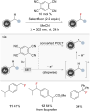
- simple lithium salts for hypervalent iodine catalyst activation. The activated hypervalent iodine catalyst allows the intermolecular coupling of soft nucleophiles such as amides onto electronically activated olefins with high regioselectivity. Keywords: amide coupling; hypervalent iodine catalysis
- nucleophiles were incorporated (Scheme 1b) [29][30][31][32][33][34][35][36][37][38][39][40]. Intermolecular hypervalent iodine catalysis with the regioselective additions of two distinct nucleophilic functionalities across an olefin, however, remains challenging with limited solutions [41][42][43][44][45][46



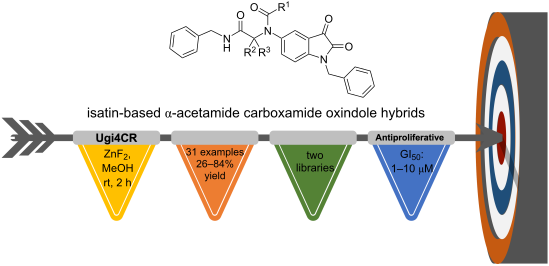
The Ugi4CR as effective tool to access promising anticancer isatin-based α-acetamide carboxamide oxindole hybrids
Beilstein J. Org. Chem. 2024, 20, 1213–1220, doi:10.3762/bjoc.20.104
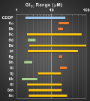
- derivatives were 8h and 8k. The former is an α,β-unsaturated amide, which could react with nucleophiles inside the cell and thus explain its relative potency. The latter bears a long aliphatic side chain (thirteen carbon atoms), which could allow anchoring to cell membranes, representing a potential target




Manganese-catalyzed C–C and C–N bond formation with alcohols via borrowing hydrogen or hydrogen auto-transfer
Beilstein J. Org. Chem. 2024, 20, 1111–1166, doi:10.3762/bjoc.20.98
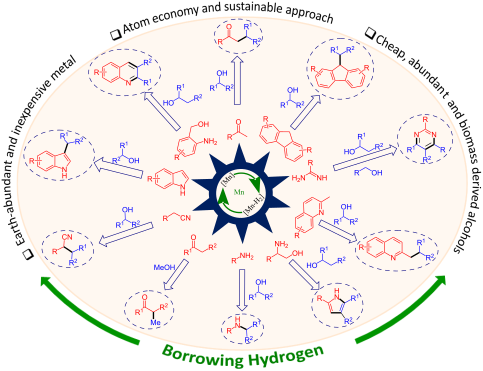
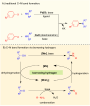
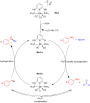
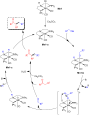
- to the scientific community [10][11][12]. In this process, first, the metal-catalyzed dehydrogenation of the alcohol provides a reactive substrate for coupling with nucleophiles and the active metal hydride species. Later, the borrowed hydrogen is used in the final step to reduce unsaturated



























Synthesis of 1,4-azaphosphinine nucleosides and evaluation as inhibitors of human cytidine deaminase and APOBEC3A
Beilstein J. Org. Chem. 2024, 20, 1088–1098, doi:10.3762/bjoc.20.96
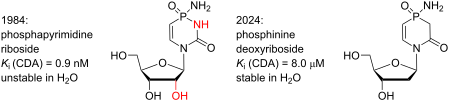
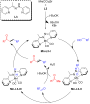
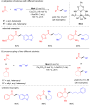
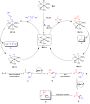
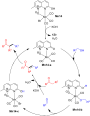
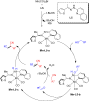
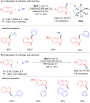
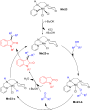
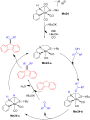
- phosphinamide Vb inhibited hCDA similarly to dZ (IIc) at pH 7.4, whereas negatively charged phosphinic acid Va showed some inhibition of hCDA only at pH 4.7. Unfortunately, due to the low stability of charge-neutral phosphinamide Vb towards nucleophiles, we could not incorporate it into DNA. Synthesis of a DMT


Structure–property relationships in dicyanopyrazinoquinoxalines and their hydrogen-bonding-capable dihydropyrazinoquinoxalinedione derivatives
Beilstein J. Org. Chem. 2024, 20, 1037–1052, doi:10.3762/bjoc.20.92
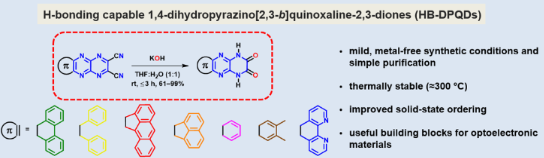
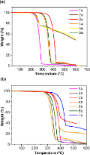
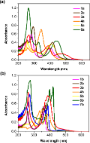
- , ethanol, ethylene glycol, and diethylene glycol in the presence of excess triethylamine (Scheme 2). These products provide evidence for the in situ formation of DCPQ 7a and demonstrate its ability to undergo trapping with various nucleophiles through an SNAr mechanism. An alternate strategy was employed




Auxiliary strategy for the general and practical synthesis of diaryliodonium(III) salts with diverse organocarboxylate counterions
Beilstein J. Org. Chem. 2024, 20, 1020–1028, doi:10.3762/bjoc.20.90
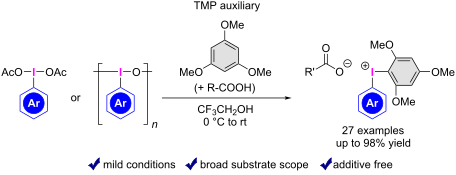
- attractive class of reagents due to their stability, accessibility, and diverse chemical reactivity [1]. Diaryliodonium(III) salts, in particular, have been widely recognized as efficient arylating reagents for a range of carbon, nitrogen, oxygen, sulfur, and other nucleophiles, and can be employed in the
- 1,3,5-trimethoxybenzene are highly recommended for chemoselective arylation processes. Aryl(TMP)iodonium(III) salts have been successfully used as transition metal-free arylating reagents for various nucleophiles such as nitrogen- [23][24][25][26], oxygen- [13][27][28][29], sulfur- [30], and carbon- [31
- ] nucleophiles due to their excellent reactivity and aryl group selectivity over aryl(anisyl)iodonium(III) salts [32] and aryl(mesityl)iodonium(III) salts [33]. Based on our previously reported conditions for the synthesis of diaryliodonium(III) salts [21], we designed a more practical synthetic protocol for the


Carbonylative synthesis and functionalization of indoles
Beilstein J. Org. Chem. 2024, 20, 973–1000, doi:10.3762/bjoc.20.87
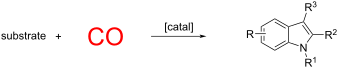
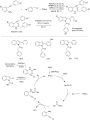
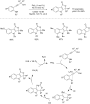
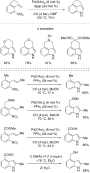
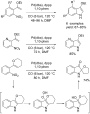
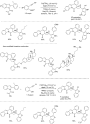
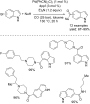
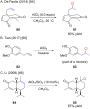
- %, respectively) in methanol under 90 bar of CO at 100 °C for two hours (Scheme 6). As already seen, triple bonds can be activated by Pd(II) catalysts towards the addition of nucleophiles in the right position, leading to heterocyclization reactions. Taking advantage of this possibility, in the Della Cá group, a
- alcohols were used as the nucleophiles (Scheme 32). About three years later, the same group developed a simple and efficient method to access CO-linked heterocyclic scaffolds by a Pd-catalyzed carbonylative cyclization of alkene–indole derivatives with 2-alkynylanilines and 2-alkynylphenols, in the












Direct synthesis of acyl fluorides from carboxylic acids using benzothiazolium reagents
Beilstein J. Org. Chem. 2024, 20, 921–930, doi:10.3762/bjoc.20.82
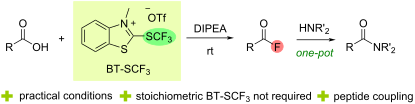
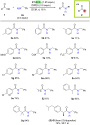
- employed as acylation reagents [1][2][3]. The strong C–F bond makes acyl fluorides relatively stable towards hydrolysis and easier to handle than other acyl halides [4][5][6][7][8]. Their reactions with nucleophiles are typically less violent than for the corresponding acyl chlorides with acyl fluorides
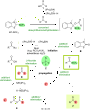
- − to another molecule of thioester 3 thus sets off a chain process, delivering acyl fluoride 2 and regenerating the fluoride nucleophile. A series of experiments conducted with thioester 3a suggest a number of nucleophiles feasibly present in the reaction mixture can initiate the chain process [34
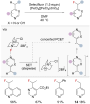
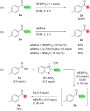
- . Mechanistic experiments. (a) Conversion of thioester 3a into acyl fluoride 2a in the presence of DIPEA. (b) Conversion of thioester 3a into acyl fluoride 2a in the presence of carboxylate and fluoride nucleophiles. (c) Two-stage deoxyfluorination reaction using 0.5 equiv of BT-SCF3. 19F NMR yields using α,α,α



Three-component N-alkenylation of azoles with alkynes and iodine(III) electrophile: synthesis of multisubstituted N-vinylazoles
Beilstein J. Org. Chem. 2024, 20, 891–897, doi:10.3762/bjoc.20.79
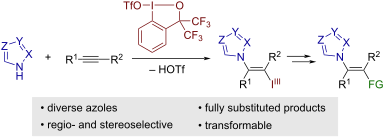
- difunctionalization of alkynes with various heteroatom and carbon nucleophiles [27][28][29][30][31][32][33][34]. Specifically, intermolecular trans-iodo(III)functionalization of alkynes has been achieved using oxygen nucleophiles such as alcohols [28][32], ethers [33], carboxylic acids [31], phosphate esters [31
- ], and sulfonic acids [31]. On the other hand, nitrogen-based nucleophiles amenable to this reaction manifold have thus far been limited to nitriles in the context of Ritter-type iodo(III)amidation [29]. In light of the significance of vinylated azoles, our attention was attracted to the feasibility of
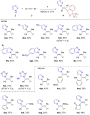
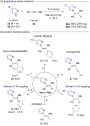
- various azole nucleophiles including pyrazole, indazole, 1,2,3-triazole, benzotriazole, and tetrazole. The follow-up transformation of the iodanyl group provides a means to prepare hitherto inaccessible types of alkenylated azoles. Further exploration of the three-component alkenylation of nitrogen and



Ortho-ester-substituted diaryliodonium salts enabled regioselective arylocyclization of naphthols toward 3,4-benzocoumarins
Beilstein J. Org. Chem. 2024, 20, 841–851, doi:10.3762/bjoc.20.76
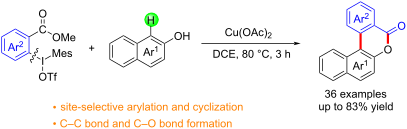
- -benzocoumarin skeletons in the presence of palladium catalysts (Scheme 1b). Furthermore, Olofsson and colleagues described an unprecedented reaction pathway using ortho-fluoro-substituted diaryliodonium salts bearing strong electron-withdrawing groups, leading to novel diarylations of N-, O-, and S-nucleophiles


Skeletal rearrangement of 6,8-dioxabicyclo[3.2.1]octan-4-ols promoted by thionyl chloride or Appel conditions
Beilstein J. Org. Chem. 2024, 20, 823–829, doi:10.3762/bjoc.20.74
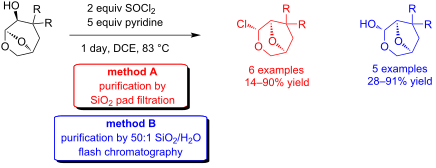
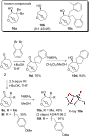
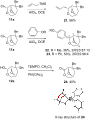
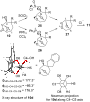
- at C4 determined the resultant ring system, as the σ* orbital is not accessible to external nucleophiles due to steric hindrance and the rigid conformation of the bicyclic ring system. When the C4–OH was equatorial, O8 migrated as it was aligned with the σ* orbital giving a 3,8-dioxabicyclo[3.2.1




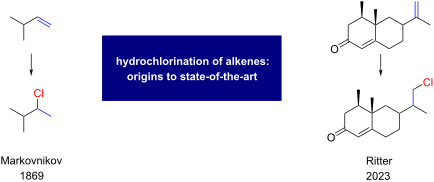
Advancements in hydrochlorination of alkenes
Beilstein J. Org. Chem. 2024, 20, 787–814, doi:10.3762/bjoc.20.72
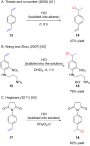
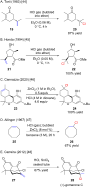
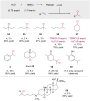
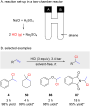
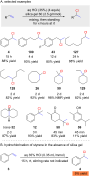
- conclusion we wish to point out that this reaction provides a convenient procedure to achieve anti Markovnikov addition of alcohols to olefins which can presumably be extended to other systems. Furthermore, the addition of other nucleophiles to photochemically generated cation radicals would make this type












Synthesis of new representatives of A3B-type carboranylporphyrins based on meso-tetra(pentafluorophenyl)porphyrin transformations
Beilstein J. Org. Chem. 2024, 20, 767–776, doi:10.3762/bjoc.20.70
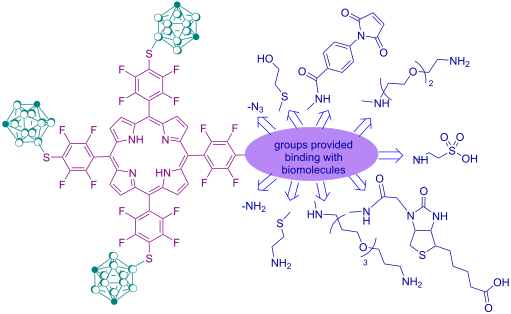
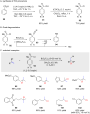
- biomolecules via the nucleophilic aromatic (SNAr) substitution reactions [15][16]. A variety of nucleophiles such as amines [17][18], alcohols [18][19][20], thiols [17][19][21][22][23], and carboranes [17][24][25][26][27] have been studied in selective SNAr substitution reactions of the p-fluorine atoms in
- next studied the modification of the pentafluorophenyl substituents with carborane clusters via the SNAr substitution reaction with carborane nucleophiles [17][24][25][26][27]. These reactions are well studied for porphyrin 1 [17][24][25][26][27] to afford the corresponding carborane derivatives
- the SNAr substitution reactions with 9-mercapto-m-carborane. As a result, tris(carboranyl)-substituted porphyrins containing pentafluorophenyl- or p-aminotetrafluorophenyl-substituents were synthesized and used in the reactions with a variety of thio- or amino-nucleophiles to form functionalized



Chemoenzymatic synthesis of macrocyclic peptides and polyketides via thioesterase-catalyzed macrocyclization
Beilstein J. Org. Chem. 2024, 20, 721–733, doi:10.3762/bjoc.20.66
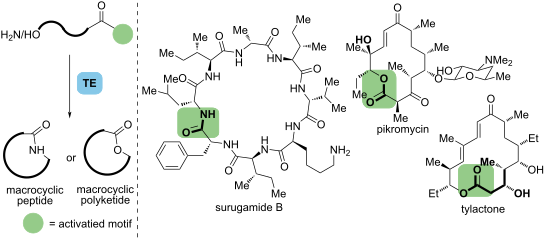
- polyketides or peptides, and form an ester bond. Then, they catalyze either intramolecular macrocyclization to give macrolactones or macrolactams with attacking of internal nucleophiles (alcohols or amine), or hydrolysis to release linear acids or peptides (Scheme 1b). Although TE domains may display


Regioselective quinazoline C2 modifications through the azide–tetrazole tautomeric equilibrium
Beilstein J. Org. Chem. 2024, 20, 675–683, doi:10.3762/bjoc.20.61
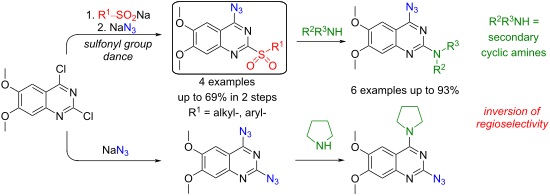
- explanation for the present tetrazole form in the solutions. Surprisingly, FTIR and X-ray analyses of 12a in the solid state indicated the existence of 12a in the azide form. In subsequent experiments it was discovered that for less nucleophilic N-nucleophiles (piperidine, morpholine, N-methylpiperazine) C2


Palladium-catalyzed three-component radical-polar crossover carboamination of 1,3-dienes or allenes with diazo esters and amines
Beilstein J. Org. Chem. 2024, 20, 661–671, doi:10.3762/bjoc.20.59
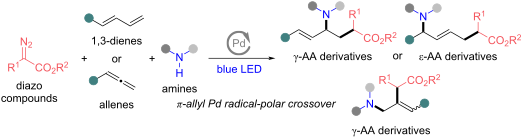
- electrophilic trapping of onium ylides generated from metal carbenes with nucleophiles, providing an ingenious difunctionalization strategy for diazo compounds to access structurally complex and diverse molecules (Scheme 1b, top) [28][29]. In recent years, radical-mediated MCRs with diazo compounds have become

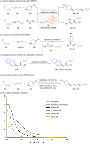


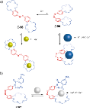
Switchable molecular tweezers: design and applications
Beilstein J. Org. Chem. 2024, 20, 504–539, doi:10.3762/bjoc.20.45





(E,Z)-1,1,1,4,4,4-Hexafluorobut-2-enes: hydrofluoroolefins halogenation/dehydrohalogenation cascade to reach new fluorinated allene
Beilstein J. Org. Chem. 2024, 20, 452–459, doi:10.3762/bjoc.20.40
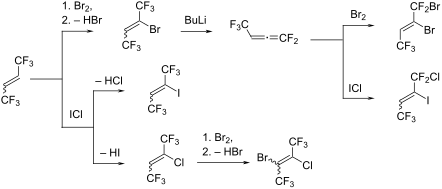
- the corresponding =CF2 containing products [10]. In addition to complexes of aluminum and boron, several magnesium and lithium silyl reagents were prepared and proved to be good nucleophiles in reactions with (Z)-1,1,1,4,4,4-hexafluorobut-2-ene, as a result of which the corresponding