

Search results
Search for "intermolecular" in Full Text gives 808 result(s) in Beilstein Journal of Organic Chemistry. Showing first 200.
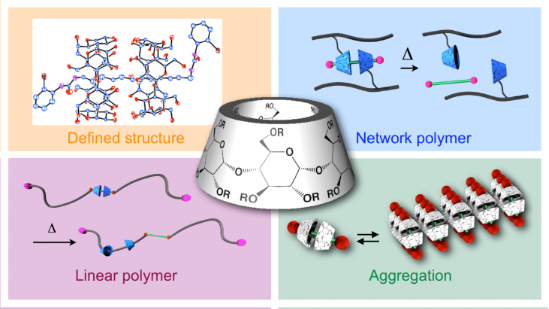
Cyclodextrin-based rotaxanes for polymer materials: challenge on simultaneous realization of inexpensive production and defined structures
Beilstein J. Org. Chem. 2024, 20, 3026–3049, doi:10.3762/bjoc.20.252






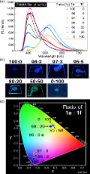
Tunable full-color dual-state (solution and solid) emission of push–pull molecules containing the 1-pyrindane moiety
Beilstein J. Org. Chem. 2024, 20, 3016–3025, doi:10.3762/bjoc.20.251
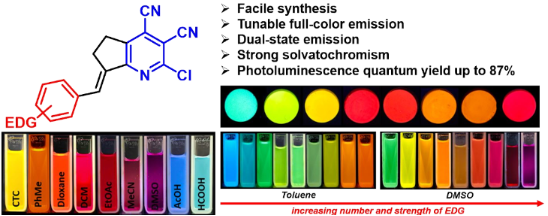
- rigidity along the C–C bond between the heterocycle and ethene bridge due to the fused cyclic fragment. As a consequence of the additional ring, the fluorescence efficiency increased. At the same time, solid-state emission was observed due to the steric hindrance, which prevented intermolecular
- contrast to related compounds A (Figure 1), were characterized by solid-state emission (Table 4 and Figure 8). This was apparently caused by the presence of the dimethylene bridge, preventing intermolecular interactions. Emission maxima of compounds 1 ranged from 540–767 nm, namely from the green to the


Advances in radical peroxidation with hydroperoxides
Beilstein J. Org. Chem. 2024, 20, 2959–3006, doi:10.3762/bjoc.20.249
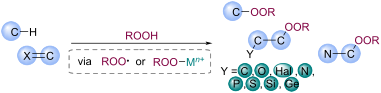
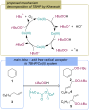
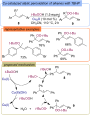
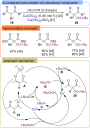
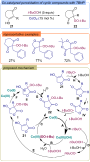
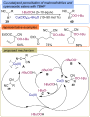
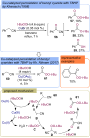
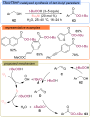
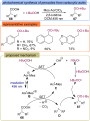
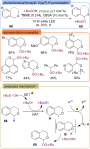
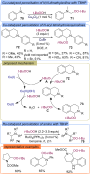
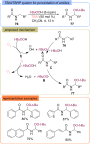
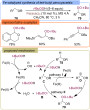
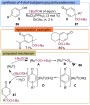
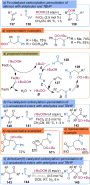
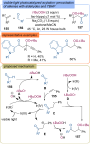
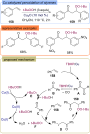
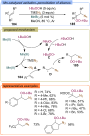
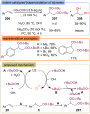
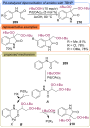
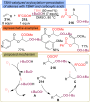
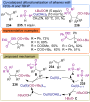
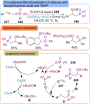
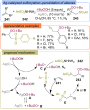
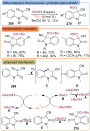
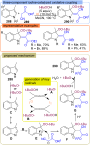
- 22 (steps F, G). The third possible pathway involves the abstraction of a hydrogen atom from 4-hydroxy-2(5H)-furanone 21 by the tert-butoxy radical formed in step A to give the alkoxy radical III (step H). Intermolecular hydrogen atom transfer results in the C-centered radical IV (step I). Further





























The charge transport properties of dicyanomethylene-functionalised violanthrone derivatives
Beilstein J. Org. Chem. 2024, 20, 2921–2930, doi:10.3762/bjoc.20.244
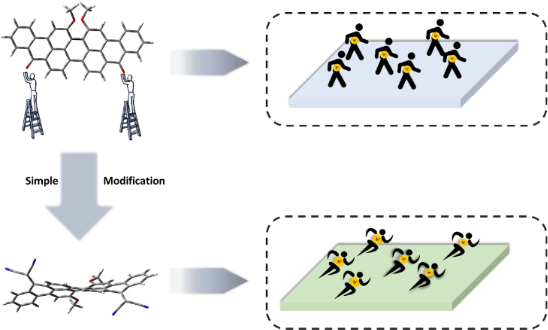
- , organic semiconductor molecules with large fused conjugated systems have achieved high charge carrier mobility. Such molecular structures improve the intermolecular interactions (such as π–π stacking) that are required to facilitate the hopping of charge carriers between adjacent molecules [7][8][9
- ][16][17], high electron affinity, excellent self-assembling properties [18][19][20], and thermal and photochemical stabilities [21]. The excellent charge carrier mobility of PDIs has been explained by the intermolecular π–π interactions with an interplanar distance (3.3–3.5 Å) [22][23][24][25] that
- intermolecular interactions which might result in a narrower HOMO–LUMO gap than that of PDI, and an absorption band extending to the near-infrared (NIR) region [26]. This makes violanthrone and its derivatives potential candidates for NIR optoelectronic applications. In fact, the intrinsic semiconducting


Recent advances in transition-metal-free arylation reactions involving hypervalent iodine salts
Beilstein J. Org. Chem. 2024, 20, 2891–2920, doi:10.3762/bjoc.20.243





Mechanochemical difluoromethylations of ketones
Beilstein J. Org. Chem. 2024, 20, 2799–2805, doi:10.3762/bjoc.20.235
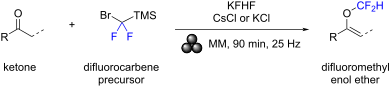
- with the generation of difluorocarbene from TMSCF2Br and KFHF. This is followed by a nucleophilic attack of the oxygen atom of ketone 1 on the difluorocarbene. Subsequently, a protonation–deprotonation sequence occurs, which can either be intermolecular, involving a molecule of HF, or intramolecular
- process. As a result, no H/D-exchange was detected. The experimental results of both experiments suggest that the reaction predominantly proceeds through an intermolecular pathway. The occurrence of the CF2D product may be attributed to a minor intramolecular reaction path or the involvement of DF formed
- isolating the low-boiling non-polar products. Mechanistic studies suggested that in situ-generated difluorocarbene reacts with the ketone oxygen, followed by intermolecular protonation/deprotonation. Although the process has still synthetic limitations, also acyclic ketones can now be converted into


C–C Coupling in sterically demanding porphyrin environments
Beilstein J. Org. Chem. 2024, 20, 2784–2798, doi:10.3762/bjoc.20.234
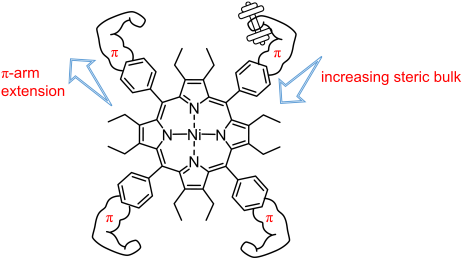
- nanotubes/nanochannels by intermolecular π–π interactions of the peripheral phenyl groups [59]. Additionally nonplanar supramolecular assemblies have found use in anion capture [12][15], and sensing [60], making the synthesis of these structures desirable from a supramolecular standpoint. Two especially


Photoluminescence color-tuning with polymer-dispersed fluorescent films containing two fluorinated diphenylacetylene-type fluorophores
Beilstein J. Org. Chem. 2024, 20, 2682–2690, doi:10.3762/bjoc.20.225
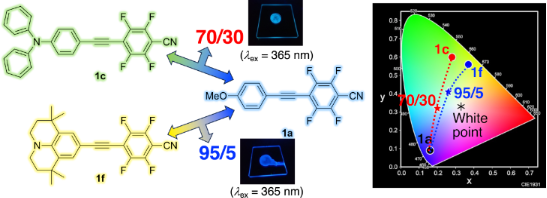
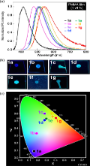
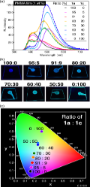
- . Judging from the fact that compounds 1a and 1c form a tight molecular packing via intermolecular H···F hydrogen bonds which suppress non-radiative deactivation in the crystalline state [20][21], we speculated that the polymer dispersion state had lost the intermolecular interactions, which accelerated the


Computational design for enantioselective CO2 capture: asymmetric frustrated Lewis pairs in epoxide transformations
Beilstein J. Org. Chem. 2024, 20, 2668–2681, doi:10.3762/bjoc.20.224
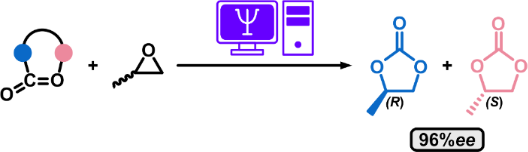
- results, we looked into the literature to explore examples of asymmetric FLPs. This exploration revealed three main types, namely, intramolecular chiral FLPs, intermolecular FLPs composed of a chiral acid and an achiral base, and intermolecular FLPs comprising an achiral acid and a chiral base [61][62


Deciphering the mechanism of γ-cyclodextrin’s hydrophobic cavity hydration: an integrated experimental and theoretical study
Beilstein J. Org. Chem. 2024, 20, 2635–2643, doi:10.3762/bjoc.20.221
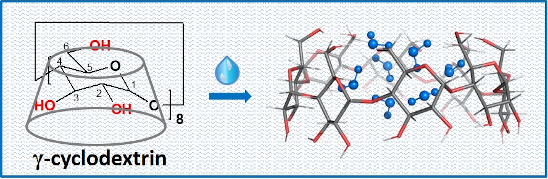
- cyclodextrin cavity and in the intermolecular space. Several overlapped steps are visible on the TG curve, which is associated with the release of water molecules in several stages, with the steepest lightening of the sample at 350–370 K. Consistent with this is the DSC endothermic peak, which is asymmetric


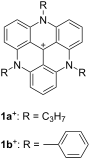
Anion-dependent ion-pairing assemblies of triazatriangulenium cation that interferes with stacking structures
Beilstein J. Org. Chem. 2024, 20, 2567–2576, doi:10.3762/bjoc.20.215
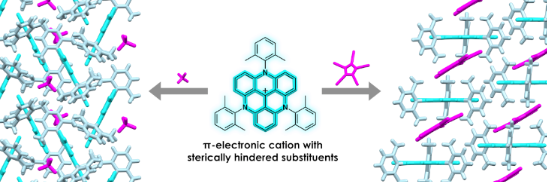
- intermolecular C–H···π interactions between the proximally located CH3 and TATA+ units, as obtained by the Hirshfeld surface analysis (Figure 4) [33][34][35][36]. The arrangement of the ion pairs depended on the counteranions, which formed different interactions. Smaller counteranions were located above the
- the aid of intermolecular C–H···π interactions. Such characteristic anion-driven assemblies of TATA+ are not known, and further studies on ion-pairing assemblies of modified TATA+ can lead to the development of functional materials, comprising multiple components associated via iπ–iπ interactions that



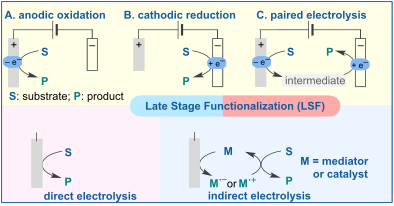
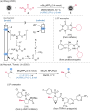
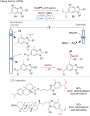
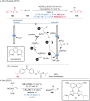
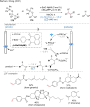
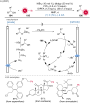
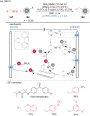
A review of recent advances in electrochemical and photoelectrochemical late-stage functionalization classified by anodic oxidation, cathodic reduction, and paired electrolysis
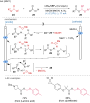
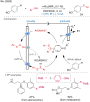
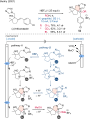
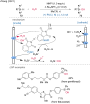
Beilstein J. Org. Chem. 2024, 20, 2500–2566, doi:10.3762/bjoc.20.214









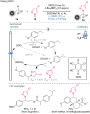
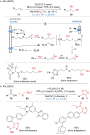

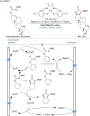


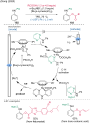
















HFIP as a versatile solvent in resorcin[n]arene synthesis
Beilstein J. Org. Chem. 2024, 20, 2469–2475, doi:10.3762/bjoc.20.211
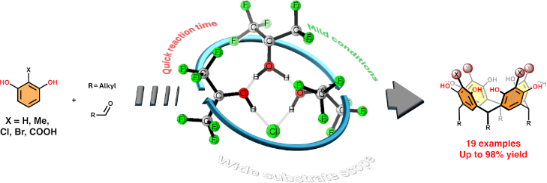
- from intermolecular dehydration, nowadays known as alkyl resorcin[4]arene. Forty years later in 1980, Höegberg noticed that short alkyl chain resorcin[n]arenes develop stereoisomers in the reaction mixture; however, since the condensation reaction is reversible, once the macrocycle adopts the bowl


Hypervalent iodine-mediated cyclization of bishomoallylamides to prolinols
Beilstein J. Org. Chem. 2024, 20, 2455–2460, doi:10.3762/bjoc.20.209
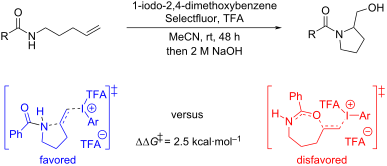
- provided slight improvements in yield (Table 1, entries 2–4). The more electron-rich 2-iodo-1,3-dimethoxybenzene led to a further increase in yield to 44% (Table 1, entry 5). 1,2-Diiodobenzene has been reported to be a superior precatalyst in intermolecular C–H aminations of arenes but only provided 40


Synthesis and conformational analysis of pyran inter-halide analogues of ᴅ-talose
Beilstein J. Org. Chem. 2024, 20, 2442–2454, doi:10.3762/bjoc.20.208
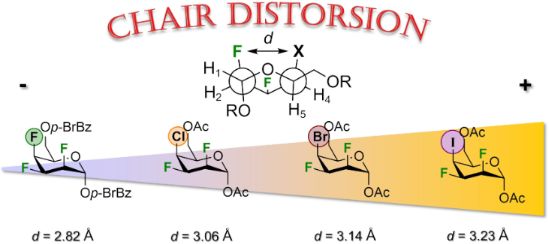
- arrangement for compound 15 and the crystal packing of compound 13 and 14 can be found in the Supporting Information File 1. The halogens are on the same side of the pyran ring, thus increasing the overall molecular dipole moment (see Supporting Information File 1). This allows intermolecular C–X···H–C
- interactions responsible, in part, for the solid-state ordering [52]. Individual pyrans stack on top of one another in a manner consistent with electrostatic interactions with halogens facing H3, H4, and H5 (Figure 4a). As such, some intermolecular H···X bond distances and angles for compound 13–15 are listed
- in Table 7. Solid-state intermolecular interactions involving fluorine atoms have been well documented over the years for carbohydrate analogues [24][44][53] or other organofluorines [54]. In our case, there is a number of C–F···H–C interactions with F2 and H4 (13: d = 2.271 Å, 14: d = 2.270 Å, and


Synthesis, electrochemical properties, and antioxidant activity of sterically hindered catechols with 1,3,4-oxadiazole, 1,2,4-triazole, thiazole or pyridine fragments
Beilstein J. Org. Chem. 2024, 20, 2378–2391, doi:10.3762/bjoc.20.202
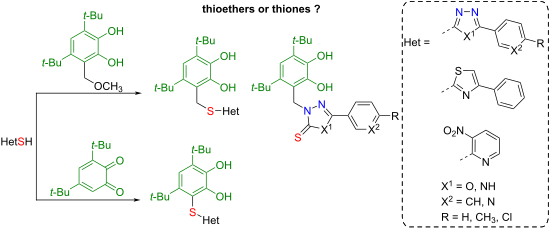
- corresponding thiones. The yield of reaction products ranges from 42 to 80%. The crystal structures of catechols with 3-nitropyridine or 1,3,4-oxadiazole-2(3H)-thione moieties were established by single-crystal X-ray analysis. The possibility of forming intra- and intermolecular hydrogen bonds has been
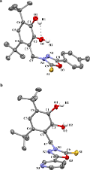
- , the catechol molecules in the crystal are located in such a way that catechol hydroxy fragments look at each other and, in addition to intra-molecular hydrogen bond O–H···O between the two hydroxy groups, the intermolecular hydrogen interactions are also being realized between the catechol fragments
- of neighboring molecules [57][58][59][60][61]. The intra- and intermolecular interactions in crystals 5, 6·0.5CH3CN, and 8 lead to different complex structural motifs in crystals of these compounds. Two intramolecular hydrogen bonds (Figure 1) are observed in the crystal structure of 5: between OH




Asymmetric organocatalytic synthesis of chiral homoallylic amines
Beilstein J. Org. Chem. 2024, 20, 2349–2377, doi:10.3762/bjoc.20.201
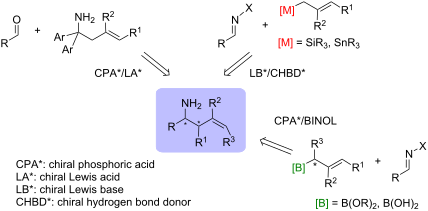
- the asymmetric addition of organoboron reagents to imines (Scheme 3). An intermolecular hydrogen bonding between a non-rigid organocatalyst and a non-rigid substrate was shown to play a key role in assembling a configurationally stable transition structure. As a result, this approach unveiled the


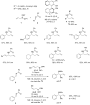


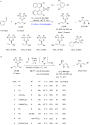


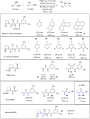


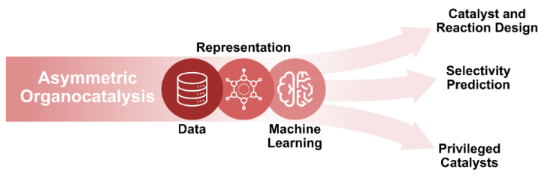
Catalysing (organo-)catalysis: Trends in the application of machine learning to enantioselective organocatalysis
Beilstein J. Org. Chem. 2024, 20, 2280–2304, doi:10.3762/bjoc.20.196
- acrylates [95] and found a similar performance compared to NCI probe descriptors. Despite the success of this approach, it is important to remember that descriptors do not have to be parameters of one molecule and that intermolecular terms can be used to derive mechanistic hypotheses. Toste and co-workers




Metal-free double azide addition to strained alkynes of an octadehydrodibenzo[12]annulene derivative with electron-withdrawing substituents
Beilstein J. Org. Chem. 2024, 20, 2234–2241, doi:10.3762/bjoc.20.191
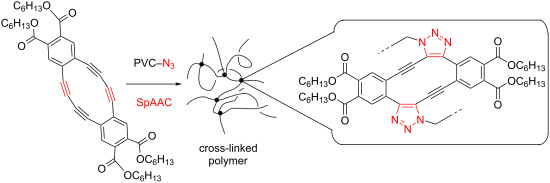
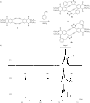
- -ethynyltriazole derivative (out-) (6b) adducts were formed. To determine the chemical structure of the product, the NOESY measurement was conducted. The NOESY spectrum suggested the intermolecular through-space coupling between two benzene protons (Figure S10 in Supporting Information File 1). This result




Heterocycle-guided synthesis of m-hetarylanilines via three-component benzannulation
Beilstein J. Org. Chem. 2024, 20, 2208–2216, doi:10.3762/bjoc.20.188
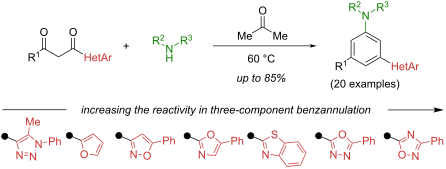
- interrupted Kröhnke reaction (Scheme 1B) [51][52]. The main step of this process is an intermolecular cyclization of the formed 1,5-diketone followed by aromatization. Previously we have shown that 1,3-diketones bearing an electron-withdrawing group (EWG) adjacent to one of the carbonyls readily react with in


Factors influencing the performance of organocatalysts immobilised on solid supports: A review
Beilstein J. Org. Chem. 2024, 20, 2129–2142, doi:10.3762/bjoc.20.183
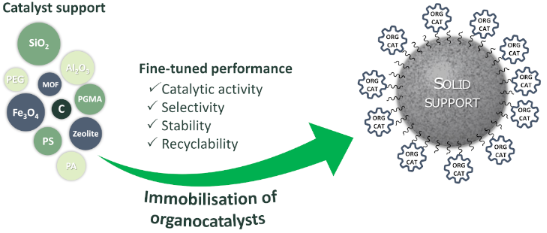
- adsorbed onto the support surface through weaker intermolecular forces, such as van der Waals forces and hydrogen bonding. Ionic catalysts form ionic bonds or those that can be ionised under immobilisation conditions. Encapsulation involves physically trapping the catalyst within the pores or cavities of


Efficacy of radical reactions of isocyanides with heteroatom radicals in organic synthesis
Beilstein J. Org. Chem. 2024, 20, 2114–2128, doi:10.3762/bjoc.20.182
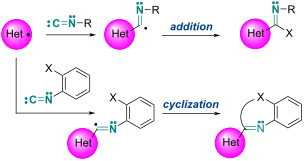
- (R = EWG-C6H4, E = PhS and PhTe) in moderate to high yields [30]. Very few examples of intermolecular cascade reactions with imidoyl radicals as key intermediates have been reported. The intermolecular cascade reaction of diselenide, electron-deficient acetylene, and isocyanide under photoirradiation
- compounds to isocyanides using imidoyl radicals as key intermediates. However, as the number of substituents on typical elements increases, intermolecular 1,1-addition reactions become more difficult due to the increase in steric hindrance. Therefore, it is expected that intramolecular cyclization of
- imidoyl radicals will be possible by introducing an unsaturated group at an appropriate position in the isocyanide molecule, since intramolecular reactions are generally 103 times faster than intermolecular reactions. This chapter discusses the intramolecular radical cyclization reactions of isocyanides


Novel oxidative routes to N-arylpyridoindazolium salts
Beilstein J. Org. Chem. 2024, 20, 1906–1913, doi:10.3762/bjoc.20.166
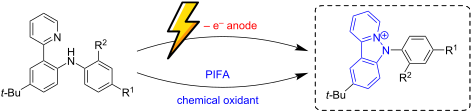
- amount (5%) of the N,N’-diaryldihydrophenazine radical cation that is the byproduct corresponding to the intermolecular oxidative C–N coupling of the diarylamine A1 was detected in the reaction mixture. This emphasizes that the both processes are of the same nature and proceed through the same
- intermediate (i.e., the diarylamines’ radical cation) and indicates the dominance of the intramolecular cyclization over the intermolecular C–N coupling process. Oxidation of diarylamines in the presence of an excess of trifluoroacetic acid gave no targeted pyridoindazolium salts, whereas the amount of
- previous mechanistic study [20][21] which revealed that the intermolecular C–N and C–C couplings are disfavored in case of the diarylamines with two electron-deficient phenyl rings. To our surprise, the procedure did not work in the case of amine A3: only traces of pyridoindazolium salt S3 were detected in


Discovery of antimicrobial peptides clostrisin and cellulosin from Clostridium: insights into their structures, co-localized biosynthetic gene clusters, and antibiotic activity
Beilstein J. Org. Chem. 2024, 20, 1800–1816, doi:10.3762/bjoc.20.159
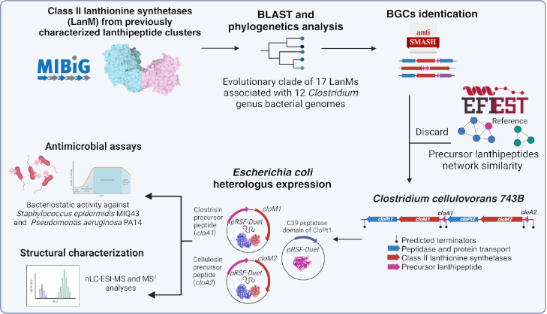
- activity of nisin, a lanthipeptide produced by certain strains of Lactococcus lactis, is dependent on thioether-ring formation [14]. Additional post-translational modifications contributing to their distinct biological activities were identified [15][16]. Intermolecular disulfide bridges were proved to




Oxidative fluorination with Selectfluor: A convenient procedure for preparing hypervalent iodine(V) fluorides
Beilstein J. Org. Chem. 2024, 20, 1785–1793, doi:10.3762/bjoc.20.157
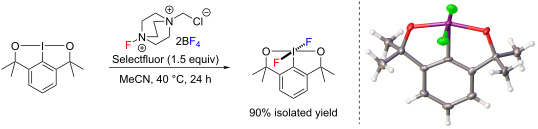
- 20 (167.2(2)° to 168.6(2)°) and fluoroiodane 2 (166.7(2)°), presumably due to the strain caused by the two five-membered rings. Similar to trifluoroiodane 20, there are two short intermolecular I…F contacts of 2.942(4) Å and 2.999(4) Å in the packing diagram of difluoroiodane 6 (see Figure S1 in