

Search results
Search for "glycans" in Full Text gives 81 result(s) in Beilstein Journal of Organic Chemistry.
Formation of carbohydrate-functionalised polystyrene and glass slides and their analysis by MALDI-TOF MS
Beilstein J. Org. Chem. 2012, 8, 753–762, doi:10.3762/bjoc.8.86
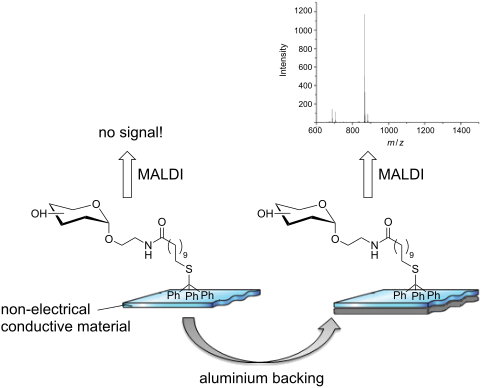
- of Organic Chemistry, Christiana Albertina University of Kiel, Otto-Hahn-Platz 3/4, 24098 Kiel, Germany 10.3762/bjoc.8.86 Abstract Glycans functionalised with hydrophobic trityl groups were synthesised and adsorbed onto polystyrene and glass slides in an array format. The adsorbed glycans could be
- . Initially, simple alkyl chains were used as tethers [9] but more recently, Wong and co-workers improved on this technology by using trityl-derived glycans, which are easily attached to glycans and were reported to bind strongly to polystyrene (Figure 1A) [7]. The attachment of glycans to the surface was


Chemo-enzymatic modification of poly-N-acetyllactosamine (LacNAc) oligomers and N,N-diacetyllactosamine (LacDiNAc) based on galactose oxidase treatment
Beilstein J. Org. Chem. 2012, 8, 712–725, doi:10.3762/bjoc.8.80
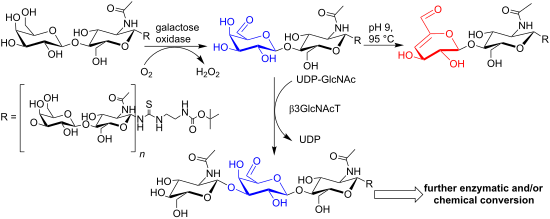
- , Germany Institute of Microbiology, Academy of Sciences of the Czech Republic, Videnska 1083, Prague 4, CZ 14220, Czech Republic 10.3762/bjoc.8.80 Abstract The importance of glycans in biological systems is highlighted by their various functions in physiological and pathological processes. Many glycan
- epitopes on glycoproteins and glycolipids are based on N-acetyllactosamine units (LacNAc; Galβ1,4GlcNAc) and often present on extended poly-LacNAc glycans ([Galβ1,4GlcNAc]n). Poly-LacNAc itself has been identified as a binding motif of galectins, an important class of lectins with functions in immune
- response and tumorigenesis. Therefore, the synthesis of natural and modified poly-LacNAc glycans is of specific interest for binding studies with galectins as well as for studies of their possible therapeutic applications. We present the oxidation by galactose oxidase and subsequent chemical or enzymatic




Preparation of aminoethyl glycosides for glycoconjugation
Beilstein J. Org. Chem. 2010, 6, 699–703, doi:10.3762/bjoc.6.81

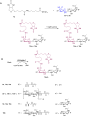
- important component of glycoprotein glycans and also a substrate for sialyltransferases to generate biologically important sialyllactosides. The aminoethyl lactoside 16 was prepared in greatest yield from the bromide and attempts to prepare 16 directly from the acetate using BF3·Et2O as the activator only


Bioorthogonal metabolic glycoengineering of human larynx carcinoma (HEp-2) cells targeting sialic acid
Beilstein J. Org. Chem. 2010, 6, No. 24, doi:10.3762/bjoc.6.24
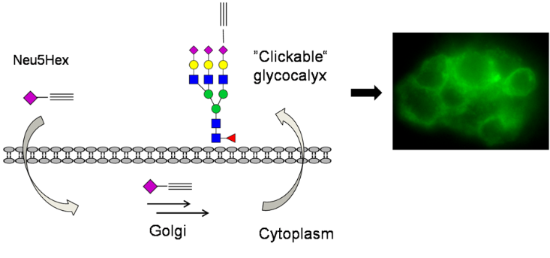
- -surface glycans. Although it has been known for many years that sialic acids are involved in myriads of interaction processes including viral infections such as the emerging flu variants, their biological role on cell surfaces of different cell lines and at different development states remains unclear. As
- new techniques for probing glycans have evolved only relatively recently, more information about the fundamental biological functions of carbohydrate structures can be obtained. Therefore we introduced metabolic glycoengineering of the human larynx carcinoma cell line HEp-2. The incorporation and cell
- cyclooctyne (DIFO) and cell-surface azido-glycans introduced recently has been proven to be suitable for in vivo labelling [14][17][18]. Experimental 2-azidoacetylamino-2-deoxy-1,3,4,6-tetraacetyl-β-D-glucopyranoside (16) was synthesized as described previously [9] N-(1R,2R,3S,4R)-Hex-5-yonic acid (2,3,4,5




Synthesis in the glycosciences
Beilstein J. Org. Chem. 2010, 6, No. 16, doi:10.3762/bjoc.6.16
- . Since the isolation of those complex glycans which are active in cellular communication is problematic, oligosaccharide synthesis is an important area of research. Moreover, what Professor Hans Paulsen, one of the greatest exponents of glycoside synthesis, observed in 1982 [2] still holds true today
Acid- mediated reactions under microfluidic conditions: A new strategy for practical synthesis of biofunctional natural products
Beilstein J. Org. Chem. 2009, 5, No. 40, doi:10.3762/bjoc.5.40
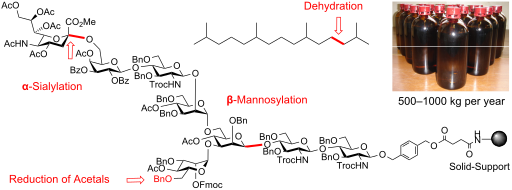
- benzylidene acetal groups, and dehydration, which are the keys to the practical synthesis of N-glycans and the immunostimulating natural product, pristane. A distinctly different reactivity from that in conventional batch stirring was found; the vigorous micromixing of the reactants with the concentrated
- industrial synthesis of the bioactive natural products. Review 1. Application of microfluidic systems to the synthesis of asparagine-linked oligosaccharides Among the various types of oligosaccharide structures, asparagine-linked oligosaccharides (N-glycans) are prominent in terms of diversity and complexity
- [34]. It is becoming clear that they are involved in a variety of important physiological events, such as cell-cell recognition, adhesion, signal transduction, quality control, and circulatory residence of proteins [35][36][37][38]. However, isolating large quantities of structurally pure N-glycans


Other Beilstein-Institut Open Science Activities