
Search results
Search for "free energy" in Full Text gives 207 result(s) in Beilstein Journal of Organic Chemistry. Showing first 200.
Synthesis of 4-substituted azopyridine-functionalized Ni(II)-porphyrins as molecular spin switches
Beilstein J. Org. Chem. 2020, 16, 2589–2597, doi:10.3762/bjoc.16.210
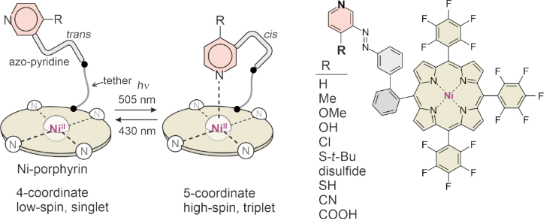
- (Figure 2). The substituents COOH, SH, COO− and O− give rise to almost complete coordination of the cis isomer. In contrast to bimolecular coordination [12] the intramolecular coordination in the substituted cis isomers, obviously, does not follow a clear linear free energy relationship. Steric hindrance


Conformational preferences of fluorine-containing agrochemicals and their implications for lipophilicity prediction
Beilstein J. Org. Chem. 2020, 16, 2469–2476, doi:10.3762/bjoc.16.200
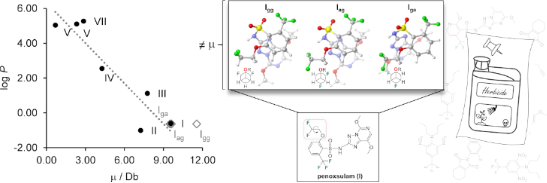
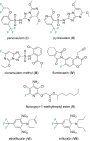
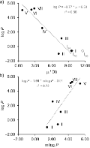
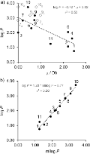
- ., becomes less stabilizing, in the order Iag < Iga < Igg. The difference in energy between Iag and Iga is somehow small (0.5 kcal mol−1), and these conformers are equally stable according to the relative Gibbs free energy ΔG (Boltzmann populations of 50% and 49%, respectively). The inclusion of an implicit



Naphthalene diimide bis-guanidinio-carbonyl-pyrrole as a pH-switchable threading DNA intercalator
Beilstein J. Org. Chem. 2020, 16, 2201–2211, doi:10.3762/bjoc.16.185
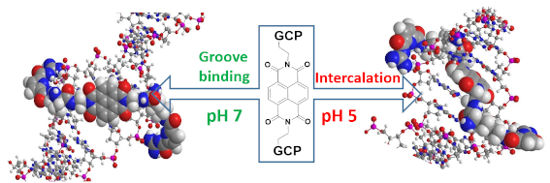
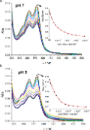
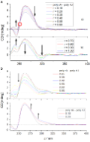
- calorimetry experiments (ITC), which allowed us to determine all thermodynamic components simultaneously in a single experiment (the equilibrium binding constant (Ka), reaction Gibbs free energy of binding (ΔrG), reaction enthalpy (ΔrH), reaction entropy (ΔrS), and the stoichiometry (n) of the complex formed
- reaction entropy change, indicating favourable enthalpic (exothermic) and entropic contribution to the reaction Gibbs free energy change. This means that the reaction is both enthalpically and entropically driven. However, secondary binding site (n > 0.4; excess of 4 over DNA primarily binding site) is
- free energy change. Moreover, at these conditions (n > 0.6) also strong new ICD bands are visible, pointing out that binding of surplus molecules of 4 is not random but well organised along the chiral double helix. Furthermore, such highly positively charged systems, which efficiently wrap around DNA





One-pot synthesis of oxazolidinones and five-membered cyclic carbonates from epoxides and chlorosulfonyl isocyanate: theoretical evidence for an asynchronous concerted pathway
Beilstein J. Org. Chem. 2020, 16, 1805–1819, doi:10.3762/bjoc.16.148
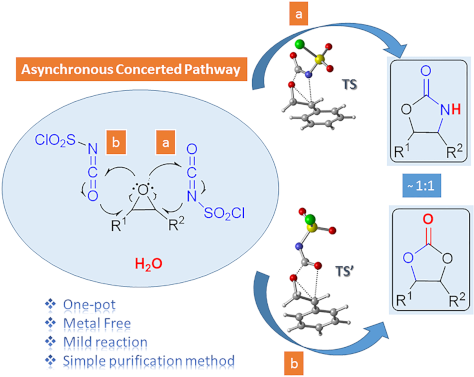
- elimination of hydrated HCl and formation of 13. The calculated free energy of activation was found to be 15.4 kcal/mol with respect to RC1 (7f+CSI) (Figure 5). The final step of path 2 takes place from RC5 (13+H2O) passing through TS5 and forming the target product 9f. This step requires an activation free
- energy of 16.2 kcal/mol with respect to the initial reactant complex RC1 (7f+CSI) (Figure 5). The overall process is exothermic by 56.2 kcal/mol. Three-dimensional (3D) views of all the optimized structures of path 2 are illustrated in Supporting Information File 1, Figure S2. As can be seen from the


Rearrangement of o-(pivaloylaminomethyl)benzaldehydes: an experimental and computational study
Beilstein J. Org. Chem. 2020, 16, 1636–1648, doi:10.3762/bjoc.16.136
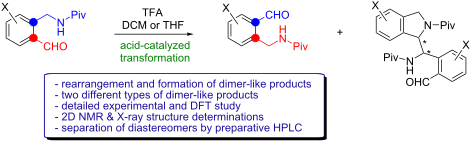
- both cases. When inspecting the Gibbs-free energy diagram of the transformation of aldehydes 1a–c (Figure 2, Table 2 and Table 3), it is noteworthy that the main trends until the formation of isoindole intermediates 4a–c are very similar. However, there is a significant difference in the 4→12
- the transformation of trimethoxy derivative 1d reveals that dehydration is almost isoergonic (ΔG9d→11d = −1.6 kJ·mol−1), but the formation of the isoindole intermediate (11d→4d) is endergonic (unlike in the case of the three other derivatives), with a larger activation free energy (ΔG#11TS = 40.2
- conformer was identified for 23a and two for 23b (Figure 4). In the two preferred conformers of 23b (23b1 and 23b2), the plane of the ortho-formyl-substituted phenyl rings is twisted with 180° compared to each other. The Gibbs free energy difference between the two conformers is 4.1 kJ·mol−1 suggesting the


Heterogeneous photocatalysis in flow chemical reactors
Beilstein J. Org. Chem. 2020, 16, 1495–1549, doi:10.3762/bjoc.16.125
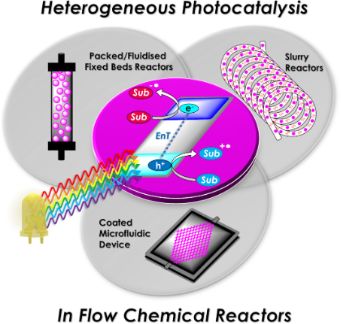
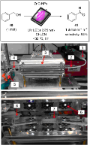
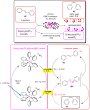
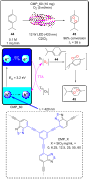
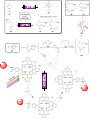
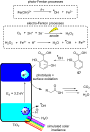
- ratio results in an extremely efficient heat exchange. This maintains a narrow free energy profile in flow reactors and can enhance selectivity [43][53][54]. This also prevents potential hot spots forming due to a photothermal effect, which could potentially alter selectivity and lead to the loss of














p-Pyridinyl oxime carbamates: synthesis, DNA binding, DNA photocleaving activity and theoretical photodegradation studies
Beilstein J. Org. Chem. 2020, 16, 337–350, doi:10.3762/bjoc.16.33
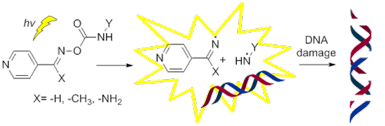
- chemical reaction below (Scheme 3). The activation free energy for the decarboxylation reaction is only 1.09 kcal/mol and by using Equation 4 (see theoretical calculations section) we find a rate constant kr = 9.87∙1011 s−1, characterizing the reaction as an ultrafast one, with a corresponding life-time of
- energy and free energy of activation are given in Equation 1 and Equation 2, respectively: For the calculation of the rate constant, kr, the Eyring’s classical Equation 3 was used, where in the above equation kB is the Boltzmann’s constant (1.380662∙10−23 J/K), h is the Planck’s constant (6.626176∙10−34


The reaction of arylmethyl isocyanides and arylmethylamines with xanthate esters: a facile and unexpected synthesis of carbamothioates
Beilstein J. Org. Chem. 2020, 16, 159–167, doi:10.3762/bjoc.16.18
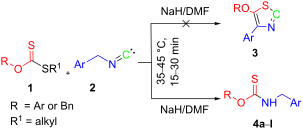
- -311++G(d,p) level of theory, with solvent corrections for chloroform, for two rotamers, namely 4cA and 4cB (generically represented as 4A and 4B in Figure 3). These structures were generated based on the X-ray structure of 4c and afforded a computed Gibbs free energy difference of −1.769 kJ mol−1 in


A combinatorial approach to improving the performance of azoarene photoswitches
Beilstein J. Org. Chem. 2019, 15, 2753–2764, doi:10.3762/bjoc.15.266
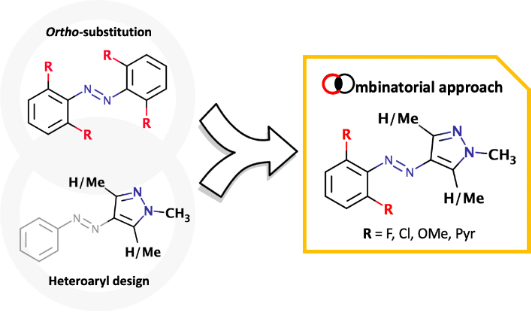
- inversely proportional to the rate constant, and this is exponentially dependent on the free-energy barrier according to Eyring theory. Thus, a small variation in the energy barrier of <1 kcal/mol leads to a change of few orders of magnitude in half-life. Vertical electronic transition energies for the
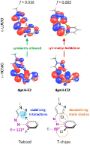
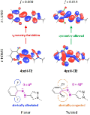
- arylazopyrazoles 4pzH-F2 (left) and 4pzMe-F2 (right). Free energy barriers calculated with respect to the corresponding ground-state Z-isomer are shown in red. Atom color coding: C in cyan, H in white, N in blue and F in pink. Noncovalent index (NCI) surfaces calculated for representative pyrrolidine-based ortho




Acid-catalyzed rearrangements in arenes: interconversions in the quaterphenyl series
Beilstein J. Org. Chem. 2019, 15, 2655–2663, doi:10.3762/bjoc.15.258
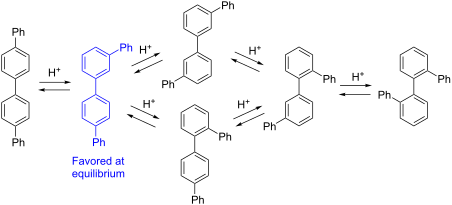
- frequency analysis but the large number of reaction paths precluded calculation of intrinsic reaction coordinates. Reported relative energies are from free energy calculations at 298 K. Pathways for terminal 1,2-phenyl shifts in quaterphenyl isomers calculated with IEFPCM(DCE)/B3LYP/6-31+G(d,p) theory



Effect of ring size on photoisomerization properties of stiff stilbene macrocycles
Beilstein J. Org. Chem. 2019, 15, 2408–2418, doi:10.3762/bjoc.15.233
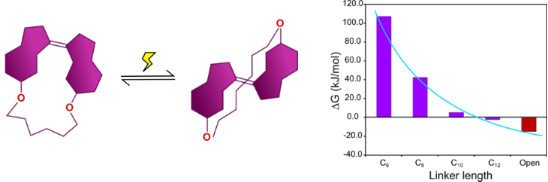
- the composition of the photostationary state. Ground state energies might therefore not be directly related to the isomerization reaction without investigation of the exited state potential energy surface. However, the difference in Gibbs free energy (ΔG, Figure 3) between the E- and Z-isomers shows a
- the same level to confirm that a minimum had been reached and to extract free energy corrections, which were evaluated at 298.15 K. A stability analysis was performed to ensure that a stable wave-function was attained for all species. Conformational analyses of the stiff stilbene macrocycles were
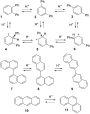
- . The investigated SS-macrocycles (Z)-1a–d. The photoisomerization of the SS-macrocycles shows a clear correlation between the Z/E ratio in the photostable mixture and the linker length. The non-cyclic SS-diester 7 is included as a reference. Gibbs free energy differences (ΔG) between Z- and E-isomers




Recent advances on the transition-metal-catalyzed synthesis of imidazopyridines: an updated coverage
Beilstein J. Org. Chem. 2019, 15, 1612–1704, doi:10.3762/bjoc.15.165
- Cu2O as a byproduct which was marked by the change of color from initial green to red. The theoretical study was carried out to check the feasibility of the reaction by calculating Gibbs free energy difference for each step (Scheme 42). The capability of copper to catalyze the cyanation reaction was


Transient and intermediate carbocations in ruthenium tetroxide oxidation of saturated rings
Beilstein J. Org. Chem. 2019, 15, 1552–1562, doi:10.3762/bjoc.15.158
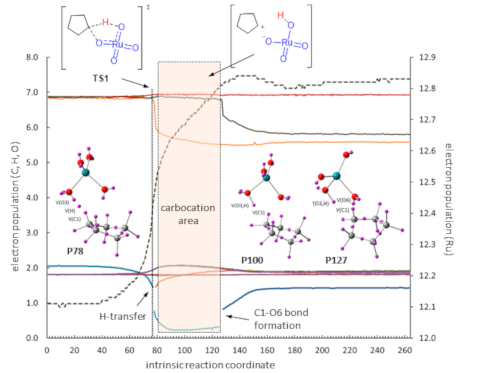
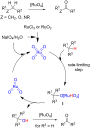
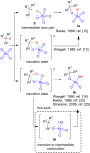
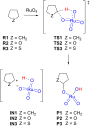
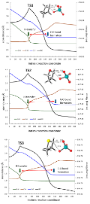
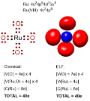
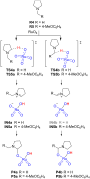
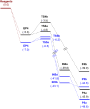
- individual reactions involved in the study are bimolecular processes. In order to avoid errors due to entropic effects when comparing all stationery points in an only energy diagram, a correction to free energy was made by substracting Strans contribution and considering a 1 M concentration [59]. Single





Host–guest interactions between p-sulfonatocalix[4]arene and p-sulfonatothiacalix[4]arene and group IA, IIA and f-block metal cations: a DFT/SMD study
Beilstein J. Org. Chem. 2019, 15, 1321–1330, doi:10.3762/bjoc.15.131
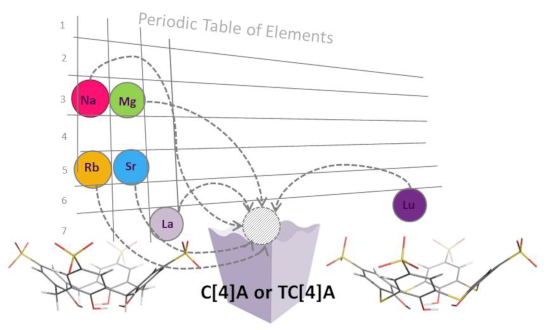
- environment. The calculated Gibbs free energy values of the complex formation reaction of these ligands with the bare metal cations suggest a spontaneous and energy-favorable process for all metal cations in the gas phase and only for Na+, Mg2+, Lu3+ cations in water environment. For one of the studied
- by the negative Gibbs free energy values (ΔG1 and ΔG78). The combination of implicit/explicit solvent treatment seems useful in the modeling of the p-sulfonatocalix[4]arene (and thiacalix[4]arene) complexes with metal cations and in the prediction of the thermodynamic parameters of the complex
- energies of the products and reactants were used to calculate the free energy of the complex formation in condensed medium (water): The fully optimized structure of some molecules and complexes in the gas phase was also re-optimized in water (with a dielectric constant ε = 78). The ∆G values derived from


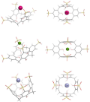

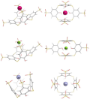


Molecular recognition using tetralactam macrocycles with parallel aromatic sidewalls
Beilstein J. Org. Chem. 2019, 15, 1086–1095, doi:10.3762/bjoc.15.105
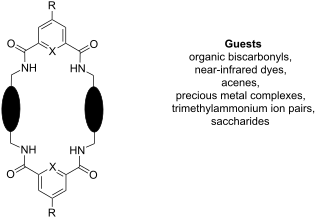
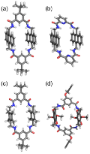
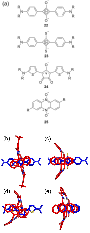
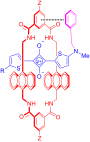
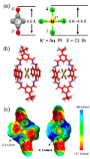
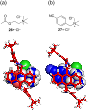
- where the guest benzyl group engages in aromatic stacking with the host anthracene sidewalls. Furthermore, the affinities followed a rough linear free energy relationship with electron density on the benzyl group, with highest affinity achieved when the benzylammonium contained a withdrawing p-CN group




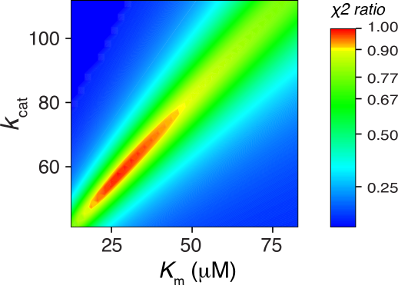
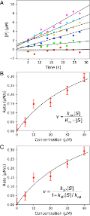
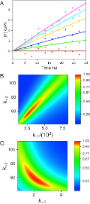
New standards for collecting and fitting steady state kinetic data
Beilstein J. Org. Chem. 2019, 15, 16–29, doi:10.3762/bjoc.15.2
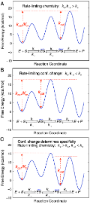
- a two-step binding mechanism could lead to increased enzyme specificity. Most notably, Fersht argued that because a two-step binding sequence has the same net free energy change as a corresponding one-step mechanism, a two-step binding sequence could not lead to greater enzyme specificity [5]. This
- to the observed kcat/Km values for the correct and incorrect substrates. Figure 6 shows three possible scenarios for the effect of the conformational change on kcat and kcat/Km. In this figure, we show free energy profiles computed from different combinations of rate constants for a minimal three
- -step reaction where product release is fast after the chemistry step. In each figure, the slow step in the pathway defines kcat and is identified as the step with the largest local barrier (relative to the local minimum) in the free energy profile. On the other hand, the specificity constant, kcat/Km



6’-Fluoro[4.3.0]bicyclo nucleic acid: synthesis, biophysical properties and molecular dynamics simulations
Beilstein J. Org. Chem. 2018, 14, 3088–3097, doi:10.3762/bjoc.14.288
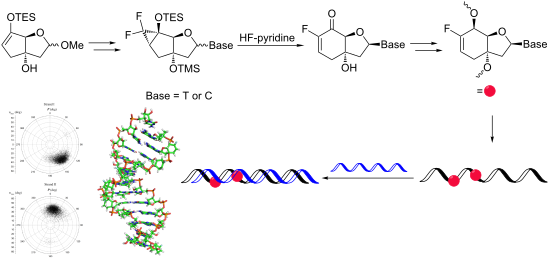
- attributed to the conformational restriction of the sugar [62][64]. The Gibbs free energy of duplex formation corresponded well with the observed Tm values. CD spectroscopy Circular dichroism of ON1–7 paired with DNA or RNA was recorded to further analyze their helical conformation and to compare it with


Organometallic vs organic photoredox catalysts for photocuring reactions in the visible region
Beilstein J. Org. Chem. 2018, 14, 3025–3046, doi:10.3762/bjoc.14.282
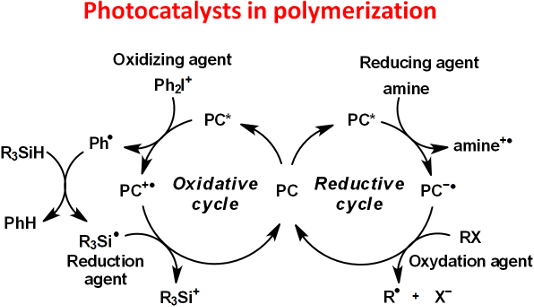
- mechanisms. From a single or triplet state of the photoredox catalyst, an electron is transferred. According to Rehm–Weller, an electron can be transferred from the electron donor to the electron acceptor in the excited state if the free energy change ∆Get is negative. ∆Get can be calculated from the
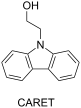
- carbazole of A3, the absorption at 470 nm is around 800 M−1·cm−1 where for A3 almost no absorption is observed. Main characteristics of A3 have been resumed in Table 8. The A3 component can be used both as electron donor and electron acceptor. Indeed, the free energy change (calculated with the Rehm–Weller



1,8-Bis(dimethylamino)naphthyl-2-ketimines: Inside vs outside protonation
Beilstein J. Org. Chem. 2018, 14, 2940–2948, doi:10.3762/bjoc.14.273
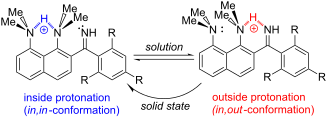
- ) preventing charge delocalisation. The protonation results in the formation of the N–H···N bonded cation 1H+, the removal of the electrostatic and steric strain and thus a considerable free energy gain (Scheme 1) [5]. This is also a reason why the vast majority of DMAN derivatives are protonated to the







The influence of the cationic carbenes on the initiation kinetics of ruthenium-based metathesis catalysts; a DFT study
Beilstein J. Org. Chem. 2018, 14, 2872–2880, doi:10.3762/bjoc.14.266
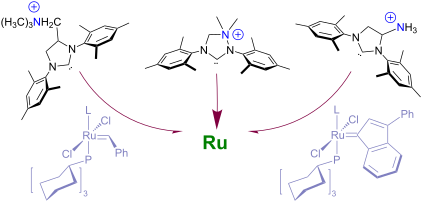
- of these effects [47]. To resolve this issue we performed benchmark calculations for standard metathesis catalyst GrI, as well as newly developed catalyst featuring a labile carbodicarbene ligand (as a model of 1–3-GrII) [48]. In the case of GrI we found the Gibbs free energy of initiation in the M06
- Gibbs free energy difference for the symmetric dimer A. In the case of carbene 3, the Gibbs free energy of dimerization could not be estimated due to instability of the monomer during geometry optimization. Thus, the results indicate higher stability of dimers for all examined NHC, which are in
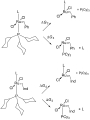
- ) are 0.4–3.1 kcal/mol lower compared to carbene dissociation (∆G3). We can speculate that the positive charge of carbenes 1–3 lowers the Ru–C bond strength, making it easier to dissociate than for neutral carbenes. Interestingly, the estimate of the Gibbs free energy of initiation for complex 3-GrI



A challenging redox neutral Cp*Co(III)-catalysed alkylation of acetanilides with 3-buten-2-one: synthesis and key insights into the mechanism through DFT calculations
Beilstein J. Org. Chem. 2018, 14, 2366–2374, doi:10.3762/bjoc.14.212
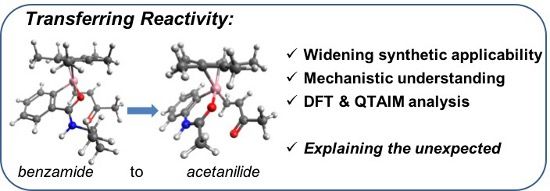
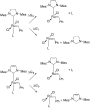
- inconsistent with the calculated mechanism. As demonstrated in this work, experimentally functionalisation of the acetanilide with 3-buten-2-one requires significantly harsher reaction conditions compared to the equivalent benzamide functionalisation. From initial comparison of the two free energy surfaces
- M06/def2-TZVP [38][39][40][41]. Frequencies calculations approximated the ZPE correction and entropic contributions to the free energy term as well as confirming all intermediate were true with no imaginary modes and all transition states had the correct critical frequency of decomposition (imaginary


Dynamic light scattering studies of the effects of salts on the diffusivity of cationic and anionic cavitands
Beilstein J. Org. Chem. 2018, 14, 2212–2219, doi:10.3762/bjoc.14.195
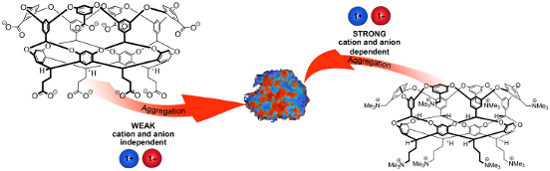
- -solubilizing group. Although its pKa may not be optimal for deprotonation at neutral or physiological pH, its small size and relatively high free energy of hydration (−373 kJ mol−1) ensure that ion-pairing effects are not strong. This was further confirmed by 1H NMR spectroscopy (Supporting Information File 1
- solution of crystalline alkali halides and the difference between the absolute free energy (or heat) of hydration of the corresponding anion and cation [27][28]. As a result, in the words of Fajans, “in the case of alkali halides, the solubility in a number of salts with the same cation (anion) and


Applications of organocatalysed visible-light photoredox reactions for medicinal chemistry
Beilstein J. Org. Chem. 2018, 14, 2035–2064, doi:10.3762/bjoc.14.179
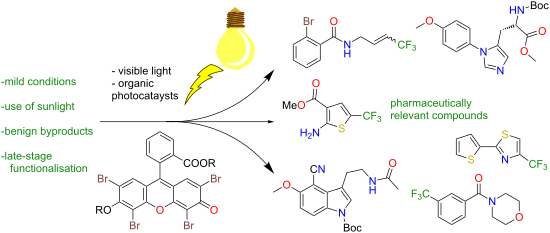
- equations can be used for predicting whether PET from an excited state photocatalyst to a substrate is spontaneous: In both cases ΔGPET is the free energy change during PET, F is the Faraday constant and E0,0 is the energy of the excited state. From these equations one can conclude that for PET to take




Synthesis of new p-tert-butylcalix[4]arene-based polyammonium triazolyl amphiphiles and their binding with nucleoside phosphates
Beilstein J. Org. Chem. 2018, 14, 1980–1993, doi:10.3762/bjoc.14.173
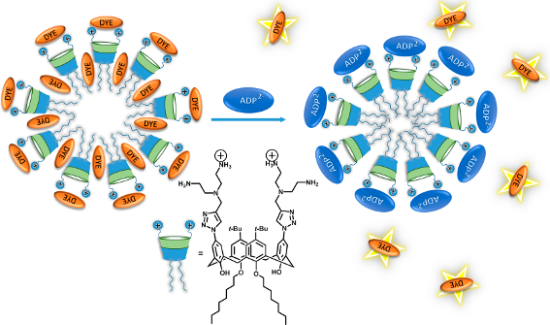
- complex formation was calculated as a difference between free energy of calix[4]arene + ADP/ATP complex and isolated calix[4]arene and ADP/ATP dianion. The complex structures corresponding to the minimum energy as well as supramolecular binding motif of ADP and ATP are presented in Figure 4. As can be


Rational design of boron-dipyrromethene (BODIPY) reporter dyes for cucurbit[7]uril
Beilstein J. Org. Chem. 2018, 14, 1961–1971, doi:10.3762/bjoc.14.171
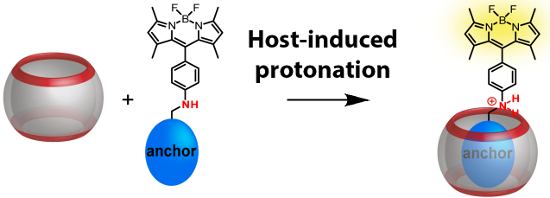
- accordance with the anticipated PET mechanism [31][45]. Further, the change in free energy, ∆G, associated with PET was calculated using the Rehm–Weller equation [46]. Therefore, we used a reduction potential of −1.55 V for the 1,3,7,9-tetramethyl-BODIPY core acceptor of 1, 2, and 5 [47] and of −1.81 V for