

Search results
Search for "cyclohexane" in Full Text gives 294 result(s) in Beilstein Journal of Organic Chemistry. Showing first 200.
Highly regio- and stereoselective phosphinylphosphination of terminal alkynes with tetraphenyldiphosphine monoxide under radical conditions
Beilstein J. Org. Chem. 2021, 17, 866–872, doi:10.3762/bjoc.17.72
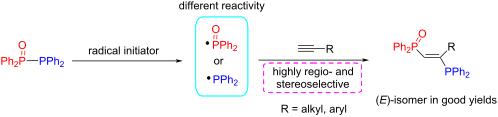
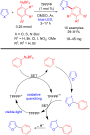
- using a radical initiator such as 1,1'-azobis(cyclohexane-1-carbonitrile) (V-40) (Scheme 1a) [45] or upon photoirradiation (Scheme 1b) [38] yields vic-bis(diphenylphosphino)alkenes in good yields. Unfortunately, this photoinduced reaction of Ph2PPPh2 was not applicable to alkenes [42]. To change the
- (X)PPh2 to unsaturated C–C bonds. The addition of Ph2P(O)PPh2 (1) to 1-octyne (2a). Phosphinylphosphination of various terminal alkynes 2 with 1. aIsolated yields. V-40 = 1,1’-azobis(cyclohexane-1-carbonitrile). bRepeated 2 times. Attempted radical addition to internal alkynes and insight into the



Synthesis of β-triazolylenones via metal-free desulfonylative alkylation of N-tosyl-1,2,3-triazoles
Beilstein J. Org. Chem. 2021, 17, 762–770, doi:10.3762/bjoc.17.66
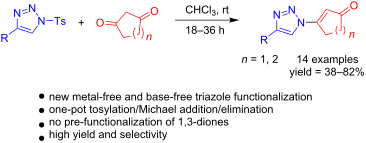
- the scope of cyclohexane-1,3-dione 2a is limited. On the contrary, dimedone (2d) did not react with N-tosyl-1,2,3-triazole, but reacted with N-mesyl-1,2,3-triazole to form the 5,5-dimethyl-3-oxo-cyclohex-1-en-1-yl methanesulfonate intermediate 4a. The highly substrate-dependent nature of the reaction


α,γ-Dioxygenated amides via tandem Brook rearrangement/radical oxygenation reactions and their application to syntheses of γ-lactams
Beilstein J. Org. Chem. 2021, 17, 688–704, doi:10.3762/bjoc.17.58
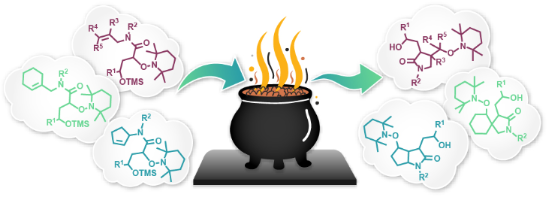
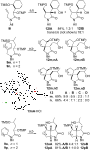
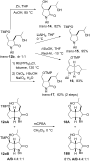
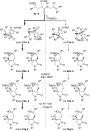
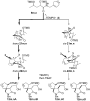
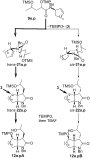
- conformation in radical 20, in which the interactions of the carbonyl group and the cyclohexane ring are minimized, the β-face at the radical center is significantly blocked by the silyloxy group hindering the approach of TEMPO (3), whereas the α-face is free for radical coupling resulting in the formation of
- mmol) was added to a round-bottomed flask containing a stirring bar, which was sealed with a septum, and dried under vacuum by a heat gun. Dry THF (8 mL) and amide 8 (1.0 mmol) were added under argon. The mixture was cooled to 0 °C in an ice/water bath, sec-butyllithium (1.4 M solution in cyclohexane







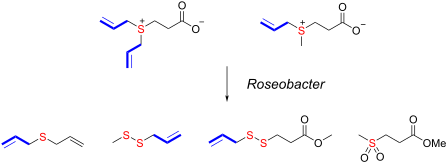
Breakdown of 3-(allylsulfonio)propanoates in bacteria from the Roseobacter group yields garlic oil constituents
Beilstein J. Org. Chem. 2021, 17, 569–580, doi:10.3762/bjoc.17.51
- treated for 24 h at 40 °C. The reaction was quenched by the addition of water and the aqueous phase extracted with ethyl acetate. The extract was dried with MgSO4 and then concentrated in vacuo. The residue was purified by silica column chromatography (cyclohexane/EtOAc 5:1) to give compound 40 (1.80 g
- , 7.56 mmol, 30%) as pale yellow oil. TLC Rf 0.44 (cyclohexane/EtOAc 10:3); IR (diamond-ATR) ν̃: 2998 (w), 2952 (w), 2845 (w), 2256 (w), 1730 (m), 1436 (w), 1354 (w), 1240 (w), 1215(w), 1195 (w), 1171 (w), 1139 (w), 1046 (w), 1017 (w), 979 (w), 907 (w), 822 (w), 726 (m), 648 (w), 435 (w) cm−1; 1H NMR
- water and extracted with ethyl acetate. The extracts were dried with MgSO4 and concentrated in vacuo. The obtained residue was purified by silica gel column chromatography (cyclohexane/EtOAc 5:1) to give compound 26 (0.23 g, 1.20 mmol, 57%). TLC Rf = 0.72 (cyclohexane/EtOAc = 1:1); IR (diamond-ATR) ν̃




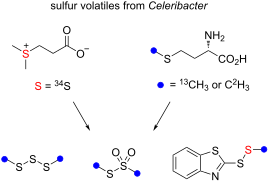
Identification of volatiles from six marine Celeribacter strains
Beilstein J. Org. Chem. 2021, 17, 420–430, doi:10.3762/bjoc.17.38
- chromatography (cyclohexane/ethyl acetate 1:1) to give 41 as a colorless solid (0.82 g, 3.85 mmol, 64%). Rf 0.60 (cyclohexane/ethyl acetate 5:1; TLC visualized with UV illumination at 366 nm); GC (HP-5MS): I = 1854; IR (diamond-ATR) ν̃: 3060 (s), 2916 (s), 1425 (w), 1310 (s), 1236 (s), 1005 (w), 756 (w), 431 (s
- chromatography (cyclohexane/ethyl acetate 99:1) gave a mixture of stereoisomers (Z)-42 and (E)-42 as pale yellow oil (96 mg, 0.65 mmol, 92%, dr 94:6 by 1H NMR). The product mixture was separated by preparative HPLC to give pure (Z)-42 (73 mg, 0.50 mmol, 70%) and (E)-42 (6 mg, 0.04 mmol, 6%). (Z)-42. Rf 0.74
- (cyclohexane/ethyl acetate 1:1); GC (HP-5MS): I = 1200; IR (diamond-ATR) ν̃: 2982 (w), 2927 (w),1695 (m), 1569 (m), 1434 (w), 1374 (w), 1300 (w), 1266 (w), 1213 (m), 1166 (s), 1095 (w), 1033 (w), 986 (w), 961 (w), 800 (w), 727 (w), 687 (w) cm−1; 1H NMR (700 MHz, CDCl3, 298 K) δ 7.04 (d, J = 10.14 Hz, 1H, CH




Au(III) complexes with tetradentate-cyclam-based ligands
Beilstein J. Org. Chem. 2021, 17, 186–192, doi:10.3762/bjoc.17.18
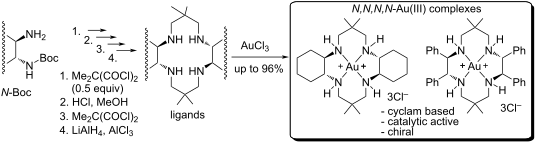
- in two model reactions. Results and Discussion Synthesis of potential ligands Chiral cyclam derivatives have previously been directly synthesized from (1R,2R)-cyclohexane-1,2-diamine (A) and malonyl dichloride [36], giving 36% yield of the wanted cyclam tetraamide product 2a. Additionally, a


Synthesis of imidazo[1,5-a]pyridines via cyclocondensation of 2-(aminomethyl)pyridines with electrophilically activated nitroalkanes
Beilstein J. Org. Chem. 2020, 16, 2903–2910, doi:10.3762/bjoc.16.239
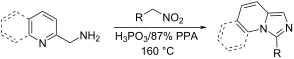
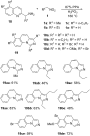
- % (101 mg, 0.77 mmol). Mp 50–52 °C (lit. [53] mp 49–50 °C, cyclohexane); Rf 0.32 (EtOAc); 1H NMR (400 MHz, DMSO-d6) δ 8.04 (dd, J = 7.1; 1.0 Hz, 1H, 5-H), 7.48 (dt, J = 9.1; 1.1 Hz, 1H, 8-H), 7.24 (d, J = 0.6 Hz, 1H, 1-H), 6.69 (ddd, J = 9.1; 6.3; 0.8 Hz, 1H, 7-H), 6.61 (ddd, 1H, 6-H), 2.57 (s, 3H, CH3
- , 0.66 mmol). Alternatively, the same compound was obtained via the typical procedure 1 starting with 1-nitropropane (1b, 178 mg, 2.00 mmol) and 2-picolylamine (12, 108 mg, 1.00 mmol), yield 53% (77 mg, 0.53 mmol). Mp 59–62 °C (lit. [54] mp 61 °C, cyclohexane); Rf 0.27 (EtOAc/petroleum ether 1:1, v/v


A novel and robust heterogeneous Cu catalyst using modified lignosulfonate as support for the synthesis of nitrogen-containing heterocycles
Beilstein J. Org. Chem. 2020, 16, 2888–2902, doi:10.3762/bjoc.16.238
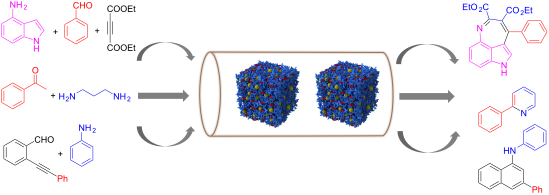
- , the substrate scope of the reaction was subsequently investigated, and it was found that the reaction could tolerate a wide range of functionalities, including fluoro, chloro, iodo, cyclohexane and benzyloxy moieties. Acetophenones with an electron-donating group in the para-position of the aromatic



Using multiple self-sorting for switching functions in discrete multicomponent systems
Beilstein J. Org. Chem. 2020, 16, 2831–2853, doi:10.3762/bjoc.16.233

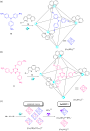
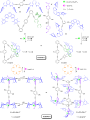
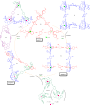
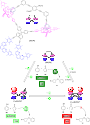
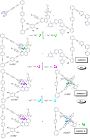
- SelfSORT-II disassembled the host–guest complex [Zn4(64')4]8+•(C6H12) with the concomitant release of the encapsulated cyclohexane thus generating the state SelfSORT-III. In this process, the 1H NMR signals corresponding to [Zn4(66')4]8+•(NO3−) remained unchanged. At last, heating the mixture to 70 °C for









Synthesis of novel fluorinated building blocks via halofluorination and related reactions
Beilstein J. Org. Chem. 2020, 16, 2562–2575, doi:10.3762/bjoc.16.208
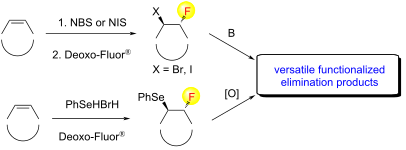
- more efficient in anhydrous CH3CN than in anhydrous CH2Cl2; therefore, the reactions were conducted in this medium at room temperature. Similar to halofluorinations, the treatment of the diester (rac)-1 with PhSeBr/Deoxo-Fluor® gave a single product (Scheme 20). The stereochemistry of the cyclohexane
- NOESY was unsuccessful. The reason is that cyclohexenes have a half-chair conformation, and the hydrogen atoms to undergo important NOESY interactions are simply too far away from each other. To solve this problem, the olefin bond of (rac)-35 was hydrogenated to a cyclohexane, affording the fluorinated


A new method for the synthesis of diamantane by hydroisomerization of binor-S on treatment with sulfuric acid
Beilstein J. Org. Chem. 2020, 16, 2534–2539, doi:10.3762/bjoc.16.205

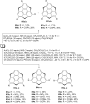
- binor-S (2) in cyclohexane in the presence of 98% sulfuric acid ([2]/[H2SO4] = 1:10–50) during 7–15 h affords a mixture of endo-endo-pentacyclo[7.3.1.12,5.18,10]tetradecane (tetrahydrobinor-S, 3c) and diamantane (1) (Table 1). An increase in the sulfuric acid ratio to binor-S (2) ([2]/[H2SO4] = 1:20–50
- what is the hydrogen source in the hydroisomerization of binor-S (С14H16, 2) containing 4 hydrogen atoms less than diamantane (С14H20, 1), we carried out a series of control experiments using deuterated sulfuric acid (98%) in cyclohexane (С6H12, experiment A), in deuterated cyclohexane (C6D12
- , experiment B), or in carbon disulfide (CS2, experiment C). In experiment А, the major isomer 1-D2, which is formed upon hydroisomerization of binor-S (2), contains two deuterium atoms. Two more hydrogen atoms are probably provided by cyclohexane. Unexpectedly, the reaction also gave undeuterated diamantane


A proposed sustainability index for synthesis plans based on input provenance and output fate: application to academic and industrial synthesis plans for vanillin as a case study
Beilstein J. Org. Chem. 2020, 16, 2346–2362, doi:10.3762/bjoc.16.196
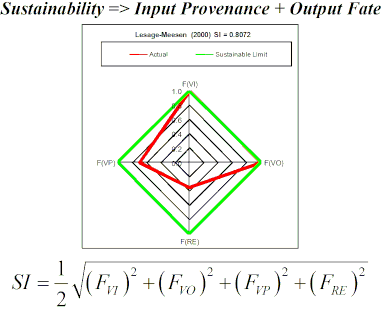
- descending order of impact according to OSI values given in Table 1: benzene (12.000), aniline (10.350), toluene (10.150), nitrobenzene (10.130), cyclohexane (8.777), diethyl ether (8.421), acetic anhydride (8.309), petroleum ether (7.734), ethyl acetate (7.597), N,N-dimethyltoluidine (7.592), methyl tert
- cyclohexane. Ranking of vanillin plans Once numerical values of PMI, SR, IEE, RSGI, and SI are available for a given set of synthesis plans to a common target product, it is possible to use some kind of ranking algorithm to identify which ones have the highest overall performances based on these five

Synthetic approaches to bowl-shaped π-conjugated sumanene and its congeners
Beilstein J. Org. Chem. 2020, 16, 2212–2259, doi:10.3762/bjoc.16.186
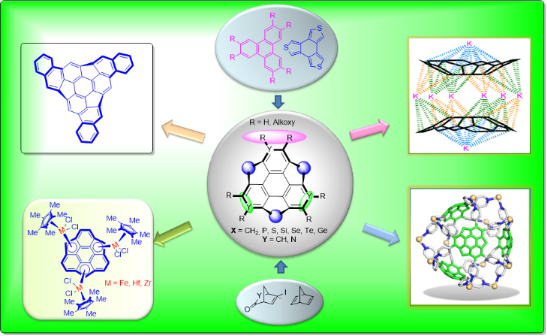
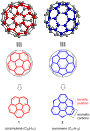
- inserted product 61 in 65% along with the dimer 62 in 18% yield with cyclohexane, confirming that the reaction precedes via the singlet state, albeit it was a triplet species in the ground-state. They further reported the applicability of the carbene precursor 59 by reacting it with different thiocarbonyl











Photosensitized direct C–H fluorination and trifluoromethylation in organic synthesis
Beilstein J. Org. Chem. 2020, 16, 2151–2192, doi:10.3762/bjoc.16.183
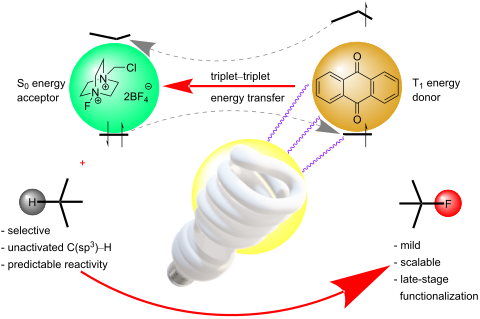
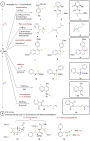
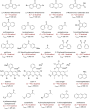
- photoexcitation by a CFL to afford the C(sp3)–H fluorinated product in 85% yield (Scheme 13). Through the use of longpass filters, the authors found that wavelengths between 370–400 nm were necessary for the reaction to proceed. The authors then subjected cyclohexane (39) to similar conditions to examine the






Synthesis of new dihydroberberine and tetrahydroberberine analogues and evaluation of their antiproliferative activity on NCI-H1975 cells
Beilstein J. Org. Chem. 2020, 16, 1606–1616, doi:10.3762/bjoc.16.133
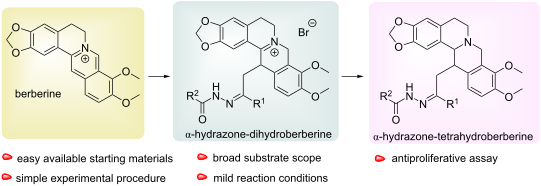
- magnetic stirring until the complete disappearance of the starting hydrazono-DHBERs 2a–n (2.0–3.0 h, TLC monitoring). The reaction solvent was then evaporated under reduced pressure. The crude mixture was then purified by column chromatography on silica gel (elution with cyclohexane/ethyl acetate mixtures
- -phenylethylidene)hydrazinecarboxylate (3a): 3a was isolated by chromatographic column on silica gel (ethyl acetate/cyclohexane, 30:70) in 95% yield (109 mg). White amorphous solid; mp: 162–164 °C; 1H NMR (400 MHz, DMSO-d6, 25 °C) δ 1.45 (s, 9H, C(CH3)3), 2.29–2.34 (m, 1H, C(15)H2), 2.62–2.75 (m, 3H, C(15)H2, C(5


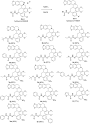


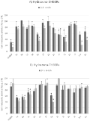
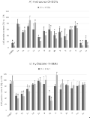
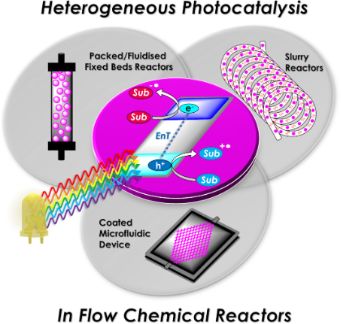
Heterogeneous photocatalysis in flow chemical reactors
Beilstein J. Org. Chem. 2020, 16, 1495–1549, doi:10.3762/bjoc.16.125









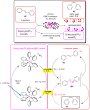

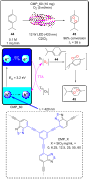

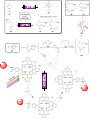


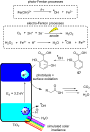

[3 + 2] Cycloaddition with photogenerated azomethine ylides in β-cyclodextrin
Beilstein J. Org. Chem. 2020, 16, 1296–1304, doi:10.3762/bjoc.16.110
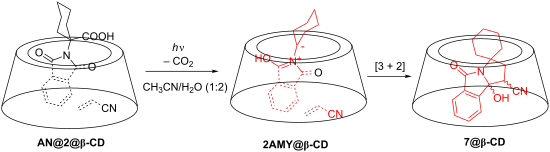
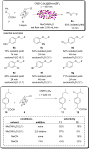
- determine stability constants for the inclusion complexes 2@β-CD and 3@β-CD. The NMR titration for 2 with β-CD was carried out in CD3CN/D2O (3:7 v/v). The addition of β-CD to the solution of 2 induced downfield shifts of the H-signals corresponding to the cyclohexane 2 and 6 positions, as well as H-signals
- and intercepted with AN to yield cycloadducts 7 or 11, respectively. However, the formation of cycloadducts is very inefficient, which may be ascribed to a smaller rate constant for the quenching due to steric hindrance imposed by the bulky cyclohexane or adamantine moiety. Thus, irradiation of 2 gave
- '-Hydroxy-5'-oxo-1',2',5',9b'-tetrahydrospiro[cyclohexane-1,3'-pyrrolo[2,1-a]isoindole]-1'-carbonitrile (7): 2 mg (2%), oily crystals; 1H NMR (CD3OD, 600 MHz) δ 7.81 (dd, J = 1.0, 7.6 Hz, 1H), 7.70 (dt, J = 1.3, 7.6 Hz, 1H), 7.65 (dt, J = 1.3, 7.6 Hz, 1H), 7.48 (dd, J = 1.0, 7.6 Hz, 1H), 4.55 (br s, 3H


The charge-assisted hydrogen-bonded organic framework (CAHOF) self-assembled from the conjugated acid of tetrakis(4-aminophenyl)methane and 2,6-naphthalenedisulfonate as a new class of recyclable Brønsted acid catalysts
Beilstein J. Org. Chem. 2020, 16, 1124–1134, doi:10.3762/bjoc.16.99
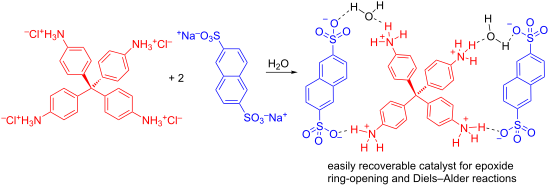
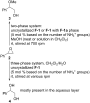
- efficiency of the reaction dropping as the size of the alcohol was increased and its polarity decreased (Table 2, runs 1–3). Water could also be used as the nucleophile (Table 2, runs 4 and 5) and led to the trans-cyclohexane diol 6 under the same experimental conditions used for the styrene oxide ring




Recent applications of porphyrins as photocatalysts in organic synthesis: batch and continuous flow approaches
Beilstein J. Org. Chem. 2020, 16, 917–955, doi:10.3762/bjoc.16.83
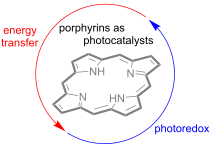
- -bromo amides (Scheme 6). Many metalloporphyrins are applied as catalysts in industrial processes, such as in the oxidation of cyclohexane to cyclohexanone catalyzed by Co(II) tetraphenylporphyrin on a ton-scale [21]. Recently, Sarkar and co-workers reported the use of nickel(II) tetraphenylporphyrin






One-pot synthesis of dicyclopenta-fused peropyrene via a fourfold alkyne annulation
Beilstein J. Org. Chem. 2020, 16, 791–797, doi:10.3762/bjoc.16.72
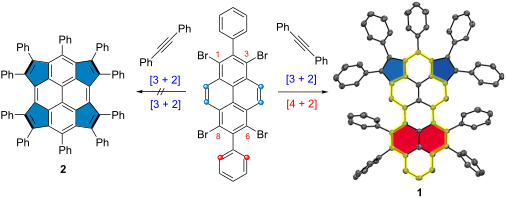
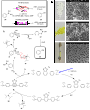
- , peropyrene and the dicyclopenta-fused peropyrene reported in this work. Synthetic route towards compound 1. a) B2pin2, dtbpy, [Ir(OMe)cod]2, cyclohexane, 70 °C, 20 h, 67%; b) Pd(PPh3)4, bromobenzene, Na2CO3, toluene/EtOH/H2O, Aliquit 336, 90 °C, 48 h, 77%; c) Br2, nitrobenzene, 120 °C, 5 h, 86%; d) 1,2


Synthesis of organic liquid crystals containing selectively fluorinated cyclopropanes
Beilstein J. Org. Chem. 2020, 16, 674–680, doi:10.3762/bjoc.16.65
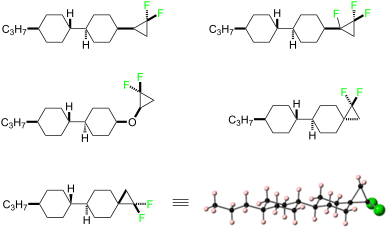
- dielectric anisotropic liquid crystals and the more rigid 1,1,6,7-tetrafluoroindane 4 led to an enhanced polarity and improved negative dielectric anisotropy character [8]. Other liquid crystals of this class are the recently reported fluorinated cyclohexane 5 and 1,1,2,2-tetrafluorocyclohexane 6 [9][10
- . The synthesis of the diastereoisomers of spiro LC candidates 11a and 11b also started from ketone 15 as illustrated in Scheme 4. Treatment of ketone 15 with methylenetriphenylphosphine which was generated in situ from methyltriphenylphosphonium bromide (PPh3CH3Br), generated exo-methylene cyclohexane
- properties significantly, however, we were interested in assessing the energy required for the bispirocyclohexane ring to adopt an axial rather than the lower energy equatorial arrangement. For 11a, the lowest energy conformer found was a rotamer around the central C–C bond linking the cyclohexane rings, but


Synthesis and herbicidal activities of aryloxyacetic acid derivatives as HPPD inhibitors
Beilstein J. Org. Chem. 2020, 16, 233–247, doi:10.3762/bjoc.16.25
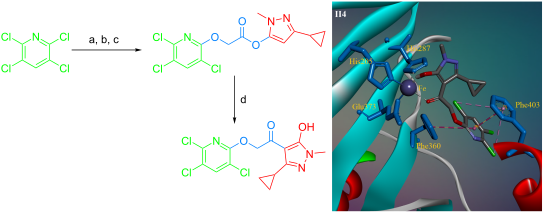
- modifying pyrazole derivatives and the carbon−carbon bond between 1,3-dicarbonyl and aroyl moieties. Previously, a series of 2-(aryloxyacetyl)cyclohexane-1,3-diones was synthesized by Wang et al. [24]. We have been interested in inserting a carbon−oxygen bond between the triketone and aroyl moieties of HPPD
- electron-withdrawing group at the 2-position provides enhanced activity compared to the 4-position. In addition, electron-donating groups were found to be detrimental to HPPD inhibition activity (I1 > I33, I38). We observed that methyl groups at the 5-position of the 1,3-cyclohexane ring were unfavorable
- I11 and I12 displayed enhanced activities relative to compound I9, which contains a cyclohexanedione ring. We also observed that the introduction of methyl groups at the 5-position of the 1,3-cyclohexane ring was detrimental to herbicidal activity (I17 > I18, I26 > I27, II1 > II2). Compounds with




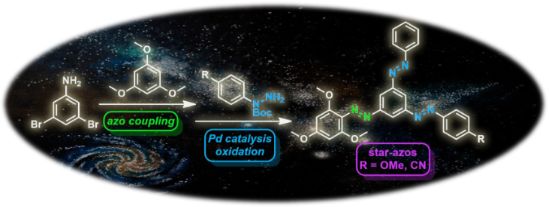
Starazo triple switches – synthesis of unsymmetrical 1,3,5-tris(arylazo)benzenes
Beilstein J. Org. Chem. 2020, 16, 22–31, doi:10.3762/bjoc.16.4
- . The mixture was separated by flash column chromatography (SiO2, cyclohexane/EtOAc, 2:1, v/v) to yield 16a as red solid (mixture of isomers, 248 mg, 10%). The product was used without further purification. See Supporting Information File 1 for the 1H NMR spectrum. HRESIMS (m/z): [M + Na]+ calcd for
- toluene (42 mL). The mixture was stirred at rt for 30 min and the tube was sealed and heated to 110 °C for 2 d. After cooling to rt, the reaction mixture was filtered through a plug of silica gel using EtOAc, concentrated, and the residue was separated by flash column chromatography (SiO2, cyclohexane
- tube was sealed, and the mixture was heated to 110 °C for 2 d. After cooling to rt, the mixture was filtered through a plug of silica gel using EtOAc, and the filtrate was concentrated. The crude mixture was separated by two consecutive flash column chromatography steps (SiO2, cyclohexane/EtOAc, 1:1, v


Influence of the cis/trans configuration on the supramolecular aggregation of aryltriazoles
Beilstein J. Org. Chem. 2019, 15, 2881–2888, doi:10.3762/bjoc.15.282
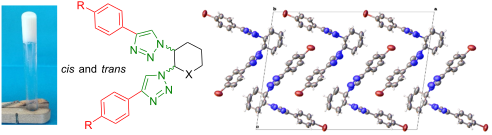
- 3.62 (d, J = 8.4 Hz, 2H), 1.85 (m, 2H), 1.64 (m, 4H), 1.38 ppm (m, 2H); 13C NMR (150 MHz, CDCl3) δ 61.4, 27.3, 21.6 ppm. (1R,2S)-1,2-Bis(4-(4-bromophenyl)-1H-1,2,3-triazol-1-yl)cyclohexane (14): To a solution of (1R,2S)-1,2-diazidocyclohexane (13, 363 mg, 2.19 mmol) in H2O (22 mL, 22 mmol), 1-bromo-4
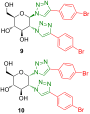
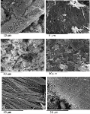
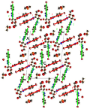
- -glucopyranosyltriazoles 1a–g and 2a–g [15]. Synthesis of 1,2-cis-/trans-bistriazoles 7a–7g and 8a–8g [15]. Compounds 9 (trans) and 10 (cis) [15]. Synthesis of (1R,2R)- and (1R,2S)-1,2-bis-(4-(4-bromophenyl)-1H-triazol-1-yl)cyclohexane (12 and 14). Gelation test results for compounds 7f, 8a, 8b, 8e, 8f, 9, 10, 12, and 14







A photochemical determination of luminescence efficiency of upconverting nanoparticles
Beilstein J. Org. Chem. 2019, 15, 2671–2677, doi:10.3762/bjoc.15.260
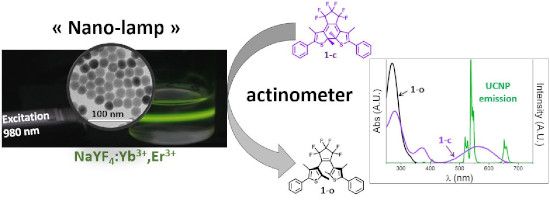
- cyclohexane. Photolysis experiments The description of the setup is summarized in Figure 2. The sample in a thermostated quartz cuvette was irradiated with a fibered, collimated CW 976 nm-laser beam. The transmitted laser intensity was measured using a calibrated power-meter. This measurement informed us
- about the fraction of light effectively absorbed by the medium and also the possibility of particle sedimentation. All this set-up was placed inside a UV–visible spectrophotometer (Figure 2). Using cyclohexane as a common solvent for both diarylethene 1 and UCNPs, we have chosen to work on mixtures of