

Search results
Search for "condensations" in Full Text gives 94 result(s) in Beilstein Journal of Organic Chemistry.
An overview of the synthetic routes to the best selling drugs containing 6-membered heterocycles
- Marcus Baumann and
- Ian R. Baxendale
Beilstein J. Org. Chem. 2013, 9, 2265–2319, doi:10.3762/bjoc.9.265
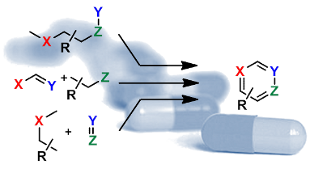

Graphical Abstract

Scheme 1: Scaled industrial processes for the synthesis of simple pyridines.

Scheme 2: Synthesis of nicotinic acid from 2-methyl-5-ethylpyridine (1.11).

Scheme 3: Synthesis of 3-picoline and nicotinic acid.

Scheme 4: Synthesis of 3-picoline from 2-methylglutarodinitrile 1.19.

Scheme 5: Picoline-based synthesis of clarinex (no yields reported).

Scheme 6: Mode of action of proton-pump inhibitors and structures of the API’s.

Scheme 7: Hantzsch-like route towards the pyridine rings in common proton pump inhibitors.

Figure 1: Structures of rosiglitazone (1.40) and pioglitazone (1.41).

Scheme 8: Synthesis of rosiglitazone.

Scheme 9: Syntheses of 2-pyridones.

Scheme 10: Synthesis and mechanism of 2-pyrone from malic acid.

Scheme 11: Polymer-assisted synthesis of rosiglitazone.

Scheme 12: Synthesis of pioglitazone.

Scheme 13: Meerwein arylation reaction towards pioglitazone.

Scheme 14: Route towards pioglitazone utilising tyrosine.

Scheme 15: Route towards pioglitazone via Darzens ester formation.

Scheme 16: Syntheses of the thiazolidinedione moiety.

Scheme 17: Synthesis of etoricoxib utilising Negishi and Stille cross-coupling reactions.

Scheme 18: Synthesis of etoricoxib via vinamidinium condensation.

Figure 2: Structures of nalidixic acid, levofloxacin and moxifloxacin.

Scheme 19: Synthesis of moxifloxacin.

Scheme 20: Synthesis of (S,S)-2,8-diazabicyclo[4.3.0]nonane 1.105.

Scheme 21: Synthesis of levofloxacin.

Scheme 22: Alternative approach to the levofloxacin core 1.125.

Figure 3: Structures of nifedipine, amlodipine and clevidipine.

Scheme 23: Mg3N2-mediated synthesis of nifedipine.

Scheme 24: Synthesis of rac-amlodipine as besylate salt.

Scheme 25: Aza Diels–Alder approach towards amlodipine.

Scheme 26: Routes towards clevidipine.

Figure 4: Examples of piperidine containing drugs.

Figure 5: Discovery of tiagabine based on early leads.

Scheme 27: Synthetic sequences to tiagabine.

Figure 6: Structures of solifenacin (2.57) and muscarine (2.58).

Scheme 28: Enantioselective synthesis of solifenacin.

Figure 7: Structures of DPP-4 inhibitors of the gliptin-type.

Scheme 29: Formation of inactive diketopiperazines from cis-rotameric precursors.

Figure 8: Co-crystal structure of carmegliptin bound in the human DPP-4 active site (PDB 3kwf).

Scheme 30: Improved route to carmegliptin.

Figure 9: Structures of lamivudine and zidovudine.

Scheme 31: Typical routes accessing uracil, thymine and cytosine.

Scheme 32: Coupling between pyrimidones and riboses via the Vorbrüggen nucleosidation.

Scheme 33: Synthesis of lamivudine.

Scheme 34: Synthesis of raltegravir.

Scheme 35: Mechanistic studies on the formation of 3.22.

Figure 10: Structures of selected pyrimidine containing drugs.

Scheme 36: General preparation of pyrimidines and dihydropyrimidones.

Scheme 37: Synthesis of imatinib.

Scheme 38: Flow synthesis of imatinib.

Scheme 39: Syntheses of erlotinib.

Scheme 40: Synthesis of erlotinib proceeding via Dimroth rearrangement.

Scheme 41: Synthesis of lapatinib.

Scheme 42: Synthesis of rosuvastatin.

Scheme 43: Alternative preparation of the key aldehyde towards rosuvastatin.

Figure 11: Structure comparison between nicotinic acetylcholine receptor agonists.

Scheme 44: Syntheses of varenicline and its key building block 4.5.

Scheme 45: Synthetic access to eszopiclone and brimonidine via quinoxaline intermediates.

Figure 12: Bortezomib bound in an active site of the yeast 20S proteasome ([114], pdb 2F16).

Scheme 46: Asymmetric synthesis of bortezomib.

Figure 13: Structures of some prominent piperazine containing drugs.

Figure 14: Structural comparison between the core of aplaviroc (4.35) and a type-1 β-turn (4.36).

Scheme 47: Examplary synthesis of an aplaviroc analogue via the Ugi-MCR.

Scheme 48: Syntheses of azelastine (5.1).

Figure 15: Structures of captopril, enalapril and cilazapril.

Scheme 49: Synthesis of cilazapril.

Figure 16: Structures of lamotrigine, ceftriaxone and azapropazone.

Scheme 50: Synthesis of lamotrigine.

Scheme 51: Alternative synthesis of lamotrigine (no yields reported).

Figure 17: Structural comparison between imiquimod and the related adenosine nucleoside.

Scheme 52: Conventional synthesis of imiquimod (no yields reported).

Scheme 53: Synthesis of imiquimod.

Scheme 54: Synthesis of imiquimod via tetrazole formation (not all yields reported).

Figure 18: Structures of various anti HIV-medications.

Scheme 55: Synthesis of abacavir.

Figure 19: Structures of diazepam compared to modern replacements.

Scheme 56: Synthesis of ocinaplon.

Scheme 57: Access to zaleplon and indiplon.

Scheme 58: Different routes towards the required N-methylpyrazole 6.65 of sildenafil.

Scheme 59: Polymer-supported reagents in the synthesis of key aminopyrazole 6.72.

Scheme 60: Early synthetic route to sildenafil.

Scheme 61: Convergent preparations of sildenafil.

Figure 20: Comparison of the structures of sildenafil, tadalafil and vardenafil.

Scheme 62: Short route to imidazotriazinones.

Scheme 63: Alternative route towards vardenafils core imidazotriazinone (6.95).

Scheme 64: Bayer’s approach to the vardenafil core.

Scheme 65: Large scale synthesis of vardenafil.

Scheme 66: Mode of action of temozolomide (6.105) as methylating agent.

Scheme 67: Different routes to temozolomide.

Scheme 68: Safer route towards temozolomide.

Figure 21: Some unreported heterocyclic scaffolds in top market drugs.
Raman spectroscopy as a tool for monitoring mesoscale continuous-flow organic synthesis: Equipment interface and assessment in four medicinally-relevant reactions
- Trevor A. Hamlin and
- Nicholas E. Leadbeater
Beilstein J. Org. Chem. 2013, 9, 1843–1852, doi:10.3762/bjoc.9.215
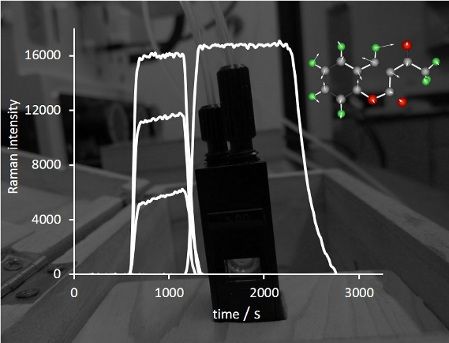
- is assessed by studying four reactions, all involving formation of products bearing α,β-unsaturated carbonyl moieties; synthesis of 3-acetylcoumarin, Knoevenagel and Claisen–Schmidt condensations, and a Biginelli reaction. In each case it is possible to monitor the reactions and also in one case, by

Graphical Abstract
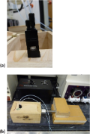
Figure 1: (a) Flow cell and (b) Raman interface used in the present study.

Scheme 1: The reaction between salicylaldehyde and ethyl acetoacetate to form 3-acetyl coumarin (1).

Figure 2: The Raman spectrum of 3-acetylcoumarin (1) generated using Gaussian 09 [40] at the B3LYP/6-31g(d) level...

Figure 3: Monitoring an aliquot of 3-acetyl coumarin (1) as it passes through the flow cell (scan time = 15 s...

Figure 4: Monitoring the conversion of salicylaldehyde and ethyl acetoacetate to 3-acetylcoumarin (1) across ...

Figure 5: Plot of Raman intensity of the peak arising at 1608 cm-1 vs concentration of 3-acetyl coumarin (1),...

Scheme 2: The Knoevenagel condensation of benzaldehyde and ethyl acetoacetate to yield (Z)-ethyl 2-benzyliden...

Figure 6: Monitoring the conversion of benzaldehyde and ethyl acetoacetate to (Z)-ethyl 2-benzylidene-3-oxobu...

Scheme 3: Claisen-Schmidt condensation of benzaldehyde with acetophenone to yield chalcone, 3a.

Figure 7: Monitoring the conversion of benzaldehyde with acetophenone to chalcone, 3a, across a range of reac...

Scheme 4: The Biginelli cyclocondensation of benzaldehyde, ethyl acetoacetate, and urea to yield 5-ethoxycarb...

Figure 8: Monitoring the conversion of benzaldehyde, ethyl acetoacetate, and urea to 5-ethoxycarbonyl-6-methy...
Quantification of N-acetylcysteamine activated methylmalonate incorporation into polyketide biosynthesis
- Stephan Klopries,
- Uschi Sundermann and
- Frank Schulz
Beilstein J. Org. Chem. 2013, 9, 664–674, doi:10.3762/bjoc.9.75
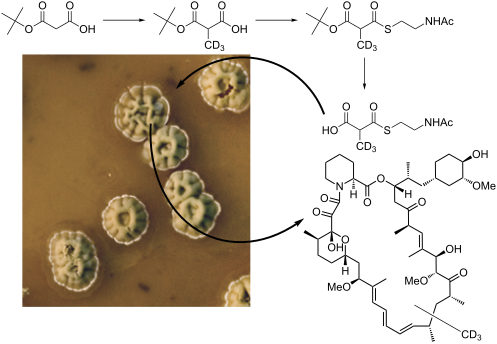
- Polyketides are biosynthesized through consecutive decarboxylative Claisen condensations between a carboxylic acid and differently substituted malonic acid thioesters, both tethered to the giant polyketide synthase enzymes. Individual malonic acid derivatives are typically required to be activated as coenzyme
- widespread application in current medicine and agriculture. Polyketide synthases (PKS), giant multienzyme complexes, play a pivotal role in their biosynthesis. PKS generate molecular complexity and diversity through a number of stepwise condensations in analogy to fatty acid synthases but with optional and
- propionate starter unit with six equivalents of methylmalonyl-coenzyme A (MM-CoA). After six rounds of decarboxylative Claisen condensations and varying degrees of reduction of the initially formed β-keto thioesters, the polyketide core of erythromycin is released from the enzyme via a terminal esterase [6

Graphical Abstract

Figure 1: The most intensively studied PKS, deoxyerythronolide B synthase (DEBS), which catalyzes the key ste...

Scheme 1: Synthesis of SNAC-activated D3-methylmalonate. a: 2.1 equiv [(CH3)2CH]2NLi, 1 equiv CD3I, abs. THF,...

Figure 2: Structures of erythromycin (left) and rapamycin (right). In this experiment both compounds were lab...

Figure 3: Relative incorporation of the D3-label into erythromycin (A) and rapamycin (B), depending on the fe...
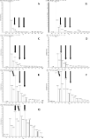
Figure 4: ESI–MS spectra of feeding experiments with an erythromycin-producing culture of S. erythraea. The m...

Scheme 2: Incorporation of a propargylated malonic acid derivative into erythromycin through an active-site m...
Flow photochemistry: Old light through new windows
- Jonathan P. Knowles,
- Luke D. Elliott and
- Kevin I. Booker-Milburn
Beilstein J. Org. Chem. 2012, 8, 2025–2052, doi:10.3762/bjoc.8.229
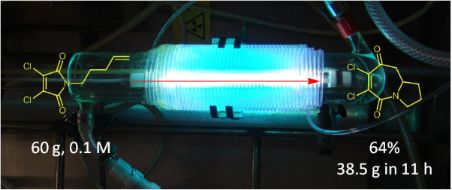

Graphical Abstract

Figure 1: An immersion-well batch reactor with 125 W medium pressure Hg lamp.

Figure 2: Transmission profile of a 0.05 M solution, ε = 200 M−1 cm−1.

Figure 3: Schematic of a typical microflow photochemical reactor (above) and detail of a triple-channel micro...

Figure 4: Schematic of a typical macroflow photochemical reactor (above) and images of the FEP photochemical ...

Scheme 1: [2 + 2] photocycloadditions of enones with enol derivatives.

Scheme 2: Competing reactions in an intramolecular [2 + 2] photocycloaddition.

Scheme 3: Diastereocontrolled cycloaddition of a cyclic enone with cyclopentene.

Scheme 4: Comparison of yields and reaction times for a batch reactor with a microflow system.

Scheme 5: Intramolecular [2 + 2] photocycloaddition.

Scheme 6: Paterno–Büchi reaction of benzophenone with an allylic alcohol.

Scheme 7: Photooxygenation of cyclopentadiene.

Scheme 8: Preparation of the anthelmintic ascaridole 23.

Scheme 9: Production of rose oxide 27 from (−)-β-citronellol (24).

Scheme 10: Photocatalytic alkylation of benzylamine.

Scheme 11: Photocatalytic reduction of 4-nitroacetophenone.

Scheme 12: Conversion of L-lysine to L-pipecolinic acid.

Scheme 13: Photocatalytic hydrodehalogenation.

Scheme 14: Photocatalytic aza-Henry reactions.

Scheme 15: Photocatalytic α-alkylation of aliphatic ketones.

Scheme 16: Decarboxylative photochemical additions.

Scheme 17: Photochemical addition of isopropanol to furanones.

Scheme 18: Photochemical addition of methanol to limonene.

Scheme 19: Light-promoted reduction of flavone.

Scheme 20: Photoreduction of benzophenone with benzhydrol.

Scheme 21: Barton reaction in a microflow system.

Scheme 22: Microflow synthesis of vitamin D3.

Scheme 23: photochemical chlorination of cyclohexane.

Scheme 24: photochemical cyanation of pyrene.

Scheme 25: Intermolecular [2 + 2] cycloaddition of maleimide (76) and intramolecular [2 + 2] cycloaddition of ...

Scheme 26: Intramolecular [5 + 2] cycloaddition of maleimide under flow conditions.

Scheme 27: Intramolecular [5 + 2] cycloaddition as a key step in the synthesis of (±)-neostenine.

Scheme 28: In situ generation of a thioaldehyde by photolysis of a phenacyl sulfide.

Scheme 29: Photodimerisation of maleic anhydride.

Scheme 30: [2 + 2] cycloaddition of a chiral enone with ethylene.

Scheme 31: Intramolecular [2 + 2] cycloaddition of a cyclopentenone.

Scheme 32: Photochemical Wolff rearrangement and cyclisation to β-lactams.

Scheme 33: Photochemical rearrangement of aryl azides.

Scheme 34: Rearrangement of quinoline N-oxides to quinolones.

Scheme 35: Photochemical rearrangement of cyclobutenones.

Scheme 36: Photoisomerisation en route to a vitamin-D derivative.

Scheme 37: Schematic of the Seeberger photooxygenation apparatus and sensitised photooxygenation of citronello...

Scheme 38: Sensitised photooxygenation of dihydroartemisinic acid.

Scheme 39: Photochemical preparation of CpRu(MeCN)3PF6.

Scheme 40: In situ photochemical generation and reaction of a [CpRu]+ catalyst.

Scheme 41: Intermolecular alkene–alkyne coupling with photogenerated catalyst.

Scheme 42: PET deoxygenation of nucleosides.

Scheme 43: Photochemical defluorination of DABFT.

Scheme 44: Aromatic azide reduction by visible-light-mediated photocatalysis.

Scheme 45: Examples of visible-light-mediated reactions.

Scheme 46: Visible-light-mediated formation of iminium ions.

Scheme 47: Examples of visible-light-mediated photocatalytic reactions.

Scheme 48: Anhydride formation from a visible-light-mediated process.

Scheme 49: Light-mediated conjugate addition of glycosyl bromide 141 to acrolein.

Scheme 50: Visible-light-mediated photocyclisation to [5]helicene.
Synthesis of chiral sulfoximine-based thioureas and their application in asymmetric organocatalysis
- Marcus Frings,
- Isabelle Thomé and
- Carsten Bolm
Beilstein J. Org. Chem. 2012, 8, 1443–1451, doi:10.3762/bjoc.8.164
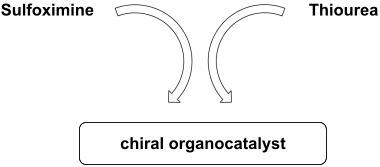
- by three-component condensations of aldehydes, urea-type substrates and enolisable carbonyl compounds. Because of the pharmacological relevance of the products, considerable research has been directed towards asymmetric approaches of these inherently chiral heterocycles [61][62][63]. Until recently

Graphical Abstract

Figure 1: General structure of sulfoximines 1 and one of the enantiomers of S-methyl-S-phenylsulfoximine ((S)-...

Figure 2: Structures of chiral mono- and bifunctional (bis-)thioureas that have been used as organocatalysts.

Scheme 1: Synthesis of compound (S)-3.

Scheme 2: Organocatalytic desymmetrization of the cyclic anhydride 4 with (S)-3.

Scheme 3: Attempted synthesis of sulfonimidoyl-substituted thiourea (R)-9.

Scheme 4: Synthesis of the sulfonimidoyl-containing thioureas (S)-12 and (S)-13.

Scheme 5: Syntheses of ethylene-linked sulfonimidoyl-containing thioureas (SS,SC)-18 and (RS,SC)-19.
Partial thioamide scan on the lipopeptaibiotic trichogin GA IV. Effects on folding and bioactivity
- Marta De Zotti,
- Barbara Biondi,
- Cristina Peggion,
- Matteo De Poli,
- Haleh Fathi,
- Simona Oancea,
- Claudio Toniolo and
- Fernando Formaggio
Beilstein J. Org. Chem. 2012, 8, 1161–1171, doi:10.3762/bjoc.8.129
- of the 1–8 and the thionated 9–11 segments. For the difficult coupling steps, in particular those involving the segment condensations, the N-[3-(dimethylamino)-propyl]-N'-ethylcarbodiimide (EDC)/7-aza-1-hydroxy-1,2,3-benzotriazole (HOAt) [51] activating method was used, while the EDC/1-hydroxy-1,2,3

Graphical Abstract

Figure 1: List of primary structures and abbreviations for the peptides studied in this work. The [Leu11-OMe]...

Scheme 1: Synthesis of ψ[CS-NH]2. 1: Coupling in the presence of EDC/HOBt. 2: Deprotection by using TFA/DCM. ...

Scheme 2: Synthesis of ψ[CS-NH]5. 1: Coupling in the presence of EDC/HOBt. 2: Deprotection by using TFA/DCM. ...

Scheme 3: Synthesis of ψ[CS-NH]9. 1: Deprotection by catalytic hydrogenation with Pd/C. 2: Coupling with n-Oc...

Figure 2: RP-HPLC profiles obtained for [Leu11-OMe] trichogin GA IV (tric-OMe) and its ψ[CS-NH]2, ψ[CS-NH]5, ...

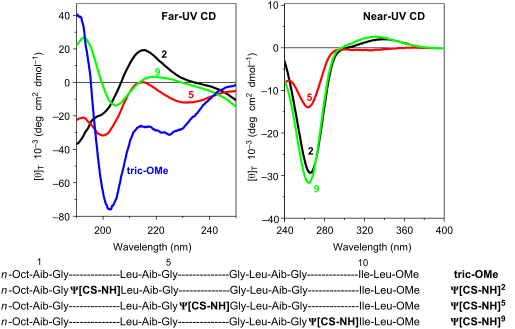
Figure 3: Far-UV (panel I) and near-UV (panel II) CD spectra of [Leu11-OMe] trichogin GA IV (tric-OMe) and it...

Figure 4: FT-IR absorption spectra (3550–3200 cm−1 region) in CDCl3 solution of [Leu11-OMe] trichogin GA IV (...

Figure 5: Region of the amide NH protons in the H/H-ROESY spectrum of ψ[CS-NH]9 (400 MHz, 1 mM in CD3CN solut...

Figure 6: Fingerprint region of the H/H-ROESY spectrum of ψ[CS-NH]9 (400 MHz, 1 mM in CD3CN solution, 298 K)....

Figure 7: Fingerprint region of the H/H-ROESY spectrum of ψ[CS-NH]9 (400 MHz, 1 mM in CD3CN solution, 298 K)....

Figure 8: Ribbon representation of the lowest energy (138.7 kcal/mol) 3D structure obtained for ψ[CS-NH]9. Al...
Parallel and four-step synthesis of natural-product-inspired scaffolds through modular assembly and divergent cyclization
- Hiroki Oguri,
- Haruki Mizoguchi,
- Hideaki Oikawa,
- Aki Ishiyama,
- Masato Iwatsuki,
- Kazuhiko Otoguro and
- Satoshi Ōmura
Beilstein J. Org. Chem. 2012, 8, 930–940, doi:10.3762/bjoc.8.105
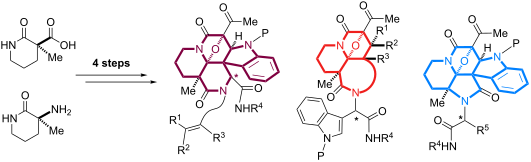
- 48 in good yields. Despite our concern for the potential instability of the aminoacetal moiety adjacent to the double bond, 47 is stable under the standard manipulations. Overall, the pair of diastereomers generated by the Ugi condensations were converted equally through the unified three-step

Graphical Abstract

Figure 1: (a) Biosynthetic outline of aromatic polyketides; (b) structure of indole alkaloids composed of ind...
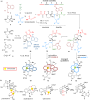
Figure 2: (a) Synthetic plans based on modular assembly and divergent cyclizations leading to fused skeletons...
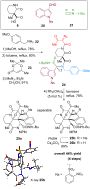
Scheme 1: Four-step synthesis of hexacyclic skeleton 25.
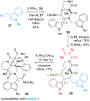
Scheme 2: Four-step synthesis of hexacyclic skeleton 30.
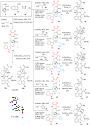
Scheme 3: Parallel and four-step synthesis of tetracyclic skeletons 39–42 and 47–48.
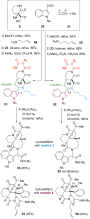
Scheme 4: Synthesis of branched precursors, 51 and 52, using amines 49 and 50, with different methylene lengt...
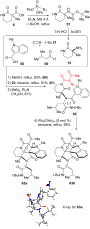
Scheme 5: Four-step synthesis of hexacyclic scaffold 63 employing manifold 15. For details of the synthesis o...
An intramolecular inverse electron demand Diels–Alder approach to annulated α-carbolines
- Zhiyuan Ma,
- Feng Ni,
- Grace H. C. Woo,
- Sie-Mun Lo,
- Philip M. Roveto,
- Scott E. Schaus and
- John K. Snyder
Beilstein J. Org. Chem. 2012, 8, 829–840, doi:10.3762/bjoc.8.93
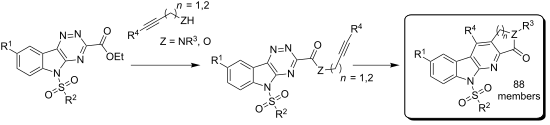
- existing indole framework. In general, applications of this construction sequence fall into two major camps, namely condensations routed through a 2-aminoindole synthon [49][50][51][52][53][54][55][56], and those targeting pyridine closures onto a 2-oxindole [57][58]. In addition, intramolecular Hartwig

Graphical Abstract

Figure 1: Natural products with α-carboline subunits.

Scheme 1: Retrosynthetic inverse electron Diels–Alder approach to α-carbolines.

Scheme 2: Condensation of isatins with ethyl oxaloamidrazonate to form triazines.

Scheme 3: Amidation of triazine ester 8a.

Scheme 4: Microwave-promoted IEDDA reaction of isatin derived triazines.

Scheme 5: One-pot amidation/cycloaddition of triazine ester 8a.

Scheme 6: Amidation/cycloaddition forming α-carbolines 14.

Scheme 7: Intramolecular hydrogen bonding prevents IEDDA cycloaddition of 14b.

Scheme 8: Preparation of unprotected triazine 15, and its lack of reactivity in cycloadditions.

Scheme 9: Transesterification and subsequent cycloaddition of 17a.
Syntheses and applications of furanyl-functionalised 2,2’:6’,2’’-terpyridines
- Jérôme Husson and
- Michael Knorr
Beilstein J. Org. Chem. 2012, 8, 379–389, doi:10.3762/bjoc.8.41
- [19][21] was tested, since it is known to be an efficient promoter of aldol condensations and Michael additions under solvent-free conditions [22][23]. Nevertheless, the treatment of furanyl-substituted aldehydes 1, 3 and 15 did not yield the targeted diketo-intermediates, but instead the chalcones 5

Graphical Abstract

Figure 1: Structure and atomic numbering of 2,2’:6’,2’’-terpyridines.

Scheme 1: Synthesis of furanyl-substituted terpyridines 12–14 by using Kröhnke’s method.

Scheme 2: Synthesis of terpyridines under solvent-free conditions.

Scheme 3: Preparation of 4,4′,4′′-trisubstituted terpyridine containing carboxylate moieties.

Scheme 4: Synthetic pathway for the preparation of a furanyl-functionalised quinquepyridine.

Scheme 5: Utilization of an iminium salt in the preparation of a furanyl-substituted tpy.

Figure 2: Chemical structure of U- and S-shaped isomers.

Scheme 6: Preparation of an asymmetric furanyl-substituted terpyridine.

Scheme 7: Synthesis of tpy by Stille cross-coupling reaction.

Scheme 8: Oxidation of the furan ring of furanyl-substituted terpyridines.
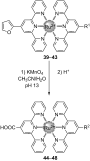
Scheme 9: Direct oxidation of a furan ring attached on Ru(II) tpy complexes.

Figure 3: Example of polyoxometalate frameworks functionalised with tpy ligands and tpy-complex (reprinted wi...

Scheme 10: Synthetic pathway to europium(III) and samarium(III) chelates 56 and 57.
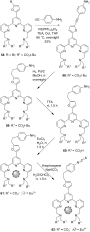
Scheme 11: Synthetic pathway to prepare thiocyanato-functionalised tpys as potential biomolecule-labelling age...
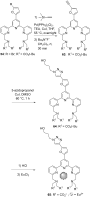
Scheme 12: Synthetic sequence envisioned for biomolecules labelling by click-chemistry.

Figure 4: Structure of pyrrolyl (66), thienyl (67) and bithienyl (68)-substituted complexes analogous to comp...
Thermodynamic and kinetic stabilization of divanadate in the monovanadate/divanadate equilibrium using a Zn-cyclene derivative: Towards a simple ATP synthase model
- Hanno Sell,
- Anika Gehl,
- Frank D. Sönnichsen and
- Rainer Herges
Beilstein J. Org. Chem. 2012, 8, 81–89, doi:10.3762/bjoc.8.8
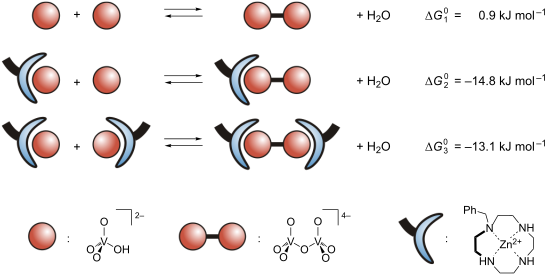
- condensation, e.g., the formation of ATP [8]. A large number of thoroughly investigated enzymes hydrolyze phosphates and provide insight into conceivable mechanisms of phosphate or vanadate condensations. In phosphatases, kinases and ATP synthase, the catalyzed transfer of phosphate usually requires the
- artificial system driving endergonic condensations (Figure 1), we draw the conclusion that only one of the binding sites should provide metal coordination to the vanadate (or phosphate) and the other binding site should associate the nucleophilic anion by neutral hydrogen bonds. Similar effects obviously

Graphical Abstract

Figure 1: Simplified free energy scheme for driving an endergonic condensation (elimination/addition of water...

Figure 2: Binding motive of a vanadate zinc benzylcyclene complex (left) as suggested by the results of DFT c...
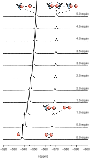
Figure 3: 51V NMR titration at pH 9.5 ([V]t = 1.5 mM, [1]t = 0 to 7.5 mM (0 to 5 equiv), 100 mM CHES). [V]t a...

Figure 4: Speciation of vanadium in a solution containing 1.5 mM Na3VO4, 100 mM CHES (pH = 9.5) and a Zn-benz...

Figure 5: 51V EXSY NMR spectrum (tmix = 1 ms) of a solution containing 1.5 mM Na3VO4, 3 mM Zn-benzylcyclene a...
Ugi post-condensation copper-triggered oxidative cascade towards pyrazoles
- Aurélie Dos Santos,
- Laurent El Kaim,
- Laurence Grimaud and
- Caroline Ronsseray
Beilstein J. Org. Chem. 2011, 7, 1310–1314, doi:10.3762/bjoc.7.153

- ; isocyanide; pyrazolidinone; Introduction In the last twenty years, the Ugi reaction coupled with its various post-condensations towards heterocyclic libraries has established the success of isocyanide-based multicomponent reactions [1][2][3][4][5][6][7]. Chemists in both academia and industry have taken
- cascade. Among potential Ugi post-condensations, radical and oxidative processes represent a very promising route towards the formation of complex scaffolds. We are currently exploring the reactivity of the N-aryl Ugi–Smiles adducts using similar strategies. Experimental Typical procedure for the first

Graphical Abstract

Scheme 1: Copper-catalyzed oxidative cyclization of alkenyl hydrazone.

Scheme 2: Pyrazolidinone 3a from Ugi adduct 2a.

Scheme 3: Attempted reactions of N-methyl hydrazones.
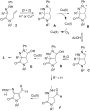
Scheme 4: Proposed mechanism.
Construction of cyclic enones via gold-catalyzed oxygen transfer reactions
- Leping Liu,
- Bo Xu and
- Gerald B. Hammond
Beilstein J. Org. Chem. 2011, 7, 606–614, doi:10.3762/bjoc.7.71
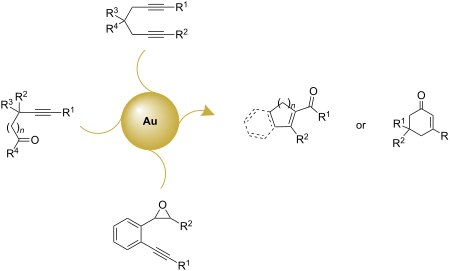
- conjugated enone substructure has attracted the interest of synthetic chemists for decades. Among numerous methodologies, aldol condensations and Wittig-type reactions have been widely utilized [9][10][11][12][13][14][15][16][17][18]. Recently, it was found that conjugated enones could be generated from the

Graphical Abstract

Scheme 1: Lewis acid or Brønsted acid-catalyzed alkyne–carbonyl metathesis and a proposed [2 + 2] intermediat...
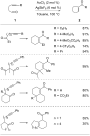
Scheme 2: Gold-catalyzed cyclization of internal alkynyl ketones.

Scheme 3: Proposed [2 + 2] mechanism for the cyclization of alkynyl ketones.

Scheme 4: Gold-catalyzed cyclization of terminal alkynyl ketones.

Scheme 5: Gold-catalyzed tandem oxygen transfer/Nazarov cyclizations.

Scheme 6: TfOH-mediated cyclization of alkynyl ketones.

Scheme 7: Gold-catalyzed cyclizations of 2-alkynyl-1,5-diketones.

Scheme 8: Designed isotopic labeling experiment for mechanistic studies.

Scheme 9: 18O isotopic experiments.

Scheme 10: B2PLYP/6-311+G(d,p)//B2PLYP/6-31G(d) computed reaction profile, relative energies in kcal/mol.

Scheme 11: Gold-catalyzed cyclization of tethered alkynyl arylaldehydes.

Scheme 12: Gold-catalyzed cyclization of terminal diynes.

Scheme 13: Proposed hydrolysis/cyclization mechanism.

Scheme 14: Gold-catalyzed cyclization of internal diynes.

Scheme 15: Proposed solvolysis/cyclization mechanism.

Scheme 16: Gold-catalyzed cyclization of alkynyl epoxides and the 18O isotopic labeling experiment.

Scheme 17: Proposed oxygen transfer mechanism.

Scheme 18: Gold or silver-catalyzed cyclization of alkynyl epoxides and the corresponding deuterium labeling e...
An overview of the key routes to the best selling 5-membered ring heterocyclic pharmaceuticals
- Marcus Baumann,
- Ian R. Baxendale,
- Steven V. Ley and
- Nikzad Nikbin
Beilstein J. Org. Chem. 2011, 7, 442–495, doi:10.3762/bjoc.7.57
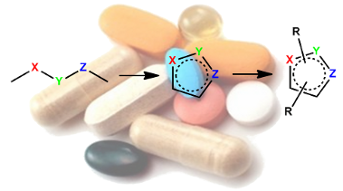

Graphical Abstract
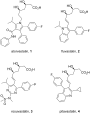
Figure 1: Structures of atorvastatin and other commercial statins.

Figure 2: Structure of compactin.

Scheme 1: Synthesis of pentasubstituted pyrroles.

Scheme 2: [3 + 2] Cycloaddition to prepare 5-isopropylpyrroles.

Scheme 3: Regiospecific [3 + 2] cycloaddition to prepare the pyrrole scaffold.

Scheme 4: Formation of the pyrrole core of atorvastatin via [3 + 2] cycloaddition.

Scheme 5: Formation of pyrrole 33 via the Paal–Knorr reaction.

Scheme 6: Convergent synthesis towards atorvastatin.

Figure 3: Binding pocket of sunitinib in the TRK KIT.

Scheme 7: Synthesis of sunitinib.

Scheme 8: Alternative synthesis of sunitinib.

Scheme 9: Key steps in the syntheses of sumatriptan and zolmitriptan.

Scheme 10: Introduction of the N,N-dimethylaminoethyl side chain.

Scheme 11: Japp–Klingemann reaction in the synthesis of sumatriptan.

Scheme 12: Synthesis of the intermediate sulfonyl chlorides 62 and 63.

Scheme 13: Alternative introduction of the sulfonamide.

Scheme 14: Negishi-type coupling to benzylic sulfonamides.

Scheme 15: Heck reaction used to introduce the sulfonamide side chain of naratriptan.

Scheme 16: Synthesis of the oxazolinone appendage of zolmitriptan.

Scheme 17: Grandberg indole synthesis used in the preparation of rizatriptan.

Scheme 18: Improved synthesis of rizatriptan.

Scheme 19: Larock-type synthesis of rizatriptan.

Scheme 20: Synthesis of eletriptan.

Scheme 21: Heck coupling for the indole system in eletriptan.

Scheme 22: Attempted Fischer indole synthesis of elatriptan.

Scheme 23: Successful Fischer indole synthesis for eletriptan.
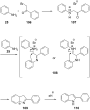
Scheme 24: Mechanistic rationale for the Bischler–Möhlau reaction.

Scheme 25: Bischler-type indole synthesis used in the fluvastatin sodium synthesis.

Scheme 26: Palladium-mediated synthesis of ondansetron.

Scheme 27: Fischer indole synthesis of ondansetron.

Scheme 28: Optimised Pictet–Spengler reaction towards tadalafil.

Figure 4: Structures of carvedilol 136 and propranolol 137.

Scheme 29: Synthesis of the carbazole core of carvedilol.

Scheme 30: Alternative syntheses of 4-hydroxy-9H-carbazole.

Scheme 31: Convergent synthesis of etodolac.

Scheme 32: Alternative synthesis of etodolac.

Figure 5: Structures of imidazole-containing drugs.

Scheme 33: Synthesis of functionalised imidazoles towards losartan.

Scheme 34: Direct synthesis of the chlorinated imidazole in losartan.

Scheme 35: Synthesis of trisubstituted imidazoles.

Scheme 36: Preparation of the imidazole ring in olmesartan.

Scheme 37: Synthesis of ondansetron.

Scheme 38: Alternative route to ondansetron and its analogues.

Scheme 39: Proton pump inhibitors and synthesis of esomeprazole.

Scheme 40: Synthesis of benzimidazole core pantoprazole.

Figure 6: Structure of rabeprazole 194.

Scheme 41: Synthesis of candesartan.

Scheme 42: Alternative access to the candesartan key intermediate 216.

Scheme 43: .Medicinal chemistry route to telmisartan.

Scheme 44: Improved synthesis of telmisartan.

Scheme 45: Synthesis of zolpidem.

Scheme 46: Copper-catalysed 3-component coupling towards zolpidem.

Figure 7: Structure of celecoxib.

Scheme 47: Preparation of celecoxib.

Scheme 48: Alternative synthesis of celecoxib.

Scheme 49: Regioselective access to celecoxib.

Scheme 50: Synthesis of pazopanib.

Scheme 51: Syntheses of anastrozole, rizatriptan and letrozole.

Scheme 52: Regioselective synthesis of anastrozole.

Scheme 53: Triazine-mediated triazole formation towards anastrozole.

Scheme 54: Alternative routes to 1,2,4-triazoles.

Scheme 55: Initial synthetic route to sitagliptin.

Figure 8: Binding of sitagliptin within DPP-IV.

Scheme 56: The process route to sitagliptin key intermediate 280.

Scheme 57: Synthesis of maraviroc.

Scheme 58: Synthesis of alprazolam.

Scheme 59: The use of N-nitrosoamidine derivatives in the preparation of fused benzodiazepines.

Figure 9: Structures of itraconazole, ravuconazole and voriconazole.

Scheme 60: Synthesis of itraconazole.

Scheme 61: Synthesis of rufinamide.

Scheme 62: Representative tetrazole formation in valsartan.

Figure 10: Structure of tetrazole containing olmesartan, candesartan and irbesartan.

Scheme 63: Early stage introduction of the tetrazole in losartan.

Scheme 64: Synthesis of cilostazol.

Figure 11: Structure of cefdinir.

Scheme 65: Semi-synthesis of cefdinir.

Scheme 66: Thiazole syntheses towards ritonavir.

Scheme 67: Synthesis towards pramipexole.

Scheme 68: Alternative route to pramipexole.

Scheme 69: Synthesis of famotidine.

Scheme 70: Efficient synthesis of the hyperuricemic febuxostat.

Scheme 71: Synthesis of ziprasidone.

Figure 12: Structure of mometasone.

Scheme 72: Industrial access to 2-furoic acid present in mometasone.

Scheme 73: Synthesis of ranitidine from furfuryl alcohol.

Scheme 74: Synthesis of nitrofurantoin.

Scheme 75: Synthesis of benzofuran.

Scheme 76: Synthesis of amiodarone.

Scheme 77: Synthesis of raloxifene.

Scheme 78: Alternative access to the benzo[b]thiophene core of raloxifene.

Scheme 79: Gewald reaction in the synthesis of olanzapine.

Scheme 80: Alternative synthesis of olanzapine.
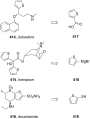
Figure 13: Access to simple thiophene-containing drugs.

Scheme 81: Synthesis of clopidogrel.

Scheme 82: Pictet–Spengler reaction in the preparation of tetrahydrothieno[3,2-c]pyridine (422).

Scheme 83: Alternative synthesis of key intermediate 422.

Figure 14: Co-crystal structures of timolol (left) and carazolol (right) in the β-adrenergic receptor.

Scheme 84: Synthesis of timolol.

Scheme 85: Synthesis of tizanidine 440.

Scheme 86: Synthesis of leflunomide.

Scheme 87: Synthesis of sulfamethoxazole.

Scheme 88: Synthesis of risperidone.

Figure 15: Relative abundance of selected transformations.

Figure 16: The abundance of heterocycles within top 200 drugs (5-membered rings).
An efficient and practical entry to 2-amido-dienes and 3-amido-trienes from allenamides through stereoselective 1,3-hydrogen shifts
- Ryuji Hayashi,
- John B. Feltenberger,
- Andrew G. Lohse,
- Mary C. Walton and
- Richard P. Hsung
Beilstein J. Org. Chem. 2011, 7, 410–420, doi:10.3762/bjoc.7.53
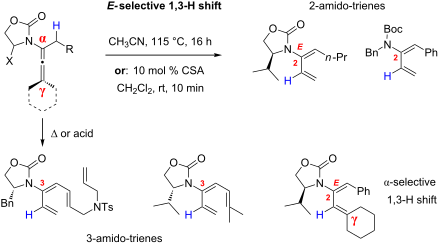
- -dienes see [51][52]). Problems with the two primary approaches to access amido-dienes [47] are that acid-mediated condensations suffer from functional group tolerances, and metal-mediated coupling methods (for reviews on Cu-mediated C–N and C–O bond formations see [53][54][55], for some examples see [56

Graphical Abstract

Scheme 1: 1,3-Hydrogen shifts of allenes.

Scheme 2: Synthesizing amido-dienes from allenamides.

Scheme 3: Synthesis of 1-amido-dienes from allenamides.

Figure 1: X-ray Structure of 10b.

Figure 2: Proposed mechanistic models.

Scheme 4: A favored pro-E TS.

Scheme 5: Unexpected competing 1,7-hydrogen shifts.

Scheme 6: Applications in pericyclic ring-closure.

Scheme 7: Cyclic 2-amido-diene synthesis.
Molecular rearrangements of superelectrophiles
- Douglas A. Klumpp
Beilstein J. Org. Chem. 2011, 7, 346–363, doi:10.3762/bjoc.7.45
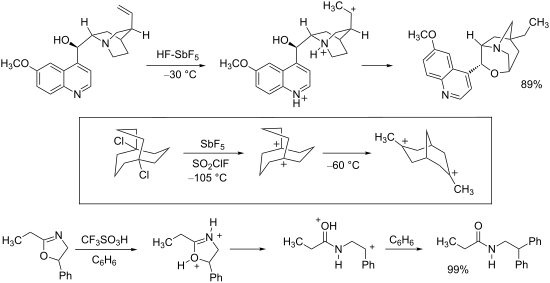
- . Condensations of ninhydrin (28) with benzene. Rearrangement of 29 to 30. Superacid promoted ring opening of succinic anhydride (33). Reaction of phthalic acid (36) in FSO3H-SbF5. Ring expansion of superelectrophile 42. Reaction of camphor (44) in superacid. Isomerization of 2-cyclohexen-1-one (48

Graphical Abstract

Scheme 1: Superelectrophilic activation of the acetyl cation.

Scheme 2: Ring opening of diprotonated 2-oxazolines.

Scheme 3: AlCl3-promoted ring opening of isoxaolidine 16.

Scheme 4: Ring-opening reactions of cyclopropyl derivatives.

Scheme 5: Condensations of ninhydrin (28) with benzene.

Scheme 6: Rearrangement of 29 to 30.

Scheme 7: Superacid promoted ring opening of succinic anhydride (33).

Scheme 8: Reaction of phthalic acid (36) in FSO3H-SbF5.

Scheme 9: Ring expansion of superelectrophile 42.

Scheme 10: Reaction of camphor (44) in superacid.

Scheme 11: Isomerization of 2-cyclohexen-1-one (48).

Scheme 12: Isomerization of 2-decalone (51).

Scheme 13: Rearrangement of the acyl-dication 58.

Scheme 14: Reaction of dialkylketone 64.

Scheme 15: Ozonolysis in superacid.

Scheme 16: Rearrangement of 1-hydroxy-2-methylcyclohexane carboxylic acid (79) in superacid.

Scheme 17: Isomerization of the 1,5-manxyl dication 87.

Scheme 18: Energetics of isomerization.

Scheme 19: Rearrangement of dication 90.

Scheme 20: Superacid promoted rearrangement of pivaldehyde (92).

Scheme 21: Rearrangement of a superelectrophilic carboxonium ion 100.

Scheme 22: Proposed mechanism for the Wallach rearrangement.

Scheme 23: Wallach rearrangement of azoxypyridines 108 and 109.

Scheme 24: Proposed mechanism of the benzidine rearrangement.

Scheme 25: Superacid-promoted reaction of quinine (122).

Scheme 26: Superacid-promoted reaction of vindoline derivative 130.

Scheme 27: Charge migration by hydride shift and acid–base chemistry.

Scheme 28: Reactions of 1-hydroxycyclohexanecarboxylic acid (137).

Scheme 29: Reaction of alcohol 143 with benzene in superacid.

Scheme 30: Reaction of alcohol 148 in superacid with benzene.

Scheme 31: Mechanism of aza-polycyclic aromatic compound formation.

Scheme 32: Superacid-promoted reaction of ethylene glycol (159).

Scheme 33: Reactions of 1,3-propanediol (165) and 2-methoxyethanol (169).

Scheme 34: Rearrangement of superelelctrophilic acyl dication 173.
Reciprocal polyhedra and the Euler relationship: cage hydrocarbons, CnHn and closo-boranes [BxHx]2−
- Michael J. McGlinchey and
- Henning Hopf
Beilstein J. Org. Chem. 2011, 7, 222–233, doi:10.3762/bjoc.7.30
- prerequisite for an intramolecular [2 + 2] photoaddition had been created. Indeed, photochemical ring closure and various oxidation steps led to the "open" triketone 70 that in principle should be convertible to a seco-decahedrane skeleton by two aldol condensations. This latter system should close to 14 by

Graphical Abstract

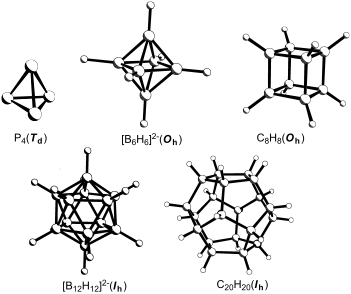
Figure 1: Molecular analogues of the Platonic solids.

Figure 2: The structure of [Mo6Cl8]4+ demonstrates the reciprocal relationship between the cube and the octah...

Figure 3: The deltahedra corresponding to the structures of the closo-boranes [BxHx]2−.

Scheme 1: The first synthesis of a tetrahedrane 19 by Maier.

Scheme 2: The conversion of Dewar benzenes to [3]-prismanes.

Scheme 3: Synthesis of [3]prismane 9 by Katz.

Scheme 4: Synthesis of cubane 10 by Eaton.

Scheme 5: Synthesis of cubane 10 by Pettit.

Scheme 6: Failed routes to [5]-prismane 11.

Scheme 7: Synthesis of [5]prismane 11 by Eaton.

Scheme 8: Retrosynthetic analysis for several approaches to dodecahedrane 16.

Scheme 9: Paquette´s synthesis of dodecahedrane 16.

Scheme 10: Prinzbach´s synthesis of dodecahedrane 16.

Figure 4: The as yet unknown polyhedranes 12–15.
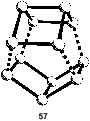
Figure 5: Coupling of two Dewar benzenes.

Scheme 11: A possible route to octahedrane 12.

Scheme 12: A possible route to nonahedrane 13.
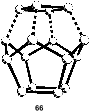
Figure 6: Capping [4]peristylane with a four-membered ring system.

Scheme 13: A possible route to decahedrane 14.

Figure 7: A possible route to undecahedrane 15 (left: side view; right: top view).

Scheme 14: Synthetic routes to trigonal prismatic hexasilanes 71a and hexagermanes 71b.

Scheme 15: Synthetic routes to octasila- and octagerma-cubanes.

Scheme 16: Synthesis of an octastannacubane and a decastannapentaprismane.

Scheme 17: Synthesis of a heterocubane.

Figure 8: D3d symmetric C8H8, a bis-truncated cubane.
Hydroxyapatite supported caesium carbonate as a new recyclable solid base catalyst for the Knoevenagel condensation in water
- Monika Gupta,
- Rajive Gupta and
- Medha Anand
Beilstein J. Org. Chem. 2009, 5, No. 68, doi:10.3762/bjoc.5.68

- , respectively. There is no data with respect to the rate of condensation versus dehydration or 1,2-elimination of the product. In all cases, no doubt, the yields were appreciable, but involved tedious separation. Electrochemically induced Knoevenagel condensations [38] have been reported but require solvents

Graphical Abstract

Figure 1: TGA of HAP–Cs2CO3.

Figure 2: FTIR spectrum of HAP–Cs2CO3.
Asymmetric synthesis of biaryl atropisomers by dynamic resolution on condensation of biaryl aldehydes with (−)-ephedrine or a proline- derived diamine
- Ann Bracegirdle,
- Jonathan Clayden and
- Lai Wah Lai
Beilstein J. Org. Chem. 2008, 4, No. 47, doi:10.3762/bjoc.4.47
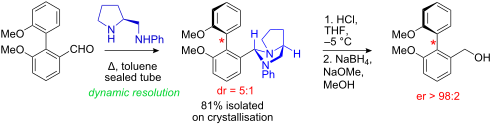
- benzene-d6 in an NMR tube (Scheme 2). The temperature of the tube was raised stepwise from rt to 110 °C as indicated in Table 2, allowing 30 min at each temperature and monitoring the changing ratio of diastereoisomers by 1H NMR. We assume that the condensations are diastereoselective at the new

Graphical Abstract

Scheme 1: Synthesis of racemic aldehydes.
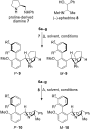
Scheme 2: Diastereoisomeric imidazolidines and oxazolidines from biaryl aldehydes.

Figure 1: X-ray crystal structure of 9a. X-ray data has been deposited with the Cambridge Crystallographic Da...

Figure 2: X-ray crystal structure of 10a. X-ray data has been deposited with the Cambridge Crystallographic D...

Scheme 3: Atropisomeric alcohols by hydrolysis and reduction.

Scheme 4: Mechanistic rationalisation of the dynamic resolution in the formation of 9.
An improved synthesis of 1,3,5-triaryl- 2-pyrazolines in acetic acid aqueous solution under ultrasound irradiation
- Ji-Tai Li,
- Xiao-Hui Zhang and
- Zhi-Ping Lin
Beilstein J. Org. Chem. 2007, 3, No. 13, doi:10.1186/1860-5397-3-13

- Table 2. The following sequence of reaction appears to afford a satisfactory explanation of the mode of formation of the products (Scheme 2). This reaction involves the initial formation of an arylhydrazone with subsequent attack of nitrogen upon the carbon-carbon double bond. Condensations involving

Graphical Abstract

Scheme 1: Synthesis of 1,3,5-triaryl-2-pyrazolines.

Scheme 2: The mechanism of 1,3,5-triarylpyrazoline formation.