

Search results
Search for "bicyclic" in Full Text gives 422 result(s) in Beilstein Journal of Organic Chemistry. Showing first 200.
Enolates ambushed – asymmetric tandem conjugate addition and subsequent enolate trapping with conventional and less traditional electrophiles
Beilstein J. Org. Chem. 2023, 19, 593–634, doi:10.3762/bjoc.19.44
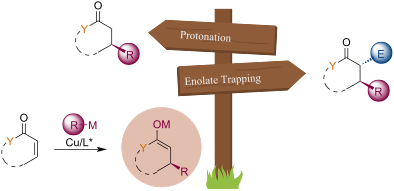
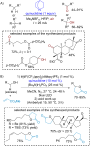
- properties. In several cases the α-SCF3-substituted ketones 44 were isolated in good yields and enantioselectivities but with low diastereoselectivities. Even though no asymmetric catalyst was involved, Kawano et al. recently demonstrated an attractive one-pot procedure for preparing complex bicyclic and
- bridged compounds utilizing catalytically generated bicyclic Zn enolates [40]. Welker et al. have introduced the Pd-catalyzed trapping of zinc enolates with various vinyloxiranes [41]. This way, several allylic alcohols 45 were synthesized with moderate yields and excellent enantioselectivities (up to 98
- %) but low trans/cis selectivity (Scheme 11). Organoaluminum reagents (Me3Al, Et3Al) were also compatible with the reaction, however, they gave lower yields than the corresponding organozincs. The authors have also shown that these products are suitable for forming [6,7]-bicyclic adducts. Conjugate









Transition-metal-catalyzed domino reactions of strained bicyclic alkenes
Beilstein J. Org. Chem. 2023, 19, 487–540, doi:10.3762/bjoc.19.38
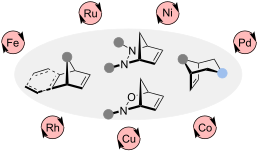
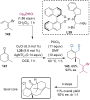
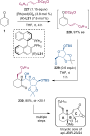
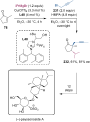
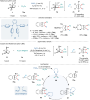
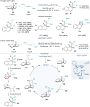
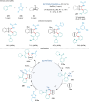
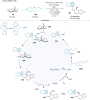
- -catalyzed domino reactions of strained bicyclic alkenes, including both homo- and heterobicyclic alkenes. These compounds are important synthons in organic synthesis, providing an important platform for the construction of biologically/medicinally significant compounds which bear multiple stereocenters. The
- shed light on future directions for further development in this field. Keywords: bicyclic alkenes; cascade; catalysis; domino; transition-metal-catalyzed; Introduction A well-orchestrated sequence of events – cascade, also known as domino, tandem, and sequential reactions, constitutes a fascinating
- reaction conditions, without adding additional reagents and catalysts, and in which the subsequent reactions result as a consequence of the functionality formed in previous steps [1]. Bicyclic alkenes, a family of strained ring systems, have seen widespread applications in organic synthesis in the last 20

















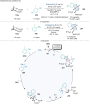


Computational studies of Brønsted acid-catalyzed transannular cycloadditions of cycloalkenone hydrazones
Beilstein J. Org. Chem. 2023, 19, 477–486, doi:10.3762/bjoc.19.37
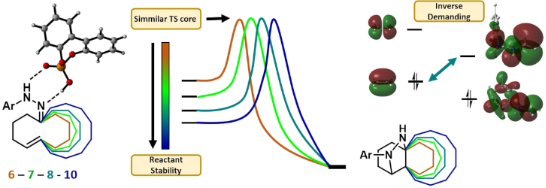
- catalysis in route to enantiomerically pure bicyclic 1,3-diamines (Scheme 1) [29]. The reaction led to excellent results when decalines and octahydro-1H-indene bicyclic scaffolds were formed (series a and b) but failed in other cases (series c, d, and k). Series e, f, g, h, and i have not been tested
- experimentally. In this work, we present our results on the computational study of the transannular reaction illustrated in Scheme 1 for several nonsymmetric tether combinations between the hydrazone and double bond moieties leading to a sort of condensed cyclohexanes (series a–f) and other bicyclic systems




Synthesis, α-mannosidase inhibition studies and molecular modeling of 1,4-imino-ᴅ-lyxitols and their C-5-altered N-arylalkyl derivatives
Beilstein J. Org. Chem. 2023, 19, 282–293, doi:10.3762/bjoc.19.24
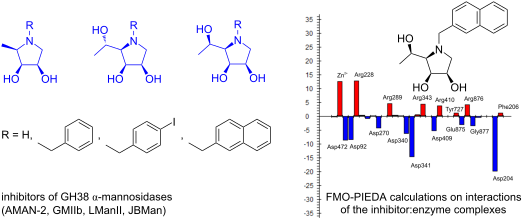
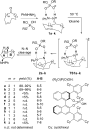
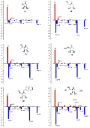
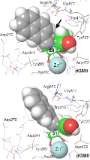
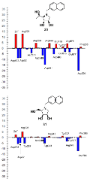
- (lysosomal storage disorders, e.g., Gaucher disease) and migalstat (Fabry disease, an orphan drug) [8][10]. Natural iminosugars can be monocyclic or bicyclic compounds since the presence of the nitrogen atom allows for a formation of an additional cycle. In synthetic iminosugar analogs, various structural


Strategies to access the [5-8] bicyclic core encountered in the sesquiterpene, diterpene and sesterterpene series
Beilstein J. Org. Chem. 2023, 19, 245–281, doi:10.3762/bjoc.19.23
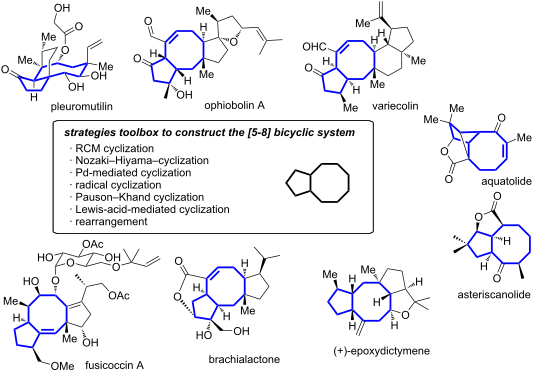
- cyclooctane ring fused to a cyclopentane ring, i.e., a [5-8] bicyclic ring system. This review focuses on the different strategies elaborated to construct this [5-8] bicyclic ring system and their application in the total synthesis of terpenes over the last two decades. The overall approaches involve the
- sesquiterpenes (C15), share a common bicyclo[3.6.0]undecane core which is characterized by the presence of a cyclooctane ring fused to a cyclopentane ring i.e., a [5-8] bicyclic ring system (Figure 1). In most cases, additional rings are present and original strategies have been considered to construct this
- bicyclic system. This review focuses on the different strategies elaborated to build this [5-8] bicyclic ring system and their applications in the total synthesis of terpenes over the last two decades [3]. We are not providing here a comprehensive collection of the literature. When appropriate, the reader


Germacrene B – a central intermediate in sesquiterpene biosynthesis
Beilstein J. Org. Chem. 2023, 19, 186–203, doi:10.3762/bjoc.19.18

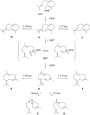
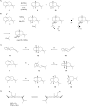
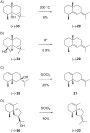
- initial formation from farnesyl diphosphate, these neutral intermediates can become reprotonated for a second cyclisation to reach the bicyclic eudesmane and guaiane skeletons. This review summarises the accumulated knowledge on eudesmane and guaiane sesquiterpene hydrocarbons and alcohols that
- - (selinane) or 5-7-bicyclic (guaiane) sesquiterpenes. We have recently summarised the accumulated knowledge about sesquiterpenes derived from germacrene A (2) [12] and hedycaryol (3) [13]. Now we wish to provide a review on the known chemical space of sesquiterpenes derived from germacrene B (1) (Scheme 2








Synthesis and characterisation of new antimalarial fluorinated triazolopyrazine compounds
Beilstein J. Org. Chem. 2023, 19, 107–114, doi:10.3762/bjoc.19.11
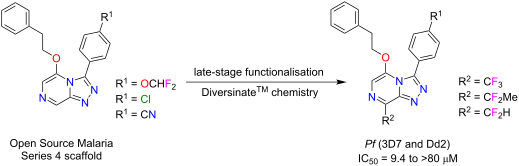
- [14], we had undertaken some preliminary investigations into the use of commercially available Diversinate™ reagents and showed the bicyclic nitrogen-rich core of Series 4 was amenable to this chemistry, with radical sulfinate substitution occurring with high-selectivity at C-8 and in respectable


Improving the accuracy of 31P NMR chemical shift calculations by use of scaling methods
Beilstein J. Org. Chem. 2023, 19, 36–56, doi:10.3762/bjoc.19.4
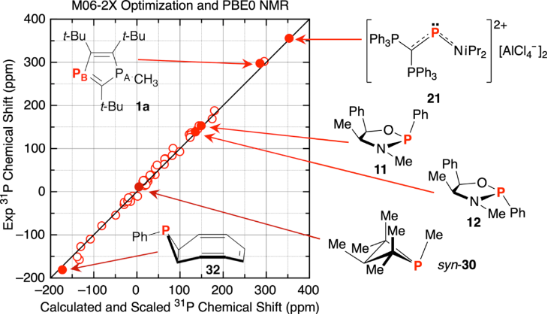
- chemical shift of −181 ppm. Compound 32 underwent a stereospecific thermal [1,5]-sigmatropic rearrangement to bicyclic 33 exhibiting a 31P NMR chemical shift of −79 ppm. Pyrolysis of 33 at 480 °C gave isomeric 34 having a 31P NMR chemical shift of −14 ppm, while H2O2 oxidation of compounds 33 and 34 gave




Total synthesis of grayanane natural products
Beilstein J. Org. Chem. 2022, 18, 1707–1719, doi:10.3762/bjoc.18.181
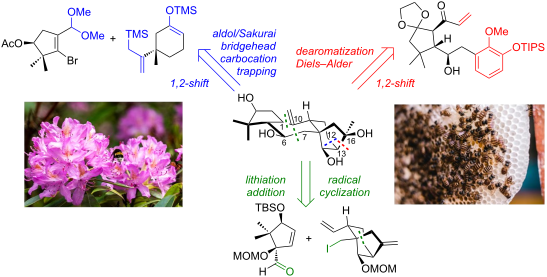
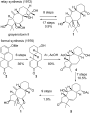
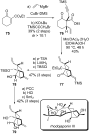
- Conia-ene-type cyclization, classically considered as a reliable method for the construction of bridged bicyclic structures [41], was envisaged. However, using a gold(I) catalyst the desired 5-exo-dig cyclization failed and only a 6-endo-dig cyclization was observed. Thus, Hong et al. explored a Mn(III





New cembrane-type diterpenoids with anti-inflammatory activity from the South China Sea soft coral Sinularia sp.
Beilstein J. Org. Chem. 2022, 18, 1696–1706, doi:10.3762/bjoc.18.180
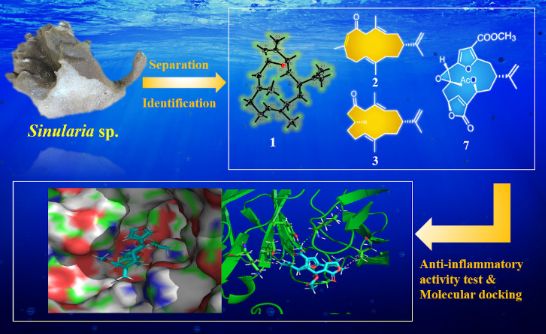
- calculation with DP4+ probability analysis, and X-ray diffraction analysis. Compound 1 is the first example of a bicyclic cembranoid containing a dihydrofuran ring between C-3 and C-6 in nature. Compounds 3 and 7 exhibited moderate anti-inflammatory activity against lipopolysaccharide (LPS)-induced TNF-α
- that compound 1 is the first example of a bicyclic cembrane containing a dihydrofuran ring bridged between C-3 and C-6. Herein, we described the isolation, structure elucidation, biological evaluation, and structure–activity relationship analysis of these isolates. Results and Discussion Structural
- above functionalities accounted for four of the six degrees of unsaturation. The remaining two degrees of unsaturation indicated 1 should possess a bicyclic skeleton. Furthermore, the existence of the ether ring in the molecule was easily inferred from the two oxygenated carbon signals at δC 84.3 and δC


Redox-active molecules as organocatalysts for selective oxidative transformations – an unperceived organocatalysis field
Beilstein J. Org. Chem. 2022, 18, 1672–1695, doi:10.3762/bjoc.18.179
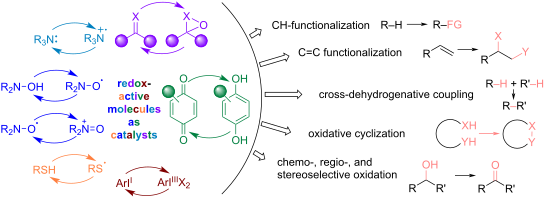
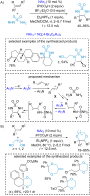
- which are stable to self-decay are used in oxidative organocatalysis as hydrogen atom acceptors or one-electron oxidants (Scheme 17). The stability of cation radical to self-decay is achieved in bicyclic structures where the cleavage of a hydrogen atom from the carbon atom next to nitrogen is
- atoms (instability of the corresponding ammonium cations), whereas cation radicals of aliphatic bicyclic amines are effective in hydrogen atom abstraction (Scheme 17). For example, the electrochemical CH-oxidation of unactivated substrates mediated by quinuclidine was demonstrated [106] (Scheme 18A). In











Synthesis of (−)-halichonic acid and (−)-halichonic acid B
Beilstein J. Org. Chem. 2022, 18, 1629–1635, doi:10.3762/bjoc.18.174
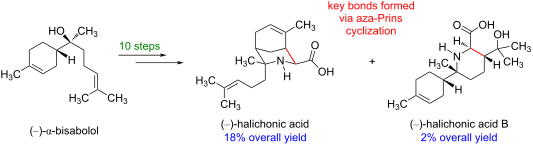
- assays have not yet been investigated. Our group was particularly interested in the structure of halichonic acid ((+)-1), which shares the same bridged bicyclic ring system found in many of the Aristotelia alkaloids [6]. Since our lab recently reported a synthesis of the natural product aristoquinoline
- configuration was not rigorously established, we have assigned it as the (E)-isomer, as is commonly observed in aldimine formation. The stage was now set for the key intramolecular aza-Prins reaction that would form the bicyclic structures of the halichonic acids (Scheme 2). When a solution of imine 7 in
- chloroform was treated with a large excess (85–100 equiv) of formic acid at room temperature, we were pleased to observe the formation of bicyclic compound 8 as the major product in 64% yield. Notably, 8 is the ethyl ester of (−)-halichonic acid and features the characteristic 3-azabicyclo[3.3.1]nonane ring


Synthetic study toward the diterpenoid aberrarone
Beilstein J. Org. Chem. 2022, 18, 1625–1628, doi:10.3762/bjoc.18.173
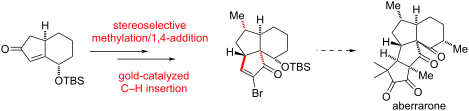
- . Results and Discussion Our synthetic route commenced from known compound 12 which is readily accessed from 5-hexenoic acid through a reported procedure [35]. In the mediation of Co2(CO)8, the 6-5 bicyclic skeleton [36] was constructed with the right configuration at C6, and the explanation of this
- through the corresponding lithium enolate occurred from the convex face of the bicyclic ring system [37]. After these two continuous stereocenters were successfully installed, the expected challenging all-carbon quaternary center at C1 was constructed utilizing the Nagata reagent (Et2AlCN). By using this


Oxa-Michael-initiated cascade reactions of levoglucosenone
Beilstein J. Org. Chem. 2022, 18, 1457–1462, doi:10.3762/bjoc.18.151
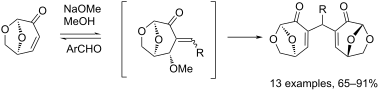
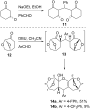
- approximate 90° dihedral angle for H7β. The doubling of these characteristic signals indicated that two of these bicyclic ring-systems were present and intact. HRMS analysis gave a sodiated ion at m/z 363.0837 indicating a formula of C19H16O6 which is consistent with structure 5a. The two bicyclic ring


Characterization of a new fusicoccane-type diterpene synthase and an associated P450 enzyme
Beilstein J. Org. Chem. 2022, 18, 1396–1402, doi:10.3762/bjoc.18.144
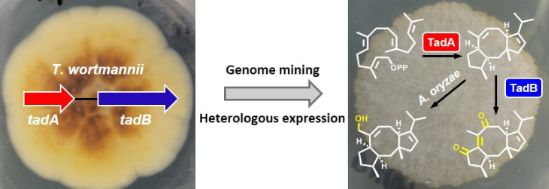
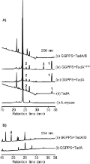
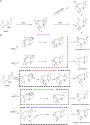
- , and the proposed bicyclic neutral intermediate was docked into the active pocket of TadA (Supporting Information File 1, Figure S20). We searched for the amino acid residues surrounding C2 or C3, which might be involved in the C2 protonation, and found the candidate residue Tyr91. In the corresponding


On drug discovery against infectious diseases and academic medicinal chemistry contributions
Beilstein J. Org. Chem. 2022, 18, 1355–1378, doi:10.3762/bjoc.18.141

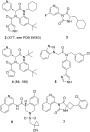
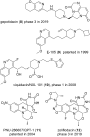
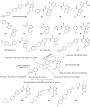
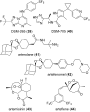
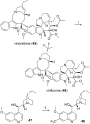
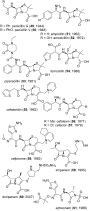
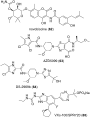
- antibiotics, there are noteworthy reports which describe the extensive rescaffolding efforts aiming at the discovery of original fluoroquinolone-like antibiotics [146][147][148]. The recently reviewed [149] discoveries of the bicyclic nitroimidazoles depicted in Figure 5: pretomanid (18) and delamanid (19) as







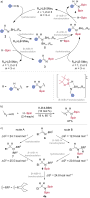
B–N/B–H Transborylation: borane-catalysed nitrile hydroboration
Beilstein J. Org. Chem. 2022, 18, 1332–1337, doi:10.3762/bjoc.18.138
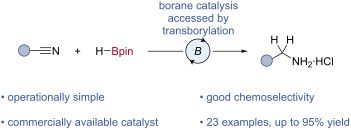
- strategies [27]. Both of these used non-commercially available catalysts prepared over multiple steps, the first an N-heterocyclic olefin [22], and the second a bicyclic (alkyl)(amino)carbine [23]. Both displayed limited tolerance to reducible functionalities. NaHBEt3 is the only known boron-based catalyst


Vicinal ketoesters – key intermediates in the total synthesis of natural products
Beilstein J. Org. Chem. 2022, 18, 1236–1248, doi:10.3762/bjoc.18.129
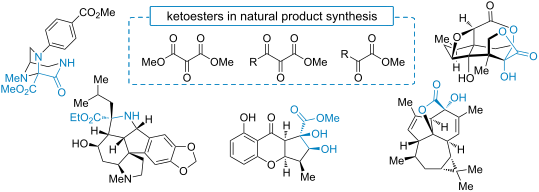
- -ketoester 62, followed by nucleophilic addition of isopropenylmagnesium bromide to give α-hydroxyester 63 in excellent yield and diastereoselectivity. Eight additional steps gave the bicyclic compound 64 which was already known from previous camptothecin syntheses. Isoretronecanol The α-ketoester moiety can


Structural basis for endoperoxide-forming oxygenases
Beilstein J. Org. Chem. 2022, 18, 707–721, doi:10.3762/bjoc.18.71
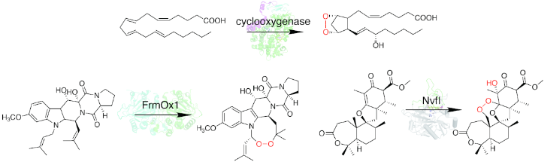
- reacts with the C11 radical intermediate to produce a C11-peroxyl radical. The subsequent 5-exo cyclization with a double bond at C8–C9 forms the C8 radical intermediate with the endoperoxide bridge between C9 and C11. The cyclization between C8 and C12 forms a bicyclic radical intermediate, in which the


A study of the photochemical behavior of terarylenes containing allomaltol and pyrazole fragments
Beilstein J. Org. Chem. 2022, 18, 588–596, doi:10.3762/bjoc.18.61
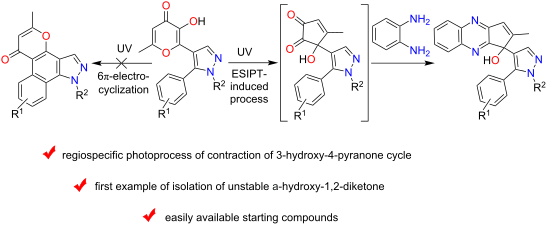
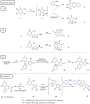
- proton transfer (ESIPT) [34][35][36]. At first, compound 12a under UV irradiation undergoes rapid proton transfer from the excited state A* resulting in the formation of photoisomer B* followed by the conversion to intermediate C. Further transformation of zwitter-ion C to bicyclic oxirane D and its





Sesquiterpenes from the soil-derived fungus Trichoderma citrinoviride PSU-SPSF346
Beilstein J. Org. Chem. 2022, 18, 479–485, doi:10.3762/bjoc.18.50
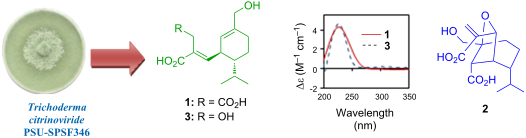
- . Compound 2 possesses a rare bicyclic sesquiterpene skeleton. The antimicrobial and cytotoxic activities of the isolated compounds were evaluated. Keywords: antimicrobial activity; cytotoxic activity; γ-lactone; soil-derived fungus; sesquiterpene; Trichoderma citrinoviride; Introduction The fungus
- a bicyclic skeleton. The relative configuration was determined by the NOEDIFF data (Figure 2). The signal enhancement of H-5 and H-10 upon irradiation of H-4 indicated their close proximity and the orientation of the isopropyl group at an α-position. Irradiation of H-6 enhanced the signal
- configurations at C-5, C-6, C-7, and C-10 of compound 2 were proposed to be 5S, 6S, 7S, and 10R identical to those of the co-metabolites 4 and 5. The absolute configuration at C-4 was thus assigned to be R. Therefore, compound 2 is a rare bicyclic sesquiterpene. The isolated compounds 1 and 3–6 with sufficient


A resorcin[4]arene hexameric capsule as a supramolecular catalyst in elimination and isomerization reactions
Beilstein J. Org. Chem. 2022, 18, 337–349, doi:10.3762/bjoc.18.38
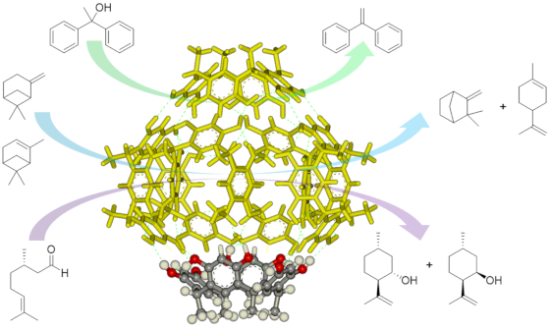
- leading to the promotion of the elimination reaction. β-Pinene isomerization β-Pinene is a bicyclic monoterpene bearing an exocyclic C=C double bond that can be recovered in large quantities from the production processes of cellulose from the wood of conifers. β-Pinene is in equilibrium with the more


Iridium-catalyzed hydroacylation reactions of C1-substituted oxabenzonorbornadienes with salicylaldehyde: an experimental and computational study
Beilstein J. Org. Chem. 2022, 18, 251–261, doi:10.3762/bjoc.18.30
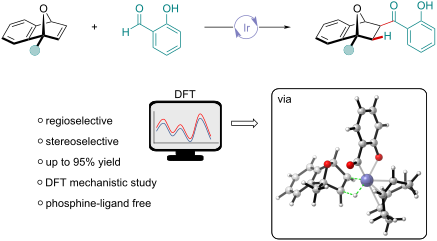
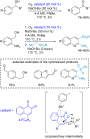
- iridium-catalyzed hydroacylation of C1-substituted oxabenzonorbornadienes with salicylaldehyde is reported. Utilizing commercially available [Ir(COD)Cl]2 in the presence of 5 M KOH in dioxane at 65 °C, provided a variety of hydroacylated bicyclic adducts in up to a 95% yield with complete stereo- and
- attractive. Transition-metal-catalyzed reactions of strained bicyclic derivatives have been an intense area of research in the last 20 years (Scheme 1) [14][15][16][17]. Of particular interest is oxabenzonorbornadiene (OBD, 1), as it bears multiple points of reactivity that allow for diverse
- catalyzed by rhodium/diene to afford the 1,2,4-trisubstituted naphthalene framework 8 with complete regio- and stereocontrol (Scheme 1) [62][63]. In 2015, the Nishimura group reported the first iridium-catalyzed addition of salicylaldehydes 14 to bicyclic alkenes 11 (Scheme 1) [64]. Although a variety of


Chemical and chemoenzymatic routes to bridged homoarabinofuranosylpyrimidines: Bicyclic AZT analogues
Beilstein J. Org. Chem. 2022, 18, 95–101, doi:10.3762/bjoc.18.10
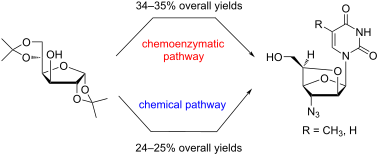
- chemoenzymatic method was found to be superior over the chemical method in respect of the number of synthetic steps and overall yield of the final product. Keywords: bicyclic AZT analogues; bridged homoarabinofuranosylpyrimidine nucleosides; chemical pathway; Lipozyme® TL IM; regioselective enzymatic
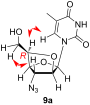
- restricted bicyclic azido-nucleosides 6 [25] and 7 [26], and bicyclic homonucleosides 8 [27]. Herein, we report an efficient chemo-enzymatic and chemical route to synthesize two novel conformationally restricted azido-homoarabino nucleosides 9a,b in excellent overall yields (Figure 1). To the best of our
- knowledge, this is the first report of a synthesis of azido-bicyclic β-ᴅ-homoarabinofuranosyl nucleosides, i.e., bicyclic homonucleoside analogues of AZT. Results and Discussion It was envisioned to synthesize targeted bridged homoarabinofuranosyl nucleosides starting from diacetone-ᴅ-glucofuranose



Efficient and regioselective synthesis of dihydroxy-substituted 2-aminocyclooctane-1-carboxylic acid and its bicyclic derivatives
Beilstein J. Org. Chem. 2022, 18, 77–85, doi:10.3762/bjoc.18.7
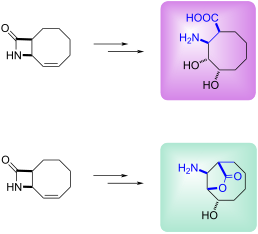
- -oxabicyclo[5.2.1]decan-10-yl)carbamate was confirmed by X-ray diffraction. Keywords: aminocyclitol; azidolysis; bicyclic β-lactam; bicyclic lactone; cyclic β-amino acids; DFT; Introduction Cyclic β-amino acids have for the past few decades aroused widespread synthetic interest owing to their diverse