

Search results
Search for "IR" in Full Text gives 1117 result(s) in Beilstein Journal of Organic Chemistry. Showing first 200.
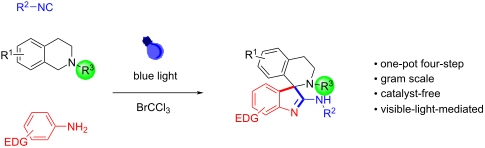
Synthesis of spiroindolenines through a one-pot multistep process mediated by visible light
Beilstein J. Org. Chem. 2024, 20, 2722–2731, doi:10.3762/bjoc.20.230
- %) due to difficulties in the purification. IR spectra were recorded as solid, oil, or foamy samples, with the ATR (attenuated total reflectance) method. TLC analyses were carried out on pre-coated Merck silica gel 60 F254 plates or Aluminum oxide on TLC-plates and viewed at UV (254 nm) and developed
- without further purification. Graphene oxide (GO) was purchased from Graphenea. All products were characterized by 1H,13C, 19F (when fluorine is present) NMR, IR and HRMS. General procedure for the one-pot synthesis of spiro[indole-isoquinoline] 3a: A solution of N-phenyltetrahydroisoquinoline (1 equiv
- °C at 451 nm (blue LEDs) under magnetic stirring for 24 h. The reaction mixture was treated with Et3N (3 equiv, 1.44 mmol, 200 µL), concentrated and the residue was purified by column chromatography on silica gel with PE/Et2O (from 85:15 to 75:25) to give 3a (121 mg, 61%), as yellow oil; IR (ATR) ν̃




Synthesis of benzo[f]quinazoline-1,3(2H,4H)-diones
Beilstein J. Org. Chem. 2024, 20, 2708–2719, doi:10.3762/bjoc.20.228
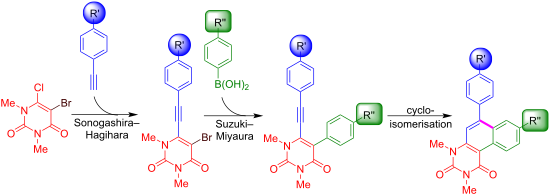
- doublet, m = multiplet; they are further described by their coupling constants J. Infrared spectra (IR) were measured as attenuated total reflection (ATR) experiments using a Nicolet 380 FT-IR spectrometer. The signals were characterised by their wavenumbers and corresponding absorption as very strong (vs
- )-dione (4g). Compound 4g was obtained as a brown solid in 58% yield (58.3 mg, 184 µmol, Rf 0.19 (heptane/ethyl acetate 3:2)); mp 152–154 °C; IR (ATR) ν̃: 1695 (s), 1642 (vs), 1582 (s), 1493 (s), 1440 (s), 1421 (s), 1176 (m), 1079 (m), 756 (s) cm−1; 1H NMR (500 MHz, chloroform-d) δ 7.51–7.48 (m, 2H), 7.45
- acetate 3:2)); mp 187–189 °C; IR (ATR) ν̃: 1708 (s), 1654 (vs), 1574 (s), 1514 (s), 1506 (s), 1446 (s), 1423 (s), 1232 (s), 1158 (s) cm−1; 1H NMR (500 MHz, chloroform-d) δ 7.48–7.44 (m, 2H), 7.26–7.22 (m, 2H), 7.15–7.10 (m, 2H), 7.06–7.02 (m, 2H), 3.70 (s, 3H), 3.44 (s, 3H); 19F NMR (471 MHz, chloroform-d




5th International Symposium on Synthesis and Catalysis (ISySyCat2023)
Beilstein J. Org. Chem. 2024, 20, 2704–2707, doi:10.3762/bjoc.20.227
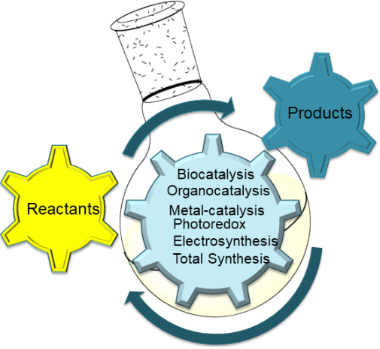
- imidazolium ring formation. The resulting carbene was metalated at the C2 position with Au(I), Cu(I), and Ir(I), obtaining an L-shaped NHC ligand scaffold. Līpiņš et al. introduced a new method for synthesizing 4-azido-6,7-dimethoxy-2-alkyl/arylsulfonylquinazolines, which are key intermediates in the

Transition-metal-free decarbonylation–oxidation of 3-arylbenzofuran-2(3H)-ones: access to 2-hydroxybenzophenones
Beilstein J. Org. Chem. 2024, 20, 2655–2667, doi:10.3762/bjoc.20.223
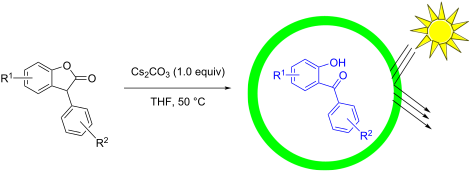
- rearrangement of 2-aryloxybenzaldehydes yielded 2-hydroxybenzophenone [12]. Pd-catalyzed o-hydroxylation of benzophenones gave moderate yield of the title compound, and Br-substituted substrates were found to be not compatible with this method [13]. Various metals (Rh, Cu, Ir etc.) were applied to catalyze the




The scent gland composition of the Mangshan pit viper, Protobothrops mangshanensis
Beilstein J. Org. Chem. 2024, 20, 2644–2654, doi:10.3762/bjoc.20.222
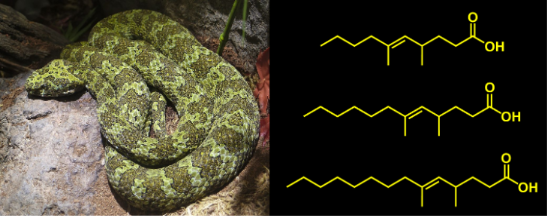
- -dimethylalk-5-enoates in a homologous series from C11–C16, were characterized by GC–MS and GC–IR analysis and various microderivatization reactions including hydrogenation and esterification leading to methyl and pyridylmethyl esters. In addition, dimethyloxazoline formation helped to localize the double bond
- ) were observed with similar mass spectra. The amount of secretion available and the complex mixture did not allow for the isolation of enough material for NMR analysis. Therefore, for the structure elucidation of these unknown compounds, we used different analytical methods, including GC–MS, GC–IR, and
- , Figure S1), confirming the acid functional group in the natural compounds. In support of these data, GC/IR analysis of Dm (Supporting Information File 1, Figure S2) showed strong carbonyl bands at 1741 cm−1 accompanied by two intermediate bands at 1198 cm−1 and 1177 cm−1, characteristic of ester valence


Efficient modification of peroxydisulfate oxidation reactions of nitrogen-containing heterocycles 6-methyluracil and pyridine
Beilstein J. Org. Chem. 2024, 20, 2599–2607, doi:10.3762/bjoc.20.219
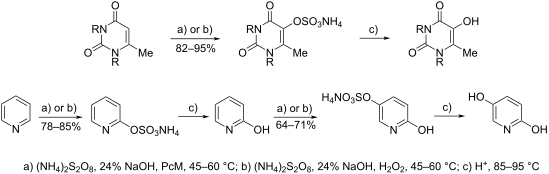
- 13C and 1H NMR spectra are given in parts per million (ppm). Elemental analyses were performed on a CHNS Euro-EA 3000 automatic analyzer. Melting points were determined on combinated Boetius tables. IR spectra were obtained on an IR Prestige-21 Shimadzu spectrophotometer in KBr pellets. Freshly


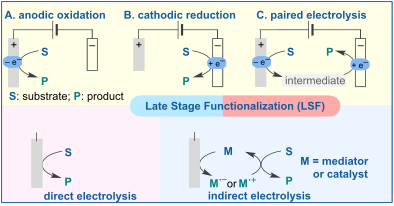
A review of recent advances in electrochemical and photoelectrochemical late-stage functionalization classified by anodic oxidation, cathodic reduction, and paired electrolysis
Beilstein J. Org. Chem. 2024, 20, 2500–2566, doi:10.3762/bjoc.20.214
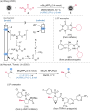
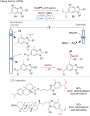
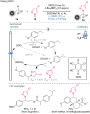
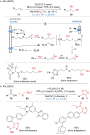
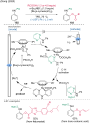
- group. Based on extensive mechanistic studies, they proposed the formation of a formal Ni(IV) complex during the process. Remarkably, nickel proved to be uniquely effective for this protocol, as other transition-metal catalysts based on Cu, Co, Pd, Ir, Ru, and Rh did not catalyze the reaction (Scheme 36
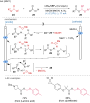
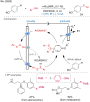
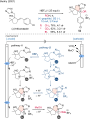
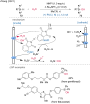
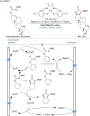
- functionalization of complex molecules without the need for directing groups, thereby simplifying the synthesis process and enhancing the exploration of new drug candidates. 1.3.7 Ir-assisted anodic oxidation. An Ir-electrocatalyzed vinylic C(sp2)–H activation method for the preparation of α-pyrones via annulation
- mechanism. Initially, C–H activation occurs, resulting in the formation of a cyclometalated Ir(III) intermediate. Ligand exchange with the alkyne substrate, followed by migratory insertion, leads to the formation of a seven-membered 18-electron Ir(III) complex. This complex then undergoes reductive




























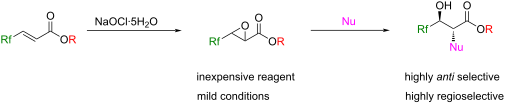
Facile preparation of fluorine-containing 2,3-epoxypropanoates and their epoxy ring-opening reactions with various nucleophiles
Beilstein J. Org. Chem. 2024, 20, 2421–2433, doi:10.3762/bjoc.20.206
- 49.4 (q, J = 2.5 Hz), 52.7 (q, J = 42.2 Hz), 68.0, 121.4 (q, J = 276.0 Hz), 128.5, 128.7, 128.8, 134.3, 165.6; 19F NMR (282.65 MHz, CDCl3) δ −75.12 (d, J = 4.5 Hz); IR (neat) ν: 3944, 3689, 3054, 2987, 2685, 2306, 1756, 1456, 1422, 1382, 1341, 1265, 1169, 1089, 988, 929, 896, 664 cm−1; Anal. calcd for
- –6.81 (m, 4H), 7.26–7.36 (m, 5H); 13C NMR (75.45 MHz, acetone-d6) δ 55.5, 59.3, 67.9, 70.0 (q, J = 30.2 Hz), 114.8, 117.7, 124.1 (q, J = 283.5 Hz), 128.5, 128.6, 128.7, 134.4, 139.5, 154.3, 170.2; 19F NMR (282.65 MHz, CDCl3) δ −76.83 (d, J = 9.0 Hz); IR (KBr) ν: 3454, 3315, 2955, 2924, 2854, 2360, 1741
- = 34.1 Hz), 122.5 (q, J = 282.9 Hz), 128.61, 128.63, 128.8, 134.0, 165.1, 165.6, 167.4; 19F NMR (282.65 MHz, CDCl3) δ −75.84 (d, J = 6.8 Hz); IR (neat) ν: 2987, 1813, 1742, 1457, 1389, 1321,1218, 1182, 1128, 1023, 972, 755 cm−1; HRMS–FAB+ (m/z): [M + H]+ calcd for C16H16F3O6, 361.0893; found, 361.0911





Synthesis, electrochemical properties, and antioxidant activity of sterically hindered catechols with 1,3,4-oxadiazole, 1,2,4-triazole, thiazole or pyridine fragments
Beilstein J. Org. Chem. 2024, 20, 2378–2391, doi:10.3762/bjoc.20.202
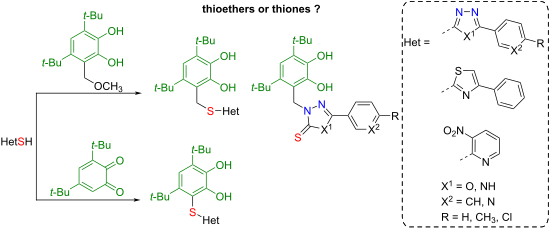
- , compounds 6–9 are products of alkylation of the nitrogen atom of the heterocycle. Thiones 6–9 were obtained in 40–79% yield (Scheme 1,b). The structures of synthesized compounds were confirmed by the spectral methods IR-, 1H NMR, 13C{1H} NMR spectroscopy (Figures S1–S18 in Supporting Information File 1




Tandem diazotization/cyclization approach for the synthesis of a fused 1,2,3-triazinone-furazan/furoxan heterocyclic system
Beilstein J. Org. Chem. 2024, 20, 2342–2348, doi:10.3762/bjoc.20.200
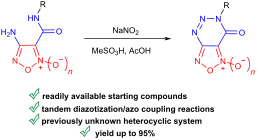
- , indicating that the developed tandem protocol does not depend on the presence of the N-oxide moiety in the parent heterocycle. All synthesized triazinones 1 and 7 were fully characterized by IR, 1H and 13C NMR spectroscopy, and high-resolution mass spectrometry. The structure of compounds 1b and 7h was
- . Supporting Information Supporting Information File 96: Experimental procedures, characterization data of all products, copies of 1H, 13C NMR, 15N spectra of new compounds, DSC curves,X-ray crystallographic data and copies of IR spectra. Acknowledgements The crystal structure determination was performed at


Synthesis and reactivity of the di(9-anthryl)methyl radical
Beilstein J. Org. Chem. 2024, 20, 2254–2260, doi:10.3762/bjoc.20.193
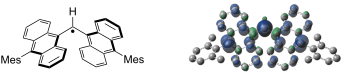
- Figure 6a and 6b, respectively. The DAntM radical exhibited a forbidden near-IR (NIR) band centered at 900 nm and relatively intense bands at 580 and 540 nm, whose spectral pattern is similar to the spectrum pattern of the TAntM radical [17]. The result of TD-DFT calculations could reproduce the obtained


Metal-free double azide addition to strained alkynes of an octadehydrodibenzo[12]annulene derivative with electron-withdrawing substituents
Beilstein J. Org. Chem. 2024, 20, 2234–2241, doi:10.3762/bjoc.20.191
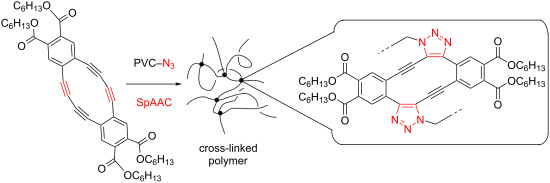
- recorded on a JASCO FT/IR-4100 spectrometer in the range from 4000 to 600 cm−1. MALDI–TOF mass spectra were measured on a Shimadzu/Kratos AXIMACFR mass spectrometer equipped with a nitrogen laser (λ = 337 nm) and pulsed ion extraction, which was operated at an accelerating potential of 20 kV. THF solutions




Allostreptopyrroles A–E, β-alkylpyrrole derivatives from an actinomycete Allostreptomyces sp. RD068384
Beilstein J. Org. Chem. 2024, 20, 1981–1987, doi:10.3762/bjoc.20.174
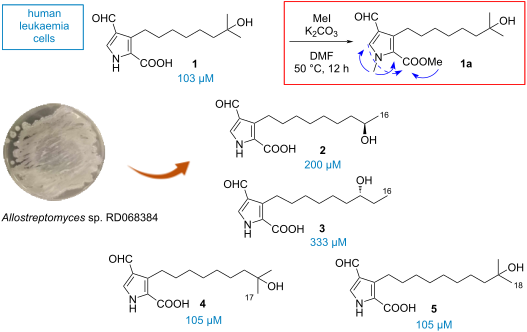
- total 6.5 mg of 1, 3.1 mg of 2, 2.6 mg of 3, 7.2 mg of 4, and 5.6 mg of 5 from 12 L culture. Allostreptopyrrole A (1): greenish yellow amorphous solid; UV (MeOH) λmax nm (log ε) 234 (3.86), 273 sh (3.44); IR (ATR) νmax: 3275, 2964, 2928, 2855, 1658, 1554, 1418 cm−1; 1H and 13C NMR data, see Table 1
- ; HRESITOFMS (m/z): [M – H]– calcd for C15H22NO4, 280.1554; found, 280.1550. Allostreptopyrrole B (2): greenish yellow amorphous solid; +15 (c 0.10, MeOH); UV (MeOH) λmax, nm (log ε): 235 (3.87), 273 sh (3.49); IR (ATR) νmax: 3263, 2964, 2925, 2854, 1658, 1556, 1417 cm−1; 1H and 13C NMR data, see Table 2
- ; HRESITOFMS (m/z): [M – H]– calcd for C15H22NO4, 280.1554; found, 280.1554. Allostreptopyrrole C (3): greenish yellow amorphous solid; −6.1 (c 0.10, MeOH); UV (MeOH) λmax, nm (log ε): 235 (3.82), 276 sh (3.46); IR (ATR) νmax: 3265, 2925, 2856, 1657, 1555, 1417 cm−1; 1H and 13C NMR data, see Table 2


1,2-Difluoroethylene (HFO-1132): synthesis and chemistry
Beilstein J. Org. Chem. 2024, 20, 1955–1966, doi:10.3762/bjoc.20.171
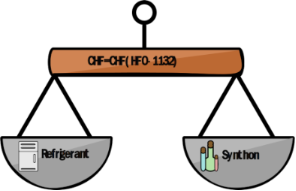
- catalyst (Pd, Pd, Pt, Rh, Ru, Ir, Ni/Cu, Ag, Au, Zn, Cr, Co, Scheme 5) [62][63]. Further, 1,2-Dichloroethylene was reacted with hydrogen fluoride in the presence of metal fluorides or transition metals (Cr, Al, Co, Mn, Ni, Fe) to form 1,2-difluoroethylene (Scheme 6) [56][58]. In patents [59][60], an exotic
- is not clear which of these can be used for the commercial production of HFO-1132. Physical properties of HFO-1132 The physical properties of the E- and Z-isomers of HFO-1132 are summarized in Table 1 [47][64][65][66]. IR-spectral data of (E)- and (Z)-HFO-1132 can be found in references [67] and [50


Regioselective alkylation of a versatile indazole: Electrophile scope and mechanistic insights from density functional theory calculations
Beilstein J. Org. Chem. 2024, 20, 1940–1954, doi:10.3762/bjoc.20.170
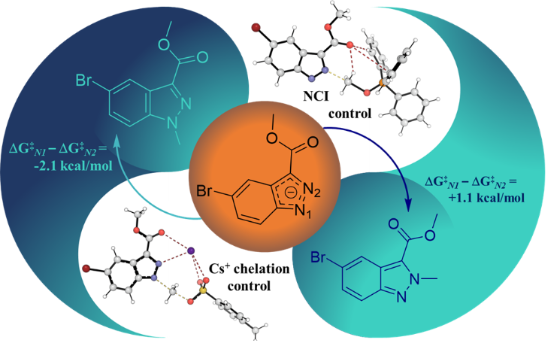
- (dd, J = 8.9, 1.9 Hz, 1H), 4.17 (s, 3H), 3.92 (s, 3H); 13C{1H} NMR (75 MHz, DMSO-d6) δ 161.8, 139.4, 132.7, 129.4, 124.1, 123.0, 116.0, 113.0, 51.8, 36.6; IR (KBr disk): 1722, 1466, 1433, 1395, 1354, 1289, 1200, 1183, 1153 cm−1; HRESIMS (m/z): [M + H]+ calcd for C10H10BrN2O2+, 268.9921; found
- (s, 3H); 13C{1H} NMR (75 MHz, DMSO-d6) δ 159.4, 144.7, 129.3, 123.6, 123.2, 122.8, 120.0, 118.0, 64.2, 52.2, 41.4, 14.4, 13.9; IR (KBr disk): 1708, 1459, 1442, 1392, 1326, 1252, 1196 cm−1; HRESIMS (m/z): [M + H]+ calcd for C10H10BrN2O2+, 268.9921; found, 268.9918. Indazole-containing bioactive
- : Characterization of all compounds (1H NMR, 13C NMR, LC–MS, IR), and crystallographic methods and data for products P1 and P2. Supporting Information File 23: DFT methods, relative energy comparisons, TS imaginary frequencies, and XYZ coordinates. Supporting Information File 24: GoodVibes outputs. Acknowledgements


Synthesis and characterization of 1,2,3,4-naphthalene and anthracene diimides
Beilstein J. Org. Chem. 2024, 20, 1767–1772, doi:10.3762/bjoc.20.155
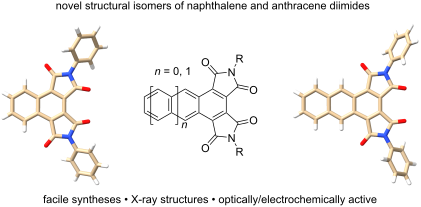
- 1,2,5,6- [9][10] and 2,3,6,7-naphthalene diimides (NDIs) have been produced and utilized in electronically active polymers (Figure 1). The linear extension of 1,4,5,8-naphthalene diimide to produce tetracene [11] and hexacene [12] diimides, some with interesting properties such as near-IR absorption, has


New triazinephosphonate dopants for Nafion proton exchange membranes (PEM)
Beilstein J. Org. Chem. 2024, 20, 1623–1634, doi:10.3762/bjoc.20.145
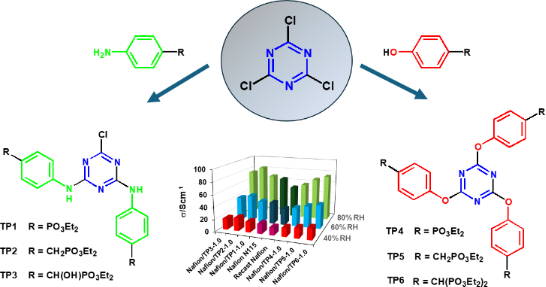
- 400 (1H 400 MHz, 13C NMR 100 MHz, 31P 162 MHz) spectrometer, with the chemical shifts (δ) indicated in ppm, and coupling constants (J) in Hz. The FTIR characterization of the dopants was done on a PerkinElmer FT-IR Spectrum BX Fourier Transform spectrometer, using KBr discs, and the characterization




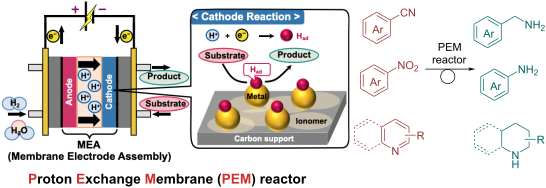
Electrocatalytic hydrogenation of cyanoarenes, nitroarenes, quinolines, and pyridines under mild conditions with a proton-exchange membrane reactor
Beilstein J. Org. Chem. 2024, 20, 1560–1571, doi:10.3762/bjoc.20.139
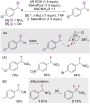
- , entry 2). Pt/C afforded the best result (90% current efficiency, Table 3, entry 3). To increase the yield, the reaction was carried out until 4a was consumed. After 7 h of electrolysis (23.2 F mol−1), 4a was completely consumed and 5a was obtained in 82% yield. Although Ir/C was inefficient (Table 3
- F mol−1 of electricity should be required ideally to reduce quinoline (6a) to 1,2,3,4-tetrahydroquinoline (7a), 4.0 F mol−1 of electricity was applied for the reactions. Pd/C, Ir/C, Ru/C, and Pt/C were used as cathode catalysts, and 3–5% yields of 7a were obtained by the use of each catalyst (Table


Benzylic C(sp3)–H fluorination
Beilstein J. Org. Chem. 2024, 20, 1527–1547, doi:10.3762/bjoc.20.137

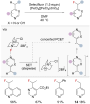
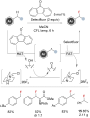
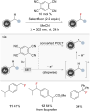
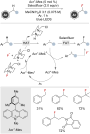
- ]. Photoexcitation of the Ir(III) catalyst I with blue light resulted in the photoexcited Ir(III)* catalyst, which was capable of performing a single-electron reduction on N-acyloxyphthalimide, promoting decarboxylation, releasing CO2, a methyl radical, anionic phthalimide and an Ir(IV) species. The resultant methyl
- radical displayed high affinity for benzylic HAT, in turn affording a benzylic radical and methane. The Ir(IV) species then oxidised the benzylic radical to the benzylic cation regenerating the ground-state iridium species, completing the catalytic cycle. Attack of the benzylic cation by fluoride, from
- , generated from reduction of tert-butyl benzoperoxoate (TBPB), selective benzylic HAT afforded the benzylic radical. Subsequent oxidation by Ir(IV) generated the benzylic cation that could be trapped by fluoride to afford the benzyl fluorides. An impressive scope with broad functional group tolerance



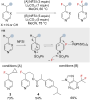

















Tetrabutylammonium iodide-catalyzed oxidative α-azidation of β-ketocarbonyl compounds using sodium azide
Beilstein J. Org. Chem. 2024, 20, 1510–1517, doi:10.3762/bjoc.20.135
- Research Center “RERI uasb”. All NMR spectra were referenced on the solvent residual peak (CDCl3: δ = 7.26 ppm for 1H NMR, δ = 77.16 ppm for 13C NMR,19F NMR unreferenced). IR spectra were recorded on a Bruker Alpha II FTIR spectrometer with diamond ATR-module using the OPUS software package. HRMS spectra
- = 17.2 Hz, 1H), 2.99 (d, J = 17.2 Hz, 1H), 1.45 (s, 9H); 13C NMR (75 MHz, CDCl3, 298 K, δ/ppm) 198.1, 167.4, 152.3, 136.4, 133.3, 128.4, 126.5, 125.6, 84.6, 70.6, 38.6, 28.0; IR (neat, FT-ATR, 298 K, ν̃/cm−1): 2984, 2928, 2853, 2110, 1747, 1736, 1718, 1604, 1589, 1548, 1466, 1431, 1397, 1372, 1353, 1326
- , 1H), 7.48 (t, J = 7.5 Hz, 1H), 4.11 (d, J = 17.9 Hz, 1H), 3.99 (d, J = 17.9 Hz, 1H), 1.49 (s, 9H); 13C NMR (126 MHz, CDCl3, 298 K, δ/ppm) 188.4, 162.0, 150.1, 137.0, 132.9, 129.1, 126.5, 126.2, 96.7, 86.1, 37.5, 27.8; IR (neat, FT-ATR, 298 K, ν̃/cm−1): 2984, 2930, 2878, 2854, 1748, 1719, 1656, 1604


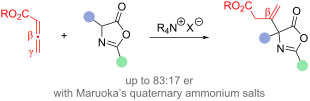
Towards an asymmetric β-selective addition of azlactones to allenoates
Beilstein J. Org. Chem. 2024, 20, 1504–1509, doi:10.3762/bjoc.20.134
- Thermo Fisher Scientific LTQ Orbitrap XL spectrometer with an Ion Max API source and analyses were made in the positive ionization mode if not otherwise stated. Infrared (IR) spectra were recorded on a Bruker Alpha II FTIR spectrometer with diamond ATR-module using the OPUS software package and are
- ), 3.52–3.16 (m, 4H), 1.15 (t, J = 7.1 Hz, 3H); 13C NMR (75 MHz, CDCl3, 298.0 K) δ/ppm = 177.4, 171.0, 160.3, 139.1, 133.8, 132.6, 130.5, 128.6, 128.0, 127.8, 127.3, 125.6, 118.1, 75.9, 60.9, 44.9, 39.3, 13.9; IR (neat): 3080, 3070, 2917, 1815, 1732, 1656, 1480, 1175, 1093, 1059, 1030, 974, 893, 694 cm−1


Photoswitchable glycoligands targeting Pseudomonas aeruginosa LecA
Beilstein J. Org. Chem. 2024, 20, 1486–1496, doi:10.3762/bjoc.20.132
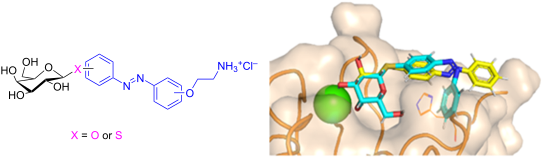
- was stirred at room temperature until total deprotection. The solution was neutralized using Amberlite IR-120 (H), filtered, concentrated and the crude material used without further purification to give the desired product in quantitative yield. (A) Selected monovalent inhibitors for PA LecA and (B


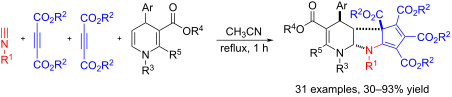
Rapid construction of tricyclic tetrahydrocyclopenta[4,5]pyrrolo[2,3-b]pyridine via isocyanide-based multicomponent reaction
Beilstein J. Org. Chem. 2024, 20, 1436–1443, doi:10.3762/bjoc.20.126
- , 58.2, 56.7, 55.2, 53.3, 52.2, 51.3, 50.4, 50.2, 32.4, 31.5, 31.2, 26.2, 25.7, 25.6, 18.2 ppm; IR (KBr) ν: 3435, 2931, 2862, 2360, 1737, 1698, 1587, 1547, 1435, 1385, 1335, 1251, 1204, 1125, 1092, 1001, 977, 895, 853, 792 cm−1; HRESIMS (m/z): [M + Na]+ calcd. for C41H46NaN2O11, 765.2994; found, 765.2993


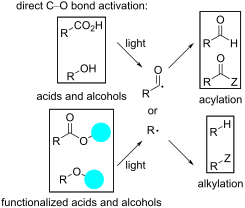
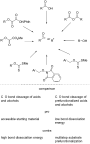
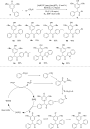
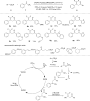
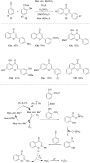
Generation of alkyl and acyl radicals by visible-light photoredox catalysis: direct activation of C–O bonds in organic transformations
Beilstein J. Org. Chem. 2024, 20, 1348–1375, doi:10.3762/bjoc.20.119
- the SET transfer process of PPh3 and quenching of photoexcited *[Ir(dF(CF3)ppy)2(bpy)]PF6 by PPh3. Fluorinated organic compounds are widely used in pharmaceuticals and pesticides. Therefore, it is crucial to diversify organic scaffolds by addition of fluorinated groups or by defluorination. In 2020
- iridium photocatalyst [Ir(dF(CF3)ppy)2(dtbbpy)]PF6 leads to excited-state *[Ir(III)], Ered (*[Ir(III)]/[Ir(II)]) = +1.21 V, possessing sufficient energy to oxidize PPh3, forming the triphenylphosphine radical cation. Subsequently, benzoic acid undergoes deprotonation facilitated by a base, producing
- product. The photomediated formation of acyl radicals directly from acids mostly employs DMDC or phosphines (e.g., PPh3, PMe2Ph) as additives and [Ir(III)] as photocatalyst. In 2022, Chu and co-workers [32] developed a protocol to form acyl radicals directly from acids utilizing Ph2S as activator and the






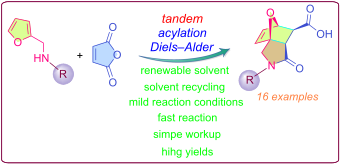
Sustainable tandem acylation/Diels–Alder reaction toward versatile tricyclic epoxyisoindole-7-carboxylic acids in renewable green solvents
Beilstein J. Org. Chem. 2024, 20, 1308–1319, doi:10.3762/bjoc.20.114
- in Flawil, Switzerland). The IR spectra were measured by Spectrum Two FT-IR spectrometer (PerkinElmer, Massachusetts, USA). The NMR spectra were measured using Bruker Ultrashield Plus Biospin 400 MHz NMR spectrometer and A600a Agilent DD2 600 MHz NMR spectrometer (Santa Clara, California, USA) and