

Search results
Search for "yellow" in Full Text gives 822 result(s) in Beilstein Journal of Organic Chemistry. Showing first 200.
Asymmetric synthesis of fluorinated derivatives of aromatic and γ-branched amino acids via a chiral Ni(II) complex
Beilstein J. Org. Chem. 2025, 21, 659–669, doi:10.3762/bjoc.21.52
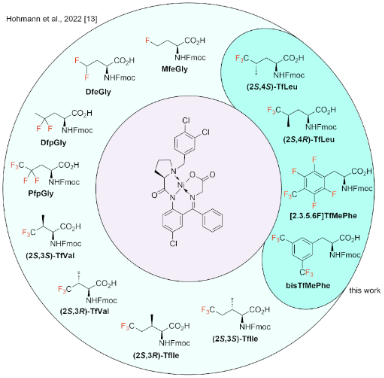
- (4 × 40 mL), dried over Na2SO4, filtered, and concentrated in vacuo. The crude material was purified by flash column chromatography (SiO2, 0 → 10% MeOH in DCM) to yield 2 as a yellow solid (3.36 g, 9.26 mmol, 67%, 91% purity determined by analytical HPLC). 1H NMR (600 MHz, CDCl3) δ 7.77 (d, J = 7.6


Entry to 2-aminoprolines via electrochemical decarboxylative amidation of N‑acetylamino malonic acid monoesters
Beilstein J. Org. Chem. 2025, 21, 630–638, doi:10.3762/bjoc.21.50
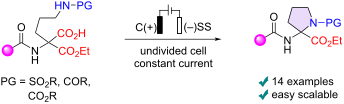
- conditions at room temperature, and 2.0 F charge (if not otherwise noticed) with current density of 12 mA/cm2 was passed through the colorless reaction solution. The resulting clear, colorless (sometimes pale yellow) solution was concentrated under reduced pressure and the crude product was purified by



Deep-blue emitting 9,10-bis(perfluorobenzyl)anthracene
Beilstein J. Org. Chem. 2025, 21, 515–525, doi:10.3762/bjoc.21.39
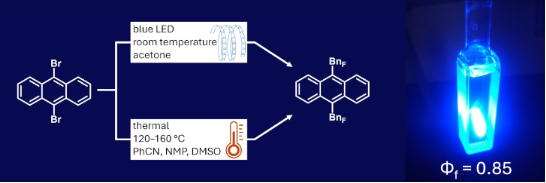
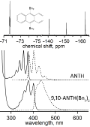
- removed in vacuo. Yield (NMR): 9-Br-10-BnF-ANTH (22%), 9,10-(BnF)2-ANTH (45%). Product characterization and NMR spectra 9-ANTH(BnF): white/yellow solid; isolated yield 14% based on ANTH; mp 177–179 °C; 19F NMR (CDCl3, δ/ppm): −73.61 (t, J = 17.7 Hz, 2F), −140.94 (m, 2F), −152.56 (t, J = 20.4 Hz, 1F
- ), −163.31 (m, 2F); 1H NMR (δ/ppm): 8.63 (s, 1H), 8.34 (d, J = 7.83 Hz, 2H), 8.06 (d, J = 7.72 Hz, 2H), 7.49 (m, 4H); EIMS (m/z): [M − H]+ calcd for 393.051; found, 393.120 (exp), 9,10-ANTH(BnF)2: white/yellow solid; isolated yield 17% based on ANTH; mp 211–214 °C; 19F NMR (CDCl3, δ/ppm): −71.73 (t, J
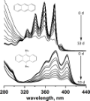
- stacked columns of ANTH moieties are colored red and green, BnF groups are colored in yellow, and H atoms have been omitted for clarity. In the off-side view (bottom right), both, F and H atoms are omitted for a better overview. Absorption spectra of ANTH and 9,10-ANTH(BnF)2 in CH2Cl2 recorded over the





Unprecedented visible light-initiated topochemical [2 + 2] cycloaddition in a functionalized bimane dye
Beilstein J. Org. Chem. 2025, 21, 500–509, doi:10.3762/bjoc.21.37
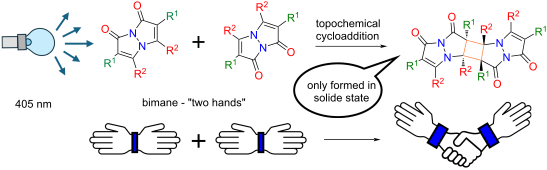
- , the crystals changed their appearance from light yellow to dark orange within 15 minutes. An alternative method for solid-state irradiation involved dissolving 5–10 mg of the bimane in a minimal amount of acetone, which was then evaporated in a 25 mL round-bottomed flask, forming a seemingly amorphous


Synthesis of N-acetyl diazocine derivatives via cross-coupling reaction
Beilstein J. Org. Chem. 2025, 21, 490–499, doi:10.3762/bjoc.21.36
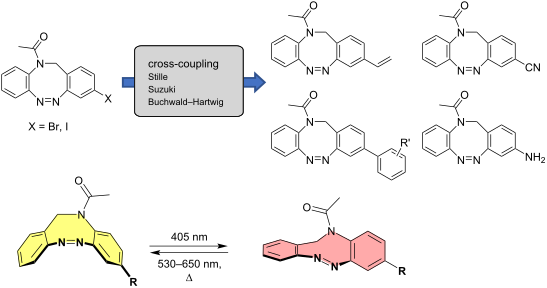
- diazocine attached to glutamate to form a photoswitchable neurotransmitter [10]. The halogen-substituted N-acetyl diazocines 2–4 were used as the starting compounds for further derivatization via Pd-catalyzed cross-coupling reactions. Solutions of the Z isomers are yellow. The E isomers are red. Synthesis


Identification and removal of a cryptic impurity in pomalidomide-PEG based PROTAC
Beilstein J. Org. Chem. 2025, 21, 407–411, doi:10.3762/bjoc.21.28
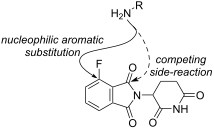
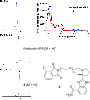
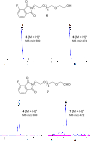
- shoulder peak (Figure 2, marked with asterisk). A close examination of the UV profile indicated the presence of an impurity. Its removal requires repetitive prep-HPLC purifications that are inefficient and time-consuming. The isolated impurity lacks the characteristic fluorescent yellow color of




Synthesis, structure, ionochromic and cytotoxic properties of new 2-(indolin-2-yl)-1,3-tropolones
Beilstein J. Org. Chem. 2025, 21, 358–368, doi:10.3762/bjoc.21.26
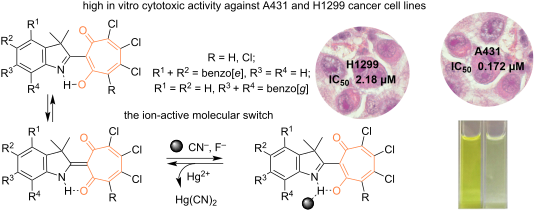
- -n-butylammonium salts (TBAX: F, Cl, Br, I, CN). Exclusively cyanide and fluoride anions lead to a naked-eye effect due to a change of the solution’s colour from yellow-orange to pale yellow (Figure 5). At the same time, a new fluorescence band appears at 420–440 nm. The Stokes shifts of fluorescence
- equation formalism (IEFPCM) [38]. Biological experiments The MTT colorimetric test for cell viability assessment is based on the reduction by NADPH-H-dependent cellular oxidoreductase enzymes of the tetrazolium dye 3-(4,5-dimethylthiazol-2-yl)-2,5-diphenyltetrazolium bromide, which has yellow color, into




Synthesis, characterization, antimicrobial, cytotoxic and carbonic anhydrase inhibition activities of multifunctional pyrazolo-1,2-benzothiazine acetamides
Beilstein J. Org. Chem. 2025, 21, 348–357, doi:10.3762/bjoc.21.25
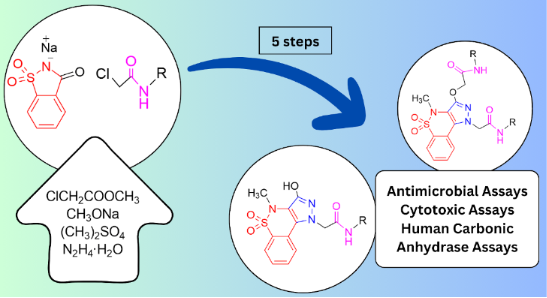
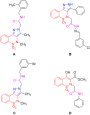
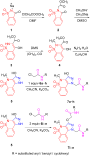
- . Yellow-colored precipitates of product 5 were formed which were separated via filtration followed by washing with excess of water. After drying, recrystallization was done with ethanol. Mp 265–266 °C; yield: 221 mg (88%). Synthesis of pyrazolo-1,2-benzothiazine-N-aryl/benzyl/cyclohexylacetamides 7a–h


Antibiofilm and cytotoxic metabolites from the entomopathogenic fungus Samsoniella aurantia
Beilstein J. Org. Chem. 2025, 21, 327–339, doi:10.3762/bjoc.21.23
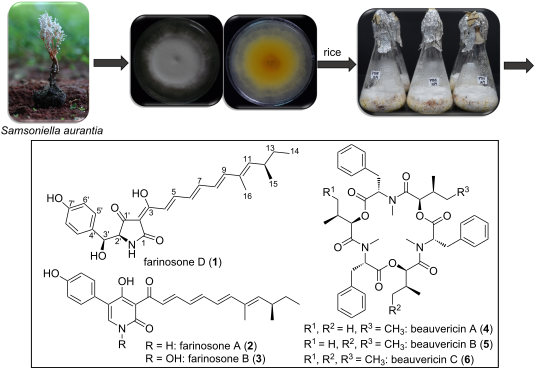
- (Figure 1) was purified as a yellow amorphous solid. The molecular formula of 1 was determined as C25H29NO5 indicating twelve degrees of unsaturation based on the HRESIMS that revealed a protonated molecule at m/z 424.2126 [M + H]+ (calculated 424.2118) and a sodium adduct at m/z 446.1947 [M + Na
- ]+ (calculated 446.1962). The UV–vis spectrum of 1 (Figure S3, Supporting Information File 1) revealed a prominent absorption peak (λmax) at 434 nm in the visible region reflected by being yellow-colored and suggesting the presence of an extended conjugated π-system in its structure. The 1H NMR and 1H–1H COSY
- that it is a related derivative to two yellow pyridone pigments, farinosones A and B, that were previously reported from Cordyceps farinosa syn. Paecilomyces farinosus [8][9]. A detailed comparison of the 1H and 13C NMR data of 1 and farinosones A/B revealed that instead of a deshielded pyridone


Effect of substitution position of aryl groups on the thermal back reactivity of aza-diarylethene photoswitches and prediction by density functional theory
Beilstein J. Org. Chem. 2025, 21, 242–252, doi:10.3762/bjoc.21.16
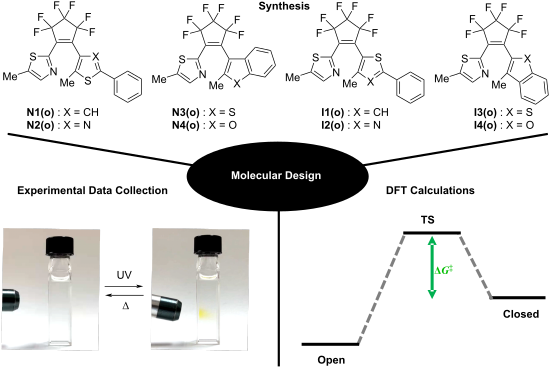
- confirmed that the colorless solution of N4(o) turned yellow upon irradiation with UV light and returned to the initial color upon removal of the irradiation. The photophysical properties of N3, N4, and I1–I4 are summarized in Table 1 together with the data of N1 and N2. Thermal back reactivity in n-hexane
- the absorption spectra upon UV irradiation. Notably, compound N4 turns bright yellow under UV light, adding a new color to the photochromic reaction of azadiarylethenes. The analysis of the thermal back reaction revealed activation parameters and highlighted the influence of the substitution position
- -hexane at 253 K for N3 and 203 K for I3: open-ring isomer (black line) and under irradiation at 365 nm (yellow line). (c) Photochromic reaction of N4 in n-hexane at room temperature ([N4] = 7.0 × 10⁻⁴ M). Absorbance decay curves and first-order kinetics profiles for (a,b) N3 and (d,e) I3 in n-hexane at



Synthesis, structure and π-expansion of tris(4,5-dehydro-2,3:6,7-dibenzotropone)
Beilstein J. Org. Chem. 2025, 21, 1–7, doi:10.3762/bjoc.21.1
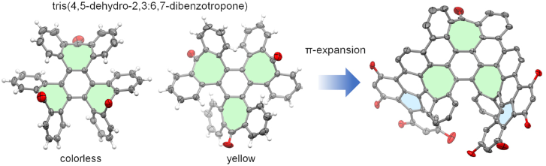
- analysis of it with X-ray crystallography. Interestingly, it is observed that tris(4,5-dehydro-2,3:6,7-dibenzotropone) crystallized from its solution in hexane resulting in colorless and yellow crystal polymorphs, where it adopts conformations of approximate Cs and C2 symmetry, respectively. Furthermore
- yellow crystals from the same solution. X-ray crystallography reveals that in the colorless crystal [27], compound 1 adopts a conformation with approximate Cs symmetry, with the plane of symmetry (σ) shown in the top view in Figure 2a. The structure of Cs-1 in this crystal is essentially the same as that
- ring of Cs-1 is essentially flat, exhibiting the largest torsion angle of 8.15° (C4–C5–C6–C1). Unlike the colorless crystal, the yellow crystal consists of conformers of 1 with approximate C2 symmetry [27]. They exist as a pair of enantiomers, namely, (P,M,P)-1 and (M,P,M)-1, where P and M represent


Efficient synthesis of fluorinated triphenylenes with enhanced arene–perfluoroarene interactions in columnar mesophases
Beilstein J. Org. Chem. 2024, 20, 3263–3273, doi:10.3762/bjoc.20.270
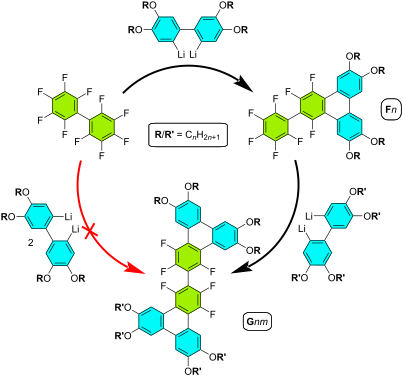
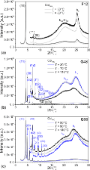
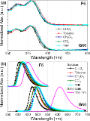
- electronic structures of the triphenylenes, and their supramolecular arene–perfluoroarene slipped stacks (J-aggregate) result in G66 with orange-yellow color fluorescence in the solid state. Fluorotriphenylene derivatives and their nonfluorinated homologs obtained by SNFAr from 2,2'-dilithio-4,4',5,5



Tunable full-color dual-state (solution and solid) emission of push–pull molecules containing the 1-pyrindane moiety
Beilstein J. Org. Chem. 2024, 20, 3016–3025, doi:10.3762/bjoc.20.251
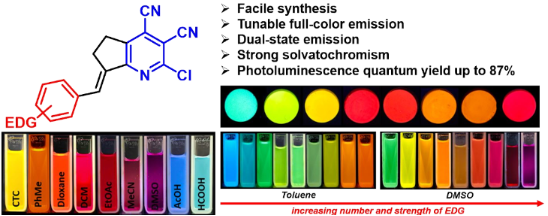
- the E-configuration. Spectral–luminescence properties Compounds 1 form colored crystals, from pale-yellow (i.e., 1a) to almost black (i.e., 1h). They are soluble and luminescent in most common organic solvents. Solvatochromism of stilbazole 1c, containing a para-methoxy group, was studied first (see


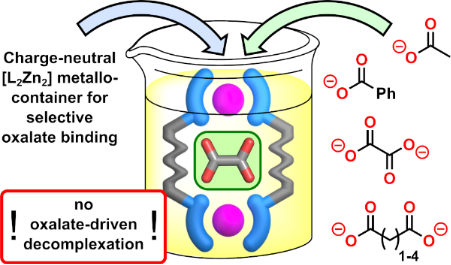
Tailored charge-neutral self-assembled L2Zn2 container for taming oxalate
Beilstein J. Org. Chem. 2024, 20, 3007–3015, doi:10.3762/bjoc.20.250
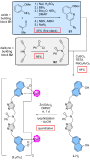
- yellow solid from this process in quantitative yield and the complex is soluble in DMSO as intended. The signal of the methylene group (Hf) adjacent to the quinolate moiety shows splitting upon complex formation (Figures S3 and S4 in Supporting Information File 1). This observation is a known indication



N-Glycosides of indigo, indirubin, and isoindigo: blue, red, and yellow sugars and their cancerostatic activity
Beilstein J. Org. Chem. 2024, 20, 2840–2869, doi:10.3762/bjoc.20.240
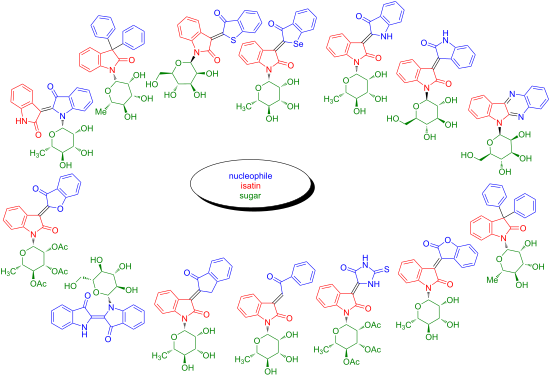
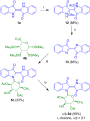
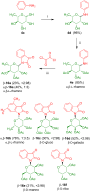
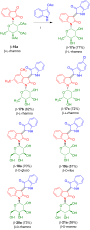
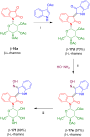
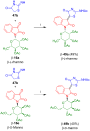
- their activity against various types of cancer. N-Glycosides of indigo, indirubin, and isoindigo, blue, red, and yellow sugars, turned out to be of special interest because of their high cancerostatic activity and structural novelty. The present article provides an account on the synthesis and
- ][9][10]. In this context, the best CDK2 inhibitory activities were observed for indirubin-derived oximes [11]. Yellow colored isoindigo received a lot of attention as constituent of polymers applied as semi-conducting materials, organic light emitting materials (OLED), and for related applications
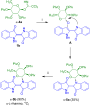
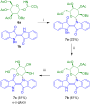
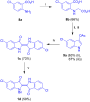
- , indirubin, and isoindigo which can be regarded as blue, red, and yellow sugars, respectively. Review Indigo-N-glycosides (blue sugars) In 2002, Laatsch and Maskey reported the isolation of the akashins A, B and C, indigo-N-glycosides, from terrestric Streptomyces (Scheme 2) [17][18]. These natural products











Synthesis of tricarbonylated propargylamine and conversion to 2,5-disubstituted oxazole-4-carboxylates
Beilstein J. Org. Chem. 2024, 20, 2827–2833, doi:10.3762/bjoc.20.238

- ), the mixture was concentrated under reduced pressure. The residue was purified by column chromatography on silica gel (eluent: hexane/ethyl acetate 70:30, Rf 0.55) to afford diethyl 2-[(4-methylbenzoyl)amino]-2-(phenylethynyl)propanedioate (4a, 122 mg, 0.31 mmol, 78% yield) as yellow oil. 1H NMR (400


Investigation of a bimetallic terbium(III)/copper(II) chemosensor for the detection of aqueous hydrogen sulfide
Beilstein J. Org. Chem. 2024, 20, 2818–2826, doi:10.3762/bjoc.20.237
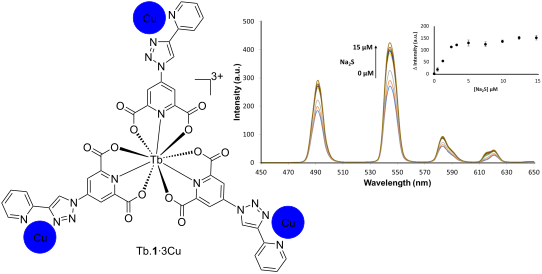
- equation; LoD = yB + 3sB. yB is the signal associated with the blank and sB corresponds to the standard deviation of the blank [22][23]. LoD: [Tb.1·3Cu]3+ 0.63 μM, λem = 544 nm. Previously reported lanthanide complexes [12][16][17]. Absorption (red line), excitation (yellow line, λem = 615 nm), and


Synthesis of spiroindolenines through a one-pot multistep process mediated by visible light
Beilstein J. Org. Chem. 2024, 20, 2722–2731, doi:10.3762/bjoc.20.230
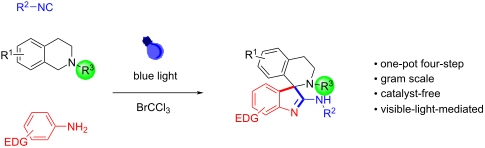
- °C at 451 nm (blue LEDs) under magnetic stirring for 24 h. The reaction mixture was treated with Et3N (3 equiv, 1.44 mmol, 200 µL), concentrated and the residue was purified by column chromatography on silica gel with PE/Et2O (from 85:15 to 75:25) to give 3a (121 mg, 61%), as yellow oil; IR (ATR) ν̃




Synthesis of fluoroalkenes and fluoroenynes via cross-coupling reactions using novel multihalogenated vinyl ethers
Beilstein J. Org. Chem. 2024, 20, 2691–2703, doi:10.3762/bjoc.20.226

- purified by column chromatography and preparative TLC (hexane only), and obtained in 96% yield (122.0 mg) as a pale yellow oil; 1H NMR (400 MHz, CDCl3) δ 7.04–7.22 (m, 2H), 7.26–7.50 (m, 6H), 7.55–7.69 (m, 2H); 13C NMR (100 MHz, CDCl3) δ 101.4 (d, J = 30.9 Hz), 102.5 (d, J = 48.0 Hz), 116.5 (d, J = 3.8 Hz
- chromatography and preparative TLC to afford 3. (3-Chloro-4-fluoro-4-phenoxybut-3-en-1-yn-1-yl)trimethylsilane (3a): Reaction time was 19 h. 3a was purified by column chromatography (pentane only), and obtained in 80% yield (107.2 mg) as a yellow oil; 1H NMR (400 MHz, CDCl3) δ 0.13 (s) and 0.24 (s) (9H), 7.08 (d


Photoluminescence color-tuning with polymer-dispersed fluorescent films containing two fluorinated diphenylacetylene-type fluorophores
Beilstein J. Org. Chem. 2024, 20, 2682–2690, doi:10.3762/bjoc.20.225
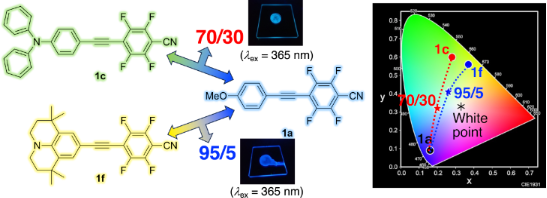
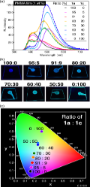
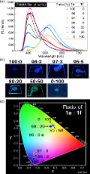
- and effective luminescence color-tuning method is proposed to investigate the photoluminescence behavior of two-component polymer dispersion films blended with two types of fluorinated diphenylacetylenes, namely blue- and yellow- or red-fluorescent fluorinated diphenylacetylenes. It is confirmed that
- if blue and green–yellow or yellow fluorophores are blended in appropriate ratios, a binary blend with color coordinates (0.20, 0.32) can be achieved, which approaches the white point of pure white emission. These findings contribute to the development of effective lighting and display devices as new
- has been severely delayed [4][5][6]. However, since Tang et al. first reported the aggregation-induced emission phenomenon in 2001 [7], the development of solid-state light-emitting materials has accelerated significantly [8][9][10]. Many photoluminescent materials that emit blue, green, and yellow


The scent gland composition of the Mangshan pit viper, Protobothrops mangshanensis
Beilstein J. Org. Chem. 2024, 20, 2644–2654, doi:10.3762/bjoc.20.222
- column chromatography [28]. Yellow oil: 1.95 g (45% over 2 steps); 1H NMR (CDCl3, 300 MHz) δ 9.64 (s, 1H), 3.68 (s, 3H), 2.40 (m, 3H), 2.07 (m, 1H), 1.70 (m, 1H), 1.13 (d, J = 7 Hz, 3H); 13C NMR (CDCl3, 75 MHz) δ 200.9, 173.4, 51.6, 45.5, 31.2, 25.3, 13.2; EIMS (70 eV) m/z (%): 116 (10), 113 (15), 112


Applications of microscopy and small angle scattering techniques for the characterisation of supramolecular gels
Beilstein J. Org. Chem. 2024, 20, 2608–2634, doi:10.3762/bjoc.20.220


Efficient modification of peroxydisulfate oxidation reactions of nitrogen-containing heterocycles 6-methyluracil and pyridine
Beilstein J. Org. Chem. 2024, 20, 2599–2607, doi:10.3762/bjoc.20.219
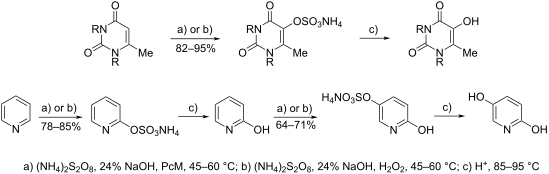
- brown color. After recrystallization from ethanol, 1.11 g (90%) of pyridine 9 were obtained as a light yellow powder. Mp 108–110 °С; 1H NMR (CDCl3) δ 6.16 (dd, 1H, С5H), 6.38 (d, 1H, С3H), 7.38 (d, 1H, С6H), 7.40 (dd, 1H, С4H), 11.5 (s, 1H, C1-OH); 13С NMR (CDCl3) δ 104.8 (С4), 119.7 (С3), 135.2 (С6


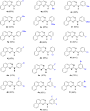
Synthesis and cytotoxicity studies of novel N-arylbenzo[h]quinazolin-2-amines
Beilstein J. Org. Chem. 2024, 20, 2592–2598, doi:10.3762/bjoc.20.218
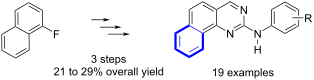
- reduced pressure to afford crude compound 2 as pale-yellow solid (65% yield). Its NMR data are in agreement with literature [5]. 1H NMR (400 MHz, DMSO-d6, δ ppm) 10.49 (s, 1H), 8.26 (d, J = 8.4 Hz, 1H), 8.10 (d, J = 8.0 Hz, 1H), 7.90 (d, J = 8.8 Hz, 1H), 7.84–7.74 (m, 3H). Step 2: Synthesis of benzo[h


Base-promoted cascade recyclization of allomaltol derivatives containing an amide fragment into substituted 3-(1-hydroxyethylidene)tetronic acids
Beilstein J. Org. Chem. 2024, 20, 2585–2591, doi:10.3762/bjoc.20.217
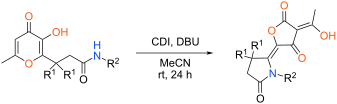
- -ylidene)furan-2,4(3H,5H)-dione (4a). Pale yellow powder; yield 62% (0.25 g); mp 121–123 °C; 1H NMR (300 MHz, DMSO-d6) δ 7.31–7.13 (m, 5H), 4.34 (t, J = 7.5 Hz, 2H), 2.74 (t, J = 7.6 Hz, 2H), 2.56–2.48 (m, 2H in DMSO), 2.46 (s, 3H), 2.14 (t, J = 11.8 Hz, 2H), 1.64–1.54 (m, 3H), 1.41–1.09 (m, 5H); 13C NMR