
Search results
Search for "visible" in Full Text gives 661 result(s) in Beilstein Journal of Organic Chemistry. Showing first 200.
Recent advances in controllable/divergent synthesis
Beilstein J. Org. Chem. 2025, 21, 890–914, doi:10.3762/bjoc.21.73
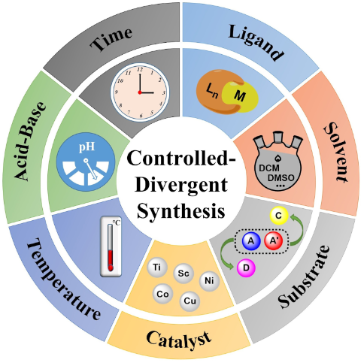
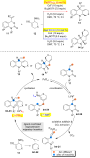
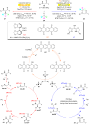
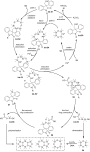
- enantiocontrol. Conversely, the bulky tert-butyl-decorated (R)-spirophosphoramidite L5 imposed a confined cavity, steering selectivity toward Si–C(sp2)-bond activation and predominantly afforded the regioisomeric (S)-2-silacyclohexenylarenes 18. In 2025, Gong and co-workers reported a visible-light-mediated







Substituent effects in N-acetylated phenylazopyrazole photoswitches
Beilstein J. Org. Chem. 2025, 21, 830–838, doi:10.3762/bjoc.21.66
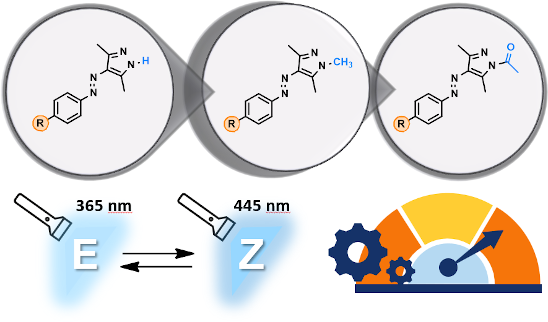
- reported to either bathochromically shift the UV–vis absorption spectrum or lead to a better separation of the n→π* bands of the two photoisomers and allow for visible-light-responsive switches [23][24][25][26]. In recent years, heteroaryl azobenzene derivatives have revealed superior properties to


Photocatalyzed elaboration of antibody-based bioconjugates
Beilstein J. Org. Chem. 2025, 21, 616–629, doi:10.3762/bjoc.21.49
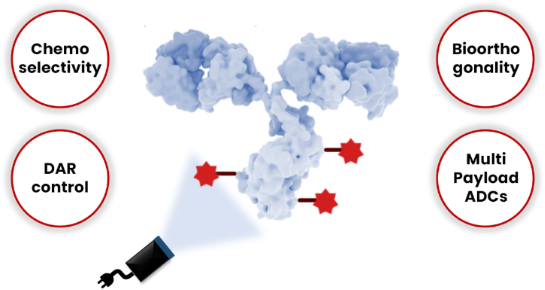
- ) that can form covalent bonds when exposed to UV or visible light. These photoaffinity tags or crosslinkers are designed to bind to specific biomolecules, such as proteins, nucleic acids, or lipids, in a highly selective manner. The light irradiation triggers a chemical reaction, such as a bond
- the agency of low-energy visible light with specific functional groups on biomolecules. This allows precise control over the conjugation process, enabling targeted modifications without affecting non-reactive sites. Although previous reviews have discussed the more traditional synthetic methods
- emerged as a transformative approach in the modification of proteins, enabling researchers to achieve selective and efficient conjugation under mild conditions [37]. By utilizing visible light and transition-metal catalysts, this technique allows the generation of reactive intermediates that can


Unprecedented visible light-initiated topochemical [2 + 2] cycloaddition in a functionalized bimane dye
Beilstein J. Org. Chem. 2025, 21, 500–509, doi:10.3762/bjoc.21.37
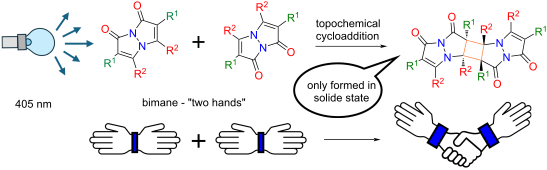
- E. M. Kosower in 1978. In this study, we report the topochemical cycloaddition of diethyl 2,6-dichloro-1,7-dioxo-1H,7H-pyrazolo[1,2-a]pyrazole-3,5-dicarboxylate (Cl2B), initiated by visible light. Crystal structure analysis confirmed that the reactive double bonds are parallel and coplanar, in line
- with the Schmidt criteria for topochemical cycloaddition. Additionally, two other bimane derivatives with different substitution patterns were synthesized and investigated. Our findings suggest that functionalizing bimanes to redshift their absorption maxima into the visible-light spectrum provides a
- a [2 + 2] cycloaddition reaction, with approximately 20% yield of the dimer in the crystal. This was particularly notable, given that the compound had spent minimal time in solution with limited exposure to visible light, and no exposure to ultraviolet light. To further explore this phenomenon, we


Synthesis of N-acetyl diazocine derivatives via cross-coupling reaction
Beilstein J. Org. Chem. 2025, 21, 490–499, doi:10.3762/bjoc.21.36
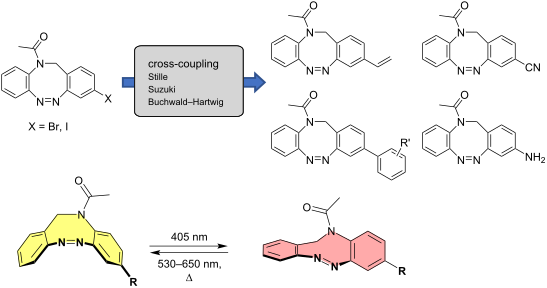
- photoswitches with superior photophysical properties. The parent ethylene-bridged diazocine shows excellent switching photoconversion between the Z and the E configurations (Γ(Z → E)385nm = 92% and Γ(E → Z)520nm > 99% in n-hexane) due to well-separated n–π*-transitions in the visible part of the electromagnetic


Photomechanochemistry: harnessing mechanical forces to enhance photochemical reactions
Beilstein J. Org. Chem. 2025, 21, 458–472, doi:10.3762/bjoc.21.33
- rearrangements. Most organic molecules are colorless and, in fact, do not absorb visible light: highly energetic UV irradiation is typically needed. A milder approach is offered by photocatalytic approaches. Here, a photocatalyst is added to the reaction mixture to convert light energy into chemical potential to
- transform molecules. Intriguingly, photocatalysts typically absorb harmless visible light and can be chosen ad hoc to trigger the desired chemistry. Indeed, the photocatalyst–substrate interaction can occur via energy transfer [4][5][6][7][8], single-electron transfer [9][10][11][12], or hydrogen-atom
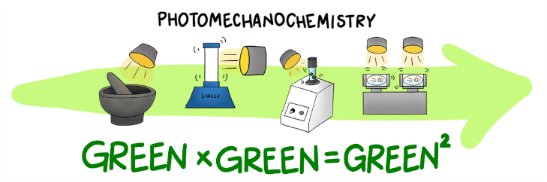
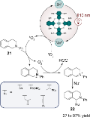
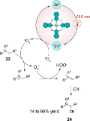
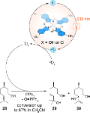
- interface two technologies, the authors opted to use mechanoluminescent powders to generate photons directly inside the jar. In more detail, SrAl2O4:Eu2+/Dy3+ (SAOED) was used as a mechanoluminescent material to drive the visible-light-mediated Hofmann–Loffler–Freytag (HLF) reaction (Scheme 12A). Thus, when




Antibiofilm and cytotoxic metabolites from the entomopathogenic fungus Samsoniella aurantia
Beilstein J. Org. Chem. 2025, 21, 327–339, doi:10.3762/bjoc.21.23
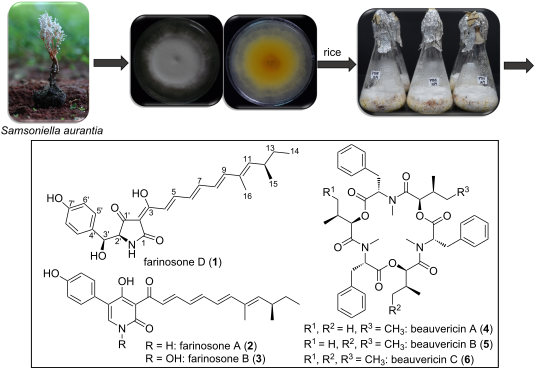
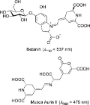
- ]+ (calculated 446.1962). The UV–vis spectrum of 1 (Figure S3, Supporting Information File 1) revealed a prominent absorption peak (λmax) at 434 nm in the visible region reflected by being yellow-colored and suggesting the presence of an extended conjugated π-system in its structure. The 1H NMR and 1H–1H COSY


Red light excitation: illuminating photocatalysis in a new spectrum
Beilstein J. Org. Chem. 2025, 21, 296–326, doi:10.3762/bjoc.21.22
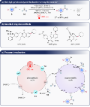
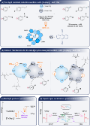
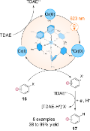
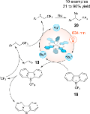
- own a large span of colors depending on the nature of the metal and the ligands but also on the various oxidation states these compounds can attain. This property results on the absorption of a visible-light photon complementary to the observed color and has been extensively exploited in photoredox
- efficiency of photoredox-catalyzed reactions. Absorption in the red region opens up innovative opportunities for photochemical transformations. First, the employed photon has the lowest energy in the electromagnetic spectrum of visible light, which allows for safer laboratory conditions in terms of
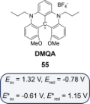
- properties of metal complexes. Phthalocyanins, porphyrins, and their derivatives exemplify this, as their rigid macrocyclic structures enable strong absorption in the visible to NIR regions, making them appealing for photoredox catalysis applications. For instance, ruthenium phthalocyanin complexes have
















Effect of substitution position of aryl groups on the thermal back reactivity of aza-diarylethene photoswitches and prediction by density functional theory
Beilstein J. Org. Chem. 2025, 21, 242–252, doi:10.3762/bjoc.21.16
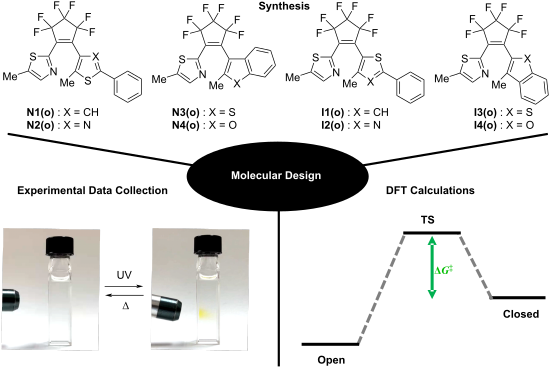
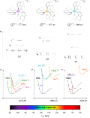
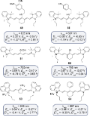
- the visible region for all molecules, in which a visible absorption maximum was observed at 487, 467, 447, 454, and 440 nm for N3(c), N4(c), and I1(c)–I3(c). Note that the λmax of I4(c) could not be determined due to the overlapping absorption bands of the open-ring and closed-ring isomers. The
- absorption band in the visible region disappeared and returned to the initial one by stopping UV light irradiation. These results indicate that all molecules exhibit T-type photochromic reactions based on 6π aza-electrocyclic reaction. The absorption bands of compounds I1(c)–I4(c) are blue-shifted compared



Visible-light-promoted radical cyclisation of unactivated alkenes in benzimidazoles: synthesis of difluoromethyl- and aryldifluoromethyl-substituted polycyclic imidazoles
Beilstein J. Org. Chem. 2025, 21, 234–241, doi:10.3762/bjoc.21.15
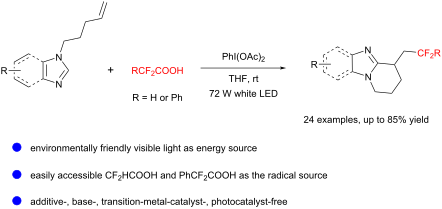
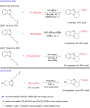
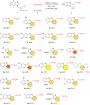
- , Palestine 10.3762/bjoc.21.15 Abstract An efficient and eco-friendly approach for synthesizing difluoromethyl- and aryldifluoromethyl-substituted polycyclic imidazoles was established via a visible-light-promoted radical cyclization reaction. This method employed the readily accessible and inexpensive
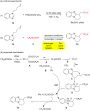
- target products in good to excellent yields. Mechanistic studies revealed that the reaction proceeds via a radical pathway. Keywords: cyclization; difluoromethylation; hypervalent iodine; polycyclic imidazole; visible light; Introduction Organofluorine compounds continue to play important roles in
- reaction of unactivated alkenes within benzimidazole molecules using CF2HSO2Na [18]. Subsequently, in 2024, Jin [19] and Yang [20] developed visible light-induced difluoromethylation strategies for unactivated alkenes within benzimidazoles using different CF2H sources (CF2HSO2Na and ([Ph3PCF2H]+Br


Cu(OTf)2-catalyzed multicomponent reactions
Beilstein J. Org. Chem. 2025, 21, 122–145, doi:10.3762/bjoc.21.7

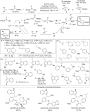
- and sulfur dioxide afforded vinyl sulfones with excellent regio- and stereoselectivity (Scheme 9) [22]. The authors used DABCO(SO2)2 to generate sulfur dioxide, and visible light irradiation and the mandatory presence of a photocatalyst for this transformation suggested a radical mechanism. The








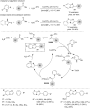


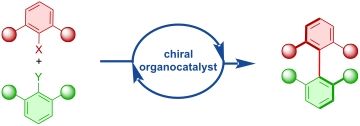
Recent advances in organocatalytic atroposelective reactions
Beilstein J. Org. Chem. 2025, 21, 55–121, doi:10.3762/bjoc.21.6
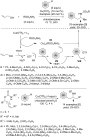
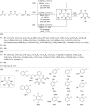
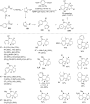
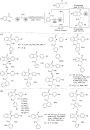
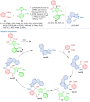
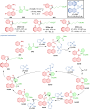
- 196a–k (Scheme 58) [88]. Both organocatalysts showed comparable effectivity in terms of enantioselectivity across. The difference between these catalysts becomes more visible through DFT calculations. In the case of biaryl phosphoric acid C30, stereocontrol is driven by the steric effects of the groups











Emerging trends in the optimization of organic synthesis through high-throughput tools and machine learning
Beilstein J. Org. Chem. 2025, 21, 10–38, doi:10.3762/bjoc.21.3
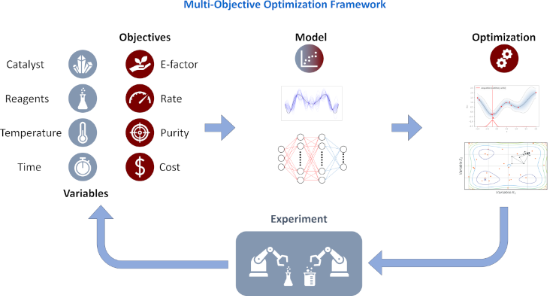
- with feedback DOE facilitated the rapid identification of appropriate solvents. Notably, the use of DMSO, DMF, and pyridine led to an enhanced yield of the monoalkylated product. An experimental setup was developed for single-droplet studies of visible-light photoredox catalysis using an oscillatory


Efficient synthesis of fluorinated triphenylenes with enhanced arene–perfluoroarene interactions in columnar mesophases
Beilstein J. Org. Chem. 2024, 20, 3263–3273, doi:10.3762/bjoc.20.270
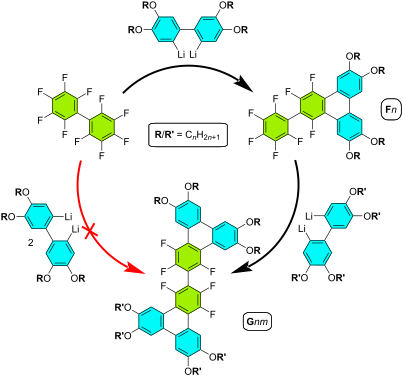
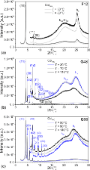
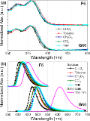
- ] in combination with tunable absorption and emission of visible light. Polar nematic phase [23] and chiral columnar phase materials [24] based on polar fluorobenzene rings have also recently emerged as interesting new classes of fluorous materials, revealing their enormous potential in the high-tech



Multicomponent reactions driving the discovery and optimization of agents targeting central nervous system pathologies
Beilstein J. Org. Chem. 2024, 20, 3151–3173, doi:10.3762/bjoc.20.261

- other approaches such as visible light, microwaves, heterogeneous catalysis, and ultrasound [12][13][14][15]. Due to its versatility, one of the most prevalent of these MCRs is the Ugi reaction [16]. This reaction generally combines an isocyanide with an acid, an amine, and an aldehyde or ketone to




Advances in the use of metal-free tetrapyrrolic macrocycles as catalysts
Beilstein J. Org. Chem. 2024, 20, 3085–3112, doi:10.3762/bjoc.20.257
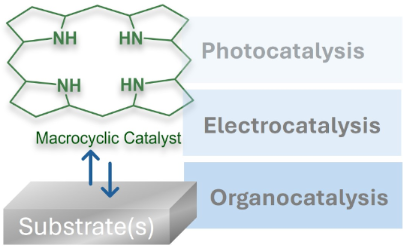
- to absorb significant amounts of visible light photons, which allows them to reach an excited state. The excited porphyrin molecule is likely to undergo energy transfer (ET; photosensitization) or single-electron transfer (SET; photoredox catalysis) to substrate molecules (Figure 13). In
- 101, using visible/sunlight to activate the catalyst (1 mol %) in acetonitrile with t-BuONO and B2pin2 (107a)/B2Epin2 (107b), achieving moderate to good yields of products ranging from 17% to 77%. In general, porphyrin macrocycles, due to their 18-π-electron aromatic ring, small singlet–triplet


Extension of the π-system of monoaryl-substituted norbornadienes with acetylene bridges: influence on the photochemical conversion and storage of light energy
Beilstein J. Org. Chem. 2024, 20, 3061–3068, doi:10.3762/bjoc.20.254
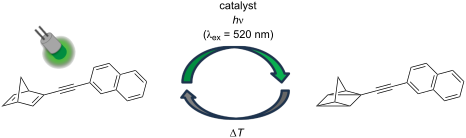
- at 1.60–1.63 ppm, 1.69–1.71 ppm, 1.82–1.85 ppm, 2.07–2.11 ppm, and 2.21–2.25 ppm. Thus, it is possible to convert this monosubstituted norbornadiene efficiently into the corresponding quadricyclane with visible light, and thus also by sunlight. Unfortunately, the derivatives 1h and 1j–l,n could not
- amounts of unidentified by-products formed. Nevertheless, it was shown exemplarily that the photoisomerization can be performed under milder conditions and upon excitation with visible light in the presence of [Ru(phen)3](PF6)2 as a photosensitizer. Under these conditions, the derivatives 1i and 1l were
- converted quantitatively into quadricyclanes by irradiation with green light. Thus, it was shown with the latter results that the photosensitization with suitable triplet sensitizers enables mild conversion of visible light in chemical energy in quantitative photoreactions of norbornadienes, even in cases


Cyclodextrin-based rotaxanes for polymer materials: challenge on simultaneous realization of inexpensive production and defined structures
Beilstein J. Org. Chem. 2024, 20, 3026–3049, doi:10.3762/bjoc.20.252
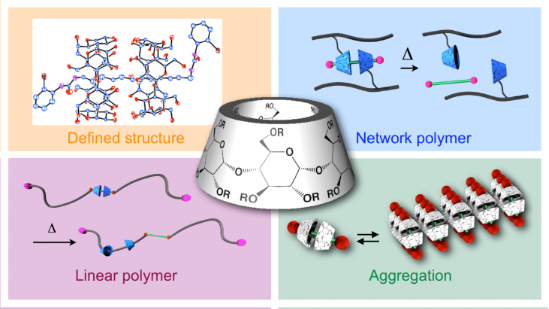
- visible-light irradiation or heating, CD was moved back to the azobenzene moiety, and the entire process was reversible. This system was further developed in 2005 by introducing bipyridinium moieties to implement the selective transfer of the wheel via heating or light irradiation (Figure 5B) [57]. During






Tunable full-color dual-state (solution and solid) emission of push–pull molecules containing the 1-pyrindane moiety
Beilstein J. Org. Chem. 2024, 20, 3016–3025, doi:10.3762/bjoc.20.251
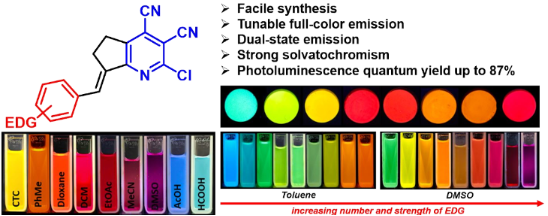
- Table S1 and Figure S1, Supporting Information File 1). The electronic absorption spectra were characterized by a pronounced maximum in the visible region centered at 431–448 nm. Emission maxima of compound 1c were more significantly affected by the change of polarity and ranged from 475 nm (blue-green
- visible region of the spectrum (from blue to red, Figure 3B and Figure 4). Acidic solutions were the most blue-shifted due to the formation of the protonated form 1iH+ (Scheme 2). Two emission maxima were observed in acetic acid and associated with the corresponding absorption maxima. The first, located
- ), namely in solution and in the solid state. Emission in solution was in the range of 469–721 nm, depending on the solvent, number, and type of substituent and covered almost the entire visible spectrum. In the solid state, the emission ranged from 493–767 nm. It was found that the presence of a


Tailored charge-neutral self-assembled L2Zn2 container for taming oxalate
Beilstein J. Org. Chem. 2024, 20, 3007–3015, doi:10.3762/bjoc.20.250
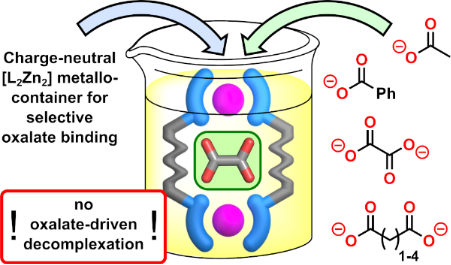
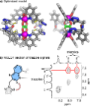
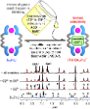
- behavior is a rotational barrier of the phenylamide residue which is visible for the complex [L2Zn2] and the free ligand L-H2 due to splitting of the neighboring methylene unit (Hh). An important sidenote is that preliminary tests with the deprotected click product of non-functionalized dipropargylamine as



Advances in radical peroxidation with hydroperoxides
Beilstein J. Org. Chem. 2024, 20, 2959–3006, doi:10.3762/bjoc.20.249
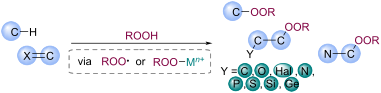
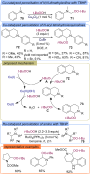
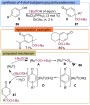
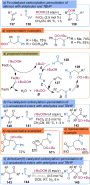
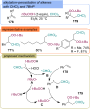
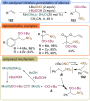
- in Kwon’s review [34]. Cu-catalyzed oxygen atom transfer with TBHP were discussed in the review [35]. The review by Xiao considered visible light-driven C–C bond cleavage enabled with organic peroxides [36]. This comprehensive review summarizes all ever published studies on radical peroxidation with
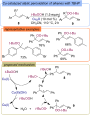
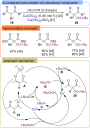
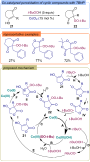
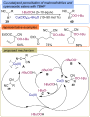
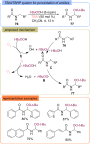
- photocatalytic system under visible light irradiation (443 nm) [56]. Peroxidation of β-ketoesters, cyanoacetic esters, and malonic esters 37 was performed using the TBAI/TBHP system (Scheme 15) [57]. The highest product yields in the TBAI-catalyzed peroxidation were achieved with malonic acid esters, in contrast
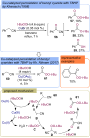
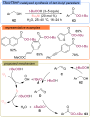
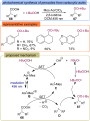
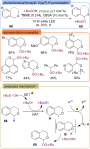
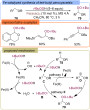
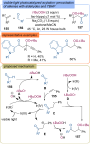
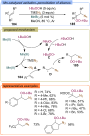
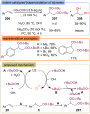
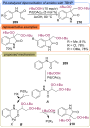
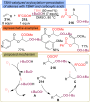
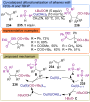
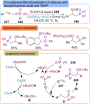
- in situ-generated Cu(I) complexes was developed (Scheme 23) [43]. 2-Phenylbutane (64) was converted into peroxide 65 in a 70% yield with 4% ee. A visible light-induced direct decarboxylative peroxidation of carboxylic acids 66 with the formation of peroxides 67 under metal-free conditions using Mes
























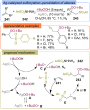


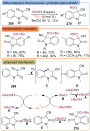


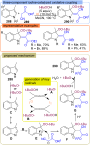

Recent advances in transition-metal-free arylation reactions involving hypervalent iodine salts
Beilstein J. Org. Chem. 2024, 20, 2891–2920, doi:10.3762/bjoc.20.243

- position of quinoline N-oxides and pyridine N-oxides, utilizing hypervalent iodine salts as the arylation reagents. The reaction was facilitated by visible light in conjunction with a photocatalyst. The absence of either the photocatalyst or light resulted in only trace amounts of the product, underscoring
- mechanism by adding 2 equivalents of TEMPO to the reaction mixture. The absence of the desired product indicated the involvement of a radical pathway in the process. The proposed reaction mechanism begins with the activation of eosin Y by visible light from 5 W blue LEDs, transitioning it to its excited


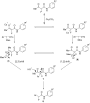


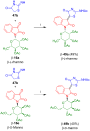
N-Glycosides of indigo, indirubin, and isoindigo: blue, red, and yellow sugars and their cancerostatic activity
Beilstein J. Org. Chem. 2024, 20, 2840–2869, doi:10.3762/bjoc.20.240
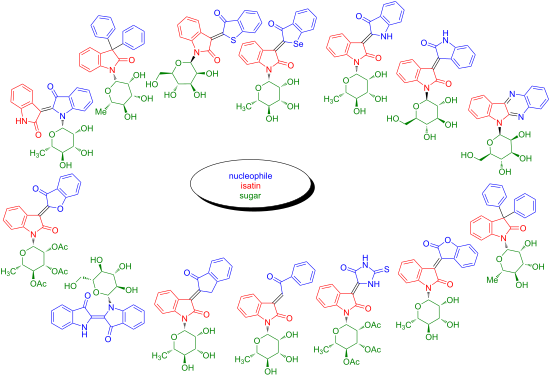
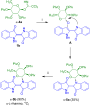
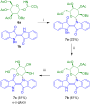
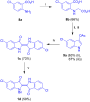
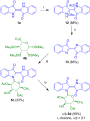
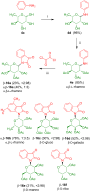
- not visible, E/Z < 2:98). The configurations were determined by comparison of chemical shifts of our products with those of non-glycosylated indirubin, by the presence of an intramolecular hydrogen bond N–H···O and by crystal structure analysis. In fact, the chemical shifts of the H-4 proton signals
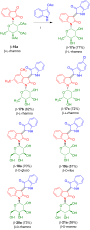
- very good yield. Likewise, glucoside β-33b, galactoside β-33c, and mannoside β-33d were prepared. All products were isolated as the pure Z-configured isomers (determination by NMR, the other isomer was not visible, E/Z < 2:98). The configurations were determined by comparison of chemical shifts of our
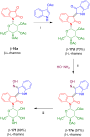
- pure Z-configured isomers (determination by NMR, the other isomer was not visible, E/Z > 98:2). Deprotection of E-β-43a,b under acidic conditions gave rhamnosides E-β-44a,b in good yields. However, deprotection of E-β-43c–e failed. Kornienko et al. reported the synthesis and antiproliferative activity











Interaction of a pyrene derivative with cationic [60]fullerene in phospholipid membranes and its effects on photodynamic actions
Beilstein J. Org. Chem. 2024, 20, 2732–2738, doi:10.3762/bjoc.20.231
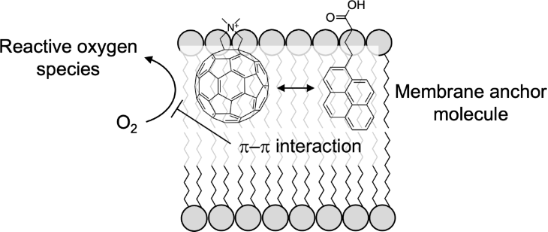
- Instutite for Liberal Arts and Sciences (ILAS), Kyoto University, Sakyo-ku, Kyoto 606-8501, Japan 10.3762/bjoc.20.231 Abstract We have reported that upon visible light irradiation, ferrocene-porphyrin-[60]fullerene triad molecules yield long-lived charge-separated states, enabling the control of the plasma
- from a difference in electric charge on the two sides of the plasma membrane (approximately 5 nm thickness), with a slight excess of the positive ions inside relative to the negative ions outside. Our ferrocene-porphyrin-C60 triad molecule exhibited long-lived charge-separated states under visible


Synthesis of spiroindolenines through a one-pot multistep process mediated by visible light
Beilstein J. Org. Chem. 2024, 20, 2722–2731, doi:10.3762/bjoc.20.230
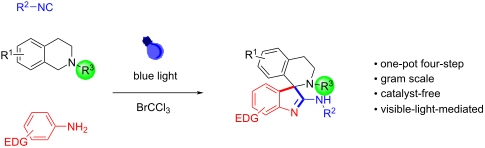
- indole alkaloids. Here, we develop a novel approach for the one-pot multistep synthesis of different spiro[indole-isoquinolines]. The protocol proposed involves the visible light mediated oxidation of N-aryl tertiary amines using bromochloroform with the generation of a reactive iminium species, which
- reacts with an isocyanide and an electron-rich aniline in a three-component Ugi-type reaction to give an α-aminoamidine. This compound might undergo an additional visible light-mediated oxidation to furnish a second iminium intermediate, which acts as electrophile in an intramolecular electrophilic
- : isocyanide; multicomponent reactions; one-pot reaction; oxidation; spiroindolenine; Ugi reaction; visible light; Introduction Diversity-oriented synthesis (DOS) is a successful approach to biologically active scaffolds directed to create an enormous exploratory space in pharmaceutical hit discovery [1][2