

Search results
Search for "free energy" in Full Text gives 207 result(s) in Beilstein Journal of Organic Chemistry. Showing first 200.
Preparation of β-cyclodextrin-based dimers with selectively methylated rims and their use for solubilization of tetracene
Beilstein J. Org. Chem. 2022, 18, 1596–1606, doi:10.3762/bjoc.18.170
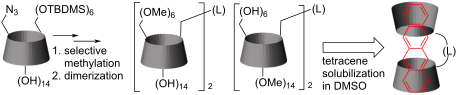
- , USA), to the two independent binding sites model. From the fit, the stoichiometry (n), binding enthalpy change (ΔH, kJ·mol−1), affinity constant (Ka, M−1), binding free energy change (ΔG, kJ·mol−1), and binding entropy change (ΔS, J·mol–1·K−1) for the first binding site were calculated. The


Naphthalimide-phenothiazine dyads: effect of conformational flexibility and matching of the energy of the charge-transfer state and the localized triplet excited state on the thermally activated delayed fluorescence
Beilstein J. Org. Chem. 2022, 18, 1435–1453, doi:10.3762/bjoc.18.149
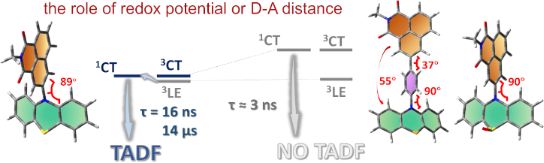
- , ΦΔ are much larger, up to 100% in dichloromethane (DCM) and ACN, likely due to the heavy-atom effect. Electrochemistry study The redox potentials of the dyads were studied with cyclovoltammetry (Figure 6, Table 3), and the Gibbs free energy changes of the charge separation (ΔGCS) and charge
Ferrocenoyl-adenines: substituent effects on regioselective acylation
Beilstein J. Org. Chem. 2022, 18, 1270–1277, doi:10.3762/bjoc.18.133
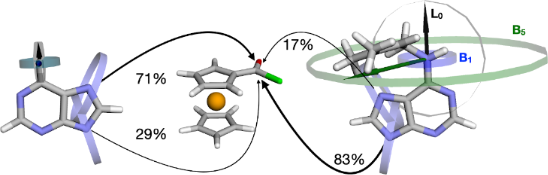
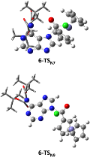
- 9H-purine structure. B3LYP/6-31+G(d)/SDD optimized transition state structures for N7- (6-TSN7) and N9-ferrocenoylation (6-TSN9) of the adenine anion 6. Two bulky tert-butyloxycarbonyl groups are displayed in the tube mode for clarity. Relation between the Gibbs free energy barrier (ΔG‡) for the N7



Experimental and theoretical studies on the synthesis of 1,4,5-trisubstituted pyrrolidine-2,3-diones
Beilstein J. Org. Chem. 2022, 18, 1140–1153, doi:10.3762/bjoc.18.118
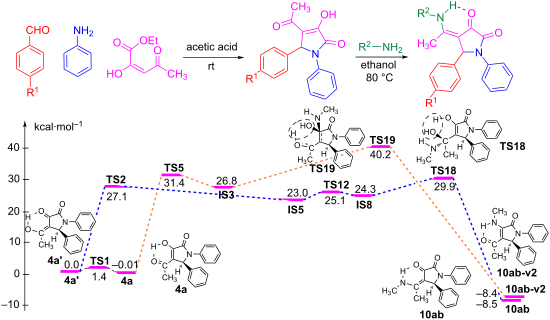
- reactants, intermediates, transition states, and products were optimized and are illustrated in Figure S7 in Supporting Information File 1. The relative free energy (ΔG, ΔG#) values for all species are presented in Figure 4, the reaction potential energy surface. This figure is a detailed reaction mechanism
- bond to N atom (Scheme 4). This process is thermodynamically favorable by a Gibbs free energy (ΔG) of −6.5 kcal·mol−1. In addition, a second way from 4a, through the TS5 transition state, to form the IS3 intermediate requires an activation energy of ca. 33.7 kcal·mol−1. IS3 could release one H2O
- favorable than from –OH and –NH groups. Moreover, the reaction mechanism in the chloroform and DMSO solvent model is also considered to confirm the main reaction pathway (Table S3 in Supporting Information File 1). The results indicate that the same trends and slight differences of free energy values are


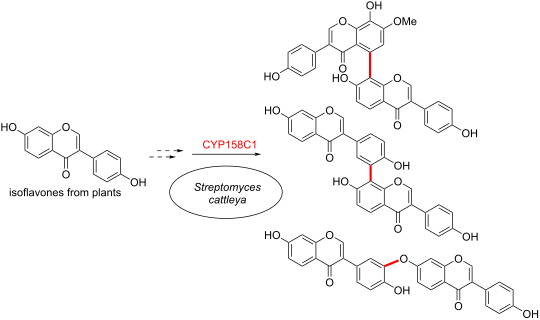
A Streptomyces P450 enzyme dimerizes isoflavones from plants
Beilstein J. Org. Chem. 2022, 18, 1107–1115, doi:10.3762/bjoc.18.113
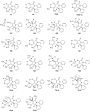
- the 2 kJ/mol energy window were generated and optimized using DFT calculations at the B3LYP/6-31+G (d,p) level. Frequency calculations were performed at the same level to confirm that each optimized conformer was true minimum and to estimate the relative thermal free energy (ΔG) at 298.15 K. The two


Understanding the competing pathways leading to hydropyrene and isoelisabethatriene
Beilstein J. Org. Chem. 2022, 18, 972–978, doi:10.3762/bjoc.18.97
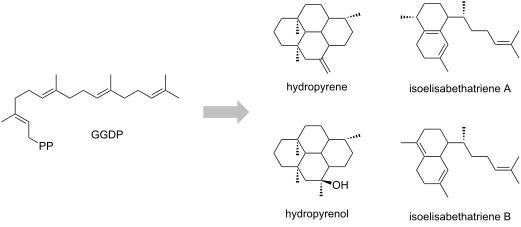
- ). We studied the inherent chemistry of the reaction leading to HP and IE using gas-phase calculations. This provided the free energy of distinct carbocation intermediates and transition states along the proposed reaction path leading to products in the gas phase. The gas phase is a natural choice as a
- reference environment for terpene synthases [10][11][12][15][16][21][22][23][24][25]. The proposed reaction mechanisms yielding HP and IE and are presented in Scheme 1, while the reaction free energy profile is presented in Figure 2. Here, we modeled the transformations A→I (HP) and A’→E’ (IE). The gas
- any free energy barrier. The deprotonation and re-protonation steps are not included in our calculations. The overall exergonicity of this process which transforms four π-bonds to σ-bonds, with accompanying gains in intramolecular dispersion interactions, is −62.8 kcal/mol. IE pathway As described


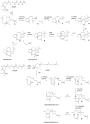
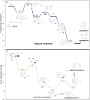

Electroreductive coupling of 2-acylbenzoates with α,β-unsaturated carbonyl compounds: density functional theory study on product selectivity
Beilstein J. Org. Chem. 2022, 18, 956–962, doi:10.3762/bjoc.18.95

- step using the DFT method at the B3LYP/6-311+(2d,p)/IEFPCM(THF) level of theory (Supporting Information File 1). From the calculation results for the reactions of 1a–h with 2a summarized in Table 4, it was found that the ratio of D:E calculated from the free energy difference between D and E (∆G) and
- -oxobutyl)phthalides 5 were produced as the sole products by the reaction of 1 with methyl vinyl ketone (2b). It was found by DFT calculations for the cyclization step of the intermediate enolate anions that the product selectivity was in good agreement with the free energy differences (∆G) in the


Synthesis of bis-spirocyclic derivatives of 3-azabicyclo[3.1.0]hexane via cyclopropene cycloadditions to the stable azomethine ylide derived from Ruhemann's purple
Beilstein J. Org. Chem. 2022, 18, 769–780, doi:10.3762/bjoc.18.77
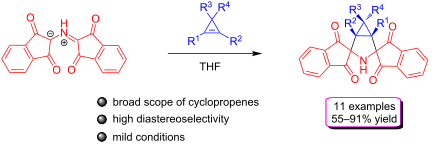
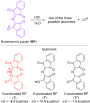
- during protonation of Ruhemann's purple. Although there was conclusive evidence of the structure of PRP (1) in the Grigg's study (proven by X-ray analysis) [27], we aimed to establish a stability order of tautomers on the basis of calculated relative values of the Gibbs free energy. Upon treatment of
- the most basic site in the molecule. We carried out full geometry optimization of all possible tautomers 1, 1', 1'', and aza-allylic anion Ruhemann's purple to calculate the Gibbs free energy change for the corresponding acid–base reactions (Scheme 7). As expected, the calculation data showed that the
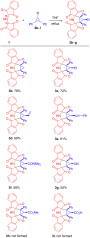
- , respectively. In turn, the Gibbs energies of activation corresponding to the endo approaches indicate that cycloadduct 4 (ΔG‡1+2j->4-endo = 19.3 kcal/mol) is more kinetically favorable than its epimer 4' (ΔG‡1+2j->4'-endo = 20.3 kcal/mol). The small free energy difference (1.0 kcal/mol) between the two






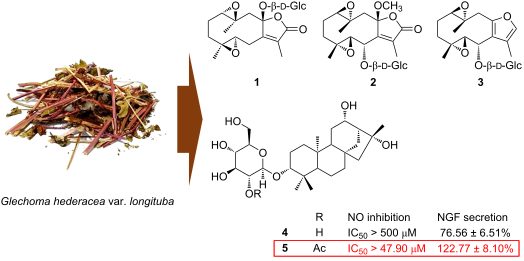
Terpenoids from Glechoma hederacea var. longituba and their biological activities
Beilstein J. Org. Chem. 2022, 18, 555–566, doi:10.3762/bjoc.18.58
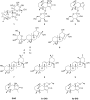
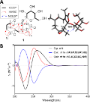
- based on the Boltzmann populations of each conformer in the associated Gibbs free energy (Supporting Information File 1, Figure S45). The ECD spectra were Boltzmann-weighted and generated using SpecDis software (Version 1.71) [23] with a σ/γ value of 0.30 eV. The chemical shift values were calculated



Iridium-catalyzed hydroacylation reactions of C1-substituted oxabenzonorbornadienes with salicylaldehyde: an experimental and computational study
Beilstein J. Org. Chem. 2022, 18, 251–261, doi:10.3762/bjoc.18.30
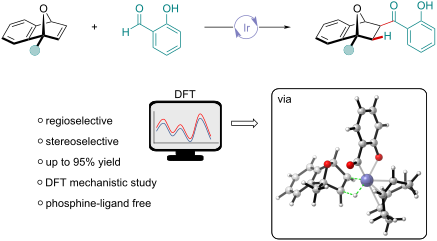
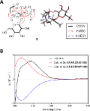
- iridium–hydride bond to form hydrometalated intermediates IN2a and IN2b (Figure 1). Two possible transition states, which exhibit a distorted Ir–H–C–C’ four-membered ring geometry, can be located. The concerning free energy barrier about IN1a to IN2a, via 1aTS2a is 8.6 kcal/mol whereas it is 4.9 kcal/mol
- last key step in the catalytic cycle involves the C–C bond-forming reductive elimination to form the final ketone intermediate IN3a or IN3b (Figure 1). Two possible transition states, 2aTS3a and 2bTS3b, can be located. The concerning free energy barrier about IN2a to IN3a, via 2aTS3a is 10.8 kcal/mol
- transition states in both reaction pathways, it is determined the reductive elimination step is the rate-determining step (RDS) for the active bond-forming hydroacylation catalytic cycle, as it possesses the greatest free energy barriers. This parallels that determined by Morehead and Sargent who


Mechanistic studies of the solvolysis of alkanesulfonyl and arenesulfonyl halides
Beilstein J. Org. Chem. 2022, 18, 120–132, doi:10.3762/bjoc.18.13
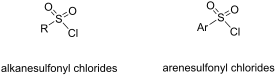
- . However, if one is willing to settle for a classification of the mechanism as unimolecular or bimolecular accompanied by an approximate measure of the extents of bond-making and bond-breaking at the sulfur atom involved at the transition state, one can use a linear free energy relationship (LFER) approach


Efficient and regioselective synthesis of dihydroxy-substituted 2-aminocyclooctane-1-carboxylic acid and its bicyclic derivatives
Beilstein J. Org. Chem. 2022, 18, 77–85, doi:10.3762/bjoc.18.7
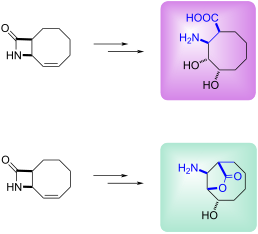
- reaction free energy and barrier are −9.5 and 14.5 kcal mol−1 with methanol, respectively and −11.1 and 13.5 kcal mol−1 with dichloromethane, respectively (Figure 3). For the formation of the five-membered lactone 18 (path a), 17 → 18, the reaction proceeds via a barrierless path and the solvent corrected
- reaction free energies are −17.2 and −18.0 kcal mol−1 with methanol and dichloromethane, respectively. For the formation of the six-membered lactone 19 (path b), 17 → 19, the solvent corrected reaction free energy and barrier are −5.4 and 14.5 kcal mol−1 in methanol, respectively and −7.1 and 13.4 kcal mol
- epoxide 7, the relative free energy of 7b is higher by 10.3 kcal mol−1 than that of 7a (Figure 5). Conclusion In summary, we successfully synthesized hydroxylated cyclooctane β-amino acid 6 and its derivatives 8, 10, and 13 starting from β-lactam 2. The regioselective synthesis of lactone 8, which is a


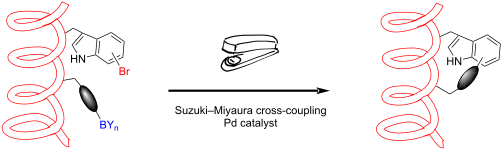
Peptide stapling by late-stage Suzuki–Miyaura cross-coupling
Beilstein J. Org. Chem. 2022, 18, 1–12, doi:10.3762/bjoc.18.1
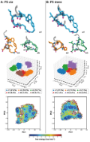
- indicated in the two-dimensional projection in the space of PC1 and PC2, where colouring is made by relative free energy as obtained from Boltzmann reweighting using 10th order Maclaurin series expansion [92][93]. In both isomers, the first three clusters represent about 53% of the total conformational
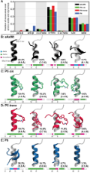
- frame and is coloured according to its corresponding re-weighted relative free energy. Data is calculated on the cumulative last 500 ns of 15 accelerated molecular dynamics runs for each SMC peptide. Molecular modelling of the conformational preferences of the SMC stapled peptides P5 (with cis or trans


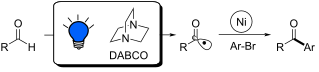
DABCO-promoted photocatalytic C–H functionalization of aldehydes
Beilstein J. Org. Chem. 2021, 17, 2959–2967, doi:10.3762/bjoc.17.205
- , endergonic by 18.8 kcal·mol−1 (gas phase) and 20.1 kcal·mol−1 (1,4-dioxane with PCM); almost thrice the Gibbs free energy for the same reaction with DABCO as a HAT abstractor. The barrierless character is supported by NEB-TS calculations (vide infra) (Supporting Information File 1, Figure S16). Both these
- the Evans–Polanyi principle, that relates the rate coefficients of a reaction step to their free energy (for which the BDE difference is a proxy) [35][36][37]. When considered together with Hammond´s postulate [38], the Evans–Polanyi principle (E-PP) generates the often used rule-of-thumb that good
- catalysts and photocatalysts [9][10][11][12][21][22][23]. Previous reports of DABCO as hydrogen abstractor in HAT reactions and this work. Free energy profile for the HAT step reactions between isovaleraldehyde with (top) DABCO and (bottom) quinuclidine radical cations. The red lines are for the gas phase




N-Sulfinylpyrrolidine-containing ureas and thioureas as bifunctional organocatalysts
Beilstein J. Org. Chem. 2021, 17, 2629–2641, doi:10.3762/bjoc.17.176
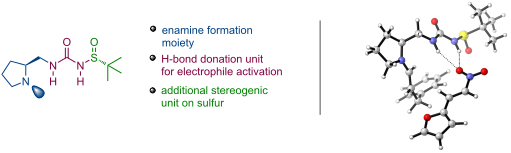
- the Michael adducts has the lowest Gibbs free energy of activation of 40.4 kJ·mol−1. The Gibbs free energies of activations for the (S,S)-C2 catalyst are only slightly higher than those for the (S,R)-C2 catalyst. These calculations support the experimental observation that the configuration of the


Visible-light-mediated copper photocatalysis for organic syntheses
Beilstein J. Org. Chem. 2021, 17, 2520–2542, doi:10.3762/bjoc.17.169
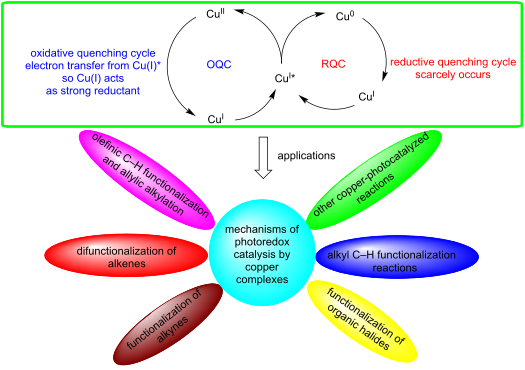
- ; mechanisms of copper photocatalysis; photoinduced copper-based catalysis; photoredox catalysis; special features of copper photocatalysis; Introduction Solar light is an inexhaustible and free energy source for green plants and bacteria. Photosynthetic organisms absorb solar energy and convert it into






Nomimicins B–D, new tetronate-class polyketides from a marine-derived actinomycete of the genus Actinomadura
Beilstein J. Org. Chem. 2021, 17, 2194–2202, doi:10.3762/bjoc.17.141
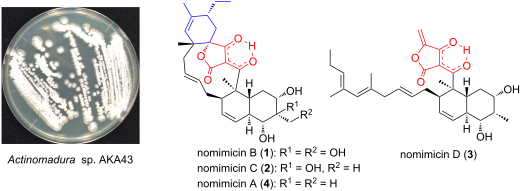
- effects at 244 and 298 nm, matched well with the calculated one of 4 (Figure 4). Noteworthy is that 4a and 4b (Tables S4–S7, Supporting Information File 1) have a lower free energy than 4c and 4d, and the calculated spectra for 4a and 4b are similar to the experimental one, indicating that 4a and 4b are
- calculations were carried out at the same level of theory to confirm the absence of imaginary frequencies and obtain thermal corrections for the Gibbs free energy. After eliminating duplicated structures with the threshold of 0.01 Å RMSD, the single-point energy was calculated at the M06-2X/def2-TZVP-SMD level
- of theory, affording 24 conformers within 3.0 kcal/mol from the minimum Gibbs free energy. The ECD spectrum of each conformer was simulated by the TDDFT calculation of 25 excited states at the ωB97X-D/def2-TZVP-PCM level of theory. The spectrum of structure 4a was created by the weighted average of



Constrained thermoresponsive polymers – new insights into fundamentals and applications
Beilstein J. Org. Chem. 2021, 17, 2123–2163, doi:10.3762/bjoc.17.138
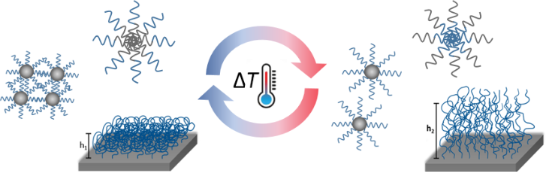
- mixtures are characterized by interactions A–A, A–B as well as B–B, which are all different from each other. The mixing process is thus accompanied by an enthalpy change and possibly by an additional entropy contribution. The free energy of mixing can thus become positive (spontaneous segregation) if the


Electron-rich triarylphosphines as nucleophilic catalysts for oxa-Michael reactions
Beilstein J. Org. Chem. 2021, 17, 1689–1697, doi:10.3762/bjoc.17.117
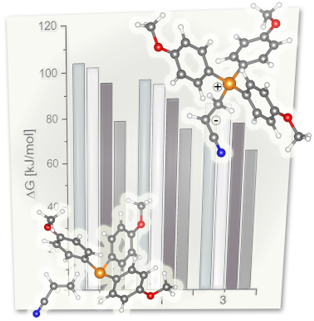
- calculated to be as low as −6.10 eV, it is obvious that also this approach fails in sufficiently describing the activity of phosphines in catalyzing oxa-Michael reactions. To resolve this issue, the Gibbs free energy (ΔG) of the reaction of TPP, MMTPP, TMTPP, and PMe3 with acrylonitrile leading to zwitterion
- formation (Figure 3, right) was calculated in chloroform. The Michael acceptor affinity (MAA) of the nucleophiles is then given by the Gibbs free energy of the back reaction [37]. The respective energy differences calculated at the B3LYP/def2-TZVPPD level of theory are −96.3 kJ/mol (TPP), −94.2 kJ/mol
- effects of chloroform have been considered for calculation of the Gibbs free energy (ΔG) of zwitterion formation and were calculated by the conductor-like screening model (COSMO) [53][54] with a dielectric constant of 4.8 and a radius of 3.17. Our best estimate for the calculation of zwitterion energies


Co-crystallization of an organic solid and a tetraaryladamantane at room temperature
Beilstein J. Org. Chem. 2021, 17, 1476–1480, doi:10.3762/bjoc.17.103
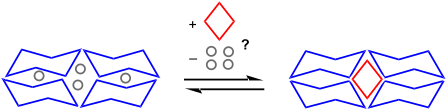
- lower minimum in free energy, with both solvent and the competing organic molecule being eliminated during crystallization [20]. Thermal crystallization, induced by cooling a saturated solution of a TAA in the liquid guest molecule, is what has been used thus far by us to produce EnOCs. We suspected


Metal-free glycosylation with glycosyl fluorides in liquid SO2
Beilstein J. Org. Chem. 2021, 17, 964–976, doi:10.3762/bjoc.17.78
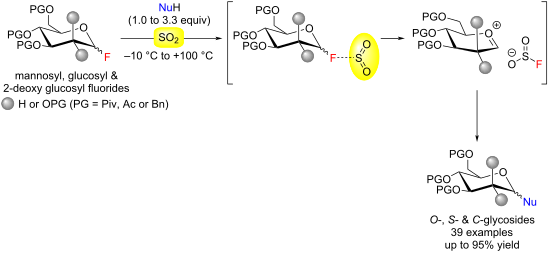
- set). Enthalpy and Gibbs free energy values referenced against the starting value for the substrates and catalyst are given in kcal/mol. Scope of glycosyl acceptors for glycosylation with pivaloyl-protected mannosyl fluoride α-1a in liquid SO2. aUnless otherwise stated, reactions were carried out by



Biochemistry of fluoroprolines: the prospect of making fluorine a bioelement
Beilstein J. Org. Chem. 2021, 17, 439–460, doi:10.3762/bjoc.17.40
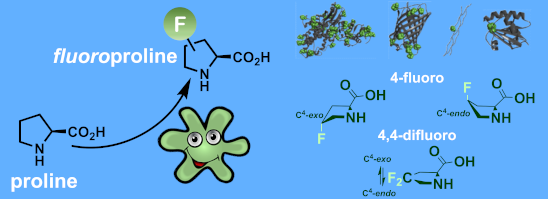
- heterogeneity can markedly complicate folding. In addition, the stability of the amide bonds translates into the thermodynamic stability of the protein structures by altering the free energy of folding. Fluoroprolines alter the relative thermodynamic stability of the amide conformers. Compared to proline, R-Flp


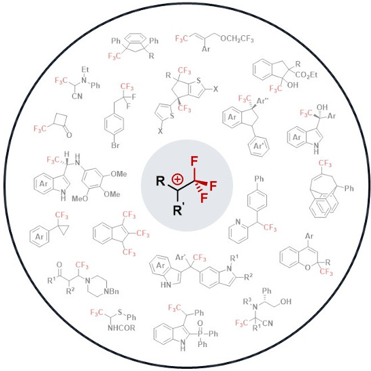
CF3-substituted carbocations: underexploited intermediates with great potential in modern synthetic chemistry
Beilstein J. Org. Chem. 2021, 17, 343–378, doi:10.3762/bjoc.17.32
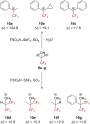
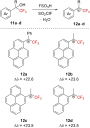
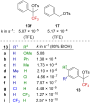
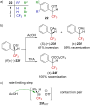
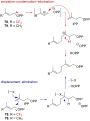
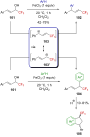
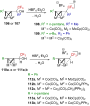
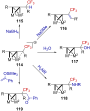
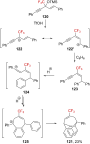
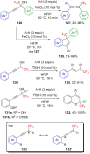
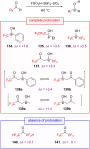
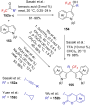
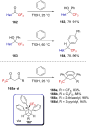
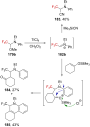
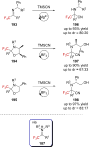
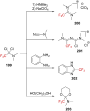
- 5) [38]. Tidwell et al. explored the influence of a CF3 group on the solvolysis reaction of various benzylic sulfonate derivatives [39][40]. They found a linear free-energy relationship between the solvolysis rate of sulfonate 13f in different solvents compared to the one of 2-adamantyl tosylate
- group. Remarkably, they found that CF3 deactivates to such an extent that benzylic tosylate 13f was approximately 10 times less reactive than benzylic tosylate 17 (Figure 2, top). Similarly to the previous study, the Grunwald–Winstein plot [44] gave a linear free-energy relationship between the
- preliminary results, Tidwell et al. envisioned the possibility to study the solvolysis reaction of secondary benzylic sulfonates [48]. In tertiary benzylic sulfonates [39][43], a linear free-energy relationship between the solvolysis rate for the secondary benzylic tosylates 21 (Figure 4) and YOTs was
































Multiswitchable photoacid–hydroxyflavylium–polyelectrolyte nano-assemblies
Beilstein J. Org. Chem. 2021, 17, 166–185, doi:10.3762/bjoc.17.17
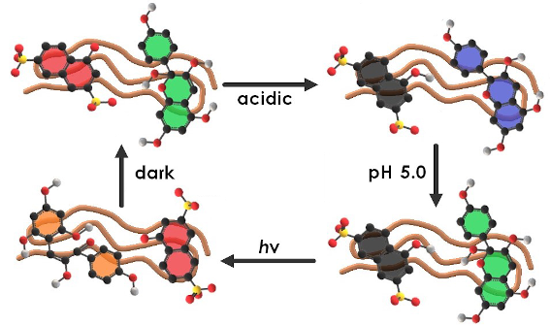
- interactions and secondary interactions such as π–π stacking [34][35][36][37][38][39][40]. The size and shape could be tuned through the free energy and the enthalpy/entropy interplay in the assembly process, which again are encoded in the molecular building block structure [31][37]. Supramolecular structures
- binding constants Kx, which are related to the free energy change ΔG and thus due to ΔG = ΔH − TΔS, also the entropy change ΔS is revealed. Table 5 summarizes the results from the full titration curve fitting. The values correlate to the binding of one monomer of the polymer to Flavy and/or photoacid. For
- that an association occurs because of hydrophobic effects, likely due to the slight hydrophobic nature of Flavy. The total free energy ΔGtotal is negative, which shows that the overall assembly process is spontaneous. The molar ratio (x-axis in Figure 8) representing the increasing addition of poly




Molecular basis for protein–protein interactions
Beilstein J. Org. Chem. 2021, 17, 1–10, doi:10.3762/bjoc.17.1
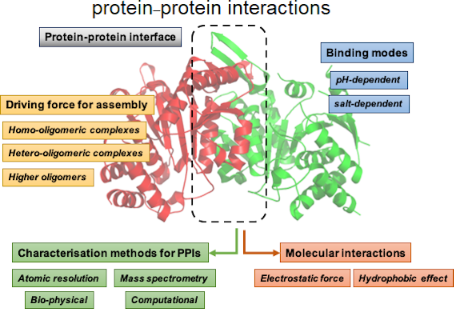
- thermodynamic properties, including the binding constant Kb, the reaction stoichiometry (n), the observed molar calorimetric enthalpy ΔHobs, the entropy ΔS, the heat capacity of the binding ΔCp,obs, and the change in the Gibbs free energy ΔG. As a result, ITC is used to provide a complete thermodynamic
- by the net charge but by different localised charges on the accessible surface residues in the protein monomers. This creates a delicate balance between the interface interaction and the desolvation energy, which affects the binding free energy. After binding occurs, ionisation changes can be induced
- in the protein molecules due to proton uptake and release. Therefore, these events are strongly affected by the pH value and the ionic strength. Variation of the pH value or the ionic strength can result in substantial binding free energy changes [48] or changes in the binding preference [49