
Search results
Search for "diversity" in Full Text gives 586 result(s) in Beilstein Journal of Organic Chemistry. Showing first 200.
New advances in asymmetric organocatalysis II
Beilstein J. Org. Chem. 2025, 21, 766–769, doi:10.3762/bjoc.21.60
- ]. In 2022, three Review articles and nine research papers showcased the diversity and breadth into which asymmetric organocatalysis had grown. This follow-up thematic issue “New advances in asymmetric organocatalysis II” aims to monitor the progress in this exciting area and highlights excellent
- transformation was catalyzed by a calcium complex of BINOL phosphate [29]. As can be seen from the summary above, the articles in this thematic issue cover a diverse array of topics in contemporary asymmetric organocatalysis. Moreover, they also reflect the diversity of our scientific community, as researchers

Recent advances in allylation of chiral secondary alkylcopper species
Beilstein J. Org. Chem. 2025, 21, 639–658, doi:10.3762/bjoc.21.51
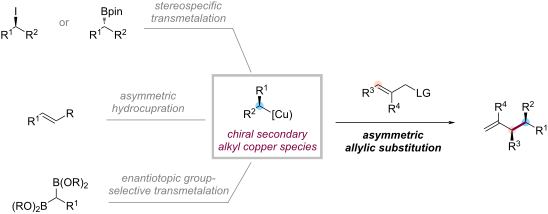
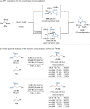
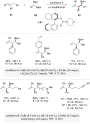
- , including non-toxicity, bench-stability, structural diversity, straightforward preparation, and broad commercial availability. Significant contributions include Sawamura's work with alkyl–9-BBN [32][33][34][35][36][37] as a nucleophile. These developments have collectively transformed copper-catalyzed AAA





Formaldehyde surrogates in multicomponent reactions
Beilstein J. Org. Chem. 2025, 21, 564–595, doi:10.3762/bjoc.21.45
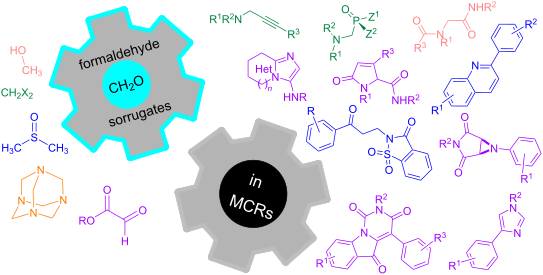
- recent years, multicomponent reactions (MCRs) have become one of the most important synthetic tools coming close to fulfilling the requirements of ideal reactions. They are ideally suited also for the generation of high chemical diversity compounds from simple reagents, either through scaffold
- the MCR product is possible thus increasing the versatility of these reactions in terms of structural diversity and molecular complexity. In this context, a wide variety of heterocycles and macrocycles as important biological scaffolds have been synthesized [6]. One of the most important components
- ] with which a wide range of aromatic and aliphatic disubstituted alkynes were reactive, resulting in a greater diversity of quinolines II. In both cases, regardless of the catalyst used, the MCR tolerates a wide variety of anilines that have either electron-donating or electron-withdrawing groups with


Synthesis of electrophile-tethered preQ1 analogs for covalent attachment to preQ1 RNA
Beilstein J. Org. Chem. 2025, 21, 483–489, doi:10.3762/bjoc.21.35
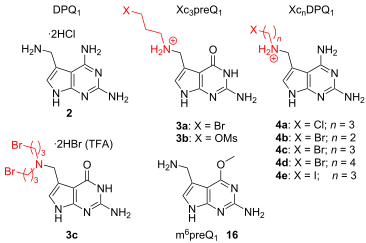
- antibiotic properties, others expand the chemical diversity and thus the functional sophistication of ribonucleic acids, as in the case of Q [3]. In most bacteria, Q biosynthesis is tightly regulated by riboswitches, which are highly structured RNA elements located mostly in the 5’-leader of messenger RNA


New tandem Ugi/intramolecular Diels–Alder reaction based on vinylfuran and 1,3-butadienylfuran derivatives
Beilstein J. Org. Chem. 2025, 21, 444–450, doi:10.3762/bjoc.21.31
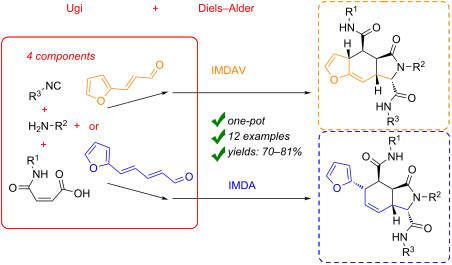
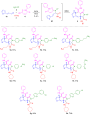
- achieving molecular diversity of derivatives for creating libraries of compounds for bioscreening. Finally, in such a tandem Ugi/IMDA reaction, furyl-2-pentadienal was studied. It was found, that the Ugi adduct formed from (2E,4E)-5-(furan-2-yl)penta-2,4-dienal (8) underwent the IMDA reaction, without




Red light excitation: illuminating photocatalysis in a new spectrum
Beilstein J. Org. Chem. 2025, 21, 296–326, doi:10.3762/bjoc.21.22
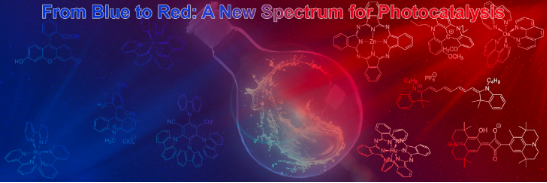
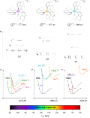
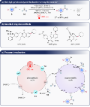
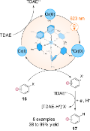
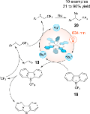
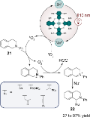
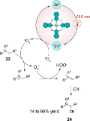
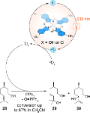
- highly effective platform for improving reaction efficiencies. These molecules can facilitate single-electron transfer or energy transfer under mild conditions, and their structural diversity allows for fine-tuning of their redox potentials and light absorption characteristics. This adaptability makes




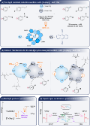



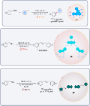









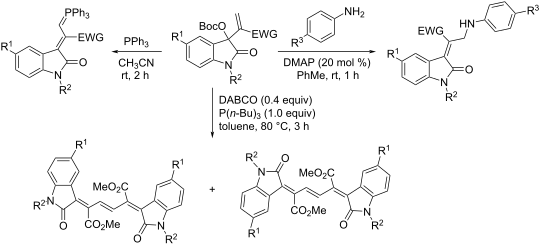
Molecular diversity of the reactions of MBH carbonates of isatins and various nucleophiles
Beilstein J. Org. Chem. 2025, 21, 286–295, doi:10.3762/bjoc.21.21



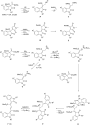
Heteroannulations of cyanoacetamide-based MCR scaffolds utilizing formamide
Beilstein J. Org. Chem. 2025, 21, 217–225, doi:10.3762/bjoc.21.13
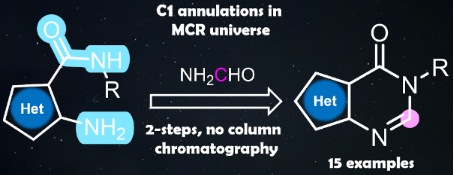
- convergent chemistry characterized by diversity, complexity and efficiency. MCRs are compatible with C1 chemistry due to the generally great tolerance of different functional groups. They have been mostly employed in the synthesis of oxazolidinones and oxazinanones utilizing CO2 and CO [4][16][17][18][19][20
- ., analgesia, anti-inflammation, antihypertension and many more (DB06889, DB07397, DB08777) [47][48][49][50][51][52][53][54][55][56]. Thienopyrimidone derivatives have also been used in the context of other Gewald-based MCRs in the past, but the reported diversity has been rather low [57][58][59][60]. The
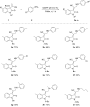
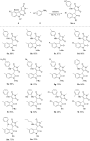
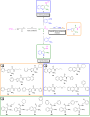
- anthranilic acid and B) access to heteroannulated pyrimidones by MCRs of suitably substituted heterocycles and formamide as C1 source. Access to the key building blocks 2–4 by employing three different nonisocyanide-based MCRs. Diversity and complexity were the essential features of our library of starting




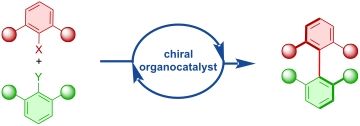
Recent advances in organocatalytic atroposelective reactions
Beilstein J. Org. Chem. 2025, 21, 55–121, doi:10.3762/bjoc.21.6











Synthesis, characterization, and photophysical properties of novel 9‑phenyl-9-phosphafluorene oxide derivatives
Beilstein J. Org. Chem. 2024, 20, 3299–3305, doi:10.3762/bjoc.20.274
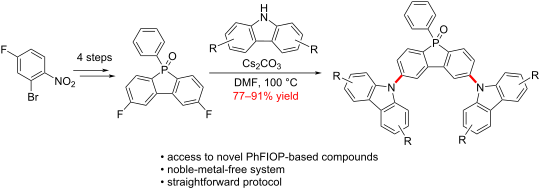
- access to PhFlOP-based TADF emitters. Additionally, the design of TADF emitters with the PhFlOP acceptor moiety and the carbazole donor moiety is lacking structural diversity. Herein, we present a 5-step synthesis of several novel D−A−D-type PhFlOP derivatives with substituted carbazole groups as donors




Reactivity of hypervalent iodine(III) reagents bearing a benzylamine with sulfenate salts
Beilstein J. Org. Chem. 2024, 20, 3281–3289, doi:10.3762/bjoc.20.272
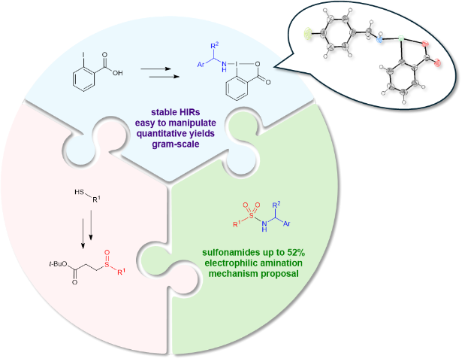
- benziodoxolone was generated in situ, via a reaction of chlorobenziodoxolone with sulfinate salts, followed by the addition of amines or hydrazines, respectively. On the follow-up on our research, we envisaged to extend the diversity of BBX reagents as electrophilic amine reagents and investigated their



Efficient synthesis of fluorinated triphenylenes with enhanced arene–perfluoroarene interactions in columnar mesophases
Beilstein J. Org. Chem. 2024, 20, 3263–3273, doi:10.3762/bjoc.20.270
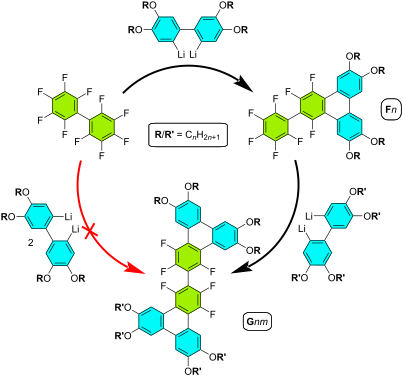
- organolithium derivatives 2,2'-dilithio-4,4',5,5'-tetraalkoxy-1,1'-biphenyl (2Li-BPn). In a continuation of this study, aiming at testing the limits of the reaction and providing a large diversity of structures, a structurally related series of compounds is reported here, namely 1,2,4-trifluoro-6,7,10,11
- increase their structural and functional diversity. In the modern organic synthetic tool-box, the fluoroarene nucleophilc substitution (SNFAr) reaction possesses many outstanding advantages in the synthesis of π-conjugated functional molecules: the electrophiles are plentiful and include cheaply available



Discovery of ianthelliformisamines D–G from the sponge Suberea ianthelliformis and the total synthesis of ianthelliformisamine D
Beilstein J. Org. Chem. 2024, 20, 3205–3214, doi:10.3762/bjoc.20.266
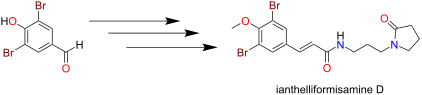
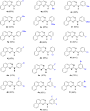
- and fauna have evolved over billions of years to survive within this unique environment [1][2], which has led to the production and diversification of unique and novel metabolites with specialised biological functions [3][4]. The richest diversity of marine metabolites are derived from invertebrates


![[Graphic 1]](/bjoc/content/inline/1860-5397-20-266-i2.svg?max-width=637&scale=1.18182)
![[Graphic 2]](/bjoc/content/inline/1860-5397-20-266-i3.svg?max-width=637&scale=1.18182)
![[Graphic 3]](/bjoc/content/inline/1860-5397-20-266-i4.svg?max-width=637&scale=1.18182)

![[Graphic 4]](/bjoc/content/inline/1860-5397-20-266-i5.svg?max-width=637&scale=1.18182)
![[Graphic 5]](/bjoc/content/inline/1860-5397-20-266-i6.svg?max-width=637&scale=1.18182)

Direct trifluoroethylation of carbonyl sulfoxonium ylides using hypervalent iodine compounds
Beilstein J. Org. Chem. 2024, 20, 3182–3190, doi:10.3762/bjoc.20.263
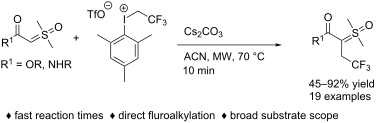
- successful derivatization of sulfoxonium ylides with trifluoroethyl or tetrafluoropropyl groups, and provides valuable insights into the scope and limitations of this approach. Nineteen examples have been prepared (45–92% yields), with structural diversity modified at two key sites on the sulfoxonium ylide


Multicomponent reactions driving the discovery and optimization of agents targeting central nervous system pathologies
Beilstein J. Org. Chem. 2024, 20, 3151–3173, doi:10.3762/bjoc.20.261

- rapid generation of chemical libraries with high diversity in a time-efficient and environmentally sustainable manner. In this review, we focus on central nervous system (CNS) disorders, particularly Alzheimer's disease, Parkinson's disease, schizophrenia, depression, and epilepsy, where MCRs have
- reaction: Based on the power of multicomponent reactions to afford rapidly and efficiently chemical diversity and continuing with an effort to develop new MTDL, Malek et al. [46] described in 2019 the design, synthesis, and the biological evaluation of new racemic chromone donepezil hybrids (CDHs) via
- years, the Ugi reaction has emerged as a highly considered reaction due to its mild conditions, broad applications, and product diversity. It enables the selective assembly of precursors, facilitating various post-reaction transformations such as deprotection cyclization, 1,3-dipolar cycloaddition, and




Synthesis of the 1,5-disubstituted tetrazole-methanesulfonylindole hybrid system via high-order multicomponent reaction
Beilstein J. Org. Chem. 2024, 20, 3077–3084, doi:10.3762/bjoc.20.256
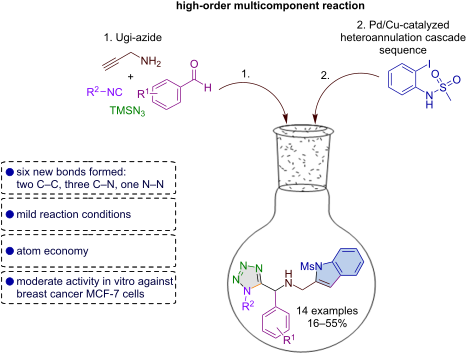
- structural diversity and complexity compared to classical 3- or 4-CRs [17][18][19]. In the same context, the hybridization of 1,5-disubstituted tetrazoles with an indole moiety using I-MCRs such as the Ugi-azide reaction as a key step, is very limited. To our knowledge, only three reactions have been



Chemical structure metagenomics of microbial natural products: surveying nonribosomal peptides and beyond
Beilstein J. Org. Chem. 2024, 20, 3050–3060, doi:10.3762/bjoc.20.253
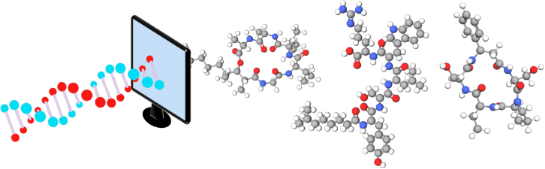
- microorganisms is readily cultured in the laboratory [14][15][16]. More recently, large-scale sequencing studies and bioinformatic analyses estimated that BGF-based discovery covered only ≈1% of the biosynthetic diversity nature has to offer [17]. This is because there are two pre-requisites for a natural
- NRP. AntiSMASH is freely available for the research community worldwide [61]. Underexplored and oversampled NRP building blocks With these prediction tools at hand, it became possible to survey the biosynthetic diversity of NRPs from a new perspective. Specifically, Jian et al. compiled data in
- contrast to BGF only being amenable to actively expressed BGCs in readily cultured microorganisms, there are very few pre-requisites to DNA sequencing, and therefore GB1 represents a (nearly) even sampling of the universe of microbial biosynthetic diversity. Jian et al. applied A domain prediction


Tunable full-color dual-state (solution and solid) emission of push–pull molecules containing the 1-pyrindane moiety
Beilstein J. Org. Chem. 2024, 20, 3016–3025, doi:10.3762/bjoc.20.251
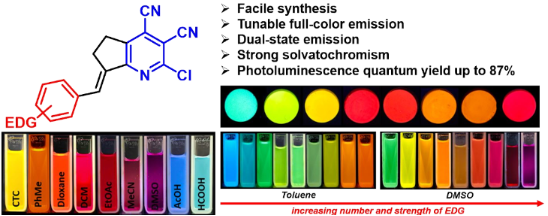
- interactions in the nonplanar pyrindanes 1. The obtained compounds 1, having a 2-chloropyridine-3,4-dicarbonitrile moiety, contained easily modifiable functional groups [48][49][50][51][52][53][54][55]. This qualified compounds 1 as promising building blocks for diversity-oriented synthesis [56][57] and for
- the facile preparation of molecular libraries with an emphasis on skeletal diversity for the development of new push–pull molecules. Results and Discussion Synthesis and structure determination A two-step procedure was used to obtain the target compounds (Scheme 1). Cyclopenta[b]pyridine derivative 2


Multicomponent synthesis of α-branched amines using organozinc reagents generated from alkyl bromides
Beilstein J. Org. Chem. 2024, 20, 2834–2839, doi:10.3762/bjoc.20.239
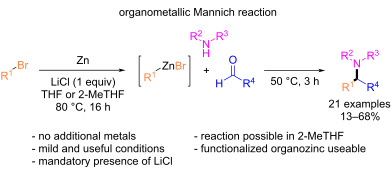
- organometallic Mannich couplings involving nonstabilized organometallics are uncommon and mostly limited to dialkylzinc reagents, likely due to their commercial availability, their significant reactivity, and their functional-group tolerance [7][8][9][10]. However, the molecular diversity accessible with these


Synthesis of tricarbonylated propargylamine and conversion to 2,5-disubstituted oxazole-4-carboxylates
Beilstein J. Org. Chem. 2024, 20, 2827–2833, doi:10.3762/bjoc.20.238

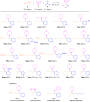
- (NAIs) [13][14][19][20][21][22]. To apply the latter method to the preparation of N,1,1-tricarbonylated propargylamines, the corresponding NAIs are necessary. However, the poor structural diversity of available NAIs limits the use of this method. For example, N,1-dicarbonylated NAIs derived from α-keto


Investigation of a bimetallic terbium(III)/copper(II) chemosensor for the detection of aqueous hydrogen sulfide
Beilstein J. Org. Chem. 2024, 20, 2818–2826, doi:10.3762/bjoc.20.237
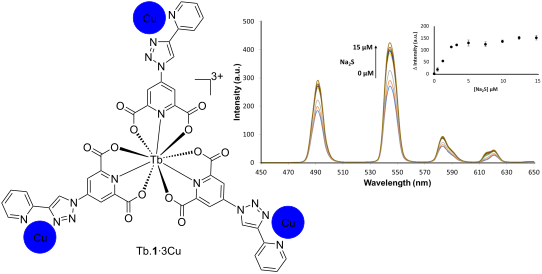
- advances have been made, there remain critical challenges and unmet needs that call for innovative approaches. One of the key motivations for this exploration is the increasing complexity and diversity of analytes that require detection in real-world scenarios. Traditional methods, while effective, often


Synthesis of spiroindolenines through a one-pot multistep process mediated by visible light
Beilstein J. Org. Chem. 2024, 20, 2722–2731, doi:10.3762/bjoc.20.230
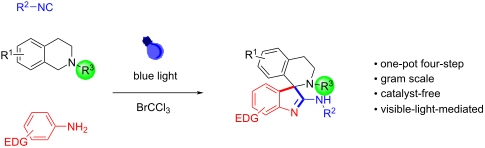
- : isocyanide; multicomponent reactions; one-pot reaction; oxidation; spiroindolenine; Ugi reaction; visible light; Introduction Diversity-oriented synthesis (DOS) is a successful approach to biologically active scaffolds directed to create an enormous exploratory space in pharmaceutical hit discovery [1][2
- construction of spirocyclic motifs is often associated with increased synthetic effort and number of synthetic steps. Hence, developing efficient strategies to access spirocyclic targets with structural diversity is highly desirable and valuable. Among the bioactive compounds containing spiro atoms, the spiro
- spiro-heterocyclic indolenines from readily available starting materials under mild conditions and in a diversity-oriented fashion remains desirable. In this contest, oxidative isocyanide-based multicomponent reactions (oxidative IMCRs) can be considered as a convenient tool [15]. Actually, the use of




5th International Symposium on Synthesis and Catalysis (ISySyCat2023)
Beilstein J. Org. Chem. 2024, 20, 2704–2707, doi:10.3762/bjoc.20.227
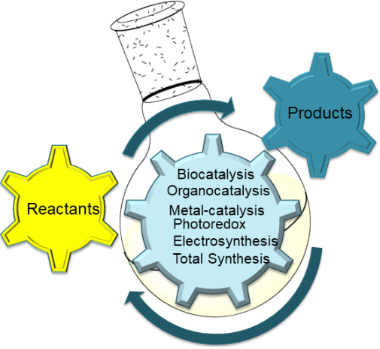
- reported that imidazole analogs behaved differently due to the ʟ-histidine unit representing a nonphenyl scaffold. Some important data on the bioisosteric modifications of 2-phenethylamine derivatives, focusing on their affinity and core aromatic diversity, were included. In another Review article

The scent gland composition of the Mangshan pit viper, Protobothrops mangshanensis
Beilstein J. Org. Chem. 2024, 20, 2644–2654, doi:10.3762/bjoc.20.222
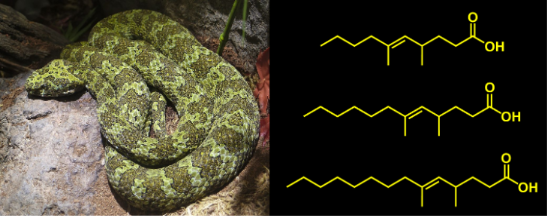
- -dimethyltetradec-5-enoic acid (F, Table 2). No differences between samples from males and females were detected. As discussed in the introduction, fatty acids are common constituents of the SGS of many snakes and show great structural diversity. Their typical chain length is between 2–26 carbons and they have been


Synthesis and cytotoxicity studies of novel N-arylbenzo[h]quinazolin-2-amines
Beilstein J. Org. Chem. 2024, 20, 2592–2598, doi:10.3762/bjoc.20.218
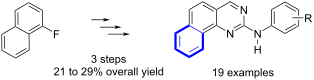
- should allow us to introduce the molecular diversity on the anilino moiety in the last step through a palladium-catalyzed reaction (Scheme 1). Therefore, we prepared first the core structure 3 in two steps from the commercially available fluoronaphthalene 1. Metallation, followed by trapping with DMF