
Search results
Search for "computational" in Full Text gives 617 result(s) in Beilstein Journal of Organic Chemistry. Showing first 200.
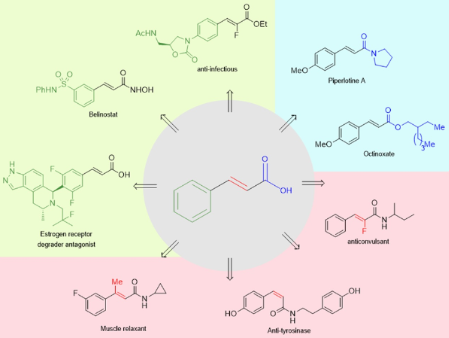
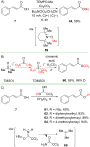
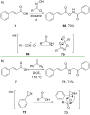
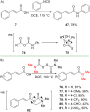
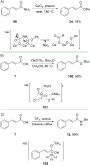
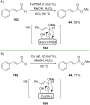
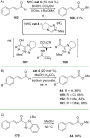
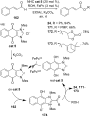
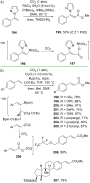
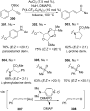
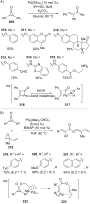
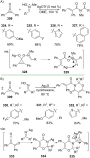
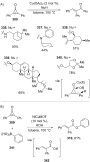
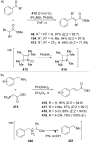
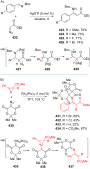
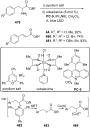
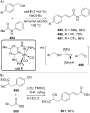
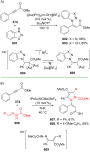
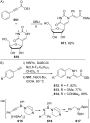
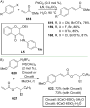
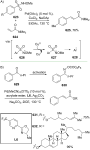
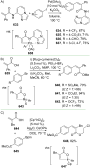
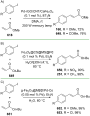
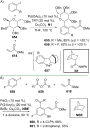
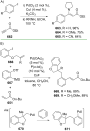
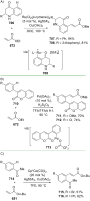
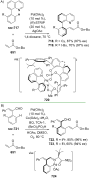
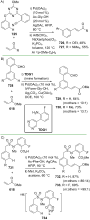
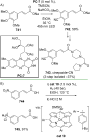
Recent advances in synthetic approaches for bioactive cinnamic acid derivatives
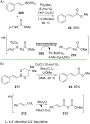
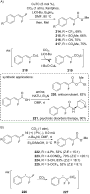
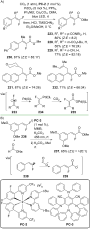
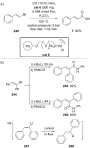
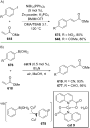
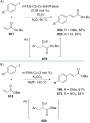
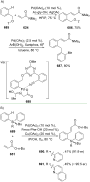
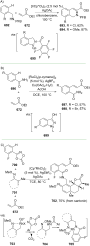
Beilstein J. Org. Chem. 2025, 21, 1031–1086, doi:10.3762/bjoc.21.85
































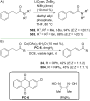

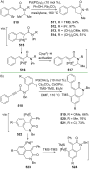
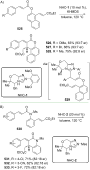
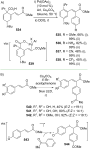

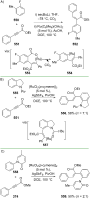
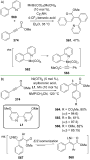
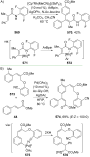


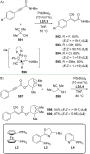






Study of tribenzo[b,d,f]azepine as donor in D–A photocatalysts
Beilstein J. Org. Chem. 2025, 21, 935–944, doi:10.3762/bjoc.21.76
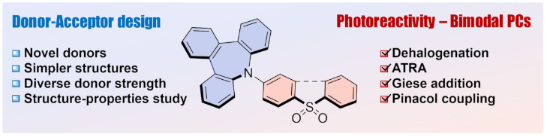
- computational study to design new PCs to be employed in atom transfer radical polymerization (O-ATRP) [17]. Notably, the sulfur-based structure 2 showed excellent performance for this transformation. One year later, the same research group reported its use in a reversible addition-fragmentation chain-transfer



Data accessibility in the chemical sciences: an analysis of recent practice in organic chemistry journals
Beilstein J. Org. Chem. 2025, 21, 864–876, doi:10.3762/bjoc.21.70

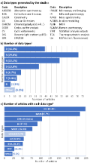
- ]. Repositories for computational materials science, such as the NOvel MAterials Discovery (NOMAD) Repository [13] and Materials Cloud [14] also enable code and workflows to be stored and shared along with the data. In the chemical sciences, sharing of thermodynamic property data is of increasing importance for
- , acquisition and processing parameters), and metadata (spectrometer specifications, acquisition and processing software, and sample information). Two of the ACS journals, J. Org. Chem. and Organometallics, give instructions for preparing data files of Cartesian coordinates from computational studies, requiring
- across the associated files, this practice concurrently discourages the use of InChI [50] and SMILES [51] identifiers. A lack of unambiguous structure identifiers makes it difficult (or impossible) to extract the associated spectroscopic data or properties for reuse through computational means. Overall





4-(1-Methylamino)ethylidene-1,5-disubstituted pyrrolidine-2,3-diones: synthesis, anti-inflammatory effect and in silico approaches
Beilstein J. Org. Chem. 2025, 21, 817–829, doi:10.3762/bjoc.21.65
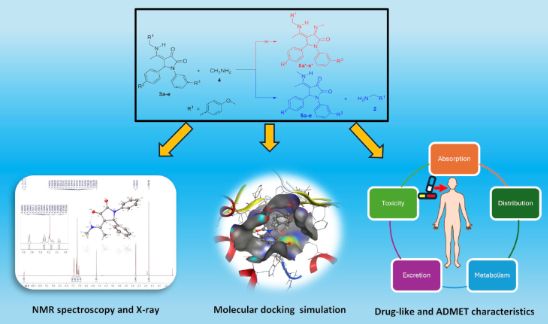
- , while density functional theory (DFT) calculations provided insights into their electronic properties, including reactivity and stability. This comprehensive approach, integrating synthesis, biological evaluation, and computational methods, highlights the potential of 4-(1-methylamino)ethylidene-1,5
- ± 9.93 µM). The integration of synthetic approaches, structural studies, computational analyses, and experimental validations underscores the potential of 4-(1-methylamino)ethylidene-1,5-disubstituted pyrrolidine-2,3-diones, particularly compound 5e, as effective candidates for anti-inflammatory drug
- determine the melting points of all products. All NMR spectra were recorded on a Bruker Avance II+ 600 MHz instrument and chemical shifts (δ) are reported in ppm (parts per million) relative to tetramethylsilane (TMS) or internal deuterated solvent signals. Computational methods Prediction of drug-likeness


Carbon-rich materials: from polyaromatic molecules to fullerenes and other carbon allotropes
Beilstein J. Org. Chem. 2025, 21, 798–799, doi:10.3762/bjoc.21.62
- chemistry, computational chemistry, physics, electrochemistry, polymer chemistry, supramolecular chemistry, and biochemistry. All are working on fascinating topics associated with these exciting molecules. Furthermore, the authors come from all over the world, not only from Switzerland and Japan but also
Development and mechanistic studies of calcium–BINOL phosphate-catalyzed hydrocyanation of hydrazones
Beilstein J. Org. Chem. 2025, 21, 755–765, doi:10.3762/bjoc.21.59
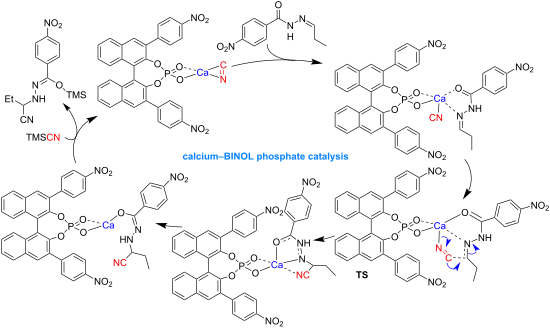
- enantioselectivity achieved with the calcium catalyst remains modest, mainly due to competing pathways for the Z- and E-hydrazone isomers leading to opposite enantiomers. The experimental results confirm these computational proposals. Keywords: asymmetric synthesis; calcium–BINOL phosphate catalysis; hydrocyanation
- cyanide source. This observation complies with the results from the computational study (Figure 2). In addition, some TMSCN is consumed together with an amount of BINOL phosphate through the probably parasitic formation of catalytically inactive trimethylsilyl phosphate 3a, which we were able to
- the computational investigation, could not be isolated either – probably due to its high sensitivity to hydrolysis. However, a 2D 1H-15N NMR correlation spectrum showed no interactions of hydrogen nuclei in silicon-bound methyl groups and any of the nitrogens in the product. This led us to conclude


Recent advances in allylation of chiral secondary alkylcopper species
Beilstein J. Org. Chem. 2025, 21, 639–658, doi:10.3762/bjoc.21.51
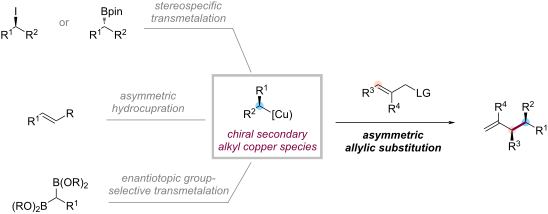
- transmetalation sequence (Scheme 6). For secondary boronic esters, Morken and co-workers conducted a systematic investigation to develop an efficient activation strategy [47]. Computational studies using DFT revealed an important relationship between the length of the boron–carbon bonds and the corresponding
- , computational density functional theory calculations were performed focusing on the oxidative addition transition states (S,R)-TS8 and (S,S)-TS9 (Scheme 19b). The theoretical analysis revealed a notable energy difference between these diastereomeric transition states, with (S,R)-TS8 being 4.11 kcal/mol lower in
- with 18-crown-6. CuH-catalyzed enantioselective allylic substitution of terminal alkynes. Copper-catalyzed enantiotopic-group-selective allylic substitution of 1,1-diborylalkanes. (a) Computational and (b) experimental studies to elucidate the mechanistic details of the enantiotopic-group-selective





Beyond symmetric self-assembly and effective molarity: unlocking functional enzyme mimics with robust organic cages
Beilstein J. Org. Chem. 2025, 21, 421–443, doi:10.3762/bjoc.21.30
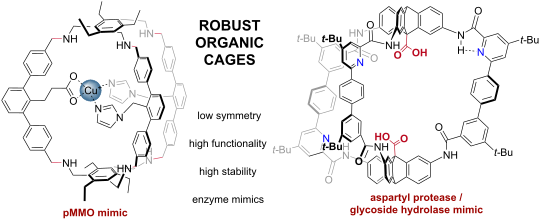
- exploiting emergent geometric rules and post-assembly modifications; (3) improved screening and collection of detailed structure–activity-relationship (SAR) data for modular systems to allow systematic design, rational and computational development, and identification of novel activity. These developments
- low-symmetry conformation of cage 3 in solution [39]. Due to their stability, we can typically reclaim our cages up to quantitatively after binding or catalysis experiments, often just via a work-up and precipitation. This breadth of available data opens considerable opportunities in computational and
- , means there are opportunities in robust organic cage research not present in any other type of cavity currently explored. Automation and calculation in cavity synthesis and study The computational discovery of new materials has advanced in recent years with increased computational power [405]. Imine




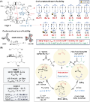
Unraveling aromaticity: the dual worlds of pyrazole, pyrazoline, and 3D carborane
Beilstein J. Org. Chem. 2025, 21, 412–420, doi:10.3762/bjoc.21.29
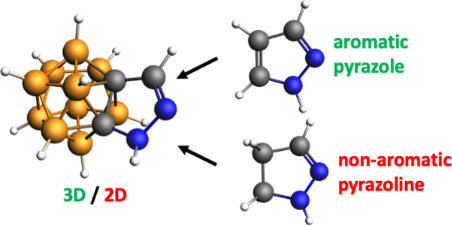
- of aromaticity. Therefore, relying solely on NICS can be misleading, and other computational indicators, along with experimental or structural data, should be used to accurately assess aromaticity. Keywords: 3D aromaticity; carborane; density functional theory; NICS ambiguity; pyrazole
- highly aromatic systems with highly negative NICS values (−25 to −30 ppm), although it can also happen with lower values. Thus, relying solely on NICS can be misleading, and other computational indicators, as well as experimental or structural data, should be considered. Computational Details All


Identification and removal of a cryptic impurity in pomalidomide-PEG based PROTAC
Beilstein J. Org. Chem. 2025, 21, 407–411, doi:10.3762/bjoc.21.28
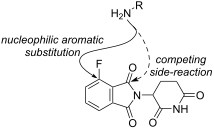
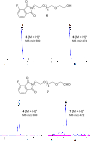
- instability, where the cleavage of the phthalimide and glutarimide rings comprises the major metabolic pathways [9][10]. Computational analysis confirms that C1, C3, C2’, and C4’ are the most electrophilic sites of thalidomide (Figure 4). As expected, introducing a fluorine atom to C4 activates it toward SNAr
- the PEG chain on the relative retention time of 8 and 9 on HPLC. Supporting Information Supporting Information File 18: Computational details, general experimental information, synthetic procedures, compound characterization data, and copies of NMR spectra. Funding This work is supported by the NIH




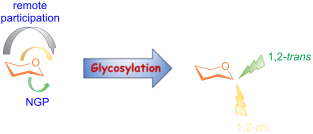
The effect of neighbouring group participation and possible long range remote group participation in O-glycosylation
Beilstein J. Org. Chem. 2025, 21, 369–406, doi:10.3762/bjoc.21.27
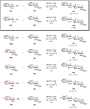
- is not only difficult but is also defective in principle. This dynamic continuum has also been depicted by an elaborate computational simulation report by Fu et al. in 2021 [41] which was a major follow-up of the work by Crich and co-workers in 2018 [29]. In general cases, the axial glycosides also




Synthesis, structure, ionochromic and cytotoxic properties of new 2-(indolin-2-yl)-1,3-tropolones
Beilstein J. Org. Chem. 2025, 21, 358–368, doi:10.3762/bjoc.21.26
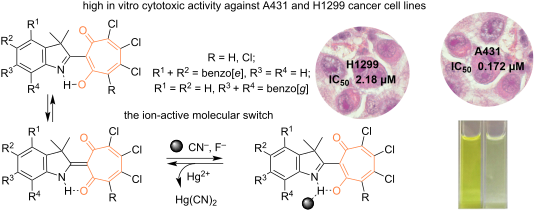
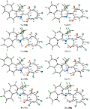
- ://www.ccdc.cam.ac.uk/data_request/cif. Computational methods Quantum chemical calculations were performed using the Gaussian 09 software package [34] with hybrid functional PBE0 [35][36] and 6-311+G (d,p) basis set. Solvent effects were modeled by using polarizable continuum model (PCM) [37] within the integral




Antibiofilm and cytotoxic metabolites from the entomopathogenic fungus Samsoniella aurantia
Beilstein J. Org. Chem. 2025, 21, 327–339, doi:10.3762/bjoc.21.23
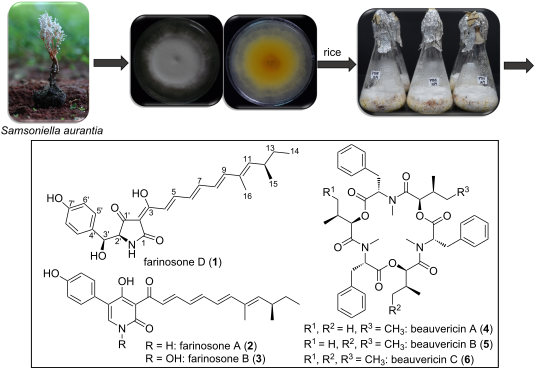
- the samples and the control group was assessed through a two-tailed Student's t-test. The level of statistical significance was set at p < 0.05. The examination was conducted utilizing GraphPad Prism 9® (GraphPad Software, San Diego, CA, USA). Computational details The distribution of conformers was


Synthesis and characterizations of highly luminescent 5-isopropoxybenzo[rst]pentaphene
Beilstein J. Org. Chem. 2025, 21, 270–276, doi:10.3762/bjoc.21.19
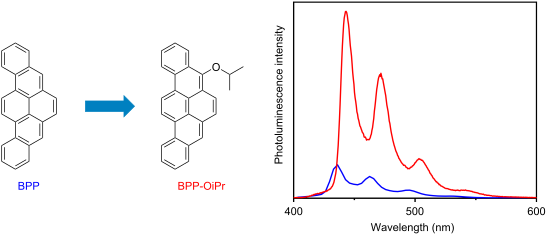
- BPP 2 and BPP-OiPr 3. Supporting Information Supporting Information File 114: Experimental and computational details, X-ray crystallography, synthesis and characterization of new compounds, additional PL, mass, and NMR spectra, and theoretical calculations. Acknowledgements We appreciate the help




Quantifying the ability of the CF2H group as a hydrogen bond donor
Beilstein J. Org. Chem. 2025, 21, 189–199, doi:10.3762/bjoc.21.11
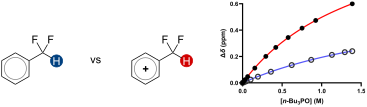
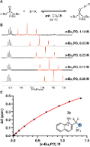
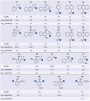
- results demonstrate the reliability of this relatively efficient computational approach for predicting the HB donation ability of CF2H-containing molecules. We further conducted natural bond orbital (NBO) [56] second-order perturbation analysis [57] to estimate the interaction energies (ELP→σ*) of the



Recent advances in organocatalytic atroposelective reactions
Beilstein J. Org. Chem. 2025, 21, 55–121, doi:10.3762/bjoc.21.6











Emerging trends in the optimization of organic synthesis through high-throughput tools and machine learning
Beilstein J. Org. Chem. 2025, 21, 10–38, doi:10.3762/bjoc.21.3
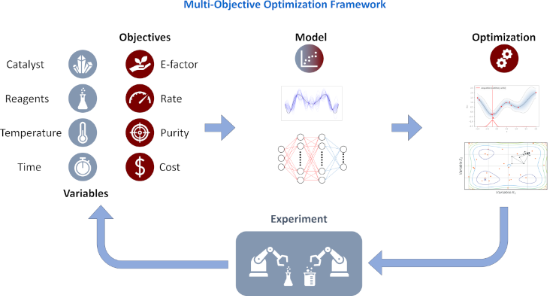
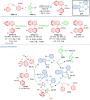
- been performed based on DOE methodologies, with the objective of maximizing the yield of the reaction product. However, these techniques are not well suited to find the global optimal conditions and scale exponentially with the number of variables. Computational approaches that rely on optimization
- algorithms offer more efficient ways to obtain the optimal conditions, without requiring an exponential number of experiments per variable to be optimized. Early examples of chemical reaction conditions optimization through computational approaches focused on the application of black-box optimization


Chemical glycobiology
Beilstein J. Org. Chem. 2025, 21, 8–9, doi:10.3762/bjoc.21.2
- . [12] in the context of photoswitchable ligands to the lectin LecA. Staying in the theme of lectin characterization, Lundstrøm et al. study the glycan binding profile of CMA1 originating from melon [13]. A time that sees great opportunities in computational biology also breeds innovative applications
- in the glycosciences. A key aspect is the modelling of protein–glycan interactions. Marcisz et al. study the power of umbrella sampling in distinguishing the interactions between different glycosaminoglycans and their receptors [14]. Nieto-Fabregat et al. provide a detailed overview on computational
- experimental and computational efforts, developing a neural-network-based approach for the interpretation of glycan structures from their vibrational fingerprints [17]. We anticipate that this diverse collection of reports across the entire spectrum of the chemical sciences cements the readers’ understanding
Direct trifluoroethylation of carbonyl sulfoxonium ylides using hypervalent iodine compounds
Beilstein J. Org. Chem. 2024, 20, 3182–3190, doi:10.3762/bjoc.20.263
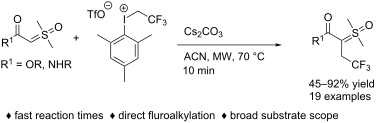
- deprotonation would complete the pathway. The alternative mechanistic proposal is an SN2 reaction [40][41][42] between 1a and the iodonium ion 2a’, which directly furnishes B without invoking halogen bonded adducts. To assess which of these mechanistic possibilities was more probable, we turned to computational
- easily available 2,2,2-trifluoroethyl(mesityl)iodonium triflate reagent enabled the straightforward trifluoroethylation of diverse sulfoxonium ylides under mild conditions and short reaction times. Various computational strategies were also employed to differentiate between competing halogen bond
- Information File 32: Experimental part, NMR spectra, computational details and crystallgraphic data. Acknowledgements We would like to acknowledge the Schipper lab at the University of Waterloo for providing access to the microwave reactor used in this study. We would also like to acknowledge Boris Ragula


Surprising acidity for the methylene of 1,3-indenocorannulenes?
Beilstein J. Org. Chem. 2024, 20, 3144–3150, doi:10.3762/bjoc.20.260
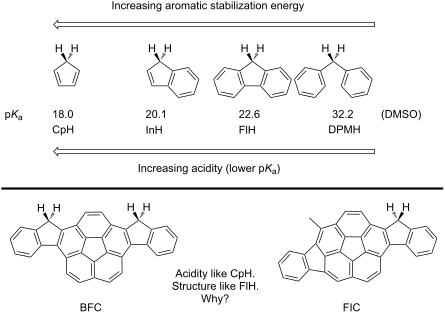
- is more nuanced [10][11]. Subsequently, literature and computational examples reveal a leitmotif for CpH-PAH-based redox-active carbon-rich materials. Results and Discussion From competitive titrations against 9-C6F5-fluorene (pKa = 28.14 in CH3CN) [12][13] and (4-Me-C6F4)(C6H5)CHCN (pKa = 26.98 in
- , however, using them in reverse. The standard uncertainty estimates of the pKa values of FIC and BFC in DMSO are 0.8 pKa units. Synthesis Material used to measure the acidity of compounds BFC and FIC was prepared previously by methods reported in reference [9]. Computational methods The structural and
- aromatic hydrocarbon acidities I. Results of pKa measurements in acetonitrile. Acknowledgements High-performance computational work was carried out using the supercomputer at SPST Tianjin University. Funding Experimental work at Tartu was carried out using the instrumentation at the Estonian Center of


Controlled oligomerization of [1.1.1]propellane through radical polarity matching: selective synthesis of SF5- and CF3SF4-containing [2]staffanes
Beilstein J. Org. Chem. 2024, 20, 3134–3143, doi:10.3762/bjoc.20.259
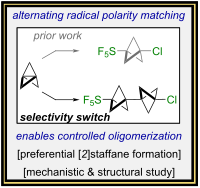
- truncated after incorporation of two bicyclopentane (BCP) units. Synthetic and computational studies suggest this phenomenon can be attributed to alternating radical polarity matching. In addition, single-crystal X-ray diffraction (SC-XRD) data reveal structurally interesting features of the CF3SF4
- activation alone. Overall, our results suggest that this alternating polarity matching effect is subtle and subject to mitigation yet can lead to desirable products if employed thoughtfully. Lastly, following our synthetic and computational studies, accessing a CF3SF4-containing [2]staffane in good yield and
- synthetic and computational study demonstrates that selective one-pot syntheses of [2]staffanes can be achieved when employing reagents that serve as radical sources of "extreme" electron-withdrawing groups (e.g., SF5 or CF3SF4), which impact relative philicities of the bicyclopentyl radical intermediates


Advances in the use of metal-free tetrapyrrolic macrocycles as catalysts
Beilstein J. Org. Chem. 2024, 20, 3085–3112, doi:10.3762/bjoc.20.257
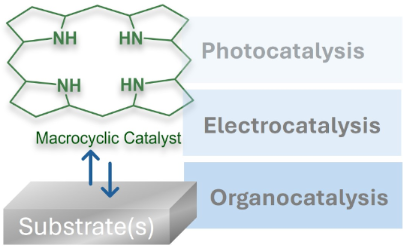
- combination of computational and experimental methods to study the electrocatalytic activity of the hydrogen evolution reaction (HER) catalyzed by free base 5,10,15-tris(pentafluorophenyl)corrole (98) [112]. Their work showed that using p-toluenesulfonic acid as the proton source, 98 was able to produce


Enantioselective regiospecific addition of propargyltrichlorosilane to aldehydes catalyzed by biisoquinoline N,N’-dioxide
Beilstein J. Org. Chem. 2024, 20, 3069–3076, doi:10.3762/bjoc.20.255
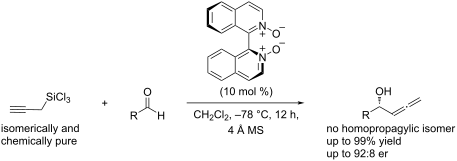
- % yield with 61:39–92:8 enantiomeric ratios. Furthermore, possible mechanisms of propargyl–allenyl isomerization of propargyltrichlorosilane were computationally investigated. Keywords: α-allenic alcohol; computational chemistry; Lewis base catalysis; organocatalysis; propargyltrichlorosilane


Chemical structure metagenomics of microbial natural products: surveying nonribosomal peptides and beyond
Beilstein J. Org. Chem. 2024, 20, 3050–3060, doi:10.3762/bjoc.20.253
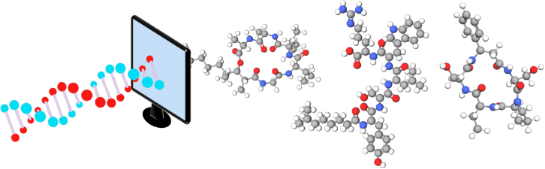
- ]. Last but not least, predicted polyketide structures can be synthesized in a streamlined and automated fashion by using a microfluidic device reported by Burke and co-workers [84][85]. As such, the necessary computational and synthetic tools are all in place to examine the PK chemical space and to


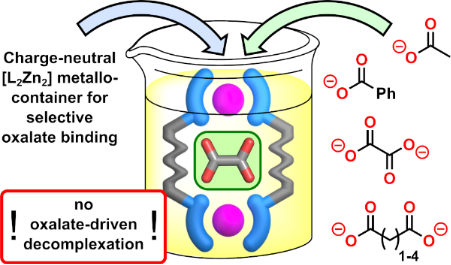
Tailored charge-neutral self-assembled L2Zn2 container for taming oxalate
Beilstein J. Org. Chem. 2024, 20, 3007–3015, doi:10.3762/bjoc.20.250
- Information Supporting Information File 2: Synthetic protocols, characterization data, NMR spectra, guest binding investigations, data fitting, and computational modeling details. Funding The authors are grateful for financial support by the Fonds der Chemischen Industrie (FCI) through a Liebig grant and the