
Search results
Search for "breast cancer" in Full Text gives 100 result(s) in Beilstein Journal of Organic Chemistry.
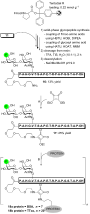
Novel solid-phase strategy for the synthesis of ligand-targeted fluorescent-labelled chelating peptide conjugates as a theranostic tool for cancer
Beilstein J. Org. Chem. 2018, 14, 2665–2679, doi:10.3762/bjoc.14.244
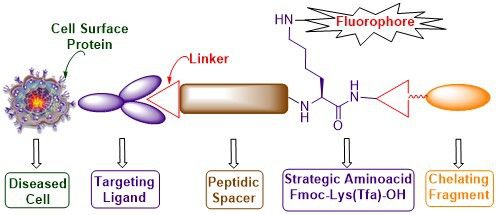
- and Sjogren's disease are caused by activated macrophages [16]. Recently EC17, (λex = 465–490 nm and λem = 520–530 nm) a conjugate of folic acid and fluorescein isothiocyanate has been used for intraoperative surgery of ovarian cancer [17], lung adenocarcinoma [18][19][20], and breast cancer [21


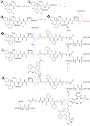
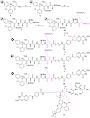

Microwave-assisted synthesis of biologically relevant steroidal 17-exo-pyrazol-5'-ones from a norpregnene precursor by a side-chain elongation/heterocyclization sequence
Beilstein J. Org. Chem. 2018, 14, 2589–2596, doi:10.3762/bjoc.14.236
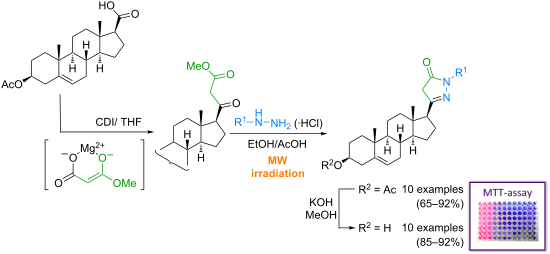
- '-ones and their deacetylated analogs were screened on three human adherent breast cancer cell lines (MCF7, T47D and MDA-MB-231): the microculture tetrazolium assay revealed that some of the presented derivatives exerted cell growth inhibitory effects on some of these cell lines comparable to those of
- antiproliferative effects were determined by means of the MTT assay [20] on a panel of adherent breast cancer cell lines (MCF7, T47D and MDA-MB-231) after treatment for 72 h (Table 2). All compounds were initially screened at 10 and 30 μM concentrations and for those compounds that elicited growth inhibition of at
- situ liberation of the reagent from its salt in EtOH followed by the heterocyclization reaction through the addition of AcOH. Some of the presented compounds 6h, 7f, 7i and 7j exerted considerable antiproliferative activity with promising cancer selectivity on a panel of human breast cancer cell lines


Comparative cell biological study of in vitro antitumor and antimetastatic activity on melanoma cells of GnRH-III-containing conjugates modified with short-chain fatty acids
Beilstein J. Org. Chem. 2018, 14, 2495–2509, doi:10.3762/bjoc.14.226
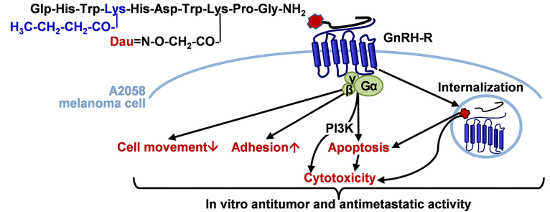
- lines (e.g., colon [20], breast cancer cells [21]). Based on a former receptor binding experiment, the conjugates with Lys(Ac) or Lys(Bu) have a more suitable structure for receptor binding, which is even more preferential in case of the butyryl side chain; however, the even longer side chain linked to
- depending on the cellular milieu or function, the GnRH analogs could elicit different – even opposite – actions [6][40]. For example, Aguilar-Rojas and his co-workers reported a similar combination of actions (invasion inhibitory and adhesion increasing effects) of a GnRH agonist in a breast cancer cell


Natural and redesigned wasp venom peptides with selective antitumoral activity
Beilstein J. Org. Chem. 2018, 14, 1693–1703, doi:10.3762/bjoc.14.144
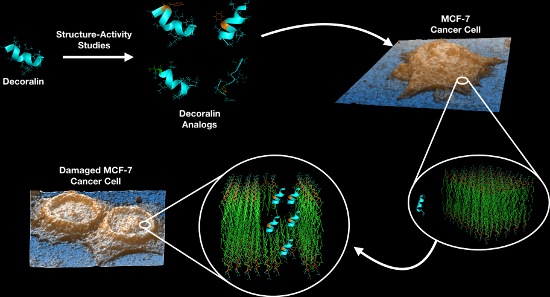
- , Cambridge, 02139, MA, United States of America 10.3762/bjoc.14.144 Abstract About 1 in 8 U.S. women (≈12%) will develop invasive breast cancer over the course of their lifetime. Surgery, chemotherapy, radiotherapy, and hormone manipulation constitute the major treatment options for breast cancer. Here, we
- low as 12.5 μmol L−1 for the selective targeting of MCF-7 breast cancer cells. Flow cytometry assays further revealed that treatment with wild-type (WT) peptide Dec-NH2 led to necrosis of MCF-7 cells. Additional atomic force microscopy (AFM) measurements indicated that the roughness of cancer cell
- conformational propensity led to peptide inactivation, whereas increasing the net positive charge of peptides enhanced their activity. We present peptide templates with selective activity towards breast cancer cells that leave normal cells unaffected. These templates represent excellent scaffolds for the design




Drug targeting to decrease cardiotoxicity – determination of the cytotoxic effect of GnRH-based conjugates containing doxorubicin, daunorubicin and methotrexate on human cardiomyocytes and endothelial cells
Beilstein J. Org. Chem. 2018, 14, 1583–1594, doi:10.3762/bjoc.14.136
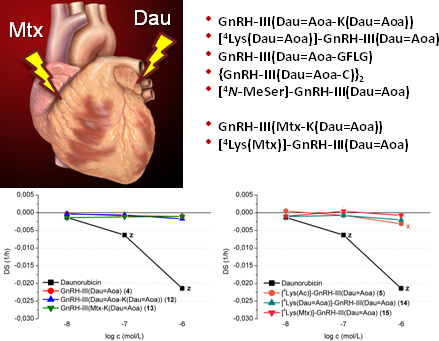
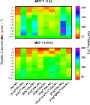
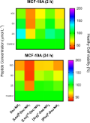
- helps to compare cytotoxic efficacy (IC50) of the 15 GnRH-based antitumor conjugates in 3 reference tumor cell lines representing the most frequent malignancies (breast cancer – MCF-7, colorectal adenocarcinoma – HT-29 and acute monocytic leukemia – MonoMac6). In parallel, the cardiotoxic effects of the
- cases the breast cancer (9) or colorectal adenocarcinoma (9, 13) proved to be also sensible to the Dau containing conjugates. On the other hand there are even sad lessons of the comparative study, some mainly Dox containing conjugates (1–3) proved to have strong cardiotoxic effects; however, they had
- antitumor cytotoxic characteristics of the conjugates in human breast cancer (MCF-7), human colorectal adenocarcinoma (HT-29) and human acute monocytic leukemia (MM6) derived cell lines as representative tumor cells. Human cardiac myocytes (HCM) and human umbilical vein endothelial cells (HUVEC) as the


Hyper-reticulated calixarene polymers: a new example of entirely synthetic nanosponge materials
Beilstein J. Org. Chem. 2018, 14, 1498–1507, doi:10.3762/bjoc.14.127
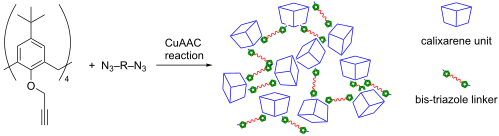
- composites loaded with quercetin may show improved cytotoxic activity towards some human breast cancer cell lines [32], likely due to a synergistic action between the polyphenol nutraceutic guest molecule and triazole derivatives coming from the progressive disgregation of the co-polymer carrier. From the


Design and biological characterization of novel cell-penetrating peptides preferentially targeting cell nuclei and subnuclear regions
Beilstein J. Org. Chem. 2018, 14, 1378–1388, doi:10.3762/bjoc.14.116
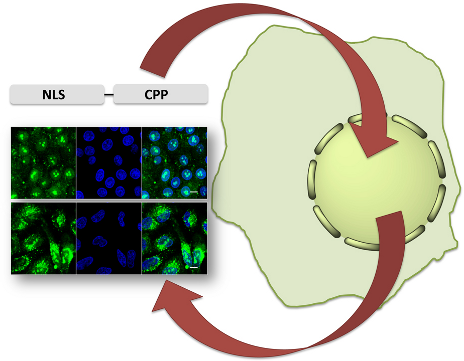
- chimera were investigated. Therefore, we chose two different cancer cell lines, namely breast cancer MCF-7 and cervix carcinoma HeLa cells, which were exposed for 24 h to various concentrations of the peptides sC18*, N50, N50-sC18*, NrTP and NrTP-sC18* (Figure 2). We observed no toxic effects of the



An overview of recent advances in duplex DNA recognition by small molecules
Beilstein J. Org. Chem. 2018, 14, 1051–1086, doi:10.3762/bjoc.14.93
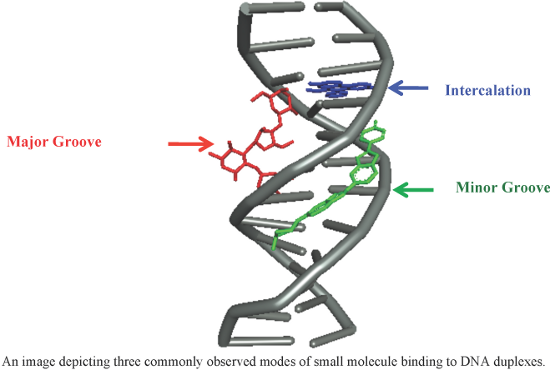
- . Szerszenowicz et al. developed a new set of potential minor groove binders derived from netropsin and bis-netropsin analogs by replacing N-methylpyrrole rings with other heterocyclic rings and their antiproliferative activity was tested on MCF-7 breast cancer cells [60]. Suckling et al. recently designed and
- DNA binding affinity as well as antiproliferative effects on human MCF-7 breast cancer cells were evaluated [99]. These conjugates bind within the minor groove of B-DNA. They inhibited catalytic action of endonucleases in A·A, A·T, T·T and A·G restriction sites but failed to block G·C-rich sequences
- . In addition, they act as potent topoisomerase II inhibitor at the concentration 10 μM and show antiproliferative and cytotoxic activities in breast cancer cell line in the range of 81.70 μM and 200.00 μM. Conjugate 41 with a 6-aminophenyl moiety appeared to be the most effective among others






On the design principles of peptide–drug conjugates for targeted drug delivery to the malignant tumor site
Beilstein J. Org. Chem. 2018, 14, 930–954, doi:10.3762/bjoc.14.80
- breast cancer, colon & rectum cancer [1]. Notably, more than 12 million cancer cases and 7 million cancer deaths are estimated to have occurred both in males and females in 2008 worldwide [2]. These numbers have mounted up to 15 million cases and 8.8 million deaths in 2015. These statistics clearly
- most common anticancer agents used against a wide variety of tumors. It is sold under the brand name Taxol by Bristol-Myers Squibb Company and is FDA approved for the treatment of breast cancer, ovarian cancer, non-small cell lung cancer and AIDS-related Kaposi's sarcoma. The main disadvantages in the
- of other types of cancers (breast cancer, bladder cancer, Kaposi's sarcoma) in combination with other anti-cancer agents. Camptothecin (CPT): Camptothecin is a cytotoxic alkaloid collected from extraction of the bark and stem of the Chinese tree ‘Camptotheca acuminata’. It was first isolated and


Recent advances in synthetic approaches for medicinal chemistry of C-nucleosides
Beilstein J. Org. Chem. 2018, 14, 772–785, doi:10.3762/bjoc.14.65
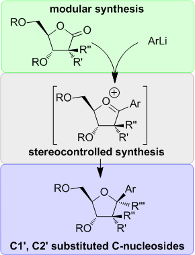
- hydrogenation afforded the optically pure carbocyclic tubercidine analogue (−)-53. This compound has shown potent activity against breast cancer cell lines and human foreskin fibroblasts [53]. Conclusion With increasing reports of emerging and reemerging infectious diseases globally, there is a need to develop


Synthesis and in vitro biochemical evaluation of oxime bond-linked daunorubicin–GnRH-III conjugates developed for targeted drug delivery
Beilstein J. Org. Chem. 2018, 14, 756–771, doi:10.3762/bjoc.14.64
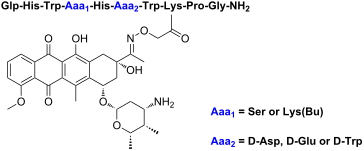
- , 9Pro-EA] and triporelin [6D-Trp], which are used as pharmaceutical peptides to treat inter alia hormone dependent prostate and/or breast cancer [7]. Since the mid-1980s cytotoxic GnRH-I derivatives were developed and investigated to treat tumor cells [4][5][8][9]. Anthracyclines such as doxorubicin
- uptake and the antitumor activity [29]. Moreover, these GnRH-III bioconjugates displayed an enhanced stability in the presence of gastrointestinal enzymes. The most potent and efficient bioconjugate which has been evaluated in in vitro cytostatic effect measurements on human breast cancer cells (MCF7
- ][49]. Due to this, the usage of internal standards during the evaluation of new potential candidates might be necessary to ensure comparability with previous results. The cytostatic effect of the novel GnRH-III bioconjugates was determined on HT-29 human colon cancer and MCF-7 human breast cancer cell



Stimuli-responsive oligonucleotides in prodrug-based approaches for gene silencing
Beilstein J. Org. Chem. 2018, 14, 436–469, doi:10.3762/bjoc.14.32


Synthesis and biological evaluation of RGD and isoDGR peptidomimetic-α-amanitin conjugates for tumor-targeting
Beilstein J. Org. Chem. 2018, 14, 407–415, doi:10.3762/bjoc.14.29
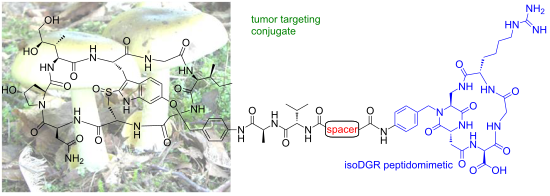
- a slight enhancement in toxicity over α-amanitin was observed. The transmembrane receptor αVβ3 integrin is widely expressed on the blood vessels of several human cancers (for example, breast cancer, glioblastoma, pancreatic tumor, prostate carcinoma) but not on the vasculature of healthy tissues [9


Automating multistep flow synthesis: approach and challenges in integrating chemistry, machines and logic
Beilstein J. Org. Chem. 2017, 13, 960–987, doi:10.3762/bjoc.13.97
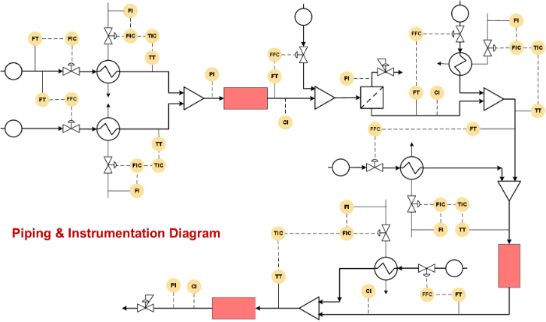
- it through the reactor for a better performance. Case study 2: Multistep flow synthesis for tamoxifen (telescope synthesis) Steven Ley and co-workers have reported a continuous multistep synthesis protocol for tamoxifen, a drug used for treating breast cancer [11]. The synthesis protocol is shown in




Synthesis and evaluation of anti-oxidant and cytotoxic activities of novel 10-undecenoic acid methyl ester based lipoconjugates of phenolic acids
Beilstein J. Org. Chem. 2017, 13, 26–32, doi:10.3762/bjoc.13.4
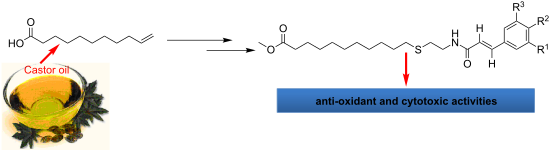
- different cancer cell lines viz., MDA-MB-231, breast cancer (ATCC® HTB-26™); SKOV3, ovarian cancer (ATCC® HTB-77™); MCF7, breast cancer (ATCC® HTB-22™); DU 145, prostate cancer (ATCC® HTB-81™); HepG2, liver hepatocellular carcinoma (ATCC® HB-8065™) were obtained from the ATCC (Bethesda, MD, USA) and


Symmetry-based approach to oligostilbenoids: Rapid entry to viniferifuran, shoreaphenol, malibatol A, and diptoindonesin G
Beilstein J. Org. Chem. 2016, 12, 2689–2693, doi:10.3762/bjoc.12.266
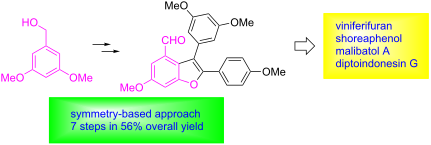
- estrogen receptors (ER) has been discovered, thereby suggesting it as a promising drug lead for the treatment of breast cancer [18]. Our continuing interest in this area led us to design an alternative approach to oligostilbenoids. As shown in Scheme 1, our idea stemmed from recognition of the symmetry


Marine-derived myxobacteria of the suborder Nannocystineae: An underexplored source of structurally intriguing and biologically active metabolites
Beilstein J. Org. Chem. 2016, 12, 969–984, doi:10.3762/bjoc.12.96
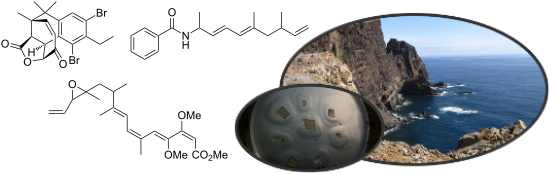
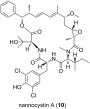
- metastatic breast cancer treatment, demonstrating the therapeutic potential of myxobacterial secondary metabolites [29][30][31]. This drug has also been assessed as chemotherapeutic agent in pancreatic lymphoma showing promising results and tolerable toxicity [32]. Over time, different strategies have been






Copper-mediated arylation with arylboronic acids: Facile and modular synthesis of triarylmethanes
Beilstein J. Org. Chem. 2016, 12, 496–504, doi:10.3762/bjoc.12.49
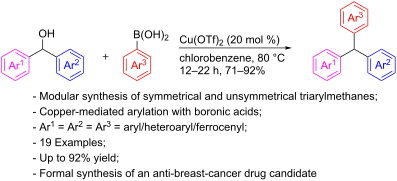
- triarylmethane intermediate towards an anti-breast-cancer drug candidate. Keywords: copper; modular synthesis; triarylmethanes; Introduction The triarylmethanes form an exclusive group of organic molecules wherein three aryl groups are attached to the central sp3-hybridized carbon atom bearing a hydrogen atom
- turbomycin (3) is an antibacterial medicinal drug (Figure 1). Genuine triarylmethane 4, having three different aryl groups on the central CH, is a proven anti-breast-cancer agent [20]. In addition to 4, several other triarylmethanes exhibit interesting biological activity, including oestrogen receptor
- designed a synthesis of the precursor 22 (Scheme 5) for the anti-breast-cancer agent 4 (Figure 1). Any method for the synthesis of 4 needs to take into account that it has two phenyl rings with different alkoxy groups at the respective C(4) position. We reasoned that one of the aryl groups could be a part


Diastereoselective synthesis of new O-alkylated and C-branched inositols and their corresponding fluoro analogues
Beilstein J. Org. Chem. 2016, 12, 353–361, doi:10.3762/bjoc.12.39
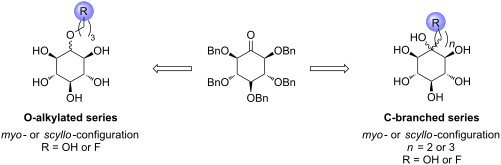
- in the diagnosis of breast cancer with this imaging technique [33][34]. Considering the synthetic and biological importance of inositol analogues, the design of new inositol derivatives to study their biological properties and to understand their binding mechanisms with molecular targets, for


Physical properties and biological activities of hesperetin and naringenin in complex with methylated β-cyclodextrin
Beilstein J. Org. Chem. 2015, 11, 2763–2773, doi:10.3762/bjoc.11.297
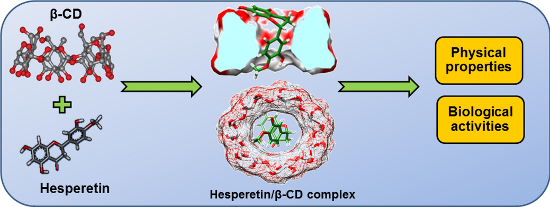
- , inhibition of chronic venous insufficiency and hemorrhoids, and prevention of post-operative thromboembolism [17]. Hesperetin can inhibit chemically induced mammary [18], urinary bladder [19], colon carcinogenesis in laboratory animals [20][21][22], and proliferation of breast cancer cells (MCF-7) [23][24
- ]. Naringenin has the ability to hinder a tumor growth on various human cancer cell lines [25], and acts as an inhibitor that blocks basal and insulin-stimulated glucose uptake in breast cancer cells [26]. Additionally, naringenin reduces the incidence of hormone-responsive cancer [27]. In spite of having
- cancer cell lines (CaCo-2, HeLa and MCF-7) has been determined by MTT assay which measures the metabolic activity and thus viability of cells based on their ability to reduce the tetrazolium substrate to formazan. For the breast cancer cell line (MCF-7), naringenin and their complexes exhibited cytotoxic


Bromotyrosine-derived alkaloids from the Caribbean sponge Aplysina lacunosa
Beilstein J. Org. Chem. 2015, 11, 2334–2342, doi:10.3762/bjoc.11.254
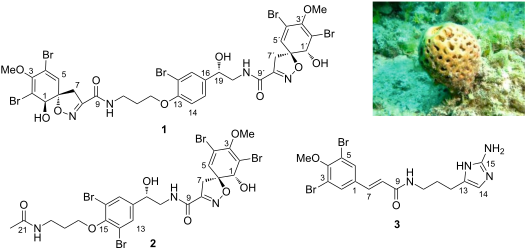
- showed mild toxicity against the breast cancer cell line MCF-7 and to FS4-LTM conditional immortalization human fibroblasts (IC50 = 78 and 32 µM, respectively). The cytotoxicities of the known compounds (4–17) are also listed in Table 5. None of the isolated compounds showed any antimicrobial activity
- proliferation assays. Targeting cell lines are L929 mouse fibroblasts, KB-31 epidermoid carcinoma, and MCF-7 breast cancer cell lines which were incubated for 5 days with the test substances. The acute toxicity was determined using the FS4-LTM conditional immortalization human fibroblasts cell line which was


Total synthesis of panicein A2
Beilstein J. Org. Chem. 2015, 11, 1991–1996, doi:10.3762/bjoc.11.215
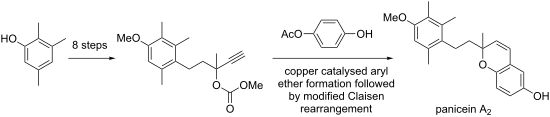
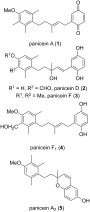
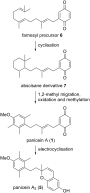
- their developmental therapeutics program. Interestingly, at the tested concentration of 10 μM, panicein A2 (5) showed very little activity against most cell lines. The best performance of panicein A2 (5) was against T-47D, a breast cancer cell line, in which it showed a 43% reduction of growth when



Pyridinoacridine alkaloids of marine origin: NMR and MS spectral data, synthesis, biosynthesis and biological activity
Beilstein J. Org. Chem. 2015, 11, 1667–1699, doi:10.3762/bjoc.11.183
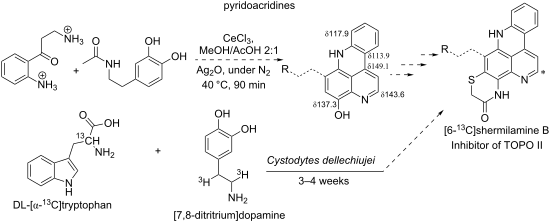
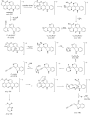
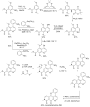
- cells, causing an extensive reduction of the MCF-7 breast cancer cells in the G2/M phase [85]. Two skeletons, including 9H-pyrido[4,3,2-mn]thiazolo[4,5-b]acridin-9-one and 8H-pyrido[4,3,2-mn]thiazolo[4,5-b]acridine (Figure 15), are found in kuanoniamine structures (60, 86–88). The first one associated




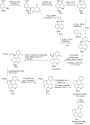

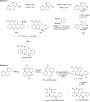


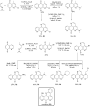


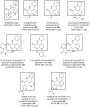


Further exploration of the heterocyclic diversity accessible from the allylation chemistry of indigo
Beilstein J. Org. Chem. 2015, 11, 481–492, doi:10.3762/bjoc.11.54
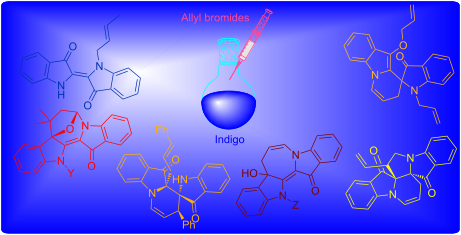
- , selected compounds were assessed for in vitro antiplasmodial (Plasmodium falciparum; drug resistant K1 strain) activity [15], cell-based anticancer activity (cell lines: NCI-H187 small cell lung cancer, KB oral cavity cancer, and MCF-7 breast cancer) [16], and in vitro antitubercular activity
- , respectively), but not against the more refractory MCF-7 breast cancer cell line [16]. Additionally, 17 exhibited some antitubercular activity (MIC 12.5 µg/mL, 38.6 µM), providing a basis for further structurally novel lead development of anti-TB compounds. The need for such compounds is a pressing one with




Synthesis and biological evaluation of a novel MUC1 glycopeptide conjugate vaccine candidate comprising a 4’-deoxy-4’-fluoro-Thomsen–Friedenreich epitope
Beilstein J. Org. Chem. 2015, 11, 155–161, doi:10.3762/bjoc.11.15
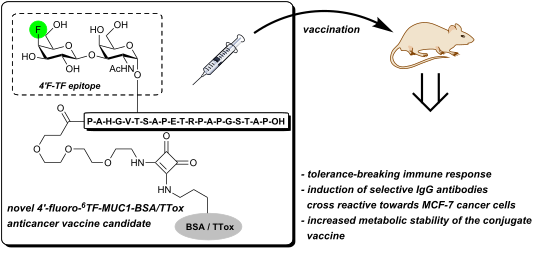
- capable of binding to the native MUC1 antigen structures present on MCF-7 human breast cancer cells. Moreover, selective deoxyfluorination at the antigenic carbohydrate determinant might be used to improve the metabolic stability of the saccharide epitope, as was showcased by the enhanced resistance of