

Search results
Search for "amphiphilic" in Full Text gives 143 result(s) in Beilstein Journal of Organic Chemistry.
Olefin metathesis in multiblock copolymer synthesis
Beilstein J. Org. Chem. 2019, 15, 218–235, doi:10.3762/bjoc.15.21

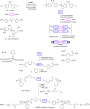
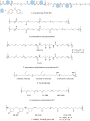
- polymerization (ATRP) and сlick reactions for the precise synthesis of amphiphilic ABCBA-type block copolymers (Scheme 4) [63]. A more facile “one-pot” procedure for the synthesis of an end-functionalized conjugated multiblock copolymer with PFV main chain was accomplished by combining olefin metathesis and
- . Changes in the synthetic stage sequence led to variable layer compositions. Various linear and star-shaped (triarm) ABA and ABCBA amphiphilic multiblock copolymers containing acetal-protected sugars (APS) were prepared by the coupling of an end-functionalized ROMP copolymer of norbornene (NB) and APS






Olefin metathesis catalysts embedded in β-barrel proteins: creating artificial metalloproteins for olefin metathesis
Beilstein J. Org. Chem. 2018, 14, 2861–2871, doi:10.3762/bjoc.14.265
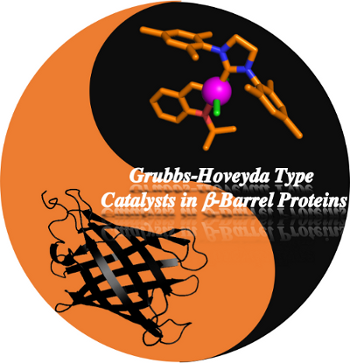
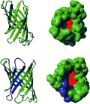
- ]. Characterized by an amphiphilic nature with either hydrophobic “barrel” interiors and hydrophilic surfaces (as in globulins, carriers of hydrophobic molecules and fluorescent proteins) or hydrophilic cores and hydrophobic surfaces (as in membrane-bound β-barrels like porins and channel proteins), they can be


Learning from B12 enzymes: biomimetic and bioinspired catalysts for eco-friendly organic synthesis
Beilstein J. Org. Chem. 2018, 14, 2553–2567, doi:10.3762/bjoc.14.232
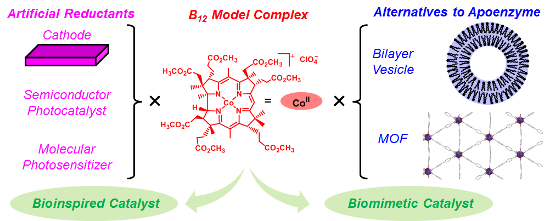
- use of vitamin B12 [116]. Furthermore, cobalester, an amphiphilic vitamin B12 derivative with six ester groups and a nucleotide loop, has recently been developed to show good catalytic activity for C–C bond forming reactions [117][118]. The above-mentioned visible-light-driven system composed of 1


Tetrathiafulvalene – a redox-switchable building block to control motion in mechanically interlocked molecules
Beilstein J. Org. Chem. 2018, 14, 2163–2185, doi:10.3762/bjoc.14.190
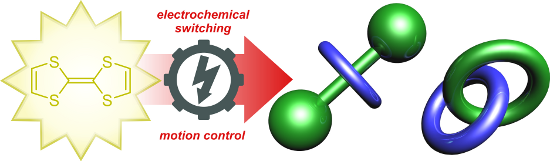
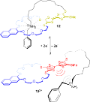
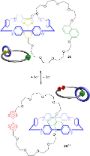
- crossbar architecture in which a monolayer of amphiphilic rotaxanes is sandwiched by a bottom Si nanowire electrode and a top Ti nanowire electrode. Both layers of nanowires are orthogonal to each other. This produces several crossing points or “junctions” whose areas are defined by the diameter of the
- states of 19. Schematic representation of a molecular electronic memory based on a bistable TTF-based rotaxane. (a) Molecular structure of the amphiphilic [2]rotaxane 20. (b) Structure of the crossbar device. (c) Switching mechanism of rotaxane 20 in a junction. Schematic representation of bending motion











Synthesis and supramolecular self-assembly of glutamic acid-based squaramides
Beilstein J. Org. Chem. 2018, 14, 2065–2073, doi:10.3762/bjoc.14.180
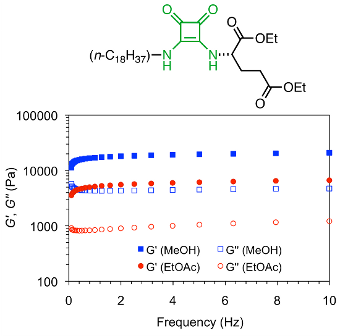
- hand, solvents such as methylene chloride, chloroform, xylene, benzene and toluene were gelled by 2 but not by 3. Thus, compound 3 can be an alternative to compound 2, and vice versa, depending on the solvent to be gelled (see below). Similarly to other amphiphilic gelators [21][29][31], the formation


Synthesis of new p-tert-butylcalix[4]arene-based polyammonium triazolyl amphiphiles and their binding with nucleoside phosphates
Beilstein J. Org. Chem. 2018, 14, 1980–1993, doi:10.3762/bjoc.14.173
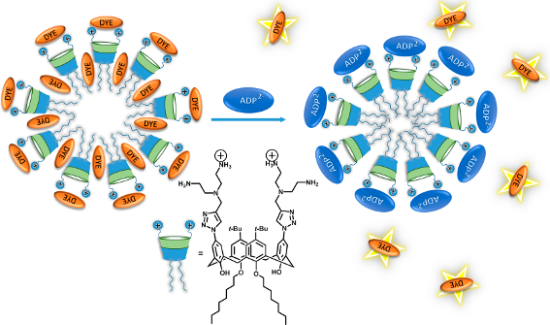
- /bjoc.14.173 Abstract The synthesis of new calix[4]arenes adopting a cone stereoisomeric form bearing two or four azide fragments on the upper rim and water-soluble triazolyl amphiphilic receptors with two or four polyammonium headgroups via copper-catalyzed azide–alkyne cycloaddition reaction has been
- ]. Calixarenes are easily functionalized at both their upper and lower rims with various stereoisomers obtainable; the initial macrocycles can be synthesized in a simple manner, they are not toxic, etc. [17][18][19][20][21][22]. Amphiphilic calixarenes are particularly interesting because they can be regarded as
- high affinity to ATP [26]. Herein we report the synthesis of new amphiphilic water-soluble calix[4]arene derivatives with cone conformation containing two or four polyammonium groups on the upper rim by using a click chemistry approach and the results of binding studies toward nucleotides in aqueous


An amphiphilic pseudo[1]catenane: neutral guest-induced clouding point change
Beilstein J. Org. Chem. 2018, 14, 1937–1943, doi:10.3762/bjoc.14.167
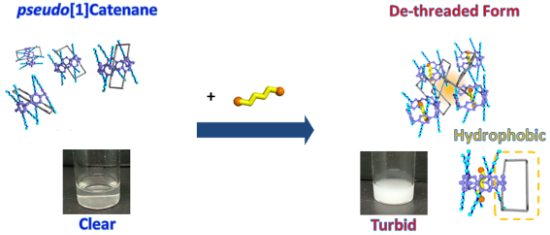
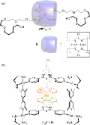
- /hydrophilic ratio in a molecule largely affects its assembled properties in aqueous media. In this study, we synthesized a new bicyclic compound which could dynamically change its hydrophobic/hydrophilic ratio by chemical stimulus. The bicyclic compound consisted of amphiphilic pillar[5]arene and hydrophobic
- aggregation of the hydrophobic alkyl chain rings, which induced insolubilization of the bicyclic compound in aqueous media at 20 °C and a decrease in its clouding point. Keywords: amphiphilic molecules; host–guest complexes; lower critical solution temperature; pillar[n]arenes; pseudo[1]catenane
- –guest chemistry [5][6][7]. The molecules consist of a non-ionic amphiphilic part containing tri(ethylene oxide) moieties, and a hydrophobic part consisting of a pillar[n]arene core (Figure 1a; 1, n = 5; 2, n = 6). Pillar[n]arenes, which were first reported by our group [11], were used as the macrocyclic


Design, synthesis and structure of novel G-2 melamine-based dendrimers incorporating 4-(n-octyloxy)aniline as a peripheral unit
Beilstein J. Org. Chem. 2018, 14, 1704–1722, doi:10.3762/bjoc.14.145
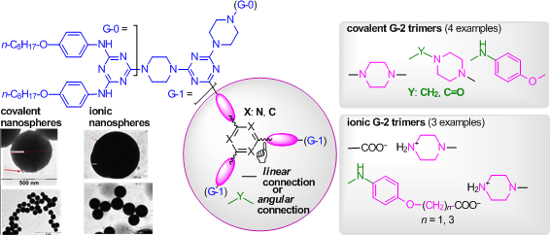
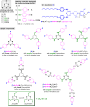
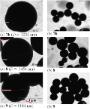
- Background: 4-(n-Octyloxy)aniline is a known component in the elaboration of organic materials with mesogenic properties such as N-substituted Schiff bases, perylene bisimide assemblies with a number of 2-amino-4,6-bis[4-(n-octyloxy)phenylamino]-s-triazines, amphiphilic azobenzene-containing linear-dendritic
- (ethynyl)-s-triazine and various icosanyloxyphenylazides) with liquid crystalline and luminescent properties [22]. On the other hand, mesogenic supramolecular perylene bisimide assemblies with a number of 2-amino-4,6-bis[(4-alkoxy)phenylamino]-s-triazines [23], amphiphilic azobenzene-containing linear



Nanoreactors for green catalysis
Beilstein J. Org. Chem. 2018, 14, 716–733, doi:10.3762/bjoc.14.61
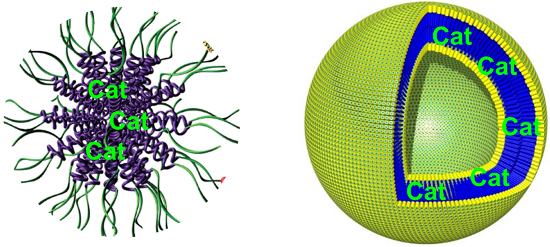
- section we will discuss the utility of some of the well-established catalytic nanoreactors towards green(er) chemistry [62]. 2.1. Micelles Micelles are supramolecular architectures that are assembled of amphiphilic molecules [41]. Above the critical micellar concentration (CMC), surfactants with the
- effect for hydrophobic substrates, which ensures higher reaction rates than those performed in bulk [63]. Besides, the structure of any micellar catalytic environment is governed by the arrangement of the amphiphilic molecules, creating, in many cases, a regioselective environment (Figure 1) that affects
- is occurring in the lipophilic pocket and not in water. The authors also demonstrated the ability of the PQS system to be recycled up to 10 times without loss in its catalytic activity. Catalytic micelles were also prepared by O’Reilly et al. when a novel amphiphilic Sulfur–Carbon–Sulfur (SCS) pincer


Aminosugar-based immunomodulator lipid A: synthetic approaches
Beilstein J. Org. Chem. 2018, 14, 25–53, doi:10.3762/bjoc.14.3
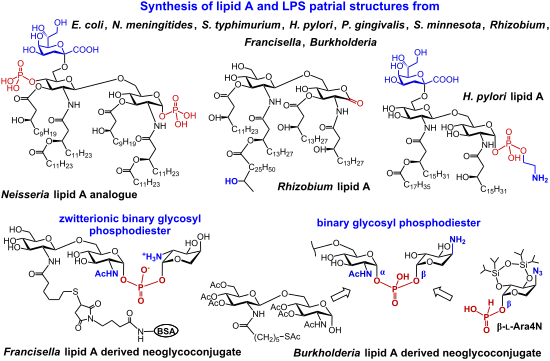
- cytokines, chemokines, prostaglandins and reactive oxygen species which manifest an acute inflammatory response to infection. The “endotoxic principle” of LPS resides in its amphiphilic membrane-bound fragment glycophospholipid lipid A which directly binds to the TLR4·MD-2 receptor complex. The lipid A
- -hydrophobic labeling reagents for amphiphilic glycoconjugates such as lipid A. 1.4. Synthesis of Helicobacter pylori Kdo-lipid A substructures A Helicobacter pylori infection of the gastric mucosa causes chronic gastritis in humans and plays a pivotal role in the progression and pathogenesis of peptic ulcer






Binding abilities of a chiral calix[4]resorcinarene: a polarimetric investigation on a complex case of study
Beilstein J. Org. Chem. 2017, 13, 2698–2709, doi:10.3762/bjoc.13.268
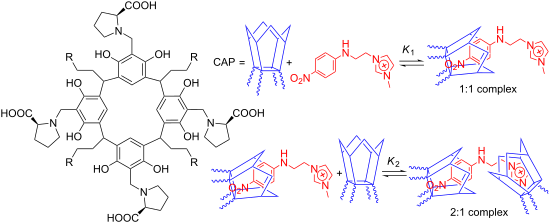
- occurring in host–guest complex formation processes involving calixarenes in general. This can be particularly useful, even because CAP and structurally related ligands might find various interesting applications, due to their amphiphilic character, chirality and coordination ability towards metal cations




Phosphonic acid: preparation and applications
Beilstein J. Org. Chem. 2017, 13, 2186–2213, doi:10.3762/bjoc.13.219
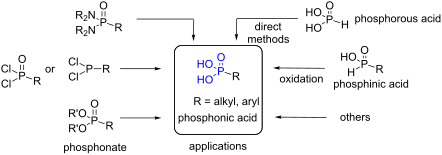
- phosphonic acid function and its ability to be ionized in water render this group attractive to design the polar head group of anionic amphiphilic compounds [25][26] or polymeric-based amphiphilic derivatives [27]. This type of compound was used as surfactant to stabilize colloidal solutions of nanocrystals
- using bromotrimethylsilane followed by methanolysis. This two-step methodology (1. BrSiMe3; 2. MeOH or H2O) was also applied to prepare macromolecules functionalized with phosphonic acid functional groups. For instance, a cyclodextrine derivative (compound 60 [177], Figure 19), amphiphilic compounds


Superstructures with cyclodextrins: Chemistry and applications IV
Beilstein J. Org. Chem. 2017, 13, 2157–2159, doi:10.3762/bjoc.13.215
- , buckminsterfullerene C60 was covalently linked to two γ-CD rings [14]. This conjugate is highly soluble in water because it forms a sandwich-like self-complex, which makes it particularly useful as a sensitizer for singlet oxygen 1O2 generation [14]. Amphiphilic CD derivatives with oligoethylene oxide side chains form
- ]. The group of Ravoo also conjugated arylazopyrazoles to amphiphilic cyclodextrin derivatives that form vesicles triggered by light [17]. A star-shaped polycationic CD derivative with many breakable, intrinsic, disulfide linkages forms nanoparticles with messenger RNA and drugs and is particularly
Chemical systems, chemical contiguity and the emergence of life
Beilstein J. Org. Chem. 2017, 13, 1551–1563, doi:10.3762/bjoc.13.155
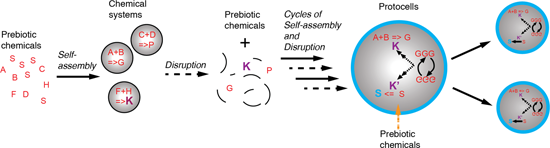
- association with the interface of chemical systems. For instance, the activity of an RNA polymerase ribozyme was improved when the various RNA compounds of the system (the ribozyme, the template/primer) were derivatized with amphiphilic moieties and co-associated within micelle structures [69]. Although no
- ]. Such vesicles with associated ribozymes could eventually prove to be novel functional chemical systems. The production of fatty acids from non-amphiphilic picolylesters performed using a photochemical reaction involving a ruthenium tris(bipyridine), functioning as photosensitizer and redox catalyst
- -existing structures [94][95] has been experimentally exploited either by adding more amphiphiles at a pace that prevents the de novo formation of novel structures [17] or by adding amphiphile precursors that had to be converted within the structures into amphiphilic molecules themselves [83][96][97


2-Methyl-2,4-pentanediol (MPD) boosts as detergent-substitute the performance of ß-barrel hybrid catalyst for phenylacetylene polymerization
Beilstein J. Org. Chem. 2017, 13, 1498–1506, doi:10.3762/bjoc.13.148
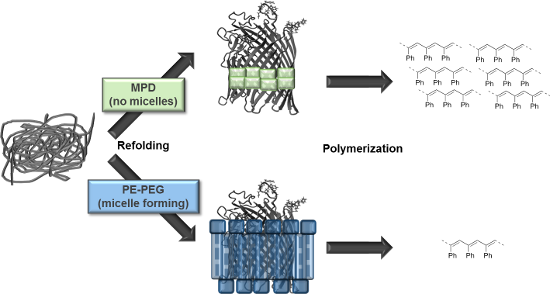
- rhodium-based biohybrid catalyst. Unlike commonly used detergents such as sodium dodecyl sulfate or polyethylene polyethyleneglycol, MPD does not form micelles in solution. Molecular dynamics simulations revealed the effect and position of stabilizing MPD molecules. The advantage of the amphiphilic MPD
- over micelle-forming detergents is demonstrated in the polymerization of phenylacetylene, showing a ten-fold increase in yield and increased molecular weights. Keywords: amphiphilic molecule 2-methyl-2,4-pentanediol; hybrid catalyst; phenylacetylene polymerization; refolding agents; transmembrane
- hydrophobic micelle core. Recently, the small amphiphilic alcohol 2-methyl-2,4-pentanediol (MPD) was shown to successfully stabilize membrane proteins and enable characterization of protein modifications [33][34]. Polymerization of phenylacetylene in the presence of MPD molecules as refolding agent was


Glycoscience@Synchrotron: Synchrotron radiation applied to structural glycoscience
Beilstein J. Org. Chem. 2017, 13, 1145–1167, doi:10.3762/bjoc.13.114
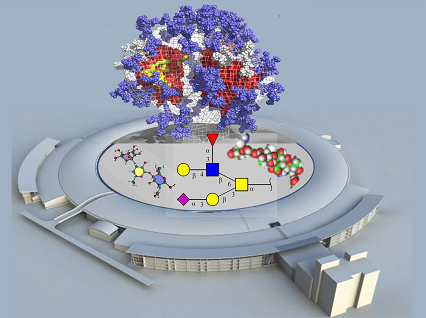
- offers another example of difficulty in terms of single crystal growth. Glycolipids (or lipo-oligosaccharides) comprise a carbohydrate moiety covalently linked to a lipid that confers on them an amphiphilic character, which makes them reluctant to crystallize. One member of the family is tricolorin A (L






From chemical metabolism to life: the origin of the genetic coding process
Beilstein J. Org. Chem. 2017, 13, 1119–1135, doi:10.3762/bjoc.13.111

- function associated to this view is that the cell separates between an inside and an outside. In 1935, James Danielli proposed with Hugh Davson that this embodiment was achieved by formation of a bilayer made of amphiphilic lipid molecules [11]. This process is entropy-driven (life belongs to physics, it



Correlation of surface pressure and hue of planarizable push–pull chromophores at the air/water interface
Beilstein J. Org. Chem. 2017, 13, 1099–1105, doi:10.3762/bjoc.13.109

- is a structural similarity between the flipper probes and cholesterol with both molecules being amphiphilic and flat. This called for a closer look at the influence of both molecules on phospholipid membrane organization (see Figure 4). For DPPC, the first-order phase transition between the


Glyco-gold nanoparticles: synthesis and applications
Beilstein J. Org. Chem. 2017, 13, 1008–1021, doi:10.3762/bjoc.13.100
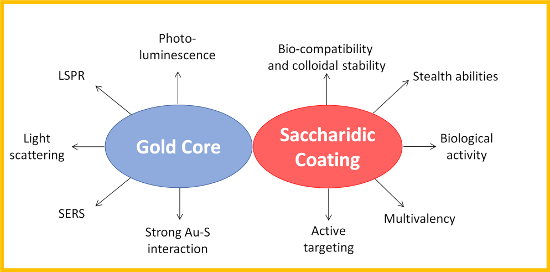
- thio-amphiphilic linker to impart improved solubility and flexibility to the glycosyl-ligand. UV–vis spectroscopy and dynamic light scattering measurements have been exploited to detect at low picomolar concentrations lactose-AuNP, mannose-AuNP and GlcNAc-AuNP interactions with their cognate lectins
- peanut agglutinin [25]. In this case, the glycosyl residue is not coated on the gold surface by means of a thiol moiety but exploiting the strain-promoted azide–alkyne cycloaddition (SPAAC) to covalently link an azido galactoside on a lipid cyclooctyne. In this manner, the amphiphilic glyco-lipid can be


Aggregation behaviour of a single-chain, phenylene-modified bolalipid and its miscibility with classical phospholipids
Beilstein J. Org. Chem. 2017, 13, 995–1007, doi:10.3762/bjoc.13.99
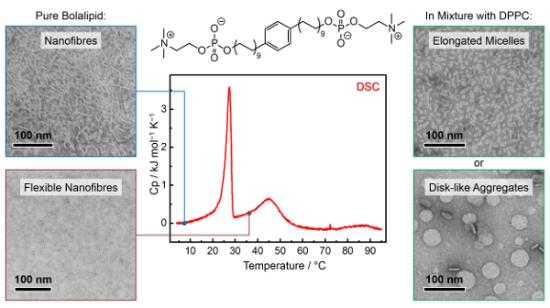
- behaviour; nanofibres; self-assembly; Introduction Bolalipids are amphiphilic molecules consisting of two hydrophilic headgroups attached to both ends of a long hydrocarbon spacer [1]. The hydrophobic spacer is composed of either a single alkyl chain or two chains connected via a glycerol moiety. These
- DPPC/DHPC systems [49], or for mixtures of phospholipids with other amphiphilic substances, e.g., in PEG-stabilized bilayer systems [50][51], for phospholipids with membrane scaffold proteins [52][53] or in combination with copolymers [54][55], or for DPPC in mixture with a T-shaped amphiphile [56




Lipids: fatty acids and derivatives, polyketides and isoprenoids
Beilstein J. Org. Chem. 2017, 13, 793–794, doi:10.3762/bjoc.13.78
- , sphingolipids and glycolipids. Lipids also constitute important post-translational protein modifications in lipoproteins. The amphiphilic nature of compounds such as phospholipids with a polar headgroup and a long apolar chain results in the spontaneous formation of lipid bilayers in aqueous environments. This
Conjecture and hypothesis: The importance of reality checks
Beilstein J. Org. Chem. 2017, 13, 620–624, doi:10.3762/bjoc.13.60
- ]. There are several advantages to using evaporation in this regard. First, simply concentrating potential reactants adds significant free energy to a system that can be used to drive condensation reactions [23]. Furthermore, if amphiphilic compounds are present they can organize and concentrate reactants
- metabolism and polymerization. Products of reactions should accumulate within the site rather than dispersing into the bulk phase environment. Biologically relevant polymers are synthesized with chain lengths sufficient to act as catalysts or incorporate genetic information. If amphiphilic compounds are
Interactions between cyclodextrins and cellular components: Towards greener medical applications?
Beilstein J. Org. Chem. 2016, 12, 2644–2662, doi:10.3762/bjoc.12.261
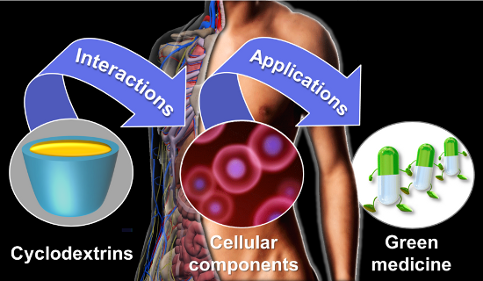
- complexes with various biomolecules including lipids, carbohydrates, proteins and nucleic acids. In this section, some biomolecule/CD inclusion complexes are presented. i) Complexation of lipids and consequences Lipids are hydrophobic or amphiphilic molecules very diverse, including, among other fats, waxes
- , sterols, fat-soluble vitamins, phospholipids, mono-, di- and triglycerides, etc. Their amphiphilic nature causes the molecules of certain lipids to organize into liposomes when they are in aqueous medium. This property allows the formation of biological membranes. Indeed, cells and organelles membranes
- prenols, which are produced from condensation of isoprene units [54]. These compounds can be easily included inside the CDs because they are hydrophobic or amphiphilic molecules. As mentioned earlier, and as it will become exceeding clear throughout the following sections, the majority of research


A self-assembled cyclodextrin nanocarrier for photoreactive squaraine
Beilstein J. Org. Chem. 2016, 12, 2535–2542, doi:10.3762/bjoc.12.248
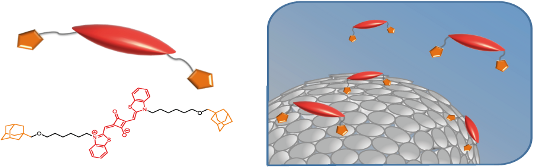
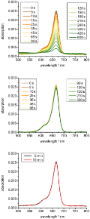
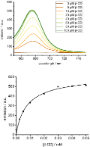
- significant potential for photodynamic therapy. Herein we report that squaraines can be immobilized on a self-assembled nanocarrier composed of amphiphilic cyclodextrins to enhance their photochemical activity. To this end, a squaraine was equipped with two adamantane moieties that act as anchors for the
- -assembled from amphiphilic cyclodextrin [27]. Given their negligible toxicity cyclodextrins have been utilized as carriers in a number of studies [28][29]. Amphiphilic cyclodextrins substituted with hydrophobic alkyl groups on the primary side and hydrophilic oligo(ethylene glycol) units on the secondary
- . Amphiphilic β-cyclodextrins substituted with 7 dodecylsulfide groups on the primary side and 7 oligo(ethylene glycol) units on the secondary side were obtained via a straightforward three step synthesis as described [27][30]. A thin film of these amphiphiles was obtained by evaporation of a chloroform




Efficient mechanochemical synthesis of regioselective persubstituted cyclodextrins
Beilstein J. Org. Chem. 2016, 12, 2364–2371, doi:10.3762/bjoc.12.230
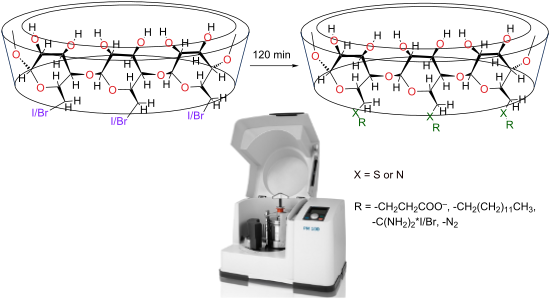
- -CD derivatives are used in siRNA delivery and gene therapy [6]. The alkyl chain, usually C10–C16, makes the product very amphiphilic, which means that it is difficult to purify not only from possible byproducts but also from the reagents. Additionally, sulfur-containing organic compounds can form