
Search results
Search for "ACID" in Full Text gives 3127 result(s) in Beilstein Journal of Organic Chemistry. Showing first 200.
Design, synthesis and biological evaluation of 2,5-diaryloxazolo[4,5-d]pyrimidin-7-ylamines as selective cytotoxic agents against HeLa cells
Beilstein J. Org. Chem. 2026, 22, 390–398, doi:10.3762/bjoc.22.27
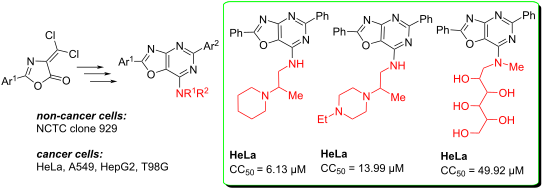
- the human body could be realized and are presented in Table 5. According to Table 5, compound 1 is expected to interact with three nucleic acid receptors and three stress signaling pathways with high probability. However, the cytotoxicity of compounds 7 and 9 is likely not due to interactions with the


Dialkylaminoalkylation of β-ketosulfones via ring-opening of 3-sulfonylpyrrolidines
Beilstein J. Org. Chem. 2026, 22, 383–389, doi:10.3762/bjoc.22.26
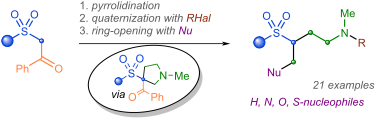
- ] cycloaddition of azomethine ylides at various vinyl sulfones were well studied [38][39][40][41], a method for the preparation of 3-sulfonylpyrrolidines from β-ketosulfones was previously unknown. We synthesized a number of pyrrolidines 2a–f in 83–97% yield, which were purified by an acid-base extraction (Scheme
- 4q–t in 61–87% yields. It should be noted that the leaving 3-benzoyl group formed a methyl benzoate when the reactions were performed in methanol. We also observed the formation of S-butyl benzothioate in the reaction mixture in case of 4q. These by-products were readily removed by an acid-base


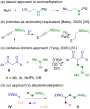


Electrosynthetic access to unsymmetrical oxaza[8]helicenes with high chiral stability and strong circularly polarized luminescence (CPL)
Beilstein J. Org. Chem. 2026, 22, 372–382, doi:10.3762/bjoc.22.25
- unsymmetrical oxaza[8]helicenes Building on Zhang’s facile acid-mediated carbazole synthesis [53], in which aniline derivatives react with p-benzoquinone to afford 3-hydroxycarbazoles [54], we employed a closely related substrate. Specifically, N-(p-tolyl)phenanthren-3-amine (2) – prepared from 3
- -bromophenanthrene (1) via Buchwald–Hartwig amination with p-toluidine under Pd catalysis [55] – was subjected to phosphoric acid-mediated annulation with p-benzoquinone to give the hydroxycarbazole derivative 3 through a tandem Michael addition/ring-closure sequence. After rapid optimization of key parameters (see
- structures). Aromaticity of oxaza[8]helicenes: (A) NICS(0)zz and NICS(1)zz values of 5a and 5b calculated at MN15/6-311G(2d,p)/SMD=chloroform level of theory; (B) ACID plots calculated at the B3LYP/6-311G(d,p) level of theory (isosurface value: 0.05). (P/M) Enantiomerization process of 5a (A), 5b (B), 6a (C




Recent advances in the cleavage of non-activated amides
Beilstein J. Org. Chem. 2026, 22, 352–369, doi:10.3762/bjoc.22.23
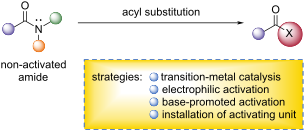
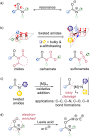
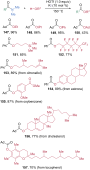
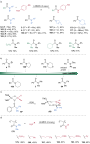
- of conventional, non-activated amides remains far more difficult. This review summarizes recent advances over the past decade in the activation and cleavage of non-activated amide C–N bonds for their conversion into diverse carboxylic acid derivatives. Key strategies covered include transition-metal
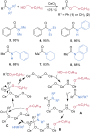
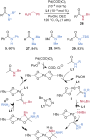
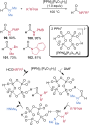
- secondary and tertiary amides with octanol catalyzed by CeO2, utilizing the advantage of its cooperative acid–base functionalities (Scheme 2) [46]. Under the optimized conditions, N,N-dimethylbenzamide (3) and N,N-diethylbenzamide (4) were smoothly converted to octyl benzoate (1) in 93% and 95% yield
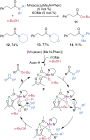
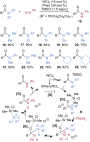
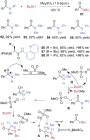
- of CeO2 to attack the carbonyl carbon, leading to cleavage of the C–N bond (B). Subsequent nucleophilic attack of the octoxide anion on the activated carbonyl center (C) then furnishes the ester product. Later, the same group found that niobium could also serve as a heterogeneous Lewis acid catalyst










Synthesis of tricyclic fused pyrrolidine nitroxides from 2-alkynylpyrrolidine-1-oxyls
Beilstein J. Org. Chem. 2026, 22, 344–351, doi:10.3762/bjoc.22.22

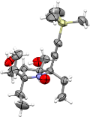
- that this methylene fragment has a more fixed conformation, consistent with the annulated structure (Figure 4). Nitroxides are known to decay in biological systems; the major mechanism is chemical reduction with cellular antioxidants (ascorbic acid and glutathione) and enzymatic systems [34]. The rate




Ring contraction and ring expansion reactions in terpenoid biosynthesis and their application to total synthesis
Beilstein J. Org. Chem. 2026, 22, 289–343, doi:10.3762/bjoc.22.21
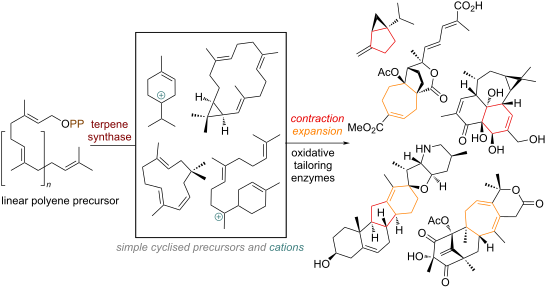
- the activation of the diphosphate group and ionisation) [25][37] and Class II (ionisation by olefin or epoxide protonation via a carboxylic acid in the active site) [26][38][39] and their reactions thus are mediated by carbocations and olefins, through careful preorganisation of the linear substrate
- found in pseudolaric acid B (14) biosynthesis [64][65]. In this case, the linear precursor 12 is first cyclised to give intermediate 14a akin to the α-terpinyl cation (see Scheme 3). From here, quantum chemical calculations indicate that the subsequent 1,2-alkyl shift and olefin cyclisation occur in a
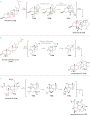
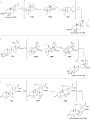
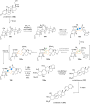
- the methyl groups residing at C-4 and the C-7 methylene to ent-7α-hydroxykaurenoic acid (34a). The hydroxy group in 34a can further engage with a CYP450 enzyme at C-6 (different CYP isoforms responsible in different genii) to form an alkyl radical 34b which upon further SET forms an intermediate






Spirobarbiturates with a pyrrolizidine moiety: synthesis, structure and biological evaluation
Beilstein J. Org. Chem. 2026, 22, 274–288, doi:10.3762/bjoc.22.20
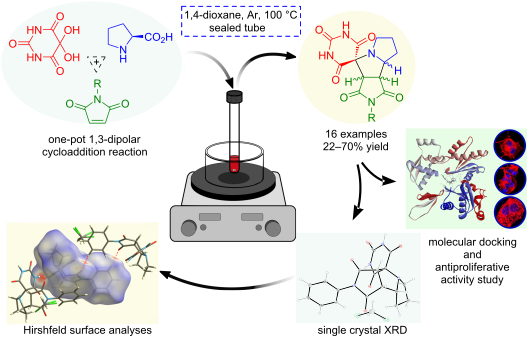
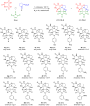
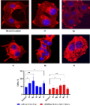
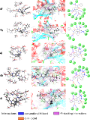
- ; pyrrolizidine moiety; spirobarbiturates; three-component reactions; Introduction The history of barbiturates dates back to 1863, when the young Adolf von Baeyer first synthesized barbituric acid [1][2]. In 1903, the drug marketed under the trade name barbital (veronal©) became commercially available as a
- sedative [3]. For more than 120 years of barbiturate history a lot has happened. Barbituric acid-based medications were widely used until the 40–50s of the last century. Then, due to accumulating evidence of their addictive potential and adverse effects, most of these substances were eventually phased out
- ]. In 2018, Kota and Sreevani prepared spirobarbiturates via a Mo(CO)6-catalyzed intermolecular [2 + 2 + 2] cycloaddition of propargyl halides with dipropargylbarbituric acid [24]. Almeida and colleagues described the formation of spiroindoline barbiturates via thermal rearrangement of 2,1-benzisoxazole




Arene activation via π-bond localization: concepts and opportunities
Beilstein J. Org. Chem. 2026, 22, 257–273, doi:10.3762/bjoc.22.19
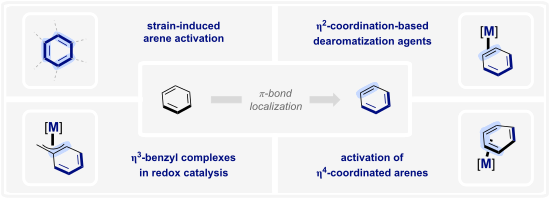
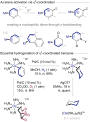
- established a mechanistic foundation for exploiting η3-benzyl intermediates as conduits for controlled arene-to-cyclohexadiene conversion. Building on this foundational discovery, Bao and Yamamoto subsequently broadened the nucleophile scope to encompass allylsilanes [76], allylboronic acid derivatives [77




A mild and atom-efficient four-component cascade strategy for the construction of biologically relevant 4-hydroxyquinolin-2(1H)-one derivatives
Beilstein J. Org. Chem. 2026, 22, 244–256, doi:10.3762/bjoc.22.18
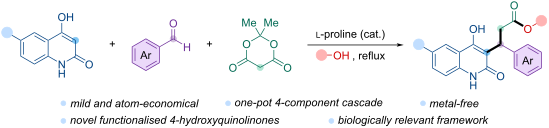
- and selective synthesis of previously inaccessible 4-hydroxyquinolin-2(1H)-one derivatives. Utilizing readily available 6-halo-4-hydroxyquinolinones, aromatic aldehydes, Meldrum’s acid, and alcohols under ʟ-proline catalysis, the reaction proceeds via in situ formation of arylidene-substituted Meldrum
- direct access to scarcely explored open-chain quinolinone esters, expanding the medicinal chemistry toolbox with promising scaffolds for drug discovery. Keywords: antibacterial activity; 4-hydroxyquinolin-2(1H)-one; ʟ-proline catalysis; Meldrum’s acid; Michael addition; multicomponent reaction
- -hydroxyquinoline scaffolds bearing both C6-halogen and γ-(3,4-dimethoxyphenyl)propanoic acid motifs. Existing approaches to such derivatives comprise typically multiple steps, are limited in scope, or require harsh reaction conditions, restricting their application in rapid analogue generation. The combination of


Conformational analysis of difluoromethylornithine: factors influencing its gas-phase and bioactive conformations
Beilstein J. Org. Chem. 2026, 22, 237–243, doi:10.3762/bjoc.22.17
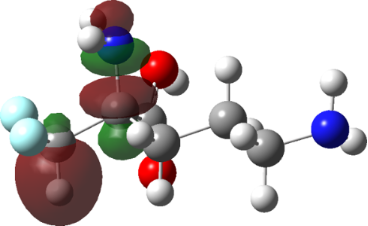
- intermolecular interactions in biological environments. This study clarifies the electronic origin of DFMO’s gauche effect and provides insight into how local electronic factors determine the structure of fluorinated amino acid derivatives. Keywords: conformational analysis; difluoromethylornithine; gauche
- balance shifts, since strong intermolecular interactions – especially hydrogen bonding with amino acid residues – favor a type-II geometry as the predominant bioconformation. Nevertheless, when different conformers engage in comparable intermolecular interactions, intramolecular effects such as the gauche
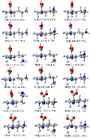
- amino acid residues and water molecules, while the ligand is delineated by a contour line to distinguish it from the binding cavity. Lowest-energy type-I, type-II, and type-III conformers of the zwitterionic form of (S)-DFMO. Color labels: H = blue, C = pink, N = orange, O = red, F = yellow. DFT




Configuration–packing synergy enabling integrated crystalline-state RTP and amorphous-state TADF
Beilstein J. Org. Chem. 2026, 22, 224–236, doi:10.3762/bjoc.22.16
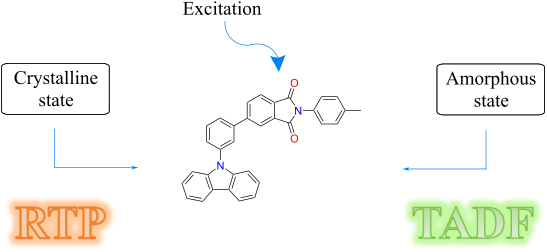
- Technology Co., Ltd.; 3-(9H-carbazol-9-yl)phenylboronic acid (5) was obtained from Sukailu Co., Ltd.; glacial acetic acid, anhydrous sodium sulfate, dichloromethane, n-hexane, ethanol, chloroform, and tetrahydrofuran were supplied by Guangzhou Chemical Reagents Co., Ltd. All reagents were used as received
- placed into a 250 mL three-necked round-bottomed flask, ensuring the proper amount of space for the reaction. It was then dissolved in 100 mL of glacial acetic acid, which served as the solvent. To create an inert atmosphere and prevent any unwanted reactions with oxygen, the solution was purged with
- no moisture or oxygen interfered with the reaction. Following this, 3-(9H-carbazol-9-yl)phenylboronic acid (5, 1.09 g, 3.80 mmol) was added to the flask. The mixture was stirred for 5 minutes to allow proper mixing. To facilitate the Suzuki coupling reaction, an aqueous solution of potassium


Synthesis of diaryl phosphates using phytic acid as a phosphorus source
Beilstein J. Org. Chem. 2026, 22, 213–223, doi:10.3762/bjoc.22.15
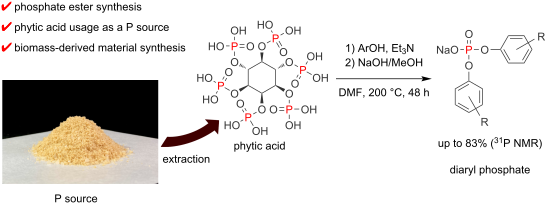
- Research, Saga University, 152-1 Shonan-cho, Karatsu, Saga 847-0021, Japan Nippon Concrete Industries Co., Ltd., 4-6-14 Shibaura, Minato-ku, Tokyo 108-8560, Japan 10.3762/bjoc.22.15 Abstract Phytic acid is a phosphorus-rich molecule, which is produced by plants using water-soluble phosphates absorbed from
- soil. It can potentially serve as a phosphorus source in the syntheses of organic phosphates; however, this approach has not been utilized for the preparation of phosphate esters. In this study, we report the first successful synthesis of phosphate esters using phytic acid as a phosphorus source. Crude
- products of phosphate diesters were obtained through the reactions of commercially available phytic acid and aromatic alcohols with 31P nuclear magnetic resonance yields up to 83%. We also isolated a portion of the reaction substrates with yields up to 60%. Next, we extracted phytic acid from rice bran




Screwing the helical chirality through terminal peri-functionalization
Beilstein J. Org. Chem. 2026, 22, 205–212, doi:10.3762/bjoc.22.14
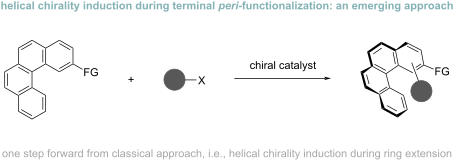
- helical chiral entities was reported by Wang and co-workers. They reported an organocatalyzed asymmetric synthesis of phosphorus-containing chiral helicenes enabled by dynamic kinetic resolution using copper and peptide-mimetic phosphonium salts, i.e. amino acid-derived phosphonium iodide and bromide as


Base-promoted deacylation of 2-acetyl-2,5-dihydrothiophenes and their oxygen-mediated hydroxylation
Beilstein J. Org. Chem. 2026, 22, 192–204, doi:10.3762/bjoc.22.13
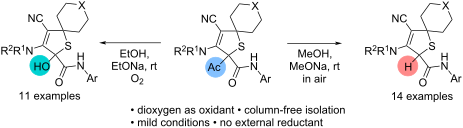
- ] and more complex molecules [11]. Rearrangements of the oxidized compounds are equally important transformations [12]. Oxidation of compounds containing a carbonyl group into carboxylic acid derivatives can be divided into two large groups: direct oxidation and oxidative rearrangements. Direct
- ]. Bernini et al. have developed a catalytic system, containing hydrogen peroxide/methyltrioxorhenium and an ionic liquid, to oxidize acetophenones to afford phenols [20]. Junjappat et al. found that hydrogen peroxide activated by boric acid can act as oxidant for the direct conversion of aromatic ketones to
- yield (21%, Table 1, entry 2). When acid (HCl) was added after quenching the residue with water, the yields of products 2a and 3a were increased (30 and 35%, Table 1, entry 3). The selective formation of 2-hydroxy-2,5-dihydrothiophene 2a in 41% yield was achieved when using 5 equiv of sodium and 0.25 mL




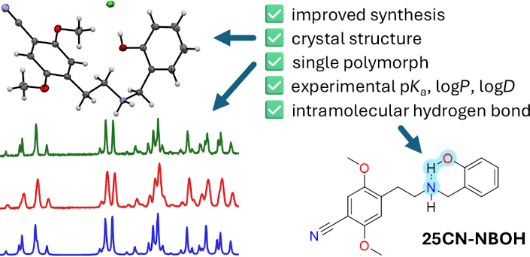
Improved synthesis and physicochemical characterization of the selective serotonin 2A receptor agonist 25CN-NBOH
Beilstein J. Org. Chem. 2026, 22, 175–184, doi:10.3762/bjoc.22.11
- scenarios. Experimental Reagents and solvents were used as received from commercial vendors, unless otherwise specified. ortho-Phosphoric acid (85%, Ph. Eur.), potassium chloride, sodium carbonate (>99.9%), and sodium dihydrogen phosphate monohydrate (Ph. Eur.) were purchased from Merck (Darmstadt, Germany
- minutes. Finally, quenching was done by careful addition of aqueous citric acid (12.5 mL, 1 M) while cooling in an ice bath. The resulting mixture was filtered through a pad of Celite and diluted with dichloromethane (75 mL) and water (75 mL), and the aqueous phase was adjusted to pH 8–9 using saturated
- and 0.1% phosphoric acid in the ratios 35:65 and 25:75, v/v for the distribution coefficient and stability experiments, respectively. The ChemStation software (Version B.04.03, Agilent Technologies) was used for instrument control and data collection. Computational chemistry DFT calculations were


A new synthesis of Tyrian purple (6,6’-dibromoindigo) and its corresponding sulfonate salts
Beilstein J. Org. Chem. 2026, 22, 167–174, doi:10.3762/bjoc.22.10
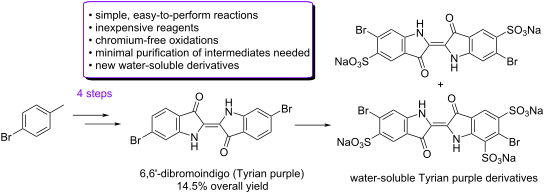
- carmine (5,5’-indigodisulfonic acid disodium salt). Results and Discussion In pursuing a new synthesis of 1, we sought to develop a shortened, chromium-free, synthetic approach leading to 1 via intermediates of 3 and 4. Furthermore, we were interested in synthesizing a water-soluble derivative of 1 via
- methodology of Keinan et al. [12], compound 5 was nitrated with fuming nitric acid in a mixture of glacial acetic acid and sulfuric acid. As shown in Scheme 3, this reaction yielded a mixture of 3 and 4-bromo-3-nitrotoluene (7) in a ≈3:1 ratio. Purification via column chromatography was successful in removing
- our best efforts, however, we were unable to reproduce the regioselectivity and 90% yield reported by Keinan et al. [12]. One possible explanation for this disparity in yield was the use of 90% fuming nitric acid in place of the reported 100% fuming nitric acid. At the time of this work, we were


Circumventing Mukaiyama oxidation: selective S–O bond formation via sulfenamide–alcohol coupling
Beilstein J. Org. Chem. 2026, 22, 158–166, doi:10.3762/bjoc.22.9
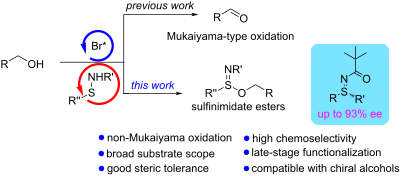
- latter is neutralized by NaHCO3, which acts as an acid scavenger and helps to maintain a mildly basic medium required for the transformation to proceed efficiently. Conclusion In summary, we have developed a mild, metal-free, and operationally simple NBS/NaHCO3-promoted oxidative coupling of sulfenamides


Asymmetric Mannich reaction of aromatic imines with malonates in the presence of multifunctional catalysts
Beilstein J. Org. Chem. 2026, 22, 151–157, doi:10.3762/bjoc.22.8
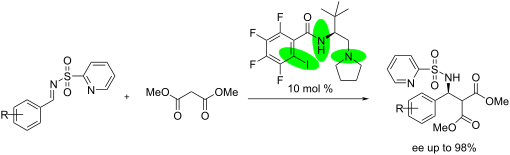
- synthesized and screened in asymmetric Mannich reaction. The reaction of aromatic imines with malonates in the presence of amino acid-derived catalysts gave Mannich adducts in very high enantiomeric purities (up to 98% ee). It is proposed that a network of hydrogen and halogen bonds with Lewis bases, together
- between the catalyst and the reagents. The chirality of the catalysts is derived from either amino acid or amino alcohols (including cinchona alkaloid derivatives). There are three exceptional structures: catalysts A-H and E-H, which are the hydrogen analogues of the corresponding iodine-containing
- % ee, Table 1, entry 6). Aminoindane-based catalysts C and D were inefficient and stereomeric purity of the products were not determined (Table 1, entries 7 and 8). The next group of catalysts consists of amino acid derivatives. The most selective was tert-leucine-based catalyst E affording the Mannich


Symmetrical D–π–A–π–D indanone dyes: a new design for nonlinear optics and cyanide detection
Beilstein J. Org. Chem. 2026, 22, 131–142, doi:10.3762/bjoc.22.6
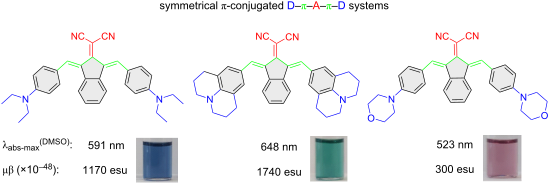
- /acetic acid buffers with a good yield (84%). Target compounds were synthesized by a coupling reaction between 2-(1,3-dihydro-2H-inden-2-ylidene)malononitrile (1) and appropriate alkylaminobenzaldehyde derivatives in acetic anhydride. Compounds were obtained with low to good yields (25–75%, conventional


Highly electrophilic, gem- and spiro-activated trichloromethylnitrocyclopropanes: synthesis and structure
Beilstein J. Org. Chem. 2026, 22, 123–130, doi:10.3762/bjoc.22.5
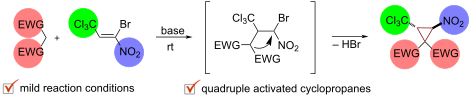
- . Conditions for obtaining the target cyclopropanes were optimized. The process is characterized by high diastereoselectivity and allows obtaining cyclopropanes with trans-configuration of -NO2 and -CCl3 groups. Monocyclic (based on malonic acid dinitrile, methyl cyanoacetate, ethyl cyanoacetate
- , benzoylacetonitrile), spirocarbo- (based on 1,3-indanedione) and spiroheterocyclic (based on Meldrum's acid, dimethylbarbituric acid, 3-methyl-1-phenyl-5-pyrazolone) cyclopropane structures were isolated and characterized. Keywords: bromonitropropene; CH-acids; cyclopropanes; nitrocyclopropanes; trichloromethyl
- by several approaches: forming of the CF3-group in a nitrocyclopropane (reaction of 2-nitrocyclopropanecarboxylic acid with sulfur tetrafluoride [31][32]), cyclopropane formation from a nitroethene substrate and a CF3-containing reagent (Corey–Chaykovsky reaction [33]), as well as reactions involving


Total synthesis of natural products based on hydrogenation of aromatic rings
Beilstein J. Org. Chem. 2026, 22, 88–122, doi:10.3762/bjoc.22.4
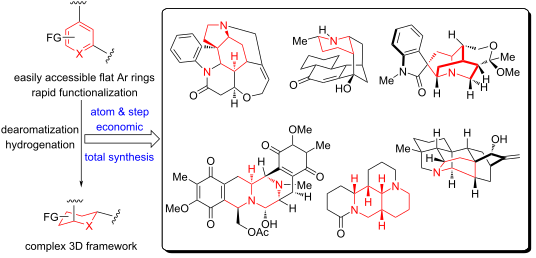
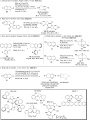
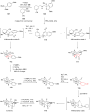
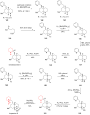
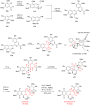
- 18, 20 to piperidine compounds using [CpRhCl2]2 as a metal catalyst and formic acid as a hydrogen source (Scheme 3) [45]. Different with other previous studies, this method allows for substituents at the 3-position of pyridine, enabling the rapid preparation of chiral piperidine compounds. It should
- tetrahydroquinolines by using dihydrogen or formic acid as the hydrogen source. In 2021 and 2024, Liu and co-workers demonstrated that with [NNP-Mn] catalysts, the hydrogenation of quinoline and its derivatives can proceed with high regio- and stereoselectivity [54][55] (Scheme 5). In 2022, Stoltz and co-workers
- range, the reaction was scaled up to the gram scale with high yield and high enantioselectivity. Recently, Du and co-workers reported a transition-metal-free asymmetric transfer hydrogenation reaction (Scheme 6) [58]. Under a hydrogen atmosphere, using chiral phosphoric acid and achiral borane as










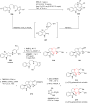

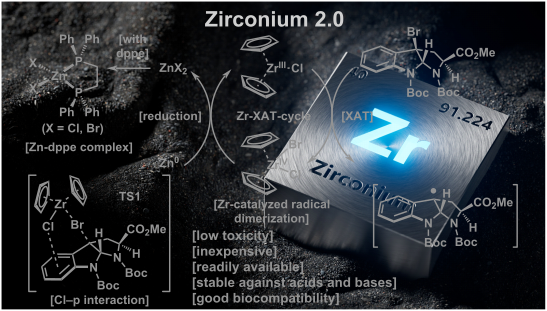
Advances in Zr-mediated radical transformations and applications to total synthesis
Beilstein J. Org. Chem. 2026, 22, 71–87, doi:10.3762/bjoc.22.3
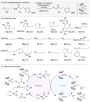
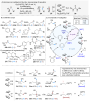
- iodide 10n failed to give the desired products. In substrate 10o containing both iodide and bromide, selective activation of the alkyl iodide was observed, affording the coupled product in 96% yield. Furthermore, the reaction proceeded smoothly in the presence of alcohols 10p–q and carboxylic acid 10r








Synthesis and applications of alkenyl chlorides (vinyl chlorides): a review
Beilstein J. Org. Chem. 2026, 22, 1–63, doi:10.3762/bjoc.22.1
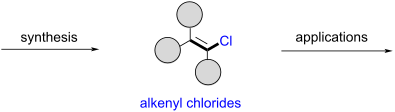
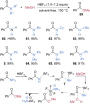
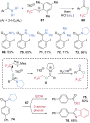
- first synthesis of alkenyl chlorides from acyl chlorides was reported by Moughamir and Mestdagh in 1999 (Scheme 18A) [71]. They observed that strongly acidic solvents, including trifluoroacetic acid and methanesulfonic acid, provided the corresponding products in good yields with excellent
- stereoselectivity, exclusively yielding the Z-isomer. Nonan-2-one required activation with the stronger methanesulfonic acid and gave a 91:9 regioisomeric mixture of 91 to 92. 1-Tetralone provided the corresponding product 61 in only 7% yield; the acid additive was not specified in this case. The authors were
- unable to efficiently separate 61 from side product 94, which was likely formed via addition of acetyl chloride to 61 followed by conversion of the ketone to the alkenyl chloride. Regarding the mechanism (Scheme 18B), acid-catalyzed enolization of the ketone is proposed (enol I), followed by acetylation























One-pot synthesis of ethylmaltol from maltol
Beilstein J. Org. Chem. 2025, 21, 2755–2760, doi:10.3762/bjoc.21.212

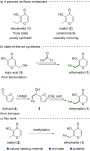
- to 100 ppm depending on the application [1][2][3]. Numerous syntheses of ethylmaltol (1) have been developed, most of which can be categorized into two distinct approaches based on the respective starting materials (Scheme 1b): In the first case, a 4-pyrone such as kojic acid (3), readily available
- through fermentation, or a synthetic intermediate derived thereof is being utilized. For example, the 1969 Pfizer patent describes the oxidation of kojic acid (3) with molecular oxygen to comenic acid, which is then decarboxylated to yield pyromeconic acid. An aldol addition with acetaldehyde followed by
- from corncob to access pyromeconic acid [6]. The second group of synthetic strategies takes advantage of furfural (4), which originates from the acid-catalyzed dehydration of agricultural biomass. It is then converted with an ethyl Grignard compound to alcohol 5 [7]. From alcohol 5, oxidation state


Sustainable electrochemical synthesis of aliphatic nitro-NNO-azoxy compounds employing ammonium dinitramide and their in vitro evaluation as potential nitric oxide donors and fungicides
Beilstein J. Org. Chem. 2025, 21, 2739–2754, doi:10.3762/bjoc.21.211
- a mixture of acetic anhydride (3.4 mL, 36.0 mmol) and 100% nitric acid (0.6 mL, 13.2 mmol) at 0 °C, and the mixture was stirred at this temperature for 30 min. Then the reaction mixture was poured into ice-water (50 mL) and extracted with CH2Cl2 (3 × 20 mL). The combined organic phase was washed