

Search results
Search for "vinyl ether" in Full Text gives 81 result(s) in Beilstein Journal of Organic Chemistry.
One hundred years of benzotropone chemistry
- Arif Dastan,
- Haydar Kilic and
- Nurullah Saracoglu
Beilstein J. Org. Chem. 2018, 14, 1120–1180, doi:10.3762/bjoc.14.98
- anhydride in benzene at 220 °C was reacted, [π2 + π8] cyclo-adduct 234 as a single product was isolated in 52% yield (Figure 9) [153][154]. The thermolysis of 230 in the presence of ethyl vinyl ether gave three volatile products 235–237 in GLC yields of 10%, 7%, and 15%, respectively (Figure 9) [154]. 5

Graphical Abstract

Scheme 1: Tropone (1), tropolone (2) and their resonance structures.

Figure 1: Natural products containing a tropone nucleus.

Figure 2: Possible isomers 11–13 of benzotropone.

Scheme 2: Synthesis of benzotropones 11 and 12.

Scheme 3: Oxidation products of benzotropylium fluoroborate (16).

Scheme 4: Oxidation of 7-bromo-5H-benzo[7]annulene (22).

Scheme 5: Synthesis of 4,5-benzotropone (11) using o-phthalaldehyde (27).

Scheme 6: Synthesis of 4,5-benzotropone (11) starting from oxobenzonorbornadiene 31.

Scheme 7: Acid-catalyzed cleavage of oxo-bridge of 34.

Scheme 8: Synthesis of 4,5-benzotropone (11) from o-xylylene dibromide (38).

Scheme 9: Synthesis of 4,5-benzotropone (11) via the carbene adduct 41.

Scheme 10: Heck coupling strategy for the synthesis of 11.

Scheme 11: Synthesis of benzofulvalenes via carbonyl group of 4,5-benzotropone (11).

Figure 3: Some cycloheptatrienylium cations.

Scheme 12: Synthesis of condensation product 63 and its subsequent oxidative cyclization products.

Figure 4: A novel series of benzo[7]annulenes prepared from 4,5-benzotropone (11).

Scheme 13: Preparation of substituted benzo[7]annulene 72 using the Mukaiyama-Michael reaction.

Figure 5: Possible benzo[7]annulenylidenes 73–75.

Scheme 14: Thermal and photochemical decomposition of 7-diazo-7H-benzo[7]annulene (76) and the trapping of int...

Scheme 15: Synthesis of benzoheptafulvalene 86.

Scheme 16: Synthesis of 7-(diphenylmethylene)-7H-benzo[7]annulene (89).

Scheme 17: Reaction of 4,5-benzotropone (11) with dimethyl diazomethane.

Scheme 18: Synthesis of dihydrobenzomethoxyazocine 103.

Scheme 19: Synthesis and reducibility of benzo-homo-2-methoxyazocines.

Scheme 20: Synthesis of 4,5-benzohomotropones 104 and 115 from 4,5-benzotropones 11 and 113.

Scheme 21: A catalytic deuterogenation of 4,5-benzotropone (11) and synthesis of 5-monosubstituted benzo[7]ann...

Scheme 22: Synthesis of methyl benzo[7]annulenes 131 and 132.

Scheme 23: Ambident reactivity of halobenzo[7]annulenylium cations 133a/b.

Scheme 24: Preparation of benzo[7]annulenylidene–iron complexes 147.

Scheme 25: Synthesis of 1-ethynylbenzotropone (150) and the etheric compound 152 from 4,5-benzotropone (11) wi...

Scheme 26: Thermal decomposition of 4,5-benzotropone (11).

Scheme 27: Reaction of 4,5-benzotropone (11) with 1,2-ethanediol and 1,2-ethanedithiol.

Scheme 28: Conversions of 1-benzosuberone (162) to 2,3-benzotropone (12).

Scheme 29: Synthesis strategies for 2,3-bezotropone (12) using 1-benzosuberones.

Scheme 30: Oxidation-based synthesis of 2,3-benzotropone (12) via 1-benzosuberone (162).

Scheme 31: Synthesis of 2,3-benzotropone (12) from α-tetralone (171) via ring-expansion.

Scheme 32: Preparation of 2,3-benzotropone (12) by using of benzotropolone 174.

Figure 6: Benzoheptafulvenes as condensation products of 2,3-benzotropone (12).

Scheme 33: Conversion of 2,3-benzotropone (12) to tosylhydrazone salt 182 and gem-dichloride 187.

Figure 7: Benzohomoazocines 191–193 and benzoazocines 194–197.

Scheme 34: From 2,3-benzotropone (12) to carbonium ions 198–201.

Scheme 35: Cycloaddition reactions of 2,3-benzotropone (12).
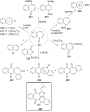
Scheme 36: Reaction of 2,3-benzotropone (12) with various reagents and compounds.

Figure 8: 3,4-Benzotropone (13) and its resonance structure.

Scheme 37: Synthesis of 6,7-benzobicyclo[3.2.0]hepta-3,6-dien-2-one (230).

Figure 9: Photolysis and thermolysis products of 230.

Figure 10: Benzotropolones and their tautomeric structures.

Scheme 38: Synthesis strategies of 4,5-benzotropolone (238).

Scheme 39: Synthesis protocol for 2-hydroxy-4,5-benzotropone (238) using oxazole-benzo[7]annulene 247.

Figure 11: Some quinoxaline and pyrazine derivatives 254–256 prepared from 4,5-benzotropolone (238).

Scheme 40: Nitration product of 4,5-benzotropolone (238) and its isomerization to 1-nitro-naphthoic acid (259)....

Scheme 41: Synthesis protocol for 6-hydroxy-2,3-benzotropone (239) from benzosuberone (162).
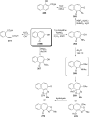
Scheme 42: Various reactions via 6-hydroxy-2,3-benzotropone (239).

Scheme 43: Photoreaction of 6-hydroxy-2,3-benzotropone (239).

Scheme 44: Synthesis of 7-hydroxy-2,3-benzotropone (241) from benzosuberone (162).

Scheme 45: Synthesis strategy for 7-hydroxy-2,3-benzotropone (241) from ketone 276.

Scheme 46: Synthesis of 7-hydroxy-2,3-benzotropone (241) from β-naphthoquinone (280).

Scheme 47: Synthesis of 7-hydroxy-2,3-benzotropone (241) from bicyclic endoperoxide 213.

Scheme 48: Synthesis of 7-hydroxy-2,3-benzotropone (241) by ring-closing metathesis.

Figure 12: Various monosubstitution products 289–291 of 7-hydroxy-2,3-benzotropone (241).

Scheme 49: Reaction of 7-hydroxy-2,3-benzotropone (241) with various reagents.

Scheme 50: Synthesis of 4-hydroxy-2,3-benzotropones 174 and 304 from diketones 300/301.

Scheme 51: Catalytic hydrogenation of diketones 300 and 174.

Scheme 52: Synthesis of halo-benzotropones from alkoxy-naphthalenes 306, 307 and 310.

Figure 13: Unexpected byproducts 313–315 during synthesis of chlorobenzotropone 309.

Figure 14: Some halobenzotropones and their cycloadducts.

Scheme 53: Multisep synthesis of 2-chlorobenzotropone 309.

Scheme 54: A multistep synthesis of 2-bromo-benzotropone 26.

Scheme 55: A multistep synthesis of bromo-2,3-benzotropones 311 and 316.

Scheme 56: Oxidation reactions of 8-bromo-5H-benzo[7]annulene (329) with some oxidants.

Scheme 57: Synthesis of 2-bromo-4,5-benzotropone (26).

Scheme 58: Synthesis of 6-chloro-2,3-benzotropone (335) using LiCl and proposed intermediate 336.

Scheme 59: Reaction of 7-bromo-2,3-benzotropone (316) with methylamine.

Scheme 60: Reactions of bromo-2,3-benzotropones 26 and 311 with dimethylamine.

Scheme 61: Reactions of bromobenzotropones 311 and 26 with NaOMe.

Scheme 62: Reactions of bromobenzotropones 26 and 312 with t-BuOK in the presence of DPIBF.

Scheme 63: Cobalt-catalyzed reductive cross-couplings of 7-bromo-2,3-benzotropone (316) with cyclic α-bromo en...

Figure 15: Cycloadduct 357 and its di-π-methane rearrangement product 358.

Scheme 64: Catalytic hydrogenation of 2-chloro-4,5-benzotropone (311).

Scheme 65: Synthesis of dibromo-benzotropones from benzotropones.

Scheme 66: Bromination/dehydrobromination of benzosuberone (162).

Scheme 67: Some transformations of isomeric dibromo-benzotropones 261A/B.

Scheme 68: Transformations of benzotropolone 239B to halobenzotropolones 369–371.

Figure 16: Bromobenzotropolones 372–376 and 290 prepared via bromination/dehydrobromination strategy.

Scheme 69: Synthesis of some halobenzotropolones 289, 377 and 378.

Figure 17: Bromo-chloro-derivatives 379–381 prepared via chlorination.

Scheme 70: Synthesis of 7-iodo-3,4-benzotropolone (382).

Scheme 71: Hydrogenation of bromobenzotropolones 369 and 370.

Scheme 72: Debromination reactions of mono- and dibromides 290 and 375.

Figure 18: Nitratation and oxidation products of some halobenzotropolenes.
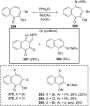
Scheme 73: Azo-coupling reactions of some halobenzotropolones 294, 375 and 378.

Figure 19: Four possible isomers of dibenzotropones 396–399.

Figure 20: Resonance structures of tribenzotropone (400).

Scheme 74: Two synthetic pathways for tribenzotropone (400).

Scheme 75: Synthesis of tribenzotropone (400) from dibenzotropone 399.

Scheme 76: Synthesis of tribenzotropone (400) from 9,10-phenanthraquinone (406).

Scheme 77: Synthesis of tribenzotropone (400) from trifluoromethyl-substituted arene 411.

Figure 21: Dibenzosuberone (414).

Figure 22: Reduction products 415 and 416 of tribenzotropone (400).

Figure 23: Structures of tribenzotropone dimethyl ketal 417 and 4-phenylfluorenone (412) and proposed intermed...

Figure 24: Structures of benzylidene- and methylene-9H-tribenzo[a,c,e][7]annulenes 419 and 420 and chiral phos...

Figure 25: Structures of tetracyclic alcohol 422, p-quinone methide 423 and cation 424.

Figure 26: Structures of host molecules 425–427.

Scheme 78: Synthesis of non-helical overcrowded derivatives syn/anti-431.

Figure 27: Hexabenzooctalene 432.

Figure 28: Structures of possible eight isomers 433–440 of naphthotropone.

Scheme 79: Synthesis of naphthotropone 437 starting from 1-phenylcycloheptene (441).

Scheme 80: Synthesis of 10-hydroxy-11H-cyclohepta[a]naphthalen-11-one (448) from diester 445.

Scheme 81: Synthesis of naphthotropone 433.

Scheme 82: Synthesis of naphthotropones 433 and 434 via cycloaddition reaction.

Scheme 83: Synthesis of naphthotropone 434 starting from 452.

Figure 29: Structures of tricarbonyl(tropone)irons 458, and possible cycloadducts 459.

Scheme 84: Synthesis of naphthotropone 436.

Scheme 85: Synthesis of precursor 465 for naphthotropone 435.

Scheme 86: Generation of naphthotropone 435 from 465.

Figure 30: Structures of tropylium cations 469 and 470.

Figure 31: Structures of tropylium ions 471+.BF4−, 472+.BF4−, and 473+.BF4−.

Scheme 87: Synthesis of tropylium ions 471+.BF4− and 479+.ClO4−.

Scheme 88: Synthesis of 1- and 2-methylanthracene (481 and 482) via carbene–carbene rearrangement.

Figure 32: Trapping products 488–490.

Scheme 89: Generation and chemistry of a naphthoannelated cycloheptatrienylidene-cycloheptatetraene intermedia...

Scheme 90: Proposed intermediates and reaction pathways for adduct 498.

Scheme 91: Exited-state intramolecular proton transfer of 505.

Figure 33: Benzoditropones 506 and 507.

Scheme 92: Synthesis of benzoditropone 506e.

Scheme 93: Synthetic approaches for dibenzotropone 507 via tropone (1).

Scheme 94: Formation mechanisms of benzoditropone 507 and 516 via 515.

Scheme 95: Synthesis of benzoditropones 525 and 526 from pyromellitic dianhydride (527).

Figure 34: Possible three benzocyclobutatropones 534–536.

Scheme 96: Synthesis of benzocyclobutatropones 534 and 539.

Scheme 97: Synthesis attempts for benzocyclobutatropone 545.

Scheme 98: Generation and trapping of symmetric benzocyclobutatropone 536.

Scheme 99: Synthesis of chloro-benzocyclobutatropone 552 and proposed mechanism of fluorenone derivatives.

Scheme 100: Synthesis of tropolone analogue 559.

Scheme 101: Synthesis of tropolones 561 and 562.

Figure 35: o/p-Tropoquinone rings (563 and 564) and benzotropoquinones (565–567).

Scheme 102: Synthesis of benzotropoquinone 566.

Scheme 103: Synthesis of benzotropoquinone 567 via a Diels–Alder reaction.

Figure 36: Products 575–577 through 1,2,3-benzotropoquinone hydrate 569.

Scheme 104: Structures 578–582 prepared from tropoquinone 567.

Figure 37: Two possible structures 583 and 584 for dibenzotropoquinone, and precursor compound 585 for 583.
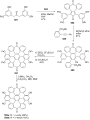
Scheme 105: Synthesis of saddle-shaped ketone 592 using dibenzotropoquinone 584.
On the design principles of peptide–drug conjugates for targeted drug delivery to the malignant tumor site
- Eirinaios I. Vrettos,
- Gábor Mező and
- Andreas G. Tzakos
Beilstein J. Org. Chem. 2018, 14, 930–954, doi:10.3762/bjoc.14.80
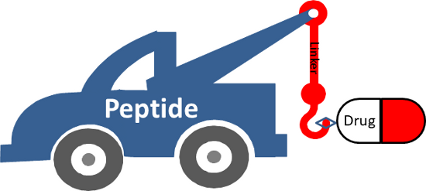
- , there are certain bonds like imine, oxime, hydrazone, orthoester, acetal, vinyl ether and polyketal [103] that are known to undergo hydrolysis at acidic pH, while being extremely stable during blood circulation. Therefore, acid-labile bonds could be hydrolyzed in the slightly acidic microenvironment and

Graphical Abstract

Figure 1: Conventional chemotherapy versus targeted chemotherapy. Black color = Solid malignant tumor; red = ...

Figure 2: A. General structural architecture of the ideal navigated drug delivery system [31]. B. General structu...

Figure 3: Binding and penetration mechanism of iRGD. The iRGD peptide is accumulated on the surface of αv int...

Figure 4: Representative examples of anticancer drugs utilized for the construction of PDCs. The most usual c...

Figure 5: Illustration of the drug release mechanism from the self-immolative spacer PABC conjugated to a tum...

Figure 6: Structures of the PDCs named AN-152 and AN-207.

Figure 7: Structure of the PDC named AN-238.

Figure 8: Chemical structure and synthetic scheme for the PDC ANG1005. (A) ANG1005 is composed of three molec...

Figure 9: Structure of oxime linked Dau–GnRH-III conjugate with or without cathepsin B labile spacer and thei...

Figure 10: Synthesis of the most effective GnRH-III–Dau conjugate with two drug molecules [153].

Figure 11: Structures of the four different PDCs of D-Lys6-GnRH-I and gemcitabine (GSG, GSG2, 3G, 3G2) [19].

Figure 12: Structures of (A) native sunitinib; (B) SAN1 analog of sunitinib and (C) assembled PDC named SAN1GS...

Figure 13: Synthetic scheme for the formation of GSG and the unexpected side product [156].

Figure 14: Illustration of uncharted guanidinium peptide coupling reagent side reactions during PDCs synthesis ...

Figure 15: Putative mechanism for the formation of the uronium side product [156].
Stepwise radical cation Diels–Alder reaction via multiple pathways
- Ryo Shimizu,
- Yohei Okada and
- Kazuhiro Chiba
Beilstein J. Org. Chem. 2018, 14, 704–708, doi:10.3762/bjoc.14.59
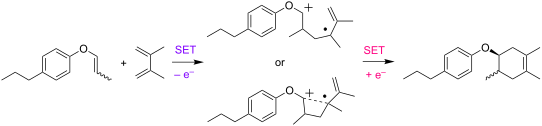
- pathways. Results and Discussion The present work began with the synthesis of the aryl vinyl ether 1 from p-propylphenol in 2 steps (Scheme S1 and Figure S1 in Supporting Information File 1). Both E- and Z-forms were readily purified by silica gel column chromatography. When the anodic oxidation of the Z
- reaction of the aryl vinyl ether 1 (Scheme 7). On the basis of the oxidation potentials, oxidative SET would selectively take place from the aryl vinyl ether 1 even in the presence of 2,3-dimethyl-1,3-butadiene (2) to generate the radical cation 1·+, in which the stereochemistry derived from the starting
- anodic oxidation of the Diels–Alder adduct 3 does not give either the retro-reaction product 1 or the vinylcyclobutane 4 and therefore, it seems that the overall transformation involves irreversible steps. Thus, the radical cation Diels–Alder reaction of aryl vinyl ether 1 effectively proceeds either via

Graphical Abstract

Scheme 1: Radical cation Diels–Alder reaction of trans-anethole [17].

Scheme 2: Radical cation Diels–Alder reactions of aryl vinyl ether and sulfides [17,25].

Scheme 3: Radical cation Diels–Alder reaction of aryl vinyl ether (1). Conditions: 1.0 M LiClO4/CH3NO2, carbo...

Scheme 4: Oxidative SET-triggered reaction of aryl vinyl ether 1c. Conditions: 1.0 M LiClO4/CH3NO2, carbon fe...

Figure 1: GC–MS Monitoring of the oxidative SET-triggered reaction of aryl vinyl ether 1c.

Scheme 5: Oxidative SET-triggered rearrangement of vinyl cyclobutane 4. Conditions: 1.0 M LiClO4/CH3NO2, carb...

Scheme 6: Unsuccessful rearrangement of cyclobutanes. Conditions: 1.0 M LiClO4/CH3NO2, carbon felt electrodes...

Scheme 7: Proposed mechanism for the radical cation Diels–Alder reaction of aryl vinyl ether 1.
Mannich base-connected syntheses mediated by ortho-quinone methides
- Petra Barta,
- Ferenc Fülöp and
- István Szatmári
Beilstein J. Org. Chem. 2018, 14, 560–575, doi:10.3762/bjoc.14.43
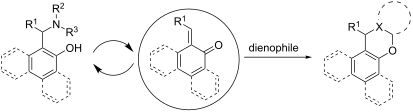
- presence of a large excess of ethyl vinyl ether as o-QM trapping agent, they isolated several 2-ethoxychromane derivatives 16. However, yields as low as 36% were found in some cases. o-QMs derived from Mannich adducts also appear to be key intermediates in the syntheses of biologically active natural

Graphical Abstract

Scheme 1: Formation of amidoalkylnaphthols 4 via o-QM intermediate 3.

Scheme 2: Asymmetric syntheses of triarylmethanes starting from diarylmethylamines.

Scheme 3: Proposed mechanism for the formation of 2,2-dialkyl-3-dialkylamino-2,3-dihydro-1H-naphtho[2,1-b]pyr...

Scheme 4: Cycloadditions of isoflavonoid-derived o-QMs and various dienophiles.

Scheme 5: [4 + 2] Cycloaddition reactions between aminonaphthols and cyclic amines.

Scheme 6: Brønsted acid-catalysed reaction between aza-o-QMs and 2- or 3-substituted indoles.

Scheme 7: Formation of 3-(α,α-diarylmethyl)indoles 52 in different synthetic pathways.

Scheme 8: Alkylation of o-QMs with N-, O- or S-nucleophiles.

Scheme 9: Formation of DNA linkers and o-QM mediated polymers.
Intramolecular glycosylation
- Xiao G. Jia and
- Alexei V. Demchenko
Beilstein J. Org. Chem. 2017, 13, 2028–2048, doi:10.3762/bjoc.13.201
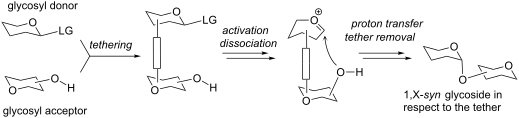
- -mannosylations [92]. In accordance with the linking strategy, the vinyl ether 70 was obtained in 98% yield from the corresponding 2-O-allyl ether 69 by the treatment with Wilkinson’s catalyst and BuLi (Scheme 17) [93]. Subsequent NIS-mediated tethering of 70 and acceptor 71 gave the tethered donor–acceptor pair

Graphical Abstract

Scheme 1: The mechanistic outline of the intermolecular (a) and intramolecular (b) glycosylation reactions.

Figure 1: Three general concepts for intramolecular glycosylation reactions.

Scheme 2: First intramolecular glycosylation using the molecular clamping.

Scheme 3: Succinoyl as a flexible linker for intramolecular glycosylation of prearranged glycosides.

Scheme 4: Template-directed cyclo-glycosylation using a phthaloyl linker.

Scheme 5: Phthaloyl linker-mediated synthesis of branched oligosaccharides via remote glycosidation.

Scheme 6: Molecular clamping with the phthaloyl linker in the synthesis of α-cyclodextrin.

Scheme 7: m-Xylylene as a rigid tether for intramolecular glycosylation.

Scheme 8: Oligosaccharide synthesis using rigid xylylene linkers.

Scheme 9: Stereo- and regiochemical outcome of peptide-based linkers.

Scheme 10: Positioning effect of donor and acceptor in peptide templated synthesis.

Scheme 11: Synthesis of a trisaccharide using a non-symmetrical tether strategy.

Scheme 12: Effect of ring on glycosylation with a furanose.

Scheme 13: Rigid BPA template with various linkers.

Scheme 14: The templated synthesis of maltotriose in complete stereoselectivity.

Scheme 15: First examples of the IAD.

Scheme 16: Long range IAD via dimethylsilane.

Scheme 17: Allyl-mediated tethering strategy in the IAD.

Scheme 18: IAD using tethering via the 2-naphthylmethyl group.

Scheme 19: Origin of selectivity in boronic ester mediated IAD.

Scheme 20: Arylborinic acid approach to the synthesis of β-mannosides.

Figure 2: Facial selectivity during HAD.

Scheme 21: Possible mechanisms to explain α and β selectivity in palladium mediated IAD.

Scheme 22: DISAL as the leaving group that favors the intramolecular glycosylation pathway.

Scheme 23: Boronic acid as a directing group in the leaving group-based glycosylation method.
Kinetic analysis of mechanoradical formation during the mechanolysis of dextran and glycogen
- Naoki Doi,
- Yasushi Sasai,
- Yukinori Yamauchi,
- Tetsuo Adachi,
- Masayuki Kuzuya and
- Shin-ichi Kondo
Beilstein J. Org. Chem. 2017, 13, 1174–1183, doi:10.3762/bjoc.13.116
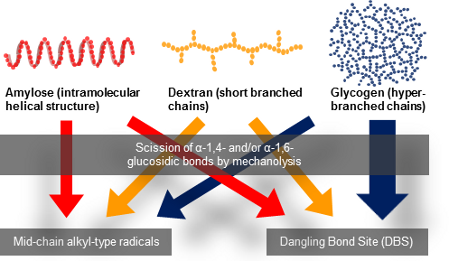
- microcrystalline cellulose powder through mechanocation polymerization with isobutyl vinyl ether in vacuum at 77 K [24]. The aforementioned mechanoanion was confirmed through tetracyanoethylene (TCNE) radical anion formation. The latter radical is produced by a single-electron transfer from the mechanoanion to

Graphical Abstract

Figure 1: Structures of discrete mechanoradicals and the reaction sequence for their formation from cellulose ...

Figure 2: Schematic structure of amylose, dextran and glycogen.

Figure 3: Progressive changes in observed ESR spectra of fractured amylose [5], Dx, and Gly, together with simul...

Figure 4: Schematic representation of bond cleavage at α-1,4- and α-1,6-bonds.

Figure 5: ESR spectrum of fractured sample of Dx and TCNE (a) before and (b) after visible-light irradiation.

Figure 6: Component spectra of the simulated ESR spectra.

Figure 7: Progressive changes in the intensity of component spectra corresponding to the simulated spectra of...

Figure 8: Changes in Dx molecular-weight distribution (MWD) during vibratory milling.

Figure 9: Changes in Dx weight-average molecular weight (Mw) during vibratory milling.

Figure 10: Change in Gly particle diameter during vibratory milling.
Multicomponent reactions: A simple and efficient route to heterocyclic phosphonates
- Mohammad Haji
Beilstein J. Org. Chem. 2016, 12, 1269–1301, doi:10.3762/bjoc.12.121
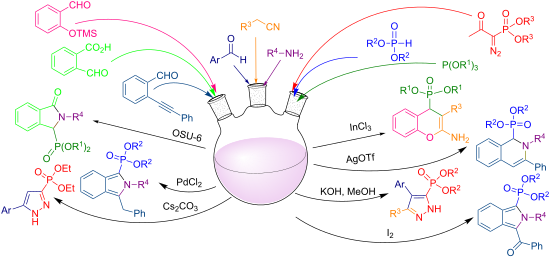
- this protocol for the preparation of phosphonodihydropyrans 163 or 164 starting from phosphonopyruvate 159 or phosphonopyruvamide 160, p-nitrobenzaldehyde (161) and ethyl vinyl ether (162) in a reactor equipped with a Dean–Stark separator (Scheme 35) [73]. The yields of the resulting cycloadducts 163

Graphical Abstract

Scheme 1: The Biginelli condensation.

Scheme 2: The Biginelli reaction of β-ketophosphonates catalyzed by ytterbium triflate.

Scheme 3: Trimethylchlorosilane-mediated Biginelli reaction of diethyl (3,3,3-trifluoropropyl-2-oxo)phosphona...

Scheme 4: Biginelli reaction of dialkyl (3,3,3-trifluoropropyl-2-oxo)phosphonate with trialkyl orthoformates ...

Scheme 5: p-Toluenesulfonic acid-promoted Biginelli reaction of β-ketophosphonates, aryl aldehydes and urea.

Scheme 6: General Kabachnik–Fields reaction for the synthesis of α-aminophosphonates.

Scheme 7: Phthalocyanine–AlCl catalyzed Kabachnik–Fields reaction of N-Boc-piperidin-4-one with diethyl phosp...

Scheme 8: Kabachnik–Fields reaction of isatin with diethyl phosphite and benzylamine.

Scheme 9: Magnetic Fe3O4 nanoparticle-supported phosphotungstic acid-catalyzed Kabachnik–Fields reaction of i...

Scheme 10: The Mg(ClO4)2-catalyzed Kabachnik–Fields reaction of 1-tosylpiperidine-4-one.

Scheme 11: An asymmetric version of the Kabachnik–Fields reaction for the synthesis of α-amino-3-piperidinylph...

Scheme 12: A classical Kabachnik–Fields reaction followed by an intramolecular ring-closing reaction for the s...

Scheme 13: Synthesis of (S)-piperidin-2-phosphonic acid through an asymmetric Kabachnik–Fields reaction.

Scheme 14: A modified diastereoselective Kabachnik–Fields reaction for the synthesis of isoindolin-1-one-3-pho...

Scheme 15: A microwave-assisted Kabachnik–Fields reaction toward isoindolin-1-ones.

Scheme 16: The synthesis of 3-arylmethyleneisoindolin-1-ones through a Horner–Wadsworth–Emmons reaction of Kab...

Scheme 17: An efficient one-pot method for the synthesis of ethyl (2-alkyl- and 2-aryl-3-oxoisoindolin-1-yl)ph...

Scheme 18: FeCl3 and PdCl2 co-catalyzed three-component reaction of 2-alkynylbenzaldehydes, anilines, and diet...

Scheme 19: Three-component reaction of 6-methyl-3-formylchromone (75) with hydrazine derivatives or hydroxylam...

Scheme 20: Three-component reaction of 6-methyl-3-formylchromone (75) with thiourea, guanidinium carbonate or ...

Scheme 21: Three-component reaction of 6-methyl-3-formylchromone (75) with 1,4-bi-nucleophiles in the presence...

Scheme 22: One-pot three-component reaction of 2-alkynylbenzaldehydes, amines, and diethyl phosphonate.

Scheme 23: Lewis acid–surfactant combined catalysts for the one-pot three-component reaction of 2-alkynylbenza...

Scheme 24: Lewis acid catalyzed cyclization of different Kabachnik–Fields adducts.

Scheme 25: Three-component synthesis of N-arylisoquinolone-1-phosphonates 119.

Scheme 26: CuI-catalyzed three-component tandem reaction of 2-(2-formylphenyl)ethanones with aromatic amines a...

Scheme 27: Synthesis of 1,5-benzodiazepin-2-ylphosphonates via ytterbium chloride-catalyzed three-component re...

Scheme 28: FeCl3-catalyzed four-component reaction for the synthesis of 1,5-benzodiazepin-2-ylphosphonates.

Scheme 29: Synthesis of indole bisphosphonates through a modified Kabachnik–Fields reaction.

Scheme 30: Synthesis of heterocyclic bisphosphonates via Kabachnik–Fields reaction of triethyl orthoformate.

Scheme 31: A domino Knoevenagel/phospha-Michael process for the synthesis of 2-oxoindolin-3-ylphosphonates.

Scheme 32: Intramolecular cyclization of phospha-Michael adducts to give dihydropyridinylphosphonates.

Scheme 33: Synthesis of fused phosphonylpyrans via intramolecular cyclization of phospha-Michael adducts.

Scheme 34: InCl3-catalyzed three-component synthesis of (2-amino-3-cyano-4H-chromen-4-yl)phosphonates.

Scheme 35: Synthesis of phosphonodihydropyrans via a domino Knoevenagel/hetero-Diels–Alder process.

Scheme 36: Multicomponent synthesis of phosphonodihydrothiopyrans via a domino Knoevenagel/hetero-Diels–Alder ...

Scheme 37: One-pot four-component synthesis of 1,2-dihydroisoquinolin-1-ylphosphonates under multicatalytic co...

Scheme 38: CuI-catalyzed four-component reactions of methyleneaziridines towards alkylphosphonates.

Scheme 39: Ruthenium–porphyrin complex-catalyzed three-component synthesis of aziridinylphosphonates and its p...

Scheme 40: Copper(I)-catalyzed three-component reaction towards 1,2,3-triazolyl-5-phosphonates.

Scheme 41: Three-component reaction of acylphosphonates, isocyanides and dialkyl acetylenedicarboxylate to aff...

Scheme 42: Synthesis of (4-imino-3,4-dihydroquinazolin-2-yl)phosphonates via an isocyanide-based three-compone...

Scheme 43: Silver-catalyzed three-component synthesis of (2-imidazolin-4-yl)phosphonates.

Scheme 44: Three-component synthesis of phosphonylpyrazoles.

Scheme 45: One-pot three-component synthesis of 3-carbo-5-phosphonylpyrazoles.

Scheme 46: A one-pot two-step method for the synthesis of phosphonylpyrazoles.

Scheme 47: A one-pot method for the synthesis of (5-vinylpyrazolyl)phosphonates.

Scheme 48: Synthesis of 1H-pyrrol-2-ylphosphonates via the [3 + 2] cycloaddition of phosphonate azomethine yli...

Scheme 49: Three-component synthesis of 1H-pyrrol-2-ylphosphonates.

Scheme 50: The classical Reissert reaction.

Scheme 51: One-pot three-component synthesis of N-phosphorylated isoquinolines.

Scheme 52: One-pot three-component synthesis of 1-acyl-1,2-dihydroquinoline-2-phosphonates and 2-acyl-1,2-dihy...

Scheme 53: Three-component reaction of pyridine derivatives with ethyl propiolate and dialkyl phosphonates.

Scheme 54: Three-component reactions for the phosphorylation of benzothiazole and isoquinoline.

Scheme 55: Three-component synthesis of diphenyl [2-(aminocarbonyl)- or [2-(aminothioxomethyl)-1,2-dihydroisoq...

Scheme 56: Three-component stereoselective synthesis of 1,2-dihydroquinolin-2-ylphosphonates and 1,2-dihydrois...

Scheme 57: Diphosphorylation of diazaheterocyclic compounds via a tandem 1,4–1,2 addition of dimethyl trimethy...

Scheme 58: Multicomponent reaction of alkanedials, acetamide and acetyl chloride in the presence of PCl3 and a...

Scheme 59: An oxidative domino three-component synthesis of polyfunctionalized pyridines.

Scheme 60: A sequential one-pot three-component synthesis of polysubstituted pyrroles.

Scheme 61: Three-component decarboxylative coupling of proline with aldehydes and dialkyl phosphites for the s...

Scheme 62: Three-component domino aza-Wittig/phospha-Mannich sequence for the phosphorylation of isatin deriva...

Scheme 63: Stereoselective synthesis of phosphorylated trans-1,5-benzodiazepines via a one-pot three-component...

Scheme 64: One-pot three-component synthesis of phosphorylated 2,6-dioxohexahydropyrimidines.
(Thio)urea-mediated synthesis of functionalized six-membered rings with multiple chiral centers
- Giorgos Koutoulogenis,
- Nikolaos Kaplaneris and
- Christoforos G. Kokotos
Beilstein J. Org. Chem. 2016, 12, 462–495, doi:10.3762/bjoc.12.48
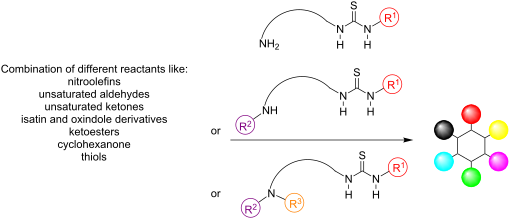
- 8-oxabicyclo[3.2.1]octane 21 framework. In this reaction, the main factor of achieving high yields or enantioselectivities, is how electron-rich or electron-poor, the dienophile is. Electron-rich olefins, like the benzyl vinyl ether and ethyl vinyl ether, reacted with success providing high yields

Graphical Abstract

Scheme 1: Activation of carbonyl compounds via enamine and iminium intermediates [2].

Scheme 2: Electronic and steric interactions present in enamine activation mode [2].

Scheme 3: Electrophilic activation of carbonyl compounds by a thiourea moiety.

Scheme 4: Asymmetric synthesis of dihydro-2H-pyran-6-carboxylate 3 using organocatalyst 4 [16].

Scheme 5: Possible hydrogen-bonding for the reaction of (E)-methyl 2-oxo-4-phenylbut-3-enoate [16].

Scheme 6: Asymmetric desymmetrization of 4,4-cyclohexadienones using the Michael addition reaction with malon...

Scheme 7: The enantioselective synthesis of α,α-disubstituted cycloalkanones using catalyst 11 [18].

Scheme 8: The enantioselective synthesis of indolo- and benzoquinolidine compounds through aza-Diels–Alder re...

Scheme 9: Enantioselective [5 + 2] cycloaddition [20].

Scheme 10: Asymmetric synthesis of oxazine derivatives 26 [21].

Scheme 11: Asymmetric synthesis of bicyclo[3.3.1]nonadienone, core 30 present in (−)-huperzine [22].

Scheme 12: Asymmetric inverse electron-demand Diels-Alder reaction catalyzed by amine-thiourea 34 [23].

Scheme 13: Asymmetric entry to morphan skeletons, catalyzed by amine-thiourea 37 [24].

Scheme 14: Asymmetric transformation of (E)-2-nitroallyl acetate [25].

Scheme 15: Proposed way of activation.

Scheme 16: Asymmetric synthesis of nitrobicyclo[3.2.1]octan-2-one derivatives [26].

Scheme 17: Asymmetric tandem Michael–Henry reaction catalyzed by 50 [27].

Scheme 18: Asymmetric Diels–Alder reactions of 3-vinylindoles 51 [29].

Scheme 19: Proposed transition state and activation mode of the asymmetric Diels–Alder reactions of 3-vinylind...

Scheme 20: Desymmetrization of meso-anhydrides by Chin, Song and co-workers [30].

Scheme 21: Desymmetrization of meso-anhydrides by Connon and co-workers [31].

Scheme 22: Asymmetric intramolecular Michael reaction [32].

Scheme 23: Asymmetric addition of malonate to 3-nitro-2H-chromenes 67 [33].

Scheme 24: Intramolecular desymmetrization through an intramolecular aza-Michael reaction [34].

Scheme 25: Enantioselective synthesis of (−)-mesembrine [34].

Scheme 26: A novel asymmetric Michael–Michael reaction [35].

Scheme 27: Asymmetric three-component reaction catalyzed by Takemoto’s catalyst 77 [46].

Scheme 28: Asymmetric domino Michael–Henry reaction [47].

Scheme 29: Asymmetric domino Michael–Henry reaction [48].

Scheme 30: Enantioselective synthesis of derivatives of 3,4-dihydro-2H-pyran 89 [49].

Scheme 31: Asymmetric addition of α,α-dicyano olefins 90 to 3-nitro-2H-chromenes 91 [50].

Scheme 32: Asymmetric three-component reaction producing 2,6-diazabicyclo[2.2.2]octanones 95 [51].

Scheme 33: Asymmetric double Michael reaction producing substituted chromans 99 [52].

Scheme 34: Enantioselective synthesis of multi-functionalized spiro oxindole dienes 106 [53].

Scheme 35: Organocatalyzed Michael aldol cyclization [54].

Scheme 36: Asymmetric synthesis of dihydrocoumarins [55].

Scheme 37: Asymmetric double Michael reaction en route to tetrasubstituted cyclohexenols [56].

Scheme 38: Asymmetric synthesis of α-trifluoromethyl-dihydropyrans 121 [58].

Scheme 39: Tyrosine-derived tertiary amino-thiourea 123 catalyzed Michael hemiaketalization reaction [59].

Scheme 40: Enantioselective entry to bicyclo[3.2.1]octane unit [60].

Scheme 41: Asymmetric synthesis of spiro[4-cyclohexanone-1,3’-oxindoline] 126 [61].

Scheme 42: Kinetic resolution of 3-nitro-2H-chromene 130 [62].

Scheme 43: Asymmetric synthesis of chromanes 136 [63].

Scheme 44: Wang’s utilization of β-unsaturated α-ketoesters 87 [64,65].

Scheme 45: Asymmetric entry to trifluoromethyl-substituted dihydropyrans 144 [66].

Scheme 46: Phenylalanine-derived thiourea-catalyzed domino Michael hemiaketalization reaction [67].

Scheme 47: Asymmetric synthesis of α-trichloromethyldihydropyrans 149 [68].

Scheme 48: Takemoto’s thiourea-catalyzed domino Michael hemiaketalization reaction [69].

Scheme 49: Asymmetric synthesis of densely substituted cyclohexanes [70].

Scheme 50: Enantioselective synthesis of polysubstituted chromeno [4,3-b]pyrrolidine derivatines 157 [71].

Scheme 51: Enantioselective synthesis of spiro-fused cyclohexanone/5-oxazolone scaffolds 162 [72].

Scheme 52: Utilizing 2-mercaptobenzaldehydes 163 in cascade processes [73,74].

Scheme 53: Proposed transition state of the initial sulfa-Michael step [74].

Scheme 54: Asymmetric thiochroman synthesis via dynamic kinetic resolution [75].

Scheme 55: Enantioselective synthesis of thiochromans [76].

Scheme 56: Enantioselective synthesis of chromans and thiochromans synthesis [77].

Scheme 57: Enantioselective sulfa-Michael aldol reaction en route to spiro compounds [78].

Scheme 58: Enantioselective synthesis of 4-aminobenzo(thio)pyrans 179 [79].

Scheme 59: Asymmetric synthesis of tetrahydroquinolines [80].

Scheme 60: Novel asymmetric Mannich–Michael sequence producing tetrahydroquinolines 186 [81].

Scheme 61: Enantioselective synthesis of biologically interesting chromanes 190 and 191 [82].

Scheme 62: Asymmetric tandem Henry–Michael reaction [83].

Scheme 63: An asymmetric synthesis of substituted cyclohexanes via a dynamic kinetic resolution [84].

Scheme 64: Three component-organocascade initiated by Knoevenagel reaction [85].

Scheme 65: Asymmetric Michael reaction catalyzed by catalysts 57 and 211 [86].

Scheme 66: Proposed mechanism for the asymmetric Michael reaction catalyzed by catalysts 57 and 211 [86].

Scheme 67: Asymmetric facile synthesis of hexasubstituted cyclohexanes [87].

Scheme 68: Dual activation catalytic mechanism [87].

Scheme 69: Asymmetric Michael–Michael/aldol reaction catalyzed by catalysts 57, 219 and 214 [88].

Scheme 70: Asymmetric synthesis of substituted cyclohexane derivatives, using catalysts 57 and 223 [89].

Scheme 71: Asymmetric synthesis of substituted piperidine derivatives, using catalysts 223 and 228 [90].

Scheme 72: Asymmetric synthesis of endo-exo spiro-dihydropyran-oxindole derivatives catalyzed by catalyst 232 [91]....

Scheme 73: Asymmetric synthesis of carbazole spiroxindole derivatives, using catalyst 236 [92].

Scheme 74: Enantioselective formal [2 + 2] cycloaddition of enal 209 with nitroalkene 210, using catalysts 23 ...

Scheme 75: Asymmetric synthesis of polycyclized hydroxylactams derivatives, using catalyst 242 [94].

Scheme 76: Asymmetric synthesis of product 243, using catalyst 246 [95].

Scheme 77: Formation of the α-stereoselective acetals 248 from the corresponding enol ether 247, using catalys...

Scheme 78: Selective glycosidation, catalyzed by Shreiner’s catalyst 23 [97].
Scope and limitations of the dual-gold-catalysed hydrophenoxylation of alkynes
- Adrián Gómez-Suárez,
- Yoshihiro Oonishi,
- Anthony R. Martin and
- Steven P. Nolan
Beilstein J. Org. Chem. 2016, 12, 172–178, doi:10.3762/bjoc.12.19
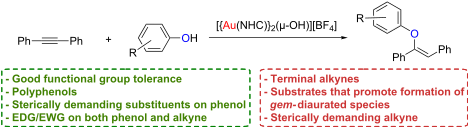
- potential applications of the vinyl ether derivatives 3 as synthetic building blocks [28], we decided to further explore the scope and limitations of the dual-gold-catalysed hydrophenoxylation of alkynes. With this study, we sought to answer the following questions: what is the functional group tolerance of
- -substituted alkynes bearing ortho-substituents due to synthetic reasons. The use of the ortho-chlorophenyl derivative 1f afforded the desired vinyl ether 3ft in good yields, while changing the chlorides for methyl groups resulted in no reaction, even when using harsher reaction conditions (3gt, Scheme 4). One
- conditions, 0.5 mol % [{Au(IPr)}2(µ-OH)][BF4] as catalyst, in toluene at 80 °C for 1 h. However, GC–FID analysis of the reaction mixture revealed only traces of product. A more careful study of the crude reaction mixture by 1H NMR spectroscopy, revealed 8% conversion to the desired vinyl ether 3kt, as well

Graphical Abstract

Scheme 1: Dual-gold-catalysed hydrophenoxylation of alkynes.
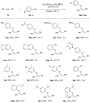
Scheme 2: Exploring the functional group tolerance. Reaction conditions: 1a (0.50 mmol, 1 equiv), 2a–o (0.55 ...

Scheme 3: Hydrophenoxylation using polyphenols. Reaction conditions: 1a (1 mmol, 2 equiv), 2p–s (0.50 mmol, 1...

Scheme 4: Hydrophenoxylation of (un)symmetrical alkynes. Reaction conditions: 1b–k (0.50 mmol, 1 equiv), 2t (...

Scheme 5: Regioselective hydrophenoxylation of unsymmetrical alkynes. Reaction conditions: 1l–p (1 equiv), 2a...
Simple activation by acid of latent Ru-NHC-based metathesis initiators bearing 8-quinolinolate co-ligands
- Julia Wappel,
- Roland C. Fischer,
- Luigi Cavallo,
- Christian Slugovc and
- Albert Poater
Beilstein J. Org. Chem. 2016, 12, 154–165, doi:10.3762/bjoc.12.17
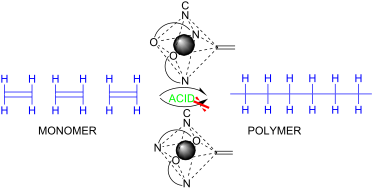
- dark green in complexes 1–3 and from brownish to red to yellow in 4. The reaction progress of the polymerization reaction was monitored using thin-layer chromatography. After complete consumption of the monomer, the reaction was stopped with an excess of ethyl vinyl ether, precipitated in vigorously
- ; HCl relative to ruthenium) was added to activate the reaction. The reaction was followed by TLC (cyclohexane/ethyl acetate = 3:1) and after complete conversion stopped with an excess of ethyl vinyl ether. The Polymer was precipitated in vigorously stirred methanol (approx. 25 mL for 100 mg polymer

Graphical Abstract

Scheme 1: Synthesis of 1-4; only the isolated and characterized complexes are shown.

Figure 1: Solid state structure of complexes 2a and 2b as retrieved from single crystal X-ray diffraction.

Figure 2: Time/conversion plot for the polymerization of 5 by preinitiators 1–4 in the presence of HCl ([5]:[...

Figure 3: 1H NMR spectrum in the low-field region of the active species for complexes 4 and M32.

Scheme 2: Energetics of 2a and 2b protonation in kcal/mol.

Figure 4: Reaction pathway of the transformation of 2b to HovII (energies in kcal/mol; main distances in Å).

Figure 5: DTA-TGA measurements for polymerizations of DCPD with catalysts 1b and 2b; Reaction conditions: [ca...
Synthesis of Xenia diterpenoids and related metabolites isolated from marine organisms
- Tatjana Huber,
- Lara Weisheit and
- Thomas Magauer
Beilstein J. Org. Chem. 2015, 11, 2521–2539, doi:10.3762/bjoc.11.273
- prepared by regioselective reduction of the carbonyl group, silylation of the resulting alcohol and further reduction of the enone moiety. An ensuing transetherification of alcohol 59 with ethyl vinyl ether gave an allyl vinyl ether, which underwent a magnesium perchlorate-promoted [1,3]-sigmatropic
- formation of the cyclooctene core was achieved via an acid-catalyzed cyclization to form tetrahydropyran 147. The following key sequence consisted of a thermal selenoxide 1,2-elimination to generate allyl vinyl ether 148 which underwent a stereoselective Claisen rearrangement [69] to furnish cyclooctenone

Graphical Abstract

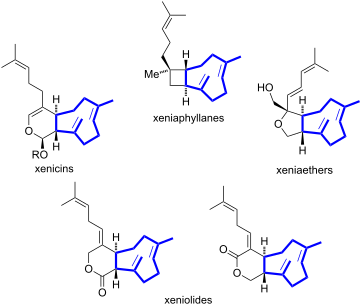
Figure 1: a) Structure of xenicin (1) and b) numbering of the xenicane skeleton according to Schmitz and van ...
Figure 2: Overview of selected Xenia diterpenoids according to the four subclasses [2-20]. The nine-membered carboc...

Figure 3: Representative members of the caryophyllenes, azamilides and Dictyota diterpenes.

Scheme 1: Proposed biosynthesis of Xenia diterpenoids (OPP = pyrophosphate, GGPP = geranylgeranyl pyrophospha...

Scheme 2: Direct synthesis of the nine-membered carbocycle as proposed by Schmitz and van der Helm (E = elect...

Scheme 3: The construction of E- or Z-cyclononenes.

Scheme 4: Total synthesis of racemic β-caryophyllene (22) by Corey.

Scheme 5: Total synthesis of racemic β-caryophyllene (22) by Oishi.

Scheme 6: Total synthesis of coraxeniolide A (10) by Leumann.
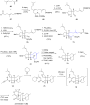
Scheme 7: Total synthesis of antheliolide A (18) by Corey.

Scheme 8: a) Synthesis of enantiomer 80, b) total syntheses of coraxeniolide A (10) and c) β-caryophyllene (22...

Scheme 9: Total synthesis of blumiolide C (11) by Altmann.

Scheme 10: Synthesis of a xeniolide F precursor by Hiersemann.

Scheme 11: Synthesis of the xenibellol (15) and the umbellacetal (114) core by Danishefsky.

Scheme 12: Proposed biosynthesis of plumisclerin A (118).

Scheme 13: Synthesis of the tricyclic core structure of plumisclerin A by Yao.
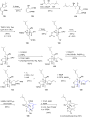
Scheme 14: Total synthesis of 4-hydroxydictyolactone (137) by Williams.

Scheme 15: Photoisomerization of 4-hydroxydictyolactone (137) to 4-hydroxycrenulide (138).
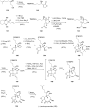
Scheme 16: The total synthesis of (+)-acetoxycrenulide (151) by Paquette.
Self-assemblies of γ-CDs with pentablock copolymers PMA-PPO-PEO-PPO-PMA and endcapping via atom transfer radical polymerization of 2-methacryloyloxyethyl phosphorylcholine
- Jing Lin,
- Tao Kong,
- Lin Ye,
- Ai-ying Zhang and
- Zeng-guo Feng
Beilstein J. Org. Chem. 2015, 11, 2267–2277, doi:10.3762/bjoc.11.247
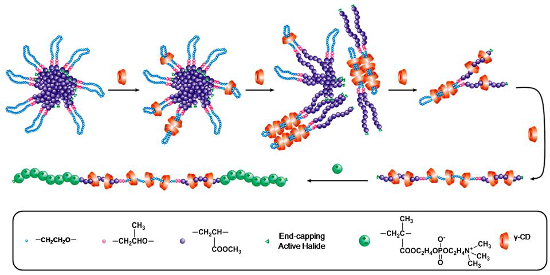
- single-chain-stranded with poly(methyl vinyl ether) (PMVE) [4] or poly(dimethylsiloxane) (PDMS) [5], but also double-chain-stranded with PEG and poly(ε-caprolactone) (PCL) [6]. Recently, Akashi et al. reported the single-chain-stranded inclusion complexation of γ-CDs with poly(methyl methacrylate) (PMMA

Graphical Abstract

Scheme 1: Schematic description of self-assembly of γ-CDs with PMA-PPO-PEO-PPO-PMA and one-pot endcapping via...

Scheme 2: Synthetic pathway of PMA-PPO-PEO-PPO-PMA.

Figure 1: Photographs of the formation of a PEP100M15CD hydrogel.

Figure 2: WXRD patterns of γ-CD (A), PEP15CD (B), PEP100M (C), PEP100M10CD (D), PEP100M15CD (E), PEP100M30CD ...
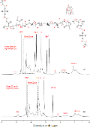
Figure 3: 1H NMR spectra of PR30CD80P in DMF-d7/D2O (A) and DMSO-d6/D2O (B).

Figure 4: GPC curves of γ-CD (A), PR0CD30P (B), PR30CD30P (C), PR30CD50P (D) and PR30CD80P (E).

Figure 5: 13C CP/MAS NMR spectra of PEP100M15CD (A) and γ-CD (B).

Figure 6: 2D NOESY NMR spectrum of PR30CD80P in DMSO-d6/D2O.

Figure 7: FTIR spectra of PEP100M (A), PEP100M15CD (B), PR0CD30P (C), PR30CD80P (D) and γ-CD (E).

Figure 8: TGA curves of PEP100M (A), γ-CD (B), PEP15CD (C), PEP100M10CD (D), PEP100M15CD (E) and PEP100M30CD ...

Figure 9: BrPEPBr (A), PEP15CD (B), PEP100M (C), PEP100M15CD (D), PR0CD30P (E), PR30CD50P (F), PR30CD80P (G) ...
Ru complexes of Hoveyda–Grubbs type immobilized on lamellar zeolites: activity in olefin metathesis reactions
- Hynek Balcar,
- Naděžda Žilková,
- Martin Kubů,
- Michal Mazur,
- Zdeněk Bastl and
- Jiří Čejka
Beilstein J. Org. Chem. 2015, 11, 2087–2096, doi:10.3762/bjoc.11.225
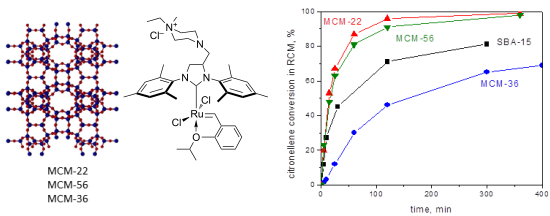
- to 1 μmol of Ru was put into the reactor, then toluene (13 mL) was added and the suspension was heated to 60 °C. The reaction was started by addition of (−)-β-citronellene (2 mmol) under stirring (900 rpm). At given time intervals, samples (0.1 mL) were taken and quenched with ethyl vinyl ether, and

Graphical Abstract

Figure 1: Hoveyda–Grubbs type catalysts used for immobilization.

Scheme 1: RCM of (−)-β-citronellene (1) and N,N-diallyl-2,2,2-trifluoroacetamide (2).

Figure 2: Conversion vs time dependence for RCM of (−)-β-citronellene over HGIIN+Cl−/MCM-36 (●), HGIIN+Cl−/SB...

Figure 3: Conversion vs. time dependences for RCM of DAF over catalysts HGIIN+Cl−/MCM-22 (▲), HGIIN+Cl−/MCM-5...

Figure 4: Splitting test for HGIIN+Cl−/MCM-56 in RCM of (−)-β-citronellene. Toluene, 60 °C, molar ratio (−)-β...

Figure 5: Self-metathesis of methyl oleate over HGIIN+Cl−/SBA-15 (■), HGIIN+Cl−/MCM-22 (▲), HGIIN+Cl−/MCM-56 ...

Scheme 2: Cross-metathesis of methyl oleate with cis-3-hexenyl acetate.

Figure 6: Conversion curves for CM of methyl oleate (full symbols) with cis-3-hexenyl acetate (open symbols) ...
Hexacoordinate Ru-based olefin metathesis catalysts with pH-responsive N-heterocyclic carbene (NHC) and N-donor ligands for ROMP reactions in non-aqueous, aqueous and emulsion conditions
- Shawna L. Balof,
- K. Owen Nix,
- Matthew S. Olliff,
- Sarah E. Roessler,
- Arpita Saha,
- Kevin B. Müller,
- Ulrich Behrens,
- Edward J. Valente and
- Hans-Jörg Schanz
Beilstein J. Org. Chem. 2015, 11, 1960–1972, doi:10.3762/bjoc.11.212
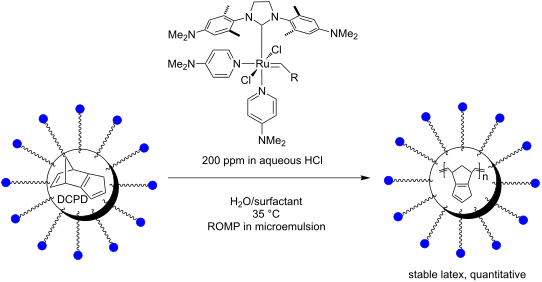
- with ethyl vinyl ether, dried under vacuum, and the monomer conversion was monitored via 1H NMR spectroscopy (300.1 MHz, 20 °C, D2O) by integration of the signals δ 2.58 (DAMA-CH2) and δ 2.98 ppm (cyclopentene-CH2). The aliquots taken after 60 min indicated the same conversion level as those taken

Graphical Abstract

Figure 1: Hydrophilic and/or pH-responsive Ru–alkylidene complexes 1–7 for olefin metathesis.

Scheme 1: Synthesis of 2nd Grubbs-type generation complex 9.

Scheme 2: Synthesis of hexacoordinate, pH-responsive complexes 11 and 12.

Figure 2: ORTEP diagram for H2ITap(DMAP)2Cl2Ru=CH-SPh (12). The positions of the hydrogen atoms were calculat...

Scheme 3: ROMP reactions conducted under microemulsion conditions.

Scheme 4: Proposed formation of catalytic species 14 and 15 under emulsion ROMP conditions.

Figure 3: AFM image produced from COE/DCPD latex film. Measurement: AFM tapping at room temperature, material...
Recent applications of ring-rearrangement metathesis in organic synthesis
- Sambasivarao Kotha,
- Milind Meshram,
- Priti Khedkar,
- Shaibal Banerjee and
- Deepak Deodhar
Beilstein J. Org. Chem. 2015, 11, 1833–1864, doi:10.3762/bjoc.11.199
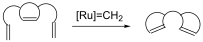
- demonstrated a simple approach to the synthesis of 2,6-dioxabicyclo[3.3.0]octenes 286 starting with the vinyl ether 284 derived from endo-7-oxanorbornene-2-ol by employing a tandem RRM–CM protocol (Scheme 60). Norbornene systems containing two heteroatoms Kouklovsky and Vincent have disclosed the RRM of

Graphical Abstract

Figure 1: Ruthenium alkylidene catalysts used in RRM processes.
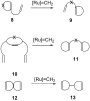
Figure 2: General representation of various RRM processes.

Figure 3: A general mechanism for RRM process.

Scheme 1: RRM of cyclopropene systems.

Scheme 2: RRM of cyclopropene with catalyst 2. (i) catalyst 2 (2.5 mol %), ethylene (24, 1 atm), (ii) toluene...
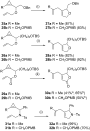
Scheme 3: RRM of various cyclopropene derivatives with catalyst 2. (i) catalyst 2 (2.5 mol %), CH2Cl2 (c = 0....

Scheme 4: RRM of substituted cyclopropene system with catalyst 2.

Scheme 5: RRM of cyclobutene system with catalyst 2.

Scheme 6: RRM approach to various bicyclic compounds.

Scheme 7: RRM approach to erythrina alkaloid framework.

Scheme 8: ROM–RCM sequence to lactone derivatives.

Scheme 9: RRM protocol towards the synthesis of lactone derivative 58.

Scheme 10: RRM protocol towards the asymmetric synthesis of asteriscunolide D (61).
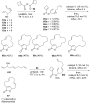
Scheme 11: RRM strategy towards the synthesis of various macrolide rings.

Scheme 12: RRM protocol to dipiperidine system.

Scheme 13: RRM of cyclopentene system to generate the cyclohexene systems.

Scheme 14: RRM of cyclopentene system 74.

Scheme 15: RRM approach to compound 79.

Scheme 16: RRM approach to spirocycles.

Scheme 17: RRM approach to bicyclic dihydropyrans.

Scheme 18: RCM–ROM–RCM cascade using non strained alkenyl heterocycles.

Scheme 19: First ROM–RCM–ROM–RCM cascade for the synthesis of trisaccharide 97.

Scheme 20: RRM of cyclohexene system.

Scheme 21: RRM approach to tricyclic spirosystem.

Scheme 22: RRM approach to bicyclic building block 108a.

Scheme 23: ROM–RCM protocol for the synthesis of the bicyclo[3.3.0]octene system.

Scheme 24: RRM protocol to bicyclic enone.

Scheme 25: RRM protocol toward the synthesis of the tricyclic system 118.

Scheme 26: RRM approach toward the synthesis of the tricyclic enones 122a and 122b.

Scheme 27: Synthesis of tricyclic and tetracyclic systems via RRM protocol.

Scheme 28: RRM protocol towards the synthesis of tetracyclic systems.

Scheme 29: RRM of the propargylamino[2.2.1] system.

Scheme 30: RRM of highly decorated bicyclo[2.2.1] systems.

Scheme 31: RRM protocol towards fused tricyclic compounds.

Scheme 32: RRM protocol to functionalized tricyclic systems.

Scheme 33: RRM approach to functionalized polycyclic systems.

Scheme 34: Sequential RRM approach to functionalized tricyclic ring system 166.

Scheme 35: RRM protocol to functionalized CDE tricyclic ring system of schintrilactones A and B.

Scheme 36: Sequential RRM approach to 7/5 fused bicyclic systems.

Scheme 37: Sequential ROM-RCM protocol for the synthesis of bicyclic sugar derivatives.

Scheme 38: ROM–RCM sequence of the norbornene derivatives 186 and 187.

Scheme 39: RRM approach toward highly functionalized bridge tricyclic system.

Scheme 40: RRM approach toward highly functionalized tricyclic systems.

Scheme 41: Synthesis of hexacyclic compound 203 by RRM approach.

Scheme 42: RRM approach toward C3-symmetric chiral trimethylsumanene 209.

Scheme 43: Triquinane synthesis via IMDA reaction and RRM protocol.

Scheme 44: RRM approach to polycyclic compounds.

Scheme 45: RRM strategy toward cis-fused bicyclo[3.3.0]carbocycles.

Scheme 46: RRM protocol towards the synthesis of bicyclic lactone 230.

Scheme 47: RRM approach to spiro heterocyclic compounds.

Scheme 48: RRM approach to spiro heterocyclic compounds.

Scheme 49: RRM approach to regioselective pyrrolizidine system 240.
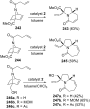
Scheme 50: RRM approach to functionalized bicyclic derivatives.

Scheme 51: RRM approach to tricyclic derivatives 249 and 250.

Scheme 52: RRM approach to perhydroindoline derivative and spiro system.

Scheme 53: RRM approach to bicyclic pyran derivatives.

Scheme 54: RRM of various functionalized oxanorbornene systems.

Scheme 55: RRM to assemble the spiro fused-furanone core unit. (i) 129, benzene, 55 °C, 3 days; (ii) Ph3P=CH2B...

Scheme 56: RRM protocol to norbornenyl sultam systems.

Scheme 57: Ugi-RRM protocol for the synthesis of 2-aza-7-oxabicyclo system.

Scheme 58: Synthesis of spiroketal systems via RRM protocol.

Scheme 59: RRM approach to cis-fused heterotricyclic system.

Scheme 60: RRM protocol to functionalized bicyclic systems.

Scheme 61: ROM/RCM/CM cascade to generate bicyclic scaffolds.

Scheme 62: RCM of ROM/CM product.

Scheme 63: RRM protocol to bicyclic isoxazolidine ring system.

Scheme 64: RRM approach toward the total synthesis of (±)-8-epihalosaline (300).

Scheme 65: Sequential RRM approach to decalin 304 and 7/6 fused 305 systems.

Scheme 66: RRM protocol to various fused carbocyclic derivatives.

Scheme 67: RRM to cis-hydrindenol derivatives.

Scheme 68: RRM protocol towards the cis-hydrindenol derivatives.

Scheme 69: RRM approach toward the synthesis of diversed polycyclic lactams.

Scheme 70: RRM approach towards synthesis of hexacyclic compound 324.

Scheme 71: RRM protocol to generate luciduline precursor 327 with catalyst 2.

Scheme 72: RRM protocol to key building block 330.

Scheme 73: RRM approach towards the synthesis of key intermediate 335.

Scheme 74: RRM protocol to highly functionalized spiro-pyran system 339.

Scheme 75: RRM to various bicyclic polyether derivatives.
Cross-metathesis of polynorbornene with polyoctenamer: a kinetic study
- Yulia I. Denisova,
- Maria L. Gringolts,
- Alexander S. Peregudov,
- Liya B. Krentsel,
- Ekaterina A. Litmanovich,
- Arkadiy D. Litmanovich,
- Eugene Sh. Finkelshtein and
- Yaroslav V. Kudryavtsev
Beilstein J. Org. Chem. 2015, 11, 1796–1808, doi:10.3762/bjoc.11.195

- magnetic stirrer under inert atmosphere at 20 °C. The polymerization was stopped by the addition of 0.3 mL of ethyl vinyl ether after 2 h. The polymers were precipitated in a 0.1% acetone solution of an antioxidant 2,2’-methylenebis(6-tert-butyl-4-methylphenol) (1), decanted, washed with several portions
- ) solution in toluene (12.3 mL) prepared as described above at 20 °C. The polymerization was stopped by the addition of 0.4 mL of ethyl vinyl ether after 1 h. The polymers were precipitated in a 0.1% ethanol solution of antioxidant 1, decanted, washed with several portions of the same solution, and dried
- mixture to 0.2 mL of ethyl vinyl ether, stirred for 30–40 min at ambient temperature, and concentrated in vacuum, after that CDCl3 was added. For DSC and GPC measurements, the copolymers were precipitated in ethanol and dried as described above. A typical 13C NMR spectrum is shown in Figure 11

Graphical Abstract

Figure 1:
Dependences of the (blue) PCOE and (green) PNB mean hydrodynamic radius ![[Graphic 2]](/bjoc/content/inline/1860-5397-11-195-i10.png?max-width=637&scale=1.18182) in CHCl3 on the (a) light ...
in CHCl3 on the (a) light ...

Figure 2: Hydrodynamic radius distributions (normalized by their maximum values) in the CHCl3 solutions of (b...

Figure 3: Stability of the primary carbene [Ru]=CHPh in the pure solvent (CDCl3).

Scheme 1: Formation of polyoctenamer-bound carbene by the interaction of Gr-1 with PCOE.

Figure 4: (a) Dependences of the normalized (red) [Ru]=CHPh and (blue) [Ru]=PCOE carbene concentrations on ti...

Scheme 2: Formation of polynorbornene-bound carbene by the interaction of Gr-1 with PNB.

Figure 5: (a) Dependences of the normalized (red) [Ru]=CHPh and (green) [Ru]=PNB carbene concentrations on ti...

Scheme 3: Elementary cross-metathesis reactions in the mixture of PCOE with PNB.

Figure 6: Dependences of the normalized (red) primary, (blue) PCOE, and (green) PNB carbene concentrations an...

Figure 7: The kinetics of NB-COE dyads formation under mixing conditions for the systems with (red) cin/cp = ...

Figure 8: The 1H NMR spectrum recorded after 10 min of the reaction between PCOE and Gr-1 at the initial conc...

Figure 9: The 1H NMR spectrum recorded after 653 min of the reaction between PNB and Gr-1 at the initial conc...

Figure 10: The 1H NMR spectrum recorded after 24 h of the reaction between PCOE, PNB, and Gr-1 at the initial ...

Figure 11: The 13C NMR spectrum recorded after 8 h of the reaction between PCOE, PNB, and Gr-1 at the initial ...
Grubbs–Hoveyda type catalysts bearing a dicationic N-heterocyclic carbene for biphasic olefin metathesis reactions in ionic liquids
- Maximilian Koy,
- Hagen J. Altmann,
- Benjamin Autenrieth,
- Wolfgang Frey and
- Michael R. Buchmeiser
Beilstein J. Org. Chem. 2015, 11, 1632–1638, doi:10.3762/bjoc.11.178
- cooling to room temperature, ethyl vinyl ether (1 mL) was added and the reaction mixture was allowed to stir for another 30 min. Finally, the reaction mixture was poured into methanol. The polymer was obtained as a white or off-white solid. General ROMP-procedure with recycling: Ru-2 (11.1 mg, 10 µmol
- methanol. The IL phase was extracted with toluene (4 × 2 mL). The extracted organic phases were also poured into methanol. Poly-M1 was obtained as a white solid. New M1 was added to the IL phase and the procedure was repeated. After the last cycle, the reaction was quenched with ethyl vinyl ether (1 mL

Graphical Abstract
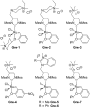
Figure 1: Catalysts synthesized by post-assembly tagging (Mes = mesitylene).

Scheme 1: Improved synthesis of Ru-1 and quarternization with methyl trifluoromethanesulfonate to Ru-2.

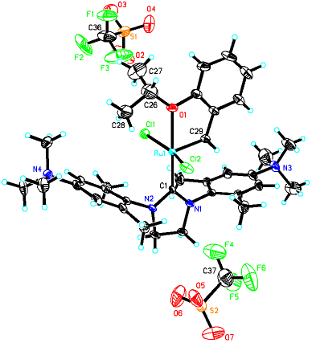
Figure 2: Single crystal X-ray structure of Ru-2. Co-solvent and disordered triflates have been omitted for c...

Figure 3: Monomers used for biphasic ROMP reactions.

Scheme 2: Recycling of Ru-2 for continuous ROMP reactions.
Ruthenium indenylidene “1st generation” olefin metathesis catalysts containing triisopropyl phosphite
- Stefano Guidone,
- Fady Nahra,
- Alexandra M. Z. Slawin and
- Catherine S. J. Cazin
Beilstein J. Org. Chem. 2015, 11, 1520–1527, doi:10.3762/bjoc.11.166
- solvent was added (5 mL) and then the pre-catalyst was weighed and charged into the Schlenk flask. Out of the glovebox, the reaction was performed at the desired temperature. Samples were taken under nitrogen flow and quenched with ethyl vinyl ether. Data were obtained by GC analysis. Examples of

Graphical Abstract

Figure 1: Examples of ruthenium complexes used in olefin metathesis reactions.

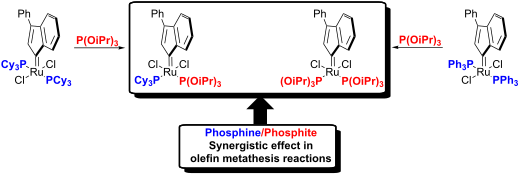
Scheme 1: Synthesis of the mixed phosphine/phosphite complex 1.

Figure 2: Molecular structure of mixed phosphine/phosphite complex 1. Hydrogen atoms are omitted for clarity.

Scheme 2: Synthesis of the bis-phosphite complex 2.

Figure 3: Molecular structure of 2 and the ylide 3. Hydrogen atoms and solvent molecules are omitted for clar...

Figure 4: Reaction profiles of mixed phosphine/phosphite 1 and phosphine-based Ind-I in the RCM of 4 (lines a...
Tandem cross enyne metathesis (CEYM)–intramolecular Diels–Alder reaction (IMDAR). An easy entry to linear bicyclic scaffolds
- Javier Miró,
- María Sánchez-Roselló,
- Álvaro Sanz,
- Fernando Rabasa,
- Carlos del Pozo and
- Santos Fustero
Beilstein J. Org. Chem. 2015, 11, 1486–1493, doi:10.3762/bjoc.11.161
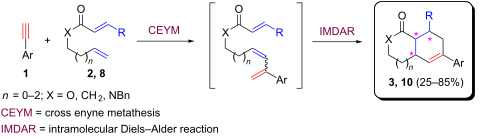
- -Diels–Alder reaction involving alkynes, ethyl glyoxalate and ethyl vinyl ether was described for the preparation of 2,3-dihydropyrans [24][25]. Additionally, a tandem CEYM–IMDAR reaction in combination with a final aromatization step was employed for the synthesis of biaryl derivatives [26]. Herein, a

Graphical Abstract

Scheme 1: Tandem cross enyne metathesis–intramolecular Diels–Alder reaction.

Scheme 2: Stereochemical outcome of the IMDAR.

Scheme 3: Preparation of starting materials 8.

Figure 1: Determination of the relative stereochemistry on compounds 10b.
Thermal properties of ruthenium alkylidene-polymerized dicyclopentadiene
- Yuval Vidavsky,
- Yotam Navon,
- Yakov Ginzburg,
- Moshe Gottlieb and
- N. Gabriel Lemcoff
Beilstein J. Org. Chem. 2015, 11, 1469–1474, doi:10.3762/bjoc.11.159
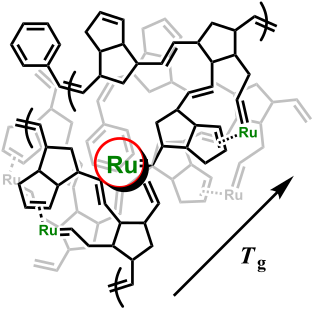
- this assumption a sample in the DSC crucible was flooded with ethyl vinyl ether for 5 days, trying to deactivate any remaining catalytic species by formation of inert Fischer carbene [32]. A control sample was flooded with diethyl ether. To our satisfaction, in the sample treated with ethyl vinyl ether
- vinyl ether. Bottom: Sample after 1 week with diethyl ether. ROMP of dicyclopentadiene by a ruthenium alkylidene initiator. Tg dependence on CPD content (%). Acknowledgements The Israel Science Foundation is gratefully acknowledged for partial financial support.

Graphical Abstract

Figure 1: DCPD (1) and ruthenium benzylidene catalyst 2.

Scheme 1: ROMP of dicyclopentadiene by a ruthenium alkylidene initiator.

Figure 2: Top: DSC plot of PDCPD 24 hours after polymerization. Blue line: 1st heating–cooling cycle. Black l...

Figure 3: Change in Tg for a representative PDCPD sample as a function of time.

Figure 4: Intensity of exothermic peak as a function of rest time at room temperature for different samples.

Figure 5: Peak intensity as function of age. Samples were analyzed every two weeks. The abnormal low intensit...

Figure 6: Resting temperature effect. Blue columns: resting at room temperature. Orange columns: resting at −...

Figure 7: Top: Sample after 1 week with ethyl vinyl ether. Bottom: Sample after 1 week with diethyl ether.
Boron-substituted 1,3-dienes and heterodienes as key elements in multicomponent processes
- Ludovic Eberlin,
- Fabien Tripoteau,
- François Carreaux,
- Andrew Whiting and
- Bertrand Carboni
Beilstein J. Org. Chem. 2014, 10, 237–250, doi:10.3762/bjoc.10.19

- vinyl ether, this approach was successfully applied in the key steps of the total synthesis of a member of the thiomarinol class of marine antibiotics (Scheme 19) [66][67]. More recently, Hall and co-workers described the total synthesis of a complex 20-membered marine macrolide, palmerolide A, a potent
- ]-cycloadditons, can further be engaged in an allylation reaction that significantly increased the structural diversity of the final products (Scheme 24). As 3-boronoacrolein esters which have been used in metal-catalyzed inverse electron demand [4 + 2]-cycloadditions, 32 reacted with ethyl vinyl ether in the

Graphical Abstract

Scheme 1: 1-Boron-substituted 1,3-diene in a tandem cycloaddition [4 + 2]/allylboration sequence.

Scheme 2: Lewis acid catalyst in the tandem cycloaddition [4 + 2]/allylboration sequence.

Scheme 3: Synthesis of an advanced precursor of clerodin.

Scheme 4: Intramolecular Diels–Alder/allylboration sequence.

Scheme 5: Diastereoselective Diels–Alder reaction with N-phenylmaleimide and 4-phenyltriazoline-3,5-dione.

Scheme 6: Asymmetric synthesis of a α-hydroxyalkylcyclohexane.

Scheme 7: Tandem [4 + 2]-cycloaddition/allylboration of 3-silyloxy- and 4-alkoxy-dienyl boronates.

Scheme 8: Metal-mediated cycloisomerization/Diels–Alder reaction/allylboration sequence.

Scheme 9: Cobalt-catalyzed Diels–Alder/allylboration sequence.

Scheme 10: A two-step reaction sequence for the synthesis of tetrahydronaphthalenes 12.

Scheme 11: Tandem sequence based on the Petasis borono–Mannich reaction as first key step.

Scheme 12: One-pot tandem dimerization/allylboration reaction of 1,3-diene-2-boronate.

Scheme 13: Tandem Diels–Alder/cross-coupling reactions of trifluoroborates 15.

Scheme 14: Diels–Alder/cross-coupling reactions of 16.

Scheme 15: Metal catalyzed tandem Diels–Alder/hydrolysis reactions.

Scheme 16: Synthesis of anti-1,5-diols 18 by triple aldehyde addition.

Scheme 17: Catalytic enantioselective three-component hetero-[4 + 2]-cycloaddition/allylboration sequence.

Scheme 18: Synthesis of natural products using the catalytic enantioselective HDA/allylboration sequence.

Scheme 19: Total synthesis of a thiomarinol derivative.

Scheme 20: Synthesis of an advanced intermediate 27 for the east fragment of palmerolide A.

Scheme 21: Bicyclic piperidines from tandem aza-[4 + 2]-cycloaddition/allylboration.

Scheme 22: Hydrogenolysis reactions of hydrazinopiperidines.

Scheme 23: Tandem aza-[4 + 2]-cycloaddition/allylboration/retrosulfinyl-ene sequence.

Scheme 24: Boronated heterodendralene 32 in [4 + 2]-cycloadditions.

Scheme 25: Synthesis of tricyclic imides derivatives.

Scheme 26: Synthesis of 37 via a HDA/allylboration/DA sequence.

Scheme 27: Diels–Alder/allylboration sequence.
Synthesis of the B-seco limonoid core scaffold
- Hanna Bruss,
- Hannah Schuster,
- Rémi Martinez,
- Markus Kaiser,
- Andrey P. Antonchick and
- Herbert Waldmann
Beilstein J. Org. Chem. 2014, 10, 194–208, doi:10.3762/bjoc.10.15
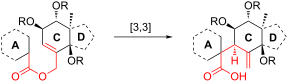
- : Claisen rearrangement. In planning the synthesis we were inspired by Ley’s synthesis of azadirachtin in which a Claisen rearrangement has been successfully employed as key transformation [37][38]. Thus the allyl vinyl ether rearrangement precursor 11 was thought to be obtained from an O-alkylation between
- allyl vinyl ether failed. Equally, copper-catalyzed C–O couplings [46] of the alcohols 19, 20 and 22 with organotrifluoroborates failed or gave only low yields. Likewise Buchwald’s procedure for the copper-catalyzed coupling of primary alcohols with vinyl iodides to yield the allyl vinyl ether or
- , depending on the reaction conditions, directly the Claisen rearrangement products was not successful [47]. Alternative strategy: Ireland–Claisen rearrangement. As the Claisen rearrangement precursor, the allyl vinyl ether, could not be obtained under various conditions, we had to change the synthetic

Graphical Abstract

Figure 1: Structures of the 4,4,8-trimethyl-17-furanylsteroid core structure I and the representative B-seco ...

Scheme 1: Retrosynthetic analysis of the B-seco limonoid framework employing a [3,3]-sigmatropic rearrangemen...

Scheme 2: Retrosynthetic analysis of the B-seco limonoid scaffold employing a Claisen rearrangement as key st...

Scheme 3: Synthesis of alcohols 19, 20 and 22. Reagents and conditions: a) CSA, 2,3-butanedione, trimethyl or...

Scheme 4: Retrosynthetic analysis of the B-seco limonoid scaffold employing an Ireland–Claisen rearrangement ...

Scheme 5: Synthesis and Ireland–Claisen rearrangement of the allyl esters 27, 28, 29 and 30. Reagents and con...

Figure 2: Conformation of rearrangement precursor 30 and possible transition state involved in the Ireland–Cl...

Scheme 6: Synthesis of model C rings 40, 41 and 42. Reagents and conditions: a) TBDPSCl, DMAP, NEt3, CH2Cl2, ...

Scheme 7: β-Substituted allyl esters tested in the Ireland–Claisen and the Carroll rearrangement.

Scheme 8: Synthesis and Ireland–Claisen rearrangement of bicyclic allyl ester precursor 66. Reagents and cond...
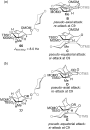
Figure 3: Conformations of rearrangement precursors 66 and 77 and possible transition states involved in the ...

Scheme 9: Synthesis and Ireland–Claisen rearrangement of allyl ester 70. Reagents and conditions: a) DIPEA, M...

Scheme 10: Synthesis and Ireland–Claisen rearrangement of allyl ester 72. Reagents and conditions: a) TIPSOTf,...

Scheme 11: Synthesis of the C14-epi and C14/C9-epi B-seco limonoid scaffolds 78 and 79. Reagents and condition...

Scheme 12: Synthesis of fully functionalized A ring 87. Reagents and conditions: a) HO(CH2)2OH, THF, Pd/C, H2,...

Scheme 13: and Attempted Ireland–Claisen rearrangement of allyl ester 88. R1 = MOM, R2 = CO2H.

Scheme 14: Synthesis and attempted Ireland–Claisen rearrangement of allyl ester 93. Reagents and conditions: a...

Scheme 15: Allyl esters tested in the Ireland–Claisen rearrangement.
Recent applications of the divinylcyclopropane–cycloheptadiene rearrangement in organic synthesis
- Sebastian Krüger and
- Tanja Gaich
Beilstein J. Org. Chem. 2014, 10, 163–193, doi:10.3762/bjoc.10.14
- ethyl vinyl ether. The necessary diazo moiety was installed using tosylazide as a diazo-transfer reagent to yield 134. Copper catalyzed intramolecular cyclopropanation furnished bicycle 135. Reduction of the carbonyl moiety and protection of the resulting alcohol was followed by ether cleavage and
- as the corresponding bis-zinc-enolate species. DVCPR occurred at ambient temperature, final acidic workup provided cycloheptadione 247 in excellent yield (see Scheme 31). Toste and coworkers [203] reported a tandem gold-catalyzed Claisen rearrangement from popargyl vinyl ether 248 (see Scheme 32) to

Graphical Abstract

Scheme 1: Vogel’s first approach towards the divinylcyclopropane rearrangement [4] and characterization of cis-d...

Scheme 2: Transition states for the Cope rearrangement and the related DVCPR. Ts = transition state.

Scheme 3: Two possible mechanisms of trans-cis isomerizations of divinylcyclopropanes.

Scheme 4: Proposed biosynthesic pathway to ectocarpene (21), an inactive degradation product of a sexual pher...

Scheme 5: Proposed biosynthesis of occidenol (25) and related natural compounds.

Scheme 6: Gaich’s bioinspired system using the DVCPR to mimick the dimethylallyltryptophan synthase. DMAPP = ...

Scheme 7: Iguchi’s total synthesis of clavubicyclone, part 1.

Scheme 8: Iguchi’s total synthesis of clavubicyclone, part 2.

Scheme 9: Wender’s syntheses of the two pseudoguainanes confertin (50) and damsinic acid (51) and Pier’s appr...
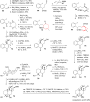
Scheme 10: Overman’s total synthesis of scopadulcic acid B.

Scheme 11: Davies’ total syntheses of tremulenolide A and tremulenediol A.

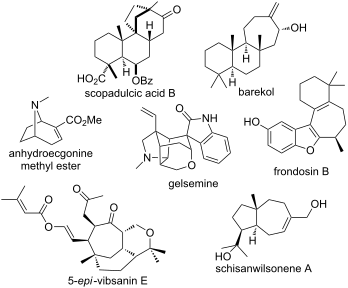
Scheme 12: Davies formal [4 + 3] cycloaddition approach towards the formal synthesis of frondosin B.

Scheme 13: Davies and Sarpongs formal [4 + 3]-cycloaddition approach towards barekoxide (106) and barekol (107...

Scheme 14: Davies formal [4 + 3]-cycloaddition approach to 5-epi-vibsanin E (115) containing an intermediate c...

Scheme 15: Echavarren’s total synthesis of schisanwilsonene A (126) featuring an impressive gold-catalzed casc...

Scheme 16: Davies early example of a formal [4 + 3]-cycloaddition in alkaloids synthesis.

Scheme 17: Fukuyama’s total synthesis of gelsemine, part 1.

Scheme 18: Fukuyama’s total synthesis of gelsemine, featuring a divinylcyclopropane rearrangement, part 2.

Scheme 19: Kende’s total synthesis of isostemofoline, using a formal [4 + 3]-cycloaddition, including an inter...

Scheme 20: Danishefsky’s total synthesis of gelsemine, part 1.

Scheme 21: Danishefsky’s total synthesis of gelsemine, part 2.

Scheme 22: Fukuyama’s total synthesis of gelsemoxonine.

Scheme 23: Wender’s synthetic access to the core skeleton of tiglianes, daphnanes and ingenanes.

Scheme 24: Davies’ approach towards the core skeleton of CP-263,114 (212).

Scheme 25: Wood’s approach towards actinophyllic acid.

Scheme 26: Takeda’s approach towards the skeleton of the cyanthins, utilitizing the divinylcyclopropane rearra...

Scheme 27: Donaldson’s organoiron route towards the guianolide skeleton.

Scheme 28: Stoltz’s tandem Wolff/DVCPR rearrangement.

Scheme 29: Stephenson’s tandem photocatalysis/arylvinylcyclopropane rearrangement.

Scheme 30: Padwa’s rhodium cascade involving a DVCPR.

Scheme 31: Matsubara’s version of a DVCPR.

Scheme 32: Toste’s tandem gold-catalyzed Claisen-rearrangement/DVCPR.

Scheme 33: Ruthenium- and gold-catalyzed versions of tandem reactions involving a DVCPR.

Scheme 34: Tungsten, platinum and gold catalysed cycloisomerizations leading to a DVCPR.

Scheme 35: Reisman’s total synthesis of salvileucalin B, featuring an (undesired) vinylcyclopropyl carbaldehyd...

Scheme 36: Studies on the divinylepoxide rearrangement.

Scheme 37: Studies on the vinylcyclopropanecarbonyl rearrangement.

Scheme 38: Nitrogen-substituted variants of the divinylcyclopropane rearrangement.
The total synthesis of D-chalcose and its C-3 epimer
- Jun Sun,
- Song Fan,
- Zhan Wang,
- Guoning Zhang,
- Kai Bao and
- Weige Zhang
Beilstein J. Org. Chem. 2013, 9, 2620–2624, doi:10.3762/bjoc.9.296
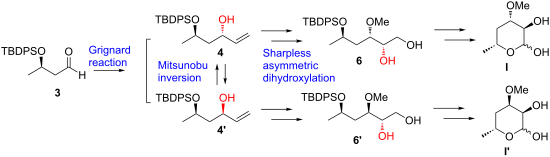
- retrosynthetic analysis of I and I′ is presented in Scheme 1. Diol II and II′ arose from a Sharpless asymmetric dihydroxylation that form the C2 stereogenic center. The installation of the C3 stereocenter on vinyl ether III was proposed to utilize a Grignard reaction followed by chromatographic separation
- set using a Grignard reaction, and the hydroxy group on C2 could be introduced with the correct stereochemistry by performing a Sharpless asymmetric dihydroxylation on vinyl ether 5. In addition, diol 6 was converted to 11 by protection with TBSOTf followed by selective unveiling of the C1 hydroxy

Graphical Abstract

Scheme 1: Retrosynthesis of I and I'. PG = protecting group; protecting groups may vary independently.

Scheme 2: Reagents and conditions: (a) TBDPSCl, DMAP, imidazole, CH2Cl2, rt, 99%; (b) DIBAL-H, CH2Cl2, −78 °C...

Scheme 3: Reagents and conditions: (a) MeI, t-BuOK,THF, rt, 96%; (b) AD-mix-β, t-BuOH/H2O, 0 °C, 80%; (c) TEM...

Scheme 4: Reagents and conditions: (a) PhCH(OCH3)2, PPTS, CH2Cl2, rt; (b) DIBAL-H, CH2Cl2, 0 °C, 76% in two s...

Scheme 5: Reagents and conditions: (a) TBSOTf, 2,6-lutidine, CH2Cl2, rt, 90%; (b) CSA, MeOH, 0 °C, 59%. TBS = ...

Scheme 6: Reagents and conditions: (a) Dess–Martin periodinane, CH2Cl2, rt, 86%; (b) TBAF, THF, 0 °C, 84%; (c...

Scheme 7: Reagents and conditions: (a) MeI, t-BuOK,THF, rt, 96%; (b) AD-mix-β, t-BuOH/H2O, 0 °C, 82%; (c) TBS...
Ambient gold-catalyzed O-vinylation of cyclic 1,3-diketone: A vinyl ether synthesis
- Yumeng Xi,
- Boliang Dong and
- Xiaodong Shi
Beilstein J. Org. Chem. 2013, 9, 2537–2543, doi:10.3762/bjoc.9.288
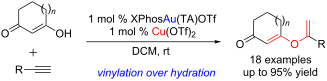
- signature reactions in the field (known as Teles hydration) [12]. This reaction usually utilized the combination of methanol and water, wherein methanol served as the nucleophile to attack the triple bond, forming the vinyl ether intermediate. This vinyl ether then collapsed to give a ketone as the final
- product [13][14][15][16][17]. A vinyl ether is a common and versatile building block in organic synthesis as well as polymer chemistry. Typical methods for the preparation of a vinyl ether involve elimination, olefination of esters, addition of alcohols to alkynes, as well as transition metal-mediated
- cross-coupling reactions [18]. Based on the π-carbophilicity of gold(I), the addition of alcohol to alkyne should provide direct access to the corresponding vinyl ether. However, most of the reported gold-catalyzed O-nucleophile additions to alkynes are intramolecular reactions. No general protocol for

Graphical Abstract

Scheme 1: Intermolecular O-addition to alkynes: challenge and opportunity.

Scheme 2: Acid as the critical additive for optimal performance.

Scheme 3: Reactions of internal alkyne and other O-nucleophiles. Isolated yields are given in paranthesis. aA...