
Search results
Search for "tosylation" in Full Text gives 62 result(s) in Beilstein Journal of Organic Chemistry.
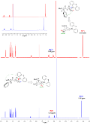
Homo- and hetero-difunctionalized β-cyclodextrins: Short direct synthesis in gram scale and analysis of regiochemistry
Beilstein J. Org. Chem. 2019, 15, 710–720, doi:10.3762/bjoc.15.66
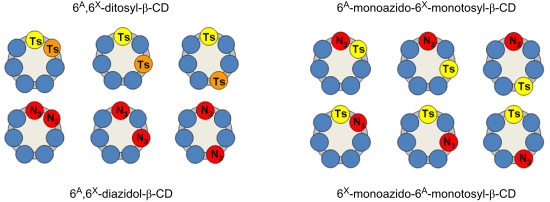
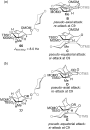
- fact that in the large – kilogram – scale production of the key synthon 6-monotosyl-β-CD besides the desired product, over-tosylation occurs giving a mixture of regioisomers of ditosylated and tritosylated β-CDs. The ditosylated fraction represents a significant amount (10–20%) of the crude product
- 2), while the Cu(II)-mediated ditosylation in water/acetonitrile (ACN) mixture gave only two positional ditosyl-β-CD isomers in a ratio 6A,6C:6A,6D = 58:42, (reaction 2, Scheme 2). Tosylation in pyridine is known to be catalyzed by the oriented inclusion of the aromatic heterocycle into the cavity
- regioselectivity is observed. On the other hand, tosylation under aqueous basic conditions has a different reaction mechanism in which p-TsCl occupies the CD cavity prior to the reaction [23]. This orientation of the first tosyl group has a great impact on the substitution of the second tosyl moiety, which can


Enhanced single-isomer separation and pseudoenantiomer resolution of new primary rim heterobifunctionalized α-cyclodextrin derivatives
Beilstein J. Org. Chem. 2018, 14, 2829–2837, doi:10.3762/bjoc.14.261
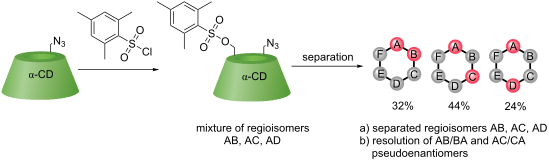
- regioisomers on the primary rim of homobifunctionalized diazido-α-CDs by selective substitution on the primary rim. Specifically, three positional regioisomers 6A,6B-, 6A,6C-, and 6A,6D-diazido-α-CDs were prepared via different intermediates (using sulfonylation with capping agents, bromination and tosylation
- prepared all possible regioisomers of primary rim-disubstituted α-CD derivatives using the most common CD intermediates by commonly used derivatization (bromination, tosylation and capping). The three positional isomers (AB, AC, AD) were separated by ad hoc-developed HPLC methods, and the regioisomeric
- the preparation of 6A,6X-ditosyl-α-CD 6 under classical tosylation conditions with an excess of tosyl chloride (TsCl) in pyridine (reaction 5, Scheme 3). A previous study has shown [31] that tosyl groups exclusively attach to the primary rim of α-CD. Subsequently, the reaction mixture was converted


Synthesis of 1,4-imino-L-lyxitols modified at C-5 and their evaluation as inhibitors of GH38 α-mannosidases
Beilstein J. Org. Chem. 2018, 14, 2156–2162, doi:10.3762/bjoc.14.189
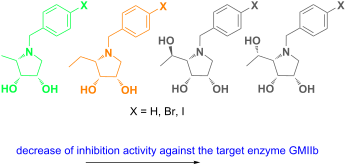
- protecting trityl group under acidic conditions followed by tosylation of the liberated hydroxy group with TsCl in the presence of DMAP as a base. Thus, required tosyl derivative 8 was obtained in 76% yield in two steps. It should be emphasized that tosylation in the presence of commonly used bases such as


Aminomethylation/hydrogenolysis as an alternative to direct methylation of metalated isoquinolines – a novel total synthesis of the alkaloid 7-hydroxy-6-methoxy-1-methylisoquinoline
Beilstein J. Org. Chem. 2018, 14, 130–134, doi:10.3762/bjoc.14.8
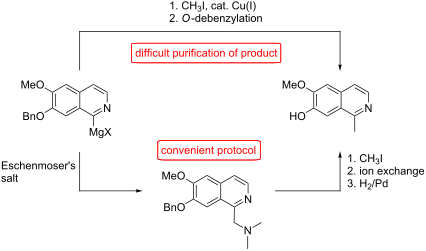
- starting aldehyde 2 was subjected to a reductive amination with aminoacetaldehyde dimethyl acetal and NaBH4, followed by N-tosylation and hydrochloric acid-mediated cyclization under concomitant N-detosylation and aromatization. Direct ring metalation of 3 with TMPMgCl∙LiCl was performed as described by us


Synthesis of ergostane-type brassinosteroids with modifications in ring A
Beilstein J. Org. Chem. 2017, 13, 2326–2331, doi:10.3762/bjoc.13.229
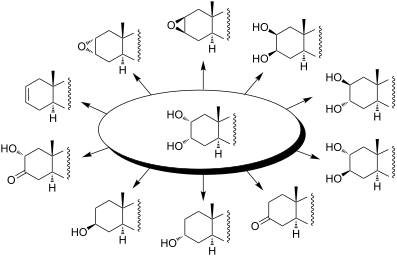
- stereospecific C(3) → C(2)-hydride shift/elimination process [30]. So, tosylation of the diol 14 occurred regioselectively at the equatorial C-2 hydroxy group to give monotosylate 30, which upon heating in pyridine, yielded compound 31 (Scheme 6). Its treatment with KOH in methanol led to 24-epi-3


Enzymatic separation of epimeric 4-C-hydroxymethylated furanosugars: Synthesis of bicyclic nucleosides
Beilstein J. Org. Chem. 2017, 13, 2078–2086, doi:10.3762/bjoc.13.205
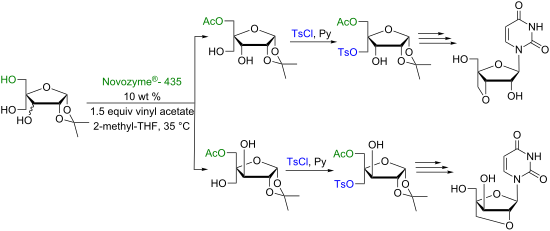
- -toluenesulfonyloxymethyl-α-D-ribofuranose (5) and 5-O-acetyl-1,2-O-isopropylidene-4-C-p-toluenesulphonyloxymethyl-α-D-xylofuranose (10, Figure 2). The tosyl derivatives 5 and 10 of dihydroxyfuranosides 4a and 4b were obtained by their tosylation with TsCl-pyridine in 94 and 95% yields, respectively (Scheme 3 and Scheme 4
- , 100.6 MHz) δ 170.76, 113.56, 104.64, 86.87, 79.44, 72.84, 65.70, 62.23, 26.43, 26.20, 20.84; HR-ESI-TOF-MS m/z: [M + H]+ calcd. for [C11H19O7]+ 263.1125, found 263.1130. General procedure for the tosylation of monoacetylated sugar derivatives 4a and 4b: synthesis of compounds 5 and 10. Similar as


Solid-state mechanochemical ω-functionalization of poly(ethylene glycol)
Beilstein J. Org. Chem. 2017, 13, 1963–1968, doi:10.3762/bjoc.13.191
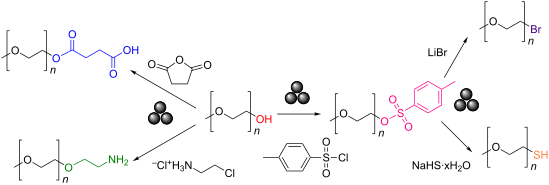
- ; tosylation; Introduction Poly(ethylene glycol) (PEG) is a linear polyether polymer with highly hydrophilic properties. Whereas PEG functionalization is restricted to its terminal functionalities, derivatization of these sites is essential for its use in pharmaceutical and material design. Specifically
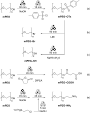
- -toluenesulfonyl chloride (TsCl) and further milling (Scheme 1a, Table 1). mPEG750 was used to survey and optimize the tosylation reaction conditions. Milling of only mPEG with TsCl led to a poor conversion of 6% (Table 1, entry 1). However, addition of 1 equivalent of weak base, such as K2CO3 or N,N
- 4). These conditions functioned similarly with higher molecular weight mPEG2000 (Table 1, entry 5). In the 1H NMR spectra of these samples, the triplet of the terminal methylene moieties in the mPEG starting material at 3.72 ppm is replaced by one at 4.15 ppm, consistent with tosylation of the


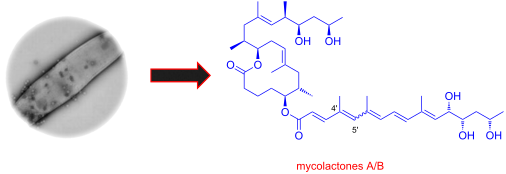
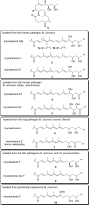
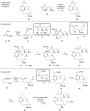
The chemistry and biology of mycolactones
Beilstein J. Org. Chem. 2017, 13, 1596–1660, doi:10.3762/bjoc.13.159









Studies directed toward the exploitation of vicinal diols in the synthesis of (+)-nebivolol intermediates
Beilstein J. Org. Chem. 2017, 13, 571–578, doi:10.3762/bjoc.13.56
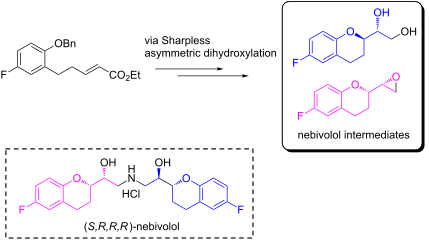
- yielding (Scheme 9). Not surprised by the poor yield of this transformation, we focused on the conversion of 28 into 5 which has also been used as a late-stage nebivolol intermediate (5 is a more advanced intermediate compared to 3). Thus, the tosylation of compound 28 followed by LiBH4 reduction of the


Synthesis and in vitro cytotoxicity of acetylated 3-fluoro, 4-fluoro and 3,4-difluoro analogs of D-glucosamine and D-galactosamine
Beilstein J. Org. Chem. 2016, 12, 750–759, doi:10.3762/bjoc.12.75
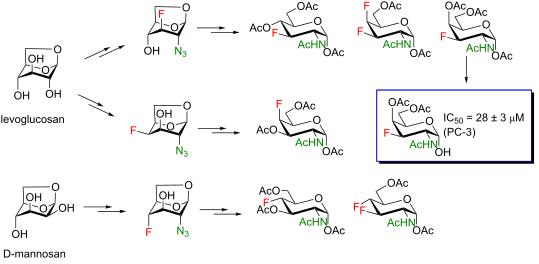
- ] of 14 followed by azidolysis [41] furnished 15. 2-Azido-3,4-epoxide 18 was prepared from readily available [42] 2,3-isopropylidene-D-mannosan (16) in five steps (Scheme 2). Tosylation of 16 [43], followed by hydrolysis of the benzylidene acetal [44] and oxirane ring closure [45] at C-4 delivered 1,6





Diastereoselective synthesis of new O-alkylated and C-branched inositols and their corresponding fluoro analogues
Beilstein J. Org. Chem. 2016, 12, 353–361, doi:10.3762/bjoc.12.39
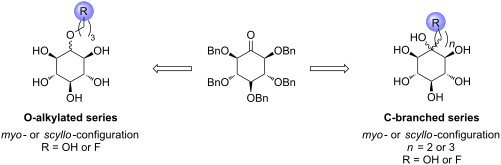
- and scyllo-20. Unfortunately, the desired fluorinated products myo-21 and scyllo-21 were not obtained; instead elimination reaction and the formation of unidentified products were observed. Hence, tosylation was next performed, in order to allow the nucleophilic substitution with fluoride at a later


Enabling technologies and green processes in cyclodextrin chemistry
Beilstein J. Org. Chem. 2016, 12, 278–294, doi:10.3762/bjoc.12.30
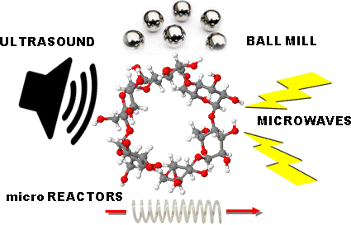
- . 6I-Benzylureido-6I-deoxy-per-O-acetyl-β-CD was obtained in shorter reaction times and excellent yields as compared to conventional conditions (Scheme 3). Tosylation of the secondary rim of the CD can be efficiently carried out under US irradiation. This efficient regioselective modification is



Synthesis of Xenia diterpenoids and related metabolites isolated from marine organisms
Beilstein J. Org. Chem. 2015, 11, 2521–2539, doi:10.3762/bjoc.11.273
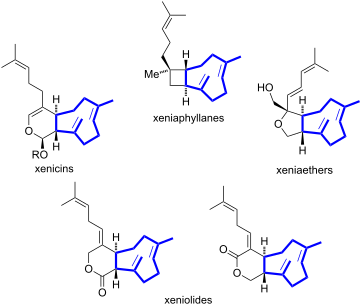
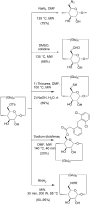
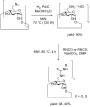
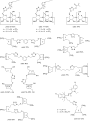
- regioselective tosylation of the primary alcohol 111 set the stage for the construction of the oxolane via Williamson etherification, which was realized by treatment with potassium hydride. Surprisingly, the following deprotection of the MOM ether using standard reaction conditions (1 N aqueous hydrochloric acid







Cholesterol lowering effects of mono-lactose-appended β-cyclodextrin in Niemann–Pick type C disease-like HepG2 cells
Beilstein J. Org. Chem. 2015, 11, 2079–2086, doi:10.3762/bjoc.11.224
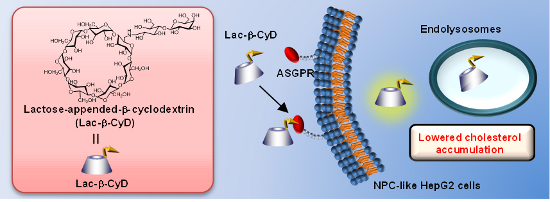
- present study, we attempted to prepare Lac-β-CyD as a hepatocyte-selective cholesterol decreasing agent. Figure 1 shows the preparation pathway of Lac-β-CyD. Firstly, we synthesized NH2-β-CyD through tosylation, and azidation of primary hydroxy groups of β-CyD, as reported previously [12][13]. Secondly




Towards inhibitors of glycosyltransferases: A novel approach to the synthesis of 3-acetamido-3-deoxy-D-psicofuranose derivatives
Beilstein J. Org. Chem. 2015, 11, 1547–1552, doi:10.3762/bjoc.11.170

- treated with triflic anhydride in the presence of pyridine. However, the resulting 3-O-triflate was unstable and decomposed rapidly after the work-up. On the other hand, an attempted tosylation of alcohol 1 using TsCl and pyridine in CH2Cl2 did not proceed, probably due to steric hindrance, and only the


Development of variously functionalized nitrile oxides
Beilstein J. Org. Chem. 2015, 11, 1241–1245, doi:10.3762/bjoc.11.138
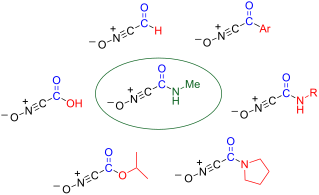
- 10.3762/bjoc.11.138 Abstract N-Methylated amides (N,4-dimethylbenzamide and N-methylcyclohexanecarboxamide) were systematically subjected to chemical transformations, namely, N-tosylation followed by nucleophilic substitution. The amide function was converted to the corresponding carboxylic acid, esters
- [11] proved to be sufficiently stable under ambient conditions. Despite the considerable efforts for optimizing the reaction conditions, the highest yield obtained for 8Ab was 60%; however, 35% of starting material 6A was recovered, and the conversion yield was 92%. This tosylation method was applied
- alcohol 11j were also detected (Table 2, entries 18 and 19). In contrast to tosylated amides 8Ab and 8Bb, tosylated N-methyl-5-phenylisoxazole-3-carboxamide 12 exhibited higher reactivity. Upon tosylation under similar conditions 3 did not afford product 12, and isoxazole-3-carboxylic acid 5a, a


Radical-mediated dehydrative preparation of cyclic imides using (NH4)2S2O8–DMSO: application to the synthesis of vernakalant
Beilstein J. Org. Chem. 2015, 11, 1008–1016, doi:10.3762/bjoc.11.113
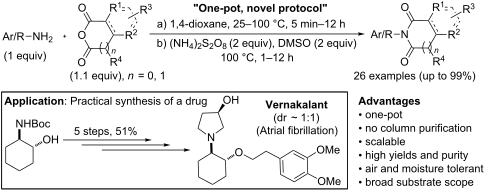
- plan was to devise a concise and practical synthetic route. The planned synthetic strategy is illustrated in Scheme 2. The synthesis began from Boc-protected trans-amino alcohol 6 [65]. The two-step sequence – tosylation of the secondary alcohol 6 followed by elimination to form the Boc- protected


Bis(vinylenedithio)tetrathiafulvalene analogues of BEDT-TTF
Beilstein J. Org. Chem. 2015, 11, 403–415, doi:10.3762/bjoc.11.46
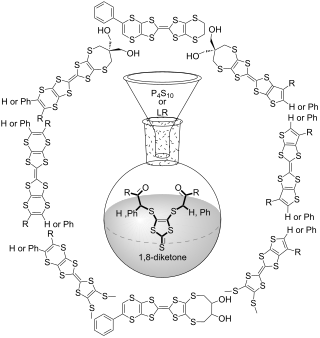
- , the hydroxy groups of which were protected by reaction with methoxyethoxymethyl chloride (MEMCl) and then the ester groups of 37 were reduced to alcohols with LiAlH4 to obtain the diol 38. This was converted into 39 through tosylation of the hydroxy groups with tosyl chloride and then conversion into


C-5’-Triazolyl-2’-oxa-3’-aza-4’a-carbanucleosides: Synthesis and biological evaluation
Beilstein J. Org. Chem. 2015, 11, 328–334, doi:10.3762/bjoc.11.38

- –Jones nucleosidation using silylated thymine and TBAF [42][43][44], was converted into the corresponding iodo-derivative 10 by sequential tosylation and iodination. The subsequent reaction of 10 with sodium azide, performed at 50 °C in CH3CN/H2O (1:10) in the presence of NH4Cl for 48 h afforded two


First chemoenzymatic stereodivergent synthesis of both enantiomers of promethazine and ethopropazine
Beilstein J. Org. Chem. 2014, 10, 3038–3055, doi:10.3762/bjoc.10.322
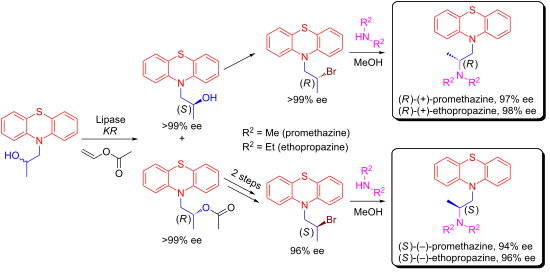
- disappointment, none of these attempts led to success. When Mitsunobu chemistry fails, a hydroxy group inversion by tosylation and displacement using amine was performed. Unfortunately, attempts to carry out the reaction at higher temperature led to complete decomposition of the tosylate substrate. In the




Synthetic strategies for the fluorescent labeling of epichlorohydrin-branched cyclodextrin polymers
Beilstein J. Org. Chem. 2014, 10, 3007–3018, doi:10.3762/bjoc.10.319
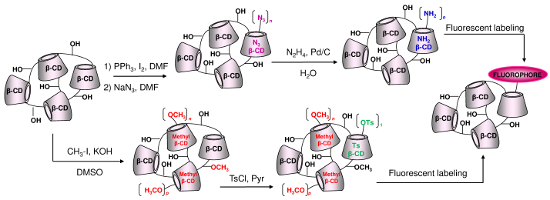
- (Scheme 3). Because both the methylation and the branching affects almost exclusively the secondary hydroxy groups, free primary hydroxy groups are accessible for tosylation. The tosylation of CD derivatives as well as the work-up of the obtained crude compounds are well described in the literature [26
- ]. The selected procedure for the tosylation of the methylated polymer is an adaptation of the classical procedure to the specific structure. Concerning the characterization of compound 5, the methyl and tosyl content can be determined by comparing 1H NMR spectra of the starting material with that one of
- product is a tosylated polymer, the amount and the distribution of fluorophore depend strictly from the tosylation step. If tosyl chloride is used in defect in respect to the amount of CD units, the substitution occurs preferentially on the primary side, if used in larger amounts (i.e., 2–3 mol per CD


Gold(I)-catalysed synthesis of a furan analogue of thiamine pyrophosphate
Beilstein J. Org. Chem. 2014, 10, 2580–2585, doi:10.3762/bjoc.10.270
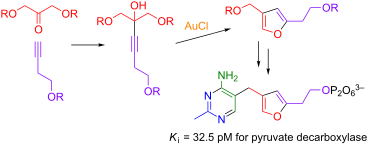
- MnO2, condensation with 3-anilinopropionitrile, and then reaction with acetamidine gives the thiamine analogue 15. Tosylation of the alcohol and displacement of tosylate by the diphosphate trianion worked well to give ThDP analogue 17. A further objective was to show that the furan ring could be


A complete series of 6-deoxy-monosubstituted tetraalkylammonium derivatives of α-, β-, and γ-cyclodextrin with 1, 2, and 3 permanent positive charges
Beilstein J. Org. Chem. 2014, 10, 1390–1396, doi:10.3762/bjoc.10.142
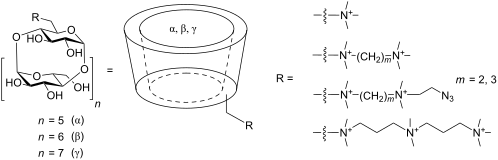
- this purpose, the selective monotosylation of the free CD was chosen. Several methods for 6-O-tosylation have already been published [23][24][25][26]. Unfortunately, most of them lead to mixtures of mono- and multi-tosylated products, which cannot be separated by precipitation from acetone or
- reaction was not isolated due to its possible explosive character, but was directly subjected to the tosylation to yield 23 [31]. Finally, compound 24 was prepared by means of the Finkelstein reaction (which was already published [32]) in 96% yield. We presumed that the alkylation of intermediate 9 by 24


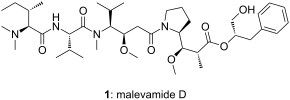
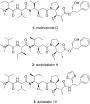
Total synthesis and cytotoxicity of the marine natural product malevamide D and a photoreactive analog
Beilstein J. Org. Chem. 2014, 10, 316–322, doi:10.3762/bjoc.10.29
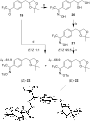
- work-up to (E)- and (Z)-22. Reprotection of the diol unit of 20 and tosylation of 21 afforded tosyloxime (E)-22, which crystallized overnight from the neat mixture and was analyzed by X-ray crystallography [17]. Thus, it became possible to assign the 19F NMR chemical shifts of both isomers ((E)-22: δF




Synthesis of the B-seco limonoid core scaffold
Beilstein J. Org. Chem. 2014, 10, 194–208, doi:10.3762/bjoc.10.15
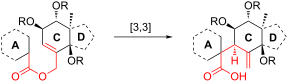
- tosylation of the primary alcohols in 19, 20 and 22 gave suitable electrophiles for the planned O-alkylation with the thermodynamic enolate of 2-methylcyclohexanone. However, under various conditions (NaH/15-crown-5/THF; t-BuOK/18-crown-6/THF/DMPU; KHMDS/THF) [44][45], the intended O-alkylation to yield the