
Search results
Search for "scaffolds" in Full Text gives 607 result(s) in Beilstein Journal of Organic Chemistry. Showing first 200.
Isoorotamide-based peptide nucleic acid nucleobases with extended linkers aimed at distal base recognition of adenosine in double helical RNA
Beilstein J. Org. Chem. 2025, 21, 2513–2523, doi:10.3762/bjoc.21.193
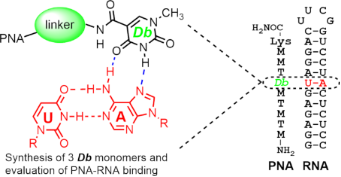
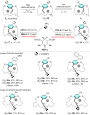
- was comparable to the selectivity of E and these scaffolds may present a lead for future nucleobase designs. The study further demonstrated a conflict between linker flexibility and triplex formation. However, the results point to the importance of entropy and related pre-organization of PNA bases for


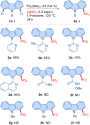
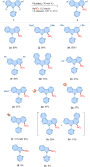
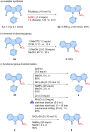
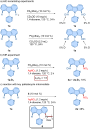
Palladium-catalyzed regioselective C1-selective nitration of carbazoles
Beilstein J. Org. Chem. 2025, 21, 2479–2488, doi:10.3762/bjoc.21.190
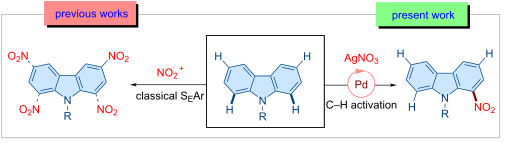
- are ubiquitous and privileged heterocyclic scaffolds in various functional organic materials and naturally occurring products. Although extensive efforts have focused on developing synthetic strategies toward carbazole derivatives, direct regioselective functionalization of the carbazole core remains
- functionalization of carbazoles via C–H activation [48][49][50][51][52][53][54][55][56][57][58][59][60][61]. Among the variously substituted carbazole scaffolds, nitro-substituted carbazoles exhibit a diverse range of medicinal properties and serve as key starting materials for the synthesis of bioactive compounds


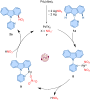
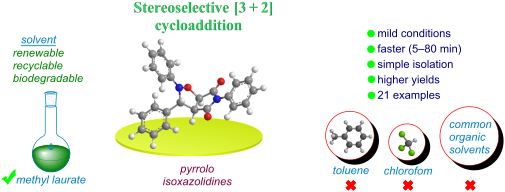
The high potential of methyl laurate as a recyclable competitor to conventional toxic solvents in [3 + 2] cycloaddition reactions
Beilstein J. Org. Chem. 2025, 21, 2389–2415, doi:10.3762/bjoc.21.184
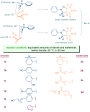
- scaffolds. From the standpoint of organic chemistry, it is evident that these compounds can be efficiently converted into a variety of versatile organic intermediates through the application of ring-opening reactions [49][50][51][52]. In addition to the aforementioned useful properties, the current methods






Recent advances in Norrish–Yang cyclization and dicarbonyl photoredox reactions for natural product synthesis
Beilstein J. Org. Chem. 2025, 21, 2315–2333, doi:10.3762/bjoc.21.177
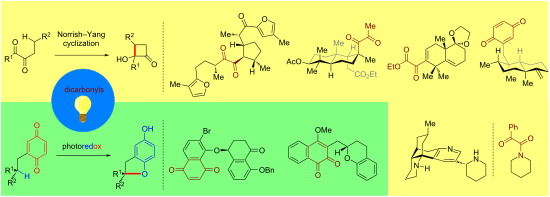
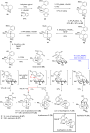
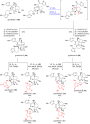
- reactivity modes and expand the structural diversity of accessible natural product scaffolds. Additionally, the highly reactive strained four-membered rings generated from these reactions present exciting opportunities for further functionalization. Studying their downstream transformations – particularly




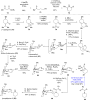


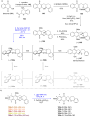

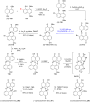
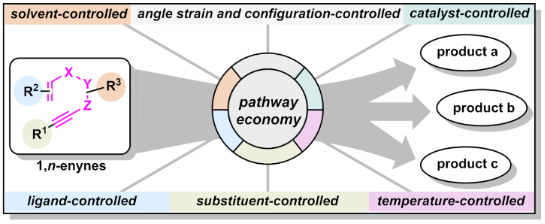
Pathway economy in cyclization of 1,n-enynes
Beilstein J. Org. Chem. 2025, 21, 2260–2282, doi:10.3762/bjoc.21.173
- synthetic intermediates, and used to successfully modify diverse bioactive scaffolds via late-stage functionalization, collectively demonstrating the method’s synthetic utility. In 2025, the Das group developed a palladium-catalyzed cycloisomerization of 2-alkynylbenzoate-cyclohexadienone that enables
- derivatives 31 (Scheme 7, path b). This work provided a novel approach for constructing substituted naphthalene and indene frameworks via gold-catalyzed cycloisomerization of 1,5-enynes. In 2016, Liu et al. achieved the stereoselective syntheses of furofuran and furopyran scaffolds from propargyl vinyl ethers
- heterocyclic scaffolds, which established a versatile platform for synthesizing structurally diverse indoline frameworks. Ligand-controlled cyclization of 1,n-enynes The core function of catalyst ligands lies in their ability to precisely modulate catalyst performance through electronic and steric effects. The


Synthesis of triazolo- and tetrazolo-fused 1,4-benzodiazepines via one-pot Ugi–azide and Cu-free click reactions
Beilstein J. Org. Chem. 2025, 21, 2202–2210, doi:10.3762/bjoc.21.167
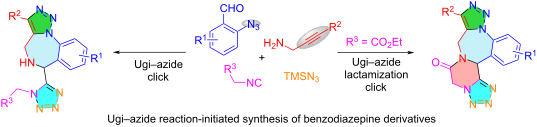
- heterocyclic scaffolds to obtain biologically interesting compounds (Scheme 1) [35][36][37][38][39][40][41]. The development of methods for the synthesis of triazole, tetrazole, piperazinone, and 1,4-benzodiazepine motifs are attractive from both synthetic and medicinal chemistry considerations [42][43][44][45
- scaffolds in a highly efficient manner. It was found that brominated azides do not undergo lactamization under the current conditions which presents an opportunity for further optimization of reaction conditions to expand the scope. Experimental General procedure for synthesis of analogs 7 and 8 A solution
- of compounds 6a (red) and 8a (blue). Ugi–azide reaction for the synthesis of 1,5-DS-T-containing heterocycles. Proposed Ugi–azide-initiated synthesis of polyheterocyclic scaffolds 7 and 8. 4-CR vs stepwise Ugi–azide reactions for the synthesis of 7a. Synthesis of benzodiazepines 7a–k. Reaction


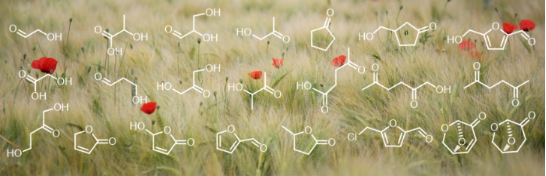
C2 to C6 biobased carbonyl platforms for fine chemistry
Beilstein J. Org. Chem. 2025, 21, 2103–2172, doi:10.3762/bjoc.21.165


Discovery of cytotoxic indolo[1,2-c]quinazoline derivatives through scaffold-based design
Beilstein J. Org. Chem. 2025, 21, 2062–2071, doi:10.3762/bjoc.21.161
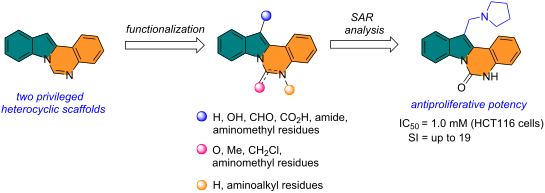
- heterocyclic scaffolds are widely used in the treatment of various diseases, making them a common focus of research [1]. A substantial part of these compounds incorporate five- or six-membered nitrogen heterocycles. The indole and quinazoline cores represent two pharmacologically significant heterocyclic
- systems, exhibiting a wide range of biological activity, high level of druglikeness and broad opportunities for derivatizations, that make them privileged scaffolds in drug discovery [2][3]. The pharmaceutical significance of indole and quinazoline rings is evident by numerous FDA-approved drugs across
- structural fusion of indole and quinazoline pharmacophores offers exceptional opportunities for designing new therapeutic agents, combining the proven bioactivities of both privileged scaffolds. Chemical ways for the synthesis of indolo[1,2-c]quinazolines (Figure 1, top) are numerous and cover different


Measuring the stereogenic remoteness in non-central chirality: a stereocontrol connectivity index for asymmetric reactions
Beilstein J. Org. Chem. 2025, 21, 1995–2006, doi:10.3762/bjoc.21.155
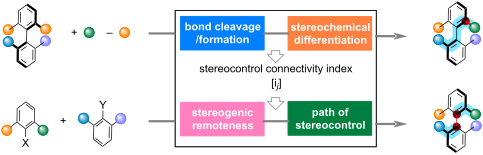
- important in pharmaceuticals, catalysts, and advanced materials due to their unique stereogenic scaffolds and associated properties. Consequently, synthetic chemists have been pursuing molecules featuring these forms of non-central chirality, where the stereogenic elements are not localized on a single
- within three-dimensional molecular frameworks that restrict conformational freedom. The geometric scaffolds can be a central atom, an axis, or a plane, and the combination and spatial arrangement of chemically distinct substituents establish the stereogenicity. Therefore, despite the apparent differences
- among these scaffolds, the various types of chirality are permutations of substituents on diverse stereogenic elements (Scheme 1C). Although this analysis offers a unified view of chirality, the realization of these chiral systems through asymmetric synthesis is far from trivial. Stereogenic compounds




Rhodium-catalysed connective synthesis of diverse reactive probes bearing S(VI) electrophilic warheads
Beilstein J. Org. Chem. 2025, 21, 1924–1931, doi:10.3762/bjoc.21.150
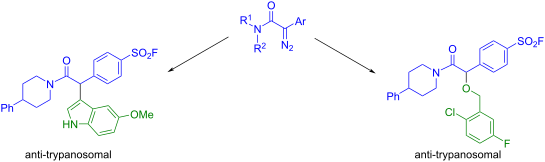
- Collins and Stuart Warriner for their support and assistance in this work. This work is based on the doctoral theses of Scott Rice (“Synthesis of Novel Polyfunctional 3D Scaffolds for Drug Discovery”, University of Leeds, 2021) and Julian Chesti (“Modular Synthesis and Biological Evaluation of


Stereoselective electrochemical intramolecular imino-pinacol reaction: a straightforward entry to enantiopure piperazines
Beilstein J. Org. Chem. 2025, 21, 1897–1908, doi:10.3762/bjoc.21.147
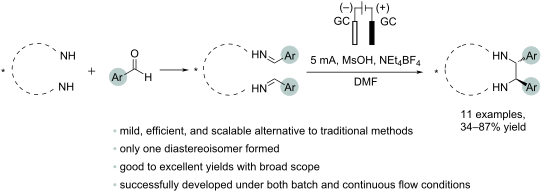
- scaffolds that are commonly used as chiral ligands. In this context we report the development of a more sustainable method – which avoids the use of lead bromide or lead electrodes – employing an undivided cell with two glassy carbon electrodes for the electroreductive intramolecular coupling of aromatic





Chiral phosphoric acid-catalyzed asymmetric synthesis of helically chiral, planarly chiral and inherently chiral molecules
Beilstein J. Org. Chem. 2025, 21, 1864–1889, doi:10.3762/bjoc.21.145
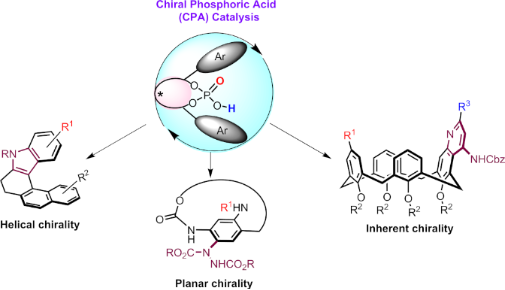
- framework of the diol precursors, predominantly axially chiral structures such as BINOL, H8-BINOL, SPINOL and VAPOL scaffolds, which are widely used in the development of CPA catalysts. Furthermore, the ortho-aryl substitutions of the CPA catalyst can efficiently modulate the stereochemical and electronic
- versatility of this method in the asymmetric synthesis of diverse chiral molecular structures. Substituted [2.2]paracyclophanes represent another class of conformationally rigid, planarly chiral molecules, which have emerged as versatile scaffolds for developing chiral catalysts, ligands and functional
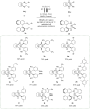
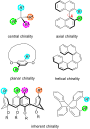
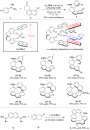
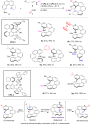
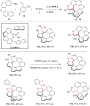
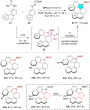
- synthesis of helically chiral, planarly chiral and inherently chiral molecules. General structure of CPAs and selected CPAs with various chiral scaffolds. Representative elements of molecular chirality. CPA-catalyzed asymmetric synthesis of azahelicenes via Fischer indole synthesis. CPA-catalyzed asymmetric











Systematic pore lipophilization to enhance the efficiency of an amine-based MOF catalyst in the solvent-free Knoevenagel reaction
Beilstein J. Org. Chem. 2025, 21, 1854–1863, doi:10.3762/bjoc.21.144
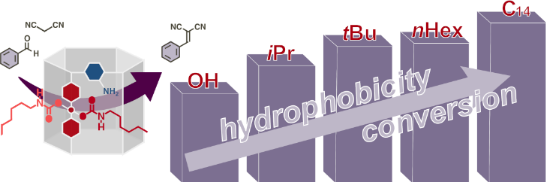
- functional groups are isolated together in confined space [7][8][9]. In the solid state, the generation of such multifunctional cavities has been pursued upon nanoporous scaffolds that include polymers of intrinsic microporosity (PIMs) [10][11][12][13], mesoporous silica materials (MSMs) [14][15][16][17


Fe-catalyzed efficient synthesis of 2,4- and 4-substituted quinolines via C(sp2)–C(sp2) bond scission of styrenes
Beilstein J. Org. Chem. 2025, 21, 1799–1807, doi:10.3762/bjoc.21.142
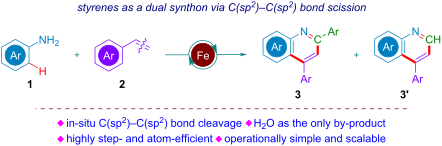
- hypothesis, we commenced our investigation by employing arylamine 1a and styrene (2a) as model substrates. The optimized reaction conditions are presented in Table 1. Building upon our previous studies, where we investigated how solvent selection can influence the selective formation of quinoline scaffolds




[3 + 2] Cycloaddition of thioformylium methylide with various arylidene-azolones in the synthesis of 7-thia-3-azaspiro[4.4]nonan-4-ones
Beilstein J. Org. Chem. 2025, 21, 1791–1798, doi:10.3762/bjoc.21.141
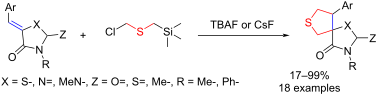
- would be of help in further drug design of spirocyclic scaffolds. Single crystal X-ray analysis for the compounds 6e (A), 7d (B), 8e (C) and 9e (D). Atoms are shown as thermal ellipsoids at 50% probability. All hydrogen atoms, except the one at the stereogenic center, are omitted for clarity. Synthetic



Approaches to stereoselective 1,1'-glycosylation
Beilstein J. Org. Chem. 2025, 21, 1700–1718, doi:10.3762/bjoc.21.133
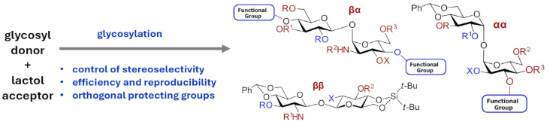
- -promoted glycosylation reactions with α-lactol acceptors 176 and 178, respectively [123]. These nonreducing disaccharides were employed as scaffolds for the synthesis of immunomodulatory glycolipids – TLR4 agonists with picomolar potency [124]. Conclusion Approaches to 1,1'-glycosylation can be rationally


Catalytic asymmetric reactions of isocyanides for constructing non-central chirality
Beilstein J. Org. Chem. 2025, 21, 1648–1660, doi:10.3762/bjoc.21.129
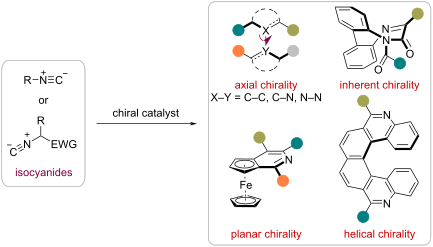
- of structurally diverse scaffolds featuring axial, planar, helical, and inherent chirality. Herein, we summarize the exciting achievements in this rapidly evolving field. These elegant examples have been organized and presented based on the reaction type as well as the resulting chirality form
- attention due to its broad applications in various fields, including but not limited to drug discovery, asymmetric catalysis, and materials science (Figure 1b). Consequently, the development of efficient and stereoselective methods for assembling such scaffolds with respect to structural diversity has
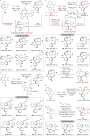
- cyclization of functionalized phenyl isocyanides, guided by DFT calculations (Scheme 2b) [29]. Three types of isocyanides (10–12) were evaluated in reactions with aryl iodides, affording indole-fused N-heteroaryl scaffolds 13–15, featuring either a C–C or C–N stereogenic axis, in moderate-to-high yields with





Heterologous biosynthesis of cotylenol and concise synthesis of fusicoccane diterpenoids
Beilstein J. Org. Chem. 2025, 21, 1489–1495, doi:10.3762/bjoc.21.111
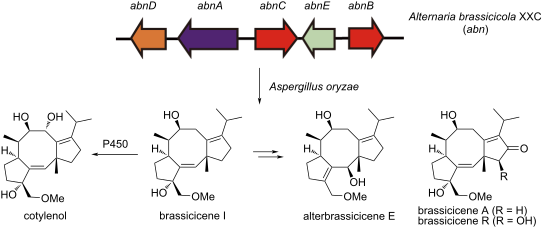
- enzymatic terpene cyclization and chemical synthesis [30][31][32][33]. Briefly, the carbon scaffolds are forged by terpene cyclases, followed by concise chemical transformations to yield the desired natural products. Here, we describe heterologous biosynthesis of cotylenol by engineering the biosynthetic


Microwave-enhanced additive-free C–H amination of benzoxazoles catalysed by supported copper
Beilstein J. Org. Chem. 2025, 21, 1462–1476, doi:10.3762/bjoc.21.108
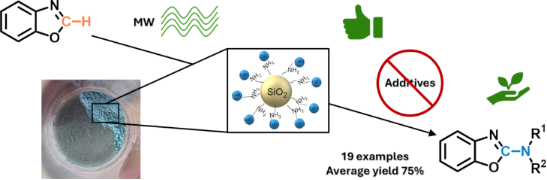
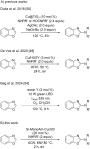
- -amination of benzoxazoles by transition-metal-catalysed reactions that traditionally involve aryl halide scaffolds [11][12][13][14]. However, these procedures entail disadvantages that need to be overcome if green chemistry criteria are to be met; high temperatures, long reaction times, the need for ligands



Advances in nitrogen-containing helicenes: synthesis, chiroptical properties, and optoelectronic applications
Beilstein J. Org. Chem. 2025, 21, 1422–1453, doi:10.3762/bjoc.21.106
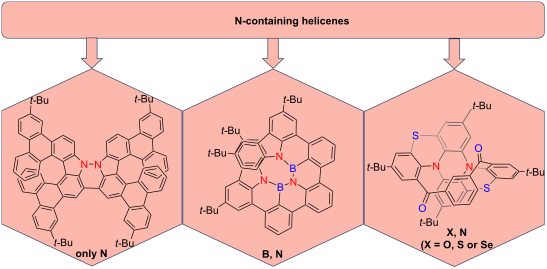
- versatile scaffolds for chiral optoelectronic applications. The incorporation of nitrogen enables precise modulation of electronic structures, redox characteristics, and intermolecular interactions, thereby enhancing performance in circularly polarized luminescence (CPL), thermally activated delayed
- (MR-TADF) emitters to date. In 2023, the same group introduced the first deep-blue chiral MR-TADF emitters based on heterohelicene scaffolds 41a–c [56]. These compounds exhibited sharp emissions at 440–444 nm in solution and 445–449 nm in doped films, with emission bandwidths as narrow as 23 nm and
- [5]helicene (compound 57b) by coupling two 12H-benzo[b]phenoxazine (BPO) units and systematically compared it to its N,N-analogue (compound 57a) derived from 13H-dibenzo[b,i]phenoxazine (DBPO) scaffolds [72] (Table 19). Compound 57b was obtained in significantly higher yield and, like compound 57a

High-pressure activation for the solvent- and catalyst-free syntheses of heterocycles, pharmaceuticals and esters
Beilstein J. Org. Chem. 2025, 21, 1374–1387, doi:10.3762/bjoc.21.102
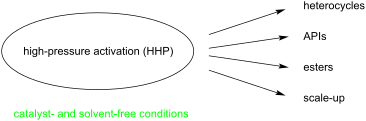
- conducting polymers or scaffolds for drug synthesis. Among them, 1,3-dihydrobenzimidazoles are widely found in many materials, drug candidates, and catalysts. For instance, they can be used in organic light-emitting diodes (OLEDs) [38], as water-soluble antitrypanosomatid agents [39], or in the synthesis of


Recent advances and future challenges in the bottom-up synthesis of azulene-embedded nanographenes
Beilstein J. Org. Chem. 2025, 21, 1272–1305, doi:10.3762/bjoc.21.99
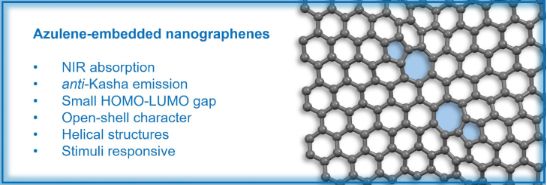
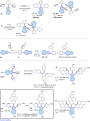
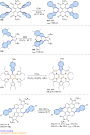
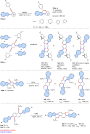
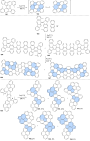
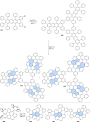
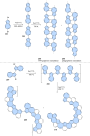
- design beyond all-hexagon polycyclic aromatic hydrocarbons (PAHs). Among these, π-conjugated scaffolds featuring embedded azulene units have gained considerable attention due to their unique optical and electronic properties. This review provides an overview of representative azulene-embedded
- gap, aromaticity of azulene subunit and anti-Kasha’s emission from higher excited states. In such cases, the azulene unit merely acts as a linker within a more complex benzenoid framework. This review covers all types of azulene-embedded molecular scaffolds, regardless of whether they contain a
- scaffolds of this type. Given the rapid progress in this field, with nearly half of the cited works published since 2020, this review focuses primarily on purely hydrocarbon structures, with less emphasis on heteroatom-containing molecules. Typically, only the final synthetic steps leading to the fused






Recent advances in oxidative radical difunctionalization of N-arylacrylamides enabled by carbon radical reagents
Beilstein J. Org. Chem. 2025, 21, 1207–1271, doi:10.3762/bjoc.21.98
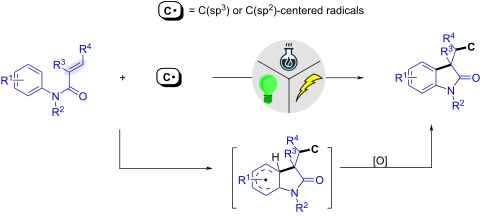
- difunctionalization of N-arylacrylamides has emerged as a powerful strategy for the construction of diverse nitrogen-containing heterocycles, particularly oxindoles and related scaffolds. This review provides a comprehensive summary of recent advances in oxidative radical difunctionalization of N-arylacrylamides with




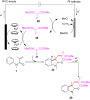


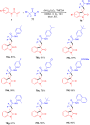


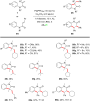


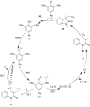


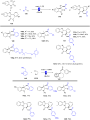


A multicomponent reaction-initiated synthesis of imidazopyridine-fused isoquinolinones
Beilstein J. Org. Chem. 2025, 21, 1161–1169, doi:10.3762/bjoc.21.92
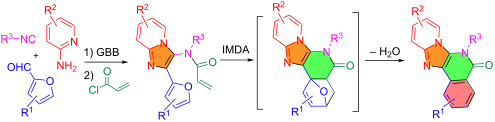
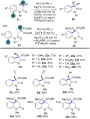
- modifications of MCRs could generate novel and complex molecular scaffolds [1][2][3][4][5][6][7][8]. Some MCR adducts generated from Ugi, Passerini, Gewald, Biginelli, and Groebke–Blackburn–Bienaymé (GBB) reactions have been modified to form chemically diverse heterocyclic scaffolds with potential biological
- activities [9][10]. Imidazo[1,2-a]pyridine and isoquinolinone-kind scaffolds are privileged rings which can be found in drug molecules such as zolimidine [11], zolpidem [12], alpidem and antiemetic drug 5-HT3A antagonist palonosetron [13] (Figure 1). Imidazopyridine-fused isoquinolinones have been developed
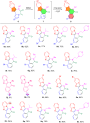
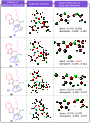
- group on the imidazopyridine moiety have direct electronic impact on the IMDA reaction. This integrated reaction process provided a new avenue for the preparation of heterocyclic scaffolds with potential biological activity. Experimental General procedure for the synthesis of intermediates 4 and 6 The




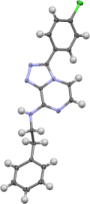
Investigations of amination reactions on an antimalarial 1,2,4-triazolo[4,3-a]pyrazine scaffold
Beilstein J. Org. Chem. 2025, 21, 1126–1134, doi:10.3762/bjoc.21.90
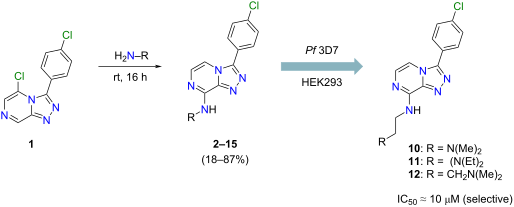
- (MMV) [3]. OSM’s aim is to “find a drug for malaria as quickly as possible” [3]. In the past, OSM synthesised and screened various derivatives of three related parent scaffolds (series 1–3) provided by GlaxoSmithKline (GSK) in non-commercial antimalarial screening datasets [4]. The group’s current
- et al. for 5-position halogenated scaffolds [10]. Several different triazolopyrazine compounds bearing chlorine, bromine or iodine at the 5-position, gave no ipso-substituted (5-substituted) products when refluxed in toluene with phenethylamine, with all major products being substituted at the 8
- -position (tele-substituted; Figure 1), distant from the halogen leaving group at position 5 [10]. A plausible reaction mechanism was proposed by Korsik et al. [10]. The antimalarial activity of series 4 triazolopyrazine scaffolds is generally reduced by substitution of an amine functionality at the 8