

Search results
Search for "protein interaction" in Full Text gives 27 result(s) in Beilstein Journal of Organic Chemistry.
An easily accessible sulfated saccharide mimetic inhibits in vitro human tumor cell adhesion and angiogenesis of vascular endothelial cells
Beilstein J. Org. Chem. 2012, 8, 787–803, doi:10.3762/bjoc.8.89
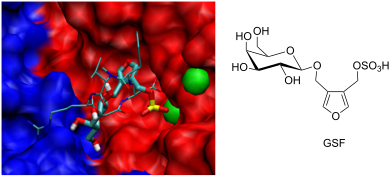
- detectable carbohydrate–protein interaction, because the combined synthetic peptidic integrin ligands completely blocked cell adhesion to fibronectin, but on the other hand, cell adhesion could be inhibited with the sulfated saccharide mimetic GSF, probably by interfering with protein–protein interactions


Synthesis of fluorinated maltose derivatives for monitoring protein interaction by 19F NMR
Beilstein J. Org. Chem. 2012, 8, 448–455, doi:10.3762/bjoc.8.51
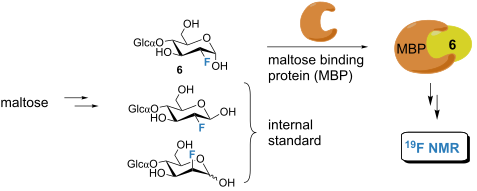
- -2-F-maltose-isomers; one isomer (α-gluco-type) binds to MBP and senses the protein interaction, and the nonbinding isomers (β-gluco- and/or α/β-manno-type) are utilized as internal references. Moreover, this reporter system was used for relative affinity studies of fluorinated and nonfluorinated
- studies of protein–ligand interaction interfaces. Keywords: fluorination; 19F NMR; maltose-binding protein (MBP); maltose derivatives; protein interaction; Introduction In recent years, we have witnessed significant improvements in NMR spectroscopy, especially as a powerful tool for studying protein
- relaxation properties of a small-molecular-weight reporter ligand that reversibly binds to a ligand binding domain, which in turn is fused to the interacting protein of interest. Subsequent protein–protein interaction leads to an additional increase of the molecular weight of the complex and can efficiently


Other Beilstein-Institut Open Science Activities