

Search results
Search for "polycyclic aromatic hydrocarbons (PAHs)" in Full Text gives 29 result(s) in Beilstein Journal of Organic Chemistry.
Influence of perylenediimide–pyrene supramolecular interactions on the stability of DNA-based hybrids: Importance of electrostatic complementarity
Beilstein J. Org. Chem. 2014, 10, 1589–1595, doi:10.3762/bjoc.10.164
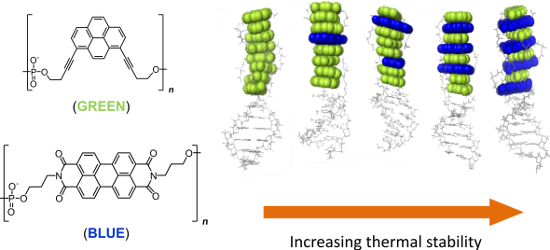
- -to-face stacking arrangement. Face-centered, parallel aromatic π–π stacking interactions have been studied and reviewed in great detail [1][2][3][4][5]. These interactions are especially important for polycyclic aromatic hydrocarbons (PAHs) [6][7]. The interaction is the result of solvophobicity, as

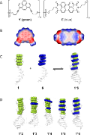


Site-selective covalent functionalization at interior carbon atoms and on the rim of circumtrindene, a C36H12 open geodesic polyarene
Beilstein J. Org. Chem. 2014, 10, 956–968, doi:10.3762/bjoc.10.94
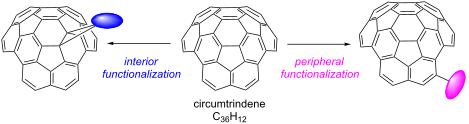
- -like reactivity at its interior carbon atoms, whereas its edge carbons react like those of planar polycyclic aromatic hydrocarbons (PAHs). The Bingel–Hirsch and Prato reactions – two traditional methods for fullerene functionalization – afford derivatives of circumtrindene with one of the interior 6:6
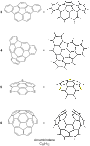
- ]. Whereas fullerenes comprising complete three-dimensional polyhedra can be classified as “closed” geodesic polyarenes, curved subunits of fullerenes are regarded as “open” geodesic polyarenes [4]. The fullerenes constitute one family of geodesic polyarenes, and bowl-shaped polycyclic aromatic hydrocarbons
- (PAHs) constitute another. Both open and closed geodesic polyarenes are characterized by curved π-systems composed of pyramidalized carbon atoms (Figure 2). Pyramidalization not only imposes curvature, but it also imparts significant electronic perturbations. The less parallel the alignment of p




Bis(benzylamine) monomers: One-pot preparation and application in dendrimer scaffolds for removing pyrene from aqueous environments
Beilstein J. Org. Chem. 2013, 9, 2320–2327, doi:10.3762/bjoc.9.266
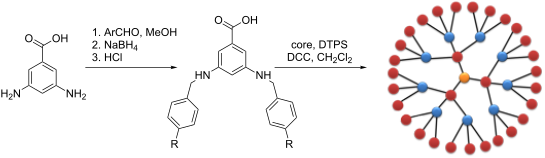
- hybrid dendrimers could be isolated and used in different solvent environments without being degraded. Due to their hydrophobic periphery and larger size, hybrid dendrimers 11–13 were envisioned as potential scaffolds to encapsulate small molecule organic pollutants such as polycyclic aromatic
- hydrocarbons (PAHs) [23][24][25]. The presence of PAHs in drinking water is a growing concern due to their carcinogenic properties and persistence in the environment [26][27]. Current methods to remove these hydrocarbons are becoming ineffective. To examine the ability of the hybrid dendrimers to remove small



Shape- persistent macrocycle with intraannular alkyl groups: some structural limits of discotic liquid crystals with an inverted structure
Beilstein J. Org. Chem. 2008, 4, No. 1, doi:10.1186/1860-5397-4-1
- ). The repeated purification process for all macrocycles was not optimized and is responsible for the rather low yield in the cyclization step. Our recent progress in the synthesis of functionalized polycyclic aromatic hydrocarbons (PAHs) opened the question about the influence of the presence of PAH



Other Beilstein-Institut Open Science Activities