

Search results
Search for "platinum(II)" in Full Text gives 28 result(s) in Beilstein Journal of Organic Chemistry.
High chemoselectivity in the phenol synthesis
Beilstein J. Org. Chem. 2011, 7, 794–801, doi:10.3762/bjoc.7.90
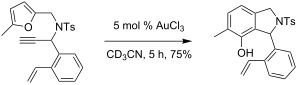
- dinuclear gold(I) complex 36 [44] gave the same result (Figure 3). When the catalyst was changed to platinum(II) chloride in acetone, a complex mixture of inseparable products was obtained. Since the two diastereoisomers 28a and 28b with the propargylic stereocenters were separable, we investigated the gold


Miniemulsion polymerization as a versatile tool for the synthesis of functionalized polymers
Beilstein J. Org. Chem. 2010, 6, 1132–1148, doi:10.3762/bjoc.6.130
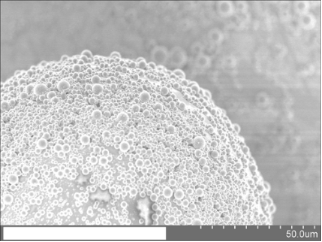
- copolymerized with styrene to yield functionalized particles [34][35] and their uptake by cells was studied [34]. In general, with increased functional groups, an increase in the uptake into cells could be observed. Copolymer particles of styrene and acrylic acid were used to encapsulate a platinum(II) complex





Functional properties of metallomesogens modulated by molecular and supramolecular exotic arrangements
Beilstein J. Org. Chem. 2009, 5, No. 54, doi:10.3762/bjoc.5.54
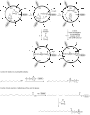
- ligand extensively used in the synthesis of cyclometallated iridium(III) and platinum(II) derivatives [46][47] but whose reactivity towards Pd(II) centres is unexplored. This kind of ligand has been functionalised with a chiral group such as a cholesteryl ester unit, introduced as terminal substituent in
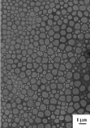
- soft materials with non-conventional structures. Platinum(II) and Zinc(II) For the less explored Pt(II) and Zn(II) metal centres versatile 2,2′-bipyridines have been selected since they are well-known building blocks for the formation of inorganic functional nanomaterials [51]. The complexation of non


Other Beilstein-Institut Open Science Activities