
Search results
Search for "phosphate" in Full Text gives 474 result(s) in Beilstein Journal of Organic Chemistry. Showing first 200.
Development and mechanistic studies of calcium–BINOL phosphate-catalyzed hydrocyanation of hydrazones
Beilstein J. Org. Chem. 2025, 21, 755–765, doi:10.3762/bjoc.21.59
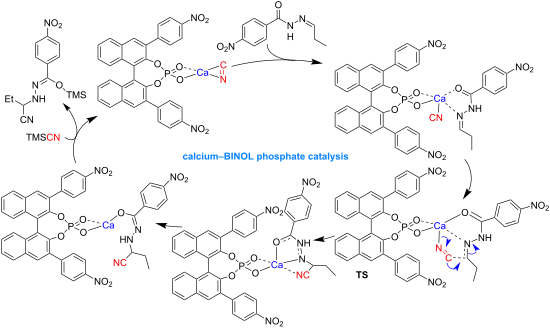
- hydrocyanation of hydrazones, catalyzed by a calcium–BINOL phosphate complex, has been studied for the first time both experimentally and computationally with DFT methods. A full catalytic cycle for the enantioselective synthesis of α-hydrazinonitriles is proposed based on insights gained from DFT calculations
- enantioselectivity achieved with the calcium catalyst remains modest, mainly due to competing pathways for the Z- and E-hydrazone isomers leading to opposite enantiomers. The experimental results confirm these computational proposals. Keywords: asymmetric synthesis; calcium–BINOL phosphate catalysis; hydrocyanation
- in elucidating the mechanism by which these bifunctional compounds act as powerful catalysts [21][22][23][24][25][26][27][28][29]. Since Ishihara disclosed the crucial role of calcium in many purportedly purely organocatalytic BINOL phosphate-catalyzed reactions [30][31], several asymmetric synthesis


Acyclic cucurbit[n]uril bearing alkyl sulfate ionic groups
Beilstein J. Org. Chem. 2025, 21, 717–726, doi:10.3762/bjoc.21.55
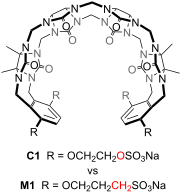
- -association in phosphate-buffered saline (PBS) which might impinge on guest binding and complicate the determination of C1·guest binding constants. For this purpose, we performed dilution experiments monitored by 1H NMR spectroscopy. We prepared a series of NMR samples of C1 in D2O (from 4 mM to 125 μM) and
- achieved by changing the concentration of host in the ITC cell [76][77][78]. Figure 7a presents the thermogram recorded when a solution of C1 (100 μM) in phosphate-buffered saline (PBS) in the ITC cell was titrated with a solution of CHDA (1 mM) from the ITC injection syringe. The DP versus time data in
- JEOL AccuTOF electrospray instrument. ITC data was collected on a Malvern Microcal PEAQ-ITC instrument with a cell volume of 200 µL and an injection syringe with a capacity of 40 μL. For ITC experiments, the host and guest solutions were prepared in a 20 mM phosphate-buffered water (pH 7.4). The sample




Recent advances in allylation of chiral secondary alkylcopper species
Beilstein J. Org. Chem. 2025, 21, 639–658, doi:10.3762/bjoc.21.51
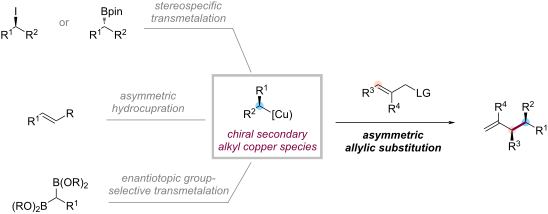
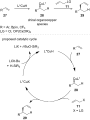
- electrophiles 11. Enantioselective hydroallylation and allylboration of styrenes A significant advance in the CuH-catalyzed enantioselective allylic substitution was reported by Buchwald and co-workers in 2016, who demonstrated the first successful hydroallylation of vinylarenes 30 using allylic phosphate
- optimization revealed LiOt-Bu and diphenyl phosphate as the optimal metal alkoxide and leaving group, delivering the desired product 32 in high yield and high enantioselectivity at room temperature with only 2 mol % catalyst loading. The scope of this transformation proved to be remarkably broad. In addition
- , providing rapid access to highly enantioenriched organometallic and organosilicon compounds. Mechanistic studies using a deuterium-labeled allylic phosphate revealed that the C–C-bond formation occurs through an SN2'-like process, with attack of the organocopper species at the 3-position of the allylic





The effect of neighbouring group participation and possible long range remote group participation in O-glycosylation
Beilstein J. Org. Chem. 2025, 21, 369–406, doi:10.3762/bjoc.21.27
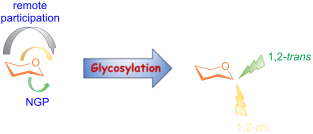
- the formation of 1,2-trans stereodirected glycosyl products 77 when the donor was suitably activated using BSP and Tf2O [139]. The role of the 2,2-dimethyltrimethylene (DMTM) phosphate group at the participating C-2 protection was analysed wherein the NMR studies showed no isolation of the
- by the participation of the phosphate group by reverse anomeric effect. However, according to the authors, the phosphate groups acting as a neighbouring participating group forming the corresponding oxocarbenium ion intermediate 73 (path B, Scheme 13) seemed to be more plausible. Non-ester




Nickel-catalyzed cross-coupling of 2-fluorobenzofurans with arylboronic acids via aromatic C–F bond activation
Beilstein J. Org. Chem. 2025, 21, 146–154, doi:10.3762/bjoc.21.8
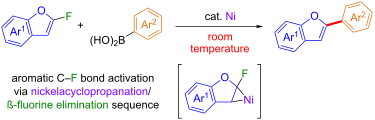
- at the 4-position (2d) also produced high yields (94–98%). For arylboronic acid 2f, which has a methoxy group at the 4-position, the use of potassium phosphate as a base resulted in a 94% yield of 3bf. For arylboronic acid 2g, which features a strongly electron-withdrawing trifluoromethyl group, we
- optimized the coupling reaction using potassium phosphate as a base and increasing the nickel catalyst loading to 20 mol %, achieving a yield of 78% for the desired product 3bg. When 2-naphthylboronic acid (2i) was employed, its solubility was enhanced using a mixed solvent system of toluene, methanol, and

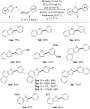


Giese-type alkylation of dehydroalanine derivatives via silane-mediated alkyl bromide activation
Beilstein J. Org. Chem. 2024, 20, 3274–3280, doi:10.3762/bjoc.20.271
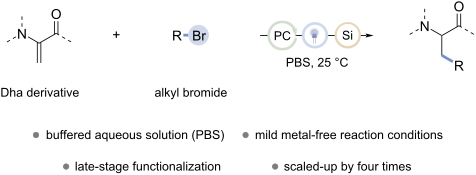
- , forming a new C(sp3)–C(sp3) bond. The reaction can be performed in a phosphate-buffered saline (PBS) solution and shows post-functionalization prospects through pathways involving classical peptide chemistry. Keywords: dehydroalanine; Giese-type reaction; hydroalkylation; photocatalysis; water
- observed in CH3CN (58% yield, 100% conv.; Table 1, entry 3). These conditions were further refined by adding of phosphate-buffered saline and decreasing the amount of (TMS)3SiH to 1.1 equiv, as no further increase in yield was noticed during the optimization. Similar to the reaction in deionized water, all


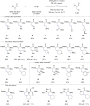

Chemical structure metagenomics of microbial natural products: surveying nonribosomal peptides and beyond
Beilstein J. Org. Chem. 2024, 20, 3050–3060, doi:10.3762/bjoc.20.253
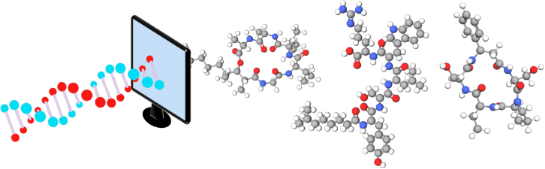
- of action (MOA) (e.g., membrane lysis and depolarization) [30][34] and specific MOA (e.g., dysregulation of ClpP protease [33], inhibition of topoisomerase I/II [36][68], blocking lipid II transport by flippase [29], sequestration of cell wall biosynthetic intermediate C55-(di)phosphate, etc.) [35


Cyclodextrin-based rotaxanes for polymer materials: challenge on simultaneous realization of inexpensive production and defined structures
Beilstein J. Org. Chem. 2024, 20, 3026–3049, doi:10.3762/bjoc.20.252
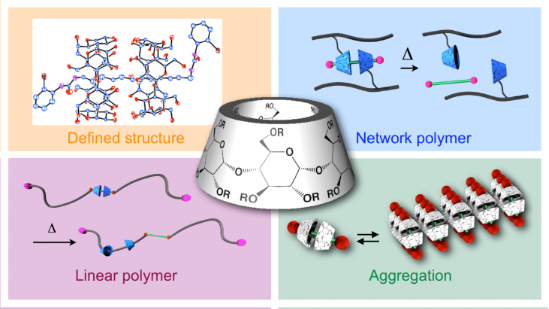
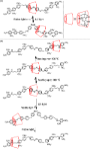
- , [3]rotaxane diol 10 was used as the initiator of the controlled ring-opening polymerization (ROP) of ε-caprolactone in the presence of a diphenyl phosphate catalyst to introduce the polyester main chain into the rotaxane framework; the successive end-capping reactions yielded macromolecular [3






Recent advances in transition-metal-free arylation reactions involving hypervalent iodine salts
Beilstein J. Org. Chem. 2024, 20, 2891–2920, doi:10.3762/bjoc.20.243

- chemistry on the histone H2A protein. The protein was demonstrated as the T120C mutant via site-directed mutagenesis in Escherichia coli and decontaminated by HPLC. A notable reconciliation was changing the aqueous buffer from HEPES to phosphate owing to side-product generation during the arylation in HEPES
- . The reaction of H2A with the diaryliodonium salt in phosphate buffer resulted in the expected arylated conjugate in an hour with a maximum of 98% conversion, yielding sulfur arylated product in 54% isolated yield after purification by HPLC. Additionally, the functionalization of the ketone with a




Interaction of a pyrene derivative with cationic [60]fullerene in phospholipid membranes and its effects on photodynamic actions
Beilstein J. Org. Chem. 2024, 20, 2732–2738, doi:10.3762/bjoc.20.231
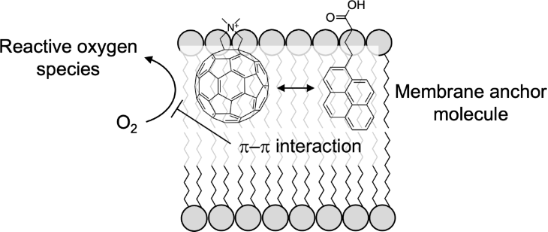
- samples dispersed in phosphate-buffered saline (PBS(–)). UV–vis absorption spectra of liposomes (1 mM phospholipid) with C60 (a) or a cationic derivative of C60 (catC60) (b) added at various molar equivalents (mol equiv) to phospholipid. The equivalent of C60 added in C60-loaded liposomes (C60-lip) was
- dotted lines. Liposome samples were dispersed in phosphate-buffered saline (PBS(–)). Fluorescence spectra of 1-pyrenebutyric acid (PyBA) in cationic derivative of C60 (catC60)-loaded liposomes (catC60-lip, 1 mM phospholipid) containing catC60 at various concentrations. (a) Effect of catC60 in liposomes
- on the fluorescence intensity of PyBA, with concentrations of catC60 at 0, 5.4, 54 µM, and PyBA at 50 µM. (b) Fluorescence spectra of catC60-lip with 0 and 54 µM catC60, treated with 50 µM PyBA, after addition of methanol. Liposome samples were dispersed in phosphate-buffered saline (PBS


Electrocatalytic hydrogenation of cyanoarenes, nitroarenes, quinolines, and pyridines under mild conditions with a proton-exchange membrane reactor
Beilstein J. Org. Chem. 2024, 20, 1560–1571, doi:10.3762/bjoc.20.139
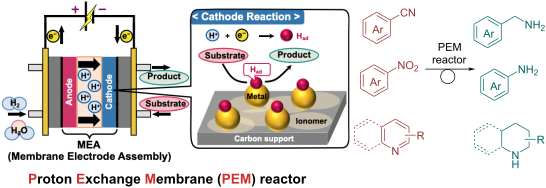
- cyanoarenes, nitroarenes, quinolines, and pyridines using a proton-exchange membrane (PEM) reactor was developed. Cyanoarenes were then reduced to the corresponding benzylamines at room temperature in the presence of ethyl phosphate. The reduction of nitroarenes proceeded at room temperature, and a variety of
- . Therefore, it was necessary to perform the reaction under anhydrous conditions. Hence, we used ethyl phosphate (mono- and di-mixture) (pKa = 1.42), which reacts easily under anhydrous conditions. As expected, the generation of 3a was suppressed and 2a was selectively obtained (Table 2, entry 5). With the
- reactions. For instance, the addition of ethyl phosphate is essential for the electroreduction of cyanoarenes. The generation of dibenzylamine was suppressed and benzylamines were obtained efficiently. The PEM system was effective in reducing nitroarenes. Several functional groups were tolerated under these


Synthesis of 1,4-azaphosphinine nucleosides and evaluation as inhibitors of human cytidine deaminase and APOBEC3A
Beilstein J. Org. Chem. 2024, 20, 1088–1098, doi:10.3762/bjoc.20.96
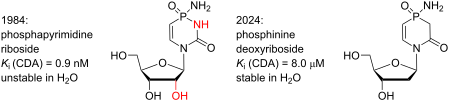
- in H2O. Removal of toluoyl groups was accomplished in aq NH3, providing pure α- and β-nucleoside of Va and Vc, respectively, carrying a negatively charged phosphinic acid group. These compounds were found to be stable in sodium phosphate buffer at pH 7.0 as no decomposition was observed in NMR
- equation, such as Lineweaver–Burk, Hanes–Woolf and Eadie–Hofstee transformations [71]. Then, KM for the substrate and Ki for each inhibitor were calculated, assuming competitive nature of the inhibitors (Table 1). Initially, we performed this assay in 50 mM sodium phosphate buffer at pH 7.4 (25 °C) and
- carrying the β-anomer of Va was detected at the concentration used (20 and 100 µM of inhibitor DNA, 1 mM dC hairpin as a substrate, 600 nM of wild-type A3A containing His6 tag (wtA3A-His6) in 50 mM Na+/K+ phosphate buffer, supplemented with 100 mM NaCl, 1 mM tris(2-carboxyethyl)phosphine (TCEP), 100 µM


Enhancing structural diversity of terpenoids by multisubstrate terpene synthases
Beilstein J. Org. Chem. 2024, 20, 959–972, doi:10.3762/bjoc.20.86
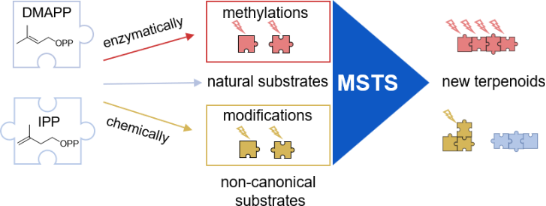
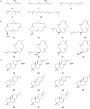
- broad range of bioactivities [2][3]. Despite their stunning diversity, all terpenes are biosynthetically derived from two general isomeric C5 building blocks, dimethylallyl diphosphate (DMAPP, 1) and isopentenyl diphosphate (IPP, 2), via the mevalonate (MVA) or methylerythritol 4-phosphate (MEP
- terpenes are shown. MEP: methylerythritol 4-phosphate; MVA: mevalonate; PT: prenyltransferase; TS: terpene synthase; MT: methyltransferase. Representative terpenoids produced by plant MSTSs. a) 6 and 7 are products of PamTps1 from Plectranthus amboinicus, 8–10 are products of CoTPS5 from Cananga odorata; b







Three-component N-alkenylation of azoles with alkynes and iodine(III) electrophile: synthesis of multisubstituted N-vinylazoles
Beilstein J. Org. Chem. 2024, 20, 891–897, doi:10.3762/bjoc.20.79
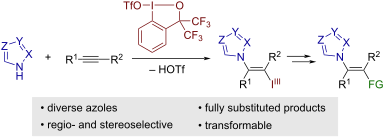
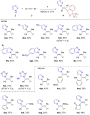
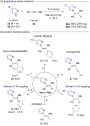
- difunctionalization of alkynes with various heteroatom and carbon nucleophiles [27][28][29][30][31][32][33][34]. Specifically, intermolecular trans-iodo(III)functionalization of alkynes has been achieved using oxygen nucleophiles such as alcohols [28][32], ethers [33], carboxylic acids [31], phosphate esters [31



Confirmation of the stereochemistry of spiroviolene
Beilstein J. Org. Chem. 2024, 20, 852–858, doi:10.3762/bjoc.20.77
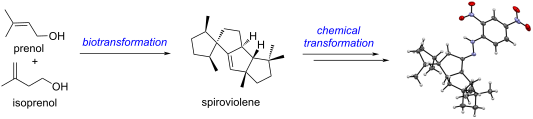
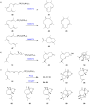
- originated from two key C5 building blocks, namely isopentenyl pyrophosphate (IPP) and dimethylallyl pyrophosphate (DMAPP), which are biosynthesized via either the methylerythritol phosphate (MEP) pathway or the mevalonic acid (MVA) pathway by using the primary metabolites. Different numbers of IPP and DMAPP
- (Figure 2) [21][22][23][24][25][26]. In this artificially generated pathway, DMAPP and IPP could be easily generated from prenol and isoprenol, respectively, by the effect of two kinases, such as hydroxyethylthiazole kinase from E. coli (EcThiM) and isopentenyl phosphate kinase from Methanocaldococcus


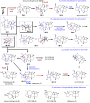


Discovery and biosynthesis of bacterial drimane-type sesquiterpenoids from Streptomyces clavuligerus
Beilstein J. Org. Chem. 2024, 20, 815–822, doi:10.3762/bjoc.20.73
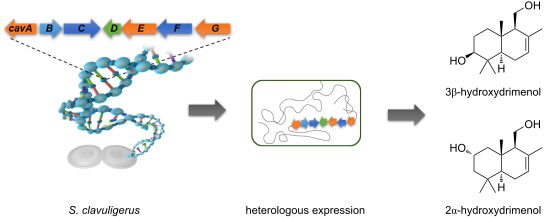
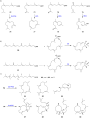
- diphosphate (DMAPP) from the mevalonate (MVA) and 2-C-methyl-ᴅ-erythritol 4-phosphate (MEP) pathways [2][3]. Sesquiterpenoids, synthesized from farnesyl diphosphate (FPP) which is composed of three C5 units, hold significant biological and industrial value, particularly in the realm of perfumery [4]. Among


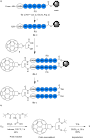
Synthesis and characterization of water-soluble C60–peptide conjugates
Beilstein J. Org. Chem. 2024, 20, 777–786, doi:10.3762/bjoc.20.71
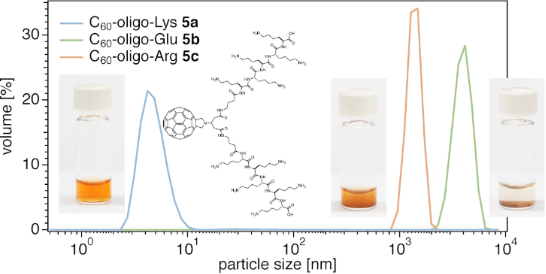
- LED lamp (527 nm) for 1 min or 10 min. PS: 40 μM, 4-oxo-TEMP: 80 mM, in 60 mM phosphate buffer (pH 7.0). Measurement conditions: temperature 296 K, microwave frequency 10.03 GHz, microwave power 10 mW, receiver gain 5.0 × 10⁴, modulation amplitude 1.00 G, modulation frequency 100 KHz, sweep time 83.89




Methodology for awakening the potential secondary metabolic capacity in actinomycetes
Beilstein J. Org. Chem. 2024, 20, 753–766, doi:10.3762/bjoc.20.69
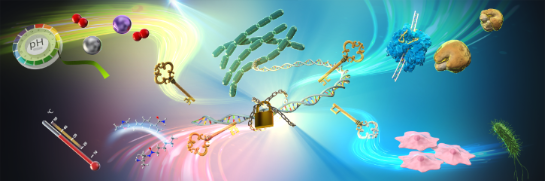
- , achieving 52.5% higher production than controls without pH shock [67]. Conversely, the present authors were able to increase the production of antarlides, which have a 22-membered ring macrocyclic structure, by adding disodium hydrogen phosphate to the culture medium of Streptomyces sp. BB47 to prevent the


Research progress on the pharmacological activity, biosynthetic pathways, and biosynthesis of crocins
Beilstein J. Org. Chem. 2024, 20, 741–752, doi:10.3762/bjoc.20.68
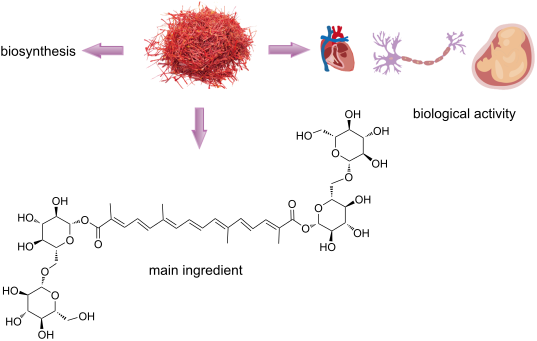
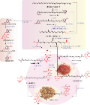
- the total crocin content [114]. The supply of UDP-glucose is a rate-limiting step in crocin biosynthesis. Glucose is first phosphorylated to generate glucose-6-phosphate by hexokinase and then converted into glucose-1-phosphate by phosphoglucomutase (PGM1). Afterwards, UTP-glucose-1-phosphate
- uridylyltransferase (GalU) converts glucose-1-phosphate into UDP-glucose. Pu et al. introduced GjUGT74F8 from G. jasminoides into an E. coli strain overexpressing PGM and GalU and achieved the production of crocins [105]. Conclusion Crocins possess the characteristic polyene core structure of carotenoids and exhibit


Substrate specificity of a ketosynthase domain involved in bacillaene biosynthesis
Beilstein J. Org. Chem. 2024, 20, 734–740, doi:10.3762/bjoc.20.67
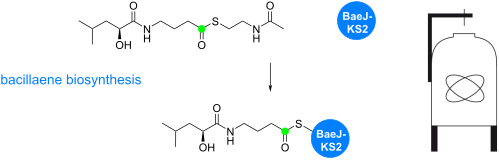
- ) allowed for test incubations with unlabelled glutamic acid in the presence of the cofactor pyridoxal phosphate (PLP), showing the complete conversion of glutamic acid (3) into γ-aminobutyric acid (4) (Scheme 2). The crude product was used without purification for a Schotten–Baumann esterification with


Regioselective quinazoline C2 modifications through the azide–tetrazole tautomeric equilibrium
Beilstein J. Org. Chem. 2024, 20, 675–683, doi:10.3762/bjoc.20.61
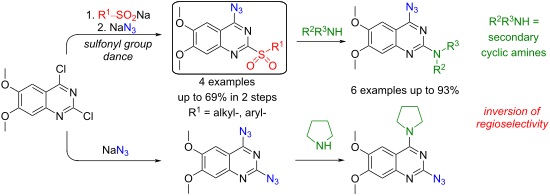
- was washed with pH 7.4 phosphate buffer to reach 96% purity [26]) yielded the regioisomers 15 of the sulfonyl group dance products at a lower yield than the previously mentioned oxidation step, which was most likely caused by the high reactivity of product 14, but the reaction conditions were not


Isolation and structure determination of a new analog of polycavernosides from marine Okeania sp. cyanobacterium
Beilstein J. Org. Chem. 2024, 20, 645–652, doi:10.3762/bjoc.20.57
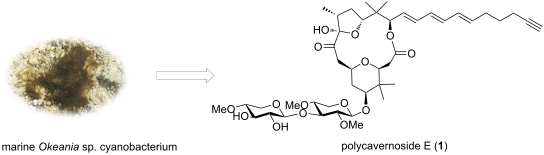
- in 100 mL phosphate-buffered saline) was added to each well. The plates were incubated for an additional 3 h. The plates were read in a SpectraMax Gemini XS microplate fluorescence scanner (Molecular Devices) using an excitation wavelength of 536 nm and an emission wavelength of 588 nm. WI-38 cells


Production of non-natural 5-methylorsellinate-derived meroterpenoids in Aspergillus oryzae
Beilstein J. Org. Chem. 2024, 20, 638–644, doi:10.3762/bjoc.20.56
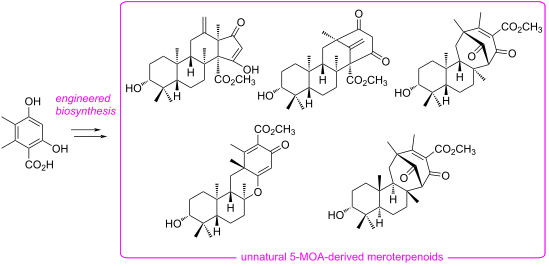
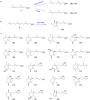
- : farnesyl pyrophosphate; FAD: flavin adenine dinucleotide; NADPH: nicotinamide adenine dinucleotide phosphate. (B) HPLC profiles of the metabolites from Aspergillus oryzae transformants. The chromatograms were extracted at 254 nm. (C) Structures of metabolites detected or isolated in this study. Note that



A myo-inositol dehydrogenase involved in aminocyclitol biosynthesis of hygromycin A
Beilstein J. Org. Chem. 2024, 20, 589–596, doi:10.3762/bjoc.20.51
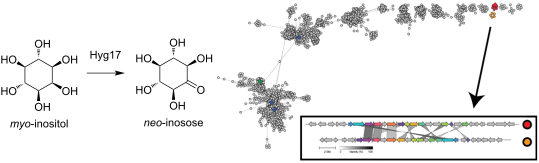
- aminocyclitol moieties. The biosynthesis of the aminocyclitol has been proposed to proceed through six enzymatic steps from glucose 6-phosphate through myo-inositol to the final methylenedioxy-containing aminocyclitol. Although there is some in vivo evidence for this proposed pathway, biochemical support for
- essential for in vivo antimicrobial activity suggesting a distinct biological function independent of ribosome binding. The hygromycin A biosynthetic gene cluster has been identified and the biosynthesis of the aminocyclitol has been proposed (Figure 1) [8][9]. Starting from glucose-6-phosphate, the pathway
- is hypothesized to proceed through six steps to the final methylenedioxy-containing aminocyclitol. First, glucose-6-phosphate is thought to be converted to myo-inositol by the myo-inositol-1-phosphate synthase Hyg18 and phosphatase Hyg25. Myo-inositol is then proposed to be oxidized by the


Switchable molecular tweezers: design and applications
Beilstein J. Org. Chem. 2024, 20, 504–539, doi:10.3762/bjoc.20.45
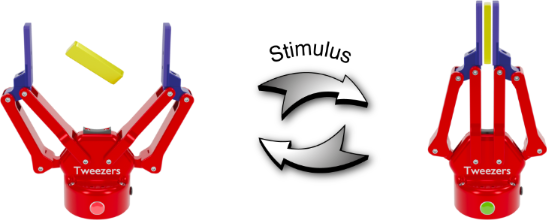
- PtCl2 preorganizes the tweezers in a closed conformation with the two hydrogen-bonding-recognition sites in proximity. A significant increase in the binding affinity toward all anions and in particular for dihydrogen phosphate (log K = 3.5) was obtained. More recently, Álvarez and co-workers reported
- switching [65]. The Zn-closed tweezers were opened by adding H2PO4− to competitively complex the Zn2+ ions. Then, Ca2+ was added to precipitate the hydrogen phosphate adduct and release the Zn2+ ions, closing the tweezers again. Another class of a coordination-responsive spacer using oxygen coordination