

Search results
Search for "molybdenum" in Full Text gives 54 result(s) in Beilstein Journal of Organic Chemistry.
Synthesis and characterization of fluorinated azadipyrromethene complexes as acceptors for organic photovoltaics
- Forrest S. Etheridge,
- Roshan J. Fernando,
- Sandra Pejić,
- Matthias Zeller and
- Geneviève Sauvé
Beilstein J. Org. Chem. 2016, 12, 1925–1938, doi:10.3762/bjoc.12.182
- 40 mg/mL, 1:0.8 donor-to-acceptor ratio, were spun coat at 800 rpm for 40 s and 2000 rpm for 2 s and annealed at 120 °C for 15 min. Molybdenum oxide (10 nm) and silver (80 nm) were thermally evaporated in sequence under a vacuum pressure of ≈3 × 10⁻⁶ Torr using an Angstrom Engineering Evovac thermal

Graphical Abstract

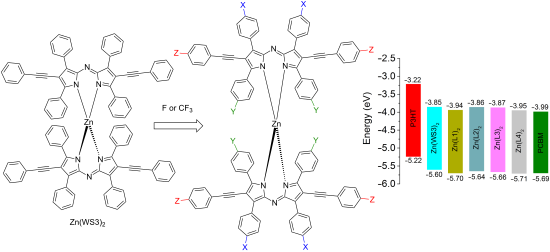
Figure 1: a) Azadipyrromethene ligand labeling positioning; b and c) chelates; d) estimated HOMO/LUMO energy ...

Figure 2: Chemical structures of the fluorinated ADP derivatives of WS3 explored in the study.

Scheme 1: Generic synthetic scheme for fluorinated free ligands, where L# corresponds to the desired ligand n...

Scheme 2: Generic chelation scheme yielding WS3-based BF2+ and zinc(II) complexes.

Figure 3: TGA spectra for the zinc(II) complexes.
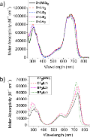
Figure 4: Molar absorptivities in chloroform solutions of a) zinc(II) chelates b) BF2+ chelates.
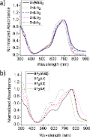
Figure 5: Normalized absorbance from spun-coat chloroform solution on microscope glass of a) zinc(II) chelate...

Figure 6: Cyclic voltamograms of zinc(II) chelates in 0.1 M TBAPF6 dichloromethane solution with Fc/Fc+ as an...

Figure 7: Cyclic voltamograms of BF2+ chelates in 0.1 M TBAPF6 dichloromethane solution with Fc/Fc+ as an int...

Figure 8: Estimated HOMO and LUMO energy levels obtained by cyclic voltammetry from the E1/2 values in dichlo...

Figure 9: ORTEP drawing of Zn(L2)2 with ellipsoids drawn at the 50% probability level and a partial labeling ...
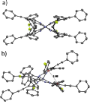
Figure 10: ORTEP drawing of Zn(L2)2 with ellipsoids drawn at the 50% probability level and a partial labeling ...
Rearrangements of organic peroxides and related processes
- Ivan A. Yaremenko,
- Vera A. Vil’,
- Dmitry V. Demchuk and
- Alexander O. Terent’ev
Beilstein J. Org. Chem. 2016, 12, 1647–1748, doi:10.3762/bjoc.12.162
- example, Mo(VI) peroxo complexes 64 and 65 were employed as the catalysts and 90% H2O2 served as the oxidizer (Table 5). The results obtained from the reactions using molybdenum systems have stimulated the search for new catalysts based on transition metal complexes. The usage of the platimum complex

Graphical Abstract
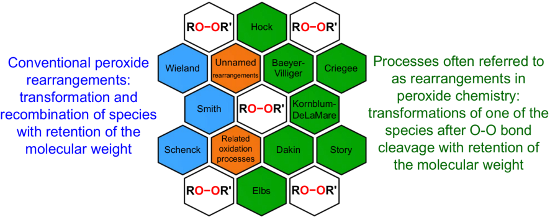
Figure 1: The named transformations considered in this review.

Scheme 1: The Baeyer–Villiger oxidation.

Scheme 2: The general mechanism of the peracid-promoted Baeyer–Villiger oxidation.

Scheme 3: General mechanism of the Lewis acid-catalyzed Baeyer–Villiger rearrangement.

Scheme 4: The theoretically studied mechanism of the BV oxidation reaction promoted by H2O2 and the Lewis aci...

Scheme 5: Proton movements in the transition states of the Baeyer–Villiger oxidation.

Scheme 6: The dependence of the course of the Baeyer–Villiger oxidation on the type of O–O-bond cleavage in t...
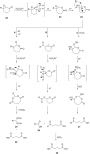
Scheme 7: The acid-catalyzed Baeyer–Villiger oxidation of cyclic epoxy ketones 22.

Scheme 8: Oxidation of isophorone oxide 29.

Scheme 9: Synthesis of acyl phosphate 32 from acyl phosphonate 31.

Scheme 10: Synthesis of aflatoxin B2 (36).

Scheme 11: The Baeyer–Villiger rearrangement of ketones 37 to lactones 38.

Scheme 12: Synthesis of 3,4-dimethoxybenzoic acid (40) via Baeyer–Villiger oxidation.

Scheme 13: Oxone transforms α,β-unsaturated ketones 43 into vinyl acetates 44.

Scheme 14: The Baeyer–Villiger oxidation of ketones 45 using diaryl diselenide and hydrogen peroxide.

Scheme 15: Baeyer–Villiger oxidation of (E)-2-methylenecyclobutanones.

Scheme 16: Oxidation of β-ionone (56) by H2O2/(BnSe)2 with formation of (E)-2-(2,6,6-trimethylcyclohex-1-en-1-...

Scheme 17: The mechanism of oxidation of ketones 58a–f by hydrogen peroxide in the presence of arsonated polys...

Scheme 18: Oxidation of ketone (58b) by H2O2 to 6-methylcaprolactone (59b) catalyzed by Pt complex 66·BF4.

Scheme 19: Oxidation of ketones 67 with H2O2 in the presence of [(dppb}Pt(µ-OH)]22+.

Scheme 20: The mechanism of oxidation of ketones 67 in the presence of [(dppb}Pt(µ-OH)]22+ and H2O2.

Scheme 21: Oxidation of benzaldehydes 69 in the presence of the H2O2/MeReO3 system.

Scheme 22: Oxidation of acetophenones 72 in the presence of the H2O2/MeReO3 system.

Scheme 23: Baeyer–Villiger oxidation of 2-adamantanone (45c) in the presence of Sn-containing mesoporous silic...

Scheme 24: Aerobic Baeyer–Villiger oxidation of ketones 76 using metal-free carbon.

Scheme 25: A regioselective Baeyer-Villiger oxidation of functionalized cyclohexenones 78 into a dihydrooxepin...

Scheme 26: The oxidation of aldehydes and ketones 80 by H2O2 catalyzed by Co4HP2Mo15V3O62.

Scheme 27: The cleavage of ketones 82 with hydrogen peroxide in alkaline solution.

Scheme 28: Oxidation of ketones 85 to esters 86 with H2O2–urea in the presence of KHCO3.

Scheme 29: Mechanism of the asymmetric oxidation of cyclopentane-1,2-dione 87a with the Ti(OiPr)4/(+)DET/t-BuO...

Scheme 30: The oxidation of cis-4-tert-butyl-2-fluorocyclohexanone (93) with m-chloroperbenzoic acid.

Scheme 31: The mechanism of the asymmetric oxidation of 3-substituted cyclobutanone 96a in the presence of chi...

Scheme 32: Enantioselective Baeyer–Villiger oxidation of cyclic ketones 98.

Scheme 33: Regio- and enantioselective Baeyer–Villiger oxidation of cyclic ketones 101.

Scheme 34: The proposed mechanism of the Baeyer–Villiger oxidation of acetal 105f.

Scheme 35: Synthesis of hydroxy-10H-acridin-9-one 117 from tetramethoxyanthracene 114.

Scheme 36: The Baeyer–Villiger oxidation of the fully substituted pyrrole 120.

Scheme 37: The Criegee rearrangement.

Scheme 38: The mechanism of the Criegee reaction of a peracid with a tertiary alcohol 122.

Scheme 39: Criegee rearrangement of decaline ethylperoxoate 127 into ketal 128.

Scheme 40: The ionic cleavage of 2-methoxy-2-propyl perester 129.

Scheme 41: The Criegee rearrangement of α-methoxy hydroperoxide 136.
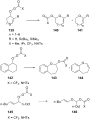
Scheme 42: Synthesis of enol esters and acetals via the Criegee rearrangement.

Scheme 43: Proposed mechanism of the transformation of 1-hydroperoxy-2-oxabicycloalkanones 147a–d.

Scheme 44: Transformation of 3-hydroxy-1,2-dioxolanes 151 into diketone derivatives 152.

Scheme 45: Criegee rearrangement of peroxide 153 with the mono-, di-, and tri-O-insertion.

Scheme 46: The sequential Criegee rearrangements of adamantanes 157a,b.

Scheme 47: Synthesis of diaryl carbonates 160a–d from triarylmethanols 159a–d through successive oxygen insert...

Scheme 48: The synthesis of sesquiterpenes 162 from ketone 161 with a Criegee rearrangement as one key step.

Scheme 49: Synthesis of trans-hydrindan derivatives 164, 165.

Scheme 50: The Hock rearrangement.

Scheme 51: The general scheme of the cumene process.

Scheme 52: The Hock rearrangement of aliphatic hydroperoxides.
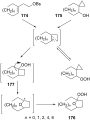
Scheme 53: The mechanism of solvolysis of brosylates 174a–c and spiro cyclopropyl carbinols 175a–c in THF/H2O2....

Scheme 54: The fragmentation mechanism of hydroperoxy acetals 178 to esters 179.

Scheme 55: The acid-catalyzed rearrangement of phenylcyclopentyl hydroperoxide 181.

Scheme 56: The peroxidation of tertiary alcohols in the presence of a catalytic amount of acid.

Scheme 57: The acid-catalyzed reaction of bicyclic secondary alcohols 192 with hydrogen peroxide.

Scheme 58: The photooxidation of 5,6-disubstituted 3,4-dihydro-2H-pyrans 196.

Scheme 59: The oxidation of tertiary alcohols 200a–g, 203a,b, and 206.

Scheme 60: Transformation of functional peroxide 209 leading to 2,3-disubstitued furans 210 in one step.

Scheme 61: The synthesis of carbazoles 213 via peroxide rearrangement.

Scheme 62: The construction of C–N bonds using the Hock rearrangement.

Scheme 63: The synthesis of moiety 218 from 217 which is a structural motif in the antitumor–antibiotic of CC-...

Scheme 64: The in vivo oxidation steps of cholesterol (219) by singlet oxygen.

Scheme 65: The proposed mechanism of the rearrangement of cholesterol-5α-OOH 220.

Scheme 66: Photochemical route to artemisinin via Hock rearrangement of 223.

Scheme 67: The Kornblum–DeLaMare rearrangement.

Scheme 68: Kornblum–DeLaMare transformation of 1-phenylethyl tert-butyl peroxide (225).

Scheme 69: The synthesis 4-hydroxyenones 230 from peroxide 229.

Scheme 70: The Kornblum–DeLaMare rearrangement of peroxide 232.

Scheme 71: The reduction of peroxide 234.

Scheme 72: The Kornblum–DeLaMare rearrangement of endoperoxide 236.

Scheme 73: The rearrangement of peroxide 238 under Kornblum–DeLaMare conditions.

Scheme 74: The proposed mechanism of rearrangement of peroxide 238.

Scheme 75: The Kornblum–DeLaMare rearrangement of peroxides 242a,b.

Scheme 76: The base-catalyzed rearrangements of bicyclic endoperoxides having electron-withdrawing substituent...

Scheme 77: The base-catalyzed rearrangements of bicyclic endoperoxides 249a,b having electron-donating substit...

Scheme 78: The base-catalyzed rearrangements of bridge-head substituted bicyclic endoperoxides 251a,b.

Scheme 79: The Kornblum–DeLaMare rearrangement of hydroperoxide 253.

Scheme 80: Synthesis of β-hydroxy hydroperoxide 254 from endoperoxide 253.

Scheme 81: The amine-catalyzed rearrangement of bicyclic endoperoxide 263.

Scheme 82: The base-catalyzed rearrangement of meso-endoperoxide 268 into 269.

Scheme 83: The photooxidation of 271 and subsequent Kornblum–DeLaMare reaction.

Scheme 84: The Kornblum–DeLaMare rearrangement as one step in the oxidation reaction of enamines.

Scheme 85: The Kornblum–DeLaMare rearrangement of 3,5-dihydro-1,2-dioxenes 284, 1,2-dioxanes 286, and tert-but...

Scheme 86: The Kornblum–DeLaMare rearrangement of epoxy dioxanes 290a–d.

Scheme 87: Rearrangement of prostaglandin H2 292.

Scheme 88: The synthesis of epicoccin G (297).

Scheme 89: The Kornblum–DeLaMare rearrangement used in the synthesis of phomactin A.

Scheme 90: The Kornblum–DeLaMare rearrangement in the synthesis of 3H-quinazolin-4-one 303.

Scheme 91: The Kornblum–DeLaMare rearrangement in the synthesis of dolabriferol (308).

Scheme 92: Sequential transformation of 3-substituted 2-pyridones 309 into 3-hydroxypyridine-2,6-diones 311 in...

Scheme 93: The Kornblum–DeLaMare rearrangement of peroxide 312 into hydroxy enone 313.

Scheme 94: The Kornblum–DeLaMare rearrangement in the synthesis of polyfunctionalized carbonyl compounds 317.

Scheme 95: The Kornblum–DeLaMare rearrangement in the synthesis of (Z)-β-perfluoroalkylenaminones 320.

Scheme 96: The Kornblum–DeLaMare rearrangement in the synthesis of γ-ketoester 322.

Scheme 97: The Kornblum–DeLaMare rearrangement in the synthesis of diterpenoids 326 and 328.

Scheme 98: The synthesis of natural products hainanolidol (331) and harringtonolide (332) from peroxide 329.

Scheme 99: The synthesis of trans-fused butyrolactones 339 and 340.

Scheme 100: The synthesis of leucosceptroid C (343) and leucosceptroid P (344) via the Kornblum–DeLaMare rearra...

Scheme 101: The Dakin oxidation of arylaldehydes or acetophenones.

Scheme 102: The mechanism of the Dakin oxidation.

Scheme 103: A solvent-free Dakin reaction of aromatic aldehydes 356.

Scheme 104: The organocatalytic Dakin oxidation of electron-rich arylaldehydes 358.

Scheme 105: The Dakin oxidation of electron-rich arylaldehydes 361.

Scheme 106: The Dakin oxidation of arylaldehydes 358 in water extract of banana (WEB).

Scheme 107: A one-pot approach towards indolo[2,1-b]quinazolines 364 from indole-3-carbaldehydes 363 through th...

Scheme 108: The synthesis of phenols 367a–c from benzaldehydes 366a-c via acid-catalyzed Dakin oxidation.

Scheme 109: Possible transformation paths of the highly polarized boric acid coordinated H2O2–aldehyde adduct 3...

Scheme 110: The Elbs oxidation of phenols 375 to hydroquinones.

Scheme 111: The mechanism of the Elbs persulfate oxidation of phenols 375 affording p-hydroquinones 376.

Scheme 112: Oxidation of 2-pyridones 380 under Elbs persulfate oxidation conditions.

Scheme 113: Synthesis of 3-hydroxy-4-pyridone (384) via an Elbs oxidation of 4-pyridone (382).

Scheme 114: The Schenck rearrangement.

Scheme 115: The Smith rearrangement.

Scheme 116: Three main pathways of the Schenck rearrangement.

Scheme 117: The isomerization of hydroperoxides 388 and 389.

Scheme 118: Trapping of dioxacyclopentyl radical 392 by oxygen.

Scheme 119: The hypothetical mechanism of the Schenck rearrangement of peroxide 394.

Scheme 120: The autoxidation of oleic acid (397) with the use of labeled isotope 18O2.

Scheme 121: The rearrangement of 18O-labeled hydroperoxide 400 under an atmosphere of 16O2.

Scheme 122: The rearrangement of the oleate-derived allylic hydroperoxides (S)-421 and (R)-425.

Scheme 123: Mechanisms of Schenck and Smith rearrangements.

Scheme 124: The rearrangement and cyclization of 433.

Scheme 125: The Wieland rearrangement.

Scheme 126: The rearrangement of bis(triphenylsilyl) 439 or bis(triphenylgermyl) 441 peroxides.

Scheme 127: The oxidative transformation of cyclic ketones.

Scheme 128: The hydroxylation of cyclohexene (447) in the presence of tungstic acid.

Scheme 129: The oxidation of cyclohexene (447) under the action of hydrogen peroxide.

Scheme 130: The reaction of butenylacetylacetone 455 with hydrogen peroxide.

Scheme 131: The oxidation of bridged 1,2,4,5-tetraoxanes.

Scheme 132: The proposed mechanism for the oxidation of bridged 1,2,4,5-tetraoxanes.

Scheme 133: The rearrangement of ozonides.

Scheme 134: The acid-catalyzed oxidative rearrangement of malondialdehydes 462 under the action of H2O2.
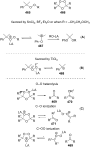
Scheme 135: Pathways of the Lewis acid-catalyzed cleavage of dialkyl peroxides 465 and ozonides 466.

Scheme 136: The mechanism of the transformation of (tert-butyldioxy)cyclohexanedienones 472.

Scheme 137: The synthesis of Vitamin K3 from 472a.

Scheme 138: Proposed mechanism for the transformation of 478d into silylated endoperoxide 479d.

Scheme 139: The rearrangement of hydroperoxide 485 to form diketone 486.

Scheme 140: The base-catalyzed rearrangement of cyclic peroxides 488a–g.

Scheme 141: Synthesis of chiral epoxides and aldols from peroxy hemiketals 491.

Scheme 142: The multistep transformation of (R)-carvone (494) to endoperoxides 496a–e.

Scheme 143: The decomposition of anthracene endoperoxide 499.

Scheme 144: Synthesis of esters 503 from aldehydes 501 via rearrangement of peroxides 502.

Scheme 145: Two possible paths for the base-promoted decomposition of α-azidoperoxides 502.

Scheme 146: The Story decomposition of cyclic diperoxide 506a.

Scheme 147: The Story decomposition of cyclic triperoxide 506b.

Scheme 148: The thermal rearrangement of endoperoxides A into diepoxides B.

Scheme 149: The transformation of peroxide 510 in the synthesis of stemolide (511).

Scheme 150: The possible mechanism of the rearrangement of endoperoxide 261g.

Scheme 151: The photooxidation of indene 517.

Scheme 152: The isomerization of ascaridole (523).

Scheme 153: The isomerization of peroxide 525.

Scheme 154: The thermal transformation of endoperoxide 355.

Scheme 155: The photooxidation of cyclopentadiene (529) at a temperature higher than 0 °C.

Scheme 156: The thermal rearrangement of endoperoxides 538a,b.

Scheme 157: The transformation of peroxides 541.

Scheme 158: The thermal rearrangements of strained cyclic peroxides.

Scheme 159: The thermal rearrangement of diacyl peroxide 551 in the synthesis of C4-epi-lomaiviticin B core 553....

Scheme 160: The 1O2 oxidation of tryptophan (554) and rearrangement of dioxetane intermediate 555.

Scheme 161: The Fe(II)-promoted cleavage of aryl-substituted bicyclic peroxides.

Scheme 162: The proposed mechanism of the Fe(II)-promoted rearrangement of 557a–c.

Scheme 163: The reaction of dioxolane 563 with Fe(II) sulfate.

Scheme 164: Fe(II)-promoted rearrangement of 1,2-dioxane 565.

Scheme 165: Fe(II) cysteinate-promoted rearrangement of 1,2-dioxolane 568.

Scheme 166: The transformation of 1,2-dioxanes 572a–c under the action of FeCl2.

Scheme 167: Fe(II) cysteinate-promoted transformation of tetraoxane 574.

Scheme 168: The CoTPP-catalyzed transformation of bicyclic endoperoxides 600a–d.

Scheme 169: The CoTPP-catalyzed transformation of epoxy-1,2-dioxanes.

Scheme 170: The Ru(II)-catalyzed reactions of 1,4-endoperoxide 261g.

Scheme 171: The Ru(II)-catalyzed transformation as a key step in the synthesis of elyiapyrone A (610) from 1,4-...

Scheme 172: Peroxides with antimalarial activity.

Scheme 173: The interaction of iron ions with artemisinin (616).

Scheme 174: The interaction of FeCl2 with 1,2-dioxanes 623, 624.

Scheme 175: The mechanism of reaction 623 and 624 with Fe(II)Cl2.

Scheme 176: The reaction of bicyclic natural endoperoxides G3-factors 631–633 with FeSO4.

Scheme 177: The transformation of terpene cardamom peroxide 639.
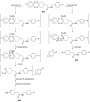
Scheme 178: The different ways of the cleavage of tetraoxane 643.

Scheme 179: The LC–MS analysis of interaction of tetraoxane 646 with iron(II)heme 647.

Scheme 180: The rearrangement of 3,6-epidioxy-1,10-bisaboladiene (EDBD, 649).

Scheme 181: Easily oxidized substrates.

Scheme 182: Biopathway of synthesis of prostaglandins.

Scheme 183: The reduction and rearrangements of isoprostanes.

Scheme 184: The partial mechanism for linoleate 658 oxidation.

Scheme 185: The transformation of lipid hydroperoxide.

Scheme 186: The acid-catalyzed cleavage of the product from free-radical oxidation of cholesterol (667).

Scheme 187: Two pathways of catechols oxidation.

Scheme 188: Criegee-like or Hock-like rearrangement of the intermediate hydroperoxide 675 in dioxygenase enzyme...

Scheme 189: Carotinoides 679 cleavage by carotenoid cleavage dioxygenases.
On the mechanism of imine elimination from Fischer tungsten carbene complexes
- Philipp Veit,
- Christoph Förster and
- Katja Heinze
Beilstein J. Org. Chem. 2016, 12, 1322–1333, doi:10.3762/bjoc.12.125
- related pentacarbonyl complexes of bis[di(isopropyl)amino]carbene 10 [49] M(CO)5(10) (M = Cr, Mo, W) readily decarbonylate at room temperature to give the tetracarbonyl complexes M(CO)4(κC,κN-10) with a side-on coordinated carbene ligand (Scheme 1e) [50][51][52]. Under CO atmosphere, the molybdenum and

Graphical Abstract

Scheme 1: Imine formation and isomerization reactions from NH carbene complexes Cr(CO)5(E-2) (a) [27], Cr(CO)5(E/Z...

Scheme 2: Synthesis of W(CO)5(E-2) from W(CO)5(1Et) [20,21] and aminoferrocene [40,41] with concomitant formation of E-1,2-...

Scheme 3: Reaction pathways 1a/1b (migration–elimination) and 2a/2b (elimination–migration) for the formation...
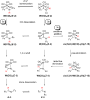
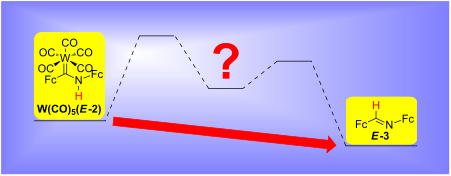
Scheme 4: Reaction pathways 3a/3b/3c (CO dissociation) for the formation of imine E-3 from W(CO)5(E-2).

Figure 1: DFT calculated oxidative addition/pseudorotation/reductive elimination pathway 3c from W(CO)4(E-2) ...

Figure 2: DFT calculated geometries of the two hydrido intermediates cis(N,H)-W(CO)4(H)(Z-15) and cis(C,H)-W(...

Scheme 5: Proposed reaction sequence from W(CO)5(E-2) to W(CO)5(PPh3) in the presence of triphenylphosphane.
Aluminacyclopentanes in the synthesis of 3-substituted phospholanes and α,ω-bisphospholanes
- Vladimir A. D’yakonov,
- Alevtina L. Makhamatkhanova,
- Rina A. Agliullina,
- Leisan K. Dilmukhametova,
- Tat’yana V. Tyumkina and
- Usein M. Dzhemilev
Beilstein J. Org. Chem. 2016, 12, 406–412, doi:10.3762/bjoc.12.43
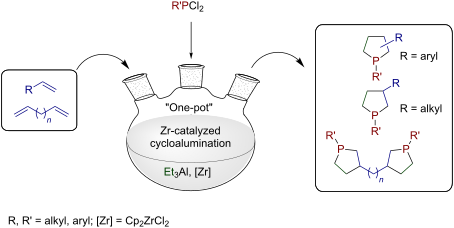
- with molybdenum hexacarbonyl. The structure of the complexes was proved by multinuclear 1H, 13C, and 31P spectroscopy. Keywords: aluminacyclopentanes; Dzhemilev reaction; molybdenum complexes; phospholanes; zirconium complexes; Introduction A widely used approach for the synthesis of cyclic
- molybdenum complexes. For example, 3-hexyl-1-phenylphospholane and 3-benzyl-1-methylphospholane react with Mo(CO)6 furnishing molybdenum complexes 13b and 14g (Scheme 7). The complex formation is evidenced by changes in the NMR spectral parameters of compounds 13b and 14g in relation to the initial
- of the phosphorus atom incorporated in the molybdenum complex. In addition, the С-5 signal in the 13С NMR spectra is shifted downfield by ca. 8 ppm and the constant JPC5 = 24.1 Hz (for example, for 13b) is much higher not only compared to the corresponding atom in the initial phospholane 2b but also

Graphical Abstract

Scheme 1: Synthesis of 3-substituted phospholanes according to earlier data [14-17].

Scheme 2: Synthesis of 3-substituted phospholanes.

Scheme 3: Synthesis of 3-substituted phospholane oxides and sulfides.

Scheme 4: Synthesis of 3-substituted 7a–f and 2-substituted 8a–f phospholanes.

Scheme 5: Synthesis of bisphospholanes.

Scheme 6: Synthesis of bisphospholane-1,1'-oxides and bisphospholane-1,1'-sulfides.

Scheme 7: Synthesis of the molybdenum complex (3-hexyl(benzyl)-1-phenyl(methyl)phospholane)Mo(CO)5.

Scheme 8: Synthesis of molybdenum complexes (1,2(1,6)-bis(1-phenylphospholan-3-yl)ethane(hexane))Mo(CO)5.
Iron complexes of tetramine ligands catalyse allylic hydroxyamination via a nitroso–ene mechanism
- David Porter,
- Belinda M.-L. Poon and
- Peter J. Rutledge
Beilstein J. Org. Chem. 2015, 11, 2549–2556, doi:10.3762/bjoc.11.275
- -chlorophenyl)hydroxylamine using a molybdenum complex [32], a process that was made catalytic by adding excess N-phenylhydroxylamine [33]. The combination of iron(II) phthalocyanines [34][35] or iron(II)/iron(III) chloride [36][37][38] and N-phenylhydroxylamine effect allylic amination reactions that are

Graphical Abstract

Figure 1: TPA (1), BPMEN (2) and (R,R′)-PDP (3) ligands.

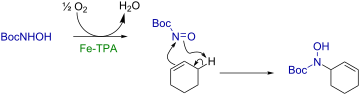
Scheme 1: Allylic hydroxyamination of cyclohexene (7) using iron catalysts 4 and 5; i. 4 or 5 (10 mol %), Boc...

Scheme 2: Proposed mechanism for hydroxyamination of cyclohexene (7) by FeTPA (4) and FeBPMEN (5): (a) iron-m...

Scheme 3: Reaction of isoprene (14) under (a) Kirby’s conditions [54,55] and (b) FeTPA- or FeBPMEN-mediated hydoxyam...
Olefin metathesis in air
- Lorenzo Piola,
- Fady Nahra and
- Steven P. Nolan
Beilstein J. Org. Chem. 2015, 11, 2038–2056, doi:10.3762/bjoc.11.221
- solvents, and yielded products with high enantiomeric excess (ee). The results where comparable to previously reported results for molybdenum-catalyzed systems [57], although the latter was used under inert conditions. In 2003, Blechert et al. reported the first systematic example of olefin metathesis in

Graphical Abstract

Scheme 1: Polymerization of 7-oxanorbornene in water.

Scheme 2: Synthesis of the first well-defined ruthenium carbene.

Scheme 3: Synthesis of Grubbs' 1st generation catalyst.

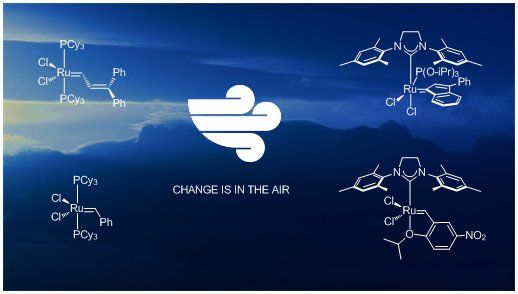
Figure 1: NHC-Ruthenium complexes and widely used NHC carbenes.

Scheme 4: Access to 21 from the Grubbs’ 1st generation catalyst and its one-pot synthesis.

Scheme 5: Synthesis of supported Hoveyda-type catalyst.

Figure 2: Scope of RCM reactions with supported Hoveyda-type catalyst. Reaction conditions: 24 (5 mol %), non...

Scheme 6: Synthesis of 33 by Hoveyda and Blechert.

Figure 3: Synthesis of chiral Hoveyda–Grubbs type catalyst and its use in RO/CM.

Scheme 7: Synthesis of 41.

Figure 4: RCM reactions in air using 41 as catalyst. Reaction conditions: 41 (5 mol %), MeOH (0.05 M), 22 °C,...

Figure 5: CM-type reactions in air using 41 as catalyst. Reaction conditions: 41 (5 mol %), 22 °C, 12 h, in a...

Figure 6: Grela's complex (54) and reaction scope in air. Reaction conditions: catalyst, substrate (0.25 mmol...
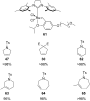
Figure 7: Abell's complex (61) and its RCM reaction scope in air. Reaction condition: 10 mol % of 61, refluxi...

Figure 8: Catalysts used by Meier in air.

Figure 9: Ammonium chloride-tagged complexes.

Figure 10: Scorpio-type complexes.

Scheme 8: Synthesis of Grubbs' 3rd generation catalyst.

Figure 11: Indenylidene complexes.

Figure 12: Commercially available complexes evaluated under air.

Figure 13: Grela's N,N-unsymmetrically substituted complexes.

Scheme 9: Synthesis of phosphite-based catalysts.

Figure 14: Catalysts used by the Cazin group.

Figure 15: RCM scope in air with catalysts 33, 85 and 98a. Reaction conditions: Catalyst, substrate (0.25 mmol...

Figure 16: Synthesis of Schiff base-ruthenium complexes.

Scheme 10: Schiff base–ruthenium complexes synthesized by Verpoort.

Scheme 11: Synthesis of mixed Schiff base–NHC complexes.

Figure 17: Veerport's indenylidene Schiff-base complexes.
Thermal properties of ruthenium alkylidene-polymerized dicyclopentadiene
- Yuval Vidavsky,
- Yotam Navon,
- Yakov Ginzburg,
- Moshe Gottlieb and
- N. Gabriel Lemcoff
Beilstein J. Org. Chem. 2015, 11, 1469–1474, doi:10.3762/bjoc.11.159
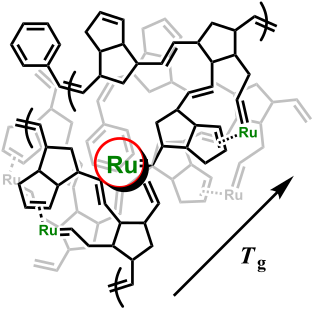
- be disrupted first to afford a linear polymer, followed by the ring opening of the less reactive cyclopentene double bond to effectively cross-link the chains (Scheme 1). Notably, with tungsten and molybdenum initiators the linear polymer may be isolated [20][21]; unlike the case with ruthenium

Graphical Abstract

Figure 1: DCPD (1) and ruthenium benzylidene catalyst 2.

Scheme 1: ROMP of dicyclopentadiene by a ruthenium alkylidene initiator.

Figure 2: Top: DSC plot of PDCPD 24 hours after polymerization. Blue line: 1st heating–cooling cycle. Black l...

Figure 3: Change in Tg for a representative PDCPD sample as a function of time.

Figure 4: Intensity of exothermic peak as a function of rest time at room temperature for different samples.

Figure 5: Peak intensity as function of age. Samples were analyzed every two weeks. The abnormal low intensit...

Figure 6: Resting temperature effect. Blue columns: resting at room temperature. Orange columns: resting at −...

Figure 7: Top: Sample after 1 week with ethyl vinyl ether. Bottom: Sample after 1 week with diethyl ether.
Consequences of the electronic tuning of latent ruthenium-based olefin metathesis catalysts on their reactivity
- Karolina Żukowska,
- Eva Pump,
- Aleksandra E. Pazio,
- Krzysztof Woźniak,
- Luigi Cavallo and
- Christian Slugovc
Beilstein J. Org. Chem. 2015, 11, 1458–1468, doi:10.3762/bjoc.11.158
- , many stunning accomplishments have been made in the field resulting in ever increasing interests in the method. Establishment of well-defined molybdenum- and ruthenium-based complexes lead to multitude of applications [2][3][4]. Especially, the latter class of compounds have gained attention due to

Graphical Abstract

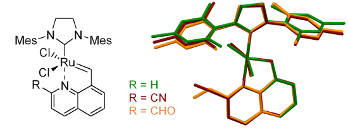
Figure 1: Selected ruthenium-based complexes.

Scheme 1: trans–cis Isomerization.

Scheme 2: Synthesis of the ligand precursors.

Scheme 3: Synthesis of the ruthenium complexes.

Figure 2: ADPs (atomic displacement parameters) and atoms labeling of the first molecule in the asymmetric pa...

Figure 3: Superposition of the asymmetric parts of units’ cells in both investigated structures: an example o...

Figure 4: Energy profile of trans–cis isomerization, modelled in CH2Cl2, (ΔE in kcal/mol). Geometry optimizat...

Scheme 4: Possible reaction pathways of 16.
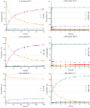
Figure 5: Time/conversion plots for the transformation of 16 catalyzed by 5 mol % of the trans isomers of tra...

Figure 6: Composition of a reaction mixture after subjecting 16 to 5 mol % cis-5a in xylene, 140 °C. Lines ar...

Figure 7: Monomers utilized in model ROMP reactions.

Figure 8: Number-average molecular weight (Mn) of poly-21 prepared with initiators 5a, 14 and 15 plotted agai...

Figure 9: STA analysis of polymerization of 22 (left) and 23 (right), initiated by 5a, 14 and 15. Reaction co...
Novel carbocationic rearrangements of 1-styrylpropargyl alcohols
- Christine Basmadjian,
- Fan Zhang and
- Laurent Désaubry
Beilstein J. Org. Chem. 2015, 11, 1017–1022, doi:10.3762/bjoc.11.114
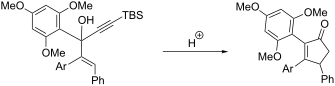
- molybdenum(VI)-catalyzed etherification of allylic alcohol with a gold(I)-catalyzed intramolecular cyclization process [5][6]. During the optimization process of this synthesis, we examined several catalysts to transform allylic alcohol 1 into ether 2, including Re2O7, which is described to efficiently

Graphical Abstract

Scheme 1: Described synthesis of cyclopentenone 4 using a combination of Mo(VI) and Au(I)-catalyzed reactions...

Scheme 2: The Rautenstrauch rearrangement.

Scheme 3: Synthesis of 1-styrylpropargyl alcohols.

Scheme 4: Postulated mechanism for the formation of cyclopentenone 4 and furan 13 (entry 1, Table 1; An= p-anisyl).

Scheme 5: Proposed mechanism for the formation of enone 19.

Scheme 6: Rearrangement of unprotected propargylic carbinol 27.
N–O Cleavage reactions of heterobicycloalkene-fused 2-isoxazolines
- Jaipal R. Nagireddy,
- Geoffrey K. Tranmer,
- Emily Carlson and
- William Tam
Beilstein J. Org. Chem. 2014, 10, 2200–2205, doi:10.3762/bjoc.10.227
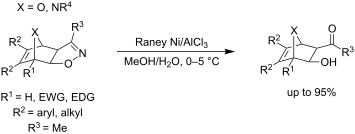
- former Mo(CO)6-promoted approach. We elected substrate 10a (Scheme 2, R’ = Me, R = X = Y = H) for early optimization trials. The molybdenum-mediated conditions, however, were unsuccessful at both the previously optimized temperature of 80 °C (which led to extensive degradation) and at lower temperatures
- to 22, suggesting the potential utility of the isoxazoline-cleavage reaction with other azabicyclic systems. In our initial report of molybdenum-mediated cleavage of carbobicycloalkene-fused isoxazolines 8, we proposed a general mechanism of the transformation to attached ring system 9 (Scheme 4). As
- the carbobicyclic framework contains no metal-coordinatable atom, we assumed that the cleavage reaction proceeds with initial coordination of the nitrogen atom to molybdenum, as suggeseted by Simoni and coworkers [18]. In comparison, the β-hydroxyketones 16 generated in the current investigation

Graphical Abstract

Scheme 1: Cleavage reactions of 2-isoxazoline 1.

Scheme 2: Potential modes of cleavage for heterobicycloalkene-fused isoxazolines 10 or 11.

Scheme 3: Raney Ni/AlCl3-mediated cleavage of 2-isoxazolines with various fused heterobicyclic frameworks.

Scheme 4: Proposed mechanism for Mo-mediated cleavage of carbobicycle-fused 2-isoxazoline.

Scheme 5: Proposed mechanism for Raney nickel-mediated formation of β-hydroxyketones from heterobicycloalkene...
Reaction of 2,2,4,4-tetrakis(trifluoromethyl)-1,3-dithiethane with N-vinyl compounds
- Viacheslav A. Petrov and
- Will Marshall
Beilstein J. Org. Chem. 2013, 9, 2615–2619, doi:10.3762/bjoc.9.295

- collected at −100 °C by using a Bruker 1K CCD system equipped with a sealed tube molybdenum source and a graphite monochromator. The structures were solved and refined with the Shelxtl [13] software package, refinement by full-matrix least squares on F2, scattering factors from Int. Tab. Vol. C Tables

Graphical Abstract

Scheme 1: Reaction of vinylamides 2a,b with 1.

Figure 1: Crystal structure of 3b with thermal ellipsoids drawn at the 30% probability level.

Scheme 2: Reaction of N-vinyllactames 2c,d with 1.

Scheme 3: Reaction of N-vinylcarbazole with 1.
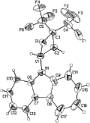
Figure 2: Crystal structure of 3e with thermal ellipsoids drawn at the 30% probability level. Disordered atom...

Scheme 4: Formation of thione 5 in reaction of 4 and 1.

Figure 3: Crystal structure of 5 with thermal ellipsoids drawn at the 30% probability level.
An overview of the synthetic routes to the best selling drugs containing 6-membered heterocycles
- Marcus Baumann and
- Ian R. Baxendale
Beilstein J. Org. Chem. 2013, 9, 2265–2319, doi:10.3762/bjoc.9.265
- , which can then be subsequently hydrolysed to nicotinic acid. The catalyst systems most commonly used in this high temperature ammoxidation are based on vanadium, molybdenum or antimony oxides supported on silica or alumina. Since the initial Chichibabin type sequence (step 1; Scheme 3) leading to 3

Graphical Abstract

Scheme 1: Scaled industrial processes for the synthesis of simple pyridines.

Scheme 2: Synthesis of nicotinic acid from 2-methyl-5-ethylpyridine (1.11).

Scheme 3: Synthesis of 3-picoline and nicotinic acid.

Scheme 4: Synthesis of 3-picoline from 2-methylglutarodinitrile 1.19.

Scheme 5: Picoline-based synthesis of clarinex (no yields reported).

Scheme 6: Mode of action of proton-pump inhibitors and structures of the API’s.

Scheme 7: Hantzsch-like route towards the pyridine rings in common proton pump inhibitors.

Figure 1: Structures of rosiglitazone (1.40) and pioglitazone (1.41).

Scheme 8: Synthesis of rosiglitazone.

Scheme 9: Syntheses of 2-pyridones.

Scheme 10: Synthesis and mechanism of 2-pyrone from malic acid.

Scheme 11: Polymer-assisted synthesis of rosiglitazone.

Scheme 12: Synthesis of pioglitazone.

Scheme 13: Meerwein arylation reaction towards pioglitazone.

Scheme 14: Route towards pioglitazone utilising tyrosine.

Scheme 15: Route towards pioglitazone via Darzens ester formation.

Scheme 16: Syntheses of the thiazolidinedione moiety.

Scheme 17: Synthesis of etoricoxib utilising Negishi and Stille cross-coupling reactions.

Scheme 18: Synthesis of etoricoxib via vinamidinium condensation.

Figure 2: Structures of nalidixic acid, levofloxacin and moxifloxacin.

Scheme 19: Synthesis of moxifloxacin.

Scheme 20: Synthesis of (S,S)-2,8-diazabicyclo[4.3.0]nonane 1.105.

Scheme 21: Synthesis of levofloxacin.

Scheme 22: Alternative approach to the levofloxacin core 1.125.

Figure 3: Structures of nifedipine, amlodipine and clevidipine.

Scheme 23: Mg3N2-mediated synthesis of nifedipine.

Scheme 24: Synthesis of rac-amlodipine as besylate salt.

Scheme 25: Aza Diels–Alder approach towards amlodipine.

Scheme 26: Routes towards clevidipine.

Figure 4: Examples of piperidine containing drugs.

Figure 5: Discovery of tiagabine based on early leads.

Scheme 27: Synthetic sequences to tiagabine.

Figure 6: Structures of solifenacin (2.57) and muscarine (2.58).

Scheme 28: Enantioselective synthesis of solifenacin.

Figure 7: Structures of DPP-4 inhibitors of the gliptin-type.

Scheme 29: Formation of inactive diketopiperazines from cis-rotameric precursors.

Figure 8: Co-crystal structure of carmegliptin bound in the human DPP-4 active site (PDB 3kwf).

Scheme 30: Improved route to carmegliptin.

Figure 9: Structures of lamivudine and zidovudine.

Scheme 31: Typical routes accessing uracil, thymine and cytosine.

Scheme 32: Coupling between pyrimidones and riboses via the Vorbrüggen nucleosidation.

Scheme 33: Synthesis of lamivudine.

Scheme 34: Synthesis of raltegravir.

Scheme 35: Mechanistic studies on the formation of 3.22.

Figure 10: Structures of selected pyrimidine containing drugs.

Scheme 36: General preparation of pyrimidines and dihydropyrimidones.

Scheme 37: Synthesis of imatinib.

Scheme 38: Flow synthesis of imatinib.

Scheme 39: Syntheses of erlotinib.

Scheme 40: Synthesis of erlotinib proceeding via Dimroth rearrangement.

Scheme 41: Synthesis of lapatinib.

Scheme 42: Synthesis of rosuvastatin.

Scheme 43: Alternative preparation of the key aldehyde towards rosuvastatin.

Figure 11: Structure comparison between nicotinic acetylcholine receptor agonists.

Scheme 44: Syntheses of varenicline and its key building block 4.5.

Scheme 45: Synthetic access to eszopiclone and brimonidine via quinoxaline intermediates.

Figure 12: Bortezomib bound in an active site of the yeast 20S proteasome ([114], pdb 2F16).

Scheme 46: Asymmetric synthesis of bortezomib.

Figure 13: Structures of some prominent piperazine containing drugs.

Figure 14: Structural comparison between the core of aplaviroc (4.35) and a type-1 β-turn (4.36).

Scheme 47: Examplary synthesis of an aplaviroc analogue via the Ugi-MCR.

Scheme 48: Syntheses of azelastine (5.1).

Figure 15: Structures of captopril, enalapril and cilazapril.

Scheme 49: Synthesis of cilazapril.

Figure 16: Structures of lamotrigine, ceftriaxone and azapropazone.

Scheme 50: Synthesis of lamotrigine.

Scheme 51: Alternative synthesis of lamotrigine (no yields reported).

Figure 17: Structural comparison between imiquimod and the related adenosine nucleoside.

Scheme 52: Conventional synthesis of imiquimod (no yields reported).

Scheme 53: Synthesis of imiquimod.

Scheme 54: Synthesis of imiquimod via tetrazole formation (not all yields reported).

Figure 18: Structures of various anti HIV-medications.

Scheme 55: Synthesis of abacavir.

Figure 19: Structures of diazepam compared to modern replacements.

Scheme 56: Synthesis of ocinaplon.

Scheme 57: Access to zaleplon and indiplon.

Scheme 58: Different routes towards the required N-methylpyrazole 6.65 of sildenafil.

Scheme 59: Polymer-supported reagents in the synthesis of key aminopyrazole 6.72.

Scheme 60: Early synthetic route to sildenafil.

Scheme 61: Convergent preparations of sildenafil.

Figure 20: Comparison of the structures of sildenafil, tadalafil and vardenafil.

Scheme 62: Short route to imidazotriazinones.

Scheme 63: Alternative route towards vardenafils core imidazotriazinone (6.95).

Scheme 64: Bayer’s approach to the vardenafil core.

Scheme 65: Large scale synthesis of vardenafil.

Scheme 66: Mode of action of temozolomide (6.105) as methylating agent.

Scheme 67: Different routes to temozolomide.

Scheme 68: Safer route towards temozolomide.

Figure 21: Some unreported heterocyclic scaffolds in top market drugs.
Gold(I)-catalysed one-pot synthesis of chromans using allylic alcohols and phenols
- Eloi Coutant,
- Paul C. Young,
- Graeme Barker and
- Ai-Lan Lee
Beilstein J. Org. Chem. 2013, 9, 1797–1806, doi:10.3762/bjoc.9.209
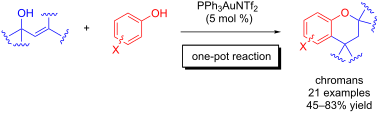
- dehydrative coupling strategy) [15][16]. To this end, the use of molybdenum catalyst CpMoCl(CO)3 together with an oxidant, o-chloranil, has been documented to catalyse the reaction of allylic alcohols with phenols to form chromans [17][18]. Strong and superacids have also been utilised in the synthesis of

Graphical Abstract

Scheme 1: Previous work on direct allylic etherification of allylic alcohols.

Figure 1: Initial side product with TMHQ.

Scheme 2: Proposed pathway.

Scheme 3: Control reactions.

Scheme 4: Reaction of 21 with added Brønsted acid co-catalyst.

Scheme 5: Suggested mechanism.
Gallium-containing polymer brush film as efficient supported Lewis acid catalyst in a glass microreactor
- Rajesh Munirathinam,
- Roberto Ricciardi,
- Richard J. M. Egberink,
- Jurriaan Huskens,
- Michael Holtkamp,
- Herbert Wormeester,
- Uwe Karst and
- Willem Verboom
Beilstein J. Org. Chem. 2013, 9, 1698–1704, doi:10.3762/bjoc.9.194
- AXS, Berlin, Germany) with an air-cooled molybdenum anode for X-ray generation. The excitation settings were 50 kV and 750 mA and quartz glass disks were used as sample carriers. The analysis was performed by signal integration over 500 seconds. For the determination, the signal of gallium (Kα1

Graphical Abstract

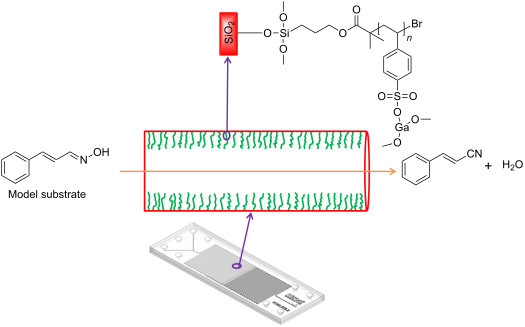
Scheme 1: Gallium-catalyzed dehydration of cinnamaldehyde oxime (1).

Scheme 2: General scheme for anchoring of initiator, ATRP of styrene sulfonate, activation, and reaction with...

Figure 1: Gallium-catalyzed formation of nitrile 2 at 90 °C and 5 atm pressure.

Figure 2: Arrhenius plot for the dehydration of cinnamaldehyde oxime (1).

Figure 3: Conversion of cinnamaldehyde oxime (1, 25 µM in acetonitrile) by continuously running the catalytic...
Tricyclic flavonoids with 1,3-dithiolium substructure
- Lucian G. Bahrin,
- Peter G. Jones and
- Henning Hopf
Beilstein J. Org. Chem. 2012, 8, 1999–2003, doi:10.3762/bjoc.8.226
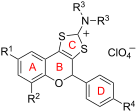
- unit. In addition to this, they are known to possess anti-inflammatory activity, inhibit the lens-aldose reductase, and decrease the blood glucose level [11][12]. Moreover, compound 3 was shown to inhibit HIV-1 integrase [13][14]. Several molybdenum and tungsten oxobisdithiolene complexes have been

Graphical Abstract

Figure 1: Polycyclic flavonoids.

Scheme 1: The synthesis of flavonoids 6 and 7.

Figure 2: Diastereoisomers of flavonoids 6.

Figure 3: Molecular structure of flavonoid 6a in the solid state. Ellipsoids represent 50% probability levels...

Figure 4: Molecular structure of flavonoid 6b in the solid state. Ellipsoids represent 50% probability levels...

Figure 5: Molecular structure of flavonoid 7a in the solid state. Ellipsoids represent 50% probability levels....
The chemistry of bisallenes
- Henning Hopf and
- Georgios Markopoulos
Beilstein J. Org. Chem. 2012, 8, 1936–1998, doi:10.3762/bjoc.8.225

Graphical Abstract

Figure 1: Loschmidt’s structure proposal for benzene (1) (Scheme 181 from [3]) and the corresponding modern stru...

Figure 2: The first isolated bisallenes.

Figure 3: Carbon skeletons of selected bisallenes discussed in this review.

Scheme 1: The preparation of 1,2,4,5-hexatetraene (2).

Scheme 2: The preparation of a conjugated bisallene by the DMS-protocol.

Scheme 3: Preparation of the 3-deuterio- and 3,4-dideuterio derivatives of 24.

Scheme 4: A versatile method to prepare alkylated conjugated bisallenes and other allenes.

Scheme 5: A preparation of 3,4-dimethyl-1,2,4,5-hexatetraene (38).

Scheme 6: A (C6 + 0)-approach to 1,2,4,5-hexatetraene (2).

Scheme 7: The preparation of a fully alkylated bisallenes from a 2,4-hexadiyne-1,6-diol diacetate.

Scheme 8: The preparation of the first phenyl-substituted conjugated bisallenes 3 and 4.

Scheme 9: Selective hydrogenation of [5]cumulenes to conjugated bisallenes: another (C6 + 0)-route.

Scheme 10: Aryl-substituted conjugated bisallenes by a (C3 + C3)-approach.

Scheme 11: Hexaphenyl-1,2,4,5-hexatetraene (59) by a (C3 + C3)-approach.

Scheme 12: An allenation route to conjugated bisallenes.

Scheme 13: The preparation of 3,4-difunctionalized conjugated bisallenes.

Scheme 14: Problems during the preparation of sulfur-substituted conjugated bisallenes.

Scheme 15: The preparation of 3,4-dibromo bisallenes.

Scheme 16: Generation of allenolates by an oxy-Cope rearrangement.

Scheme 17: A linear trimerization of alkynes to conjugated bisallenes: a (C2 + C2 + C2)-protocol.

Scheme 18: Preparation of a TMS-substituted conjugated bisallene by a C3-dimerization route.

Scheme 19: A bis(trimethylsilyl)bisallene by a C3-coupling protocol.

Scheme 20: The rearrangement of highly substituted benzene derivatives into their conjugated bisallenic isomer...

Scheme 21: From fully substituted benzene derivatives to fully substituted bisallenes.

Scheme 22: From a bicyclopropenyl to a conjugated bisallene derivative.

Scheme 23: The conversion of a bismethylenecyclobutene into a conjugated bisallene.

Scheme 24: The preparation of monofunctionalized bisallenes.

Scheme 25: Preparation of bisallene diols and their cyclization to dihydrofurans.

Scheme 26: A 3,4-difunctionalized conjugated bisallene by a C3-coupling process.

Scheme 27: Preparation of a bisallenic diketone by a coupling reaction.

Scheme 28: Sulfur and selenium-substituted bisallenes by a [2.3]sigmatropic rearrangement.

Scheme 29: The biallenylation of azetidinones.

Scheme 30: The preparation of a fully ferrocenylated conjugated bisallene.

Scheme 31: The first isomerization of a 1,5-hexadiyne to a 1,2,4,5-hexatetraene.

Scheme 32: The preparation of alkynyl-substituted bisallenes by a C3-dimerization protocol.

Scheme 33: Preparation of another completely ferrocenylated bisallene.

Scheme 34: The cyclization of 1,5-hexadiyne (129) to 3,4-bismethylenecyclobutene (130) via 1,2,4,5-hexatetraen...
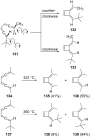
Scheme 35: Stereochemistry of the thermal cyclization of bisallenes to bismethylenecyclobutenes.

Scheme 36: Bisallene→bismethylenecyclobutene ring closures in the solid state.

Scheme 37: A bisallene cyclization/dimerization reaction.

Scheme 38: A selection of Diels–Alder additions of 1,2,4,5-hexatetraene with various double-bond dienophiles.

Scheme 39: The stereochemistry of the [2 + 4] cycloaddition to conjugated bisallenes.

Scheme 40: Preparation of azetidinone derivatives from conjugated bisallenes.

Scheme 41: Cycloaddition of heterodienophiles to a conjugated bisallene.

Scheme 42: Addition of triple-bond dienophiles to conjugated bisallenes.

Scheme 43: Sulfur dioxide addition to conjugated bisallenes.

Scheme 44: The addition of a germylene to a conjugated bisallene.

Scheme 45: Trapping of conjugated bisallenes with phosphinidenes.

Scheme 46: The cyclopropanantion of 1,2,4,5-hexatetraene (2).

Scheme 47: Photochemical reactions involving conjugated bisallenes.

Scheme 48: Base-catalyzed isomerizations of conjugated bisallenes.

Scheme 49: Ionic additions to a conjugated bisallene.

Scheme 50: Oxidation reactions of a conjugated bisallene.
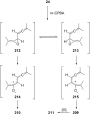
Scheme 51: The mechanism of oxidation of the bisallene 24.

Scheme 52: CuCl-catalyzed cyclization of 1,2,4,5-hexatetraene (2).

Scheme 53: The conversion of conjugated bisallenes into cyclopentenones.

Scheme 54: Oligomerization of a conjugated bisallene by nickel catalysts.
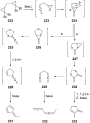
Scheme 55: Generation of 1,2,5,6-heptatetraene (229) as a reaction intermediate.

Scheme 56: The preparation of a stable derivative of 1,2,5,6-heptatetraene.

Scheme 57: A bisallene with a carbonyl group as a spacer element.

Scheme 58: The first preparation of 1,2,6,7-octatetraene (242).

Scheme 59: Preparation of 1,2,6,7-octatetraenes by (C4 + C4)-coupling of enynes.

Scheme 60: Preparation of 1,2,6,7-octatetraenes by (C4 + C4)-coupling of homoallenyl bromides.

Scheme 61: Preparation of 1,2,6,7-octatetraenes by alkylation of propargylic substrates.

Scheme 62: Preparation of two highly functionalized 1,2,6,7-octatetraenes.

Scheme 63: Preparation of several higher α,ω-bisallenes.

Scheme 64: Preparation of different alkyl derivatives of α,ω-bisallenes.

Scheme 65: The preparation of functionalized 1,2,7,8-nonatetraene derivatives.

Scheme 66: Preparation of functionalized α,ω-bisallenes.

Scheme 67: The preparation of an α,ω-bisallene by direct homologation of an α,ω-bisalkyne.

Scheme 68: The gas-phase pyrolysis of 4,4-dimethyl-1,2,5,6-heptatetraene (237).
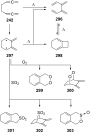
Scheme 69: Gas-phase pyrolysis of 1,2,6,7-octatetraene (242).

Scheme 70: The cyclopropanation of 1,2,6,7-octatetraene (242).

Scheme 71: Intramolecular cyclization of 1,2,6,7-octatetraene derivatives.

Scheme 72: The gas-phase pyrolysis of 1,2,7,8-nonatetraene (265) and 1,2,8,9-decatetraene (266).

Scheme 73: Rh-catalyzed cyclization of a functionalized 1,2,7,8-nonatetraene.

Scheme 74: A triple cyclization involving two different allenic substrates.

Scheme 75: Bicyclization of keto derivatives of 1,2,7,8-nonatetraene.

Scheme 76: The preparation of complex organic compounds from functionalized bisallenes.

Scheme 77: Cycloisomerization of an α,ω-bisallene containing a C9 tether.

Scheme 78: Organoborane polymers from α,ω-bisallenes.

Scheme 79: Preparation of trans- (337) and cis-1,2,4,6,7-octapentaene (341).

Scheme 80: The preparation of 4-methylene-1,2,5,6-heptatetraene (349).

Scheme 81: The preparation of acetylenic bisallenes.

Scheme 82: The preparation of derivatives of hydrocarbon 351.

Scheme 83: The construction of macrocyclic alleno-acetylenes.

Scheme 84: Preparation and reactions of 4,5-bismethylene-1,2,6,7-octatetraene (365).

Scheme 85: Preparation of 1,2-bis(propadienyl)benzene (370).

Scheme 86: The preparation of 1,4-bis(propadienyl)benzene (376).

Scheme 87: The preparation of aromatic and heteroaromatic bisallenes by metal-mediated coupling reactions.

Scheme 88: Double cyclization of an aromatic bisallene.

Scheme 89: Preparation of an allenic [15]paracyclophane by a ring-closing metathesis reaction of an aromatic α...

Scheme 90: Preparation of a macrocyclic ring system containing 1,4-bis(propadienyl)benzene units.

Scheme 91: Preparation of copolymers from 1,4-bis(propadienyl)benzene (376).

Scheme 92: A boration/copolymerization sequence of an aromatic bisallene and an aromatic bisacetylene.

Scheme 93: Formation of a layered aromatic bisallene.

Figure 4: The first members of the semicyclic bisallene series.

Scheme 94: Preparation of the first bis(vinylidene)cyclobutane derivative.
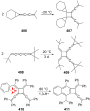
Scheme 95: Dimerization of strain-activated cumulenes to bis(vinylidene)cyclobutanes.

Scheme 96: Photodimerization of two fully substituted butatrienes in the solid state.

Scheme 97: Preparation of the two parent bis(vinylidene)cyclobutanes.

Scheme 98: The preparation of 1,3-bis(vinylidene)cyclopentane and its thermal isomerization.

Scheme 99: The preparation of the isomeric bis(vinylidene)cyclohexanes.

Scheme 100: Bi- and tricyclic conjugated bisallenes.
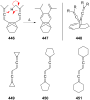
Scheme 101: A selection of polycyclic bisallenes.

Scheme 102: The first endocyclic bisallenes.

Figure 5: The stereochemistry of 1,2,6,7-cyclodecatetraene.

Scheme 103: The preparation of several endocyclic bisallenes.

Scheme 104: Synthesis of diastereomeric derivatives of 1,2,6,7-cyclodecatetraene.

Scheme 105: Preparation of a derivative of 1,2,8,9-cyclotetradecatetraene.

Scheme 106: The preparation of keto derivatives of cyclic bisallenes.

Scheme 107: The preparation of cyclic biscumulenic ring systems.

Scheme 108: Cyclic bisallenes in natural- and non-natural-product chemistry.

Scheme 109: The preparation of iron carbonyl complexes from cyclic bisallenes.

Figure 6: A selection of unknown exocyclic bisallenes that should have interesting chemical properties.

Scheme 110: The thermal isomerization of 1,2-diethynylcyclopropanes and -cyclobutanes.

Scheme 111: Intermediate generation of a cyclooctapentaene.

Scheme 112: Attempted preparation of a cyclodecahexaene.

Scheme 113: The thermal isomerization of 1,5,9-cyclododecatriyne (511) into [6]radialene (514).

Scheme 114: An isomerization involving a diketone derived from a conjugated bisallene.

Scheme 115: Typical reaction modes of heteroorganic bisallenes.

Scheme 116: Generation and thermal behavior of acyclic hetero-organic bisallenes.

Scheme 117: Generation of bis(propadienyl)thioether.

Scheme 118: The preparation of a bisallenic sulfone and its thermal isomerization.

Scheme 119: Bromination of the bisallenic sulfone 535.

Scheme 120: Metalation/hydrolysis of the bisallenic sulfone 535.

Scheme 121: Aromatic compounds from hetero bisallenes.

Scheme 122: Isomerization/cyclization of bispropargylic ethers.

Scheme 123: The preparation of novel aromatic systems by base-catalyzed isomerization of bispropargyl ethers.

Scheme 124: The isomerization of bisacetylenic thioethers to bicyclic thiophenes.

Scheme 125: Aromatization of macrocyclic bispropargylic sulfides.

Scheme 126: Preparation of ansa-compounds from macrocyclic bispropargyl thioethers.

Scheme 127: Alternate route for cyclization of a heterorganic bisallene.
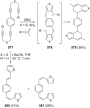
Scheme 128: Multiple isomerization/cyclization of “double” bispropargylic thioethers.

Scheme 129: Preparation of a bisallenyl disulfide and its subsequent bicyclization.

Scheme 130: Thermal cyclization of a bisallenyl thiosulfonate.

Scheme 131: Some reactions of heteroorganic bisallenes with two sulfur atoms.

Scheme 132: Further methods for the preparation of heteroorganic bisallenes.

Scheme 133: Cyclization reactions of heteroorganic bisallenes.

Scheme 134: Thermal cycloadditions of bisallenic tertiary amines.

Scheme 135: Cyclization of a bisallenic tertiary amine in the presence of a transition-metal catalyst.

Scheme 136: A Pauson–Khand reaction of a bisallenic ether.

Scheme 137: Formation of a 2:1adduct from two allenic substrates.

Scheme 138: A ring-forming silastannylation of a bisallenic tertiary amine.

Scheme 139: A three-component cyclization involving a heterorganic bisallene.

Scheme 140: Atom-economic construction of a complex organic framework from a heterorganic α,ω-bisallene.
Efficient electroorganic synthesis of 2,3,6,7,10,11-hexahydroxytriphenylene derivatives
- Carolin Regenbrecht and
- Siegfried R. Waldvogel
Beilstein J. Org. Chem. 2012, 8, 1721–1724, doi:10.3762/bjoc.8.196
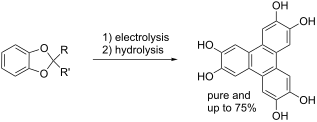
- [8][9]. Typically, the oxidative trimerization of catechol derivatives can be induced by metal salts in high oxidation states, for example by molybdenum pentachloride [4][10]. Electrochemical methods can be applied to realize the oxidative trimerization since the formation of metal waste is avoided

Graphical Abstract

Scheme 1: Experimental conditions for the anodic oxidation of catechol ketals.

Figure 1: Cyclic voltammograms of catechol ketal 1a in ACN and PC and triphenylene ketal 2a in ACN, for magni...

Scheme 2: Acid-catalyzed cleavage of ketal moieties.
Synthesis and in silico screening of a library of β-carboline-containing compounds
- Kay M. Brummond,
- John R. Goodell,
- Matthew G. LaPorte,
- Lirong Wang and
- Xiang-Qun Xie
Beilstein J. Org. Chem. 2012, 8, 1048–1058, doi:10.3762/bjoc.8.117
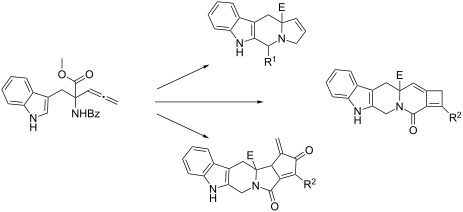
- molybdenum hexacarbonyl in DMSO/toluene solutions (Table 3). Allene-yne 9{1,2} afforded a mixture of four compounds comprising two diastereomers of 3{1,2}, the 4-alkylidene cyclopentenone, resulting from the cyclocarbonylation reaction with the distal double of the allene, and a fourth compound, which could
- not be identified (see spectral data in Supporting Information File 1). Aryl-substituted alkynones 9{1,5}–9{1,8} were not available for the molybdenum-mediated cyclocarbonylation process due to competing [2 + 2] cycloaddition reactions (Table 2). The majority of these β-carboline-containing products

Graphical Abstract

Figure 1: Tetrahydro-β-carboline containing scaffolds 1–3.
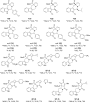
Figure 2: Library of tetrahydro-β-carboline containing compounds 1–7 and calculated properties (amolecular we...
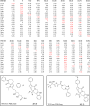
Figure 3: Results of high-throughput docking analysis. Top: A docking-score matrix arranged by compound IDs a...
Reciprocal polyhedra and the Euler relationship: cage hydrocarbons, CnHn and closo-boranes [BxHx]2−
- Michael J. McGlinchey and
- Henning Hopf
Beilstein J. Org. Chem. 2011, 7, 222–233, doi:10.3762/bjoc.7.30
- the centers of adjacent faces of the octahedron are connected, they yield a cube and vice versa; this is beautifully illustrated by the X-ray crystal structure of the [Mo6Cl8]4+ cluster in which an octahedron of molybdenum atoms is encapsulated within a cube of chlorines (Figure 2). The icosahedron

Graphical Abstract

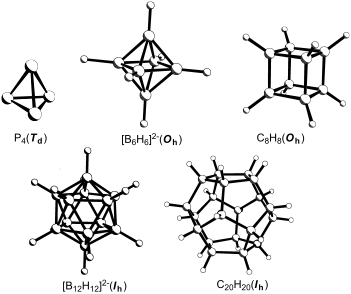
Figure 1: Molecular analogues of the Platonic solids.

Figure 2: The structure of [Mo6Cl8]4+ demonstrates the reciprocal relationship between the cube and the octah...

Figure 3: The deltahedra corresponding to the structures of the closo-boranes [BxHx]2−.

Scheme 1: The first synthesis of a tetrahedrane 19 by Maier.

Scheme 2: The conversion of Dewar benzenes to [3]-prismanes.

Scheme 3: Synthesis of [3]prismane 9 by Katz.

Scheme 4: Synthesis of cubane 10 by Eaton.

Scheme 5: Synthesis of cubane 10 by Pettit.

Scheme 6: Failed routes to [5]-prismane 11.

Scheme 7: Synthesis of [5]prismane 11 by Eaton.

Scheme 8: Retrosynthetic analysis for several approaches to dodecahedrane 16.

Scheme 9: Paquette´s synthesis of dodecahedrane 16.

Scheme 10: Prinzbach´s synthesis of dodecahedrane 16.

Figure 4: The as yet unknown polyhedranes 12–15.
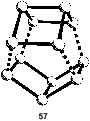
Figure 5: Coupling of two Dewar benzenes.

Scheme 11: A possible route to octahedrane 12.

Scheme 12: A possible route to nonahedrane 13.
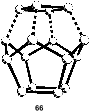
Figure 6: Capping [4]peristylane with a four-membered ring system.

Scheme 13: A possible route to decahedrane 14.

Figure 7: A possible route to undecahedrane 15 (left: side view; right: top view).

Scheme 14: Synthetic routes to trigonal prismatic hexasilanes 71a and hexagermanes 71b.

Scheme 15: Synthetic routes to octasila- and octagerma-cubanes.

Scheme 16: Synthesis of an octastannacubane and a decastannapentaprismane.

Scheme 17: Synthesis of a heterocubane.

Figure 8: D3d symmetric C8H8, a bis-truncated cubane.
Ene–yne cross-metathesis with ruthenium carbene catalysts
- Cédric Fischmeister and
- Christian Bruneau
Beilstein J. Org. Chem. 2011, 7, 156–166, doi:10.3762/bjoc.7.22
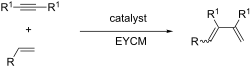
- before the discovery of the very efficient molybdenum and ruthenium metathesis catalysts. In 1980, the polymerization of alkynes initiated by tungsten carbene was demonstrated by Katz [1][2] who proposed metallacyclobutenes as key intermediates in this polymerization. At the same period of time, Geoffroy

Graphical Abstract

Scheme 1: Interaction of triple bonds with a metal carbene.

Scheme 2: General scheme for EYCM and side reactions.

Figure 1: Selected ruthenium catalysts able to perform EYCM.

Scheme 3: Catalytic cycle with initial interaction of a metal methylidene with the triple bond.

Scheme 4: Catalytic cycle with initial interaction of a metal alkylidene with the triple bond.

Scheme 5: Formation of 2,3-disubstituted dienes via cross-metathesis of alkynes with ethylene.

Figure 2: Applications of EYCM with ethylene in natural product synthesis.

Scheme 6: Application of EYCM in sugar chemistry.

Scheme 7: EYCM as determining step to form vinylcyclopropane derivatives.

Scheme 8: Sequential EYCM with ethylene/nucleophilic substitution or elimination.

Scheme 9: Various regioselectivities in EYCM of silylated alkynes.

Scheme 10: High regio- and stereoselectivities obtained for EYCM with styrenes.

Scheme 11: EYCM of terminal olefins with internal borylated alkynes.

Scheme 12: Synthesis of propenylidene cyclobutane via EYCM.

Scheme 13: Efficient EYCM with vinyl ethers.

Scheme 14: From cyclopentene to cyclohepta-1,3-dienes via cyclic olefin-alkyne cross-metathesis.

Scheme 15: Ring expansion via EYCM from bicyclic olefins.

Scheme 16: Ring contraction resulting from EYCM of cyclooctadiene.

Scheme 17: Preparation of bicyclic products via diene-alkyne cross-metathesis.

Scheme 18: Ethylene helping effect in EYCM.

Scheme 19: Stereoselective EYCM in the presence of ethylene.

Scheme 20: Sequential ethenolysis/EYCM applied to unsaturated fatty acid esters.

Scheme 21: Sequential ethenolysis/EYCM applied to symmetrical unsaturated fatty acid derivatives for the produ...
Recent advances in the development of alkyne metathesis catalysts
- Xian Wu and
- Matthias Tamm
Beilstein J. Org. Chem. 2011, 7, 82–93, doi:10.3762/bjoc.7.12
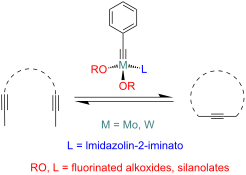
- Xian Wu Matthias Tamm Institut für Anorganische und Analytische Chemie, Technische Universität Braunschweig, Hagenring 30, 38106 Braunschweig, Germany 10.3762/bjoc.7.12 Abstract The number of well-defined molybdenum and tungsten alkylidyne complexes that are able to catalyze alkyne metathesis
- reactions efficiently has been significantly expanded in recent years.The latest developments in this field featuring highly active imidazolin-2-iminato- and silanolate–alkylidyne complexes are outlined in this review. Keywords: alkynes; homogeneous catalysis; metathesis; molybdenum; tungsten; Review
- Schrock system containing imidazolin-2-iminato ligands that was developed by our group; 2. silanolate-supported complexes such as molybdenum nitride and alkylidyne complexes with Ph3SiO ligands developed by Fürstner and tungsten alkylidyne complexes with (t-BuO)3SiO ligands introduced by us. Since there

Graphical Abstract

Scheme 1: Alkyne metathesis based on the Katz mechanism.

Scheme 2: Reaction patterns of alkyne metathesis.

Scheme 3: Typical examples from traditional catalyst systems.

Scheme 4: Ligand synthesis and catalyst design.
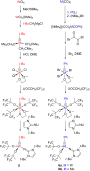
Scheme 5: Catalysts synthesis using high- and low-oxidation-state routes (for 6a, X = Li or K; for 6b, X = K)....

Figure 1: Alkylidyne complexes 9 and 10.

Scheme 6: Design strategy of Fürstner’s new system.

Scheme 7: Synthetic routes of Fürstner’s new catalysts.

Scheme 8: Lewis acid addition of 26 and 28.

Scheme 9: Preparation of the silanolate–alkylidyne tungsten complex 39.
The catalytic performance of Ru–NHC alkylidene complexes: PCy3 versus pyridine as the dissociating ligand
- Stefan Krehl,
- Diana Geißler,
- Sylvia Hauke,
- Oliver Kunz,
- Lucia Staude and
- Bernd Schmidt
Beilstein J. Org. Chem. 2010, 6, 1188–1198, doi:10.3762/bjoc.6.136
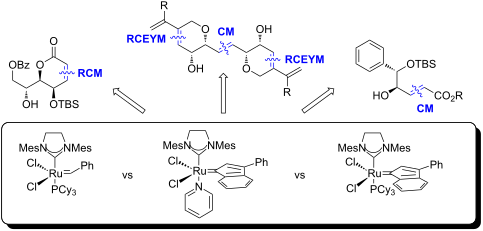
- reactions in organic synthesis [1]. The elucidation of the crucial role of metal carbenes by Chauvin [2] and the development of stable and defined precatalysts for homogeneously catalyzed reactions by Schrock [3] and Grubbs [4] paved the way for this development. Since then, molybdenum- [5] and ruthenium

Graphical Abstract

Figure 1: Ru-based metathesis catalysts.

Scheme 1: RCM of an allyl ether catalyzed by catalyst H.

Figure 2: Solvent screening for the RCM of 1 catalyzed by H (standardized conditions as denoted in Scheme 1).

Figure 3: Comparison of catalysts D, E and H in toluene and acetic acid (standardized conditions as denoted i...

Figure 4: Conversion vs catalyst loading for the RCM of 1 in acetic acid (standardized conditions as denoted ...

Scheme 2: Catalyst screening for RCM of acrylate 3a.

Figure 5: Acrylates 3 and their RCM products 4.

Scheme 3: Ring closing enyne metathesis reactions.

Scheme 4: Cross metathesis reactions with allylic alcohol 8.
About the activity and selectivity of less well-known metathesis catalysts during ADMET polymerizations
- Hatice Mutlu,
- Lucas Montero de Espinosa,
- Oĝuz Türünç and
- Michael A. R. Meier
Beilstein J. Org. Chem. 2010, 6, 1149–1158, doi:10.3762/bjoc.6.131
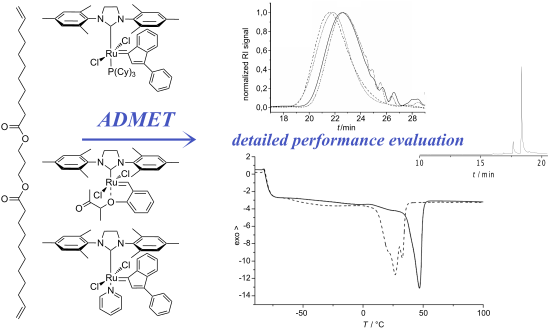
- demonstrated that, while Grubbs 1st generation and Schrock's molybdenum alkylidene catalysts did not produce appreciable double bond isomerization, Grubbs 2nd generation catalyst presented significant isomerization activity, which was greatly reduced at temperatures below 30 ºC [17][28]. These studies were

Graphical Abstract

Figure 1: Olefin isomerization during ADMET polymerization.

Figure 2: Ru–indenylidene metathesis catalysts C1 and C2, “boomerang” complexes C3, and Hoveyda–Grubbs 2nd ge...

Figure 3: Representative scheme for the in situ generated Ru–indenylidene [38].

Figure 4: Synthesis of the studied α,ω-diene, its ADMET polymerization, and the strategy to evaluate isomeriz...

Figure 5: GPC traces of the polymerizations performed at 60, 80, 100 and 120 ºC in presence of a) 0.5 mol % C1...

Figure 6: GC-MS study of the acid-catalyzed degradation products of polymers P19, P20, P21, and P22.
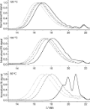
Figure 7: GPC traces of polymerizations performed with C1 at 80, 100, and 120 ºC. Samples taken at 5 min (―–)...

Figure 8: DSC traces of ADMET polymers P11 and P12 (Table 1, entries 11 and 12, respectively).
Light-induced olefin metathesis
- Yuval Vidavsky and
- N. Gabriel Lemcoff
Beilstein J. Org. Chem. 2010, 6, 1106–1119, doi:10.3762/bjoc.6.127
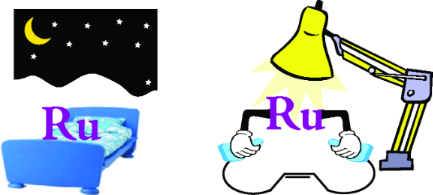
- ] determined the heterogeneous character of the active catalytic species obtained on irradiation of 1 in CCl4, supporting the previous proposal by Harfouch and coworkers. In another example of heterogeneous light induced metathesis, Shelimov and Kazansky [51] also found that silica supported molybdenum

Graphical Abstract

Scheme 1: Light activated metathesis of trans-2-pentene.

Scheme 2: Light induced generation of metathesis active species 2.
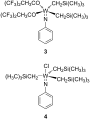
Figure 1: Well-defined tungsten photoactive catalysts.

Figure 2: The first ruthenium based complexes for PROMP.

Figure 3: Cyclic strained alkenes for PROMP.

Scheme 3: Proposed mechanism for photoactivation of sandwich complexes.

Figure 4: Ruthenium and osmium complexes with p-cymene and phosphane ligands for PROMP.

Figure 5: Commercially available photoactive ruthenium precatalyst.

Figure 6: Some of the rings produced by photo-RCM.

Scheme 4: Photopromoted ene-yne RCM by cationic allenylidene ruthenium complex 14.

Figure 7: Dihydrofurans synthesised by photopromoted ene-yne RCM.

Figure 8: Ruthenium complexes with p-cymene and NHC ligands.

Scheme 5: Ruthenium NHC complexes for PROMP containing p-cymene and trifluroacetate (17, 19) or phenylisonitr...

Figure 9: Photoactivated cationic ROMP precatalysts.

Figure 10: Different monomers for PROMP.

Scheme 6: Proposed mechanism for photoinitiated polymerisation by 22 and 23.

Figure 11: Light-induced cationic catalysts for ROMP.

Figure 12: Sulfur chelated ruthenium benzylidene pre-catalysts for olefin metathesis.

Scheme 7: Proposed mechanism for the photoactivation of sulfur-chelated ruthenium benzylidene.

Figure 13: Photoacid generators for photoinduced metathesis.

Scheme 8: Synthesis of precatalysts 36 and 37.

Scheme 9: Trapping of proposed intermediate 41.

Figure 14: Encapsulated 39, isolated from the monomer.
Progress in metathesis chemistry
- Karol Grela
Beilstein J. Org. Chem. 2010, 6, 1089–1090, doi:10.3762/bjoc.6.124
- development of the metathesis method in organic synthesis” has been fully recognized by the award of the Nobel Prize in Chemistry for 2005 jointly to Yves Chauvin, Robert H. Grubbs, and Richard R. Schrock [2]. Organic chemists are now provided with molybdenum and ruthenium complexes that present good
- more sensitive towards air and moisture, molybdenum catalysts provide excellent results in stereoselective metathesis and are sometimes more active. Therefore these catalyst families can be used in a complementary fashion. Currently, olefin metathesis (and its sister reaction, alkyne metathesis) [3] is