

Search results
Search for "membrane" in Full Text gives 396 result(s) in Beilstein Journal of Organic Chemistry. Showing first 200.
Binding of tryptophan and tryptophan-containing peptides in water by a glucose naphtho crown ether
Beilstein J. Org. Chem. 2025, 21, 541–546, doi:10.3762/bjoc.21.42
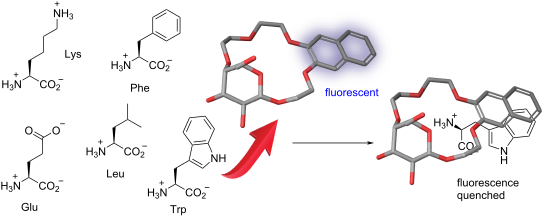
- receptors; molecular recognition; monosaccharides; tryptophan; Introduction Tryptophan plays a crucial role in a variety of biological processes [1][2]. For example, it is critical for electron transfer in proteins [3] and is a key component of several membrane proteins as well as short antimicrobial


Hot shape transformation: the role of PSar dehydration in stomatocyte morphogenesis
Beilstein J. Org. Chem. 2025, 21, 47–54, doi:10.3762/bjoc.21.5
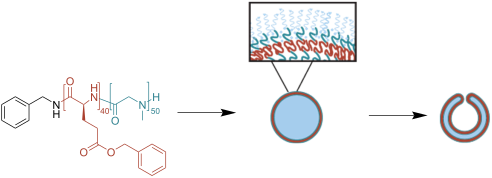
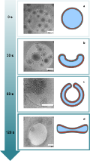
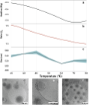
- properties are crucial, particularly its permeability. Excessive permeability allows water molecules – and potentially larger molecules – to traverse the membrane without exerting adequate force, undermining the transformation process [20][21]. Lastly, membrane stiffness plays a role; the stiffness of the
- membrane determines how it responds to the applied force. Besides that stiffness should be sufficient to maintain membrane curvature for a shape transformation to occur [22]. This is particularly important when domains are formed over the membrane with different stiffness which can lead to an asymmetrical
- response [23][24][25]. An excessive stiffness will eventually even impede deformation entirely [26]. This characteristic is harnessed in systems to stabilize shapes by water addition, effectively locking the membrane in a kinetically stable state [27]. In a recent study by Elafify, M. S. et al. it was


Intramolecular C–H arylation of pyridine derivatives with a palladium catalyst for the synthesis of multiply fused heteroaromatic compounds
Beilstein J. Org. Chem. 2024, 20, 3256–3262, doi:10.3762/bjoc.20.269
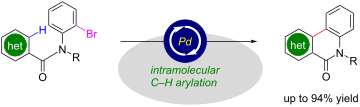
- Yuki Nakanishi Shoichi Sugita Kentaro Okano Atsunori Mori Department of Chemical Science and Engineering, Kobe University, 1-1 Rokkodai, Nada, Kobe 657-8501, Japan Research Center for Membrane and Film Technology, Kobe University, 1-1 Rokkodai, Nada, Kobe 657-8501, Japan 10.3762/bjoc.20.269


Discovery of ianthelliformisamines D–G from the sponge Suberea ianthelliformis and the total synthesis of ianthelliformisamine D
Beilstein J. Org. Chem. 2024, 20, 3205–3214, doi:10.3762/bjoc.20.266
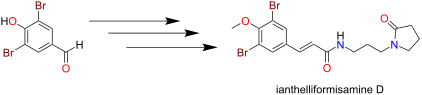
- supported the important role that the polyamine chain length plays in antibacterial activity. Of note, increasing research providing structure–activity relationship analyses shows that polyamines (including spermine) are bacterial membrane disruptors and are beneficial in enhancing activity of known


![[Graphic 1]](/bjoc/content/inline/1860-5397-20-266-i2.svg?max-width=637&scale=1.18182)
![[Graphic 2]](/bjoc/content/inline/1860-5397-20-266-i3.svg?max-width=637&scale=1.18182)
![[Graphic 3]](/bjoc/content/inline/1860-5397-20-266-i4.svg?max-width=637&scale=1.18182)

![[Graphic 4]](/bjoc/content/inline/1860-5397-20-266-i5.svg?max-width=637&scale=1.18182)
![[Graphic 5]](/bjoc/content/inline/1860-5397-20-266-i6.svg?max-width=637&scale=1.18182)

Synthesis of extended fluorinated tripeptides based on the tetrahydropyridazine scaffold
Beilstein J. Org. Chem. 2024, 20, 3174–3181, doi:10.3762/bjoc.20.262
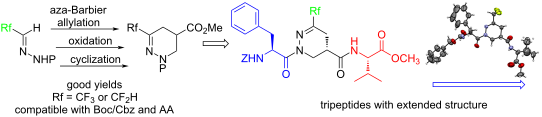
- groups (CF3 or CF2H) in organic molecules can modulate their physicochemical (pKa, lipophilicity), structural (additional hydrophobic and hydrogen-bond interactions), and biological properties (metabolic stability, membrane permeability) [14][15]. Alongside the very well-known CF3 group, the CF2H group


Multicomponent reactions driving the discovery and optimization of agents targeting central nervous system pathologies
Beilstein J. Org. Chem. 2024, 20, 3151–3173, doi:10.3762/bjoc.20.261

- biomolecules like DNA and lipids. Lipid peroxidation and membrane disruption can cause random cross-linking, resulting in cell death and the fragmentation of proteins and enzymes. Elevated concentrations of reactive oxygen species (ROS) from various molecular processes contribute to the oxidation of proteins




Chemical structure metagenomics of microbial natural products: surveying nonribosomal peptides and beyond
Beilstein J. Org. Chem. 2024, 20, 3050–3060, doi:10.3762/bjoc.20.253
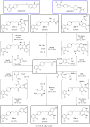
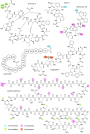
- of action (MOA) (e.g., membrane lysis and depolarization) [30][34] and specific MOA (e.g., dysregulation of ClpP protease [33], inhibition of topoisomerase I/II [36][68], blocking lipid II transport by flippase [29], sequestration of cell wall biosynthetic intermediate C55-(di)phosphate, etc.) [35


N-Glycosides of indigo, indirubin, and isoindigo: blue, red, and yellow sugars and their cancerostatic activity
Beilstein J. Org. Chem. 2024, 20, 2840–2869, doi:10.3762/bjoc.20.240
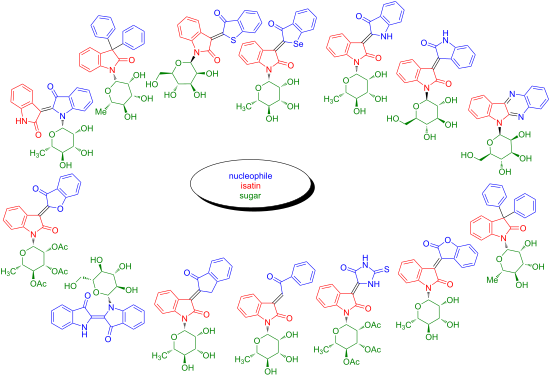
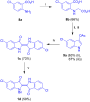
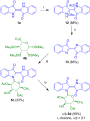
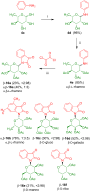
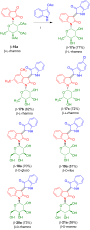
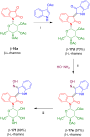
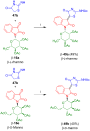
- represent promising candidates for drug discovery, because of their improved water solubility, membrane permeability, and improved recognition by the respective receptors [16]. The present article aims to provide an updated review of the chemistry and biological applications of N-glycosides of indigo
- anticipated that PAM activates channels of the membrane of melanoma cells to allow the antiproliferative compound (β-33b) to enter the cell. Thus, β-33b combined with PAM might be developed to a new and promising method of therapeutic intervention. This concept of combination of PAM with drugs could also be
- negative feed-back loop by TRAIL and an upregulation of both receptors. In addition, a loss of mitochondrial membrane potential and release of cytochrome c was observed which gave rise to an activation of intrinsic apoptosis pathways. The mitochondrial response seems to be related to an upregulation of Bax











Synthesis and antimycotic activity of new derivatives of imidazo[1,2-a]pyrimidines
Beilstein J. Org. Chem. 2024, 20, 2806–2817, doi:10.3762/bjoc.20.236
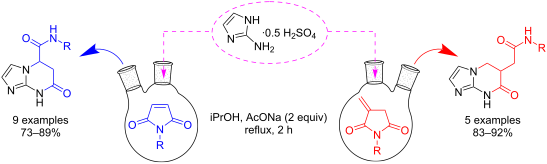
- /ERG11 gene. This enzyme contains a haem-like prosthetic group in its active center and is a member of the cytochrome P450 family, which plays a key role in the biosynthesis of sterols. Sterols in turn are integral components of the fungal cell membrane, making inhibition of CYP51 [43] an effective


Interaction of a pyrene derivative with cationic [60]fullerene in phospholipid membranes and its effects on photodynamic actions
Beilstein J. Org. Chem. 2024, 20, 2732–2738, doi:10.3762/bjoc.20.231
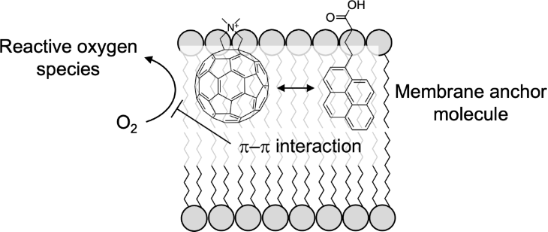
- membrane potential (Vm) in living cells. These previous studies indicated that the localization of the triad molecules in a specific intra-membrane orientation and the suppression of the photodynamic actions of the [60]fullerene (C60) moiety are likely important to achieve fast and safe control of Vm
- an acceptor in photoinduced charge-separation systems, we have previously employed ferrocene-porphyrin-C60 triad molecules (Figure 1a) in a biological system to control the plasma membrane potential (Vm) of living mammalian neuronal cells under photoirradiation [4][5][6]. Generally, Vm originates
- from a difference in electric charge on the two sides of the plasma membrane (approximately 5 nm thickness), with a slight excess of the positive ions inside relative to the negative ions outside. Our ferrocene-porphyrin-C60 triad molecule exhibited long-lived charge-separated states under visible


Synthesis and conformational analysis of pyran inter-halide analogues of ᴅ-talose
Beilstein J. Org. Chem. 2024, 20, 2442–2454, doi:10.3762/bjoc.20.208
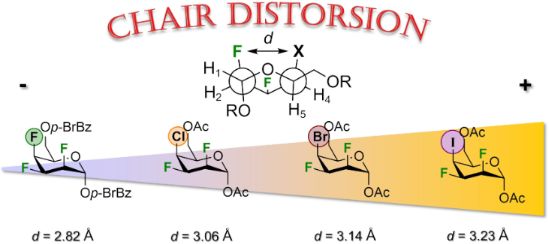
- ][3][4][5][6][7]. What about other halogens? Pyran inter-halide analogues of carbohydrates were rarely investigated as new tools in glycobiology [8]. This is surprising since the incorporation of halogens can improve cellular uptakes and enhance membrane binding and permeation [9][10][11]. In addition


Computational toolbox for the analysis of protein–glycan interactions
Beilstein J. Org. Chem. 2024, 20, 2084–2107, doi:10.3762/bjoc.20.180
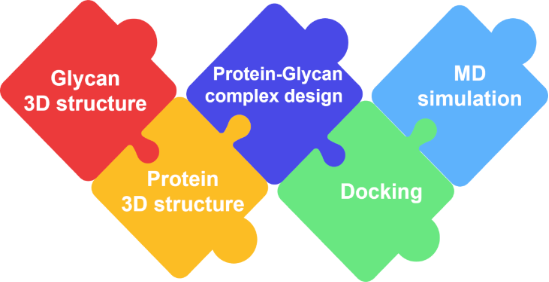
- constituting glycoproteins or glycolipids, respectively. Recently, glycan structures exposed on the cellular membrane have also been found to be associated with tRNA [2]. In other species, such as prokaryotes, plants or fungi, glycoconjugates comprise the cell wall, playing critical metabolic, structural and
- platform contains a number of different modules designed to construct complex glycans, glycoconjugates as lipopolysaccharides (LPS), or even building a membrane system or solvating a protein. To use all these features, grouped in the Input Generator tab (https://www.charmm-gui.org/), it is necessary to be


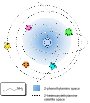
2-Heteroarylethylamines in medicinal chemistry: a review of 2-phenethylamine satellite chemical space
Beilstein J. Org. Chem. 2024, 20, 1880–1893, doi:10.3762/bjoc.20.163
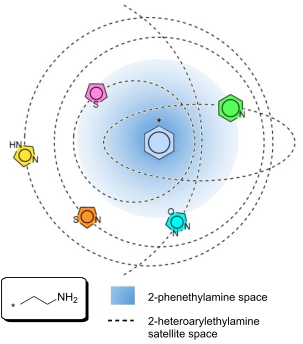
- second generation series, i.e., compounds 91–94 (Scheme 12), featuring simple hydrocarbon substituents was elaborated. This collection showed good activities, demonstrating the tolerance of introducing bulky moieties at position C2 or N1 of the imidazole ring. Researchers also described positive membrane
- originally synthesized by Palazzo et al. [76] and several other derivatives were developed based on ethylamine-chain homologation [77]. Triazoles: Hall and co-workers [78] developed 1,2,3-triazolyl analogues 111 of ʟ-histidine for ʟ-type amino acid transporter 1 (LAT1) activity, a sodium-independent membrane


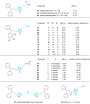


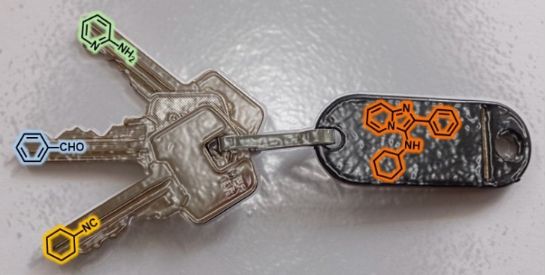
The Groebke–Blackburn–Bienaymé reaction in its maturity: innovation and improvements since its 21st birthday (2019–2023)
Beilstein J. Org. Chem. 2024, 20, 1839–1879, doi:10.3762/bjoc.20.162


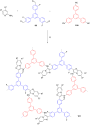




Discovery of antimicrobial peptides clostrisin and cellulosin from Clostridium: insights into their structures, co-localized biosynthetic gene clusters, and antibiotic activity
Beilstein J. Org. Chem. 2024, 20, 1800–1816, doi:10.3762/bjoc.20.159

- catalyze the formation of Dha-Cys or Dhb-Cys [21]. Moreover, lanPt encodes a membrane protein with two ABC transporter domains and a C39 peptidase domain. The protein cleaves the leader peptide to generate mature lanthipeptides and exports them to the extracellular environment [22]. The diversity of
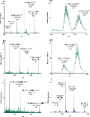
- in more pronounced morphological changes after 5 hours of treatment. The changes included the loss of the characteristic cocci structure, with the formation of blebs that increased the membrane's rugosity. Besides, cytosolic leakage and remnants of the outer membrane were identified (see Figure 6B, C
- , G, and H). The treatment with the mature peptides led to numerous blebs visible after 1 hour. Interestingly, no cocci structures were detected after 5 hours of treatment (see Figure 6). The precursor peptides, especially cellulosin, appear to elicit some effects on the membrane of S. epidermidis




Chemo-enzymatic total synthesis: current approaches toward the integration of chemical and enzymatic transformations
Beilstein J. Org. Chem. 2024, 20, 1693–1712, doi:10.3762/bjoc.20.151
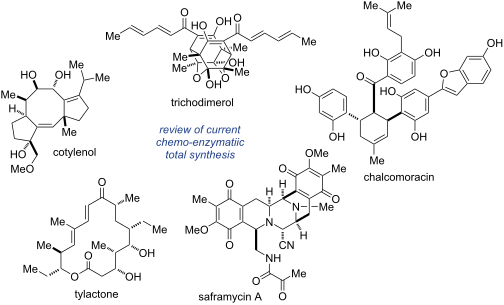
- oxidation of phenols on A- and E-rings, yield bisquinone 94. The membrane-bound peptidase SfmE excises the long-chain fatty acid moiety on the N-terminus of the C1 side chain. Secretion through the efflux pump SfmG, and extracellular oxidative deamination catalyzed by the berberine bridge enzyme (BBE)-like
- fatty acid moiety on the C1 side chain (Scheme 9). Although the enzymatic deacylation of 94 can be catalyzed by the membrane-bound peptidase SfmE, similar chemical transformations require harsh conditions and are difficult to perform in the presence of highly reactive functional groups. To circumvent


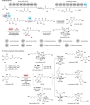
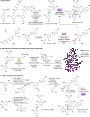


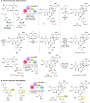
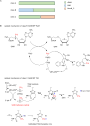
Methyltransferases from RiPP pathways: shaping the landscape of natural product chemistry
Beilstein J. Org. Chem. 2024, 20, 1652–1670, doi:10.3762/bjoc.20.147
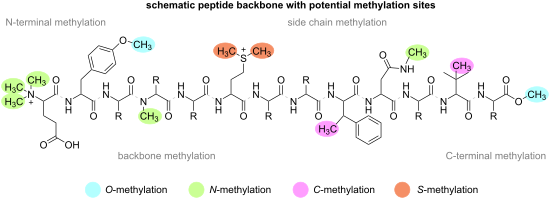
- perform oxygen-directed methylation [59]. A range of natural products are known to undergo O-methylation [61], improving membrane permeability, absorption, and oral bioavailability [61][62]. The most extensively studied O-MTs are those that methylate catecholic hydroxy groups [63]. Several O-methylation
- proteusin family of RiPPs. They are produced by the tunicate symbiont Candidatus Entotheonella factor and exhibit membrane activity against Gram-positive bacteria and are highly cytotoxic. Cytotoxicity was tested with murine leukaemia cells; polytheonamide A, B, and C showed IC50 values between 68 and 78 pg
- towards the C-terminus, named "axial amphipathicity". Thus, this methylation is thought to play an important role in correct target membrane insertion and the associated cytotoxic effect [125]. TsrM is another cob(II)alamin-dependent C-MT (Figure 10). This enzyme is involved in the biosynthesis of





New triazinephosphonate dopants for Nafion proton exchange membranes (PEM)
Beilstein J. Org. Chem. 2024, 20, 1623–1634, doi:10.3762/bjoc.20.145
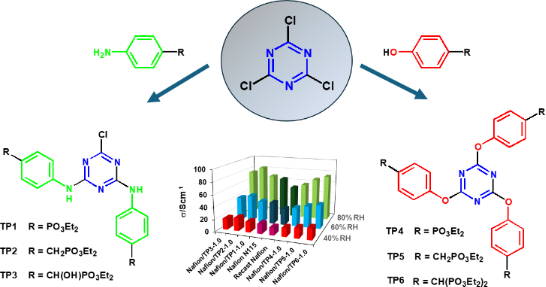
- applications and performances depend on key components such as their separators/ion-exchange membranes. The most studied and already commercialized Nafion membrane shows great chemical stability, but its water content limits its high proton conduction to a limited range of operating temperatures. Here, we
- -triazinephosphonate (TPs) derivatives. The evaluation of the proton conduction properties of the new membranes and relative humidity (RH) conditions and at 60 °C, showed that they present higher proton conductivities than the prepared Nafion membrane and similar or better proton conductivities than commercial Nafion
- N115, in the same experimental conditions. The Nafion-doped membrane with compound TP2 with a 1.0 wt % loading showed the highest proton conductivity with 84 mS·cm−1. Keywords: electrolyser; fuel cells; Nafion-modified membranes; phosphonates; proton exchange membranes; triazine; Introduction


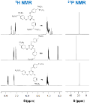


Supramolecular assemblies of amphiphilic donor–acceptor Stenhouse adducts as macroscopic soft scaffolds
Beilstein J. Org. Chem. 2024, 20, 1590–1603, doi:10.3762/bjoc.20.142
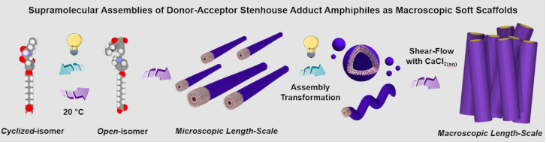
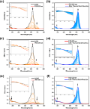
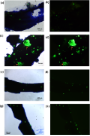
- found in nature in order to enable different biological functions in a precise manner, e.g., actin in biological molecular motors, the cytoskeleton, and cell membrane [5][6][7][8]. Mimicking natural supramolecular assemblies in aqueous medium, the intrinsic supramolecular dynamicity, stimuli




Electrocatalytic hydrogenation of cyanoarenes, nitroarenes, quinolines, and pyridines under mild conditions with a proton-exchange membrane reactor
Beilstein J. Org. Chem. 2024, 20, 1560–1571, doi:10.3762/bjoc.20.139
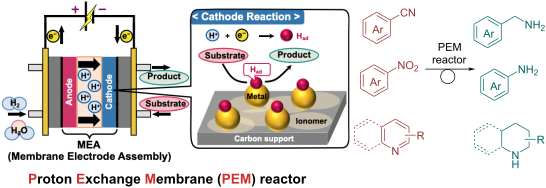
- cyanoarenes, nitroarenes, quinolines, and pyridines using a proton-exchange membrane (PEM) reactor was developed. Cyanoarenes were then reduced to the corresponding benzylamines at room temperature in the presence of ethyl phosphate. The reduction of nitroarenes proceeded at room temperature, and a variety of
- hydrogen [13][14][15][16][17][18]. Meanwhile, electrochemical systems using solid polymer electrolytes (SPEs) have recently attracted significant attention [19]. Among these, proton-exchange membrane (PEM) reactors are powerful tools for hydrogenation [20][21][22][23][24][25][26][27][28][29][30][31][32][33
- ][34][35][36][37][38][39][40][41][42][43]. The PEM reactor included a membrane electrode assembly (MEA) consisting of a PEM and an electro-catalyst supported on carbon (Figure 1). Humidified hydrogen gas (H2) or H2O was injected into the anodic chamber and the substrate passed through the cathodic


Diameter-selective extraction of single-walled carbon nanotubes by interlocking with Cu-tethered square nanobrackets
Beilstein J. Org. Chem. 2024, 20, 1298–1307, doi:10.3762/bjoc.20.113
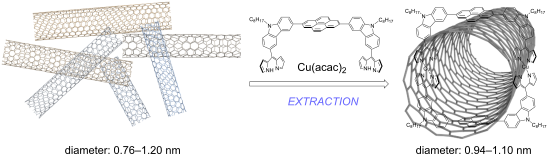
- obtained by centrifugation at 50400g for 16 h and subjected to UV−vis−NIR measurements (Figure 3a). After concentrating the extract obtained above, the residue (e-SWNTs) was suspended in dichloromethane by sonication and filtered through a PTFE membrane (pore size 0.1 μm). This washing process was repeated
- PTFE membrane. This process to remove host molecules was repeated three times, until no absorption bands from the host molecules were observed in the UV−vis spectra of washings. After the resulting p-SWNTs were washed with dichloromethane several times to thoroughly remove all the organic molecules




Stability trends in carbocation intermediates stemming from germacrene A and hedycaryol
Beilstein J. Org. Chem. 2024, 20, 1189–1197, doi:10.3762/bjoc.20.101
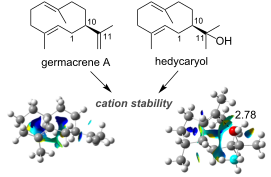
- several significant processes, terpenoids play an indispensable role in cell-wall and membrane biosynthesis, sensing, plant defense, electron transport, or conversion of light into chemical energy [1][2]. Based on the number of hydrocarbon units, terpenes are classified into various families like


Methodology for awakening the potential secondary metabolic capacity in actinomycetes
Beilstein J. Org. Chem. 2024, 20, 753–766, doi:10.3762/bjoc.20.69
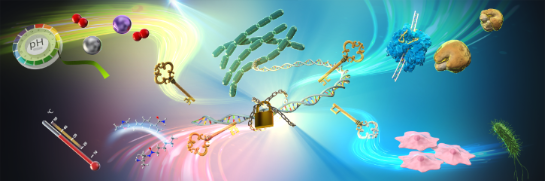
- living organisms produce and use such metabolites as biocatalysts in nature. Therefore, it is thought that the production of HSMs has some physiological significance. For example, other microbial species reportedly activate energy metabolism and strengthen the cell membrane or walls in high-temperature


Chemoenzymatic synthesis of macrocyclic peptides and polyketides via thioesterase-catalyzed macrocyclization
Beilstein J. Org. Chem. 2024, 20, 721–733, doi:10.3762/bjoc.20.66
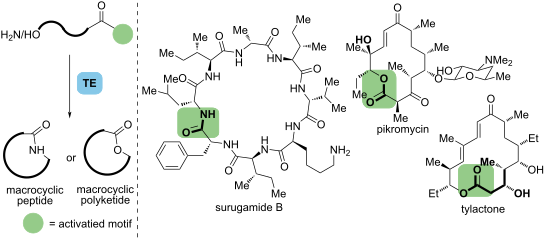
- brevis [27], can penetrate the lipid phase of a Gram-positive inner cell membrane [28][29]. Despite exhibiting high antimicrobial activity, this compound also disrupts the membranes of higher mammalian cells, as evidenced by their pronounced hemolytic activity [30]. Establishing a concise and diverse


New variochelins from soil-isolated Variovorax sp. H002
Beilstein J. Org. Chem. 2024, 20, 692–700, doi:10.3762/bjoc.20.63
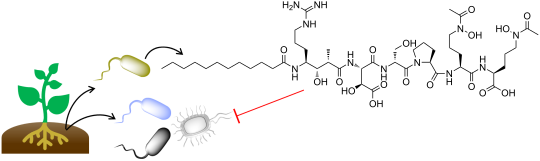
- transporters to form the siderophore Fe(III) complex extracellularly [2][3]. Subsequently, the stable and water soluble siderophore Fe(III) complex is transported across the cell membrane into the cytoplasm, where the iron is released from the complex by reduction, generating free Fe(II) ions that are
- ) resembles those of other amphiphilic marine siderophores such as marinobactins and aquachelins exhibiting the membrane affinity [21] as well as the self-assembling ability to form iron-containing vesicles [22]. This study presents another suite of amphiphilic peptidic siderophores originating in the
- hydrolysates were dissolved in water (160 µL), and treated with saturated NaHCO3 (200 µL) and 1% ʟ-FDLA in acetone (160 µL). The mixtures were heated at 40 °C for 30 minutes, quenched with 1 M HCl (200 µL), and concentrated in vacuo. The residue was dissolved in DMSO (400 µL) and passed through a membrane